
Addressable Dream Color Controllers
12 sub-categories
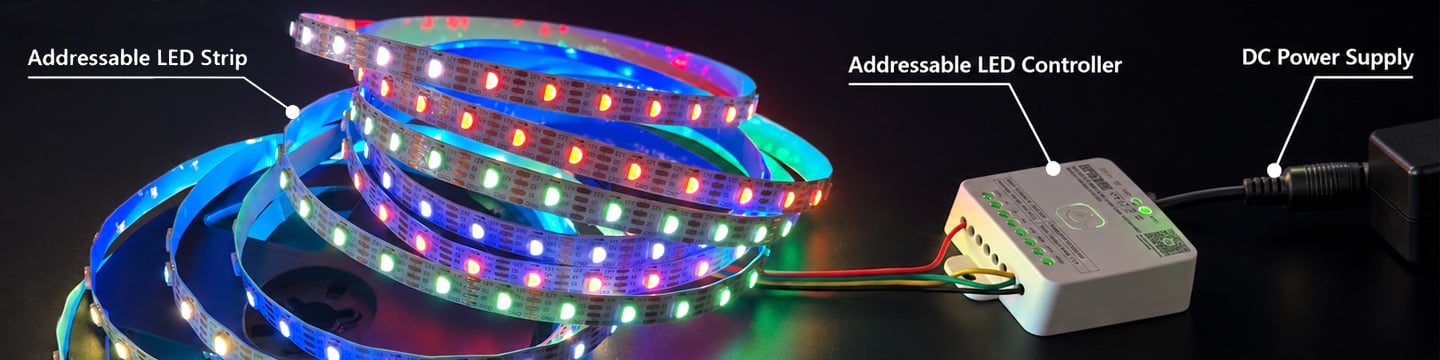
Addressable LED Controllers are used to control Programmable Addressable LED Strip Lights (also known as Dream Color LED Strip Lights and Pixel LED Strips) such as WS2812B, WS2811, WS2815, SK6812, etc. Suitable for IC-controlled LED strips, LED modules, and LED pixel screens.
Unlike a standard RGB controller that changes the entire light strip to one color at a time, an addressable LED controller gives you command over every single IC LED/LEDs individually. This is the technology behind the flowing, chasing "dream color" effects you see in high-end media rooms, dynamic signage, and architectural accents.
Essentially, while a regular LED strip controller sends a simple power signal, an addressable controller sends a constant stream of data, telling each pixel what color and brightness to be at any given moment. This unlocks fluid gradients, rainbow waves, and complex animations that are impossible with non-addressable strips. Getting started is a matter of matching the IC controller's capabilities—both its control protocol and its pixel capacity—to your project's ambition.
How to Choose the Right Addressable LED Strip Controller
Choose your addressable LED strip controller based on how you want to control your pixel lighting, including Bluetooth, WiFi/Alexa, RF remote, DMX Art-Net, computer programmable, and music-sync control options. Due to the incompatibility of RGBIC Controllers with Addressable RGBW and Addressable RGBCCT LED strip types, we have created two separate categories to make your choice easier.
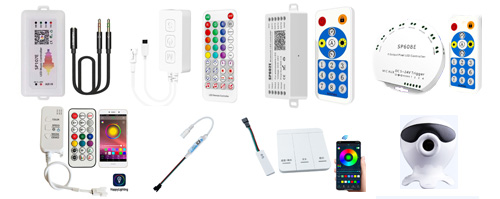
SPI LED Bluetooth Controller
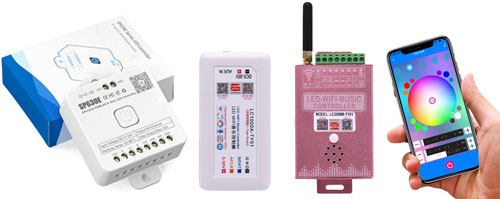
SuperLightingLED™ SPI LED Bluetooth Controller can wirelessly connect between your mobile phone and addressable LED light fixtures (addressable led strip lights, pixel led modules, pixel led panel screens, pixel led sheets, etc. ). It can implement data commands to addressable LED lights within a short distance without wires to change the LED color, light brightness, mode, etc. In addition, our Bluetooth LEDs addressable controller can be compatible with music, RF remote control, IR remote control, wireless panel control, and speaker functions to achieve more intelligent control methods.
With a fast and convenient connection, Bluetooth is great wireless LED light control method. Turn on the Bluetooth of your mobile phone and connect to the Bluetooth of your addressable LED light fixture. After a successful connection, you can control the LED lighting through your IOS/Android mobile phone APP.
Explore our full range of Bluetooth addressable LED controllers below, along with key technical guidelines to help you select the right protocol for your installation.
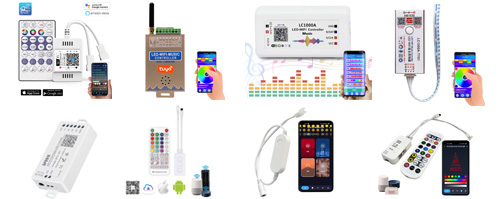
WiFi Alexa LED Controller
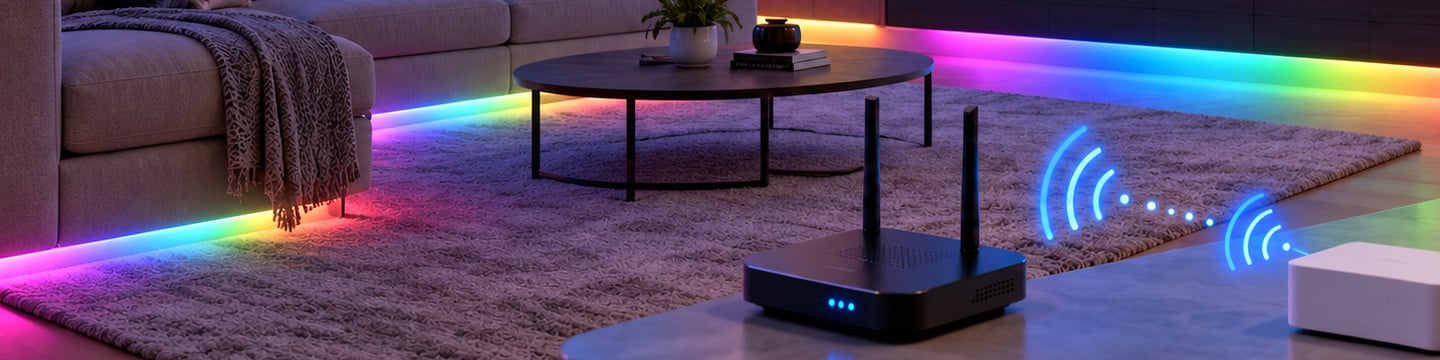
Controlling addressable LED strip lighting via WiFi controllers paired with Alexa voice control is the ultimate upgrade for modern home entertainment lighting.
SuperLightingLED™ WiFi Alexa LED controller Series connects your addressable LED strips to your home network, giving you control from your phone anywhere in the world and unlocking voice commands through assistants like Alexa and Google Home. This is the key difference from its siblings.
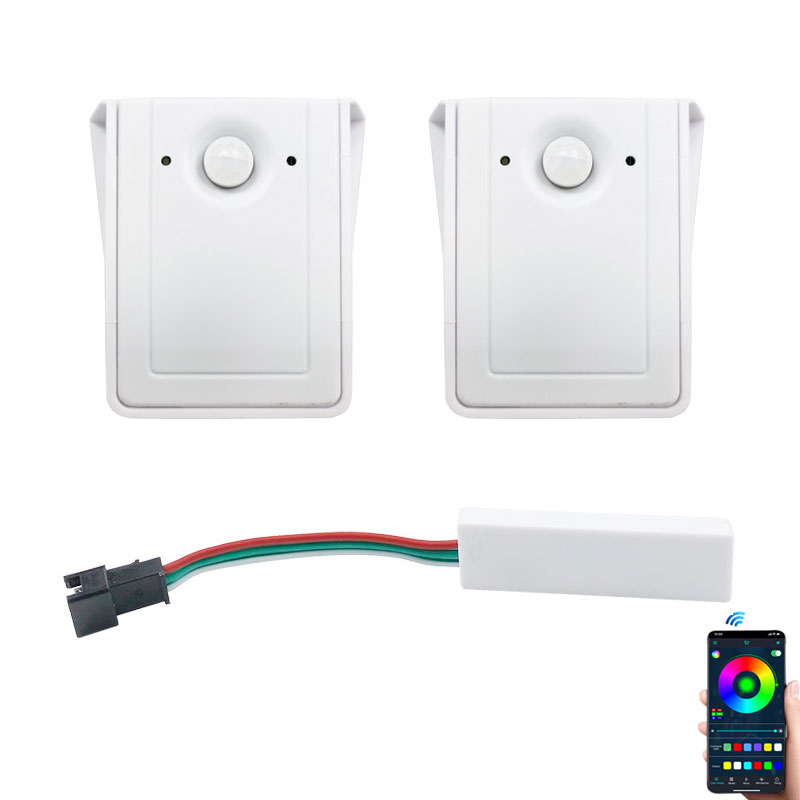
Beyond smart app and voice integration, these intelligent pixel controllers also support dynamic music synchronization, RF/IR remote controls, and motion-sensing capabilities for a fully automated lighting experience.
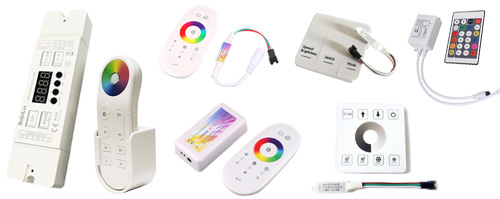
RF Pixel LED Controller
Using RF (Radio Frequency) or IR (Infrared) handheld remotes remains the most direct, convenient, and reliable way to manage dynamic lighting effects across addressable LED strips and outdoor pixel light fixtures. Operating via tactile pushbuttons or touch-sensitive color wheels, physical remotes deliver instant local control over pre-programmed lighting sequences without depending on smartphone apps or local network connectivity.
SuperLightingLED™ RF Pixel LED Controller Series offers flexible pairing options, available as complete controller-and-remote kits or standalone receiving units. This allows installers and end users to select the ideal wireless hand-held remote or wall-mounted touch panel for their specific layout. For everyday convenience, these remotes are powered by standard coin cell batteries (such as CR2032) or standard AA/AAA batteries, ensuring low power consumption and long battery life.
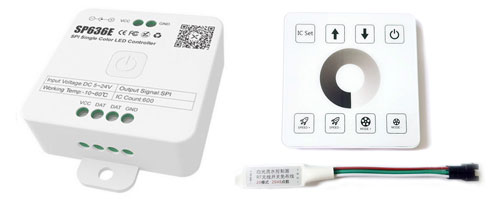
Running Water LED Strip Controller
The "Running Water" effect (also referred to as a chasing or flowing effect) describes a dynamic lighting pattern where a solid color or light segment smoothly travels along the addressable LED strip in a single direction, mimicking the natural movement of flowing water.
SuperLightingLED™ Running Water LED Strip Controller Units are purpose-built to make single-color light 'run' along a strip. This makes them the go-to choice for motion-activated stair lighting, pathway guidance, and architectural reveals where a simple, elegant flow is the goal.
These pixel LED controllers are designed specifically for 3-pin or 4-pin DAT/CLK addressable white LED strips using common ICs like the WS2811, SK6812, APA102, and TM1934. They provide pre-set 'running water' modes right out of the box, from light flowing from one end to the other, to meeting in the middle and expanding outwards.
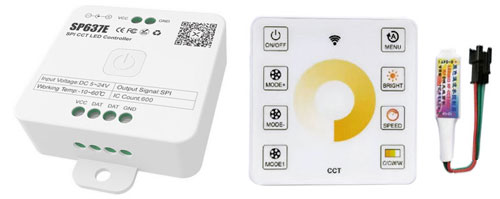
WWA Addressable CCT Controller
Addressable WWA (White + Warm White + Amber) and CCT (Tunable White) controllers are specifically engineered to drive digital IC pixel chips, transforming standard dual-color lighting into dynamic, segmented white-light experiences. These pixel-control CCT units enable independent color tuning, smooth running-water chasing, gradual sunrise/sunset fades, and localized natural light simulations along a single strip.
SuperLightingLED™ WWA Addressable CCT Controller Series is custom-designed for digital LED strips utilizing 2-channel white color lights, typically warm white 2700K and cool white 6500K, with SM16703, FW1903, SK6812, WS2818 ICs. We also offer special three-channel white addressable light strips like the TM1934 model and the UCS1903 model, which require you to use a pixel controller with three-channel white support.
To ensure flawless integration, please check your LED strip's pinout and IC specification. Before installation, verify whether your pixel strip features a 2-channel (two white lights, 2-in-1) or 3-channel (three white lights, 3-in-1) IC chip protocol to configure the correct channel sequence in your controller setup.
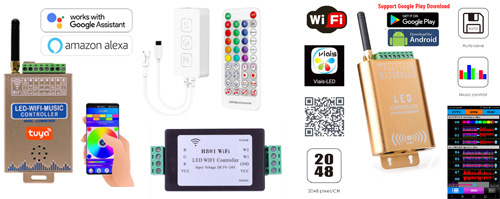
Addressable RGBW Controller
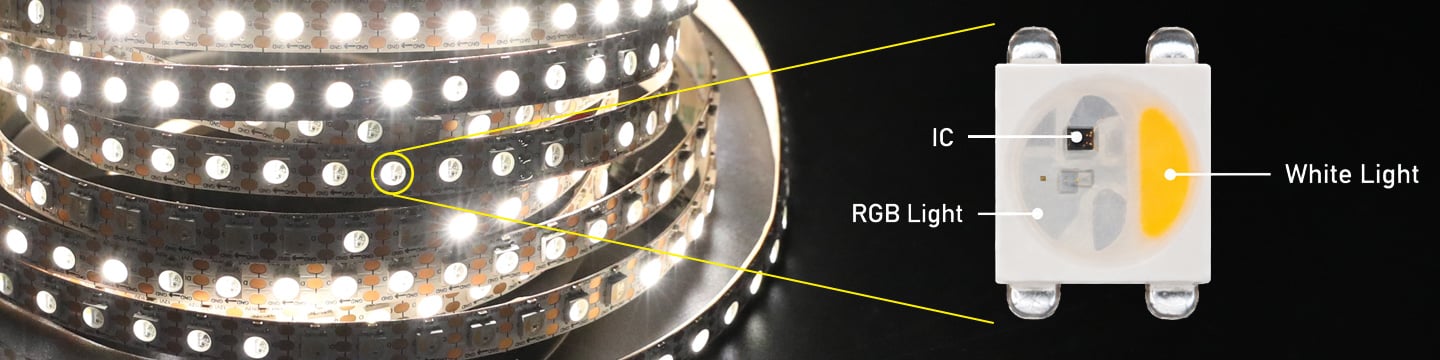
An addressable RGBW LED uses an IC to control four independent color channels: Red, Green, Blue, and White. The additional white channel is an important difference between addressable RGBW lighting and standard addressable RGB lighting, which normally uses only three color channels.
Because the IC protocol and channel data are different, a standard addressable RGB controller is not compatible with an addressable RGBW LED strip. If an RGB-only IC controller is connected to a 4-channel RGBW pixel strip, the controller may be unable to drive the strip correctly. Depending on the IC and protocol, the LEDs may not light at all, may display incorrect colors, or may respond unpredictably.
If your addressable LED strip or fixture uses a 4-channel RGBW IC such as SK6812 RGBW, SM16704, WS2814F, CS8812/WS2815, FW1834/TM1834, TM1824, UCS2904, choose a controller from SuperLightingLED™ Addressable RGBW Controller Series. (Please note: TM1812 and WS2814 use relatively specialized IC protocols, so controller compatibility should be confirmed before purchase.)
Addressable RGBCCT Controller
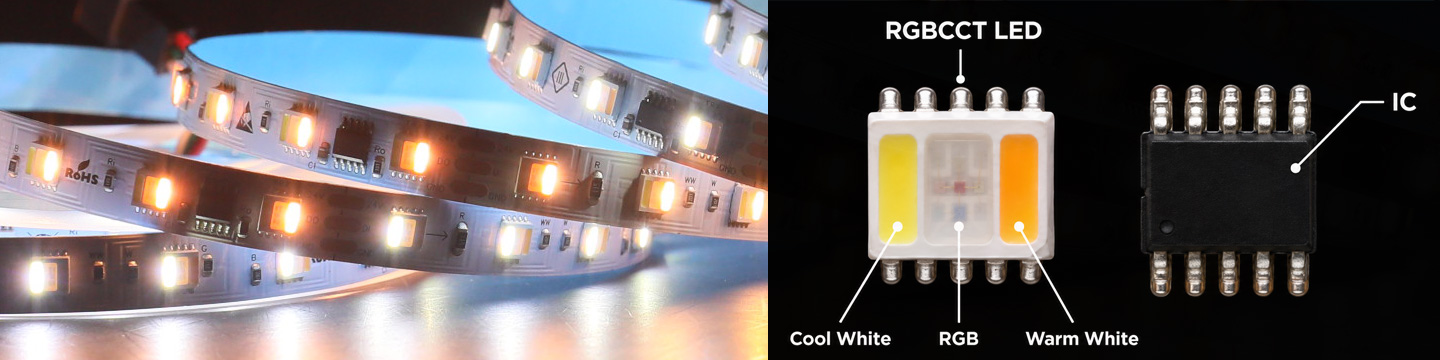
An addressable RGBCCT LED controller is designed to control digital RGBCCT lighting systems with five independent color channels: Red, Green, Blue, Warm White, and Cool White.
By controlling the five RGBCCT channels within each addressable pixel or segment, the controller can create dynamic color-chasing effects, gradients, animations, brightness changes, and adjustable white color temperatures from warm white to cool white.
SuperLightingLED™ Addressable RGBCCT Controllers are intended for 5-channel addressable RGBCCT lighting systems, including compatible WS2811-based RGB+CCT designs, WS2805 / FW1906 RGBCCT LED strips, and DMX RGBCCT lighting systems, depending on the controller model and supported communication protocol.
The latest WLED-compatible controllers can also support selected RGBCCT IC protocols, providing app- and web-based control for RGBCCT pixel lighting, subject to the controller hardware, firmware version, and supported chipset list.
Because different RGBCCT LED strips may use different IC protocols, signal structures, channel orders, and pixel configurations, controller compatibility should always be checked before installation.
LED Artnet DMX Controller
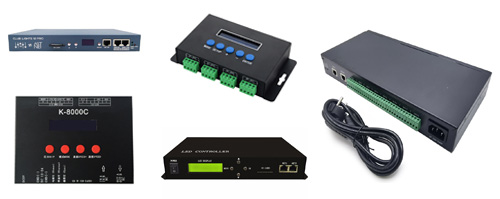
An Art-Net DMX LED controller is a professional network-based lighting controller that sends large amounts of DMX or pixel data over a standard Ethernet network. It acts as the bridge between lighting-control software such as MADRIX, Resolume, MadMapper, or other Art-Net-compatible platforms and your DMX512 fixtures or SPI/TTL addressable LED lights.
Compared with a conventional DMX512 connection, which is limited to 512 channels per universe, Art-Net transports multiple DMX universes over Ethernet. This makes it much easier to build lighting systems containing thousands of addressable pixels, multiple LED zones, matrix displays, building outlines, stage fixtures, or other large-scale installations.
Programmable LED Controller
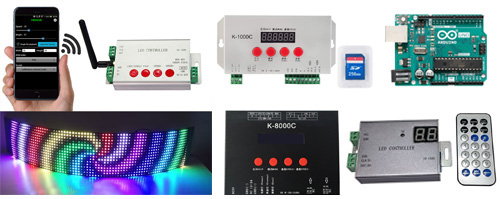
A programmable LED controller is designed for users who need more than preset colors and built-in lighting effects for addressable LED strips and digital LED fixtures. Its main advantage is the ability to create, edit, save, and run custom lighting programs, giving you greater control over pixel animations, color sequences, effect speed, timing, brightness, patterns, transitions, and playback order.
Compared with standard smart pixel controllers, which mainly focus on convenient control through a mobile app, WiFi, Bluetooth, or RF remote, programmable pixel LED controllers place more emphasis on custom effect creation and independent program playback. They are ideal for projects where the lighting effect needs to be designed specifically for an installation rather than selected from a fixed list of preset effects.
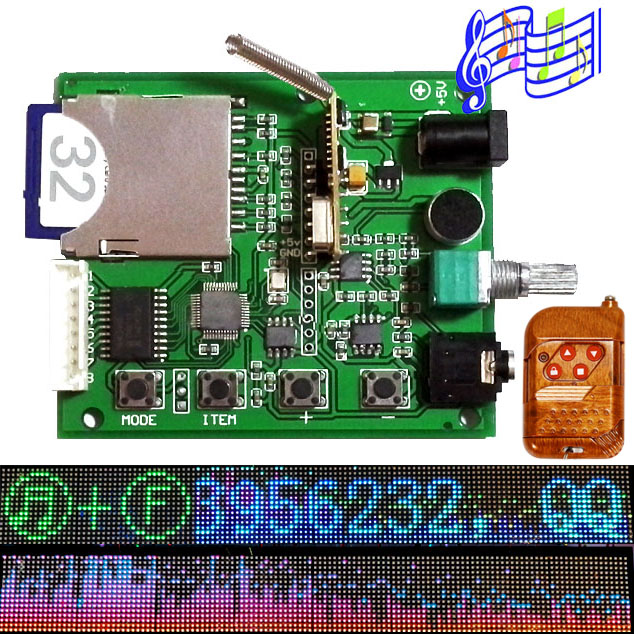
Many programmable controllers include built-in buttons, an LCD or digital display, and an SD card or memory storage, allowing programs created with compatible PC software to be downloaded to the controller and played offline without keeping a computer or smartphone connected. Depending on the model, users can adjust playback speed, brightness, program sequence, repeat mode, timing, and other parameters directly from the controller.
For users who prefer a more flexible and open control platform, selected WLED-compatible controllers provide another way to create advanced addressable LED lighting systems.
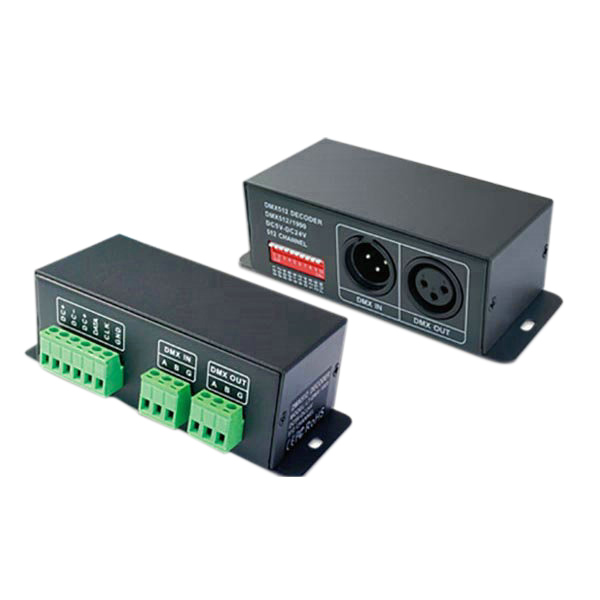
DMX512-SPI LED Decoder
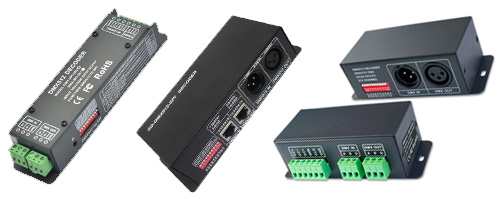
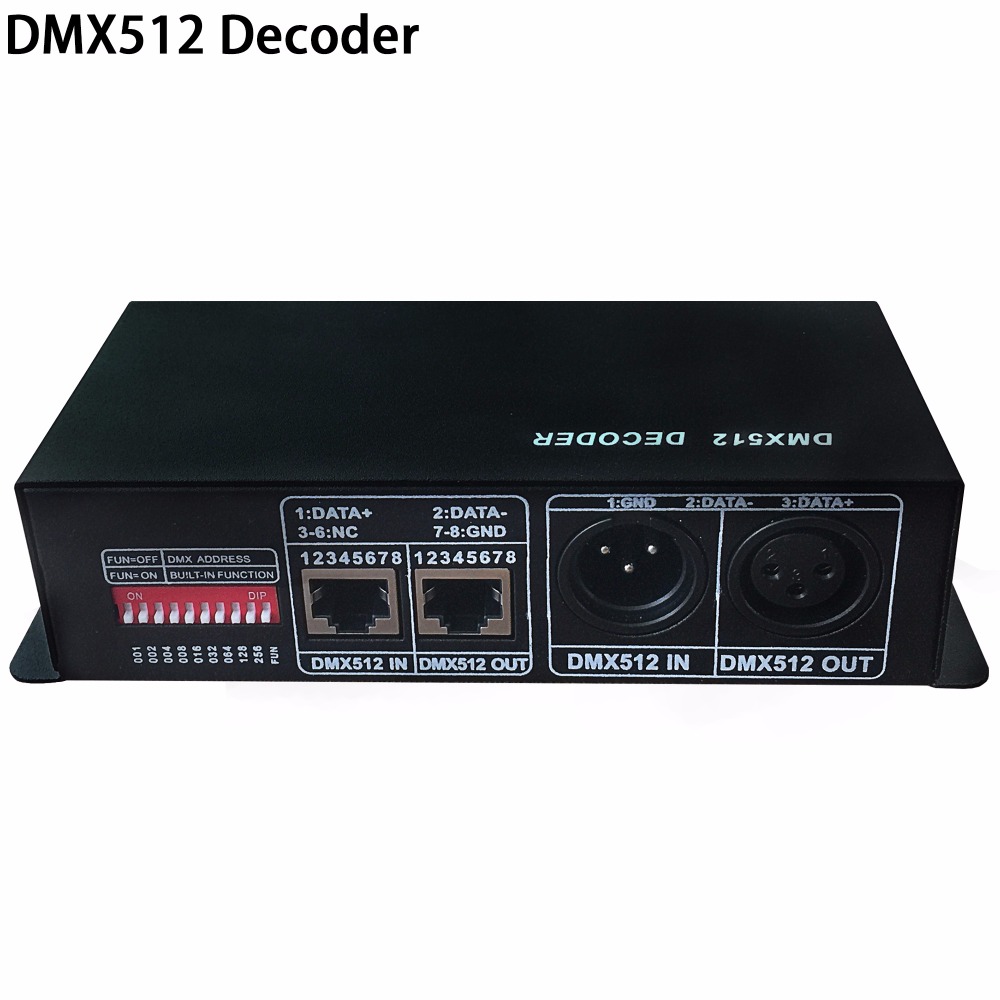
Can SPI/TTL addressable LED strip lights and fixtures be controlled by a standard DMX system? Yes! While SPI and DMX use different communication protocols, the DMX512-SPI LED Decoder acts as the ultimate bridge. It converts universal DMX512/1990 digital signals into SPI (Data or Data + Clock) digital signals, allowing professional DMX lighting consoles or masters to seamlessly control addressable SPI LED strips (such as WS2811, WS2812B, UCS1903, SK6812, etc.).
Through these decoders, your DMX console gains pixel-level precision, allowing you to control every single channel or pixel of the LED fixture to achieve smooth 0–100% dimming, dynamic color chasing, fluent flowing, and complex custom lighting patterns.
Music LED Controller
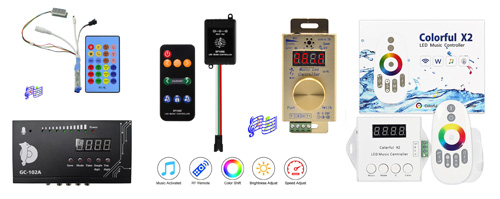
A Music LED Controller does one job that other smart controllers can't: it makes your lights react to sound in real-time. Our Pixel LED Music Controllers have a built-in microphone or an audio line-in to analyze the rhythm, bass, and melody of your music. This turns your addressable LED strips into a dynamic light show, perfect for entertainment rooms, bars, or gaming setups. Forget simple color cycling; these controllers create genuinely responsive music led lights.
SuperLightingLED offers over 40 different music pixel controller models, from simple IR remote units to sophisticated multi-channel WiFi and Bluetooth app-controlled devices. They're built to drive the most popular addressable LED strips, including WS2812B, WS2811, and SK6812, operating on the common DC5V, 12V, or 24V rails. Whether you need a simple plug-and-play solution or a multi-output controller for a complex installation, we have a unit that will get your digital LED strip lights to sync with music perfectly.
Mini Controller Series
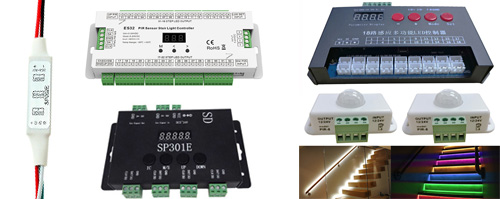
Our Mini Controller series features small size, low price, rich functions, easy installation and easy operation without complicated setup process, allowing for users to get started quickly.
These Mini Controllers can be operated by their own buttons or by compatible wireless remotes and Bluetooth/WiFi APPs. You can realize the control of addressable LED lights through simple settings, including light color, brightness, mode and other effects, which is convenient to carry out DIY, home decoration and other application scenarios.
Best-selling Addressable Dream Color Controllers
161–180 of 202 products
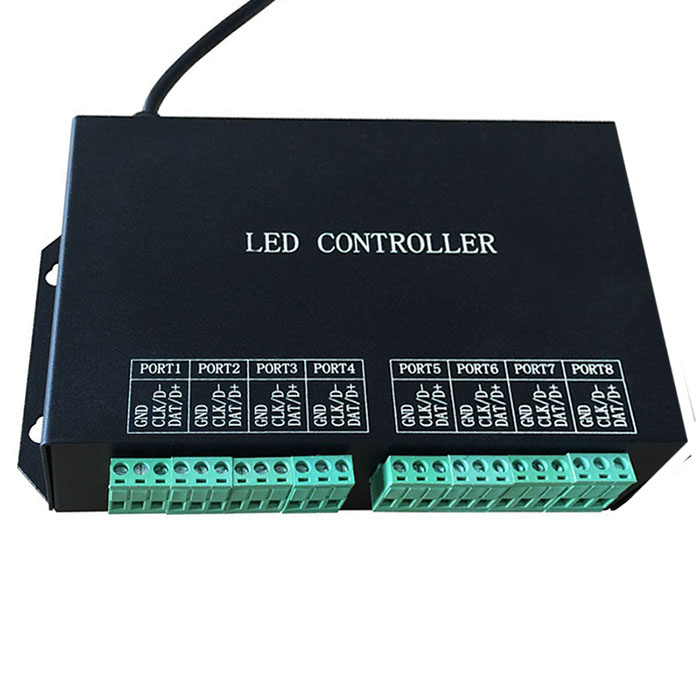
AC85-245V Full Color Programmable Controller, WS2811,WS2812 controller,8 ports drive 8192...
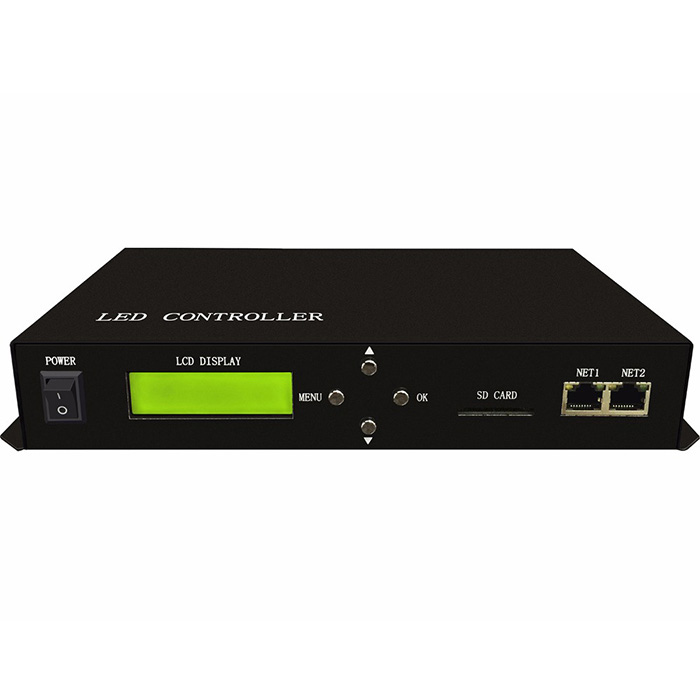
AC 220V RGB LED controller,full color programmable,work online or offline,drive 170000...
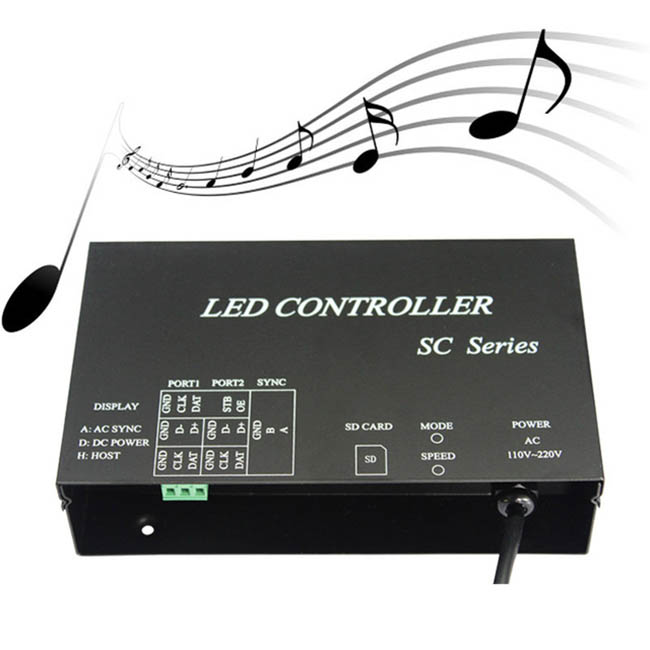
AC220V LED music controller,full color programmable,play effects with music,support...
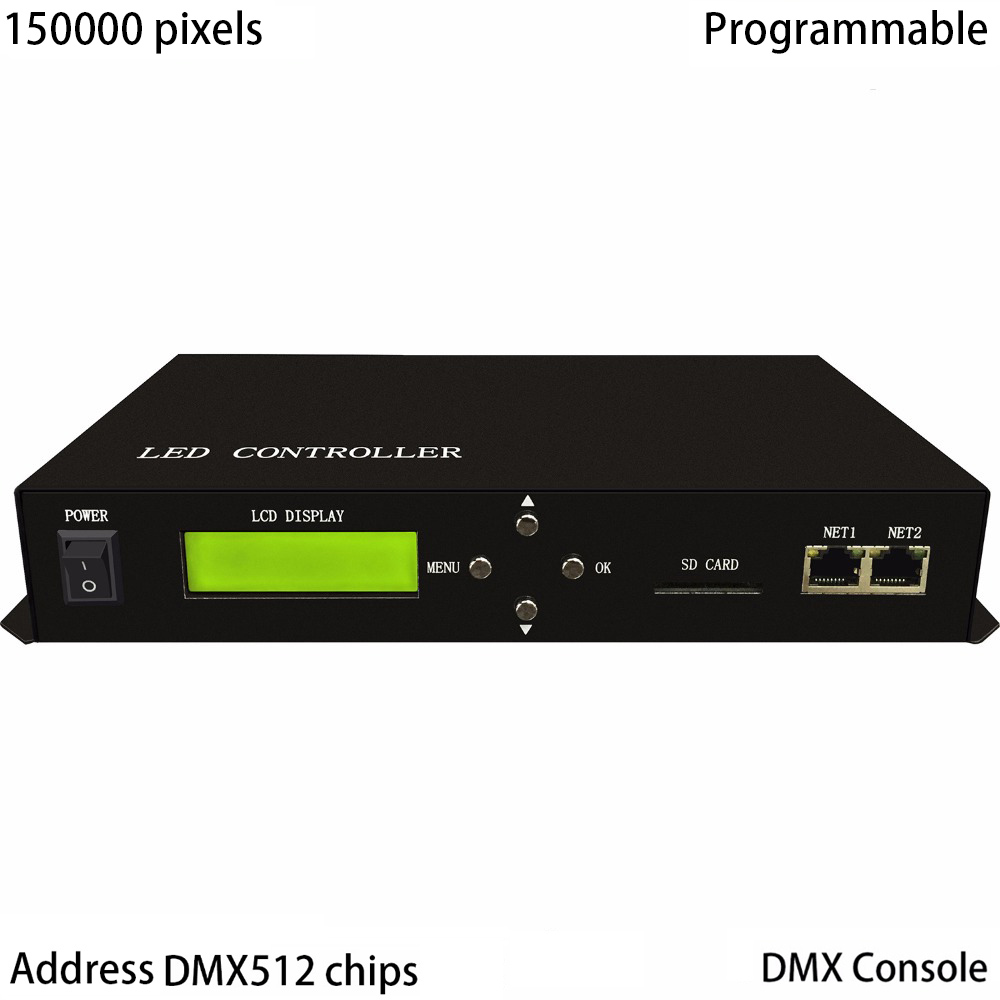
AC86-265V 10W full color LED master controller,employ Ethernet protocol,drive max 150000...
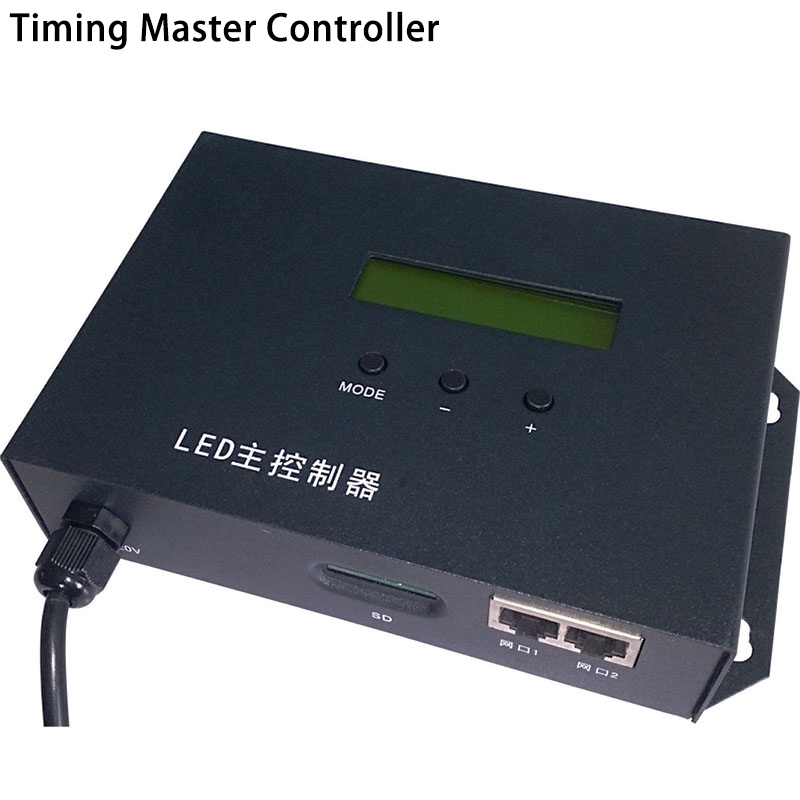
AC220V LED RGB Controler full color timing master controller play effects by schedule,support...
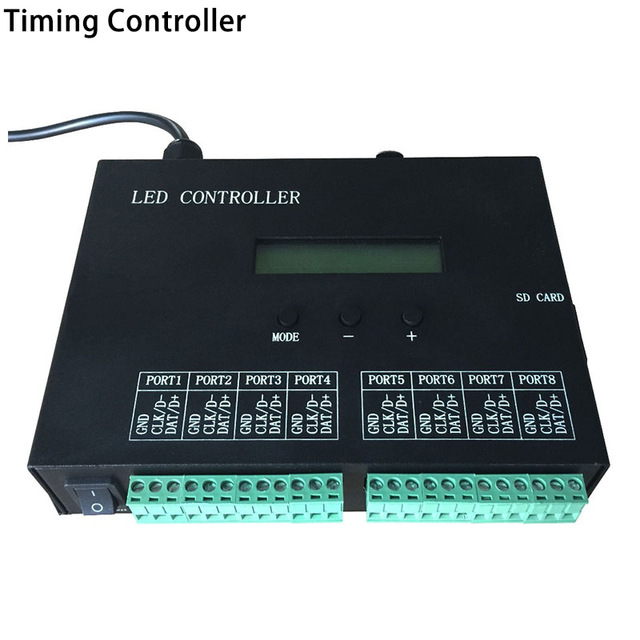
RGB led timetable controller,play effects by schedule,control max 8192 pixels,support WS2812...
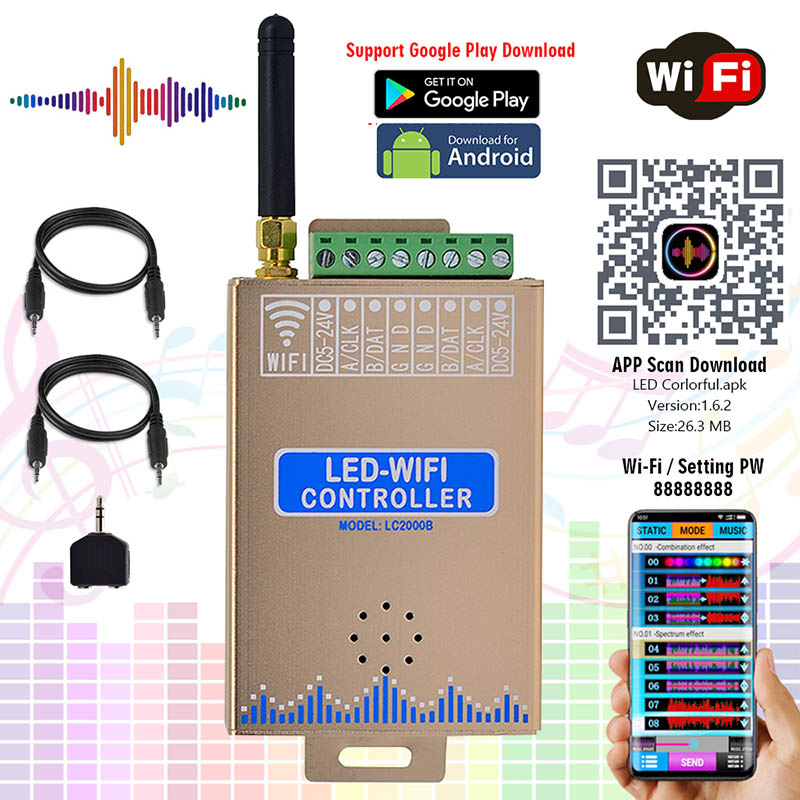
LC-2000B SPI LED WIFI Music Controller, APP Support Input Content
 (33)
(33)
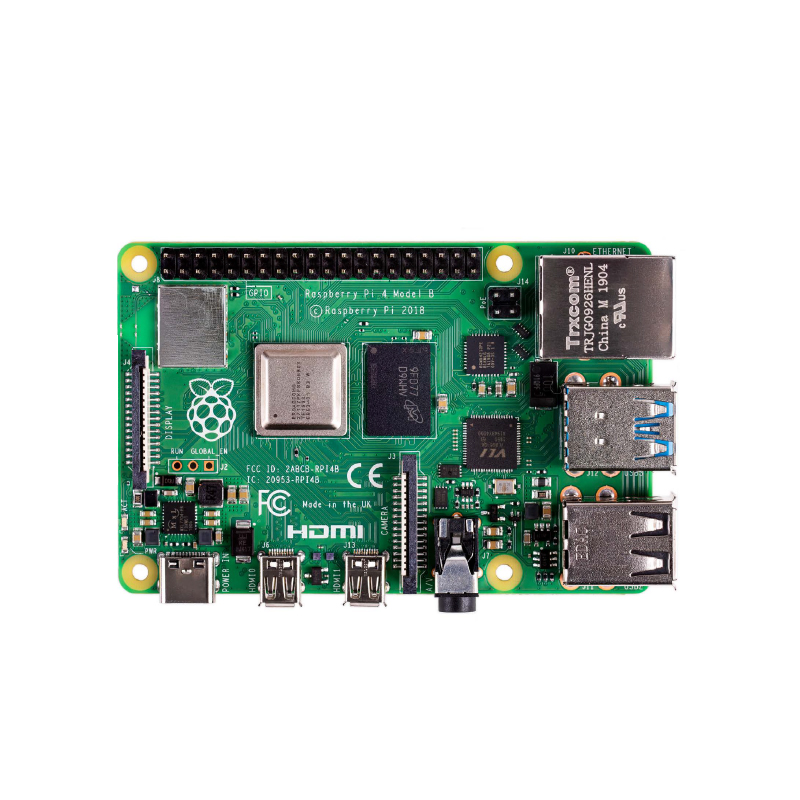
Raspberry Pi 4B 2GB Control Board Basic Package
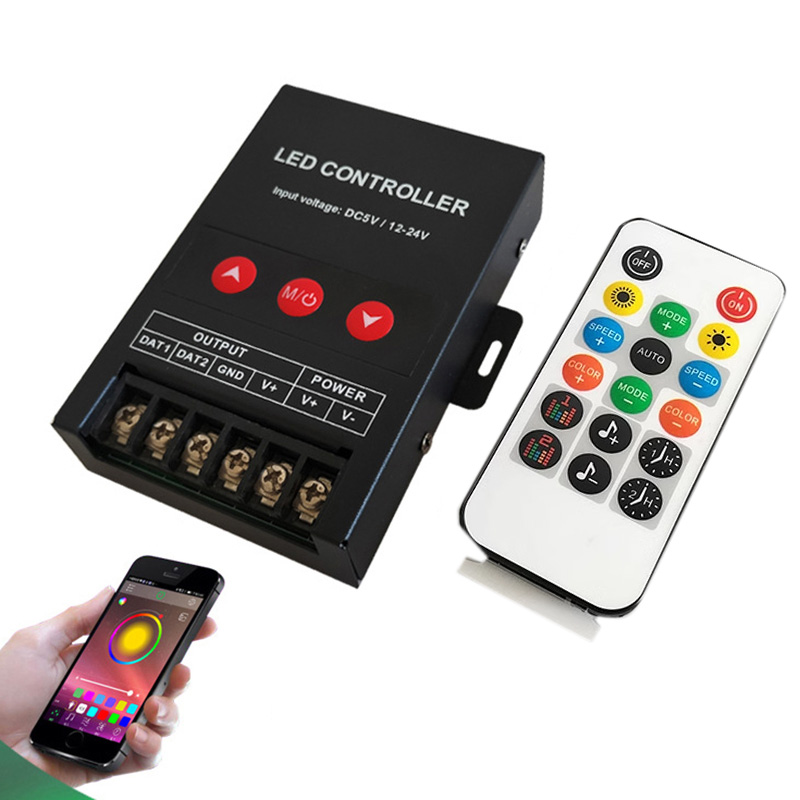
Bluetooth Addressable LED Strips High Power LED Music Controller
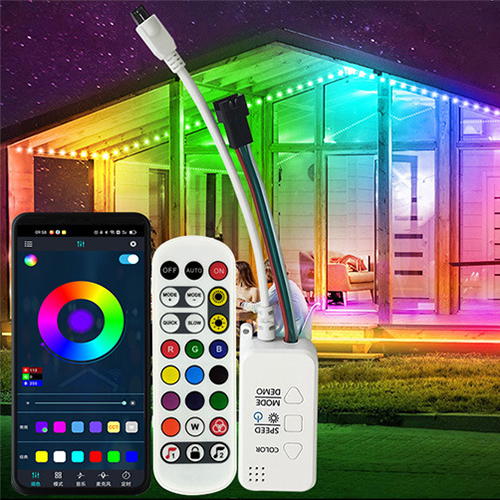
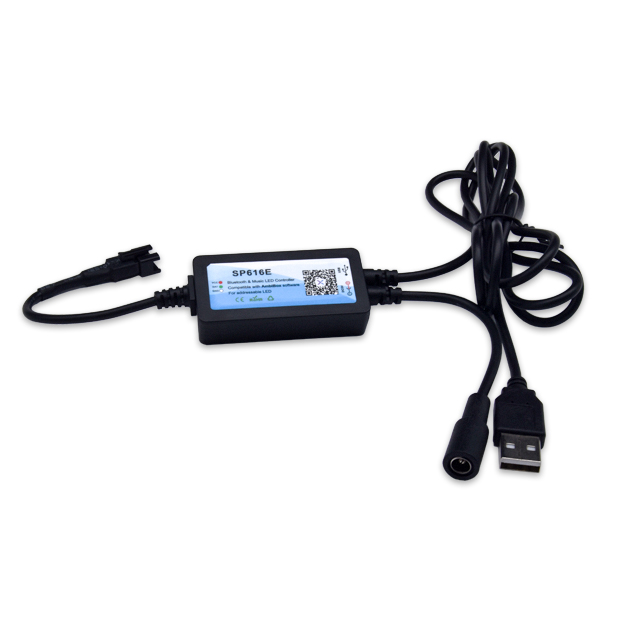
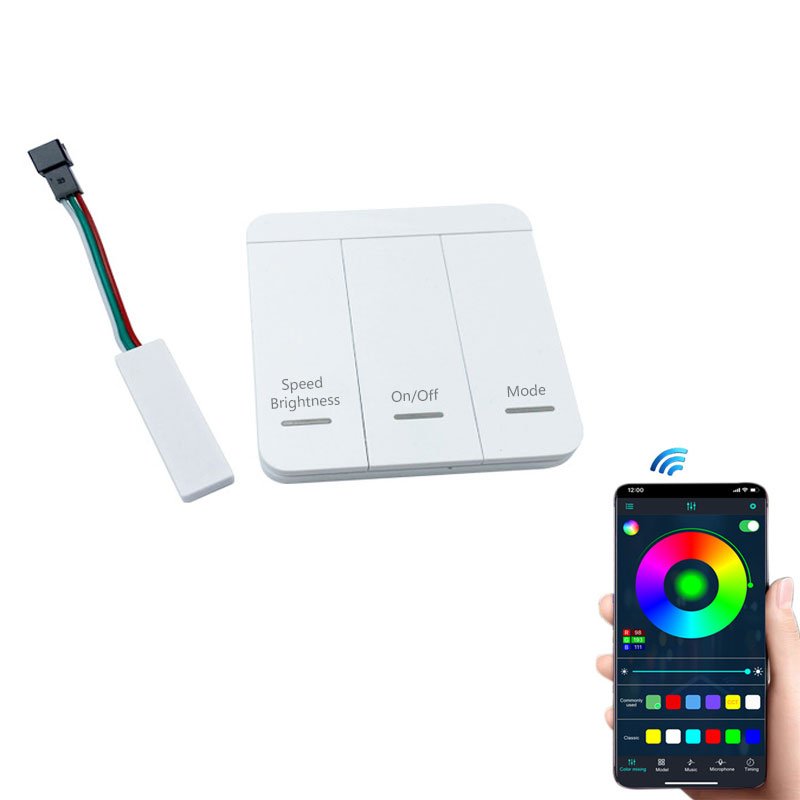
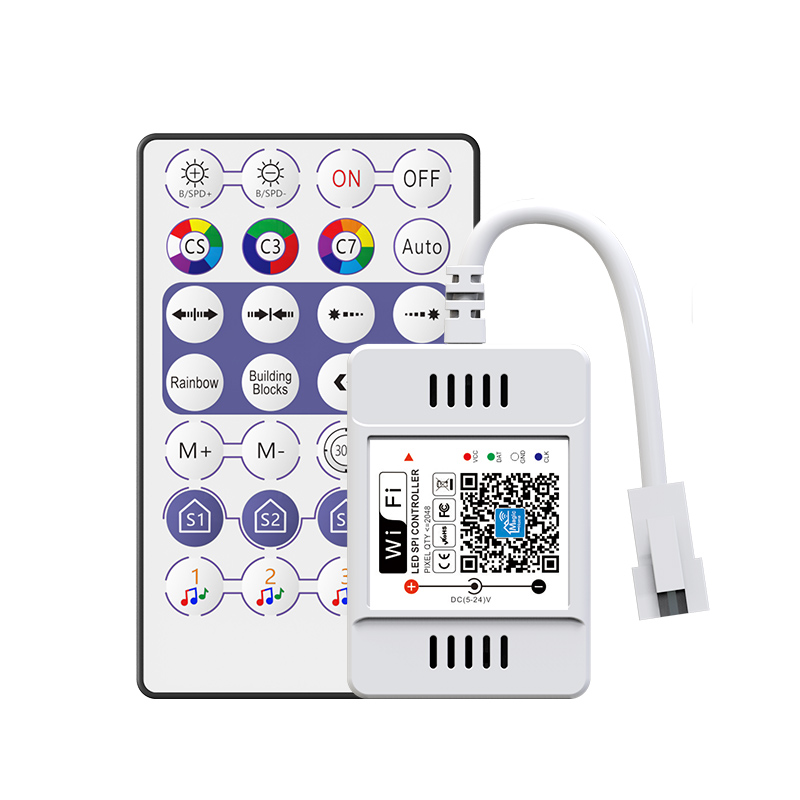
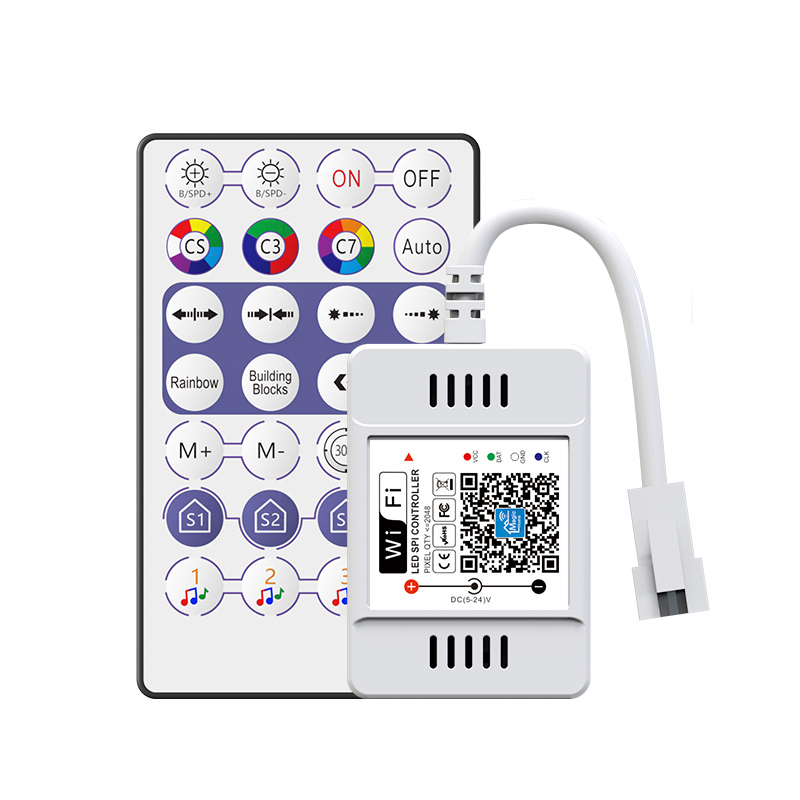
DC5-24V Mini WiFi Music Timer Pixel SPI Smart LED Controller For Dream Color Addressable LED Strips...
(1)
Magic Home Pro APP DC12-24V WiFi Addressable LED Pixel Remote Smart Controller (Replace by...
Addressable Controllers: Technical Details and Installation Tips
Once you've chosen a control method, the technical details matter. Matching your controller to the specific type of addressable strip and planning your power and data lines correctly are the keys to a flicker-free, reliable installation that performs exactly as you designed it.
Does My Controller Need to Match My IC Strip Type?
Yes, absolutely. The 'IC' in RGBIC stands for 'Integrated Circuit,' but not all ICs are the same. While a basic RGBIC controller works for simple 3-pin digital RGB LED strips, it won't know what to do with the extra data channels on more advanced strips. Using the wrong controller can result in incorrect colors or non-functioning channels.
- Addressable RGBW: These IC LED strips add a dedicated white chip. You need a controller specifically designed for 4-channel-light pixel control to manage the white channel independently from the RGB colors.
- Addressable RGB+CCT: These are 5-channel light strips with RGB plus dedicated warm white and cool white chips. To access the full tunable white range, you must use one of our addressable RGBCCT controllers.
- Addressable WWA: A 2-channel or 3-channel pixel light strip with warm white, cool white, and amber chips for creating a rich spectrum of white light. These require a dedicated addressable CCT controller.
Why Protocols Matter: SPI vs. DMX
The protocol is the language your controller uses to send instructions. While most of our controllers output the native SPI signal that pixel ICs understand, we also provide DMX units that act as translators for larger, more professional systems.
SPI (Serial Peripheral Interface)
This is the direct communication method between the microcontroller and the LED chips. It's fast and effective for most projects, especially when the controller is located close to the strip (typically within 15 feet / 5 meters). Most of our app-controlled, RF, and mini controllers are native SPI controllers.
DMX512 & Art-Net
DMX is a robust, differential signaling protocol that's been the standard in theatrical and architectural lighting for decades because of its high resistance to interference over long distances (up to 1000ft / 300m). An LED Artnet DMX controller or decoder takes DMX commands from a lighting console or software and translates them into the SPI data the LED strips need. This is how you integrate pixel strips into a professional-grade lighting design.
Addressable Dream Color Controllers: What You Need to Know About Addressable LED Strips
How to choose the best addressable led strip?
Frequently Asked Questions About Addressable Dream Color Controllers
Got a question about wiring, compatibility, or how many pixels you can run? I've answered thousands of these over the years. Here are the most common ones.
They're just different languages for talking to lights. SPI is the most direct and common for single-strip projects; the controller sends data straight to the strip's ICs. DMX is the bulletproof industry standard for stages and architecture, using decoders to translate the DMX signal to SPI for the strips. Art-Net is just DMX over a network (Ethernet/WiFi), which lets you control a huge number of universes and pixels from a computer. For home or small commercial jobs, SPI is usually all you need. For a theater or building facade, you'll be using DMX or Art-Net.
This is the most critical spec. An addressable LED controller's limit depends on its memory and processing power. A simple RF remote controller might only handle 300 to 1000 pixels. More powerful WiFi or programmable controllers often support 2048 pixels, sometimes spread across multiple outputs. For massive installations, our Art-Net controllers can manage thousands of pixels per port across many DMX universes. Always check the 'Max Pixels' or 'IC Control Qty' number on the product page. Overloading it will cause lag, flickering, or just won't work at all.
In the IC controller's app or configuration software, there's a setting for 'RGB Order' or 'Color Sequence'. Different strip manufacturers wire the Red, Green, and Blue channels in a different order (RGB, GRB, BGR, etc.). Your controller is sending the signal for 'Red', but the strip is wired to interpret that signal as 'Green'. Just cycle through the RGB order settings until the colors on your remote or app match the strip's output. It's a five-second fix for a very common problem.
It depends entirely on the IC chip your strip uses. Three-wire strips like the popular WS2811, WS2812B, and SK6812 use just Power, Ground, and a single Data line. They don't have a clock wire. Four-wire strips like the APA102, SK9822, or WS2801 require a separate Clock line (sometimes labeled CI or CLK) in addition to the Data line (DI or DAT). The clock line allows for much faster data transfer speeds, which means higher refresh rates and less flicker, especially in video applications. If your strip has a clock pad, you must use a controller with a clock output.
No, you'll need a specific controller that knows how to handle that fourth (White) channel. A standard RGBIC or 'Dream Color' controller only knows how to send data for Red, Green, and Blue. If you connect it to an RGBW strip, you'll get strange colors and you won't be able to control the white channel independently. You need one of our dedicated addressable RGBW controllers that has settings for the specific IC type (like SK6812-RGBW) to address all four colors correctly.
For someone just starting out, I'd recommend a controller that uses Bluetooth and a simple app, like our SP107E, SP530E or similar models. They give you a great range of dynamic effects and music sync without the complexity of DMX or programmable software.
Yes, it absolutely matters. While many of these chips use a similar protocol, the internal timing and data structure can be slightly different. Selecting the wrong IC type in the app is a common reason for flickering, incorrect colors, or the strip not responding at all. Your strip's product page or the text printed on the flexible PCB itself will tell you exactly which chip it uses. Always match this setting in the app to the hardware you're using for stable, predictable results.
Usually, nothing bad happens—it's just inefficient. The controller will send out data for, say, 300 pixels, but if only 150 are connected, the extra data just goes nowhere. However, on some controllers and with some effects, this can cause animations to run incorrectly because the controller thinks the 'end' of the strip is much further away. It's always best practice to set the pixel count in the software to exactly match the number of pixels on your physical strip. It ensures effects scale properly and you get the best possible frame rate.
The best way is to use WiFi-based controllers. You can install a separate addressable WiFi controller for each strip or zone. Then, using an app like Tuya Smart Life or MiBoxer, you can group these controllers together. This lets you run the same scene across all rooms simultaneously, or control each room individually, all from a single app on your phone. For more complex commercial jobs, you'd use a multi-zone Art-Net or DMX system that can send different data to dozens of controllers from one central computer.