
DC5V MW Switching Power Supply
17 productsIf you have already decided that your 5V LED project needs a hardwired, high-current, professional power supply, the next question is which Mean Well 5V switching power supply is right for you.
SuperLightingLED offers a selection of Mean Well 5V switching power supplies from 35W / 7A to 600W / 120A, covering compact installations as well as high-current professional LED systems. Available series include LRS, UHP, RSP, and NEL, allowing you to select the balance of size, power, efficiency, cooling method, and project requirements that best fits your installation.
Hardwired 5V Power for Professional LED Systems
These Mean Well 5V switching power supplies are designed for hardwired installations, rather than plug-and-play household use. The typical system is: AC Power → Mean Well 5V Switching Power Supply → 5V LED Strip / Pixel System. Indoor use only.
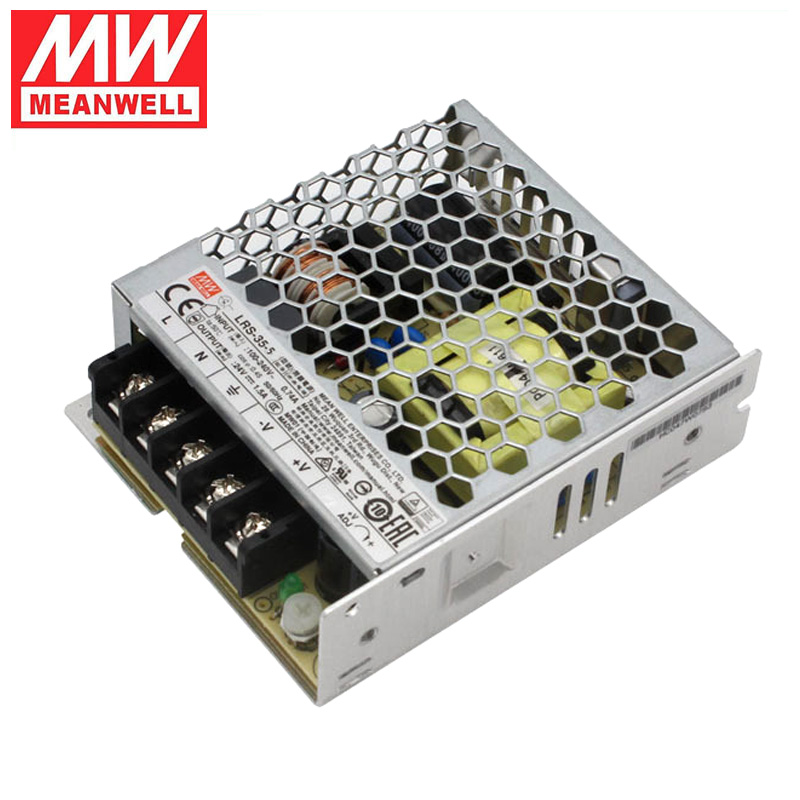
Meanwell LRS-35-5 5V 35W 7A Switching LED Power Supply
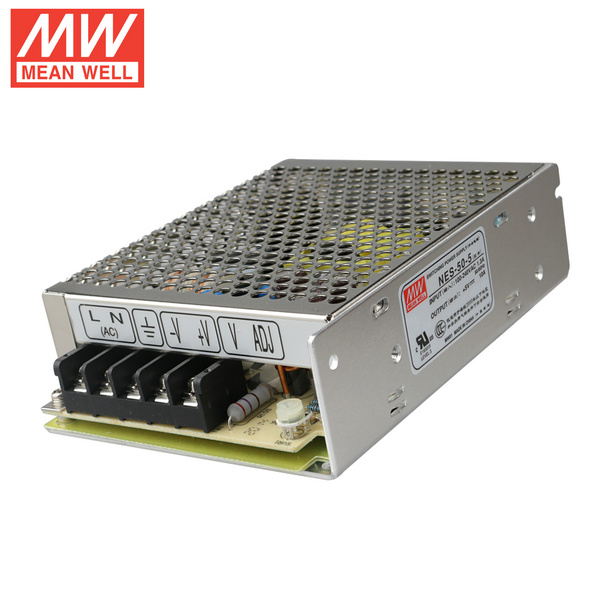
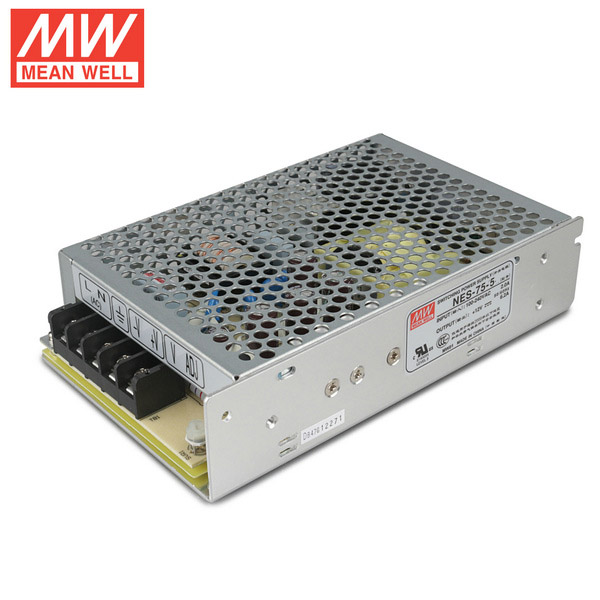
Mean Well LRS-75-5 5V 75W Power Supply - UL Certified LED Driver
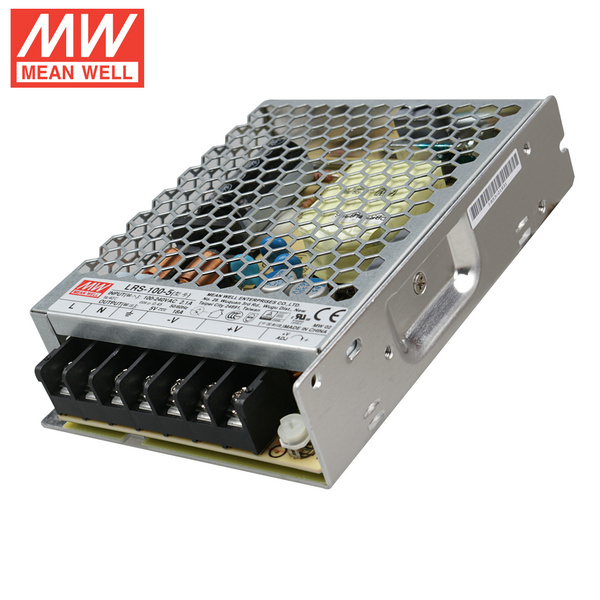
Mean Well LRS-100-5 5V 100W Power Supply - UL Certified 20A AC/DC LED Driver
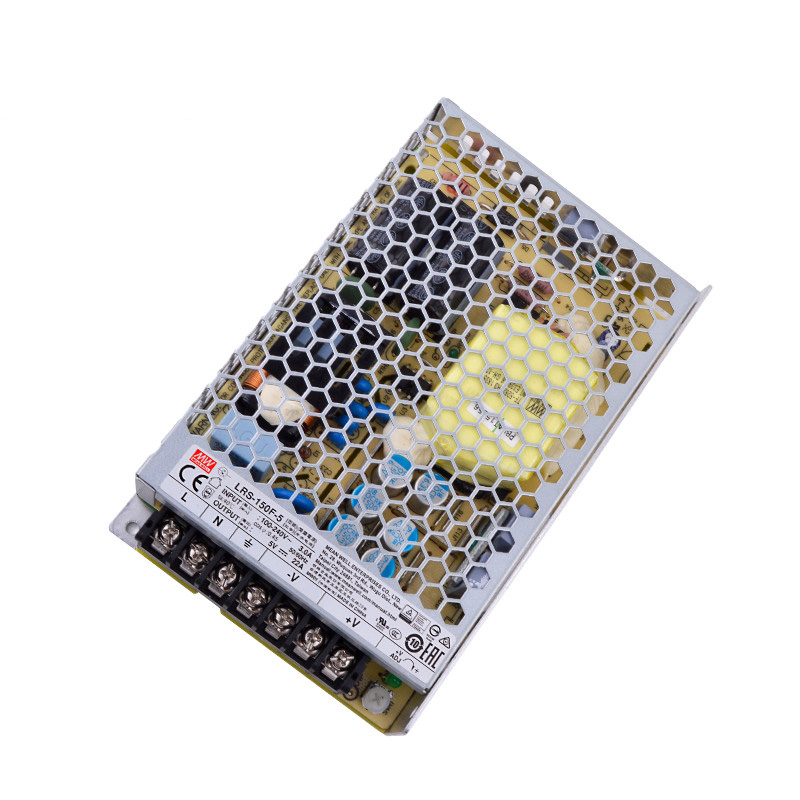
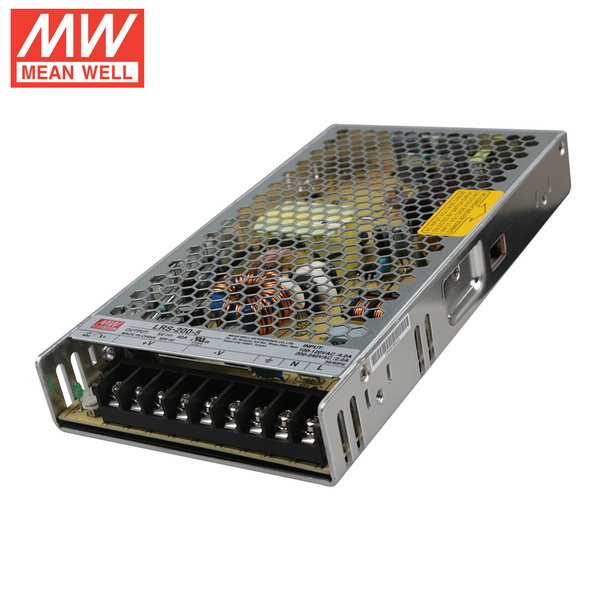
LRS-200-5 DC5V 200Watt 40A Mean Well LED Power Supply
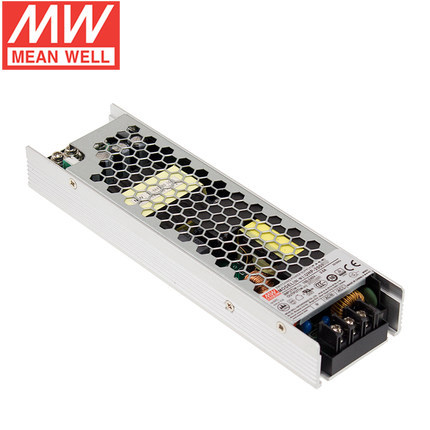
Mean Well UHP-200-5: 5V 200W UL LED Power Supply with PFC
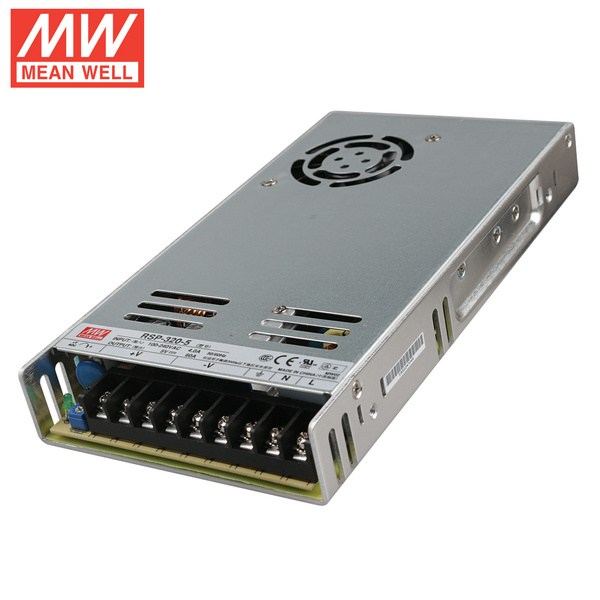
Mean Well RSP-320-5 5V 320W 64A Power Supply - UL Certified for LED Strips
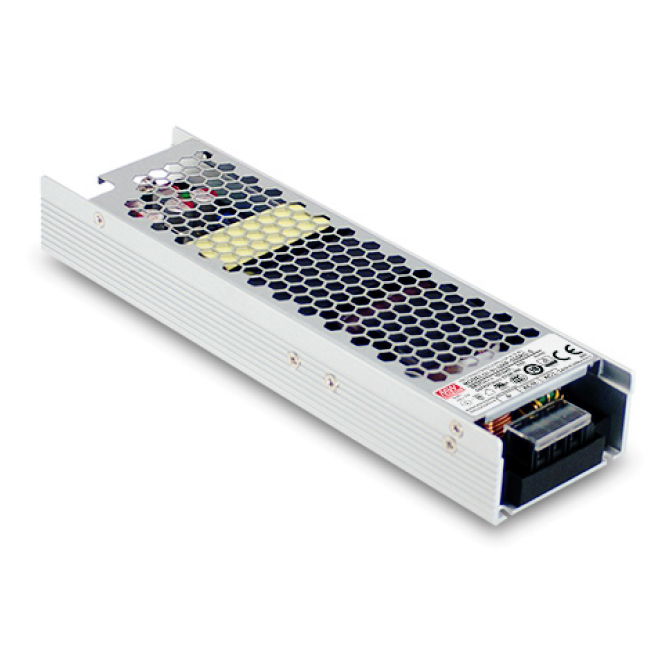
UL-Listed 350W 5V LED Power Supply | Slim PFC Design
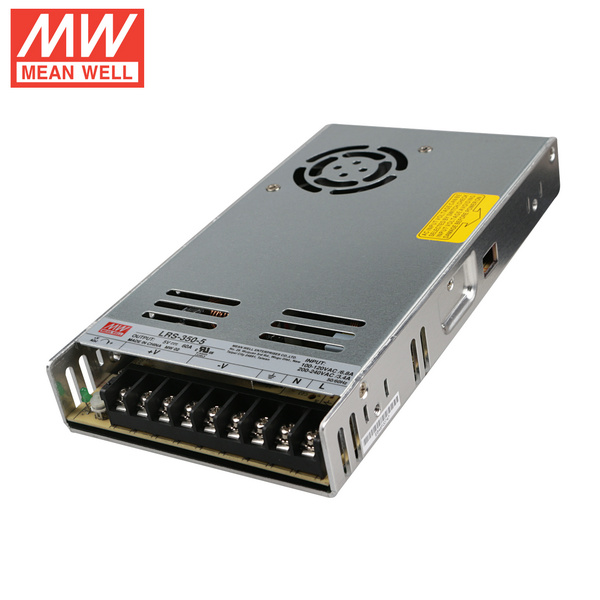
Mean Well LRS-350-5 DC5V 350W Power Supply - UL Certified for LED Strips
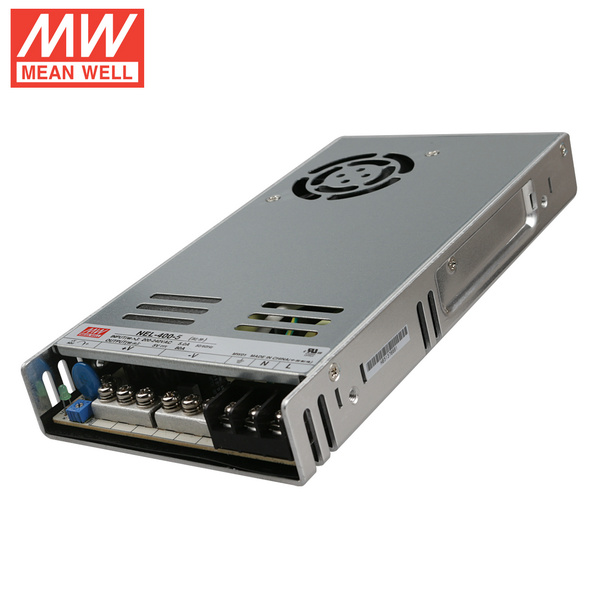
Mean Well NEL-400-5 5V 400W UL Power Supply for LED Strip Lights
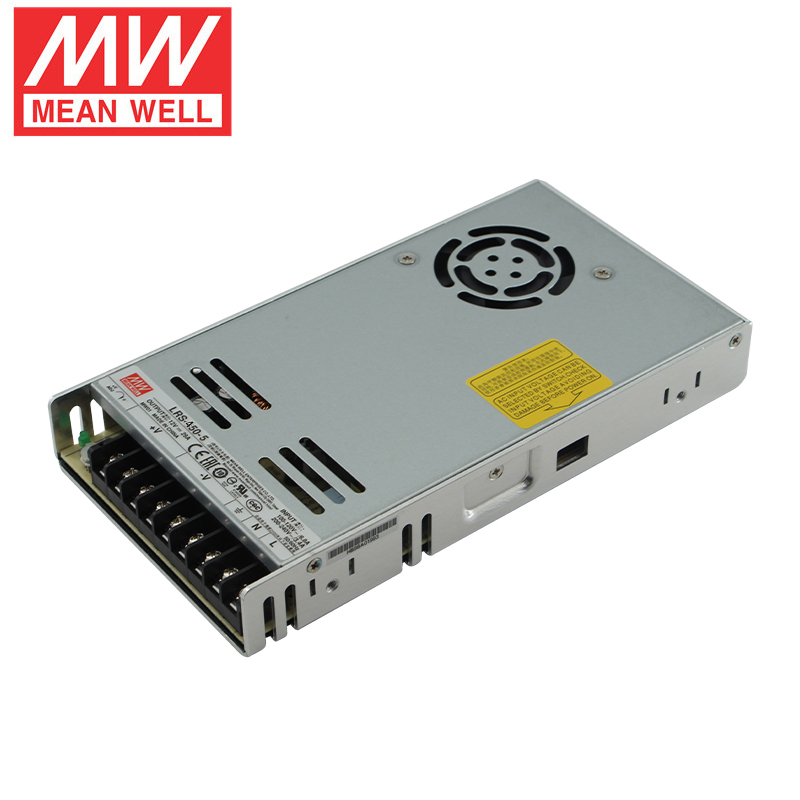
Meanwell LRS-450-5 Power Supply: 5V, 450W, Fan-Cooled & Efficient
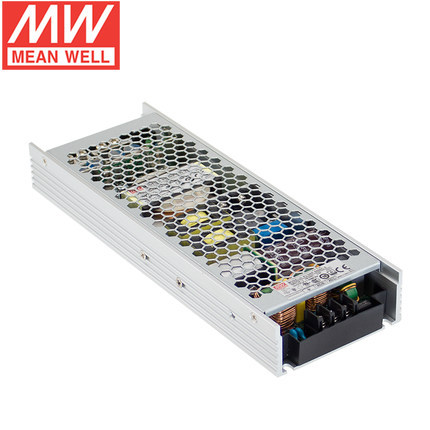
Mean Well UHP-500-5V LED Power Supply | 500W Slim, UL Certified
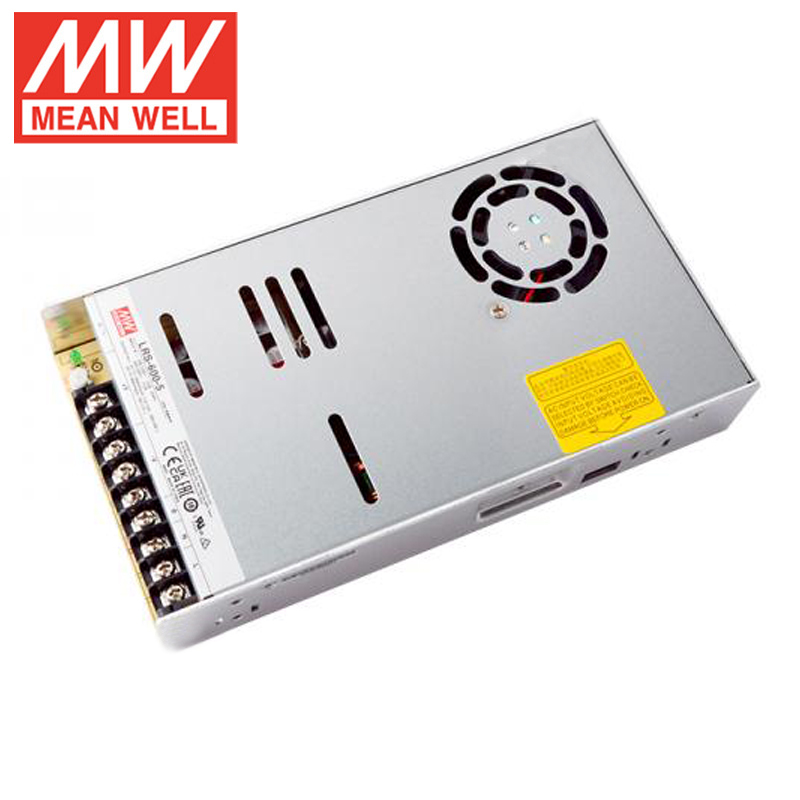
Meanwell LRS-600-5 5V LED Power Supply | UL Listed AC/DC Transformer
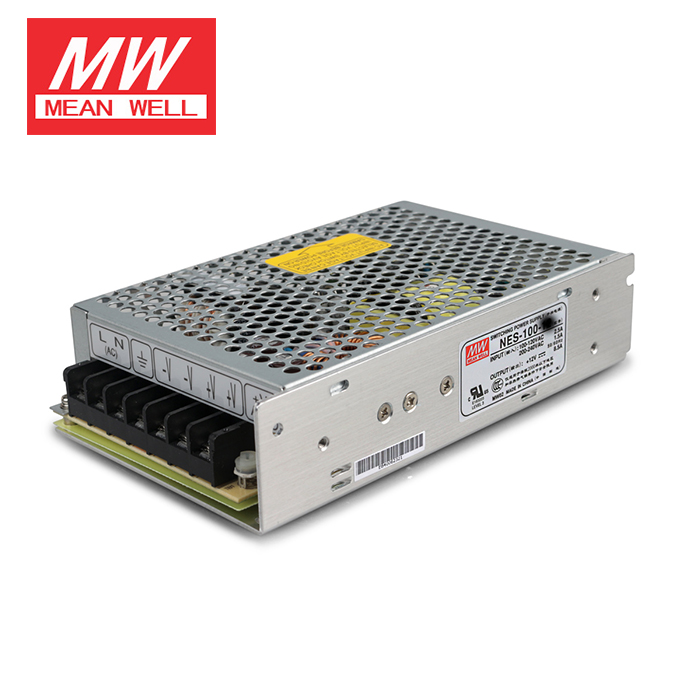
Mean Well LRS-100-5 5V 100W 20A UL Power Supply for LED Strip Lights
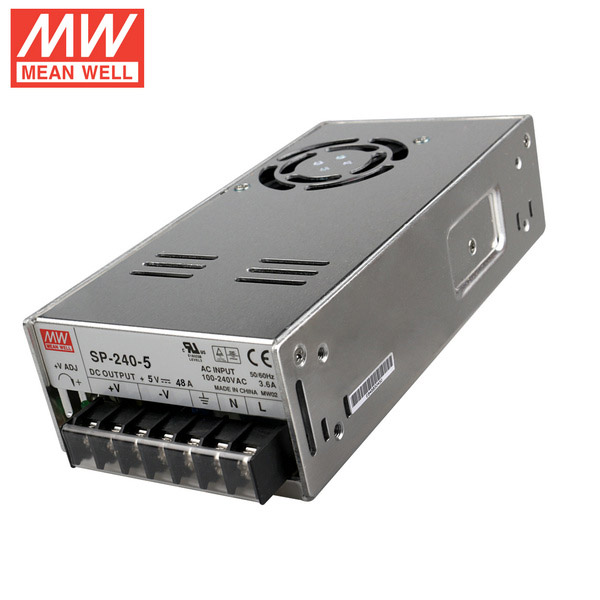
Mean Well RSP-240-5 240W 5V LED Power Supply | UL Certified, PFC
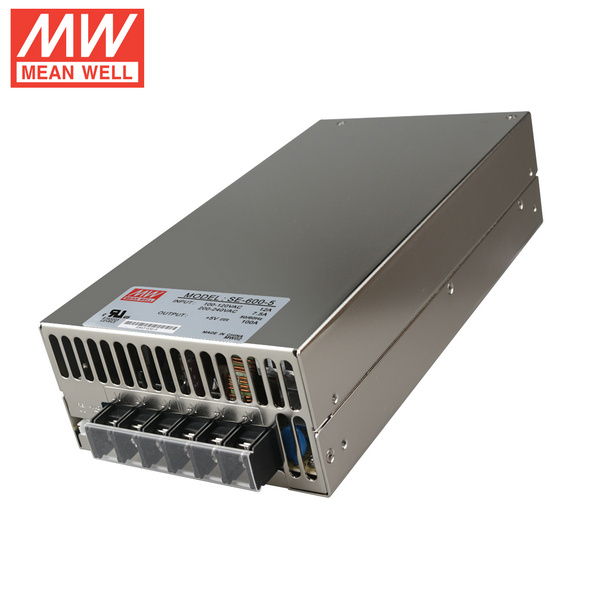
Mean Well SE-600-5 5V 600W 120A Power Supply - UL Certified LED Driver
Which Mean Well 5V Series Should You Choose?
The different Mean Well series are not simply different versions of the same power supply. They are designed around different priorities such as cost, form factor, power capacity, efficiency, power factor correction, cooling, and installation requirements.
LRS Series — The Economical General-Purpose Choice
The LRS series is one of the most practical choices when you need a reliable 5V enclosed switching power supply without paying for features that your project does not require.
Mean Well describes the LRS series as its more economical, non-PFC option, with an ultra-compact 1U low-profile design, 35W–600W power range across the family, 5G vibration resistance, operation up to 70°C, and low no-load power consumption. The 5V versions range from compact models such as LRS-35-5 through higher-power options including LRS-350-5 and LRS-600-5, depending on the model.
Choose the LRS 5V series when your priority is:
- A cost-effective professional power supply
- Compact installation dimensions
- General indoor LED strip or pixel applications
- Medium- to high-power 5V systems
- A straightforward AC-to-DC solution without PFC requirements
UHP Series — High Power in a Low-Profile Design
When installation space becomes more important while the required power continues to increase, the UHP series becomes a stronger candidate.
Mean Well's UHP family uses a low-profile, fanless design and conduction cooling rather than relying on a conventional cooling fan. Available UHP models extend into higher power levels, making the series useful for demanding installations where both high output capacity and compact height are important.
For 5V LED applications, consider UHP when you need a high-power professional supply but want to keep the installation profile relatively low, especially for architectural, signage, display, and other space-conscious installations.
RSP Series — Higher-End Performance and PFC
The RSP series is a good choice when your project requires a more advanced power supply architecture rather than simply the lowest-cost solution.
Mean Well's RSP family includes 5V models across different power levels and features power factor correction (PFC) on applicable models, along with a slim 30mm-height form factor in the RSP-200/320 family. Mean Well lists 5V output versions for models such as RSP-200 and RSP-320, making them suitable for higher-power professional applications.
Choose RSP when your project places greater emphasis on power quality, professional system integration, PFC, and higher-performance operation rather than simply minimizing initial cost.
NEL Series — High-Power, Economical Option
The NEL series is another option for high-power applications where cost and installation profile are important. Mean Well identifies NEL as an economical series with a 30mm height, while the NEL-400 provides a 400W-class solution.
For large 5V LED installations, NEL can be considered when its input requirements, power rating, and environmental specifications match the project.
Efficiency, Cooling, and Installation Matter
When selecting a high-current 5V power supply, wattage is not the only specification to consider.
Efficiency affects how much input power is converted into useful DC output and how much energy is dissipated as heat. For high-power installations, even a small difference in efficiency can affect operating temperature and overall energy consumption.
Cooling method is also important. Many enclosed Mean Well supplies use free-air cooling, while selected higher-performance families use fanless or conduction-cooled designs. The available airflow and installation clearance should always follow the specific model's requirements.
Form factor can also determine which series is practical. A lower-profile power supply may fit inside a restricted installation space, while a larger high-current model may require a dedicated electrical enclosure.
Frequently Asked Questions About DC5V Mean Well Switching Power Supplies
Got a question about picking or wiring your 5V power supply? I've answered thousands of them over the years. Here are the most common ones that come up right before an order.
To correctly calculate the power supply for an LED strip, you find the total watts your strip needs and then add 20% headroom. The formula is simple: (Total Length of Strip in Meters × Watts per Meter) × 1.2 = Minimum Power Supply Wattage. Never load a power supply to 100% of its rating. That 20% buffer is crucial for reliability and lifespan, especially on long-running jobs. We have a full guide to calculating power if you want to see more examples.
Yes, you absolutely must. An enclosed AC to DC 5V power supply like these Mean Well units has exposed screw terminals with live AC voltage. They are designed as components to be built into a larger system. You need to install it inside a ventilated electrical box or another enclosure to prevent accidental contact, dust buildup, and to meet electrical codes. They are not meant to be left out in the open.
This is critically important for 5V systems. High current at low voltage requires much thicker wire to avoid voltage drop and a potential fire hazard. For a 20A load, don't use anything smaller than 14 AWG for your main DC lines. For the really big 60A or 80A supplies, you should be using 10 AWG or even 8 AWG wire for runs of more than a few feet. Using undersized wire is one of the most common and dangerous installation mistakes. Our LED strip connection guide has a chart to help.
Many of the LRS series power supplies have a switch on the side to select between 115V (for North America) and 230V (for Europe/Asia) input. They almost always ship from the factory set to 230V. If you're in the US and plug it in without flipping that switch to 115V, it won't power on. It's the first thing to check.
The fans on the higher-wattage power models are definitely audible. They are not silent. The fan speed is thermally controlled, so it will only spin up under significant load. If you need a quiet power supply, look at the UHP series, which is fanless by design.
Yes, a 5V LED strip power supply is an excellent way to do it. These provide a very stable and clean 5V power source that can handle the current demands of both the microcontroller and a large number of LEDs without issue. It's much more robust than a typical USB wall adapter. Just make sure you connect the ground terminal from the power supply to a ground pin on both your Arduino/Pi and your LED strip to create a common ground.
It won't blow up; the built-in protection circuits will activate. On these Mean Well power supplies, it's usually 'hiccup mode' protection for overload. The power supply will turn on, detect that it's being asked for too much current, immediately shut down, wait a moment, and try again. The result is that your lights will just flash on and off. It's the unit's safe way of telling you that you need a bigger power supply.
In the United States, yes, almost always. Using UL-Listed components like these power supplies is typically a requirement for passing an electrical inspection in a commercial space. The UL mark signifies that the product has been independently tested and certified for safety against fire and electrical shock. It's a critical feature for any professional job. For wet areas, you'll need one of our waterproof 5V power supplies instead.
No, not with these models. You can't just wire the V+ and V- terminals of two standard 5v power switching power supplies together. They will 'fight' each other, leading to instability or failure. Only specific power supplies with a dedicated 'current sharing' or 'parallel' function can do this, and the LRS, UHP, and NEL series don't have that feature. If you need more amps, you must buy a single, larger power supply rated for your total load.
Absolutely. This is a huge part of what we do and it never appears on the site. Just send us a sketch or a few sentences describing what you need—a specific length AC cord for your region, particular DC output wires, or a certain Molex, JST, or barrel connector pre-installed. An engineer here will map it out, price it, and send a complete parts list back, usually within 12 hours. There's no fee for the consultation and no obligation to order. We build custom wiring harnesses like this every day.