
DMX LED Controller Panel
5 productsThe wall-mounted dimmer DMX-512 controller adheres to the standard DMX protocol, enabling them to send control signals to LED DMX decoder, which interpret the signals to achieve precise control over single color, dual color, RGB/RGBW LED lights.
The DMX controller for LED lights is equipped with Intuitive user interface, including rotary knob, touch panel, push button or WiFi types. Besides, the DMX 512 lighting controller offers precise lighting control over connecting LED strips via DMX512 decoders. The dmx master can be connected to multiple DMX decoders via signal amplifiers or repeaters for synchronized control of large-scale lighting systems.
The DMX control panel is capable of controlling multiple zones in isolation or in synchronization, presenting steady colors or dynamic changing color schemes.
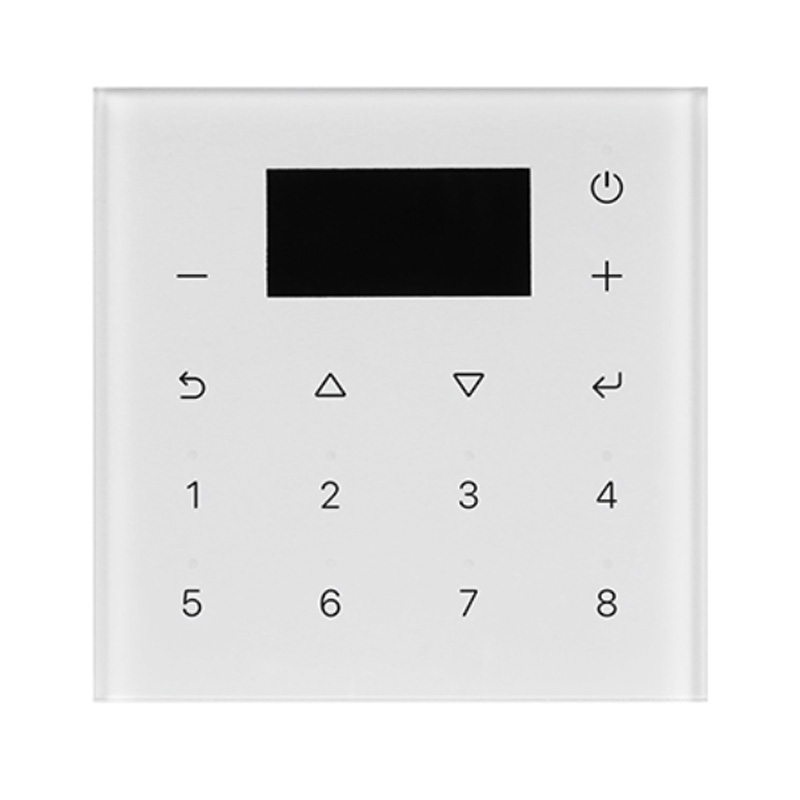
SR-2847 AC LED Light Wall Mounted DMX512 Control Panel

SR-2817DMX RF Wireless Remote Control DMX512 Controller Master
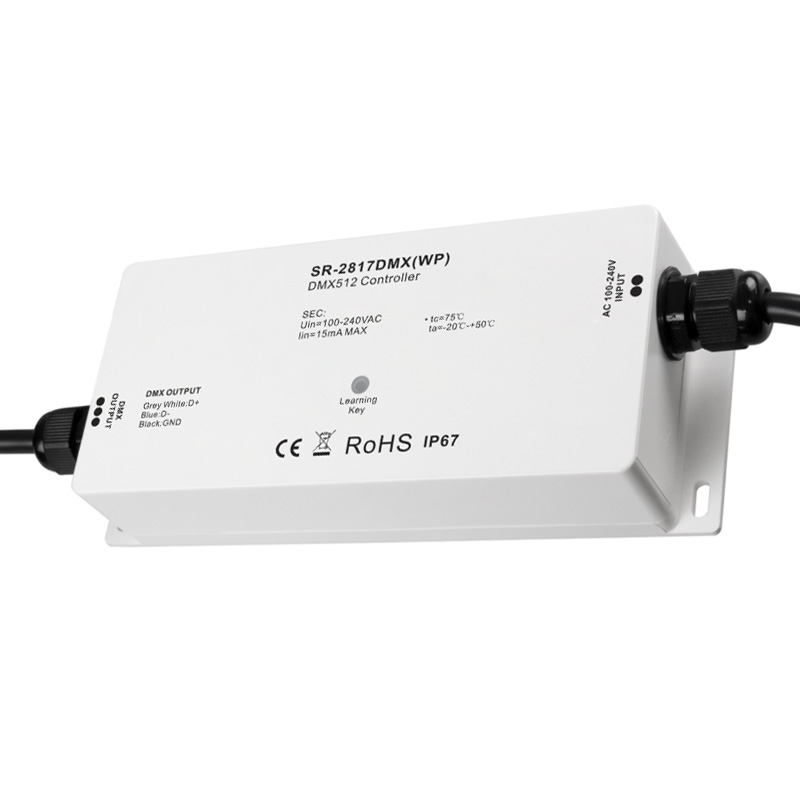
SR-2817DMX(WP) Waterproof LED Strip Lights RF DMX Controller
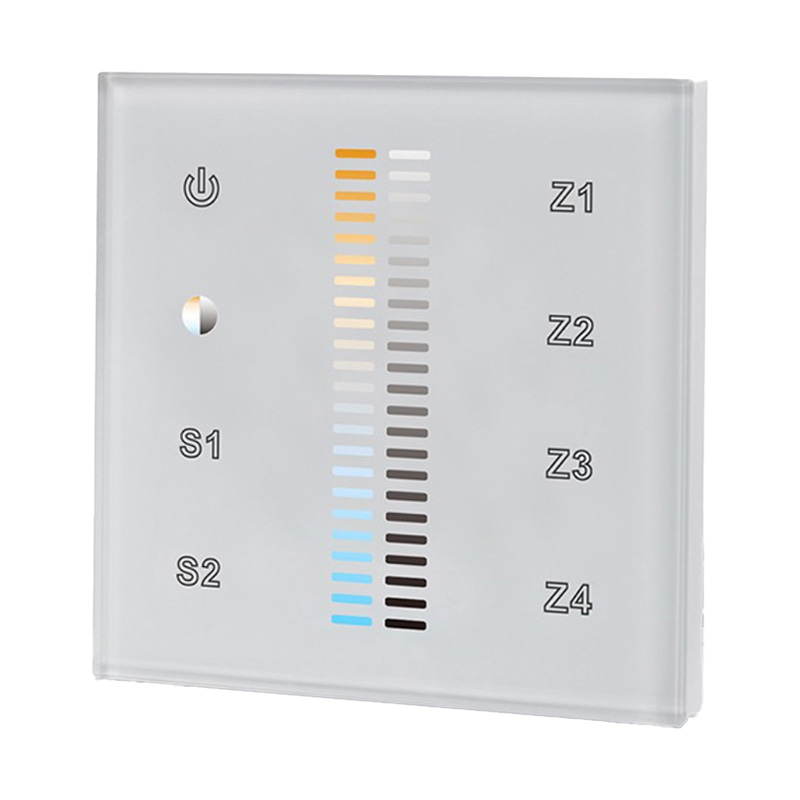
SR-2830BDMX Wall CCT LED Strip Dmx512 Control Panel Master
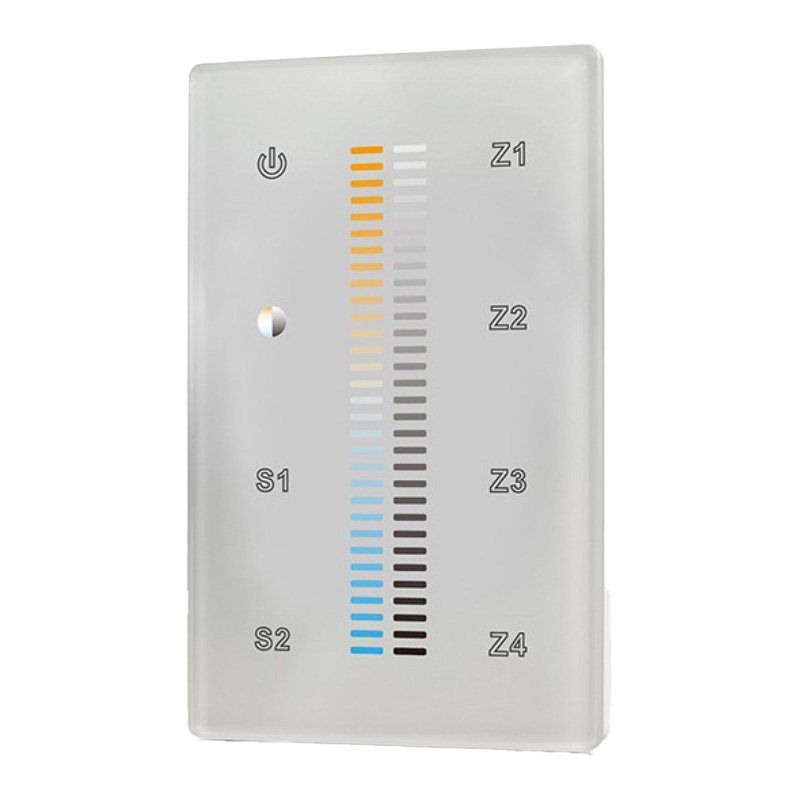
SR-2830BDMXUS Tunable White LED Strip Wall DMX Touch Panel
FAQ About DMX LED Controller Panels
Direct answers to real jobsite wiring, protocol, and installation questions about our wall-mounted DMX512 master control panels.
To connect LED lights to DMX controller panels, you must route the panel's low-voltage DMX signal output to a dedicated decoder rather than wiring strips straight to the wall unit. The panel outputs digital control data, not DC driving current. Run a shielded twisted-pair cable from the DMX Out terminals (D+, D-, Ground) on the wall panel to the DMX In terminals on your DMX512 decoders. From there, connect your 12V or 24V constant-voltage power supply and your LED strip lights directly to the decoder's high-current output terminals.
You control LED lights with DMX controller panels for dual-color strips by mapping warm-white and cool-white channels to two sequential DMX starting addresses on your decoder. Units like the US-standard CCT touch panel send synchronized dual-channel commands from a single capacitive touch slider, shifting color temperature from 2700K to 6500K while keeping overall lumen output completely steady across 256 dimming steps.
An architectural DMX controller safely manages up to 32 standard DMX decoders daisy-chained along a single continuous RS-485 data line up to 300 m long. Once you exceed 32 physical receiver loads, bus resistance pulls transceiver voltages below the 200 mV threshold required for reliable packet detection. If your commercial layout needs more than 32 decoders or branches out into multiple floor runs, install one of our DMX signal repeaters to isolate the bus, regenerate square-wave edges, and split the run into fresh branches.
A multi-zone DMX LED controller panel commands multiple rooms or architectural coves independently by assigning each zone a separate block of DMX addresses. On models like the SR-2847, the panel outputs multiple address groups across the 512-channel universe. By setting your perimeter cove decoders to start at address 001 and your under-cabinet decoders to start at address 005, you can dim or switch the cove accent light from Zone 1 without altering task illumination on Zone 2, all from a single glass faceplate.
Every controller DMX wall station in our lineup adheres strictly to the standard USITT DMX512 protocol, meaning it communicates with any compliant decoder regardless of manufacturer. Whether your downlights run on third-party constant-current DMX drivers or your coves use constant-voltage decoders, the wall master transmits standard 8-bit packets at 250 kbps. As long as your receiving gear accepts standard 3-pin or RJ45 RS-485 inputs, signal handoff is completely transparent.
An AC line DMX light controller wires straight to 100-240V AC building power, whereas a low-voltage DC touch panel requires a 12V to 24V DC auxiliary power supply inside or near the junction box. The SR-2847 and SR-2830BDMXUS incorporate an internal AC-to-DC step-down circuit behind the touch glass, allowing electricians to pull hot, neutral, and ground wires directly into standard gang boxes without carving out extra drywall space for an auxiliary transformer.