
DMX Signal Distributor Amplifier
22 productsWhen DMX signals need to be transmitted over long distances or connected to multiple lighting devices, the signals may attenuate, resulting in unstable or inaccurate control. The role of these DMX signal amplifers and distributors is to enhance the strength of the signal during the transmission, and ensure that the DMX512 signals can be stably delivered to the target devices, maintaining the consistency and accuracy of the lighting effects. Used for DMX led strips and lights.
DMX Signal Amplifier vs. DMX Distributor vs. DMX Extender
Although the terms DMX amplifier, DMX distributor, and DMX extender are sometimes used interchangeably, they emphasize different functions. A DMX signal amplifier regenerates and strengthens the DMX512 signal to maintain reliable communication over longer cable runs. A DMX distributor takes one DMX input and provides multiple DMX outputs, allowing a single DMX source to be distributed to several lighting branches. A DMX extender generally refers to equipment designed to extend the usable transmission distance of a DMX signal, sometimes by regenerating the signal or using a different transmission method.
Many professional DMX distributors combine these functions, allowing you to regenerate the signal and split it into multiple outputs at the same time. This makes them particularly useful for large lighting systems with multiple branches, long cable runs, or multiple DMX fixtures.
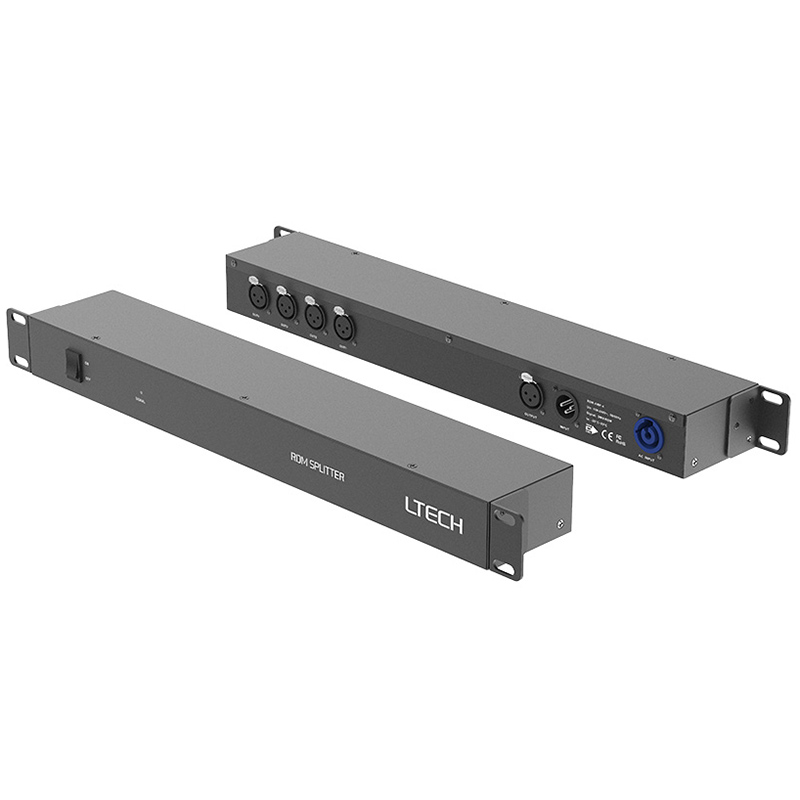
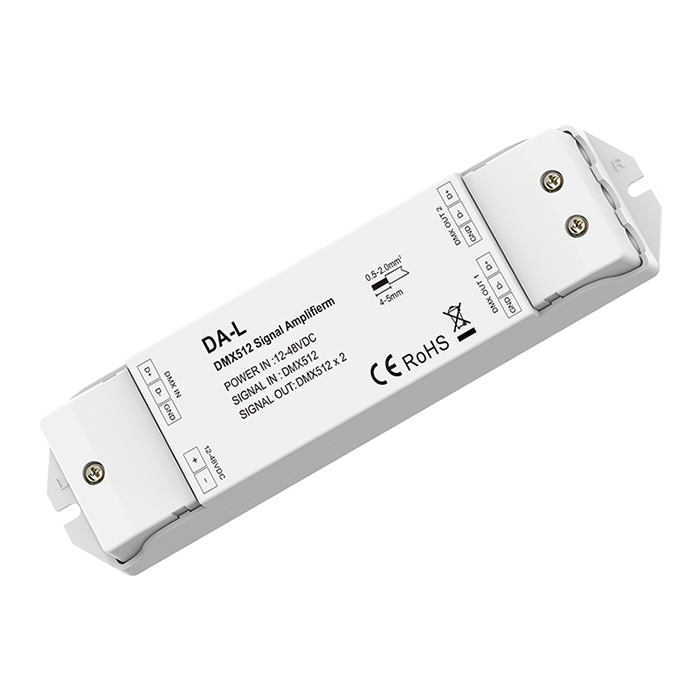
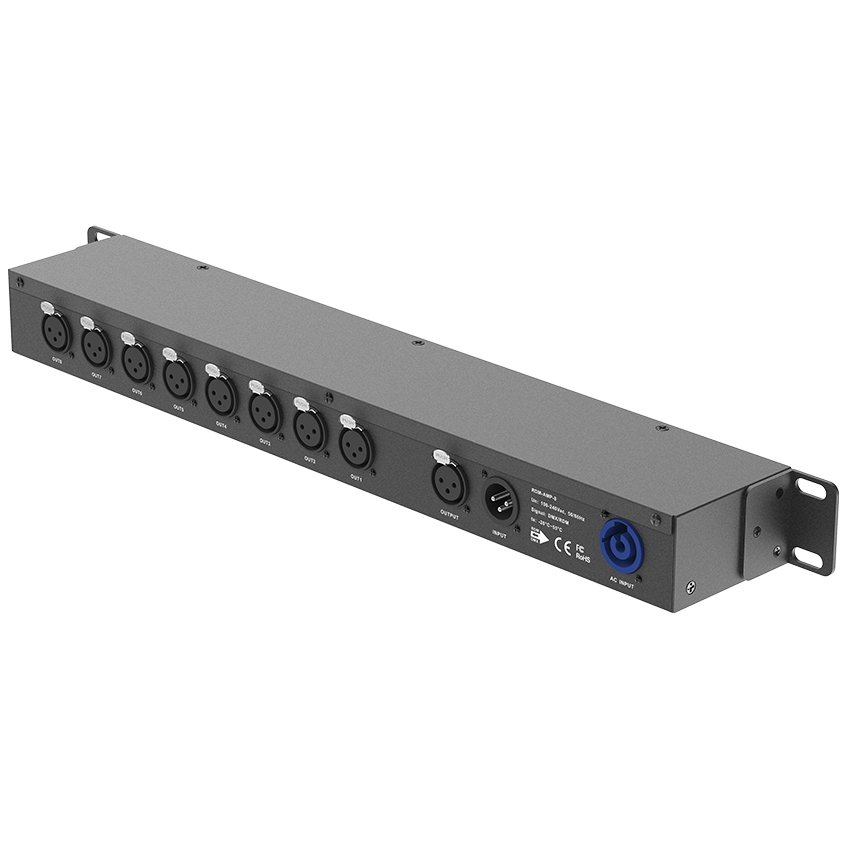
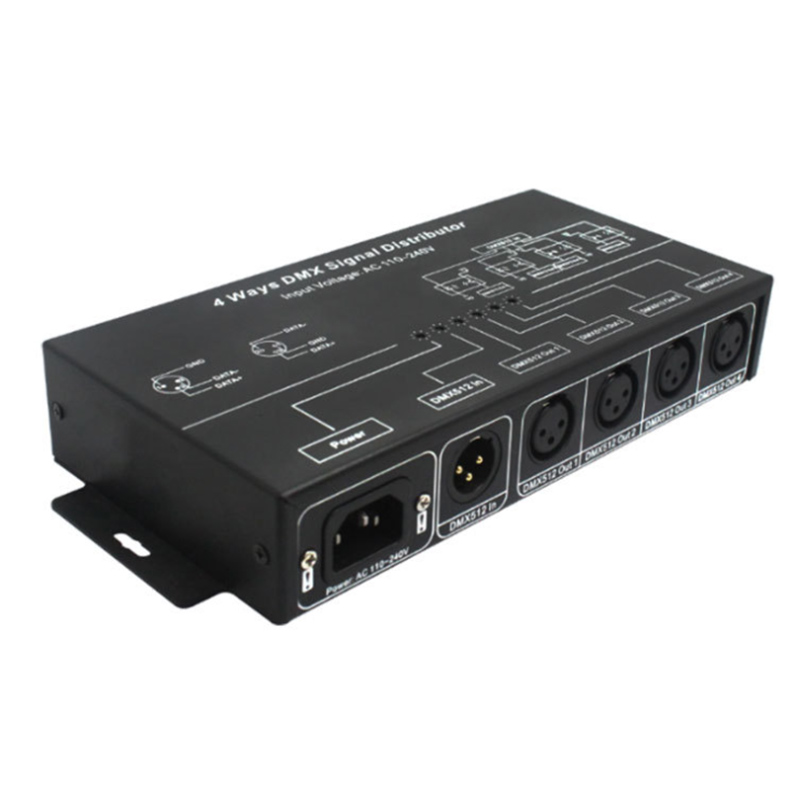
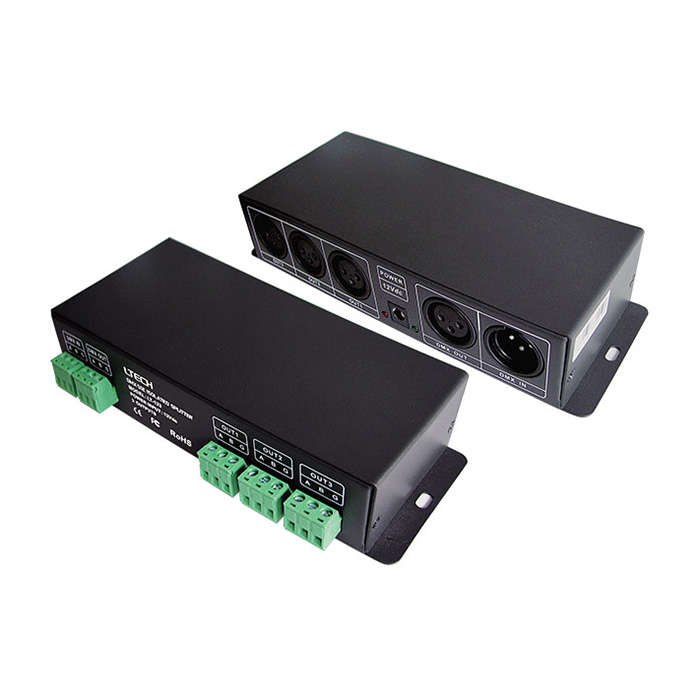
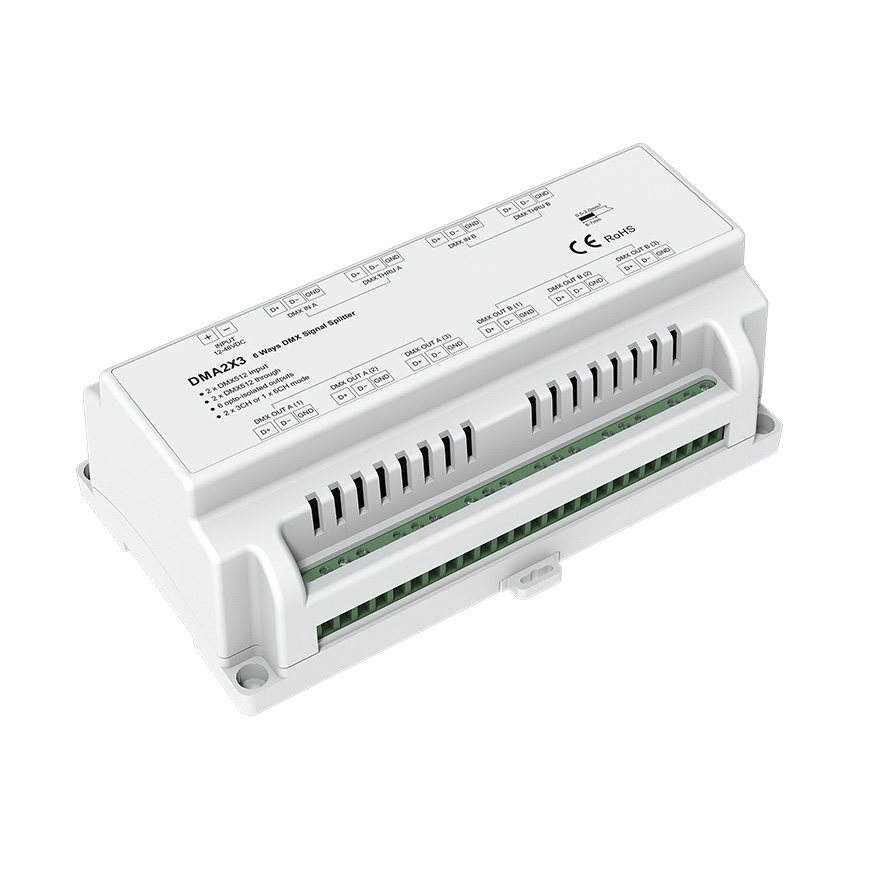
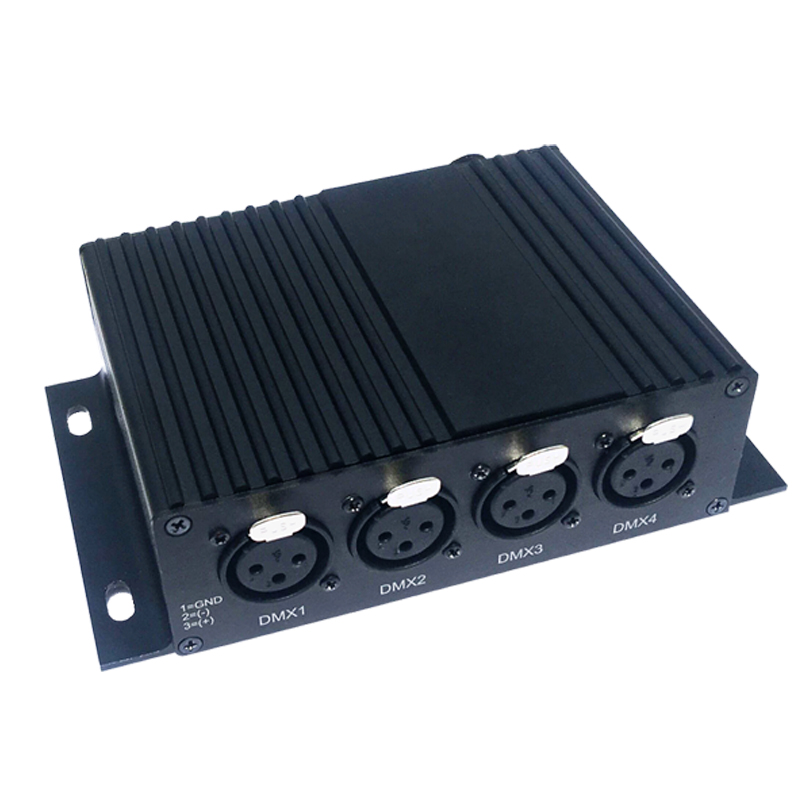
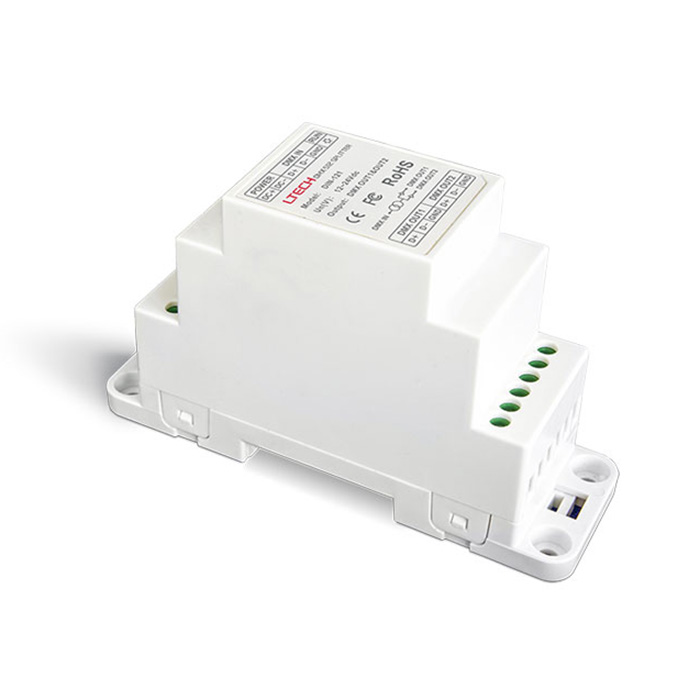
DMX124 Signal Distributor 4 Channel For DMX512 LED Strip Lights or DMX512 Decoder
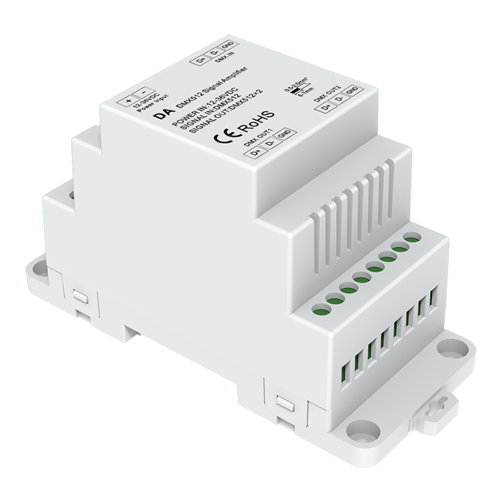
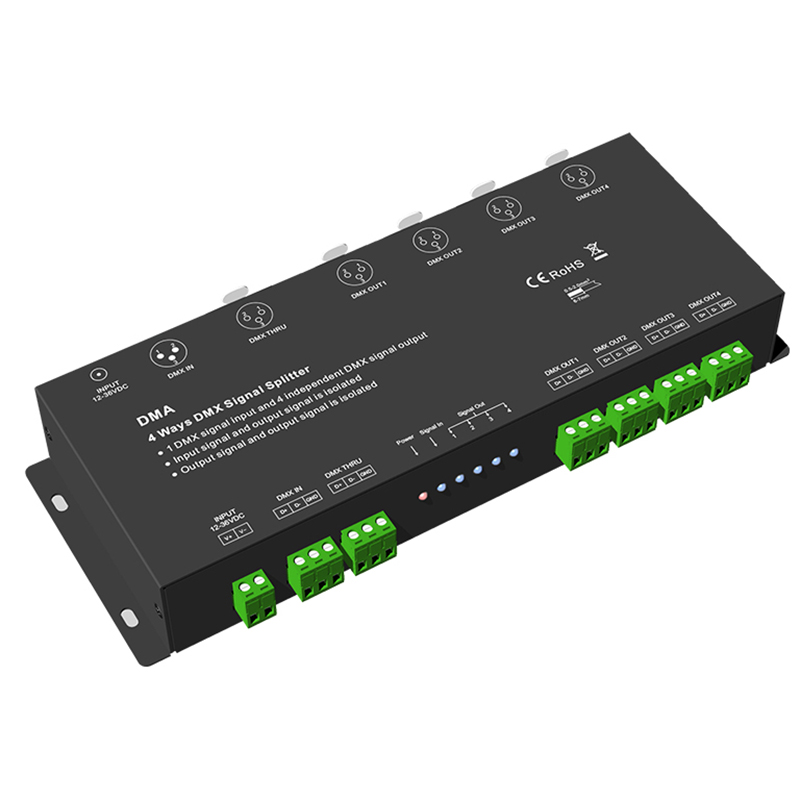
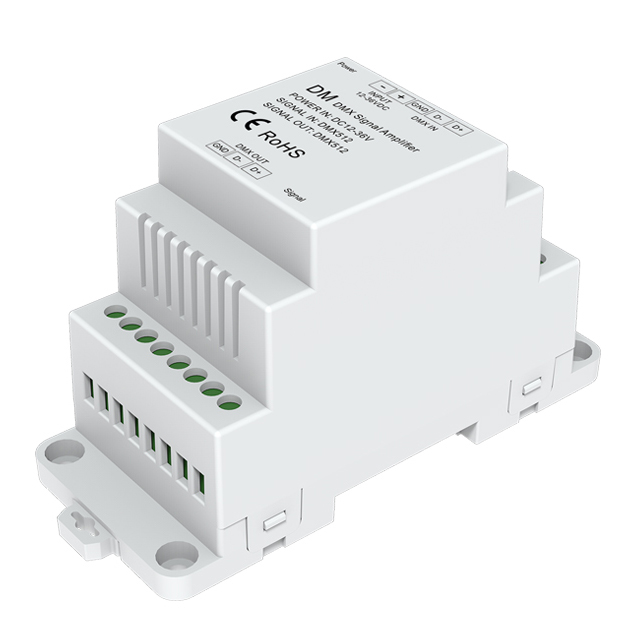
DA DMX RDM Signal Amplifier 12-36V - Bidirectional | Noise Isolation
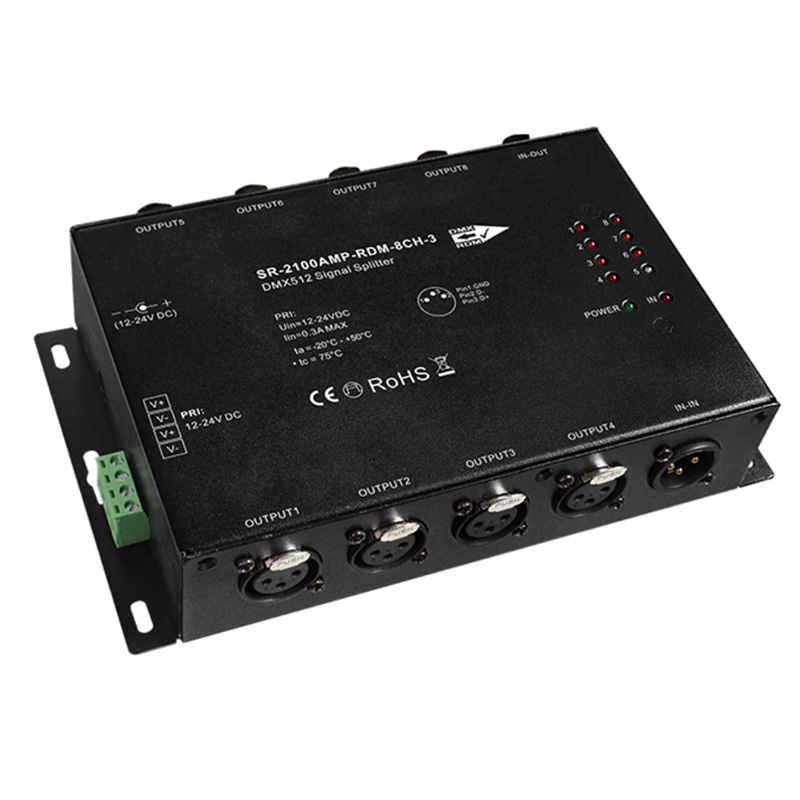
SR-2100AMP-RDM-8CH 3 or 5 Pin RDM 8 Channel DMX Splitter

DMX124 Signal Distributor 8 Channel For DMX512 LED Strip Lights and DMX512 Decoder
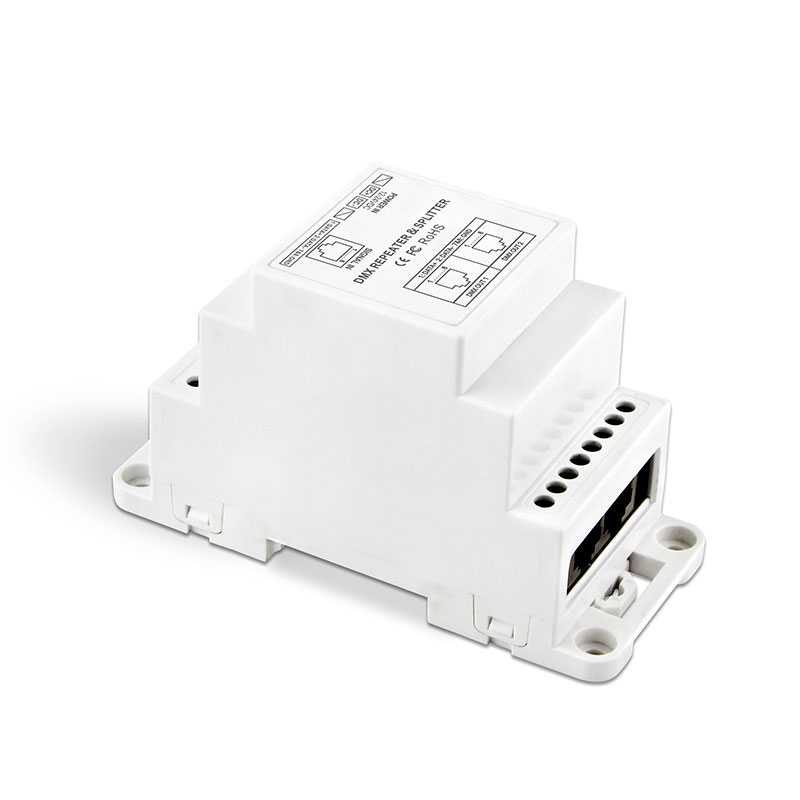
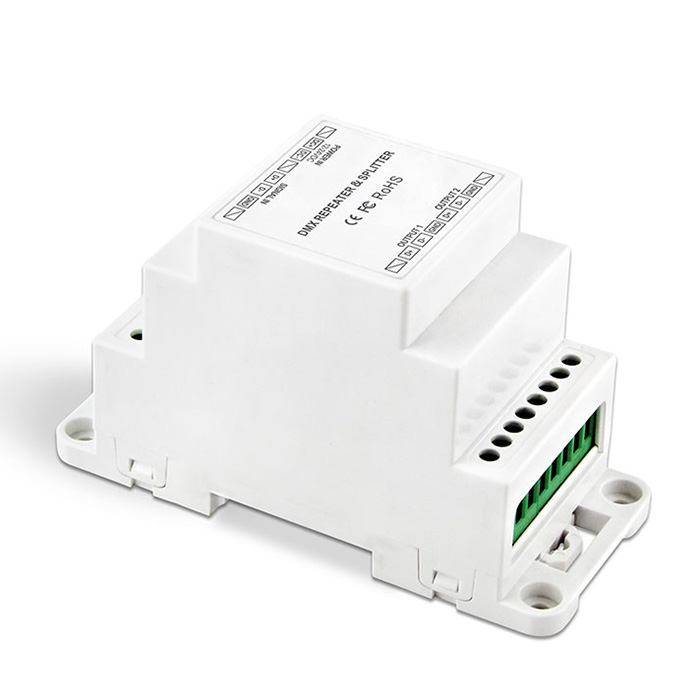
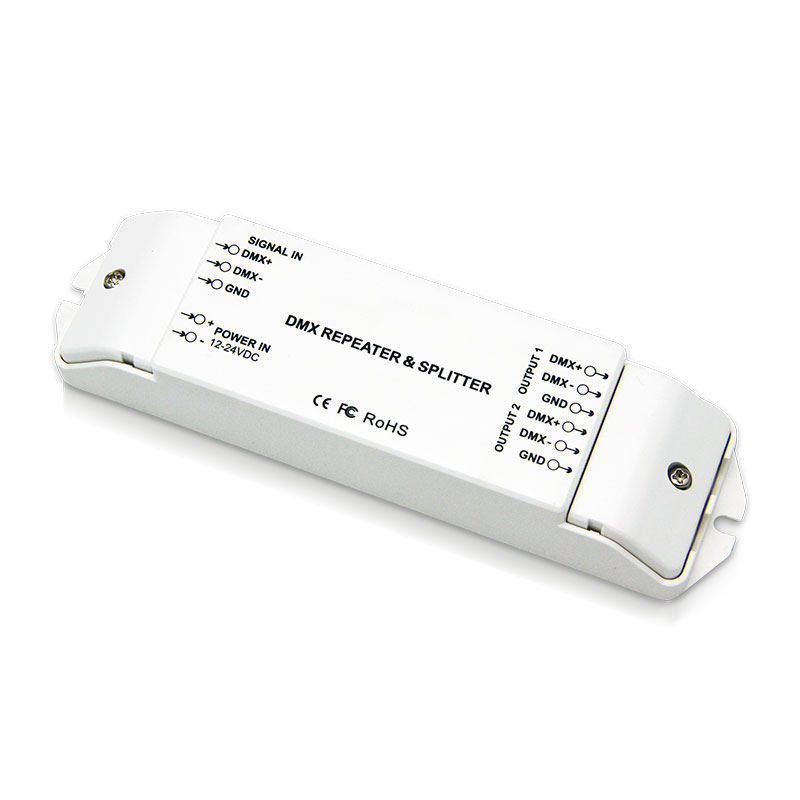
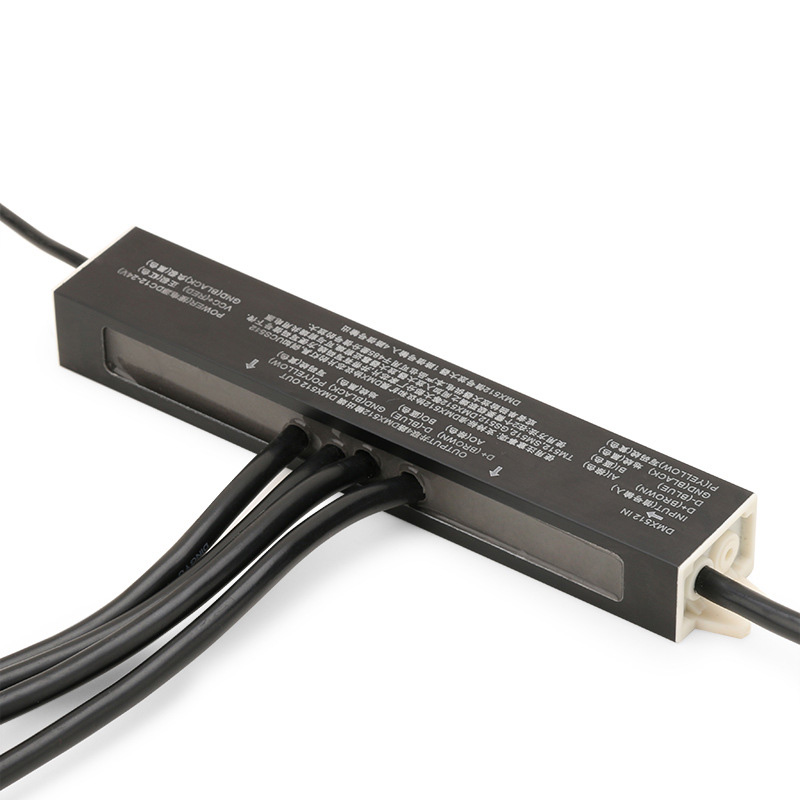
Outdoor IP67 Waterproof 4CH DMX512 Signal Amplifier
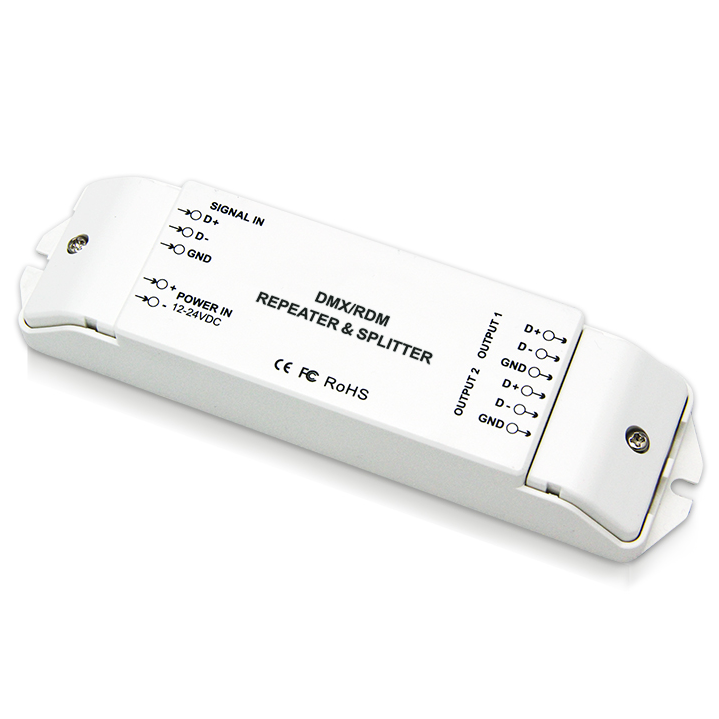
Hardwired DMX vs. Wireless DMX Signal Extension
DMX signal extension can be implemented through either wired or wireless transmission. A traditional hardwired DMX amplifier or distributor uses DMX cables with XLR or terminal connections to receive, regenerate, and distribute the DMX512 signal. This is generally the preferred solution for permanent installations because it provides a stable, predictable connection and can support multiple independent DMX output branches.
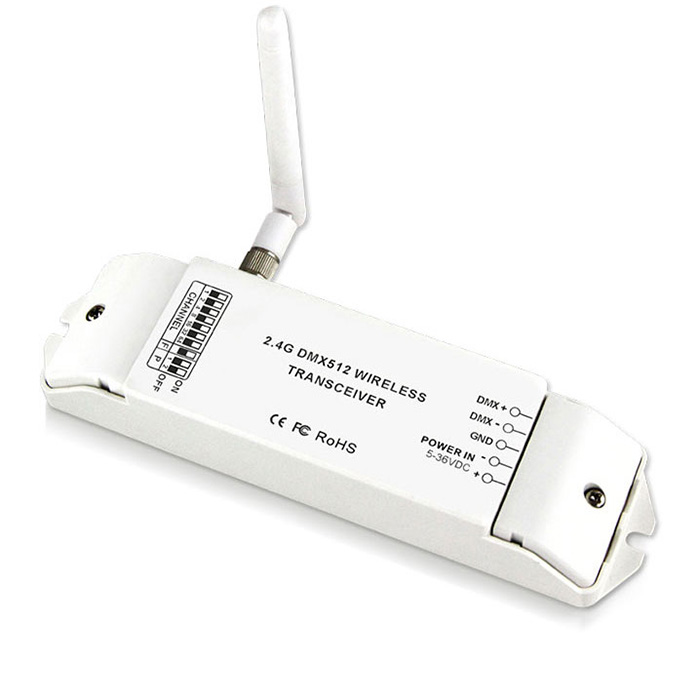
A wireless DMX system, on the other hand, transmits the DMX data wirelessly between a transmitter and one or more receivers. It can eliminate long DMX cable runs and is particularly convenient for temporary events, stage lighting, moving fixtures, rental systems, historic buildings, or installations where running cables is difficult.
Wireless DMX is not simply a wireless version of a wired signal amplifier. A typical system requires a wireless DMX transmitter and compatible receiver, with the receiver converting the wireless data back into a standard DMX output for the lighting fixtures. For reliable operation, the transmitter and receiver must use a compatible wireless protocol and frequency configuration.
When Should You Use a DMX Signal Distributor or Amplifier?
A DMX distributor or amplifier is useful when your lighting system has long DMX cable runs, multiple branches, a large number of fixtures, or multiple areas that need to receive the same DMX universe. Instead of connecting every fixture in one long daisy chain, the DMX signal can be regenerated and distributed into several shorter branches. This architecture can make a large DMX installation easier to expand, troubleshoot, and maintain.
For a simple short DMX chain with only a few fixtures, a distributor or amplifier may not be necessary. For larger systems, however, using the appropriate DMX distribution point can help maintain stable signal transmission and predictable lighting control.
DMX Signal Distribution for LED Strips and Fixtures
DMX signal distributors and amplifiers can be used with a wide range of DMX512 LED strips, DMX decoders, LED controllers, stage lights, architectural lighting fixtures, and other DMX-compatible equipment. When designing a system, remember that a DMX amplifier or distributor only addresses the communication signal. It does not increase the power available to the LED fixtures.
The lighting system still requires an appropriately sized power supply, DMX controller or console, DMX cables, decoders/controllers, and LED loads. For long LED strip installations, power distribution and voltage-drop management should be planned separately from DMX signal distribution.
Frequently Asked Questions About DMX Signal Distributors & Amplifiers
Got questions about boosting or splitting your DMX signal? You're in the right place. Here are the answers we give most often on the tech support desk.
You need a DMX signal distributor, or splitter, for two main reasons. First, if you have more than 32 DMX devices in a single chain. The DMX standard tops out there. Second, if your total cable run from the controller to the last light exceeds about 300 meters (around 1,000 feet). Past those limits, the signal gets weak and your lights will start flickering or responding unreliably. The distributor regenerates a fresh, strong signal for each new line.
Honestly, we use the terms interchangeably and so does most of the industry. They all describe a device that takes one DMX input and creates multiple, electrically separate outputs. 'Amplifier' just emphasizes that the device is actively boosting and re-shaping the signal on each output, not just passively splitting it like a headphone Y-cable. All our distributors are active amplifiers.
That's almost always signal degradation. Either the cable run is too long, or you have too many fixtures daisy-chained together. A DMX signal can only travel so far and push through so many connections before it gets corrupted. Installing a DMX signal distributor partway down the line will clean up and boost the signal, solving the flicker. Also, make sure you have a terminator on the last fixture. For a deeper dive, check out our full DMX lighting guide.
RDM stands for Remote Device Management. It allows two-way communication on the DMX line. A standard DMX signal only talks one way: from the controller to the lights. With RDM, the lights can talk back, reporting status, errors, or allowing you to change their DMX address remotely. You only need an RDM distributor if you have RDM-enabled lights and one of our DMX master consoles that can use that information. If not, a standard distributor is all you need.
Yes, it does. These are active electronic devices that need power to run their internal processors and regenerate the DMX signal. Most of our DMX distributors run on low voltage DC, typically 12V or 24V. You'll need to provide a separate power supply for the amplifier itself; it doesn't get power from the DMX line.
Let's check the simple stuff first, as it solves 99% of cases. Is the amplifier powered on? Is the DMX cable from your controller plugged into the DMX IN port, not an OUT port? Are the fixtures you're trying to control properly addressed? Finally, double-check your DMX cables. A cable with the data wires (pins 2 and 3) swapped will stop the signal cold.
You sure can. You just need a simple 5-pin to 3-pin adapter. The DMX512 standard signal only uses pins 1 (ground), 2 (data-), and 3 (data+). On a 5-pin cable, pins 4 and 5 were reserved for a second data link that almost no modern LED fixture uses. As long as you adapt the connector, it'll work perfectly.
No, you can't. DMX and SPI (like the protocol used for WS2812B pixels) are completely different signal types. A DMX signal amplifier is specifically designed for the balanced, differential RS-485 signal of DMX. Plugging an SPI signal into it won't work and could damage the amplifier or your strip. You need a dedicated SPI signal amplifier or booster for addressable LEDs.