
DMX-SPI signal type
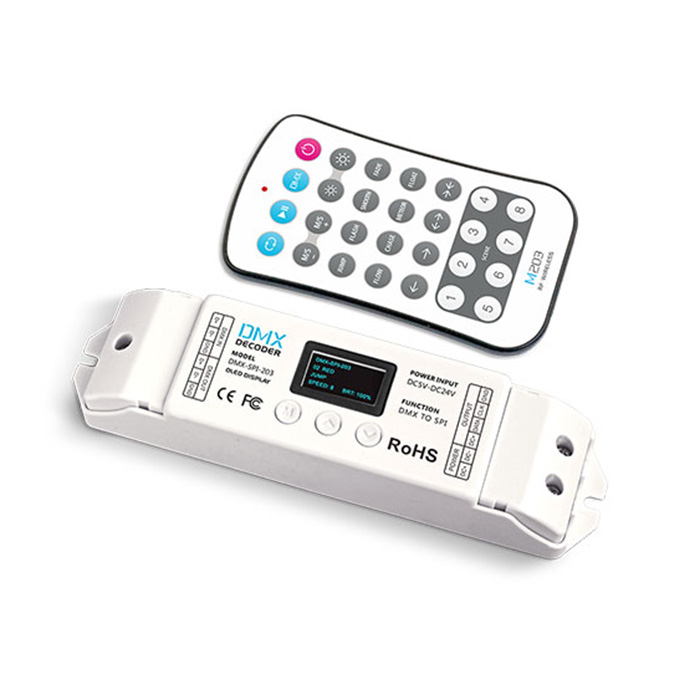
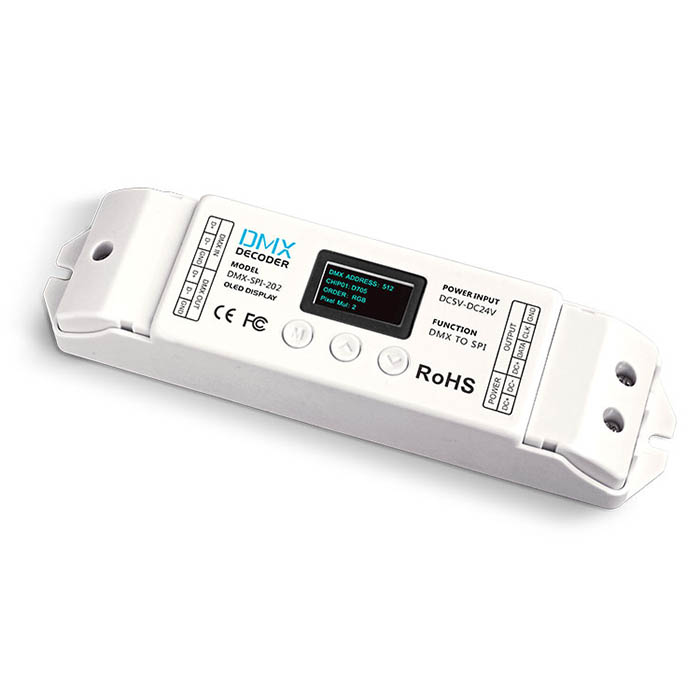
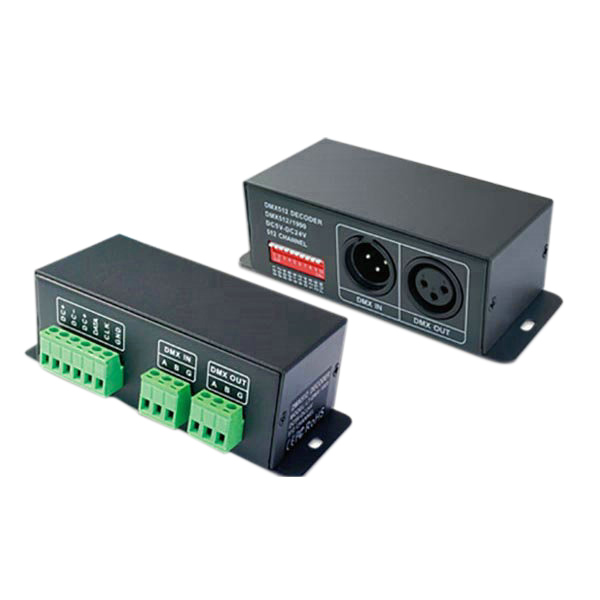
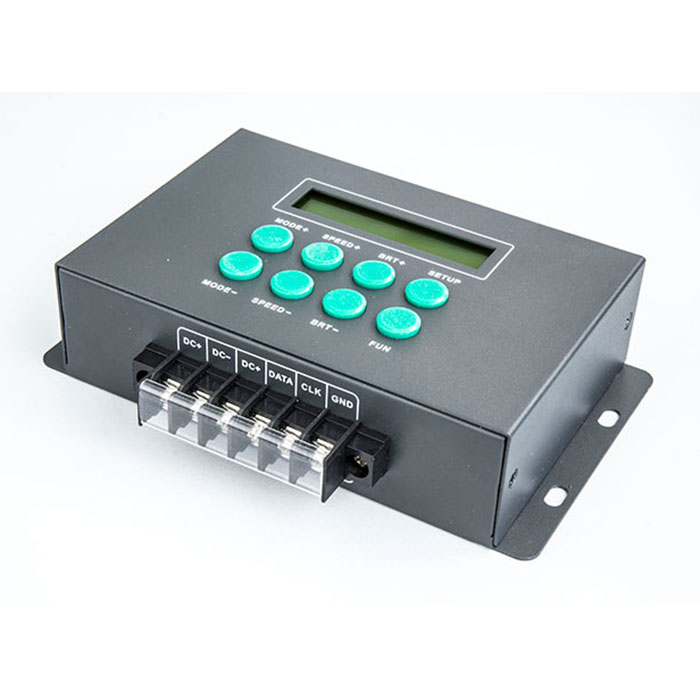
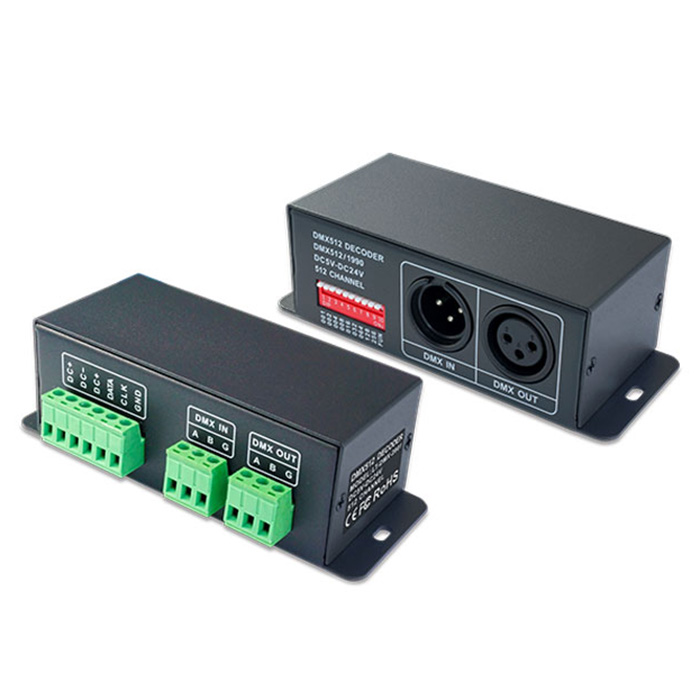
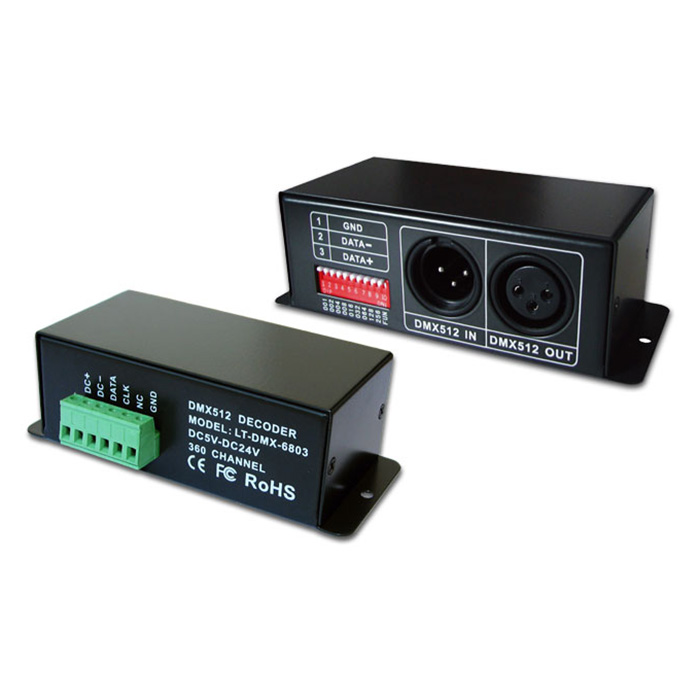
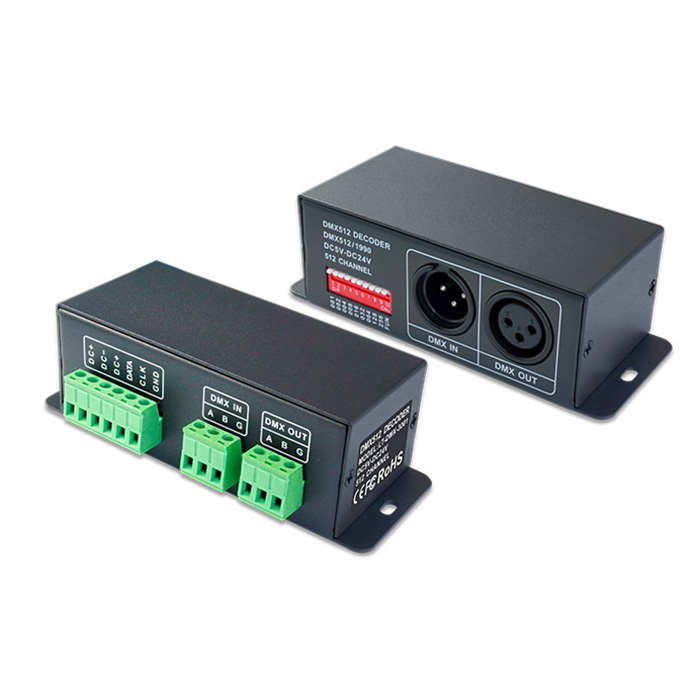
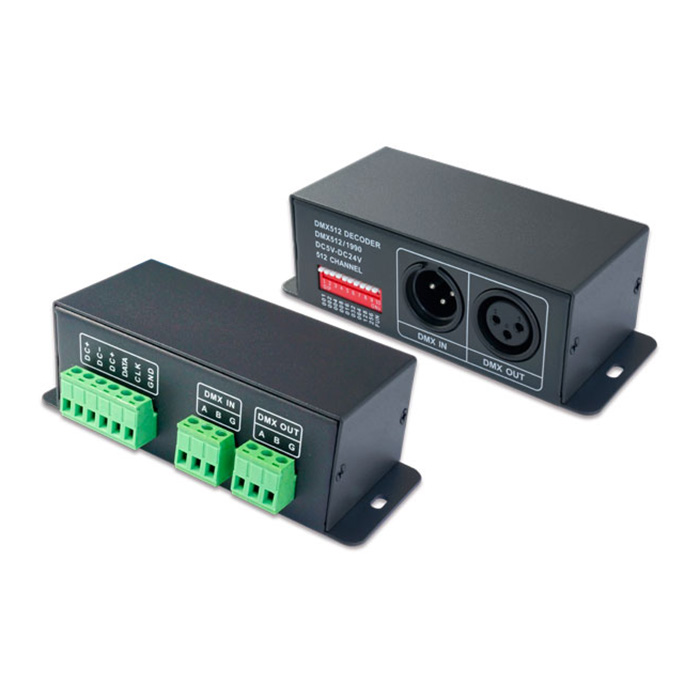
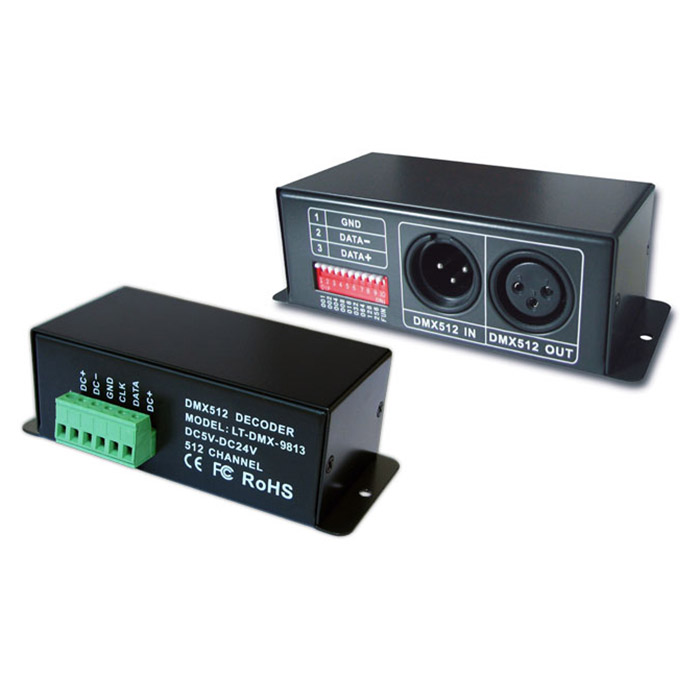
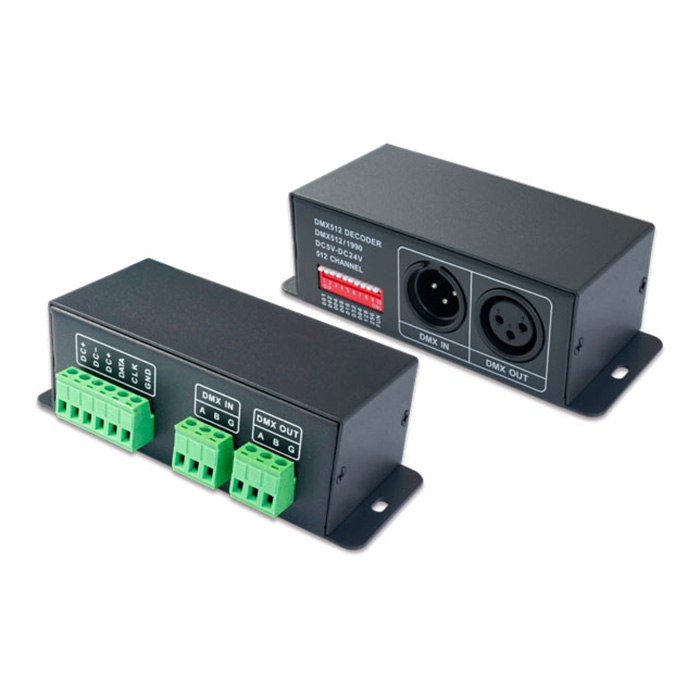
12 productsSuperLightingLED DMX-SPI Signal Type converts standard DMX signals into SPI/TTL signals that pixel LEDs can recognize, allowing you to program numerous pixel light strips and fixtures using a professional DMX control system.
Renowned for their exceptional craftsmanship and reliability, Ltech DMX-SPI signal converters are engineered to deliver top-tier performance for professional pixel lighting projects. Backed by an impressive 5-year warranty, these converters are the ultimate solution for integrating standard DMX systems with addressable RGB (RGBIC) LED strip lights—such as WS2811, UCS1903/UCS2903, and LPD6803.
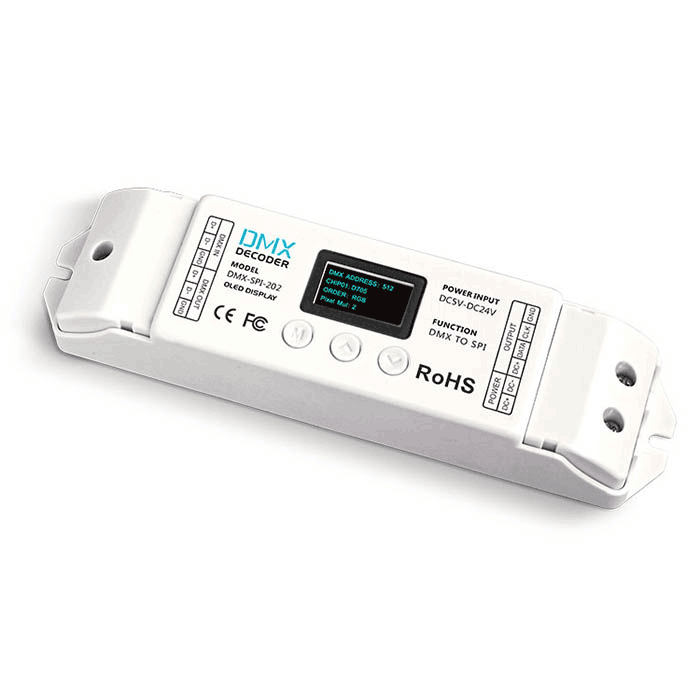
The advanced DMX-SPI-202 V6.0 version expands your design possibilities even further. In addition to supporting standard configurations, this new firmware version delivers extended compatibility for addressable RGBW (RGBWIC) LED strips, including popular data chips like SK6812, SM16704, TM1814, and UCS2904B, enabling vibrant white channel blending alongside stunning color effects; and fully compatible with high-speed addressable ICs such as APA102 and WS2801, ensuring ultra-smooth data transmission and zero lag in high-demand architectural or stage installations.
Whether you are upgrading a commercial venue or designing a complex stage setup, Ltech's DMX-SPI converters guarantee stable and precise pixel control from your DMX console. We also offer a wider selection of DMX512-SPI decoders.
Frequently Asked Questions About DMX-SPI Signal Converters
Got a question about getting your DMX console to talk to pixel LEDs? You're in the right place. Here are the questions we answer for professional installers every day.
It all comes down to the Integrated Circuit, or IC chip, on your strip. Every DMX-SPI signal converter lists the specific ICs it's compatible with, like WS2811, SK6812, UCS1903, TM1814, and so on. Check your strip's datasheet for its IC model and compare it against the decoder's spec sheet. If it's not on the list, it won't work. The newer L-tech DMX-SPI-202 V6.0 has one of the widest compatibility lists available.
It depends on how many DMX channels the decoder can handle. A standard DMX universe has 512 channels. Since a single RGB pixel requires 3 channels (one for red, one for green, one for blue), you can control a maximum of 170 pixels per universe (512 ÷ 3 = 170.6). Some decoders handle multiple universes, which increases the total pixel count. An RGBW pixel LED strips would use 4 channels, reducing the count to 128 pixels per universe.
Those are for pixel strips that use a two-wire signal, like the APA102 or WS2801. Unlike single-wire strips (WS2811/WS2812B), these have a separate clock line that synchronizes the data transfer. This allows for a much faster refresh rate, which is essential for persistence-of-vision effects or when filming the LEDs, as it dramatically reduces flicker. If your strip only has a single data input, you'll just use the decoder's 'Data' (DAT) output and leave the 'Clock' (CLK) terminal empty.
Yes, that's what they're for. Any controller that outputs a standard DMX512 signal—from a simple hardware fader board to advanced PC-based software like Madrix, Resolume, or QLC+—will work perfectly with a DMX-SPI signal converter. The converter simply makes the entire pixel strip appear to the console as a series of generic RGB or RGBW DMX light fixtures.