
Individually Addressable Series
64 productsIndividually addressable LED strip light is a collection of a single IC control a single LED product, serial cascade interface, an unlimited cascade, every LED that can display different lighting effects. Similarly, modular LED pixel light strings are also individually addressable and are commonly used in architectural lighting applications such as eave lighting.
How to choose an individually addressable LED strip light?
Virtually all DC 5V pixel LED strips support individual control, such as our WS2812 series, WS2813 series, and CLK clock signal IC series.
For DC12V, the most popular WS2815 breakpoint-resume product is also individually addressable, they are all single LED cuttable, so the most accurate LED strip length customization can be achieved, it is the first choice for home lighting; for longer distance lighting, you can choose WS2815 LED strip light, and for shorter distance lighting, you can choose SK6812 LED strip light, with good cost performance.
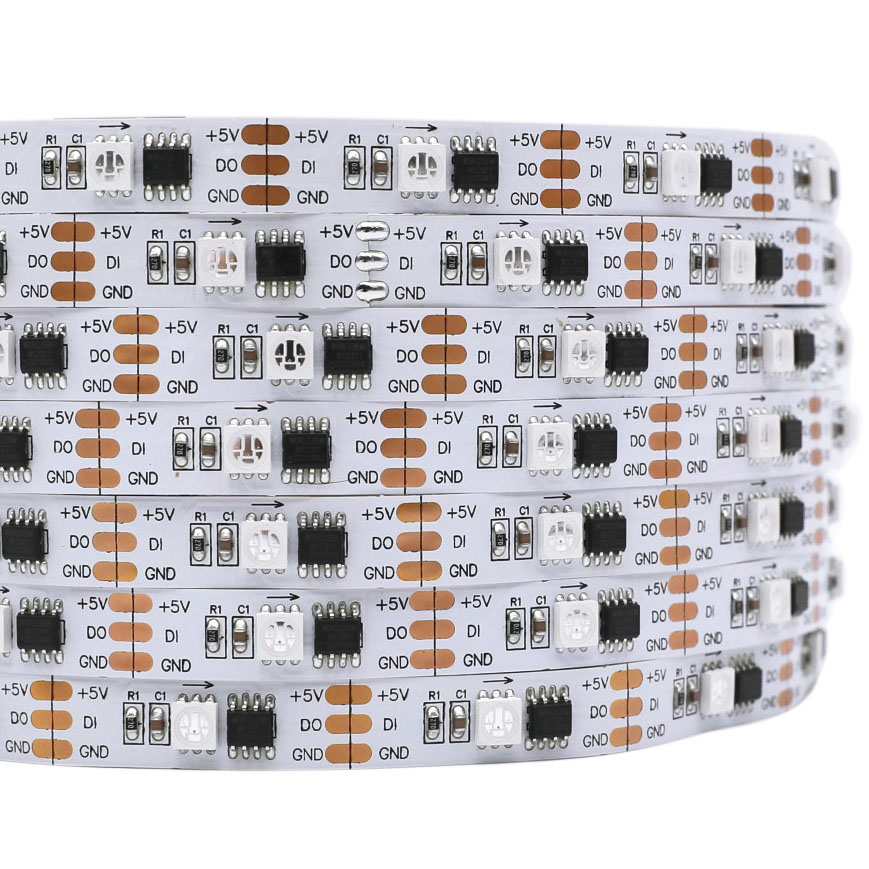
WS2811 DC5V 150LEDs Color Chasing Addressable LED Strip
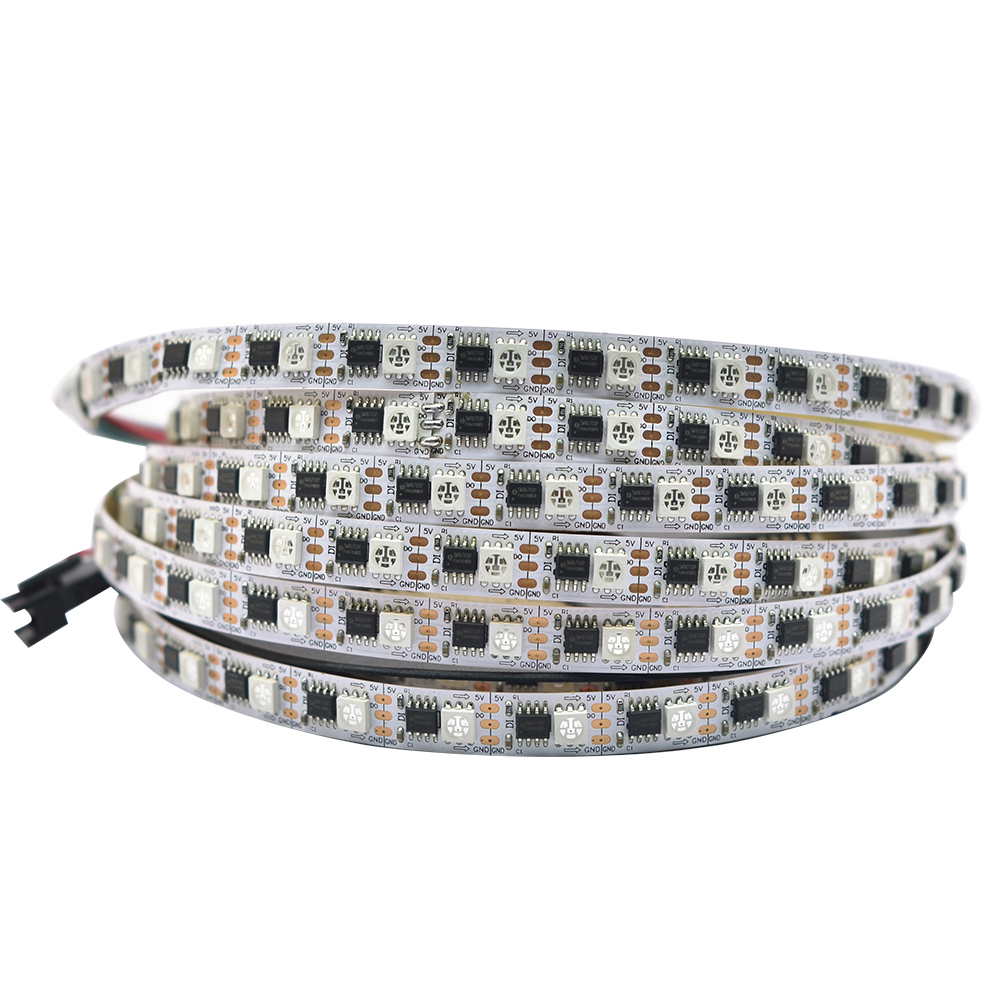
WS2811 5V Individually Addressable RGB Color Chase LED Strip
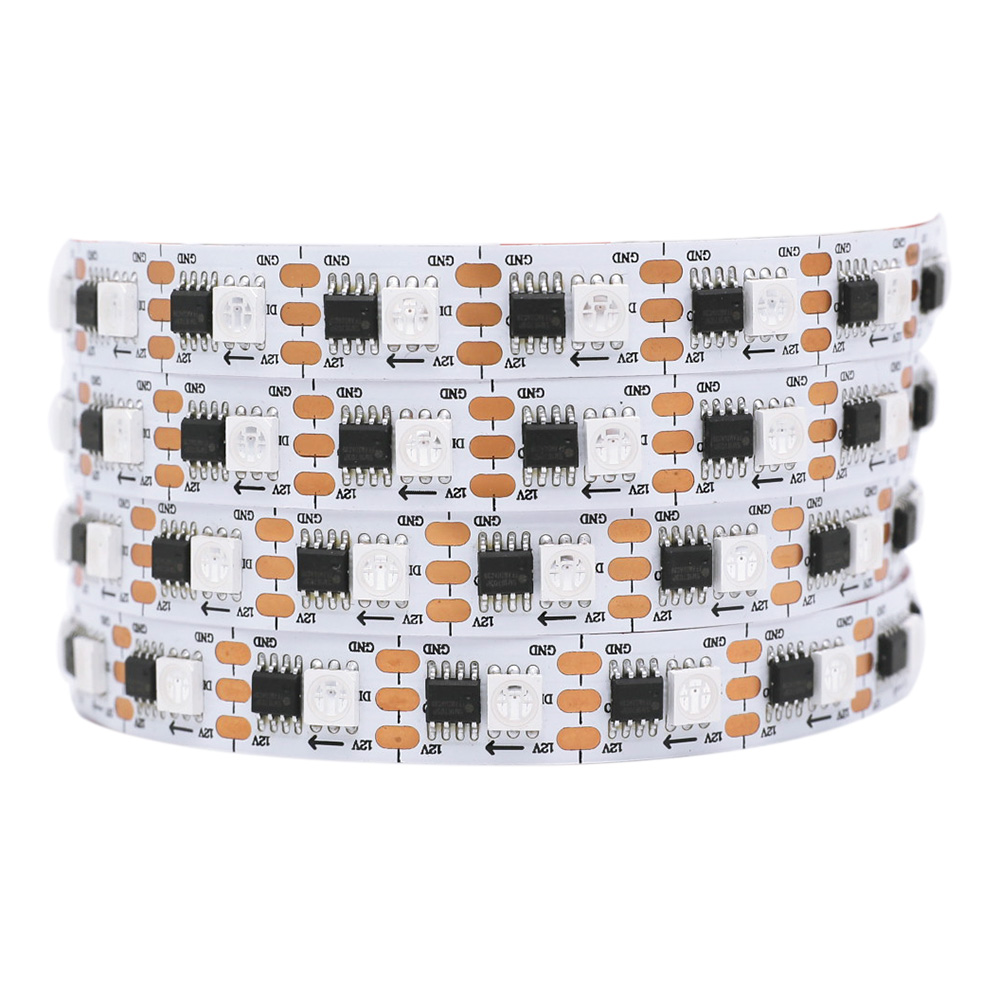
Individually Addressable LED Strip - 360 Degrees Lighting - DC12V Input
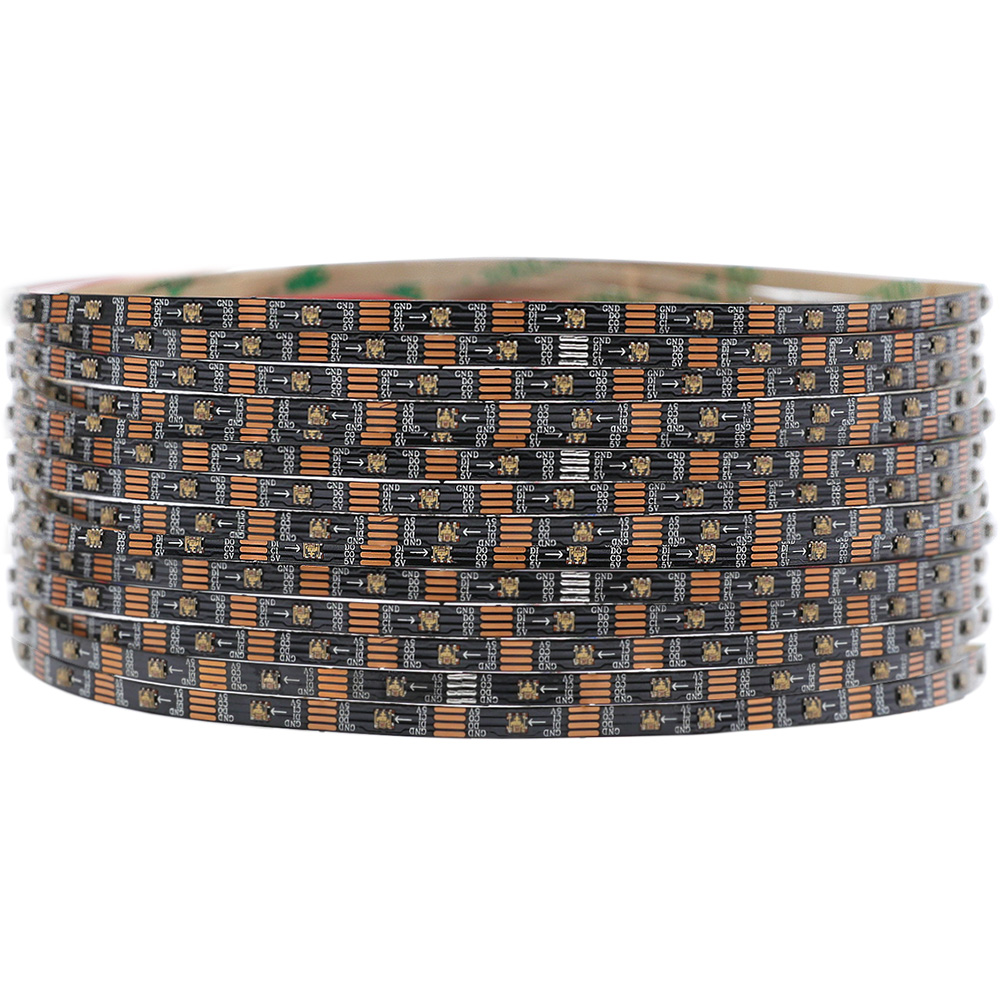
4mm APA102 Digital RGB LED Strip 5V - Individually Addressable
Individual vs. Group Addressable LED Strips: What's the Real Difference?
An individually addressable LED strip is the ultimate tool for granular lighting control, where every single LED has its own driver IC. This means you can command each diode on the strip to be a different color and brightness, creating fluid, dynamic effects. This is a big step up from group-addressable strips (like some WS2811 versions), where one IC might control a block of 3 or 6 LEDs. With those, your resolution is lower, and the smallest section you can cut and control is that 3- or 6-LED block. Our individually addressable LED strip lights, on the other hand, are typically cuttable after every single LED, giving you maximum precision for your project.
| Feature | Individually Addressable Strips | Group Addressable Strips |
| Control Granularity | 1 IC per 1 LED. The highest possible resolution. | 1 IC per 3 or 6 LEDs. Lower resolution effects. |
| Cut Points | After every single LED. | Every 3 or 6 LEDs (at the end of a group). |
| Common ICs | WS2812B, WS2815, SK6812, APA102 | WS2811, UCS1903 (in 3-LED group configurations) |
| Best For | Video displays, intricate animations, POV effects, high-end architectural lighting. | General chase effects, cove lighting, signage where fine detail isn't critical. |
Frequently Asked Questions About Individually Addressable LED Strips
Your project's tough questions, answered by an engineer. Here's what you need to know before you buy.
It means every single LED on the strip has its own tiny computer chip (an IC), letting you control its specific color and brightness, independent of all the others. This is what we mean by 'one LED one pixel'. Unlike standard RGB strips that show one color at a time, these can create flowing rainbow effects, chases, and complex scenes because you're talking to each light individually.
It depends on your project's length and density. For short, dense runs like in a PC case or a small display, a 5V individually addressable strip is fine. For general room lighting up to 5 meters, a 12V individually addressable strip like the WS2815 is the sweet spot. For runs longer than 5 meters, a 24V individually addressable strip is your best bet as it fights voltage drop much more effectively, meaning fewer power injection points.
Yes, absolutely. Because it's one LED one pixel, you can cut these strips right on the copper pads located after every single LED. This gives you maximum precision for fitting them into tight spaces or custom applications. Just make sure you cut on the designated line, then you can solder new wires or use a connector to link them up again.
They're all popular individually addressable LEDs, but with key differences. WS2812B is the classic 5V, 3-wire standard. SK6812 is very similar to WS2812B but often has slightly better color consistency and is also available in RGBW versions, which gives you a dedicated white channel. The WS2815 is a big step up: it's a 12V individually addressable strip with a backup data line, so one dead pixel won't kill the whole strip after it.
This is a common mistake. The data signal runs in series, from the controller to the first LED, to the second, and so on. But power must always be wired in parallel. Never try to power the strip from just one end and then loop it to the next strip. You should run fresh power wires from your power supply to each separate strip section. Wiring power in series guarantees you'll have severe voltage drop.
Yes, without a doubt. Higher voltage pushes current more efficiently over longer distances, which is the whole point of using 24V. While you might need to inject power every 5 meters on a 12V strip, you can often run a 10-meter section of a 24V strip from a single power feed. This means less wiring, fewer failure points, and a much cleaner install for architectural projects.
It means you have the highest possible resolution. Think of it like a TV screen. More pixels mean a sharper image. With one LED one pixel control, you can create incredibly smooth gradients, fast-moving effects, and even display low-resolution video. For things like animated signs, media walls, or complex art installations, this level of control is non-negotiable.
You need a controller specifically designed for addressable (or 'pixel') LEDs. These controllers speak the digital language of the IC chips (like WS2812 or SK6812). They come in all shapes and sizes, from simple IR remotes to advanced Wi-Fi units that work with apps like WLED or Madrix. We have a full range of compatible addressable controllers that have been tested with our strips.
To get a smooth, continuous line of light, you need two things: high LED density and a good diffuser. A strip with 96 or 144 LEDs per meter will look much smoother than a standard 30 or 60 LED strip. The second, and most important part, is mounting it inside one of our silicone neon housings or aluminum channels with diffusers. The frosted cover blends the individual points of light into a seamless glow.
Yes, we do this all day. A huge part of our business is building custom lighting solutions that never even appear on the website. Just send us your requirements—a sketch on a napkin is fine. Tell us the exact length, the type of strip like a 12V individually addressable model, the length of the wire tails you need, and the type of connector. An engineer will send back a full wiring diagram and parts list within 12 hours. There's no fee for this, and no obligation to order.