
DC5V Waterproof Power Supply
4 productsA DC5V waterproof power supply is the correct way to power 5V LED strip lights in outdoor, wet, or dusty environments. These IP67-rated LED power supplies provide a sealed, hardwired AC-to-DC connection that protects against the elements.
These are constant voltage power supplies, delivering a stable 5V DC output that's critical for sensitive lighting like WS2812B addressable LED strips. With power ratings from 15W up to 60W, you can find a 5V power supply for outdoor LED strip projects of various sizes. Because they are fully encapsulated, they cool by free air convection, meaning they operate silently with no fan noise.
What does IP67 mean for a 5V power supply?
An IP67 rating on a 5V LED strip power supply provides a high level of protection for outdoor and wet location installations. The 'IP' stands for Ingress Protection, and the two numbers have specific meanings:
- 6 (First Digit): Total protection against dust. The enclosure is completely sealed, making it suitable for dusty workshops, industrial settings, or outdoor areas.
- 7 (Second Digit): Protection against temporary immersion in water. The unit can be submerged in water up to 1 meter deep for 30 minutes without damage.
This level of protection ensures the power supply's internal components are safe from rain, snow, splashes, and humidity, which is why they are the standard choice for landscape lighting, outdoor signage, and bathroom installations.
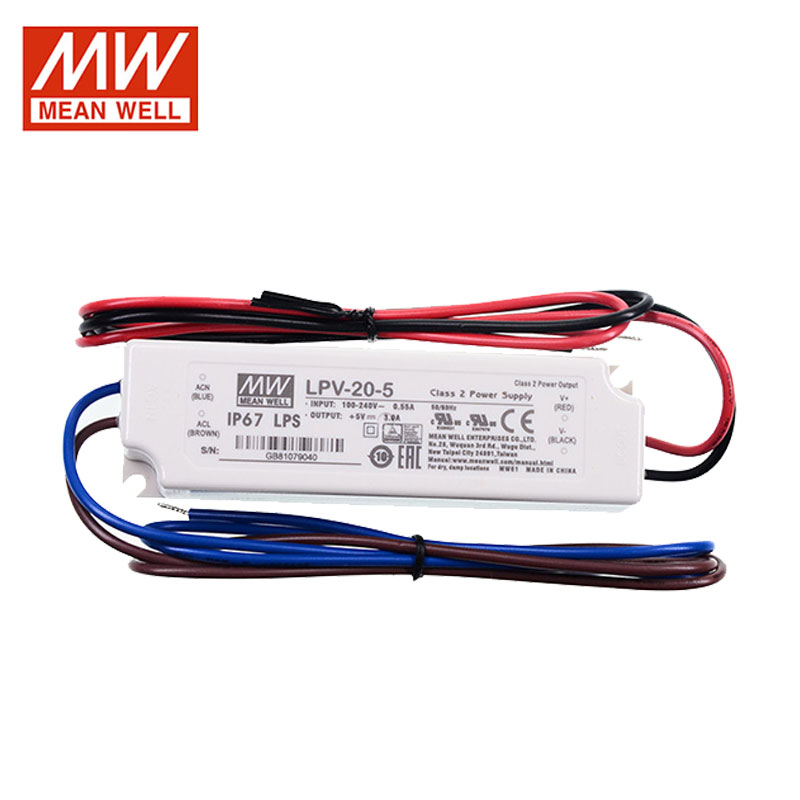

Mean Well LPV-35-5 5V 35W IP67 LED Driver - UL Certified Power Supply

Mean Well LPV-60-5 5V 60W IP67 LED Power Supply - UL Certified
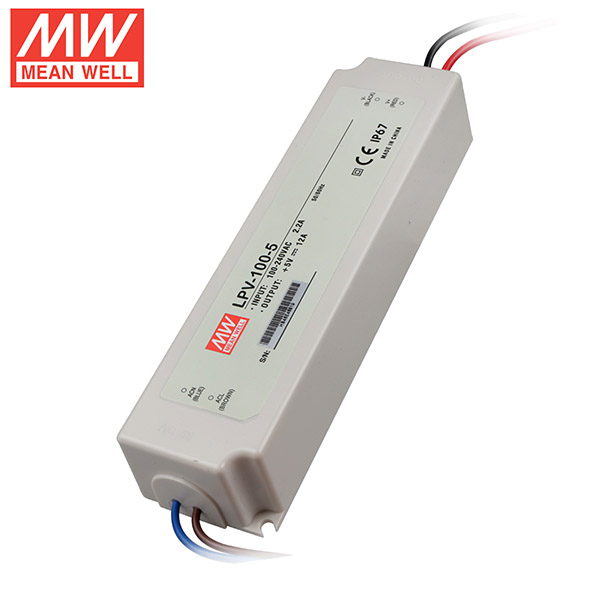
Mean Well LPV-100-5 5V 100W IP67 Power Supply for Programmable LED Strips
DC5V Waterproof Power Supply: Features and Wiring
Beyond the IP67 rating, these professional waterproof power supplies have features designed for permanent, reliable installations. Unlike a simple wall adapter, they are components meant to be hardwired into your electrical system. They accept a universal AC input (typically 90-264V AC), making them suitable for residential and commercial voltages in most regions.
Built-in safety protections are standard. This includes safeguards against short circuits, overload, and over-voltage conditions, protecting both the power supply and your connected LED strips. The fully loaded burn-in testing and an average fault-free operating time of over 50,000 hours mean you can install it in a hard-to-reach location with confidence.
How to Connect the LED Strip to the Power Supply
Connecting a waterproof 5V power supply is straightforward for an electrician or experienced installer. The unit will have pigtail wires for both input and output.
- AC Input: The input wires (typically brown for Live, blue for Neutral, and green/yellow for Ground) are connected to your mains AC power source. This connection should always be made inside a suitable junction box.
- DC Output: The output wires (typically red for +V and black for -V) connect directly to the power input wires of your 5V LED strip.
To maintain the system's weather resistance, it's critical to use IP67 or IP68 waterproof connectors and proper sealing techniques for all connections. For a detailed walkthrough, see our guide on how to connect an LED strip to its power supply.
Choosing Between Waterproof and Indoor 5V Supplies
The main decision is your installation environment. If your project is entirely indoors and away from moisture, a UL-listed Mean Well indoor supply or a simple plastic shell power adapter will work fine. You only need a waterproof 5V power supply when the unit will be exposed to water, humidity, or dust.
Also, remember the limits of 5V systems. Due to voltage drop, 5V LED strips often require power to be injected every 2-3 meters or so.
Frequently Asked Questions About DC5V Waterproof Power Supplies
Got a question about getting your outdoor 5V LED project powered up? I've answered thousands of these over the years. Here are the most common ones.
No. This is a very common mistake. IP67 is rated for temporary immersion, not permanent burial in wet soil. Constant contact with damp earth and ground minerals will eventually compromise the seals and cause it to fail. You must install the power supply above ground in a proper NEMA-rated waterproof junction box that allows for some air circulation.
They don't have fans, so they rely on passive cooling. While they're built for tough conditions, heat is the enemy of all electronics. Don't pack them into a tight, unventilated space, especially if they'll be in direct sun. Mounting them to a metal surface can help dissipate heat, but the main thing is to give them some breathing room so air can circulate around the case.
You can, but you have to do it correctly. You can't just tie the outputs of two power supplies together; that will destroy them. Instead, you use them to power separate sections. For example, power the first 5 meters with one supply and the next 5 meters with another. The critical part for addressable strips is that you must connect the ground (V-) from both power supplies together to create a common ground.
First, find the power draw of your LED strip, usually listed in watts per meter (W/m). Multiply that by the total length of your strip in meters. For example, 2 meters of a 15W/m strip is 30 watts. Then, add a 20% safety margin. So, 30W x 1.2 = 36W. The right choice would be the next size up, which is our 60W model. Never run a power supply at its maximum rated wattage.