
DMX Controller
27 productsThe BinColor DMX Controller Series is designed for lighting projects that require centralized control through the DMX512 protocol. These controllers directly output 1, 2, or 4 channels (DMX universes) of standard DMX512/1992 signals, allowing you to control DMX-compatible LED fixtures directly or send control commands to DMX decoders for operating LED strips and lighting fixtures.
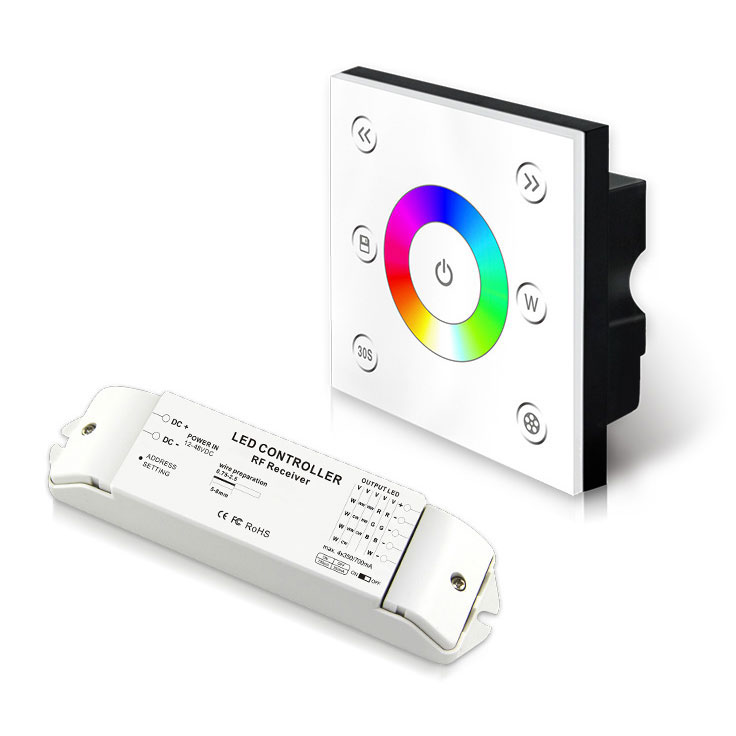
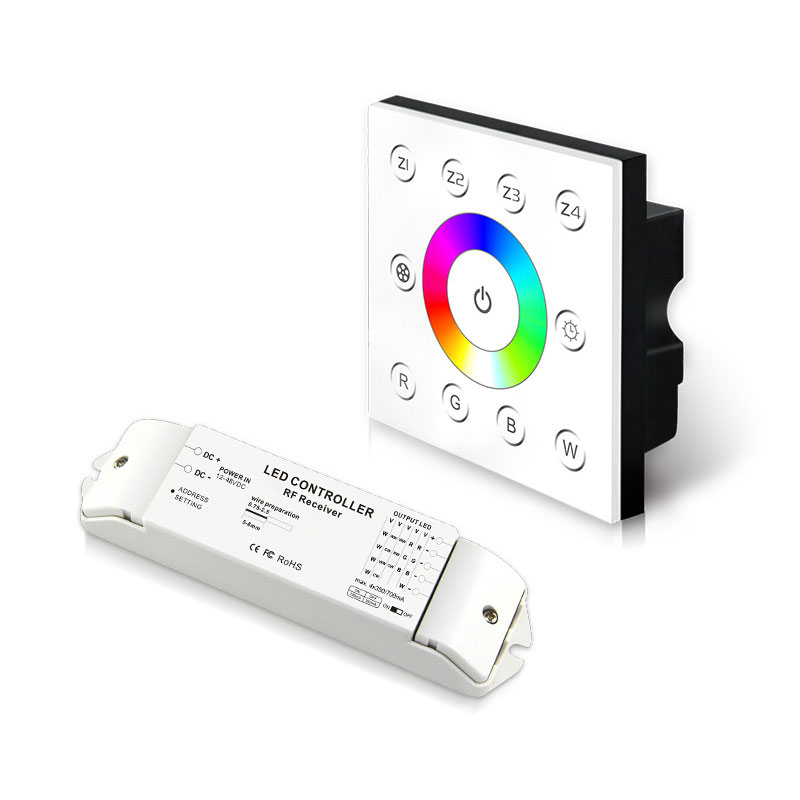
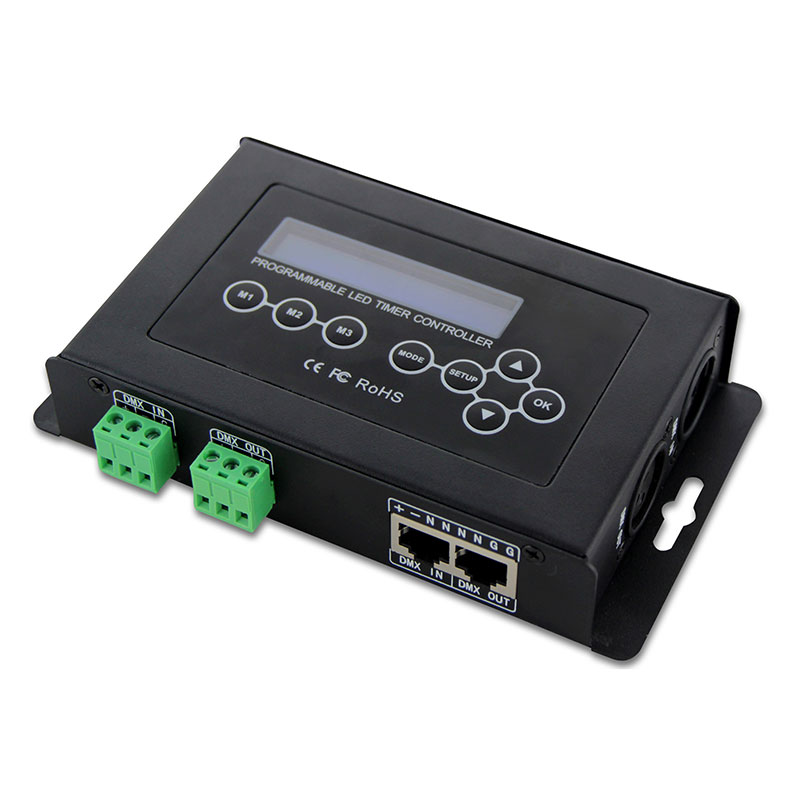
Depending on the model, you can manage your DMX lighting system through Art-Net over Ethernet for network centralized control, or use the controller's built-in programs and local interface for direct operation. Many models feature physical buttons and LCD/TFT displays for selecting lighting programs, adjusting parameters, and configuring control settings. Selected models also offer wireless remote control for added convenience.
Whether you need computer-based network control, preset lighting effects, scheduled operation, or straightforward local control without a separate computer, SuperLightingLED BinColor DMX Controllers provide flexible control options for residential, commercial, architectural, and professional lighting projects.
Choose a suitable DMX light controller according to the number of DMX outputs, network control requirements, built-in functions, and the DMX devices you plan to operate.
Frequently Asked Questions About DMX Controllers
Direct engineering answers on selecting, wiring, and programming standalone and pixel-mapping DMX controllers for architectural and stage LED strip lighting installations.
A DMX controller is a centralized digital transmitter that generates standard USITT DMX512 or Art-Net protocol data packets to coordinate the colour, dimming, and motion dynamics of automated LED fixtures. In an architectural or stage setup, the controller does not drive high-voltage DC power to the diodes itself; instead, it outputs low-voltage differential RS-485 data down a balanced 3-pin or 5-pin line to addressable receivers. Those receivers interpret the serial addresses across 512 universe channels and modulate 12V or 24V constant-voltage circuits using pulse-width modulation. When managing standard analogue LED strips, you place DMX CV decoders between this master unit and the tape.
A DMX controller acts as the commanding master device that generates and schedules digital lighting scenes, while a DMX decoder is a slave interface that converts incoming digital data into dimmed DC power. Masters like the BC-100 or BC-204 issue control signals via Art-Net or hardwired terminals, but they provide zero power output to run an LED strip directly. You need a master to originate universe commands and decoders downstream to regulate load current.
To control LED lights with DMX controller hardware, you map each fixture's start address, route a shielded twisted-pair signal cable from master to receiver, and set program parameters on the interface console or via software. The master transmits 512 8-bit channel values at a 44 Hz refresh rate over an RS-485 bus. Setting address 001 on a 4-channel decoder reserves channels 1 through 4 for red, green, blue, and white dimming levels. On standalone masters like the BC-322, built-in timer schedules adjust brightness curves automatically across 24-hour cycles, whereas network controllers read continuous stream commands over Ethernet via sACN or Art-Net protocols.
To connect LED lights to DMX controller terminals, route the controller DMX+ (Data+), DMX- (Data-), and GND ports directly to your receiver's signal inputs. Never wire low-voltage analogue LED strips straight into the signal terminals of a DMX lighting controller, as signal terminals carry digital logic voltage rather than driving current. The controller's data bus feeds an intermediate decoder, while a separate 12V or 24V power supply delivers DC current to the decoder's power terminals. For addressable SPI tapes, certain hybrid masters provide dedicated Data and Clock screw terminals that feed strip pixels directly alongside common ground.
The best DMX controller for pixel mapping applications is an Ethernet-to-SPI master unit like the BC-200 Art-Net pixel controller, which processes high-bandwidth network protocols without signal latency. Unlike basic serial consoles limited to 512 channels, network-attached pixel processors ingest Art-Net or E1.31 streaming ACN across multiple IP universes over RJ45 connections. The BC-204 and BC-216 bridge incoming Ethernet data directly to clock and data SPI lines, running matrix panels, building contour profiles, and large holiday light shows. They eliminate frame drops and sync issues common when using legacy USB-to-DMX dongles on high-density displays.
One physical DMX512 universe supports exactly 512 control channels, but the physical transceiver chips on the bus face a hardware electrical limit of 32 unit loads per run. If you use RGBW tape consuming 4 channels per zone, a single 512-channel universe accommodates up to 128 individually controlled zones (512 / 4). However, once you attach 32 physical receiver boxes in line, signal loading degrades packet voltages regardless of how many leftover channels remain. To place 60 decoders on one universe run, you must split the daisy chain with an optically isolated RS-485 distributor at the 30-device mark.
You can configure addresses and check load parameters remotely if your master console supports the bidirectional ANSI E1.20 RDM (Remote Device Management) protocol. A controller DMX unit equipped with RDM, such as the BC-800, sends discovery packets down the standard 3-pin signal cable to locate all compatible slave boards on the link. It reads their current addresses, device temperatures, and firmware versions, and allows you to rewrite starting addresses directly from the master keypad. This eliminates manual ladder climbing and DIP switch adjustment across drop ceilings or exterior facade installations.
An autonomous DMX light controller reads programmed lighting scenes, chase timings, and fade durations from internal flash memory or an SD card without needing a live PC connection. Units like the BC-204-DMX512 allow engineers to map complex multi-universe light shows inside Art-Net software, export the compiled data files to an onboard SD card, and trigger cues via front-panel LCD pushbuttons or external dry contacts. Dedicated master clocks synchronize fade transitions over preset calendar times, ensuring exterior architectural accents and lobby backlights execute daily schedules reliably without computer crashes or operating system updates.
Standalone DMX master consoles in this series operate on low-voltage DC power supplies, typically requiring either a DC 9V wall adapter or a DC 12V to 24V supply. Industrial masters like the BC-800 and BC-204 accept a wide DC 5V to 24V input range. Internal logic circuits consume minimal current, usually under 500 mA at 12V. However, keep controller power feeds clean and isolated from high-draw PWM loads to prevent switching ripple from degrading digital output transceivers.