
5000K Daylight LED Strip Light
25 products
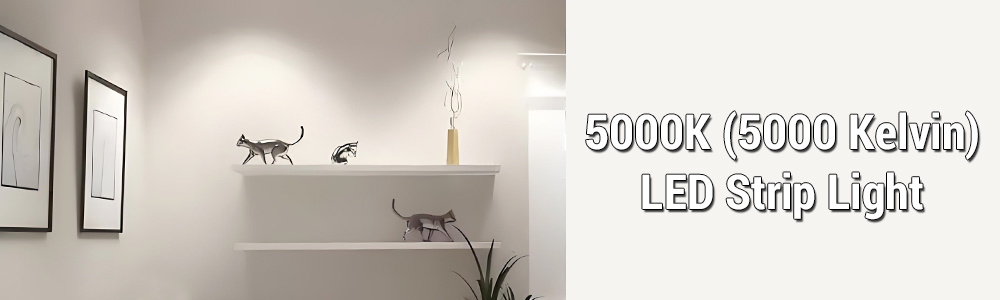
5000K light is close to the color temperature of midday sunlight, with a balanced spectrum where the ratios of red, green, and blue are similar to natural light. Visually, under high-color-rendering 5000K lighting, objects appear almost neutral—neither warm (yellow/red) nor cool (blue).
When is 5000K the Right Choice for Your LED Strips?
You'll find 5000K daylight LED tape lights are perfect for places where clarity and focus are key. If you’re looking for the crisp illumination of a 5000K light bulb for under-cabinet task lighting, a workshop, a garage, or a commercial display, these LED strips deliver that exact 5000K light color in a flexible, low-profile form factor. This is your go-to for seeing things as they truly are.

Free Cut 12V/24V Copper PCB Linear COB Flexible LED Strip Light

Premium Immersion Gold PCB 10mm Free Cut Cob LED Strip Light

24V Cut Anywhere Ra97 Tunable White LED Strip Black PCB

CRI 98 Full Spectrum Cob Led 24V White Strip Lights

DC24V CRI 96 8mm full spectrum white 600LEDs SMD2835 LED strip

Miniature 12V COB LED Strip Extremely Small LED Lights

12/24V 10mm Wide DC Low Voltage COB White Light Led Strips

DC12/24V 4MM Super Slim COB Strip Light - Diverse Colors

12/24V 8mm 480LEDs/m COB Dotless LED Strips - Vast Selection

Battery Powered 2835 White LED Strip With Switch Control

24V UCS1903 3in1 Color Temperature Addressable White LED Strip Light

24V 2835 High Intensity LED Light Strips Bright White 503lm/ft

24V White LED Strip with Diverse Color Temperature Options 600 Lights CRI 90

24V 2835 White High Output LED Strip Lights High Brightness 511lm/ft

24V 2835 High Density Very Bright LED Strip Lights White 894lm/ft

24V Dual Row 288D Brightest Double Density SMD 5630 LED Strip

24V 490mm*245mm White Ultra Slim Flexible LED Lighting Sheet 22X11

24V 2835 Super Bright White High Lumen LED Strip Lights 252 LEDs / m

20mm Double Row 480LEDs/m Ultra Bright 2835 LED Strip Light

05*11mm Black Neon LED Strip Lights Waterproof
5000K vs. 3000K vs. 6500K: Which is Actually Better?

There is no single "better" color, only the right one for the job. The difference between 3000K vs 5000K is dramatic—it's the difference between a cozy restaurant and a bright office. Similarly, the 6500K vs 5000K comparison is about moving from neutral daylight to a more intense, blue-tinged light often seen in clinical or industrial settings. Choosing the wrong one is one of the most common lighting regrets we see. Here’s a simple breakdown to help you decide.
| Characteristic | 3000K Warm White | 5000K Daylight | 6500K Cool White |
| Visual Feel | Soft, yellowish, inviting | Neutral, clean, balanced | Crisp, bluish, intense |
| Best For | Relaxing, ambiance | Tasks, clarity, color accuracy | High-alertness, industrial |
| Common Applications | Living rooms, bedrooms, restaurants | Kitchens, bathrooms, offices, garages | Warehouses, hospitals, grow rooms |
Why Trust SuperLightingLED for Your 5000K Daylight Lighting Strips?
We've been engineering lighting solutions since 2011. We stock over 6,400 models, but our real strength is the system around them. Need to dim your daylight strip lights with a specific wall switch? We have over 2,600 controllers covering everything from simple PWM dimmer knobs to complex DALI, Zigbee, and DMX systems. Need to mount it cleanly? We have over 700 aluminum channel profiles. If you're stuck, just send us a sketch of your project. Within 12 hours, one of our engineers will send you a complete wiring diagram and parts list, free of charge.
Frequently Asked Questions About 5000K Daylight LED Strip Lights
Got questions before you buy? As an application engineer here for over a decade, I've answered them all. Here are the most common ones we get about 5000K strips.
A 5000K light provides a neutral, crisp white that's very close to midday sun. The reason it can look slightly blue is all about context. If you're used to the warm yellow of a traditional 2700K bulb, the absence of that yellow makes 5000K feel cooler and more clinical in comparison. It's not actually blue, but your eyes perceive it that way against a warmer memory. It's perfect for tasks where you need to see true colors without a yellow or blue tint.
For most workshops, a 5000K LED light is the sweet spot. It gives you clean, clear, neutral light that renders colors accurately without causing eye strain over long periods. A 6500K vs 5000K comparison shows that 6500K is noticeably bluer and more intense. While some people like that hyper-alert feel for industrial tasks, many find it harsh and fatiguing for a home garage or detailed hobby work. Stick with 5000K for clarity you can work under for hours.
Yes, it's an excellent choice for task areas like kitchen counters. A 5000K LED light strip cuts through shadows and shows you the true color of your food, which is great for prep work. It creates a clean, modern look. If your overall kitchen lighting is much warmer (say, 3000K), the contrast can be a bit stark. But for a kitchen that's all about function and a bright, airy feel, 5000K is perfect.
On a 24V system, you can typically run a single length of about 10 meters (around 32 feet) before voltage drop becomes noticeable. With a 12V strip, that limit is closer to 5 meters. If you need a longer continuous run, you have to power it from both ends or add a new power feed in the middle. We've got a whole guide on long runs that breaks down the wiring. Don't try to power a 15-meter run from just one end; the far end will look dim and yellowish.
If you want a perfectly smooth line of light with zero visible dots, go with COB (Chip on Board). The LEDs are so dense they look like a continuous strip of light, even without a deep channel or a heavy diffuser. SMD strips, like those with 2835 chips, can still look smooth in a good channel, but if the channel is shallow or you're reflecting off a glossy surface like a granite countertop, our dotless COB strips are the guaranteed way to avoid that 'spotted' look.
For high-output strips, absolutely. The channel isn't just for looks; it's a heat sink. LEDs generate heat, and without a way to dissipate it, their lifespan and color consistency will drop fast. For a low-power accent strip, you might get away with it, but we always recommend a channel. It protects the strip from physical damage and guarantees you'll get the full 50,000-hour rated life out of it.
When you're comparing 3000K vs 5000K light for reading, 5000K generally provides better contrast and clarity. It's a crisp, neutral white that makes black text on a white page really pop, reducing eye strain. A 3000K light is much warmer and more yellow, which is great for relaxing but can make it slightly harder to focus on small text for long periods. For a dedicated reading lamp or task light, 5000K is the more functional choice.
A quality 5000K LED strip, when installed properly with adequate heat sinking, is rated for about 50,000 hours of use. Over that long lifespan, you might see a very gradual color shift, but it's typically minor. The biggest killer of LEDs and cause of color shift is heat. Mount it in an aluminum channel and don't overpower it, and it will give you consistent, stable light for years.
Absolutely. This is a huge part of what we do. You send us your dimensions—even a sketch on a napkin with measurements is fine—and we'll build a complete plug-and-play kit. We can cut the 5000K strip to the exact lengths you need, solder on lead wires of any length, and apply an IP65 coating for protection against kitchen moisture. An engineer will send back a wiring diagram and a parts list, usually the same business day, with no fee or obligation to order. Most of the complex projects we ship are custom builds that never appear on the website.
For those applications, a high CRI 5000K LED light is not just worth it, it's essential. A standard CRI of 80 is fine for general lighting, but for retail or photography, you need a CRI of 95 or higher. At 5000K, a high CRI light renders colors almost perfectly, like natural daylight. This means a red shirt looks truly red, not slightly orange, and skin tones look natural. It makes products look more appealing and ensures what you see in a photo is true to life. You can learn more about what CRI is in our knowledge base.