
WS2818 IC Programmable LED Strips
14 productsWS2818 is an upgraded version of WS2811, featuring redundant signaling that significantly enhances the stability of IC-controlled LED strip lighting systems. WS2818 LED strip uses 12V DC as its operating voltage, and its 8-pin IC is externalized to 5050 RGB LEDs, each WS2818 IC is capable of controlling three LEDs simultaneously. A data transfer rate of 800Kpbs and a refresh frequency of up to 2KHz/s enable WS2818 12 volt addressable RGB LED strip to respond smoothly and quickly to the controller's SPI signals for complex, dynamic pattern synchronized displays.
Compared to 5V WS2813 and WS2812B, the WS2818 raises the voltage to 12 volts and is able to support strip runs up to 5 meters with the same specifications. WS2818 LED 12V light strips, while not carrying over the individually addressable feature of 12V WS2815, are more cost-effective than WS2815 RGB in most animated effects lighting scenarios. Browse our products for your project now.
Product spec sheets & downloads
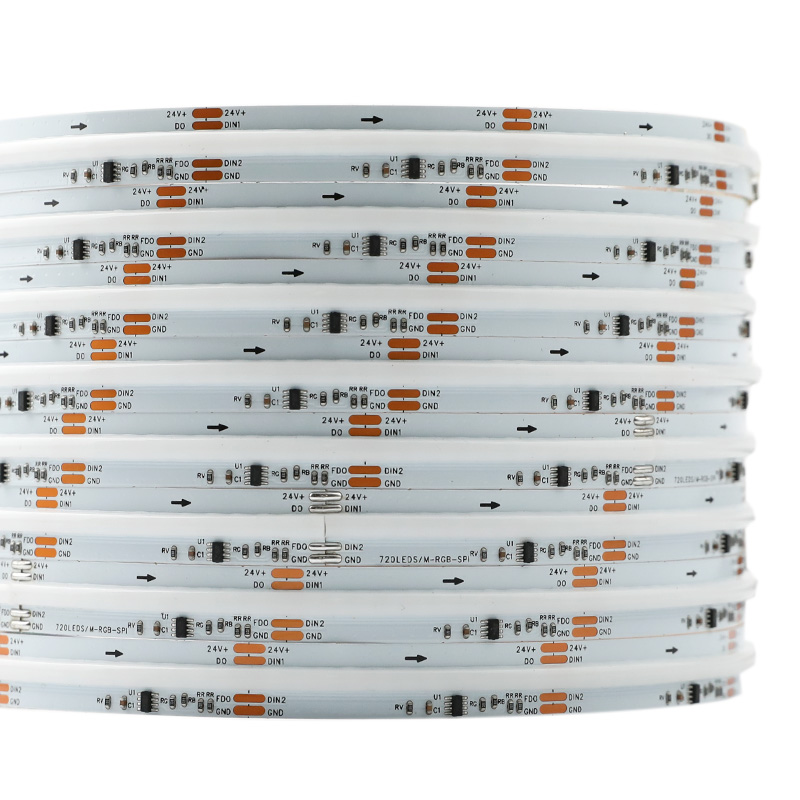
Break-Resume WS2818F Addressable RGB 12V 24V Cob LED Tape 100 Pixels
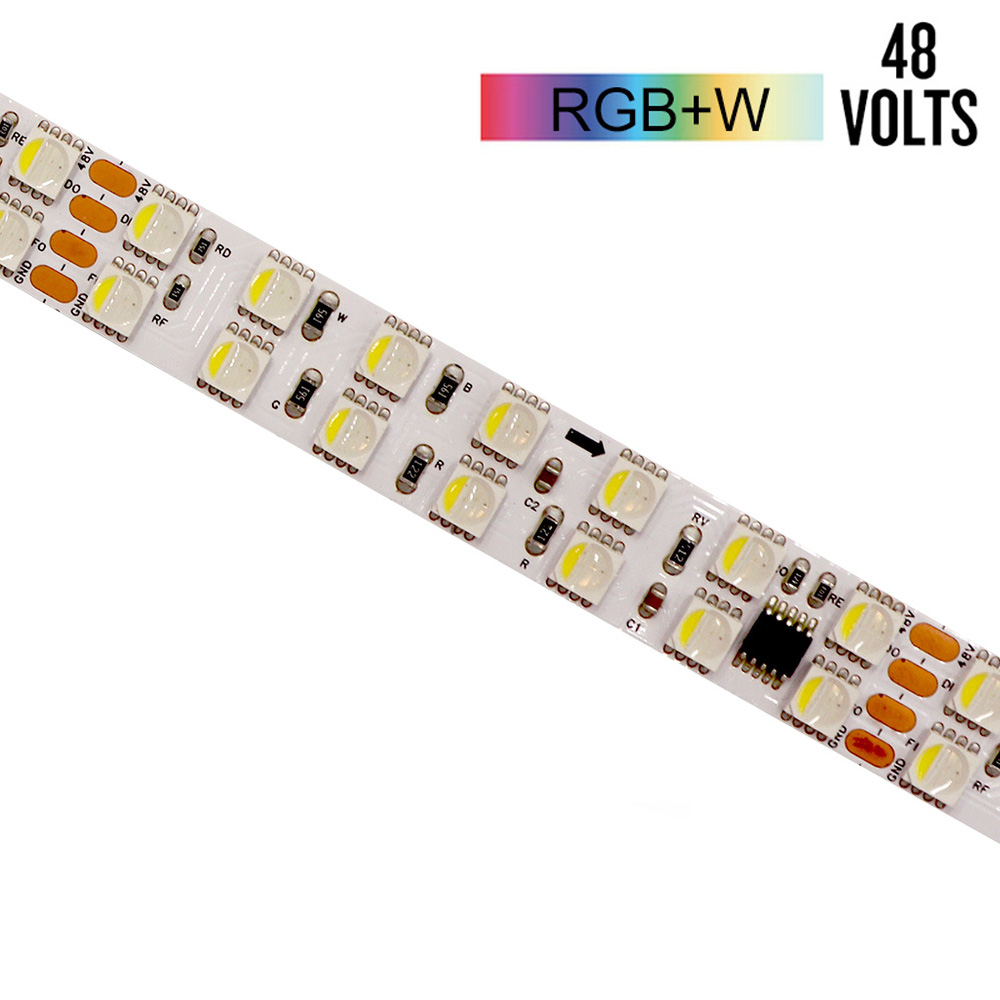
Dual-Row Bright 48V Long Addressable UCS7624 RGBW LED Strip
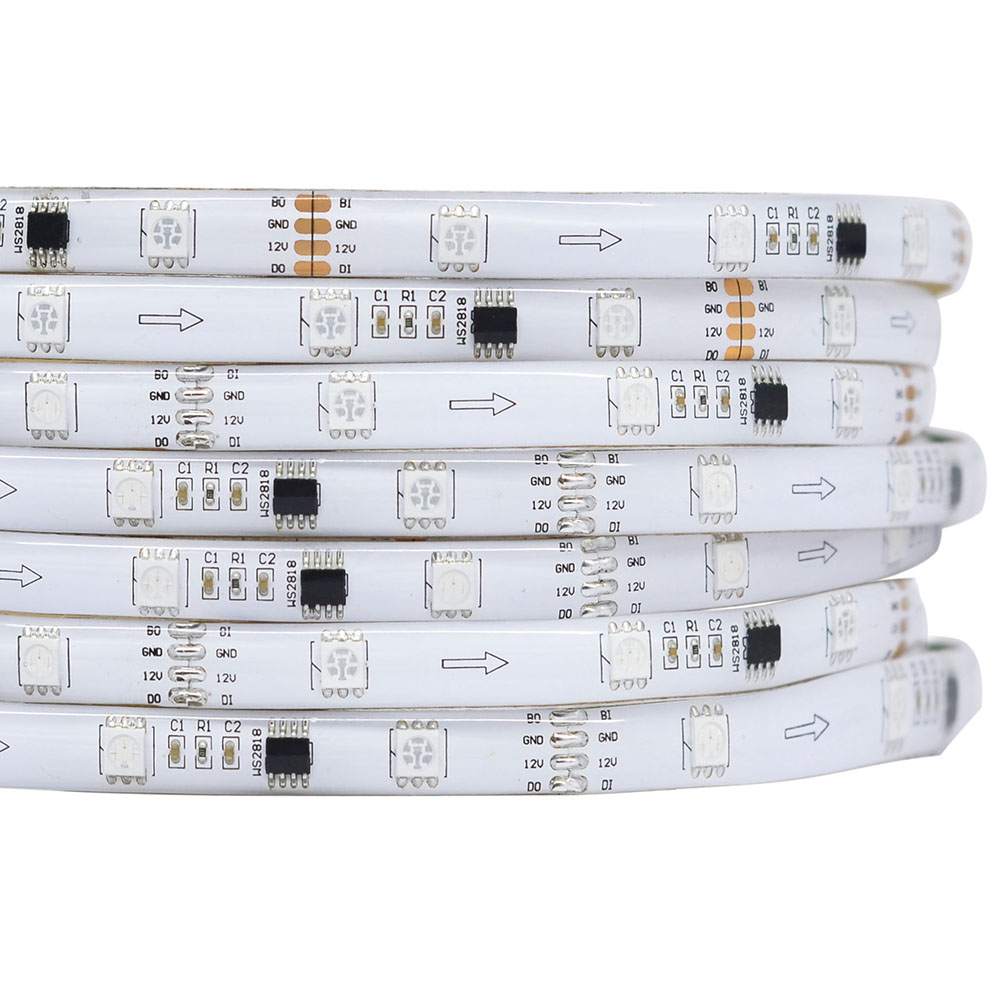
DC12V WS2818 5050SMD RGB Breakpoint Continue 150 LEDs Addressable Digital Strip Lights
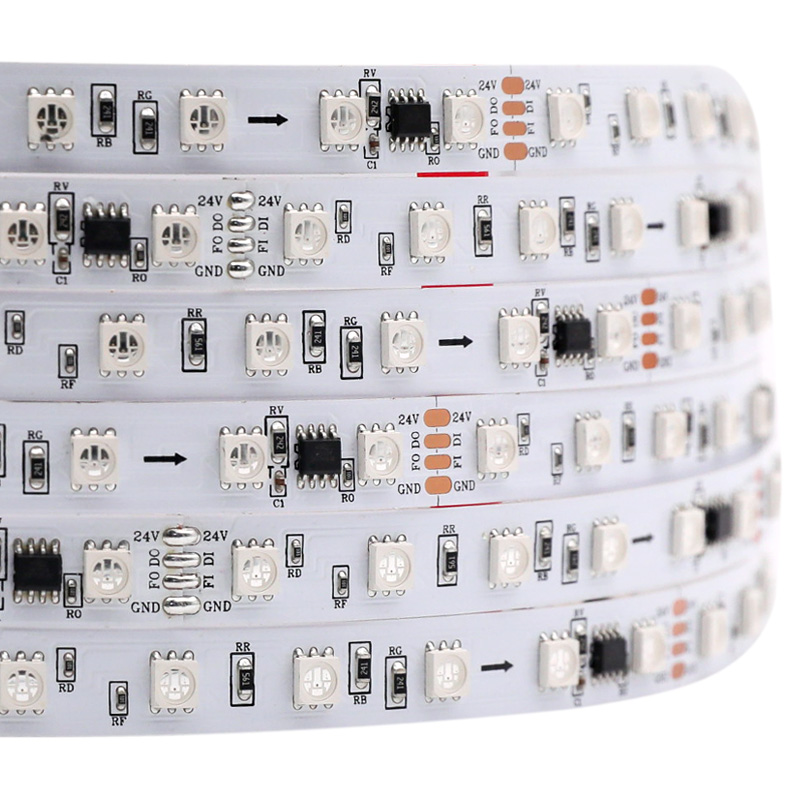
WS2818/TM1934A 20m 65ft Long Run Addressable RGB LED Strip
-5050SMD-RGB,-Breakpoint-continue,300-LEDs-Individually-Addressable-Digital-Strip-Lights.jpg)
DC12V WS2818 RGB Addressable Digital Strip Lights Breakpoint-continue 300 LEDs
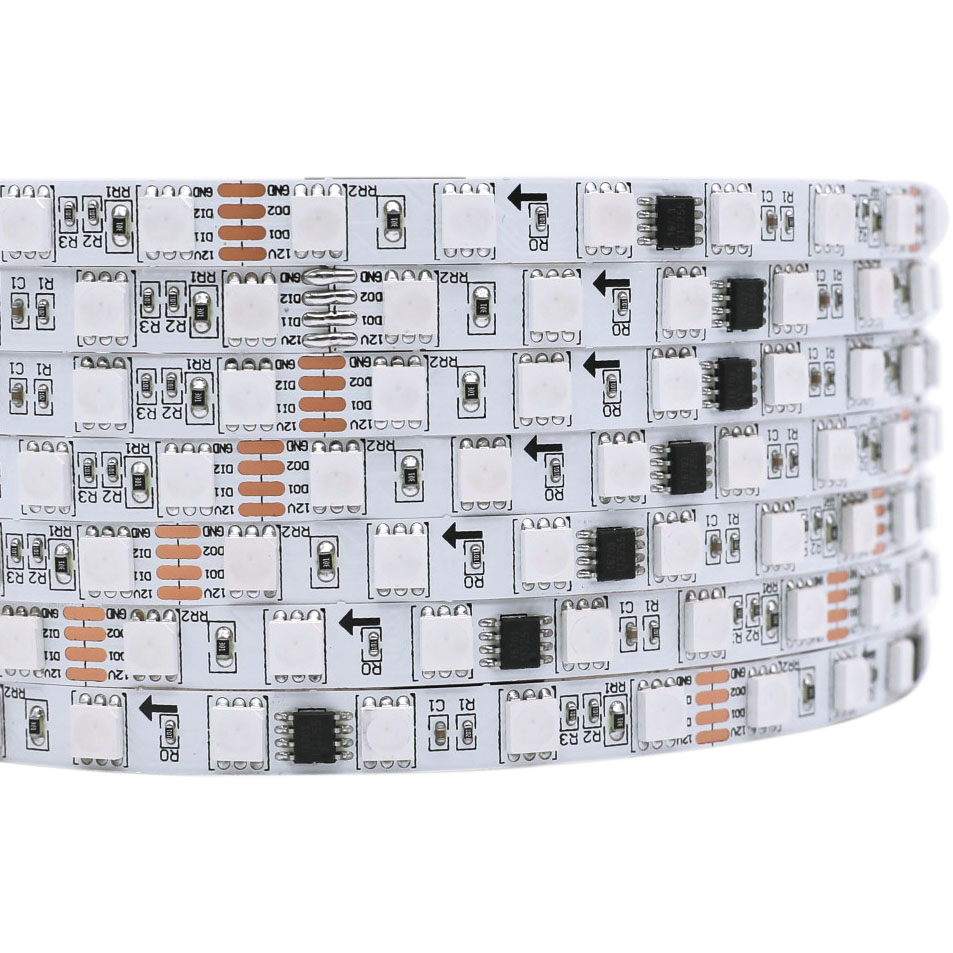
WS2818 Addressable RGB LED Strip Light - 22LEDs/Ft Breakpoint-resume - 0.31in Wide
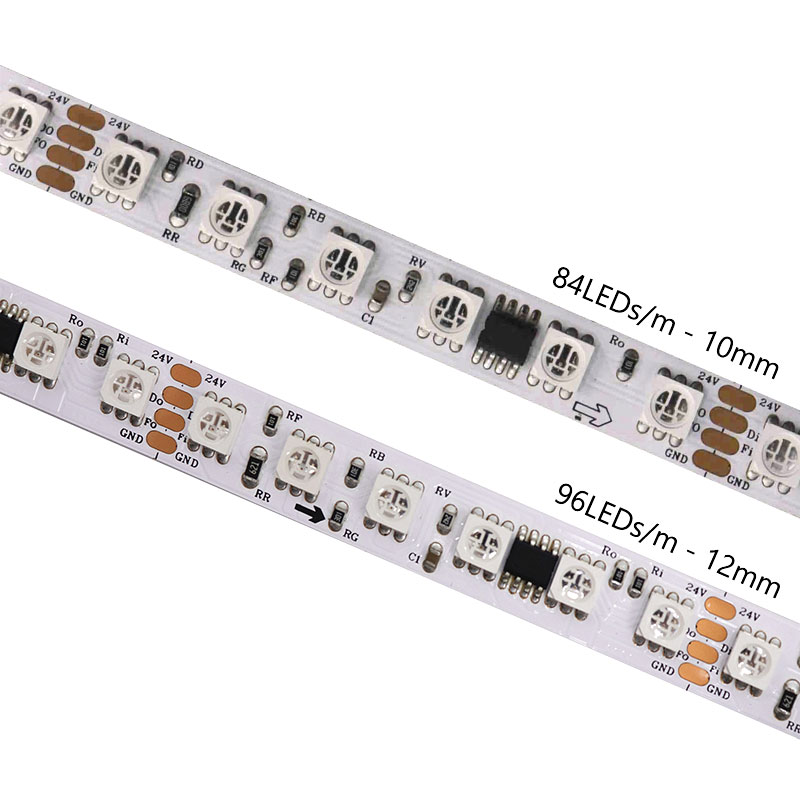
24V Dual Data Signal 5050 RGB Addressable LED Strip, 84/96 LEDs/m
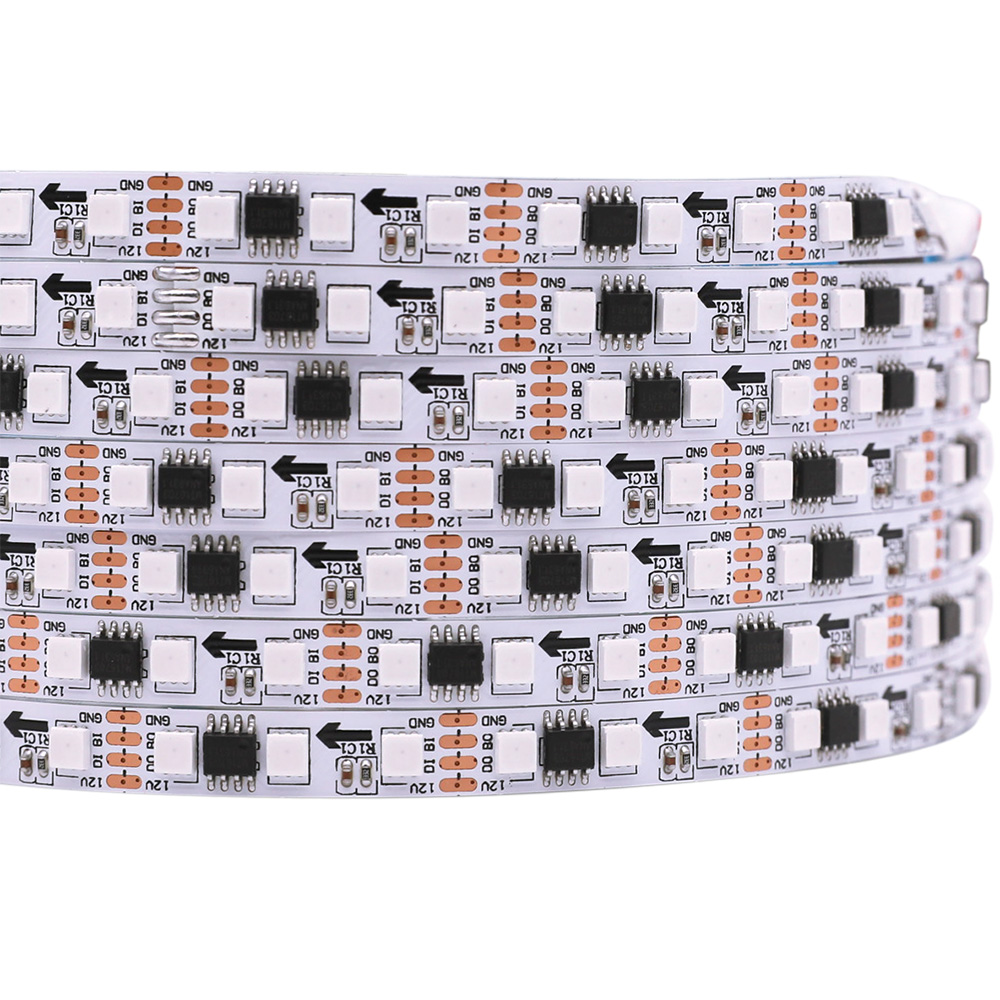
8mm 96LEDs/m 12V WS2818 Dual Data Signal RGB Addressable LED Strip
 5050SMD RGB, Breakpoint-continue,480 LEDs Individually Addressable Digital Strip Lights, Waterproof Dream Color Programmable Flexible LED Ribbon Light, 5m16.4ft per Roll.png)
DC12V WS2818 Breakpoint-continue Addressable Digital Strip Lights 480 LEDs
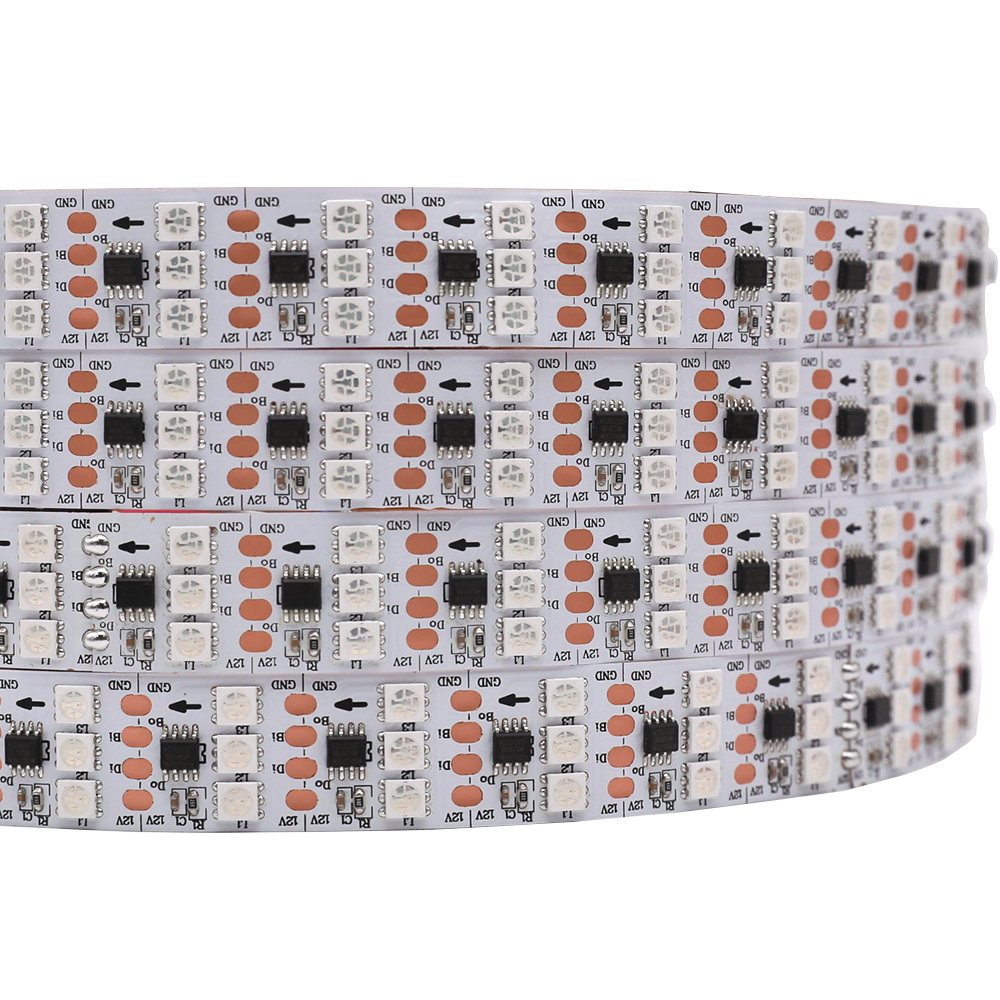
Triple Row Addressable RGB LED Strip - WS2818 Breakpoint Resume
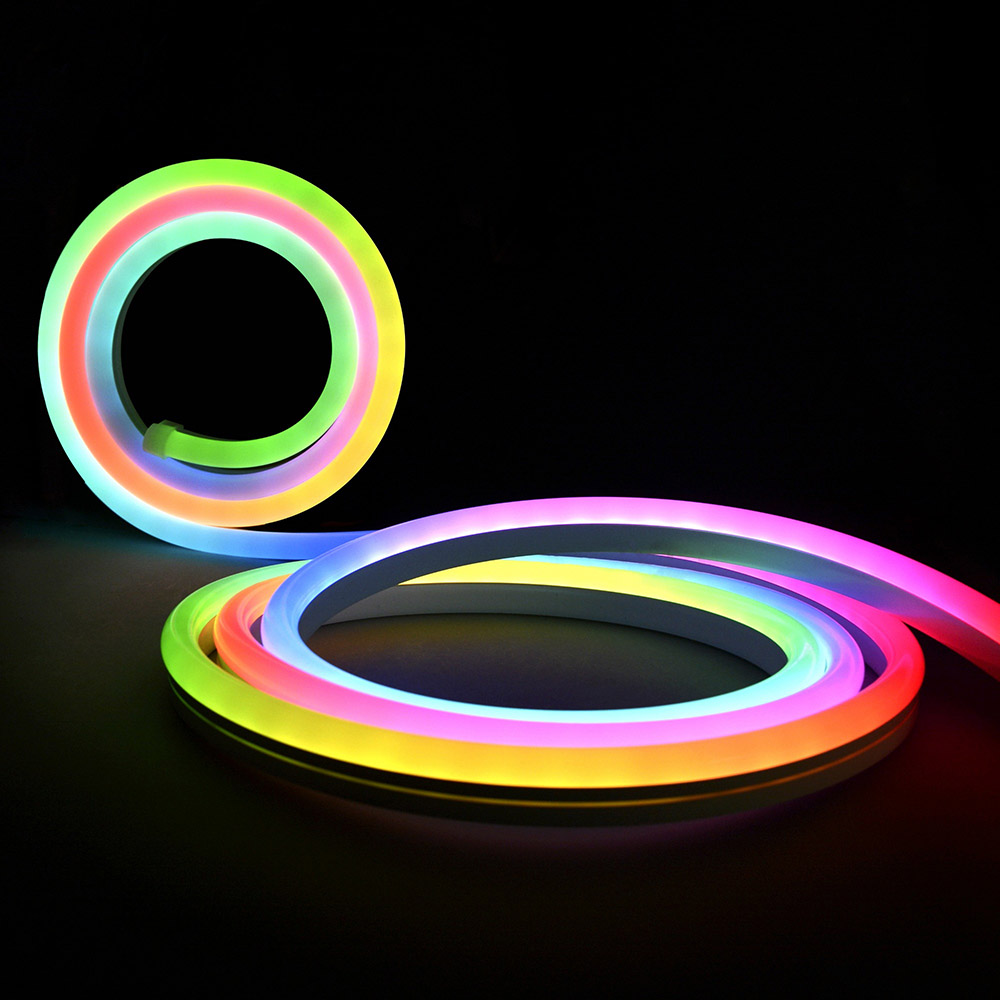
10*23mm Side Glow Addressable RGB RGBW Digital LED Neon Tube Light Strip
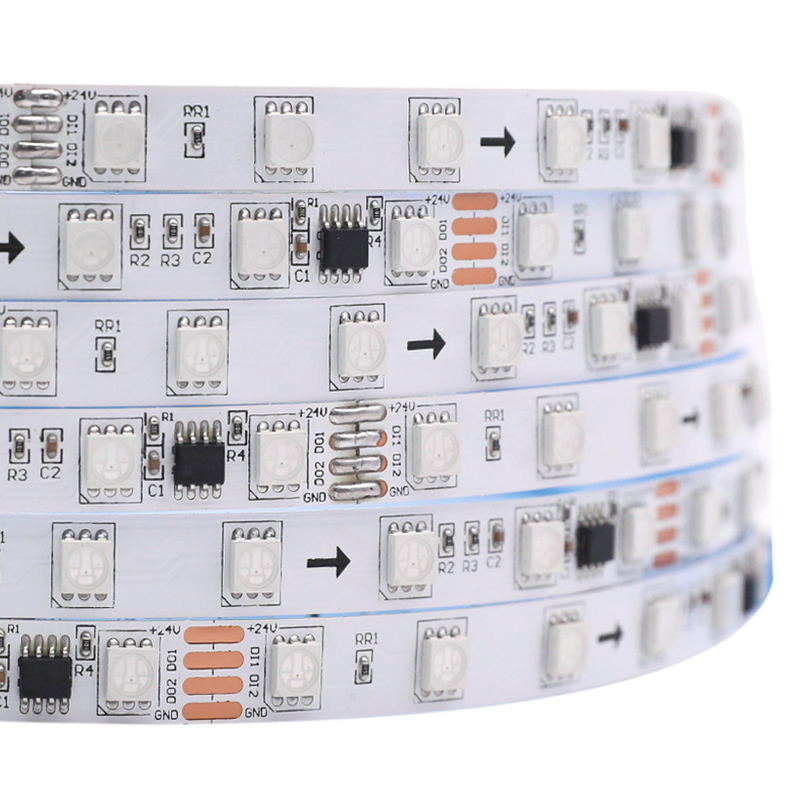
FW1903 Dual Data Signal 10m Addressable RGB LED Strip Light
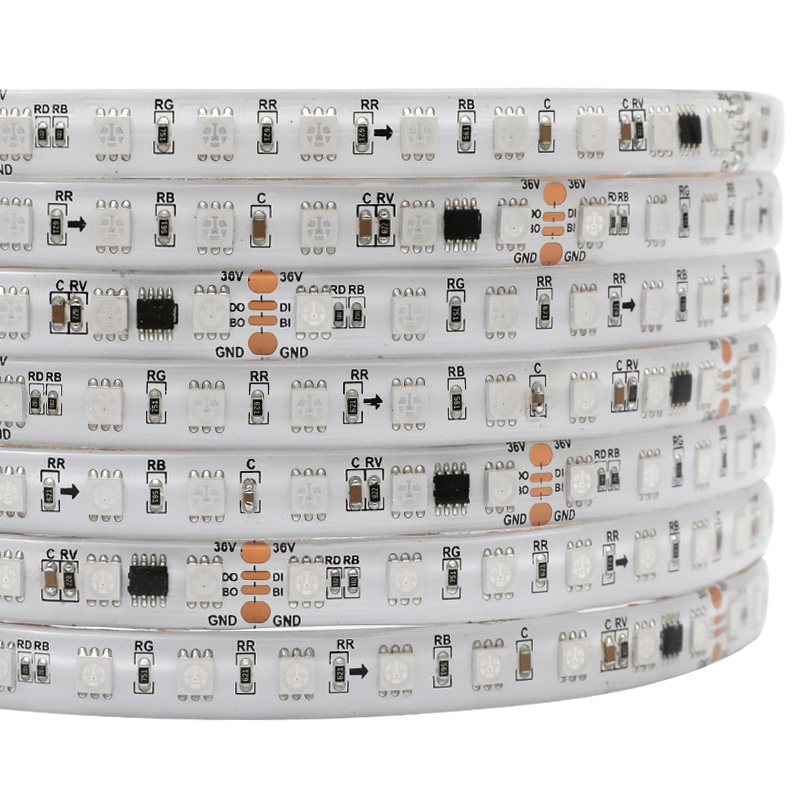
Max 25m 82ft Long 36V Dual Data UCS1903 5050 Addressable RGB LED Strip Light
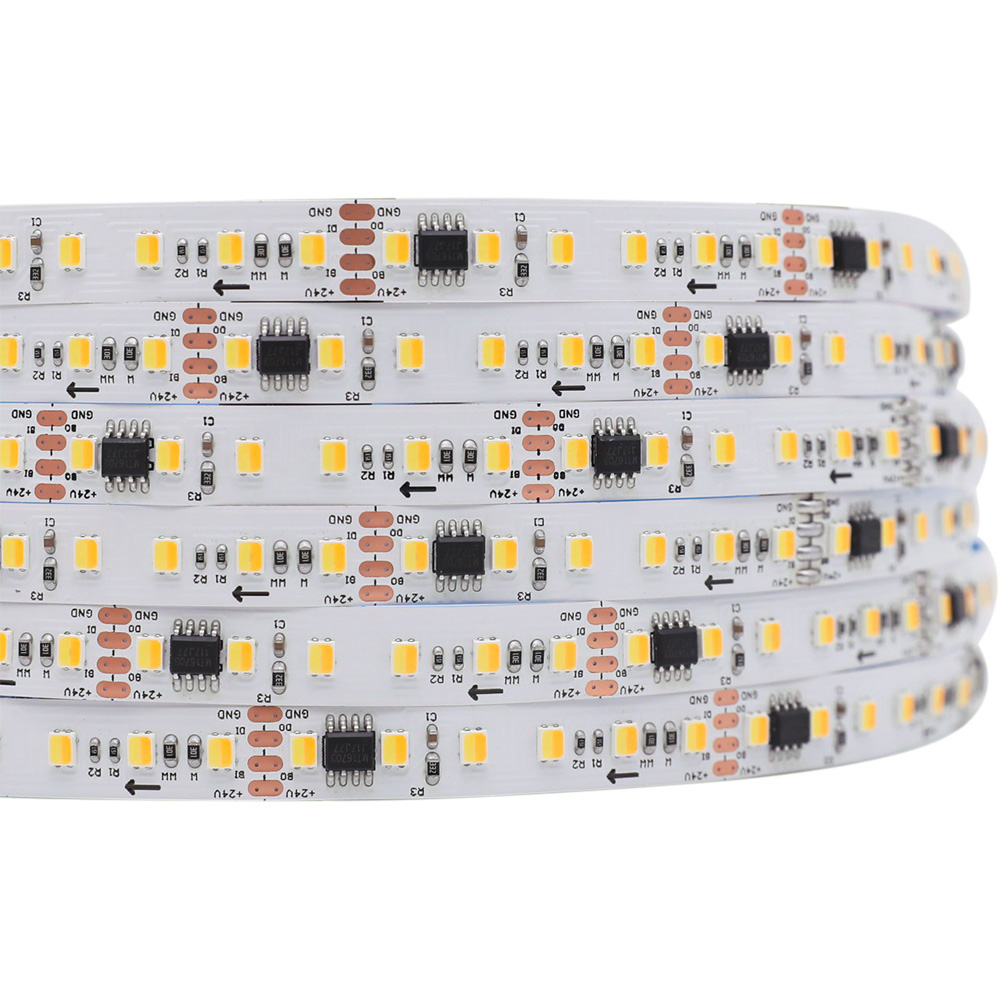
WS2818 WWA Addressable White LED Strip Lights 12V
Frequently Asked Questions About WS2818 LED Strips
Got a question about wiring, controlling, or choosing a WS2818 strip? I've answered thousands of them over the years. Here are the most common ones.
The big upgrade in a WS2818 IC programmable LED strip is the backup data line. If one IC fails, the signal just jumps to the next one, so the rest of your strip keeps working. A WS2811 strip is single-signal, so one bad chip can take down everything after it. For any critical install, that dual-signal redundancy is worth it. They use the same control protocol, so your controller won't know the difference.
It depends on what you need. The main difference when comparing WS2818 vs WS2815 is the control resolution. WS2815 strips are individually addressable, meaning you control every single LED. A WS2818 controls LEDs in small groups, usually 3 or 6. For smooth color fades and chases, a WS2818 is far more cost-effective. If you need fine-grained pixel mapping for video effects, you need the WS2815.
Yes, absolutely. WS2818 LED strips use the exact same data protocol as WS2811 strips. Your existing controller, whether it's an Arduino, a dedicated SPI controller, or running WLED, will see it as a WS2811 and work perfectly. You just get the added benefit of the backup data line for more reliability.
They're functionally identical, yes. When you see a strip listed as TM1934A vs WS2818, you can treat them as interchangeable for your project. They are both dual-signal, group-addressable ICs that use the same control protocol. For your controller and power calculations, the specs are the same.
It's straightforward. You'll have Positive (+V, usually red), Data In (DI), Backup Data In (BI), and Ground (GND, usually white or black). Connect +V and GND to your power supply. Connect DI and BI to your controller's data output.
Both are breakpoint-resume addressable RGB LED strips, but the key difference when comparing WS2818 vs GS8208 is that GS8208 is individually addressable. The GS8208 LED strips also tend to have a higher PWM frequency, which is better for on-camera work. For most architectural and accent lighting, the WS2818 is a more economical choice.
Absolutely. A huge part of our business is building custom-length WS2818 LED strip assemblies. Just send us a sketch or a list of lengths—even a photo of a drawing on a napkin works. An engineer will send back a complete wiring diagram, parts list, and quote, usually within 12 hours. We can cut to your specified lengths, solder on lead wires, and add any connectors you need. There's no fee for the consultation and no obligation to order.