
Classic RF Controller Set
25 productsThe SkyDance Classic RF Controller Set Series is specifically designed for LED strip lighting, offering a variety of pre-matched wireless controller and handheld remote combinations for different LED strip types and lighting requirements.
Each Classic RF Controller Set comes with a corresponding handheld remote designed to work with the included controller. Depending on the Single-Color / CCT / RGB / RGBW / RGBCCT / Addressable set, you can conveniently switch lights on and off, adjust brightness, select colors or color temperatures, recall lighting scenes, and customize dynamic effects. Some models also support Wi-Fi app control and integration with smart lighting systems, offering additional flexibility for convenient wireless operation and smart home automation.
Choose the Right Set for Your LED Strip
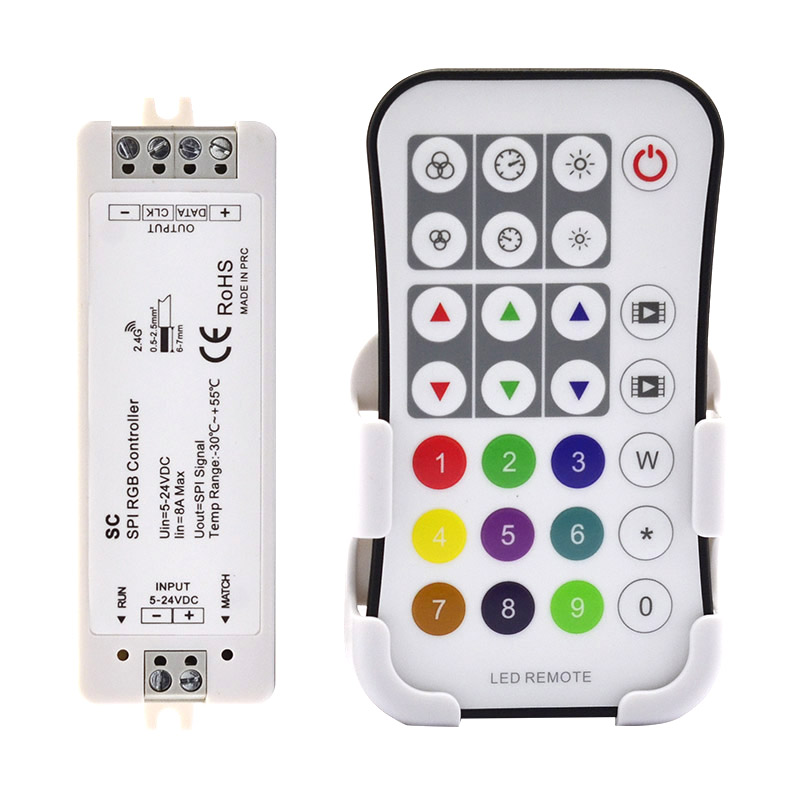
When selecting a Classic RF Controller Set, make sure its output type, operating voltage, channel configuration, and supported LED protocol match your LED strip. For addressable LED strips, also verify that the controller supports the specific IC or control protocol used by your strip.
With the controller and remote already matched, SkyDance Classic RF Controller Sets make it easier to find a compatible wireless control solution for your LED strip lighting installation.
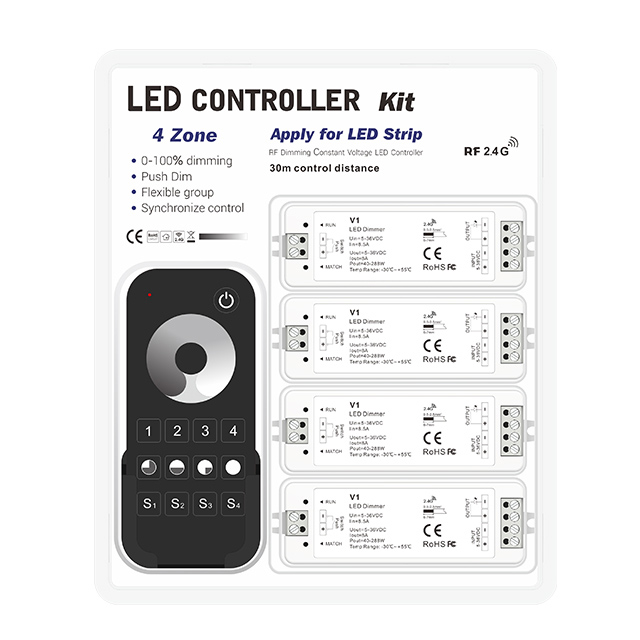
SkyDance RF wireless products support both single-zone and multi-zone control, allowing one remote to operate a single lighting setup or manage multiple independent lighting zones, depending on the model. With a wireless control range of up to 30 meters (98 ft), compatible controllers can also synchronize their lighting effects wirelessly within the supported range. Multiple controller-and-remote sets can be used in the same space, making it easier to create coordinated lighting across different areas while maintaining flexible zone control.
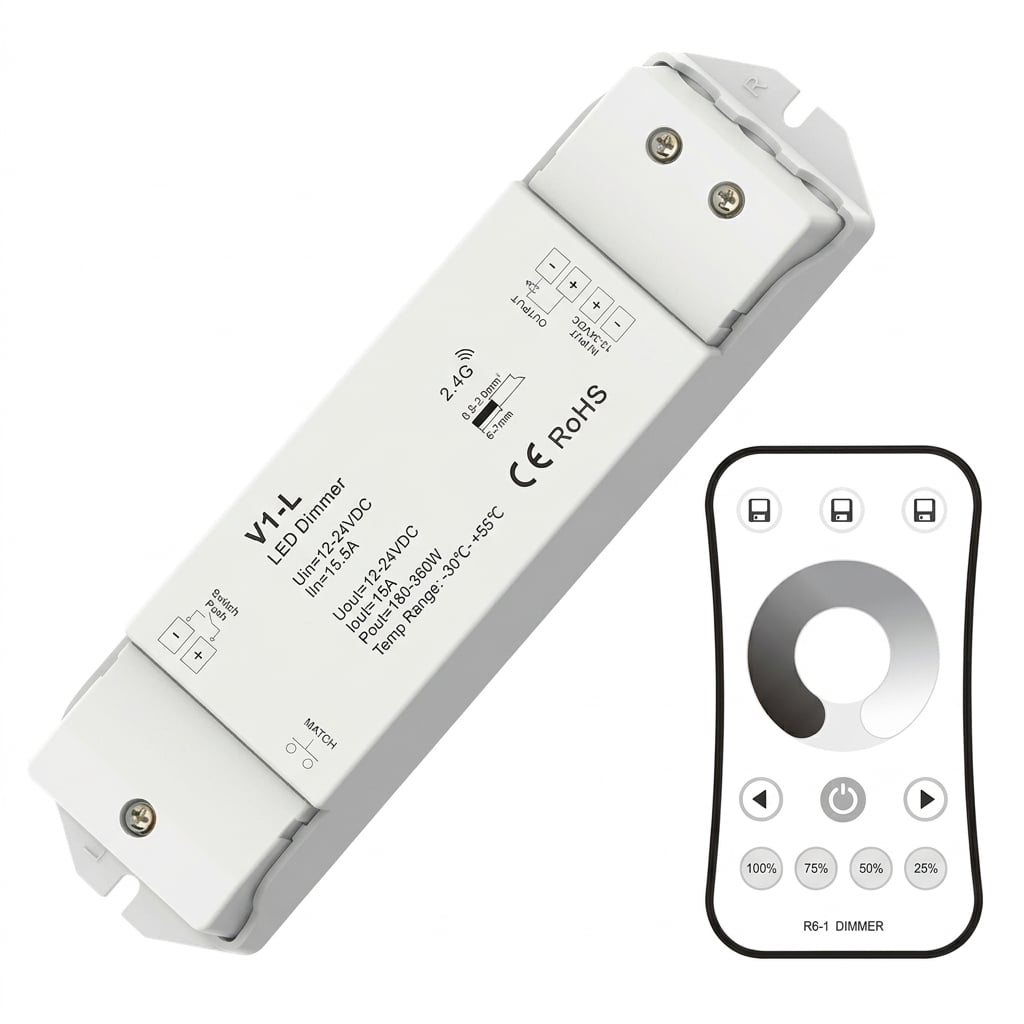


Smart WiFi LED Dimmer Kit: Tuya App & RF Remote for 12-36V Strip Lights



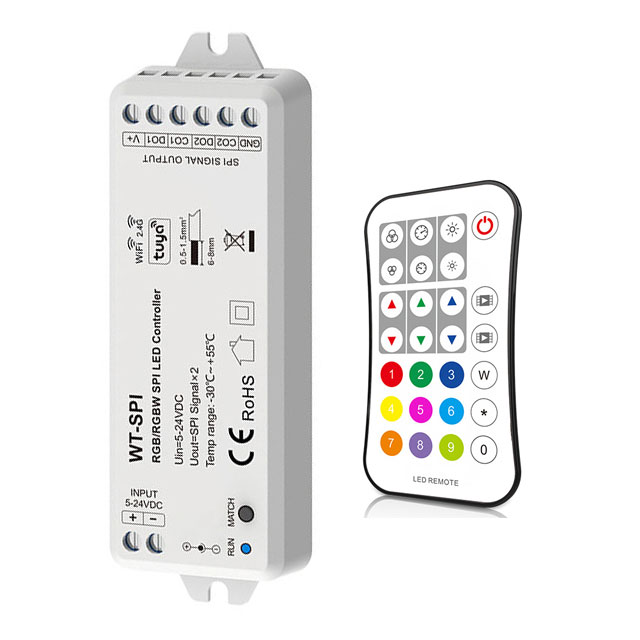
WT-SPI 5-24VDC WiFi Tuya & RF RGB/RGBW SPI LED Controller


FAQ About Classic RF Controller Sets
Direct answers to common wiring, pairing, and load-matching questions from our technical support desk.
In an RF LED controller setup, SkyDance receivers can sit up to 30 metres apart thanks to built-in automatic signal transmitting. When you send a command from your handheld remote to the nearest receiver, that unit executes the change and simultaneously retransmits the 2.4 GHz RF signal to the next controller within a 30 m radius. In practice, this creates an automated cascade across large rooms or multi-room installations. As long as no single gap between adjacent receivers exceeds 30 m in clear air (or roughly 15 m through standard drywall partitions), your entire system stays synchronized without extra repeaters.
Mount the RF receiver on the underside of the cabinet or inside a nearby drywall chase, keeping it at least 30 cm away from metal range hoods and switching power supplies. While 2.4 GHz radio signals easily penetrate 18 mm MDF, plywood, and standard granite countertops, placing the receiver inside a sealed metal junction box cuts the reception radius by up to 80%. If you must hide the receiver inside a deep metal enclosure, route the flexible wire antenna through a small drilled grommet so it sits exposed to open air. Always orient the DC output terminals facing downward to prevent dust accumulation.
Overheating terminal blocks are almost always caused by loose terminal screws or exceeding the maximum single-terminal current rating. For example, a 3-channel V3 receiver handles 4A per channel (12A total). If you wire three high-output 24V strips drawing 4A each, all 12A must return through the single positive terminal. If the positive wire is undersized (thinner than 16 AWG) or the cage clamp screw is not torqued down firmly, contact resistance generates intense localized heat, scorching the plastic. For runs approaching total receiver capacity, split the positive return across parallel terminals or use an external distribution block.
Choosing the right capacity in an RF controller set comes down to your total run wattage divided by your DC supply voltage. We list 25 live models in this Classic RF Controller Set category, ranging from compact mini-receivers like the 4A-per-channel V3 (96W max at 24V per channel) up to high-capacity units like the V1-L handling a full 15A on a single channel (360W at 24V). If your total continuous load exceeds 80% of a standard unit's rated capacity, step up to an '-L' high-amperage receiver. It avoids thermal throttling and provides larger cage terminals that accept thicker 12–14 AWG wire.
Many receivers in our Classic RF controller set lineup feature dedicated 'Push-Dim' terminals alongside their wireless RF antenna. This lets you wire a standard momentary wall push switch directly to the receiver using simple two-conductor bell wire. A short press turns the LED strip lights on or off, while a sustained press ramps brightness smoothly up or down. Both the wired momentary switch and your handheld RF remote operate concurrently without conflicting. If someone turns the lights off from the wall, you can still turn them back on from the handheld remote, making it ideal for bedrooms and entryways.
Hybrid models like the WT1 or WT-SPI maintain 100% functionality with their paired 2.4 GHz handheld remotes even during a complete internet or router outage. The local RF connection communicates point-to-point directly between the handheld remote and the receiver's RF chip, requiring no local network, cloud server, or router handshake. Only smartphone app commands, Alexa/Google voice integration, and cloud-stored timer automations pause when external internet fails. Once your broadband connection restores, the controller automatically reconnects to the Tuya cloud without needing to be re-paired or manually power-cycled.
SkyDance handheld remotes typically run 12 to 24 months on a standard 3V CR2032 lithium coin cell or two AAA batteries, depending on the model. The remote consumes almost zero standby power (less than 1 microampere) by entering deep sleep mode milliseconds after any button or touch wheel is released. If you notice the transmission indicator LED glowing faintly or the control range dropping from 30 m down to 5 m, the battery voltage has dipped below 2.6V and needs replacement. Swapping the battery never wipes programmed pairings; the receiver retains all network codes in non-volatile flash memory.