
LED Smart Controller Series
14 sub-categoriesAn LED strip controller is the brain of your lighting system. It's the component that takes your command—whether from a remote, a wall switch, or a smartphone app—and tells your LED strips what to do. Without the right controller, even the best LED strips are just dumb lights. SuperLightingLED™ smart lighting solutions to give you precise control over everything from simple dimming to complex, multi-zone color scenes.
A controller is an active electronic device that sits between your power supply and your LED strip. It needs to be able to handle the voltage and current your lights demand, or it will fail—or worse, become a hazard. Getting the choice right is the difference between a professional, reliable installation and a flickering, frustrating headache.
What's the First Decision? Matching Controller to Strip Type
Your LED strip dictates your controller choice. They are classified primarily by strip light color type, because each requires a different number of channels. Here’s how to get it right:
- For Single Color Strip Lights: You need a simple 2-channel dimmer. These control brightness only.
- For Tunable White (CCT) Strip Lights: These require a 3-channel controller to adjust brightness and blend warm and cool white tones.
- For RGB Strip Lights: A 4-channel led strip controller rgb is necessary to mix red, green, and blue.
- For RGBW Strip Lights: You'll need a 5-channel controller to manage the three colors plus the separate white channel.
- For RGB+CCT (RGBCCT) Strip Lights: The most complex, these require a 6-channel controller for RGB colors and the tunable white CCT channel.
- For Addressable ('Pixel') Strip Lights: These need a dedicated addressable SPI or DMX controller that can send data to each individual chip. Standard controllers won't work.
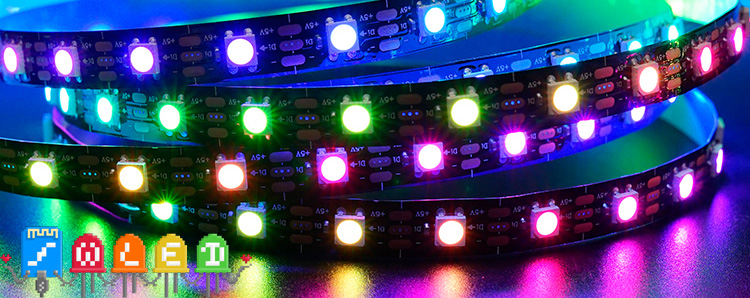
WLED Controller For LED Strip Lights
Many users of LED strip lights, especially users of addressable led strip, choose WLED controls because WLED program allows users to set the tape lighting effect according to their own needs, which is very DIY. And WLED is an open source project with a large online community where users can share their LED strip projects, effects and settings, and get inspiration and help through the community. For DIY led strip lights, this is an important advantage of using WLED controller.
These Gledopto WiFI WLED controllers are compatible with multiple color types of DC 5V 12V 24V digital led strips, such as WS281X family, SK6812, and other RGBICs and RGBWICs, WS2805 and FW1906 RGBCCT ICs, and single white ICs. The maximum output of a single WLED led controller is 800 pixels and 15A current and two data output ports (GPIO16/GPIO1, GPIO2), some models are even equipped with DIY ports (IO33/IO14/IO12) to connect additional push switches and sensors. Also available with wireless handheld remote control.
WLED ESP32 vs. ESP8266
WLED APP supports both ESP32 (accessible to Alexa and Google Home Assistant) and ESP8266 microcontroller chips. Compared with ESP8266, the performance advantage of WLED led light strip controller ESP32 can support microphone function makes it better in led strip lighting control which needs audio driver. WLED compatible controller with MIC can capture the music or sound in the environment in real time and dynamically adjust the brightness, color and light effect mode of the light strip according to the audio frequency and rhythm.
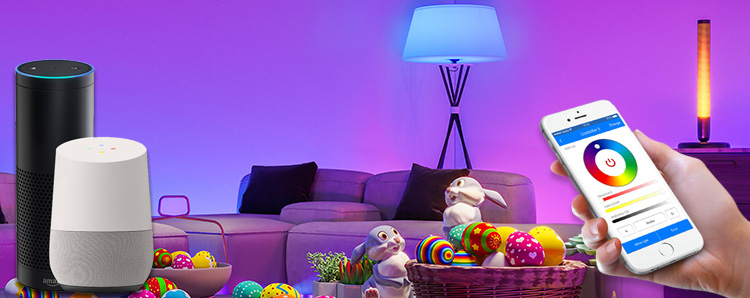
Alexa|Google|TuYa|WiFi Controllers
When you want to add smart control to your lighting without buying another hub, SuperLightingLED™ WiFi LED strip controllers are the direct solution. Unlike Zigbee controllers that require a separate gateway, a WiFi controller connects straight to your home's 2.4GHz router. This simple setup is all you need to control your LED strips with Alexa, Google Home, or a smartphone app like Tuya or Smart Life. You get full voice control, scheduling, and remote access right out of the box. How to Connect LED Strip Lights To Tuya SmartLife?
SuperLightingLED Wi-Fi Controllers: High-Value PWM Lighting Control Built for Modern Smart Homes
SuperLightingLED Wi-Fi controllers and receiver modules are engineered for versatile PWM (Pulse Width Modulation) strip lighting, offering seamless multi-channel control across the entire spectrum—from single-color, tunable white, and RGB to advanced RGBW and RGBCCT LED strips.
Versus SkyDance Wi-Fi Series: While SkyDance specializes in commercial-grade controls featuring strict UL-certified models and native cross-compatibility with SkyDance’s proprietary RF remote ecosystem, SuperLightingLED focuses on cost-efficient, everyday residential and light commercial applications that deliver robust smart app performance without the overhead of enterprise certifications.
Versus MiBoxer (Mi-Light) Wi-Fi Series: MiBoxer is widely recognized for high-current hardware capable of 20A to 30A heavy-load outputs and multi-zone integration with MiBoxer’s 2.4G RF remotes. In contrast, SuperLightingLED Wi-Fi controllers optimize standard-amperage installations, offering compact, budget-friendly modules ideal for typical room runs without paying for excess power capacity you don't need.
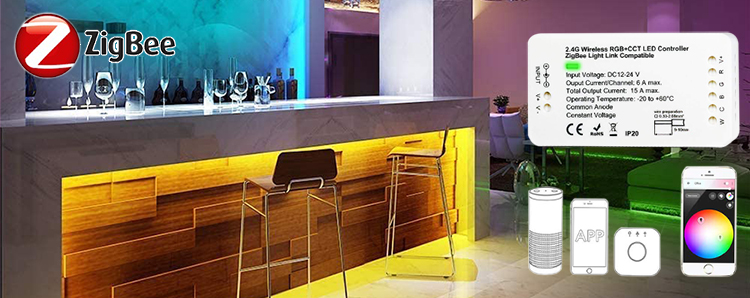
Zigbee Controllor and Lights
Zigbee controllers and lights are advanced smart home components that utilize the Zigbee 3.0 wireless protocol to create a stable, low-latency mesh network. Unlike Wi-Fi LED fixtures that can congest your router, Zigbee light devices communicate with each other, extending the signal range and maintaining responsiveness even if the internet is unstable.
SuperLightingLED™ Zigbee lighting system provides high networking capacity and superior energy efficiency, enabling you to seamlessly manage hundreds of devices through a single Zigbee Gateway.
Many premium models support both Zigbee 3.0 and 2.4G RF signals, allowing you to configure physical Zigbee/RF remotes alongside app-based Zigbee control, ensuring your lights are always accessible even if your smartphone isn't nearby. Note that RF remotes are often series-specific and may not be interchangeable between different brands.
Versatile Lighting Solutions and Smart Ecosystem Integration
Whether you are looking for simple plug-and-play light bulbs or complex architectural strip lighting, the Zigbee ecosystem offers two primary configurations to suit your needs:
• Zigbee LED Bulbs: Ideal for residential retrofitting, these smart bulbs screw directly into existing sockets to provide RGBCCT color-changing and dimming capabilities. They are perfect for users who want immediate smart functionality via voice assistants like Amazon Alexa or Google Home.
• Power Supply—Controller—LED Strip: This setup is the preferred choice for professional lighting projects like outdoor landscape lighting or cove accents. By using a compatible Zigbee LED strip light controller, you can transform any constant-voltage LED strip into a smart fixture with million-level dimming precision.
If you need alternatives for the Skydance or Mi-Light series Zigbee products, or prefer to maintain brand uniformity within your existing setup, please explore our dedicated Skydance Zigbee series or Mi-Light Zigbee series.
LED Strip 48V Controller
These led strip 48 volt controllers are designed to be compatible with 48V DC input, ideal for controling various 48V led strip lighting applications. SuperLightingLED™ strip led 48V controller supports multiple control methods, including RF remote control, WiFi, Zigbee, Bluetooth, DMX protocol, and manual adjustment, offering flexible and convenient lighting management for home and commercial 48V led lights setups. When selecting a 48V led PWM controller, ensure that its output current exceeds the operating current of your 48 volt led strips to guarantee stable performance and optimal functionality.
48V LED Strip Control SystemConvert AC power to DC 48V, then connect the controller between the power supply and LED strip.DC 48V→48VDC 48V
LED ControllerDimming, CCT, RGB,
RGBW or RGB+CCT controlDC 48V→Wiring Order: AC Power → AC/DC 48V Power Supply → 48V LED Controller → 48V LED Strip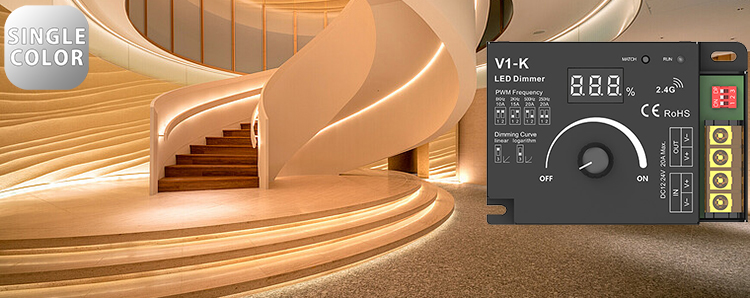
Single Color Dimmer Series
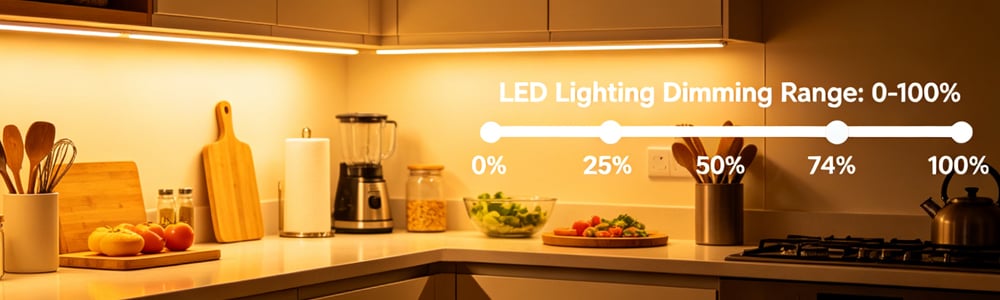
Single color LED strip lights can be directly connected to power supply. However, if you want to dim the lights (adjust the brightness), a dimmer controller is required.
A simple touch dimmer switch is sometimes all you need. Knob dimming is also a good idea. RF remote control, mobile APP control, and touch panel control are also available. For more intelligent lighting control, that would have to be PIR motion sensor controller, automatically turn the lights on and off by detecting your movements. Choose the one you like.
Know the wiring here: How to wire single color led strip lights?
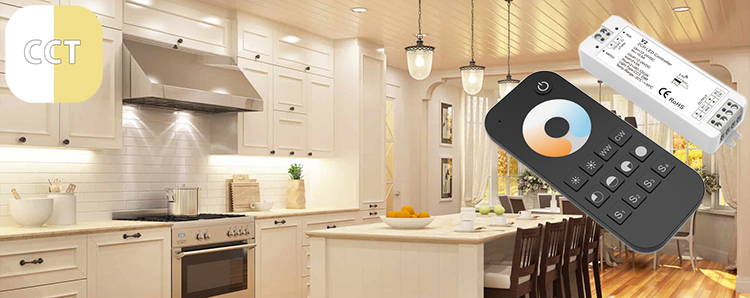
Dual White Color CT LED Dimmers
A Dual-White CCT LED Dimmer Controller does more than just dim your lights; it controls their mood. While a basic single-color dimmer only adjusts brightness from 0-100%, a CCT color temperature controller gives you command over the shade of white light itself. It works by independently managing the two sets of LEDs on a 3-wire tunable white LED strip — one warm white and one cool white. By blending these two channels, you can dial in any color temperature from a cozy, incandescent-like 2700K to a crisp, neutral 4000K or a bright, energizing 6500K daylight.
This level of led light color temperature control is essential for spaces that serve multiple purposes. You can set a warm, relaxing tone for the evening and switch to a cool, focused light for daytime work, all with the same lighting fixture. Getting the right control interface is the first step. SuperLightingLED™ offers a huge range of CCT dimmers to suit every project's different needs, from simple remote control to fully integrated smart home systems with voice commands.
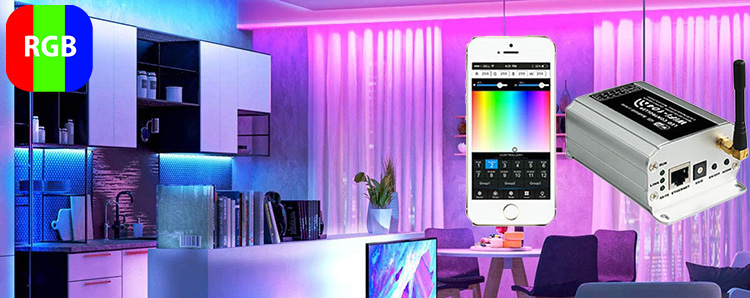
Color Change RGB LED Controllers
What a RGB LED controller do? How do you control RGB LED lights?
RGB Controller is dedicated to controlling 4 pin RGB light strips (V+, R, G, B) with various control types, most of them are compatible with DC5-24V or DC12-24V or DC12-48V low voltage input. With different control signals, RGB led light strip controller is able to adjust the brightness and color of the strip, it also with various built-in dynamic modes such as color jumping, fading, etc., to add vitality to the environment.
If you are not satisfied with the RGB light controller's self-contained colorful modes, you can choose the more flexible DMX RGB control, 0-10V RGB control, or DALI RGB control. With DMX master programming, users can create an almost infinite variety of color changing lighting effects and scenes to use for different scenarios.
Some users may want to customize the colors and effects of the RGB strips to their liking or the ambiance of the room, and don't want overly complicated controls, this is the time to consider using computer to program your RGB led strip lights. Connecting to a computer via a USB port and using specific PC software to control RGB strip lights is more suitable for home and small-scale projects.
Wall-mounted led RGB controller is a more traditional means, allowing users to select colors, adjust brightness or switch preset modes directly through intuitive buttons, knobs, or touch controls. Nowadays, it's mostly popular to control RGB led tape via mobile app with WiFi or Bluetooth support, or directly use RF or IR remote to change the RGB color and mode wirelessly. For those occasions where you need to create dynamic lighting effects, hold an event or party, lighting effects synchronized with music can create a vibrant atmosphere and add fun and dynamism to the event.
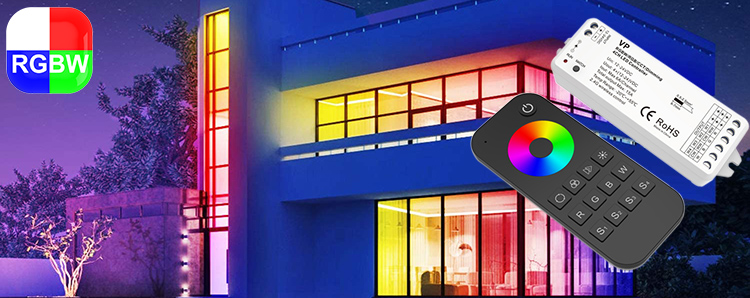
RGBW Controller Series
SuperLightingLED™ RGBW Controllers are designed to control RGBW (Red, Green, Blue, White) LED lighting systems, allowing you to adjust RGB colors, create dynamic lighting effects, dim the light, and control the dedicated white channel from one controller. They are commonly used with non-addressable RGBW LED strips and other compatible RGBW LED fixtures.
An RGBW LED controller is designed for 5-wire RGBW LED strips, which combine red, green, and blue color channels with a separate white channel. This gives you both millions of color combinations for decorative and ambient lighting and a dedicated white light for practical everyday illumination—all from the same RGBW strip.
SuperLightingLED RGBW Controllers for Every Lighting Project
Our RGBW light controller range provides flexible control solutions for DIY projects, residential lighting, and commercial installations. Depending on how you want to operate your lighting, you can choose from traditional RF remote controllers, wall-mounted controls, Bluetooth controllers, WiFi/app-enabled smart controllers, and other RGBW control solutions. Whether you are adding colorful accent lighting to a bedroom, kitchen, home theater, display cabinet, bar, retail store, restaurant, or architectural feature, you can select a controller based on the required control method and installation scale.
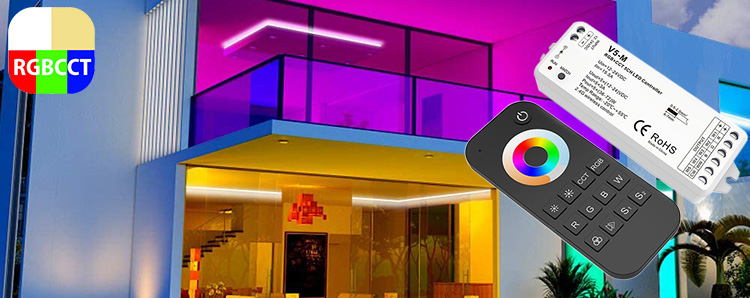
RGB+CCT Controller Series
RGB+CCT LED Controller provides precise control of color temperature and color output of RGBCCT LED Strip Lights and fixtures (Non-addressable), capable of producing a wide range of colors including cool white light, warm white light, natural white light, and RGB light.
You can connect a Bluetooth or WiFi RGBCCT LED Strip Controller to a compatible app on your smartphone, or use an RF/IR LED Controller to remotely control the RGB+CCT LED lights. In addition, the WiFi LED Controller is also available with Alexa/Google Assistant voice commands to adjust the lights.
By using Smart LED Controllers that are compatible with Zigbee, Mi light/Miboxer, Skydance, or Gledopto control systems, you can build a huge lighting system for your home or building.
When purchasing a separate controller, please select the remote type carefully to ensure compatibility of use.
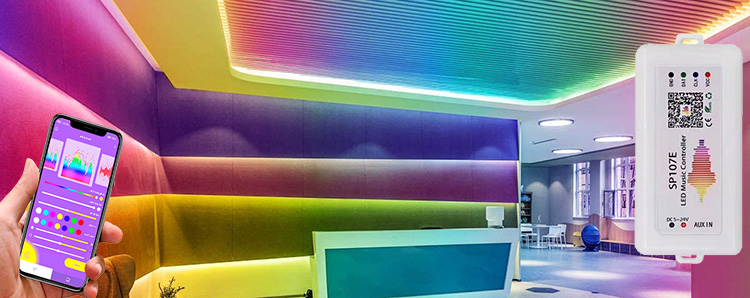
Addressable Dream Color Controllers
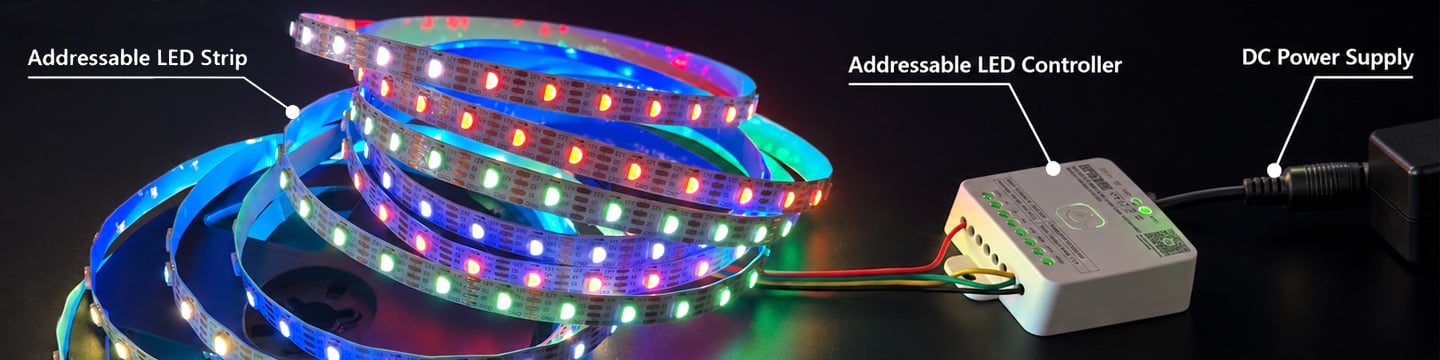
Addressable LED Controllers are used to control Programmable Addressable LED Strip Lights (also known as Dream Color LED Strip Lights and Pixel LED Strips) such as WS2812B, WS2811, WS2815, SK6812, etc. Suitable for IC-controlled LED strips, LED modules, and LED pixel screens.
Unlike a standard RGB controller that changes the entire light strip to one color at a time, an addressable LED controller gives you command over every single IC LED/LEDs individually. This is the technology behind the flowing, chasing "dream color" effects you see in high-end media rooms, dynamic signage, and architectural accents.
Essentially, while a regular LED strip controller sends a simple power signal, an addressable controller sends a constant stream of data, telling each pixel what color and brightness to be at any given moment. This unlocks fluid gradients, rainbow waves, and complex animations that are impossible with non-addressable strips. Getting started is a matter of matching the IC controller's capabilities—both its control protocol and its pixel capacity—to your project's ambition.
How to Choose the Right Addressable LED Strip Controller
Choose your addressable LED strip controller based on how you want to control your pixel lighting, including Bluetooth, WiFi/Alexa, RF remote, DMX Art-Net, computer programmable, and music-sync control options. Due to the incompatibility of RGBIC Controllers with Addressable RGBW and Addressable RGBCCT LED strip types, we have created two separate categories to make your choice easier.
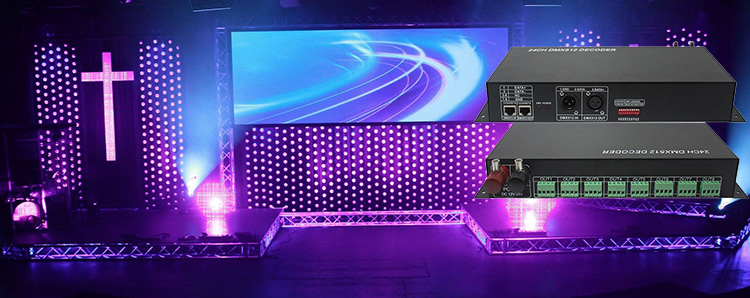
DMX Master Decoder Console
DMX512 isn't just for stage lighting anymore. In the modern architectural and linear lighting landscape, DMX stands as the gold standard for precision, reliability, and complex dynamic control. Whether you are illuminating a high-rise façade or syncing a home theater's RGBW accents, understanding the DMX ecosystem is key to unlocking limitless creative potential of LED lighting. At SuperLightingLED, we empower you with the underlying logic of DMX lighting systems and numerous hardwares to execute it. Learn the system, pick your tools, and light up your space like a pro.
Choose Your DMX Control Based on LED Type
When designing a lighting system, the important question "Which type of controller should I buy?" is actually "How do the LED strips receive instructions?"
From a signal control perspective, almost all LED light strips and fixtures fall into three primary categories. Matching your DMX control system to the correct signal type is the secret to an instant responsive LED setup.
1. DMX to PWM (Analog Control)
PWM LEDs—commonly referred to as Analog or Non-addressable light strips—are the most foundational and widely used lighting products in the LED industry.These include your standard Single Color, Tunable White, RGB, RGBW, or RGBCCT lights, where the entire run operates as a single unit and changes color or brightness of LEDs simultaneously.
In this setup, the LED strip itself is "dumb"—it has no onboard intelligence. It relies on an external DMX Decoder to translate DMX data into a PWM (Pulse Width Modulation) signal that regulates LED brightness and color.
The DMX signal ends at the decoder; the decoder then drives the LED lights via multi-core cables (V+, V-: R, G, B, W, etc.).
2. DMX to SPI/TTL (Pixel/Addressable Control)
If you are using "Addressable" or "Pixel" light strips (integrated with IC chips such as WS2811, SK6812, or WS2815), the LEDs require a digital data stream. A DMX-to-SPI Converter is needed to map DMX channels to the specific IC model.The converter translates DMX "Universe" data into a serial protocol (Data & Clock) that tells each individual IC pixel what to do in LEDs.
3. Native DMX512 (Direct Control)
This is the most streamlined and reliable DMX configuration available. These "Direct-to-DMX" light fixtures feature DMX512 ICs (such as the UCS512 or TM512) integrated directly into the LED substrate, simplifing wiring.By utilizing differential signal transmission (RS485), Native DMX LED products offer superior immunity to electromagnetic interference.
The DMX signal travels directly from the controller to the light fixture. No external decoders or SPI converters are required in between.
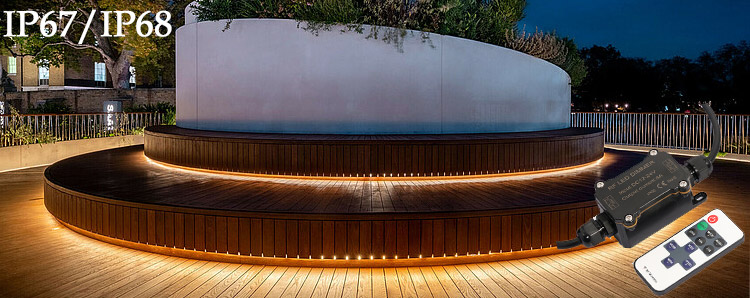
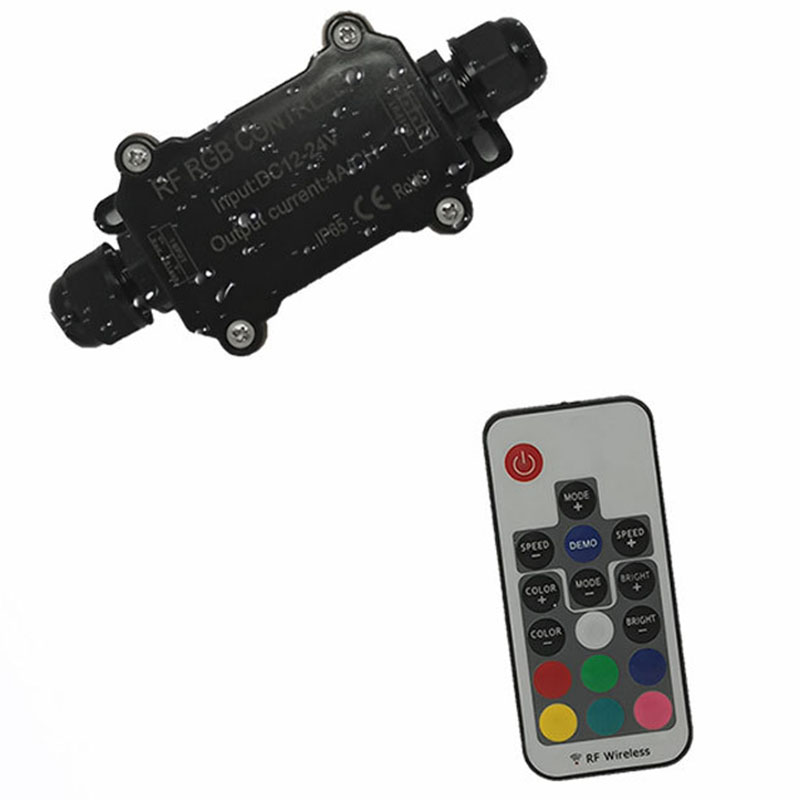
Outdoor Waterproof LED Controllers
Waterproof LED controller is a control device designed for use with LED lighting equipment in wet or watery environments. This type of LED light controller usually has great protection, often with IP66, IP67, or even IP68 ratings to prevent water, moisture, dust, or other damage to the device. The sealed construction ensures that the controller's individual ports and seams are effectively insulated from moisture.
Our waterproof LED outdoor lighting controllers cover a range of LED control types you may need, such as PWM, SPI/TTL, DMX, 0-10V/1-10V, DALI, Low Voltage DC12-48V, High Voltage, etc. as well as amplification of these signals.
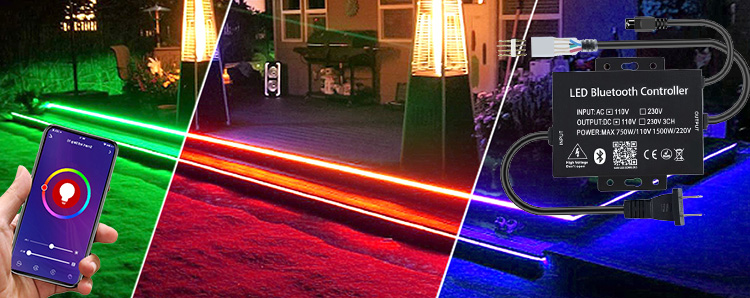
High Voltage LED Dimmer Controllers
Use these high voltage AC Light Controllers to dim, adjust color temperature, change color and mode for your 100V~240V AC power light. Our smart AC controllers are designed for lights working at the high voltage end, equipped with RF and IR remote control, WiFi and Zigbee mobile Tuya APP control, DMX signal control and other control methods, compatible with single-color, CCT, RGB, RGBW line-voltage LED lights and traditional incandescent and halogen lamps for dimming. Provides flexible AC light control and great lighting experience for home and outdoor line voltage lighting.
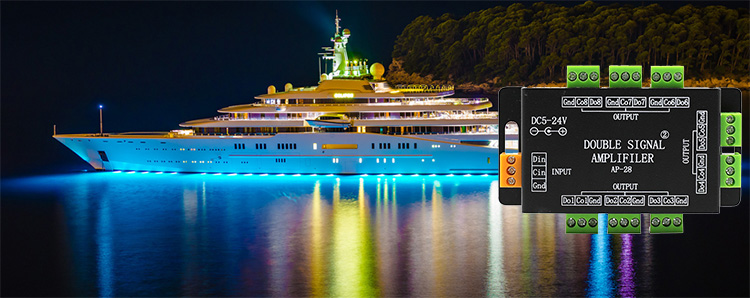
LED Power Signal Amplifier
An LED power amplifier or signal amplifier is an expansion device used when an LED strip lighting system becomes too long, too large, or too complex for a single controller to drive reliably. These devices allow you to extend the controlled LED length, add more LED strips or fixtures, and maintain consistent brightness, color, and lighting effects without replacing the original controller with a much larger one.
Power amplifiers and signal amplifiers solve different problems. A power amplifier or power repeater is mainly used with conventional PWM LED strips to provide additional current to another section of LED strip while reproducing the same control signal. A signal amplifier, such as an SPI or DMX repeater, is primarily used to strengthen or regenerate a digital control signal when transmission distance or the number of connected devices exceeds the reliable range of the original signal.
An amplifier is not a replacement for the LED controller. It works as an expansion component between the controller, power supplies, and additional LED sections.
Best-selling LED Smart Controller Series
141–160 of 898 products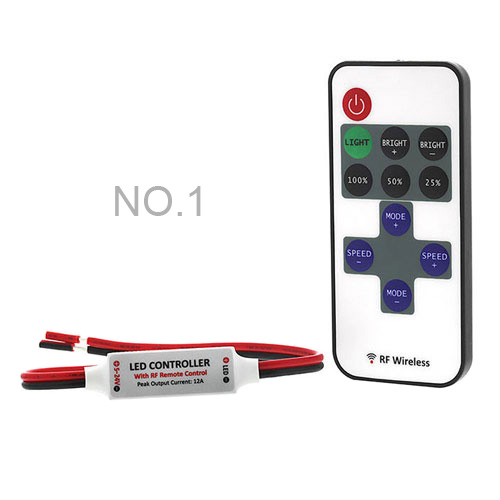
RF Remote Control LED Dimmer For Single Color LED Strip Lights
 (1)
(1)
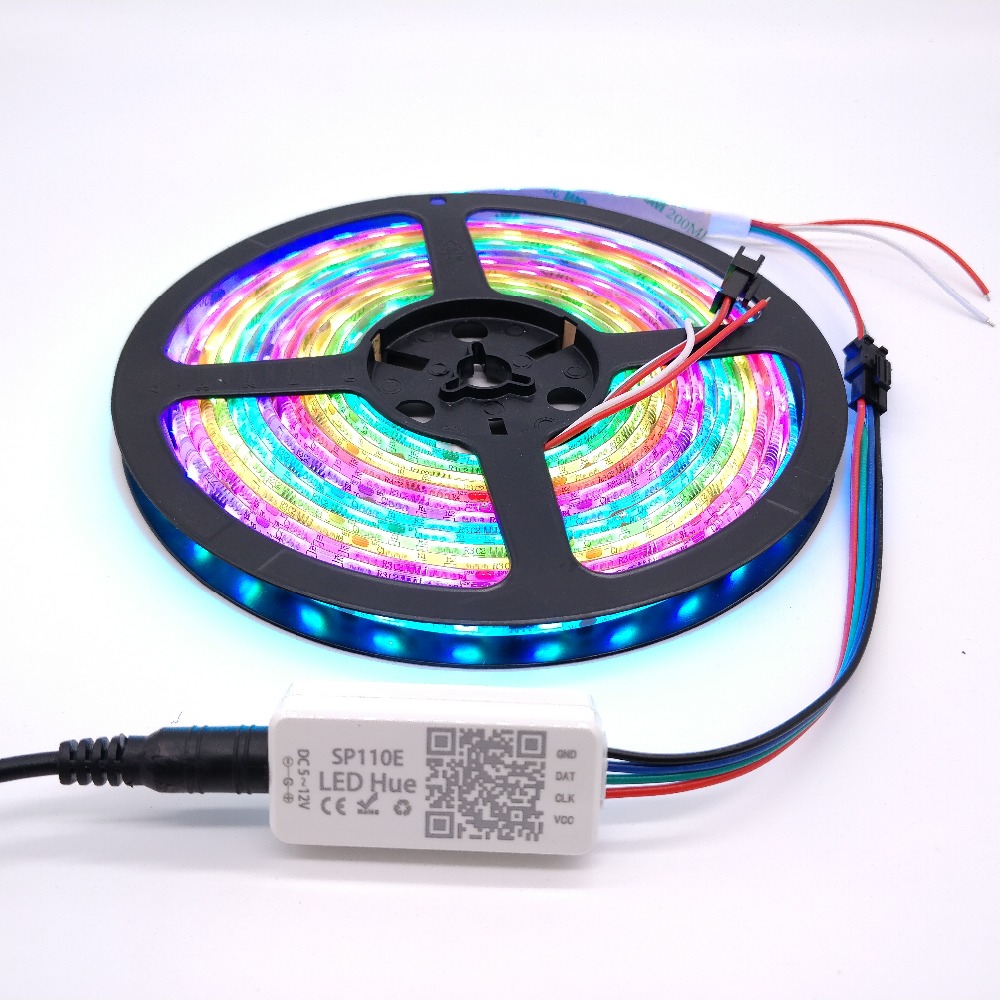
SP110E Bluetooth Pixel LED Remote Controller For WS2812B SK6812 LPD8806 DMX512 1903 RGB Addressable...
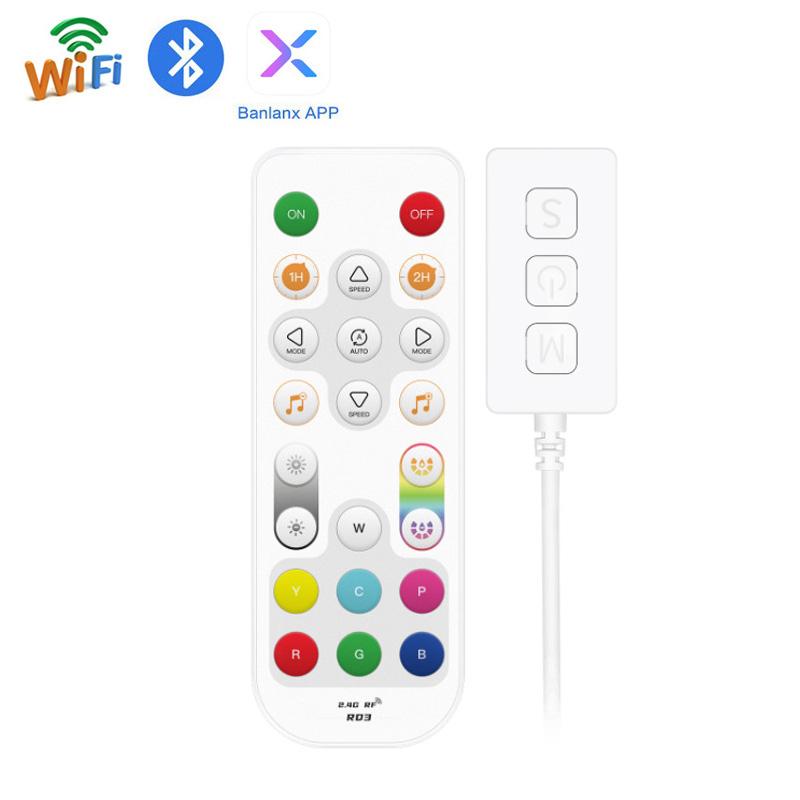
SP548E Smart BanlanX Mini 3-Key 1200 RGBIC Pixel Light Controller
(1)


WiFi RGBCCT Controller, IR Remote / Mobile APP / Alexa / Google Assistant Compatible
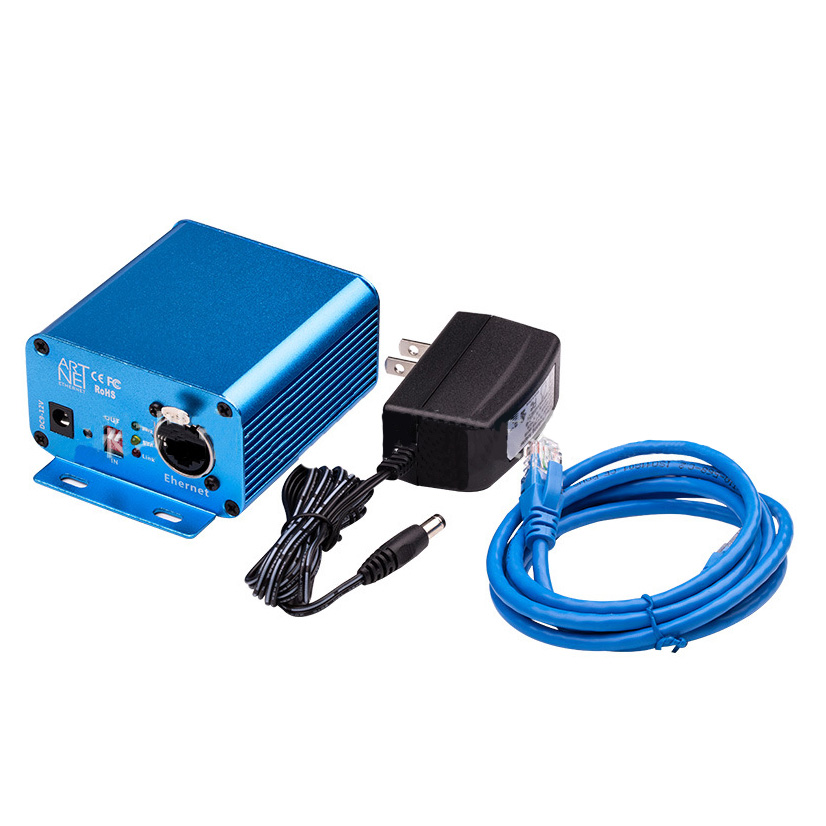
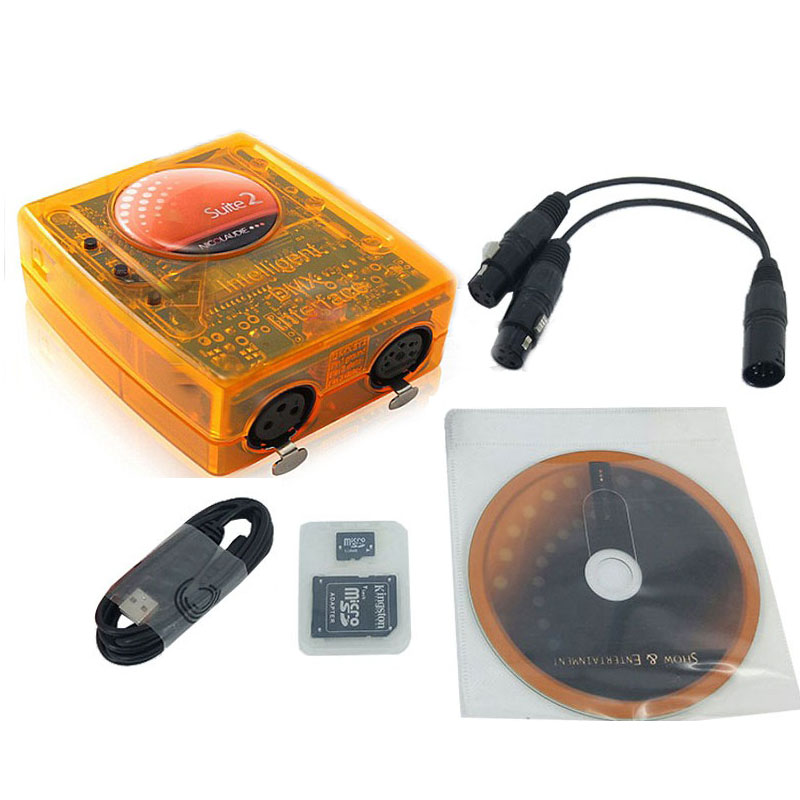
2CH DMX Controller, DMX512 to Art-Net Madrix Software, Two-way Transmission

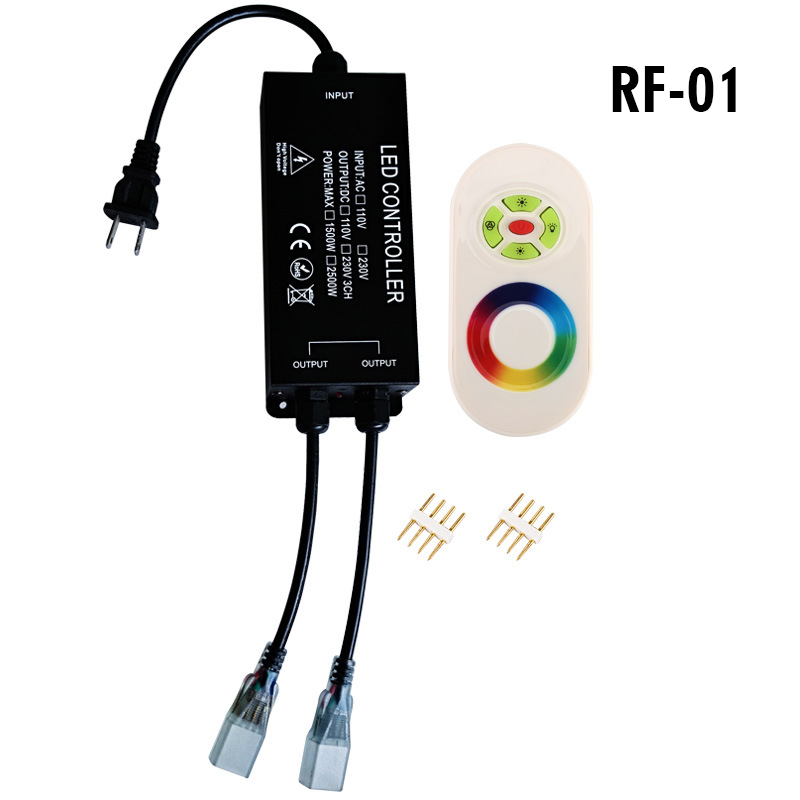
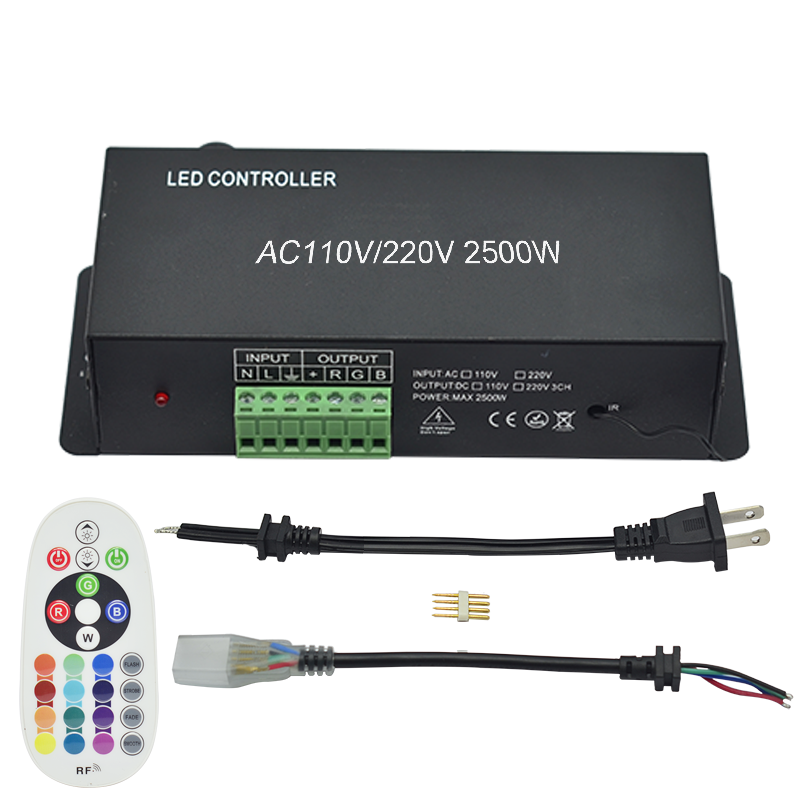
AC110/220V High Power 1500/2500W, One to Two High Voltage Controller, PWM LED RGB Wireless RF 24...
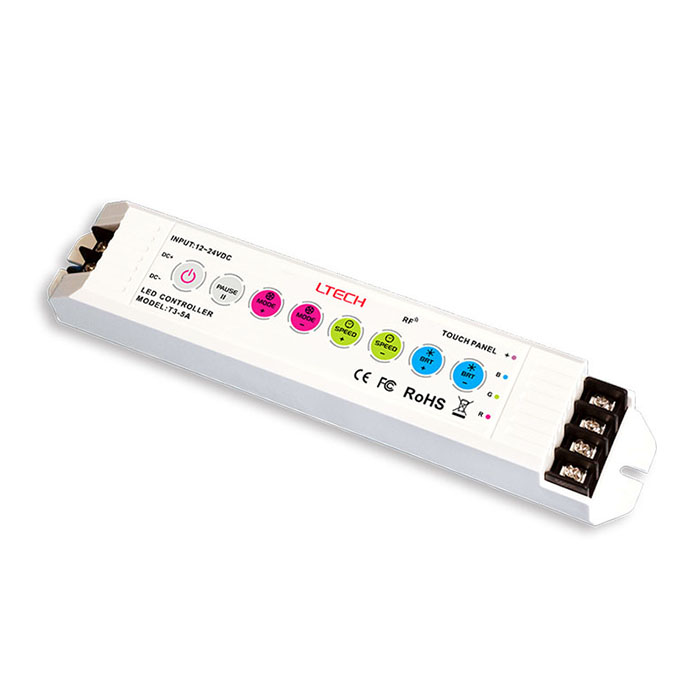
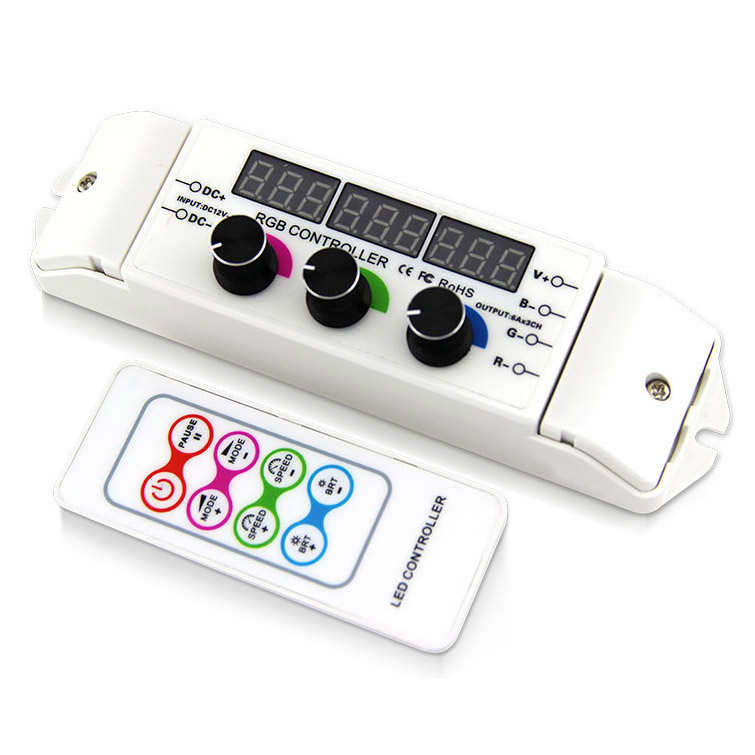
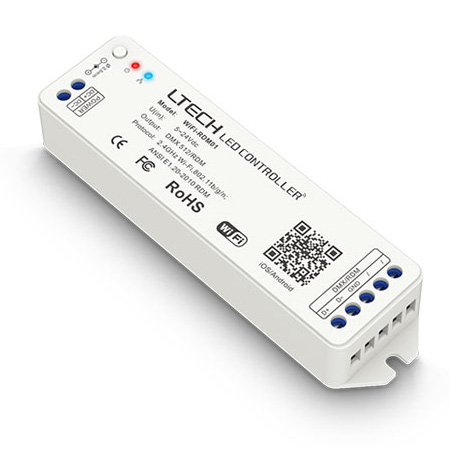
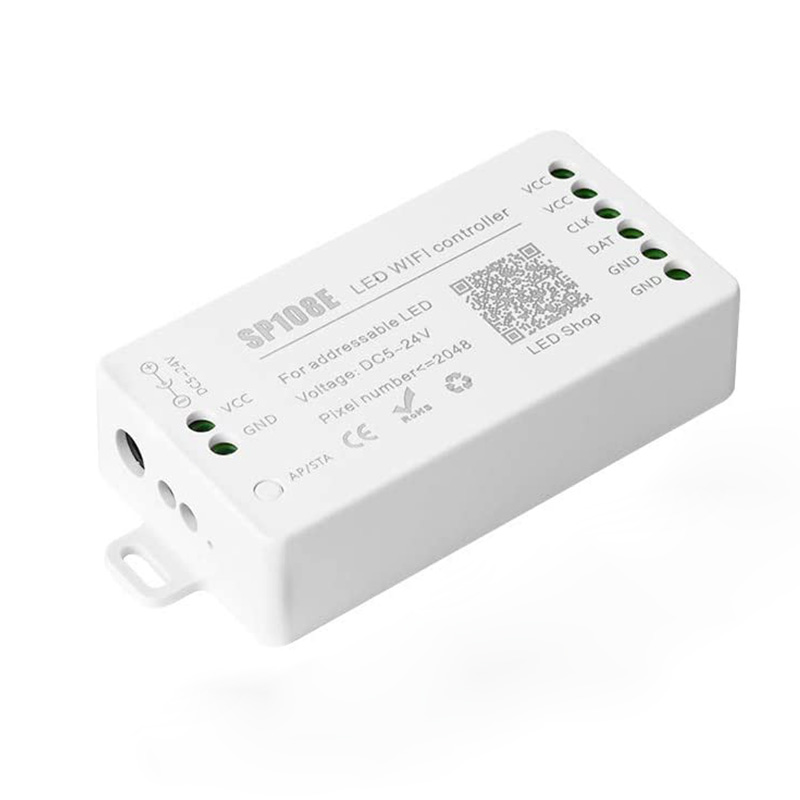
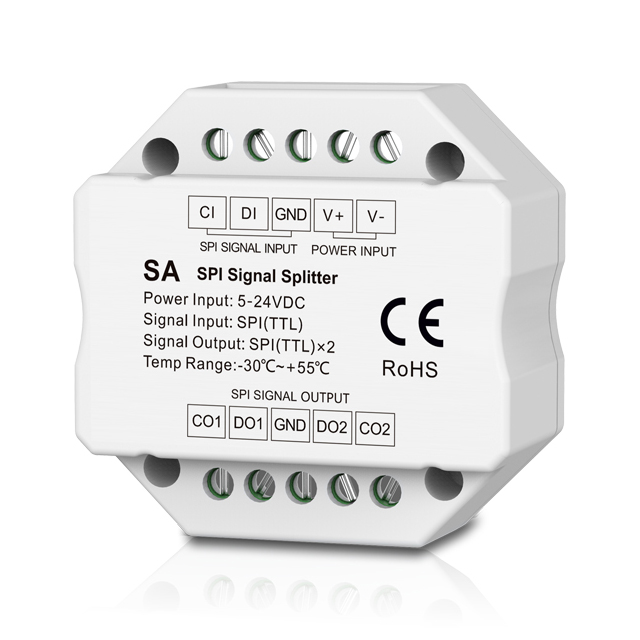
DC5-24V SPI 1 to 2 Signal Splitter Amplifier SA For Addressable LED Light Strip
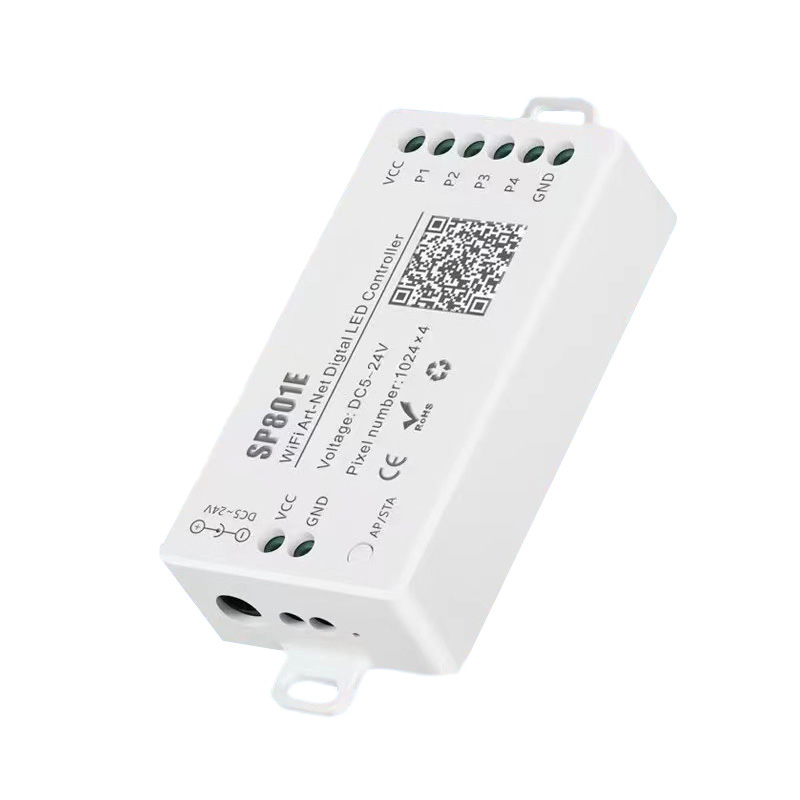
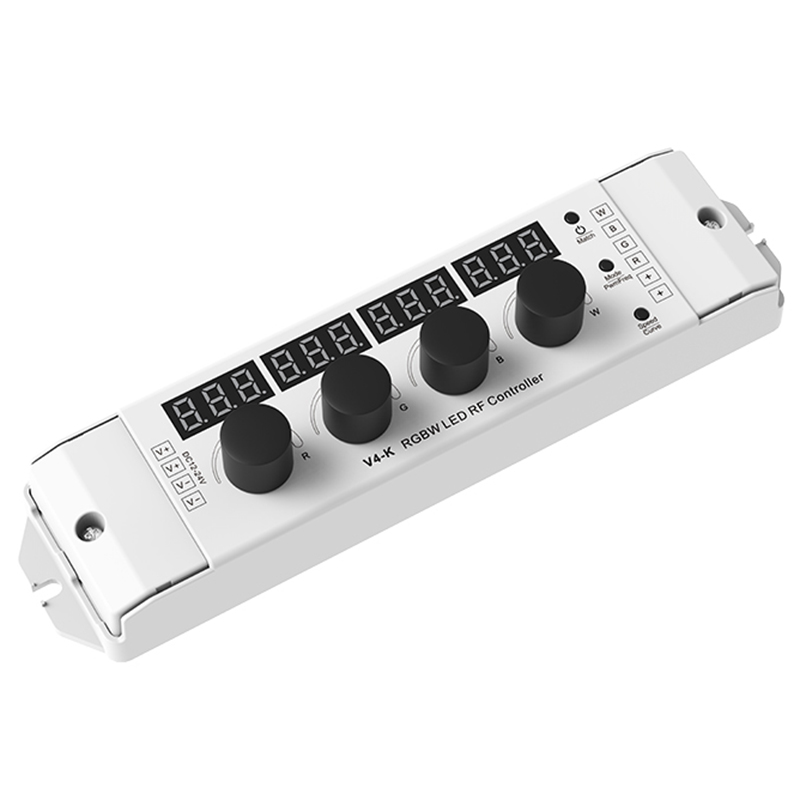
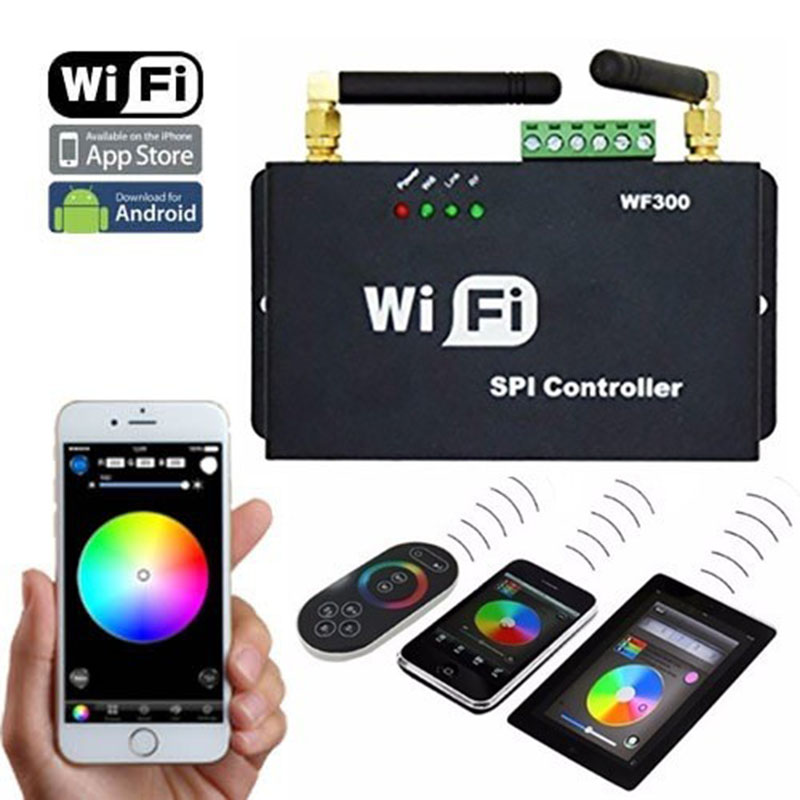
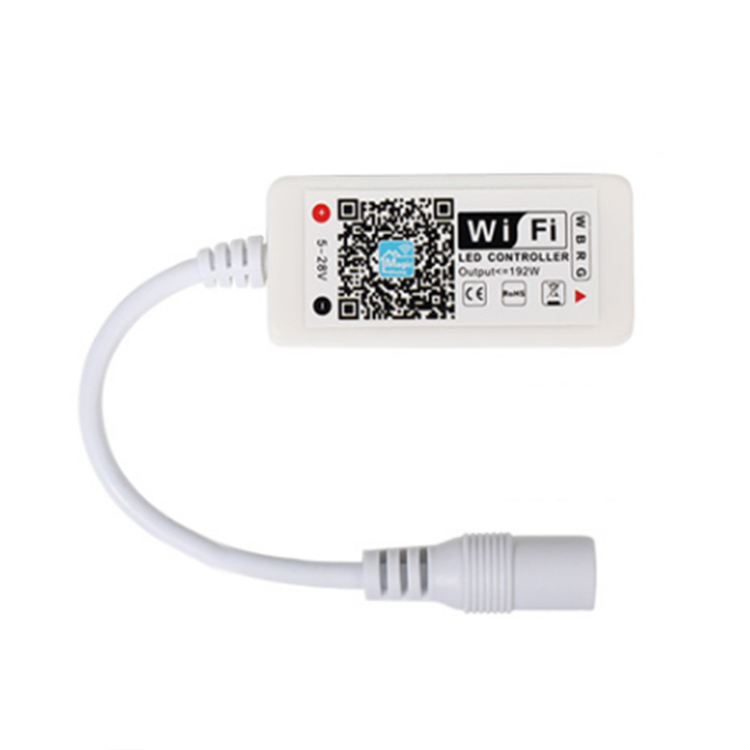
WIFI RGBW LED Controller - Color Change Dynamic - Voice Control Smartphone Control
Which Control Protocol Is Best for Smart Lighting?
Once you've matched the controller to your strip type, the next choice is how you want to talk to it. Different protocols offer different trade-offs in range, cost, and complexity. For most home and commercial projects, one of these four will be the right fit.
| Protocol | How It Works | Best For |
| RF (Radio Frequency) | Dedicated remote sends a radio signal directly to the receiver. No network needed. | Simple, reliable control where you don't need app or voice integration. Under-cabinet, closets. |
| WiFi (e.g., Tuya, Smart Life) | Controller connects to your home WiFi. Control via smartphone app from anywhere. | Full smart home integration with Alexa/Google, scheduling, and remote access. |
| Bluetooth | Pairs directly with your phone. No WiFi network or hub required. | Quick setup for single-room control. Great for apartments or areas with weak WiFi. |
| Zigbee | Creates a low-power mesh network. Requires a Zigbee hub (e.g., Philips Hue, SmartThings). | Large, complex smart home systems. Extremely reliable and responsive once set up. |
Expanding Your Lighting System Beyond a Single Strip
For large-scale or complex projects, you may need more than just a controller. That's where our professional-grade components come in.
When to Use an LED Power Signal Amplifier
If you're running LED strips over a very long distance (typically more than 5-10 meters), voltage drop will cause the lights at the far end to be dim and discolored. An LED power signal amplifier solves this. You place it after the first strip, and it takes the signal from the controller, boosts it, and sends it to the next strip with fresh power from a second power supply. This allows you to create perfectly consistent lighting over massive distances.
Integrating with Professional LED Lighting Control Systems
For architectural, stage, or commercial displays, you'll often need to integrate with a DMX system. A DMX master decoder console acts as the bridge. It receives commands from a master DMX controller and translates them into the PWM signals that drive the LED strips. This lets you incorporate our LED strips into a centralized, professional lighting control system with thousands of channels.
SuperLightingLED Controllers vs. Leading Industry Brands: Finding the Right Fit for Your Project
When choosing an LED lighting controller, balancing performance, reliability, and total project cost is critical. SuperLightingLED controllers are designed to offer the ideal entry-to-mid-level solution for residential and everyday commercial installations. Built with intuitive user interfaces, versatile dimming protocols, and essential smart features (such as RF wireless, Tuya Wi-Fi, and Zigbee compatibility), they deliver stable, multi-zone control at an accessible price point—eliminating unnecessary complexity for standard lighting setups.
In contrast, specialized industry brands serve distinct professional niches across the lighting ecosystem:
- Ltech & BinColor: Preferred for high-end commercial projects, offering broadcast-grade flicker-free PWM dimming, advanced DMX512/RDM decoding, and sub-millisecond signal response.
- SkyDance & LeyNew: Recognized for heavy-duty industrial reliability, high-current output capacity, and rugged multi-protocol conversion (0–10V, DALI, TRIAC).
- MiBoxer (Mi-Light) & Gledopto: Optimized for decentralized smart home ecosystems, featuring deep integration with 2.4G RF mesh networks, Philips Hue, and multi-gateway IoT platforms.
LED Smart Controller Series: Professional FAQ
It depends on your desired effect and the strip type. Static single-color LED strips can be connected directly to a power supply to stay "on." However, any light strip that requires dimming, color changing, or dynamic effects (like RGB, RGBW, tunable white, or addressable SPI/DMX) must have a controller. At SuperLightingLED, we recommend a controller even for single-color LED strips to extend the LED lifespan through dimming and to provide smart scheduling via Wi-Fi or Bluetooth.
At SuperLightingLED, you can find a vast array of LED strip control solutions tailored to modern architectural designs, DIY creative projects, and professional stage setups. Our smart LED controller range includes everything from precision RF Remote Controls and sleek Wall-Mounted Touch Panels to advanced DMX512 Consoles. Whether you are looking for a simple plug-and-play DIY kit or a complex, multi-zone synchronization system for an entire building, we provide the hardware to bring your vision to life.
The app you use depends entirely on the compatibility of your LED controller. Both Android and iOS (Apple) smartphones are fully supported across our smart controller lineup. Most SuperLightingLED™ smart controllers are compatible with world-leading ecosystems, including Tuya Smart / Smart Life, Happy Lighting / Lotus Lantern, Apple Home / Alexa / Google Home etc.
Yes. Wireless signals (RF/Wi-Fi) can be affected by physical walls or metal interference. For hardwired signals like PWM (from controller to strip), voltage drop occurs over long distances, causing the end of the strip to dim or change color. To solve this, SuperLightingLED™ provides Power Amplifiers (Repeaters) to boost the signal and power for large-scale installations, ensuring uniform brightness.
No. An LED controller must match the control protocol and channel type of the light strip. An RGBCCT controller is backward compatible; it can control RGBW, RGB, or single white LED strips by leaving channels unused. Conversely, an RGB controller cannot control RGBCCT strips because it lacks the extra outputs for the dual-white channels. Always ensure your controller's output matches your LED strip's requirements.
Generally, no. RF (Radio Frequency) remotes use proprietary coding and frequencies unique to each manufacturer. For example, a Skydance remote cannot pair with an LTECH receiver, and vice versa. At SuperLightingLED, we provide matched LED remote control kits or expandable lighting systems within the same brand ecosystem to ensure 100% synchronization.
Yes, multiple LED strips can be wired to one controller if the total wattage does not exceed the controller’s maximum load. Also, with our multi-zone RF systems, one remote can control multiple receivers wirelessly at the same time, allowing you to synchronize an entire room without running long wires between every strip.
Using a voltage higher than the controller's rating (e.g., 24V power into a 12V-only controller) will likely permanently damage the internal circuitry. If the voltage is too low, the controller and LEDs may flicker or fail to turn on. So please choose a controller that match your LED working voltage.