
Motion Sensor Stair Tread Lighting
9 productsMotion activated stair lighting is an indoor stair lighting solution that is currently preferred by home users, and it allows for very intelligent control of stairs lights. Motion sensor indoor stair lights uses a PIR (Passive Infrared) sensor as the trigger device, when the human body enters the sensing range, the sensor head will capture the infrared radiation of the organism and automatically trigger the lights to come on. This automated control allows the motion sensor step lights to be turned on and off based entirely on people's activities, without the need for manual operation, which greatly improves the convenience of use.
The motion sensor light staircase system not only realizes on-demand lighting, but also enhances the user experience through smart home integration technology. It avoids unnecessary energy waste and meets the pursuit of energy saving and environmental protection in modern families. Long-term use can significantly reduce electricity expenses, while also reducing the impact on the environment.
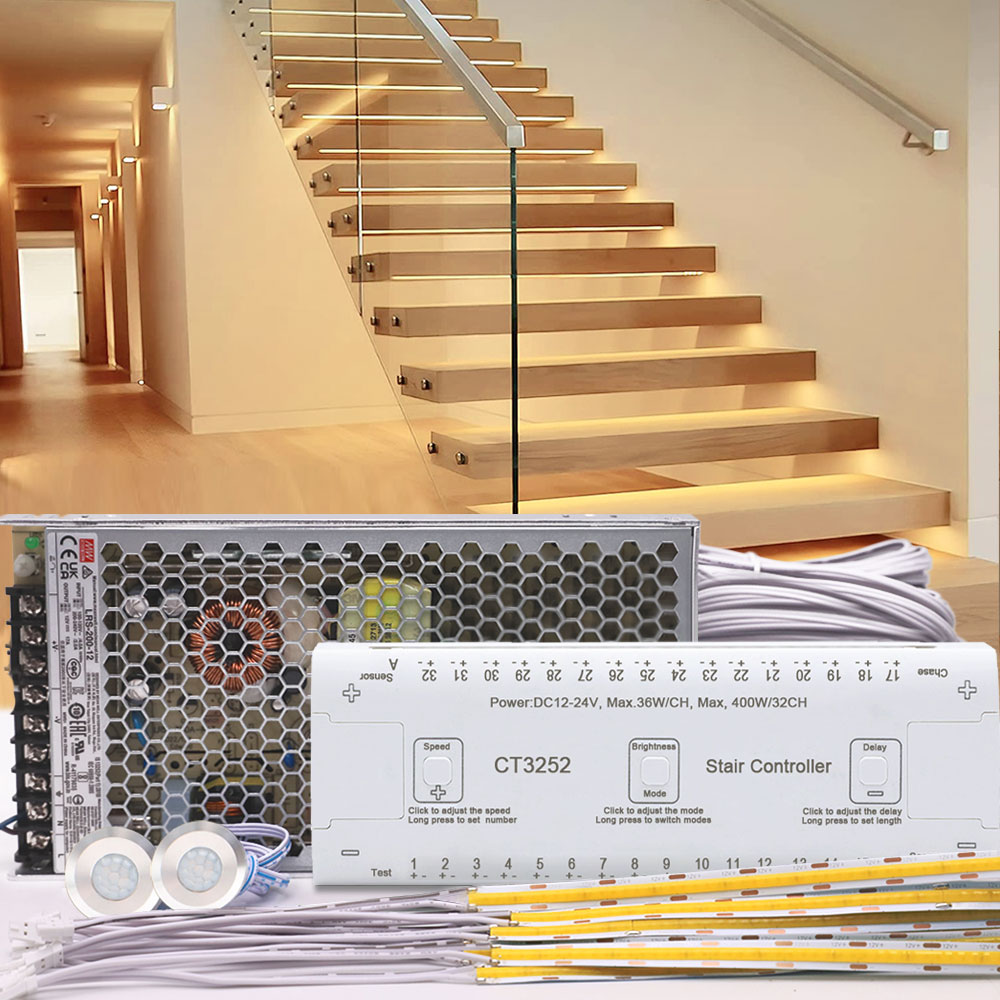
CT3252 Motion Activated COB LED Strip Lit Stair Lighting Kit
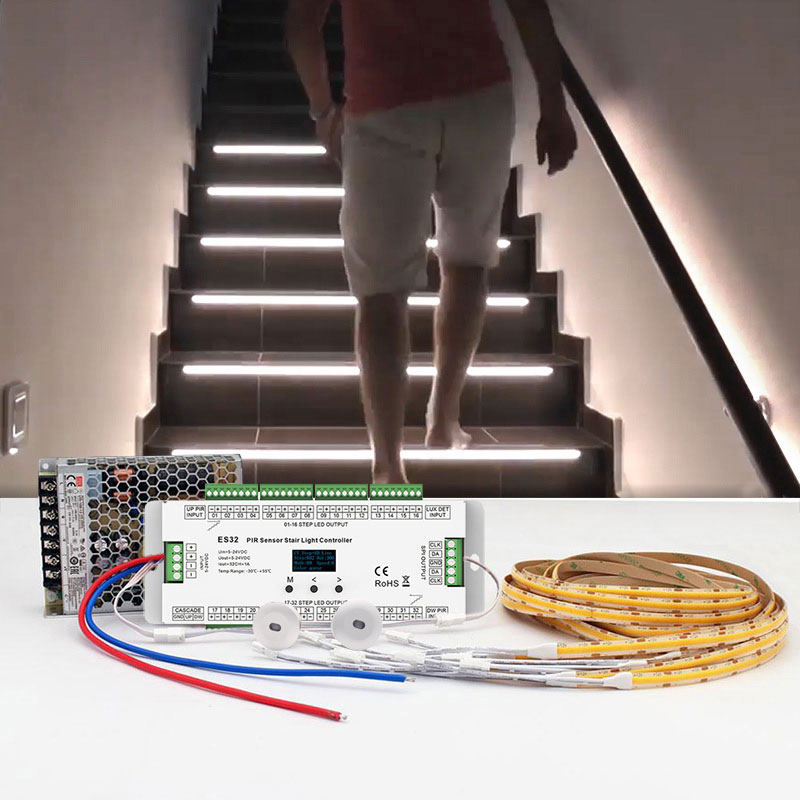
Intelligent Motion Sensor LED Stair Lights Kit - SuperLightingLED
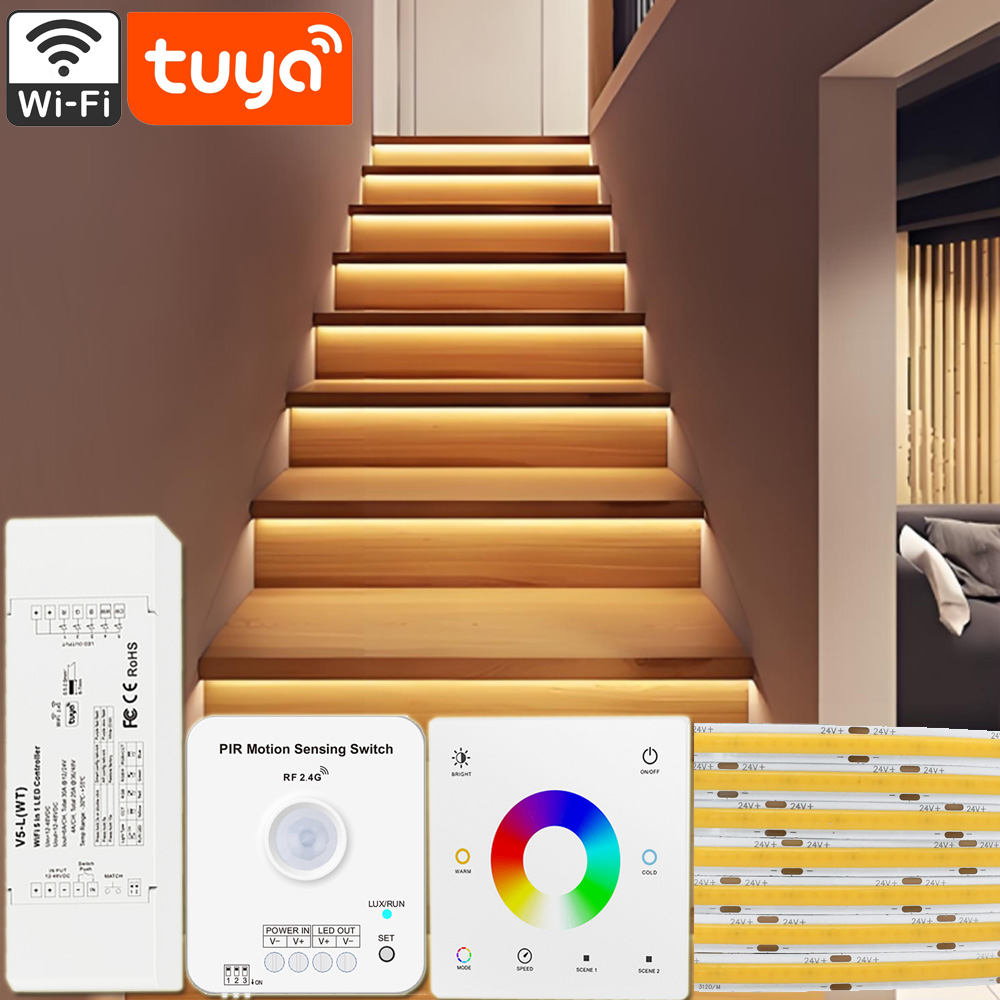
Smart Motion Sensitive Switch Led Strip Lights Staircase Lighting Kit
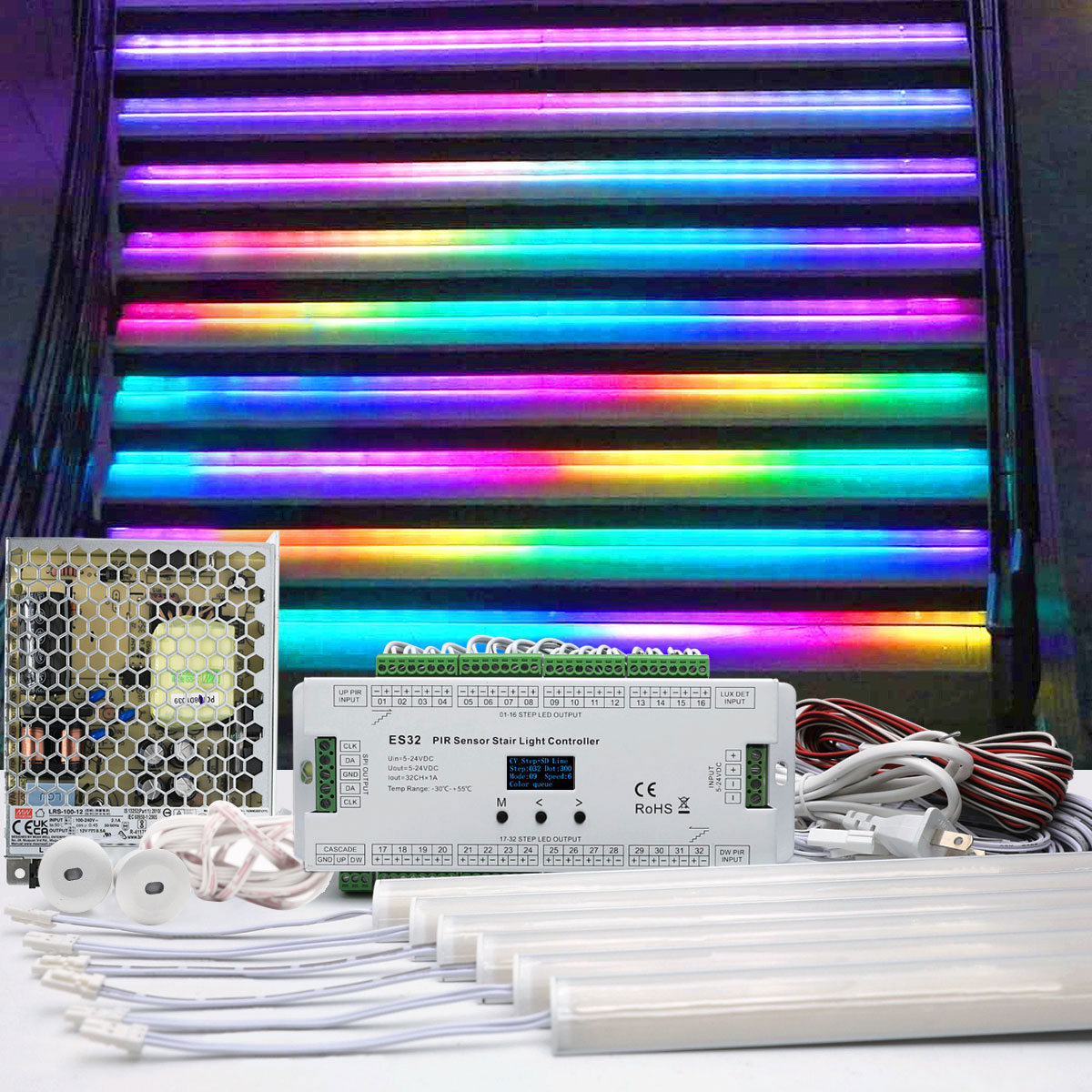
RGB Color Chase Motion Sensor Indoor Step Lights Kit For Stairs
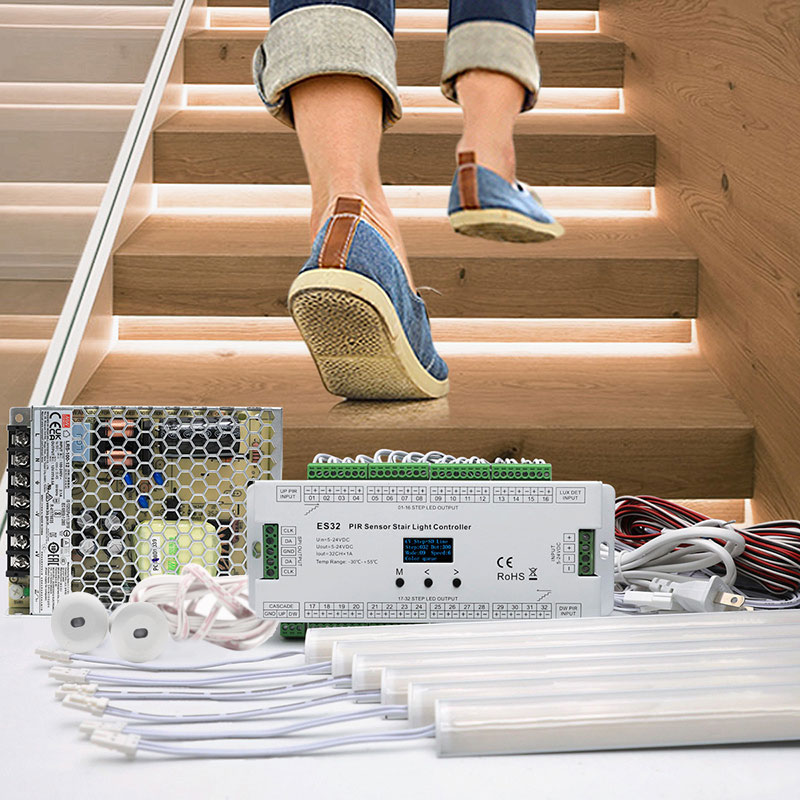
Intelligent LED Motion Sensor Stair Lights Indoor
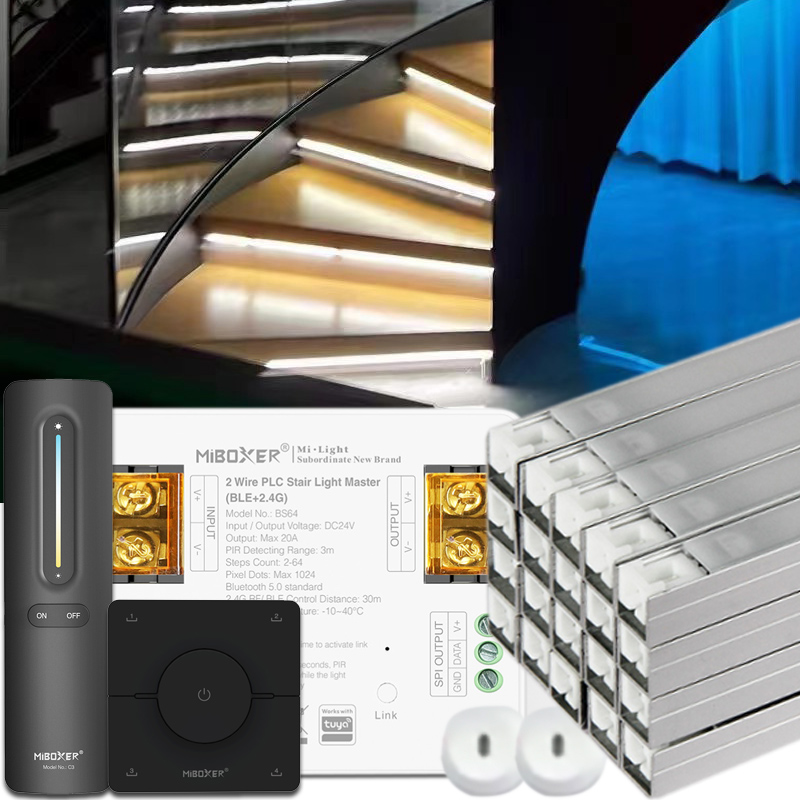
Tuya+RF Motion Sensored CCT Alu LED Strip Lighted Staircase Treads
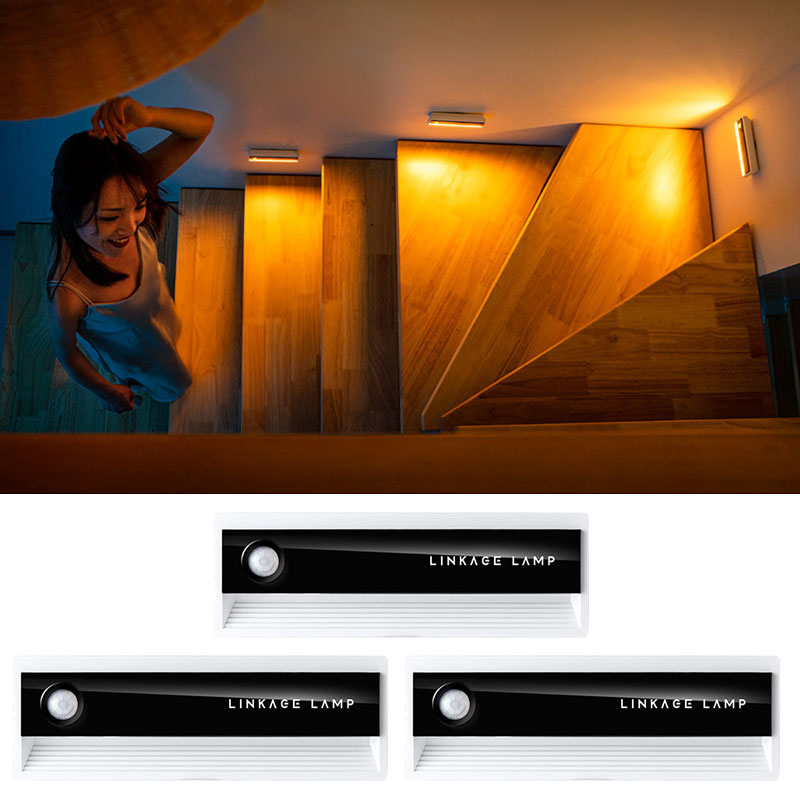
Linkage Motion Sensor Rechargeable Magnetic LED Stair Lights
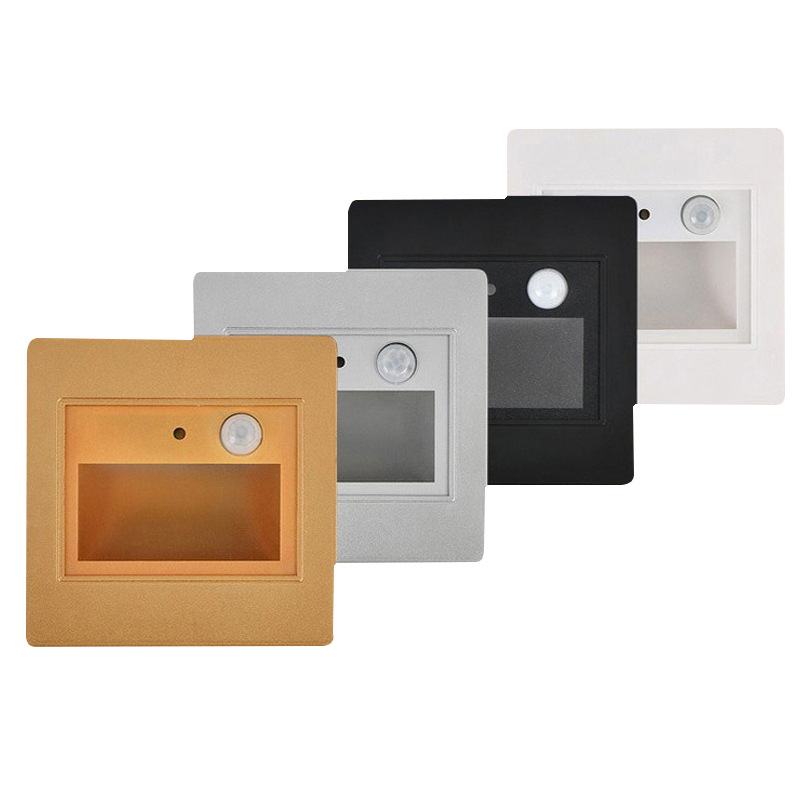
3000K Warm White 6000K Bright White Smart LED Stair Lights
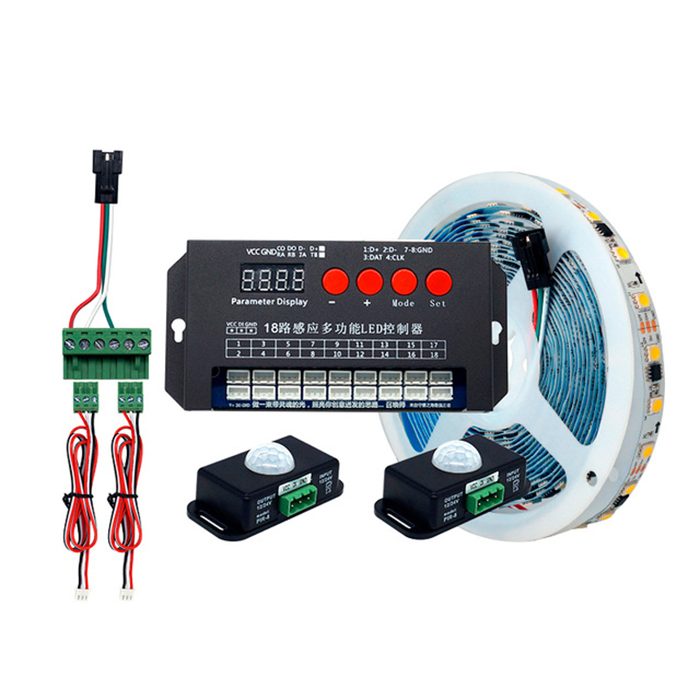
DC12V 60LEDs/M Human Body Induction Stair Warm White LED Strip Light Kit, 16.4ft/5m, WS2811 Color Changing Flexible LED Strip
Frequently Asked Questions About Motion Sensor Stair Tread Lighting
Got a question about our stair lighting kits? I've probably answered it before. Here are the most common things people ask before they buy.
It's pretty simple. You place a PIR (Passive Infrared) sensor at the top and bottom of your stairs. When you walk past one, it detects your body heat and tells a central controller to turn the lights on. The controller then powers up the LED strips on each tread. After a set time with no new motion, it turns them off again. It's all low-voltage, so it's safe and efficient.
The key is that the sensors don't wire directly to the lights. For a typical motion sensor stair lighting kit, you'll wire both the top and bottom PIR sensors back to the input terminals on the controller module. Then, you wire the controller's output to your LED strips, and the controller's power input to the DC power supply. Don't ever wire the AC mains directly to the controller or strips. You can see the full sequence in our step-by-step installation guide.
This is a false trigger caused by the PIR sensor's placement. These sensors see heat. If one is pointed at a heating vent, a window with direct sunlight, or even a spot where a pet frequently walks, it can trigger the lights. Try adjusting the angle of the sensor head slightly away from any heat sources. Sometimes lowering the sensitivity on the controller, if it has that option, also solves it.
When we talk about the 'switch' in these kits, we're really talking about the controller module, which is much smarter than a simple switch. The best motion sensor light switch is a dedicated stair lighting controller like the ES32 or CT3252. These let you adjust things like the light-up speed, the brightness, and how long the lights stay on. A simple wall motion switch can't give you the step-by-step lighting effects and fine control that these dedicated controllers do.
Yes, absolutely. The LED strips in our motion sensor stair tread lighting kits are designed to be cut. You'll see designated cut marks, usually with a little scissor icon, every 25mm to 100mm depending on the strip model. Just make a clean cut across that line with sharp scissors. Don't cut anywhere else, or you'll damage the circuit and that section won't light up. You can also choose any of our “Free-Cut” Cob LED Strip Light series and have us customize it for you.
Most of our advanced motion sensor light switch controllers have small buttons or dials right on the unit. You'll use these to cycle through modes and set your preferences. Typically, you can adjust the speed of the lighting effect, the overall brightness, and the delay time before the lights turn off. The product manual will have a chart showing what each setting does. Just press and hold to enter programming mode, then tap to adjust the value. It's usually a 5-minute job.
This depends entirely on the controller model. Our popular ES32 controller, for example, can manage up to 32 steps, which covers almost any residential staircase. Other simpler controllers might be capped at 16 or 20. If you have a very long or multi-landing staircase that exceeds the controller's limit, you can either use a second controller or add stair light controllers and signal amplifiers to extend the run. Just send us your stair count and we'll confirm the right gear.
Yes, we do this all the time. A huge amount of what we ship is built to a customer's drawing. Just tell us your number of steps, the width of each tread, and the finish you want on the aluminum channel. An engineer here will draw up a complete wiring diagram and parts list for you—usually the same day. We'll cut the channels and strips to length, pre-solder connectors, and label everything so it's a plug-and-play install on your end. There's no fee for this service and no obligation to order.
Most of the kits in this category are designed for indoor use, with an IP20 rating, meaning they're not protected from water. For an outdoor deck, you need a fully waterproof system. We have a separate category for our outdoor step lights that use IP67 or IP68 rated components designed to handle rain, snow, and temperature changes. Using an indoor kit outside will cause it to fail, often within a few months.
It varies by kit. The more advanced controllers often have settings to adjust sensitivity, which helps prevent false triggers from pets. The range is typically fixed, usually around 2-3 meters, which is perfect for the top and bottom of a staircase. The key is aiming them correctly—you want the sensor looking across the path where a person will walk, not straight down the stairs, to get the most reliable detection.