
Running Water LED Strip Controller
23 productsThe "Running Water" effect (also referred to as a chasing or flowing effect) describes a dynamic lighting pattern where a solid color or light segment smoothly travels along the addressable LED strip in a single direction, mimicking the natural movement of flowing water.
SuperLightingLED™ Running Water LED Strip Controller Units are purpose-built to make single-color light 'run' along a strip. This makes them the go-to choice for motion-activated stair lighting, pathway guidance, and architectural reveals where a simple, elegant flow is the goal.
These pixel LED controllers are designed specifically for 3-pin or 4-pin DAT/CLK addressable white LED strips using common ICs like the WS2811, SK6812, APA102, and TM1934. They provide pre-set 'running water' modes right out of the box, from light flowing from one end to the other, to meeting in the middle and expanding outwards.

Programmable LED Controller For SPI & DMX Lights

SPIR5 5-in-1 Digital LED Controller (RF + Push Switch + Music)

4CH Addressable LED Light Strip Controller (WiFi + RF + Music)
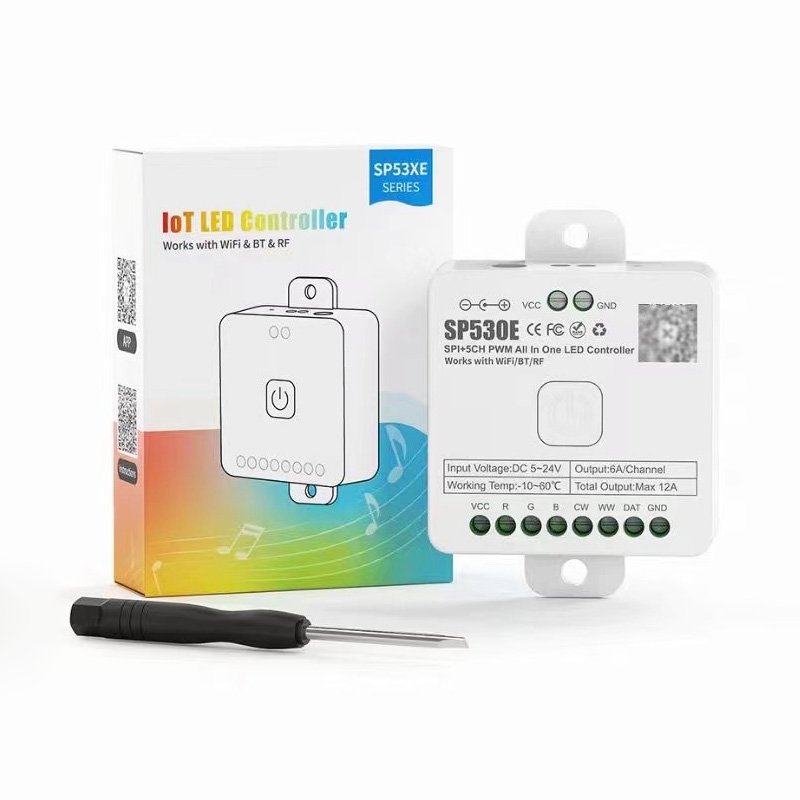
SP530E WiFi Bluetooth RF Music LED Strip Light Controller (Upgraded of SP630E)
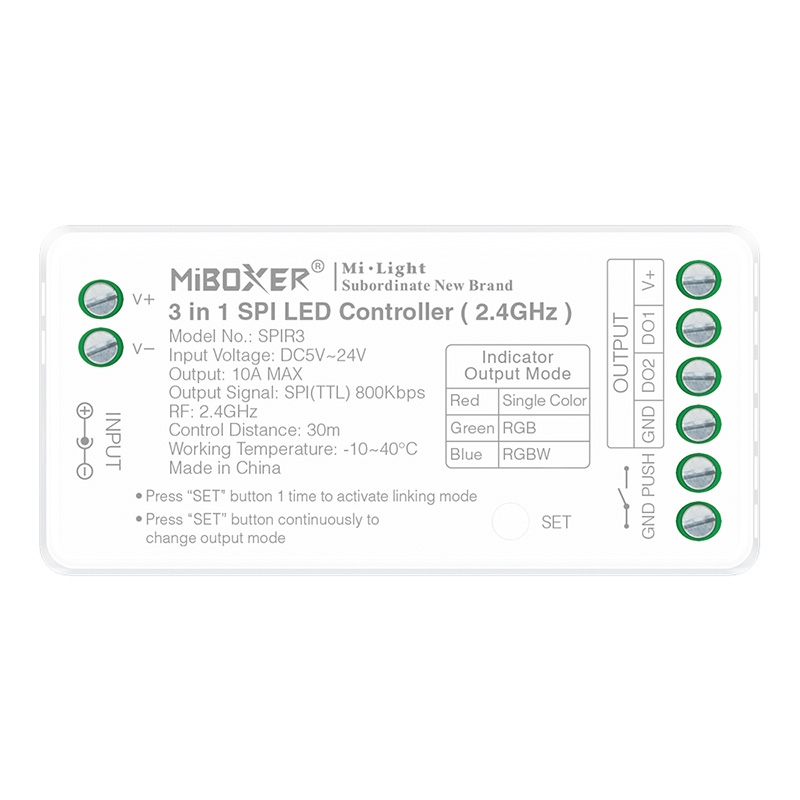
Miboxer SPIR3 RF 3in1 SPI LED Strip Pixel Addressable Controller
-SPI-WiFi-PIR-Sensor-Addressable-LED-Strip-Controller.jpg)
-5-to-24VDC-Dual-Push-Button-Tuya-WiFi-LED-SPI-Controller.jpg)
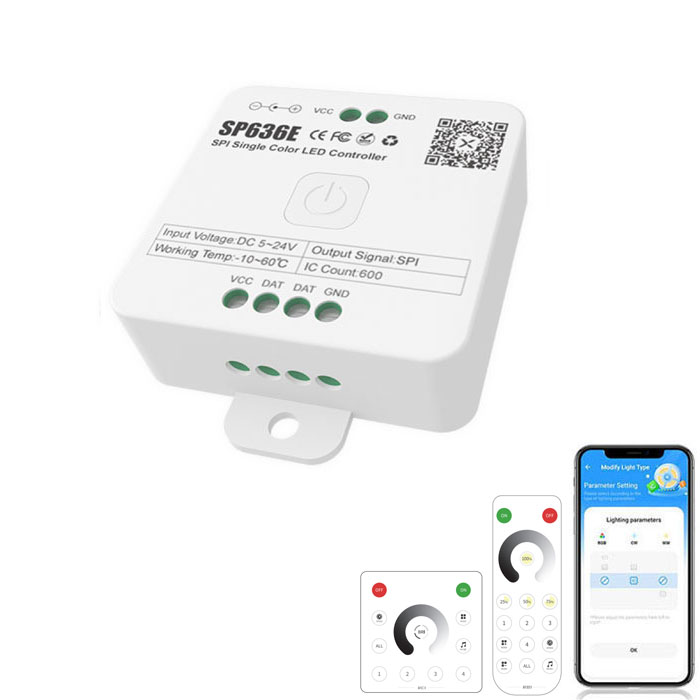
SP636E Bluetooth & RF & Music Running Water LED Strip Light Controller
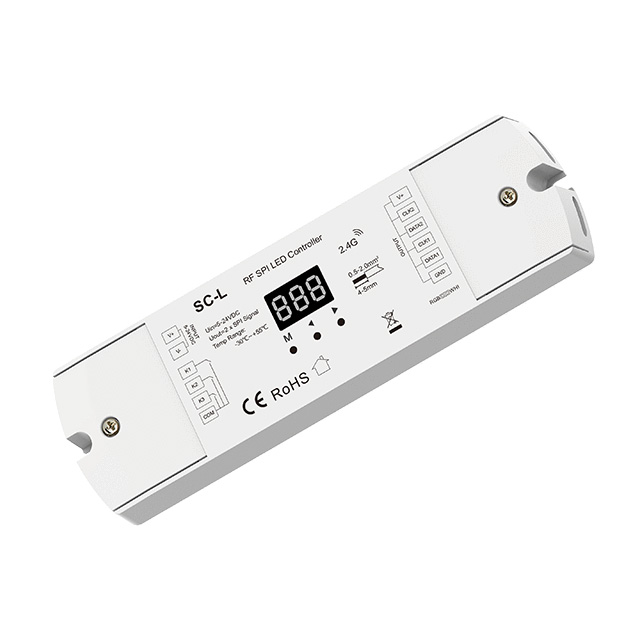
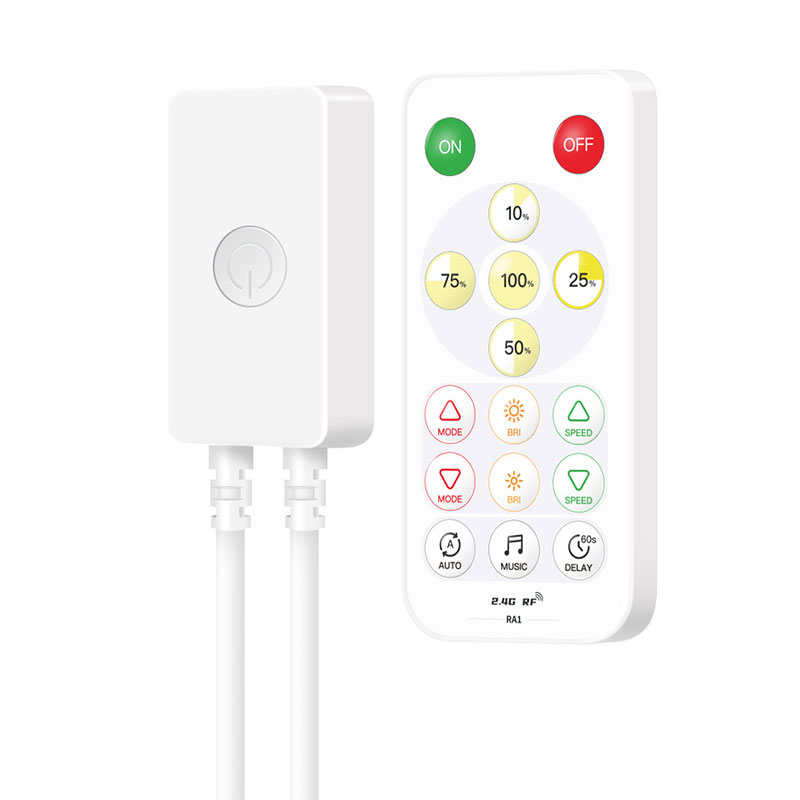
SP646E Bluetooth Music Addressable White LED Controller With Remote
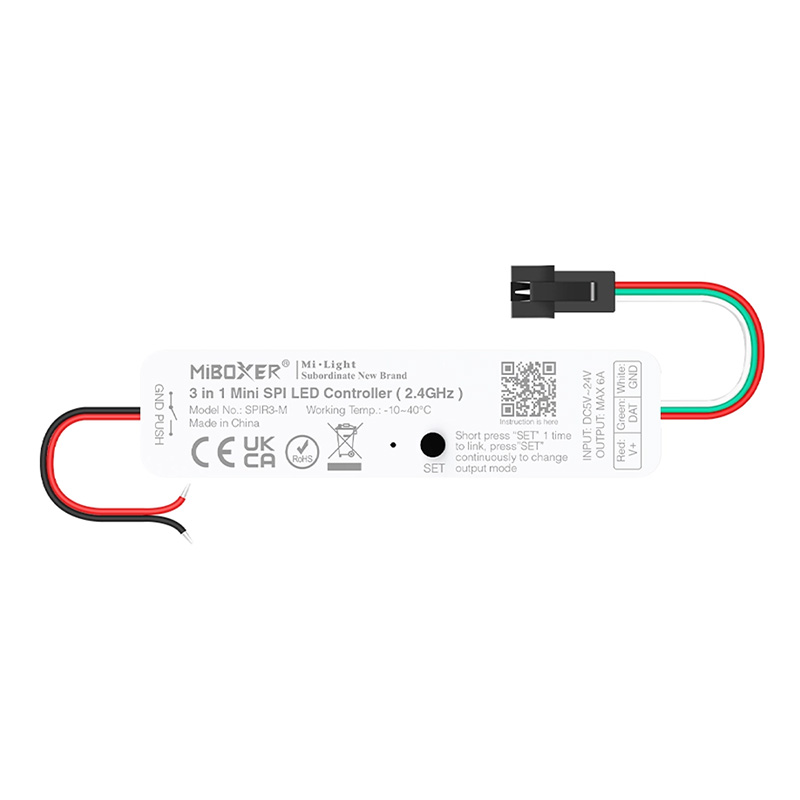
SPIR3-M RF 3 in 1 Dimmable SPI Mini Pixel LED Strip Controller
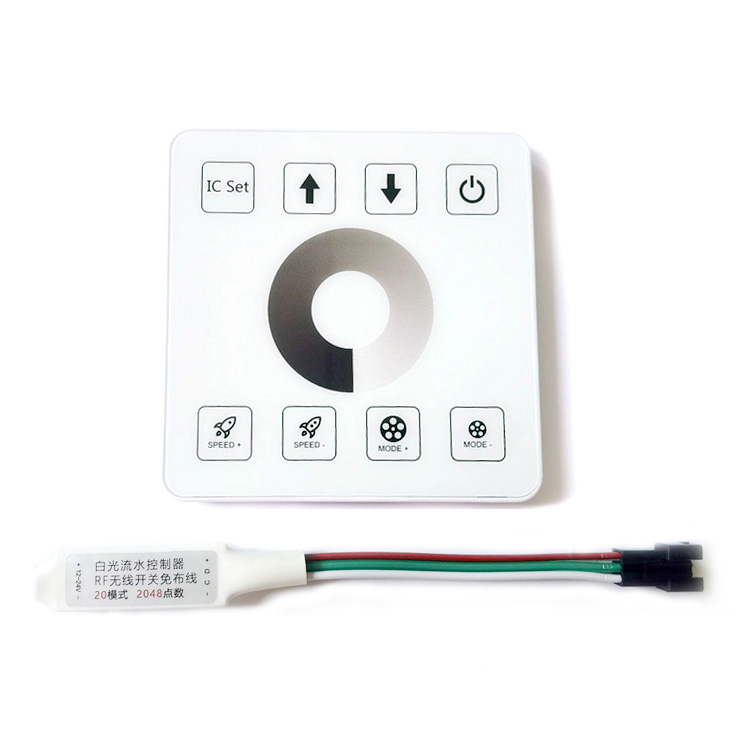
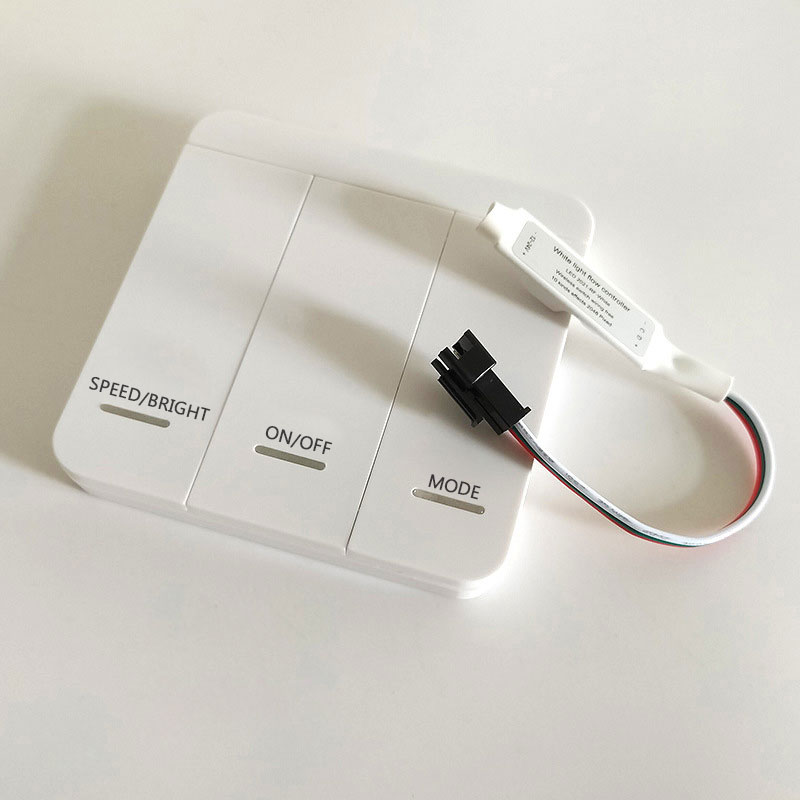
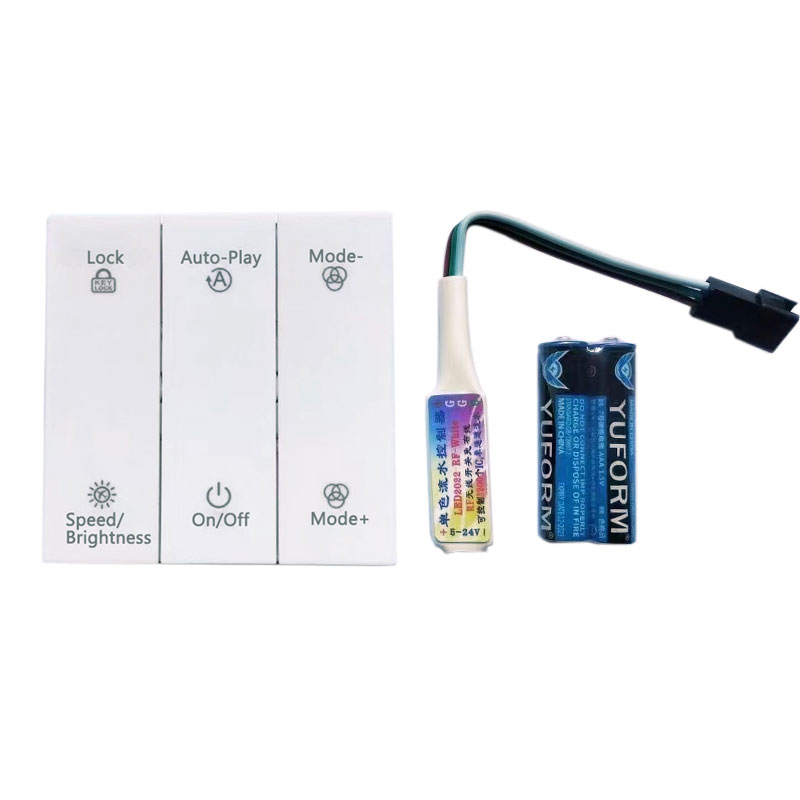
Mini SPI RF LED Controller With Panel Control For Running Water LED Strip
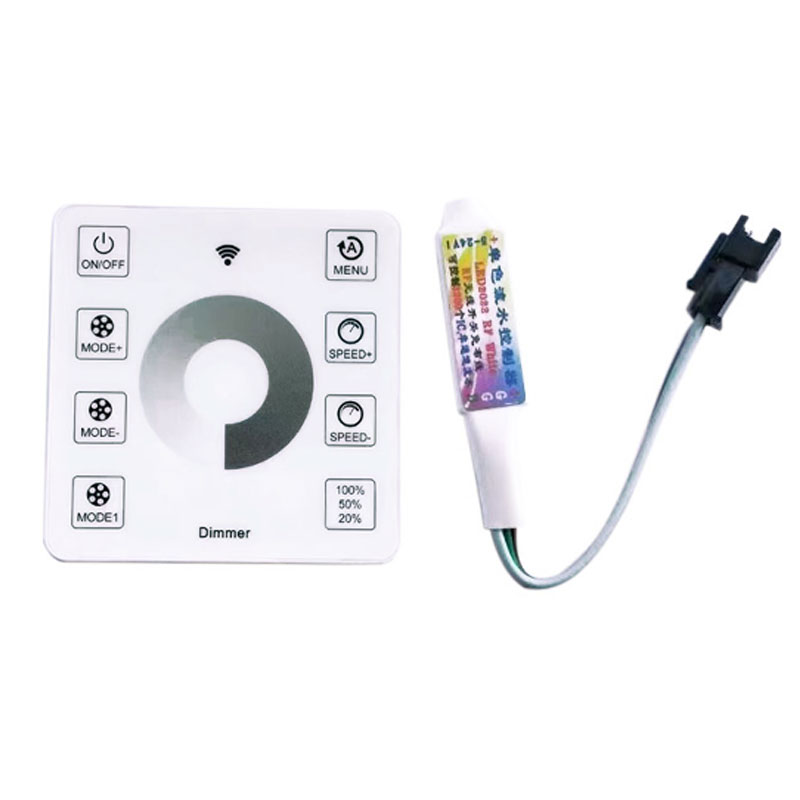
Wireless Addressable LED Mini Controller Panel
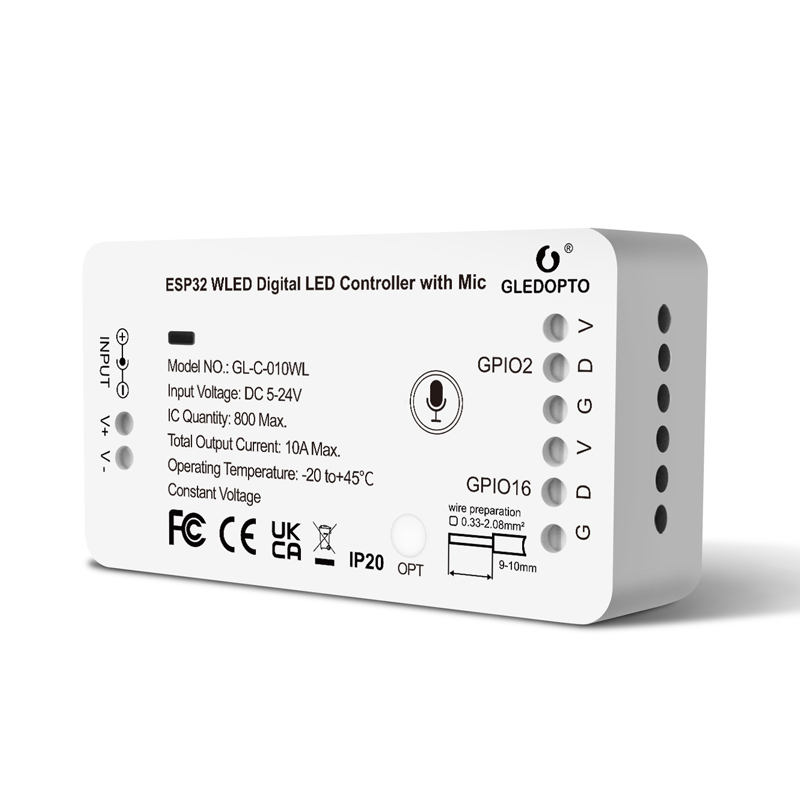
800 Pixels Mic Control WiFi WLED ESP32 LED Pixel Tape Controller
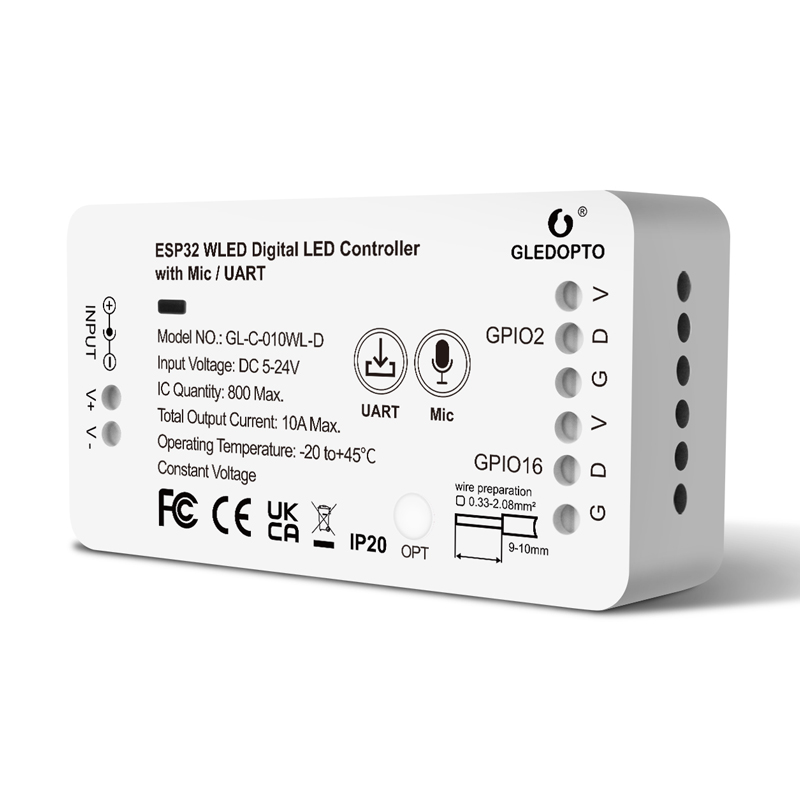
WLED ESP32 Pixel LED Strip Mic Controller With UART Download
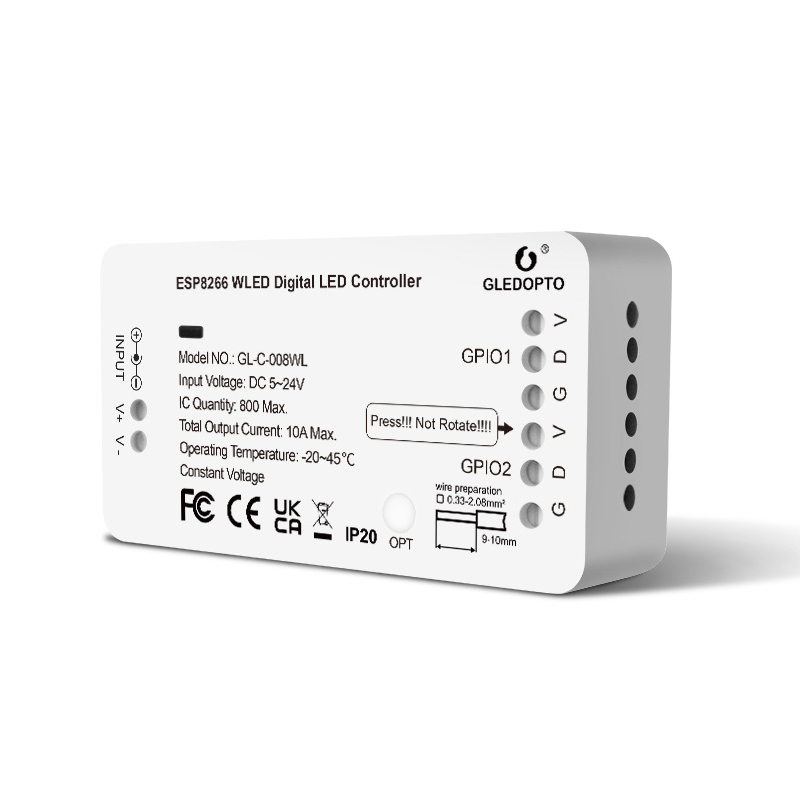
2 Channel 10A Basic WiFi WLED ESP8266 Digital LED Strip Controller
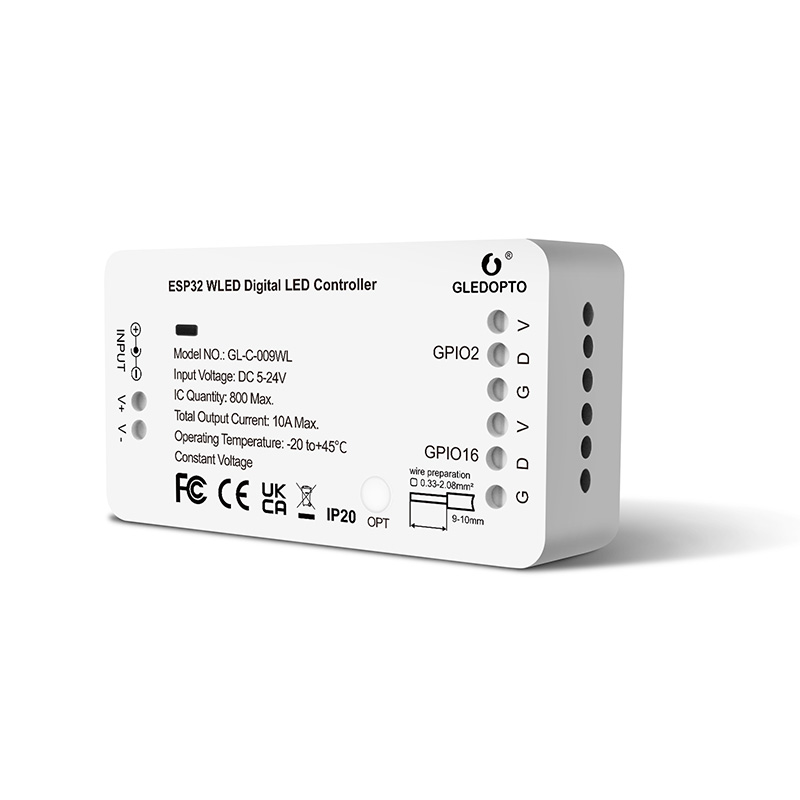
2 Port Data 10A Basic Led ESP32 WLED Pixel Controller
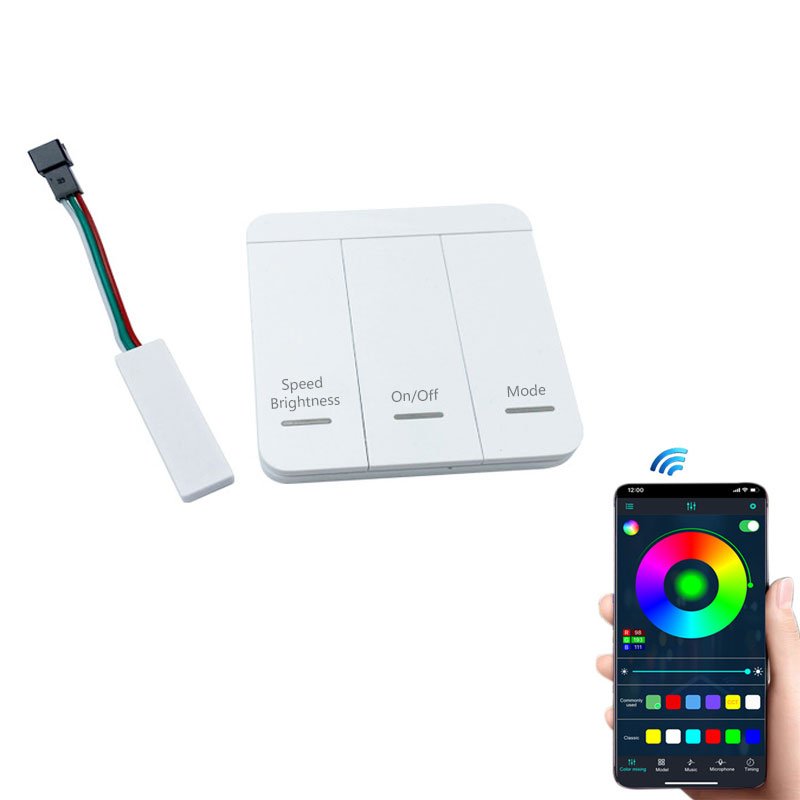
Mini Bluetooth & Switch Panel LED Running Water Controller
Watch Addressable "Running Water" LED Effects in Action
Experience the smooth, continuous motion of our addressable white LED strips with real-world dynamic lighting demonstrations. Below, you'll see how precision IC chip control creates seamless "Running Water" (flowing and chasing) effects—ideal for architectural accents, modern stairways, and high-impact commercial installations.
Frequently Asked Questions About Running Water LED Strip Controllers
Got questions about setting up that flowing light effect? You're in the right place. Here are the common questions we answer every day.
Think of it as a smooth, chasing animation for single-color white LEDs. Instead of the whole strip turning on at once, a segment of light flows from one end to the other. It's a dynamic effect created by an addressable white LED controller telling each individual LED, or a small group of them, when to turn on and off in sequence.
For stairs, you'll typically have a controller at the top or bottom with motion sensors at both ends. The key for long runs is managing voltage drop. You'll need to inject power at multiple points—usually at the start and end of the strip, and maybe in the middle if it's a very long staircase. This keeps the brightness consistent. We have a detailed guide on wiring addressable strips that walks through this exact setup.
Not usually. In most setups, you'll use a single power supply that powers both the controller and the LED strip. You just need to make sure the power supply has enough wattage for the total length of your strip, plus a little headroom for the controller itself. Just wire the power supply output to both the controller's power input and the strip's power injection points.
This is almost always a data signal issue or a power problem. First, check your wiring—a loose data connection will cause flickering and weird behavior. Second, if the effect looks fine at the start of the strip but gets glitchy at the end, that's often voltage drop. The chips at the far end aren't getting enough voltage to operate correctly. You'll need to inject power at the end of the strip.
Some of our controllers have multiple channels, like the 6-channel stair controller. This lets you run separate data lines for different sections, like two parallel stair stringers or multiple flights of stairs, and have them all sync up. For simpler single-channel controllers, you can't run two completely independent stairs, but you could split the data signal to have them mirror each other.
They make the effect automatic. You place a PIR (Passive Infrared) sensor at the top of the stairs and another at the bottom. When you approach the bottom, it triggers the running water light effect to flow *up* the stairs ahead of you. When you approach from the top, it flows *down*. It's a really clean and intuitive way to light a staircase safely.
You'll see classic voltage drop. The beginning of the strip will be bright white, but as you look down the line, it will dim and might even shift color to a yellowish tint. In a worst-case scenario, an overloaded power supply will overheat and shut down. Always calculate the total wattage your strip needs and choose a 24V power supply with about 20% more capacity.
Definitely not. The smoothness of the flow light animation depends on the controller's processor and the effects it's programmed with. Basic RF controllers might have a few chunky, stepping effects. More advanced controllers, especially WLED-based ones, give you dozens of smooth, configurable patterns—chasing, comets, meteors, wipes, and more. You can fine-tune the speed and length of the effect.