
WLED Controller For LED Strip Lights
18 productsMany users of LED strip lights, especially users of addressable led strip, choose WLED controls because WLED program allows users to set the tape lighting effect according to their own needs, which is very DIY. And WLED is an open source project with a large online community where users can share their LED strip projects, effects and settings, and get inspiration and help through the community. For DIY led strip lights, this is an important advantage of using WLED controller.
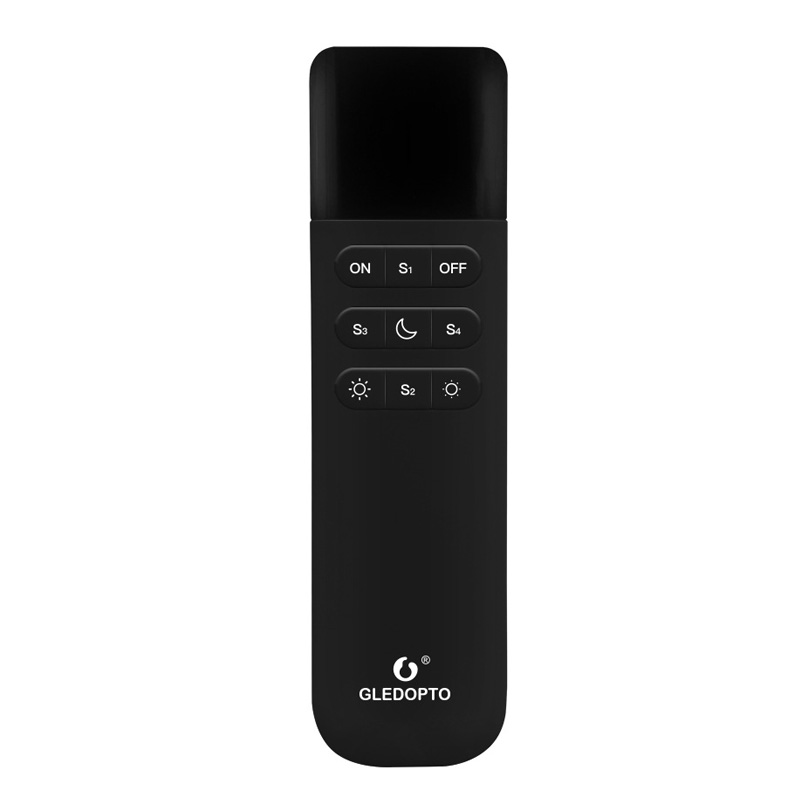
These Gledopto WiFI WLED controllers are compatible with multiple color types of DC 5V 12V 24V digital led strips, such as WS281X family, SK6812, and other RGBICs and RGBWICs, WS2805 and FW1906 RGBCCT ICs, and single white ICs. The maximum output of a single WLED led controller is 800 pixels and 15A current and two data output ports (GPIO16/GPIO1, GPIO2), some models are even equipped with DIY ports (IO33/IO14/IO12) to connect additional push switches and sensors. Also available with wireless handheld remote control.
WLED ESP32 vs. ESP8266
WLED APP supports both ESP32 (accessible to Alexa and Google Home Assistant) and ESP8266 microcontroller chips. Compared with ESP8266, the performance advantage of WLED led light strip controller ESP32 can support microphone function makes it better in led strip lighting control which needs audio driver. WLED compatible controller with MIC can capture the music or sound in the environment in real time and dynamically adjust the brightness, color and light effect mode of the light strip according to the audio frequency and rhythm.
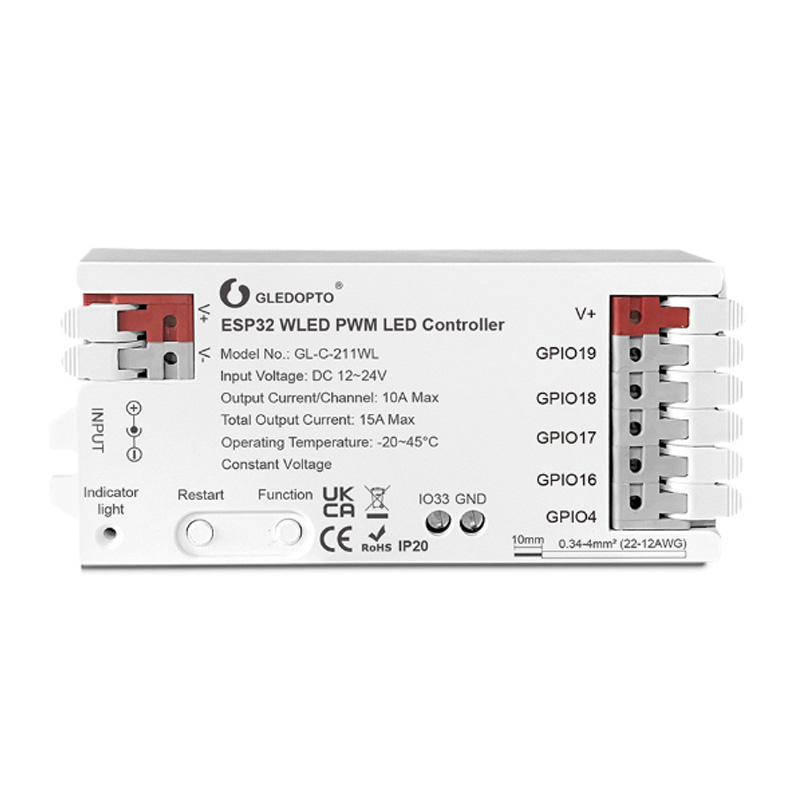
Wireless 5 in 1 Strip WLED ESP32 WiFi LED PWM Controller
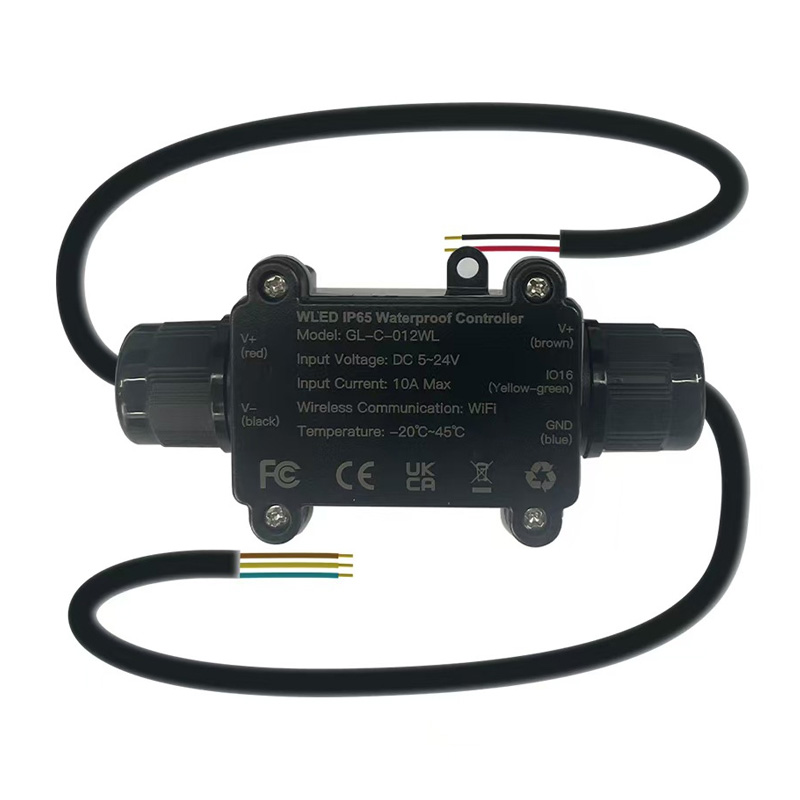
Wireless WiFI Controlled Programmable Led ESP32 WLED Outdoor Light Controller

ESP32 WLED 4CH Digital LED Controller | Easy Setup 5V-24V

Wifi ESP32 DIY WLED Controller with Microphone and UART Download
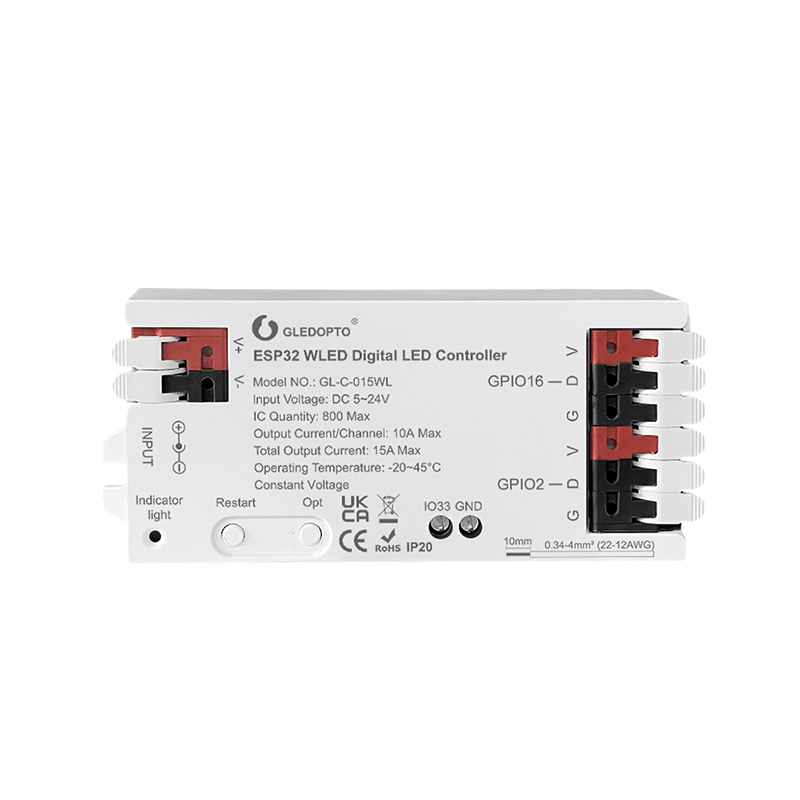
WIFI ESP32 WLED Controller to Control RGB and RGBW Pixel LED Tape
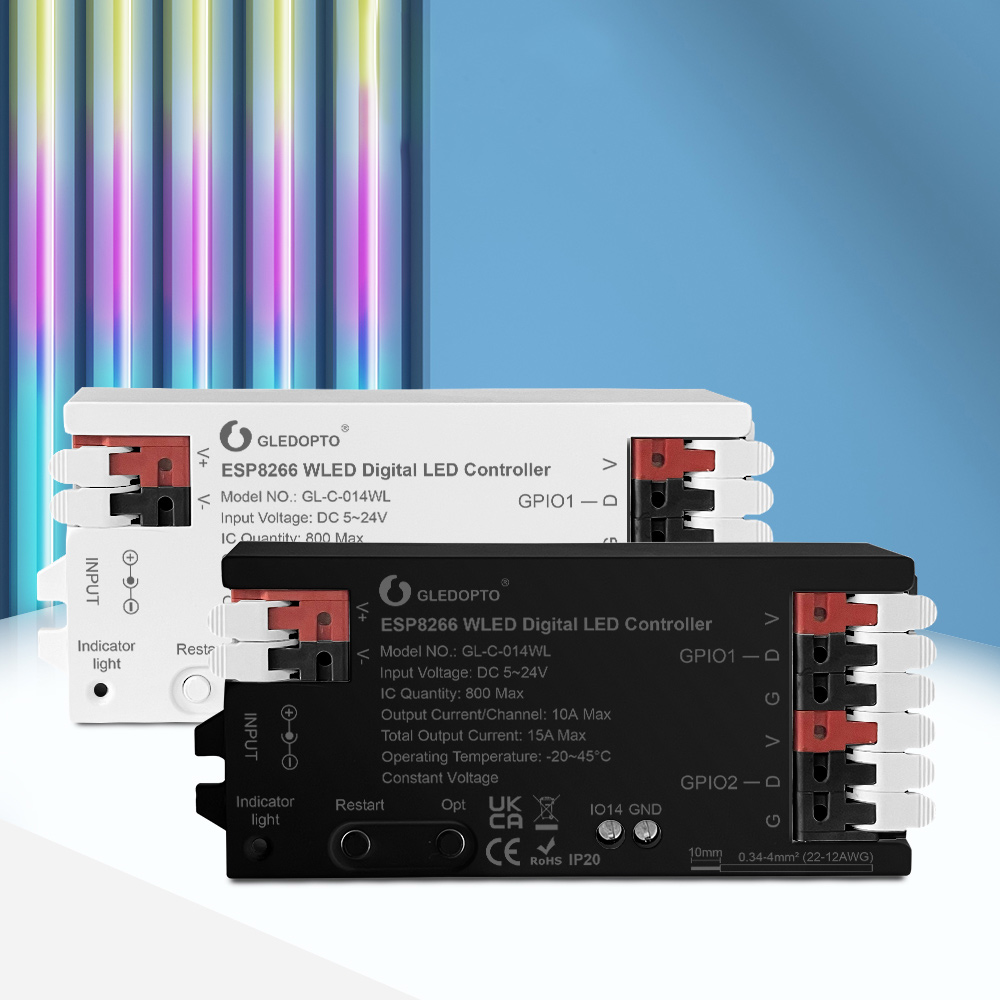
WIFI ESP8266 WLED Controller for RGB and RGBW Digital LED Strips
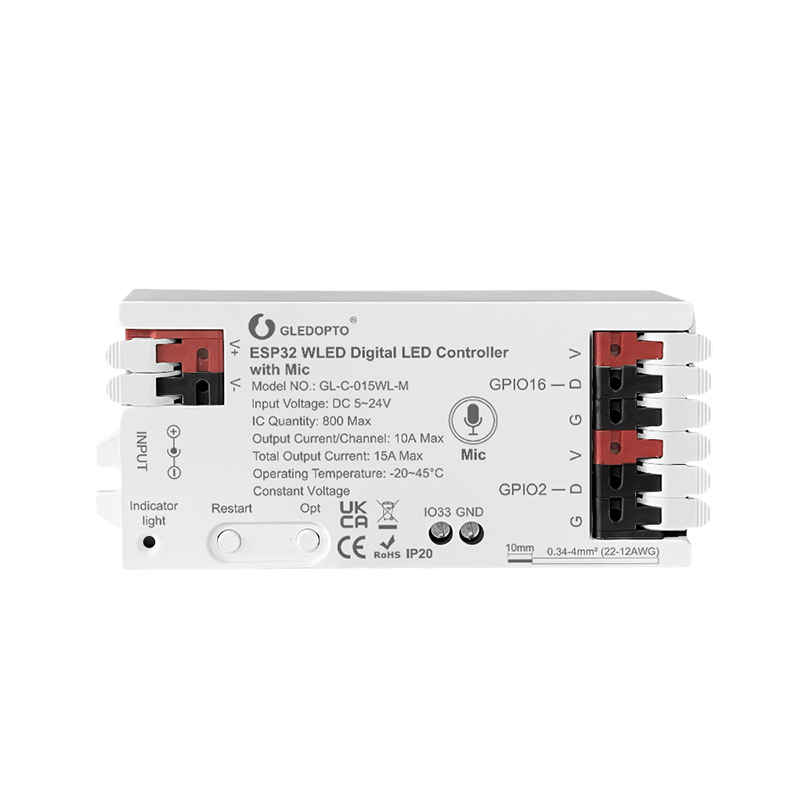
WLED ESP32 Addressable Wifi Music Controller with Microphone inside
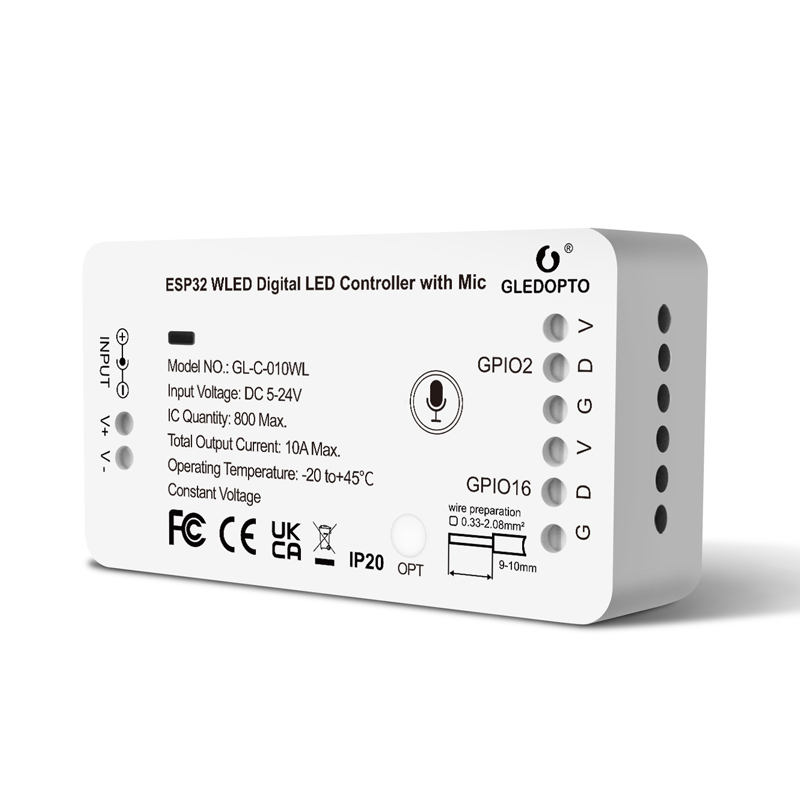
800 Pixels Mic Control WiFi WLED ESP32 LED Pixel Tape Controller
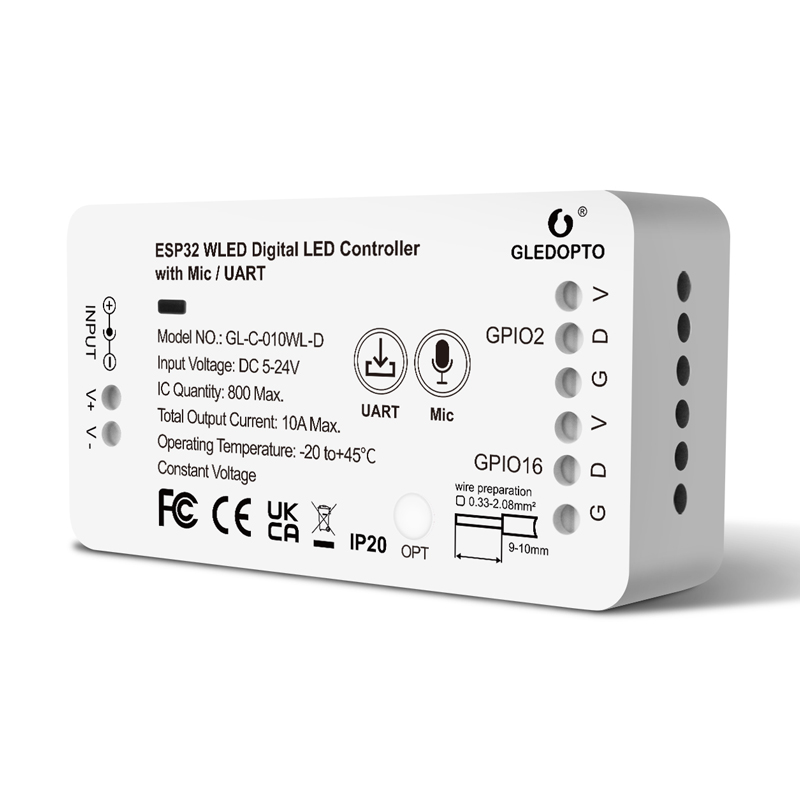
WLED ESP32 Pixel LED Strip Mic Controller With UART Download
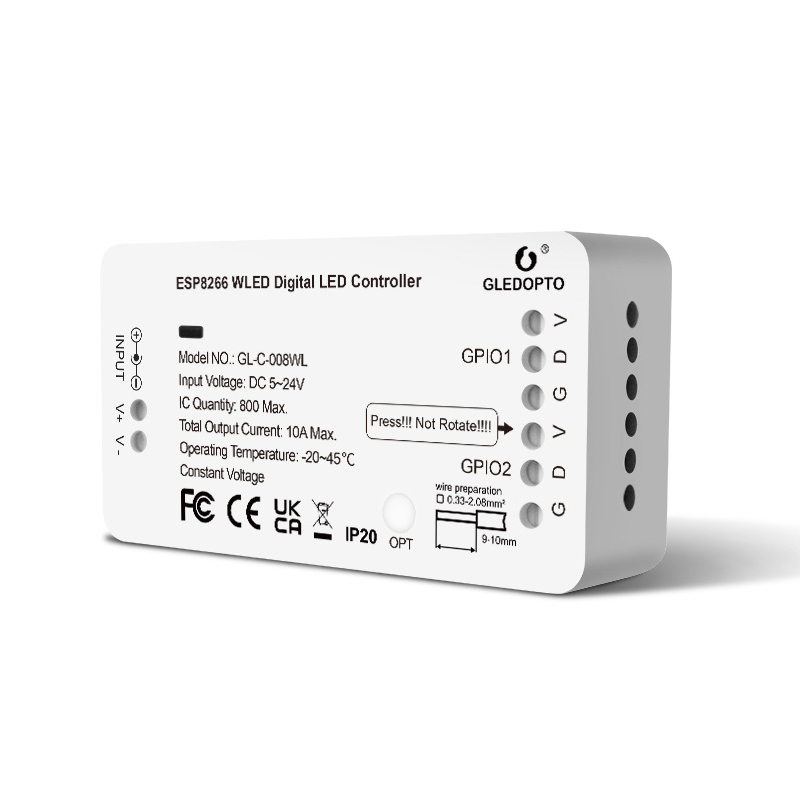
2 Channel 10A Basic WiFi WLED ESP8266 Digital LED Strip Controller
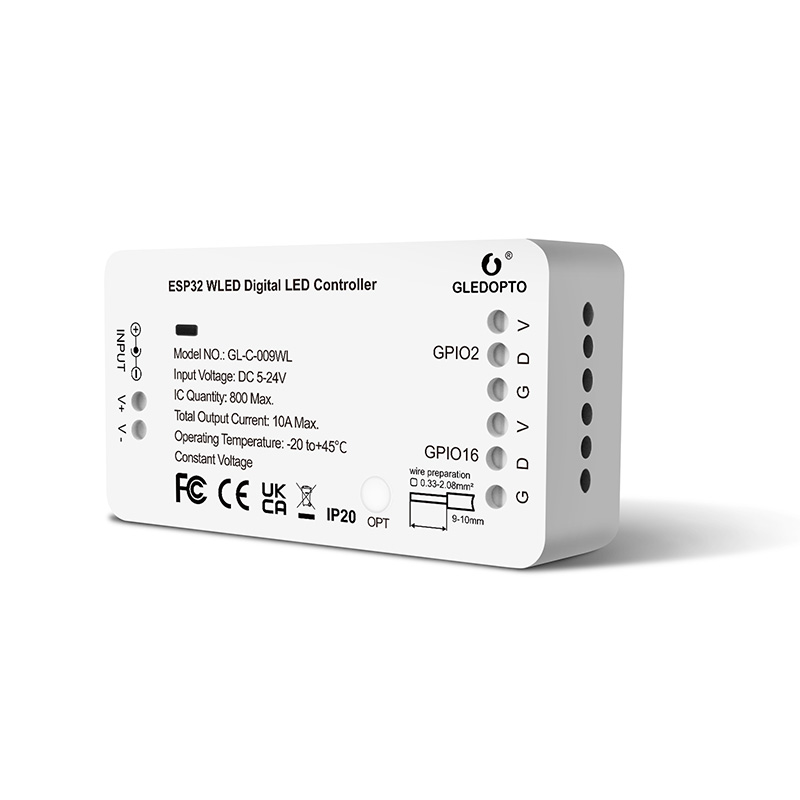
2 Port Data 10A Basic Led ESP32 WLED Pixel Controller
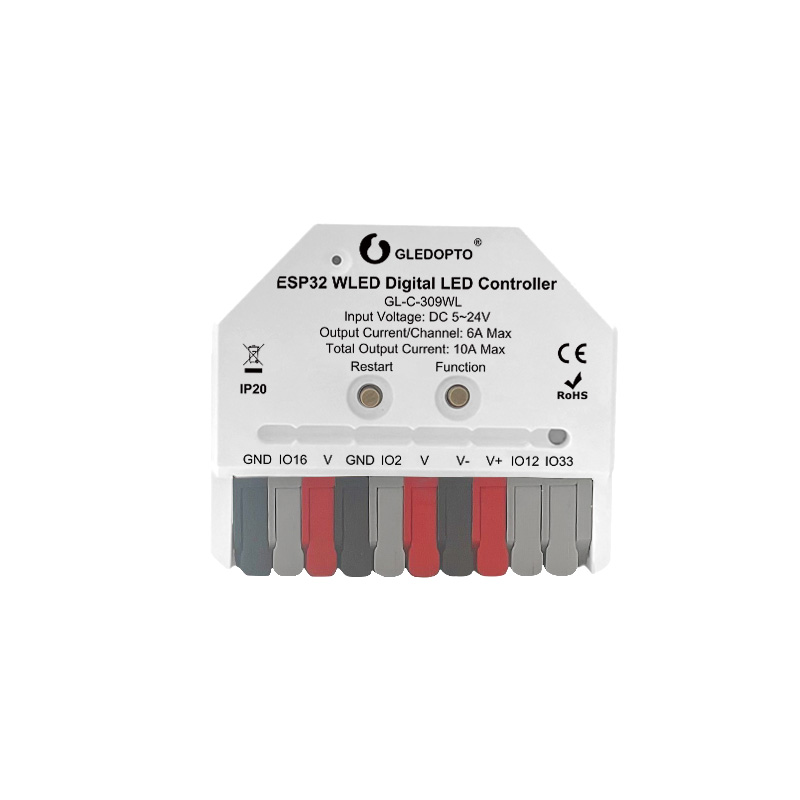
2CH WiFi ESP32 LED Light Strip WLED DIY Pixel Controller Mini
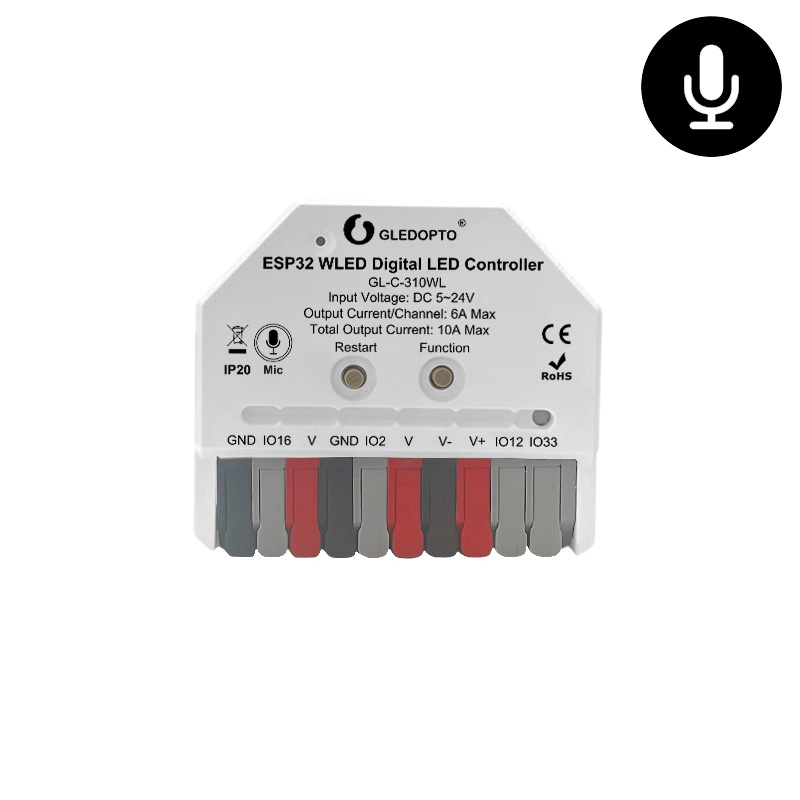
Mini Addressable LED Strip ESP32 WLED DIY Sound Activated LED Controller

3A 5V Pixel LED WiFi WLED ESP32 Microphone Mini USB Smart Controller
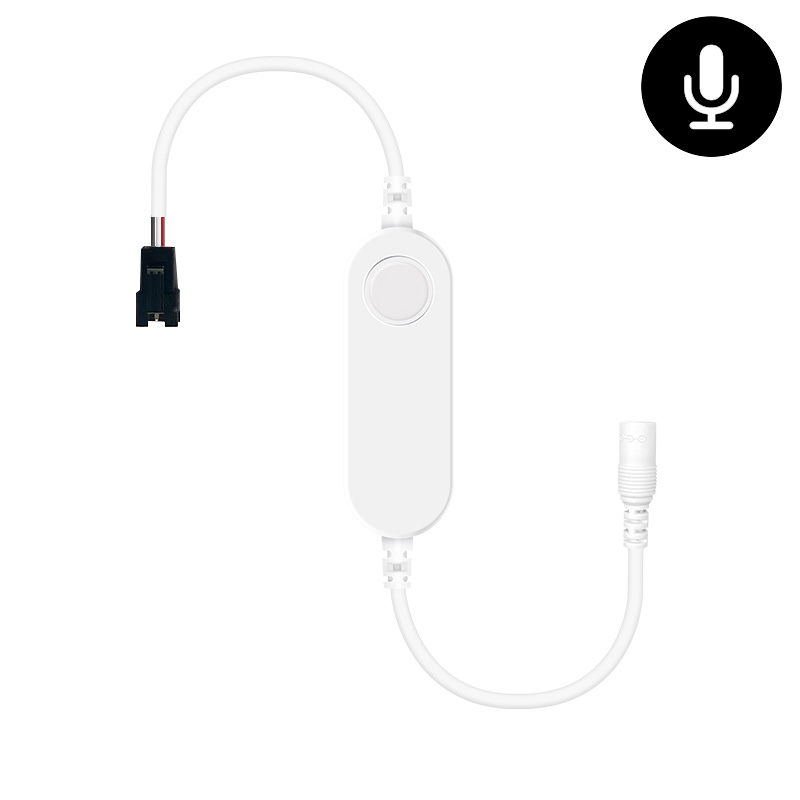
WiFi ESP32 WLED Microphone DC 12V 24V Pixel LED Strip Light Mini Controller

ESP8266 WLED WiFi Addressable LED Mini USB 5V Charge Controller
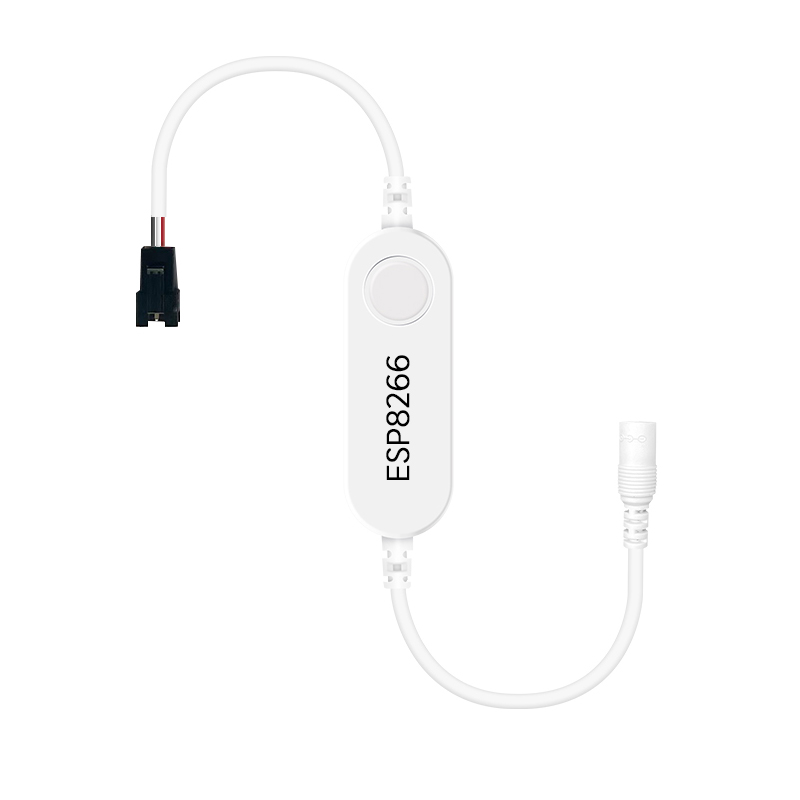
WLED ESP8266 DC12V DC24V WiFi LED Mini Dream Color Controller
WLED Controller Types
Currently common WLED control individual lights methods can be divided into two main types: WLED control board and WLED led controller. WLED controler will be relatively simple in wiring, through the screws or hand press the wiring port can be fixed the light strip wire. Mini WLED controller even comes with a 3 pin JST quick connector to connect the pixel led strip more conveniently. All of our WLED controllers are WIFI enabled, you can adjust the LED strip light using your smartphone app, tablet, web page, or via Home Assistant, Alexa voice assistant.
Frequently Asked Questions About WLED Controllers For LED Strip Lights
Got a question about getting started with WLED? We've answered thousands of them. Here are the most common ones we see.
WLED is open-source firmware that runs on these controllers, giving you way more power and flexibility than a typical remote. Think hundreds of effects, deep customization, and a huge online community. A standard controller gives you a few preset modes; a WLED controller for LED strip lights lets you build exactly the effect you want and integrate it with systems like Home Assistant for true, cloud-free local control.
The ESP32 is the more powerful chip. It's faster, has more memory, and supports more features like sound reactivity or driving multiple data outputs smoothly. For a simple, single-strip setup, an ESP8266 WLED controller is perfectly fine and saves a few bucks. If you're planning complex effects, music sync, or running lots of pixels, go with the ESP32 every time.
Almost any digital addressable LED strip, yes. These Gledopto WLED controllers are designed for the most common types like the WS2812B and WS2811 families, SK6812, and even addressable CCT and RGBW strips. The key is to match the voltage. Just check the product page for the full list of compatible ICs.
Our WLED controllers for LED strip lights can handle up to 800 pixels per data output, but that's just the data limit. The real-world limit is almost always your power supply. An 800-pixel strip running full white can draw a massive amount of current—way more than the controller's 10A or 15A rating. You have to calculate your power needs separately and inject power directly to the strip.
Yes, this is the step everyone tries to skip, and the number one cause of problems. For any run longer than about 5 meters or a few hundred LEDs, you absolutely need to plan for power injection. Without it, you'll see voltage drop: the LEDs at the far end of the strip will be dimmer and might have a reddish tint on white. It's not a fault of the WLED controller or the strip; it's just physics.
The controllers with a built-in microphone, like the ESP32 Music Controller, listen to ambient sound in real time. The WLED software then analyzes the sound and maps different frequencies and beats to lighting effects. It's all processed right on the controller itself, so it's fast and doesn't rely on your phone or an app being open. It’s great for creating reactive lighting that matches your music or even the audio from your TV.
Absolutely. This is one of the biggest reasons people choose WLED. It has native integration with Home Assistant, which means you get fast, reliable, local control over all your lights. Once you connect the WLED controller to your network, Home Assistant usually discovers it automatically. No cloud accounts, no subscriptions, just direct control.
A WLED controller with two data ports lets you run two separate strips as independent light segments. For example, you could run one strip along the top of your cabinets and another along the bottom, and have them display completely different effects simultaneously from one controller. It's also useful for reducing the data wire length to different parts of an installation, which helps maintain signal integrity.
It's normal for a WLED controller to get warm, especially an ESP32 chip running complex effects. However, if it's too hot to comfortably touch, you might be pushing too much current through it. The controller has a max amperage rating, like 10A or 15A. This is for passing power *through* to the start of the strip. If your strip needs more current than that, you must power the strip directly from the power supply, not through the controller's terminals.
This is almost always a simple software setting. Different LED strips have their red, green, and blue chips arranged in a different order (e.g., GRB instead of RGB). If your WLED controller is sending a signal for red but the strip has green wired up first, the colors will be swapped. Just go into the WLED 'LED Preferences' page and change the 'Color Order' setting until a red, green, and blue test pattern looks correct.
Yes, many of our models are designed specifically for this. Several of our Gledopto WLED controllers expose extra GPIO pins. You can use these to add physical buttons, motion sensors, or other inputs. Because WLED is open source, you can compile your own version with these custom 'usermods' enabled. If you have a specific need, send us your requirements.