
SK6812 24V LED Pixel Tape
12 products24V addressable led strip is usually a built-in or external SK6812 IC to control 6 LEDs, with the development of technology and market demand gradually expanding, 24V individually addressable led strip came into being. Our SK6812 24V individually controllable pixel led strip with 12-24V 12-36V wide voltage input or DC24V single voltage input, each 5050 RGB LED or 5050 RGBW LED has a built-in SK6812 IC chip, which is capable of presenting fine color changes. 24V SK6812 pixel led strip can support longer linear runs without significant voltage drops due to its higher voltage, which is especially important for long distance digital led strip lighting installations.
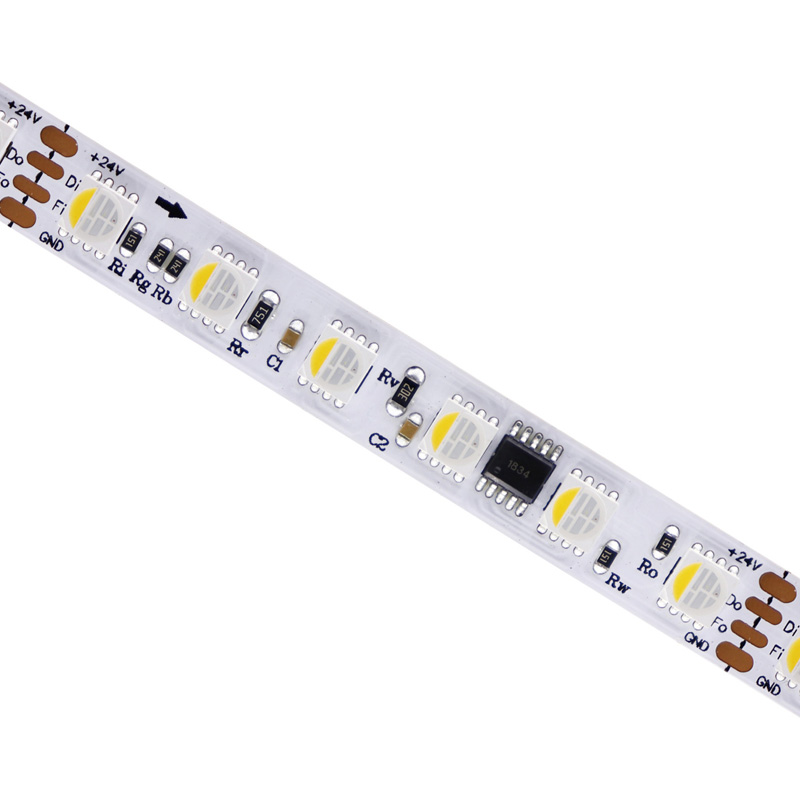
24V TM1834 84 LED/m High Density RGBW Dual Data Led Strip
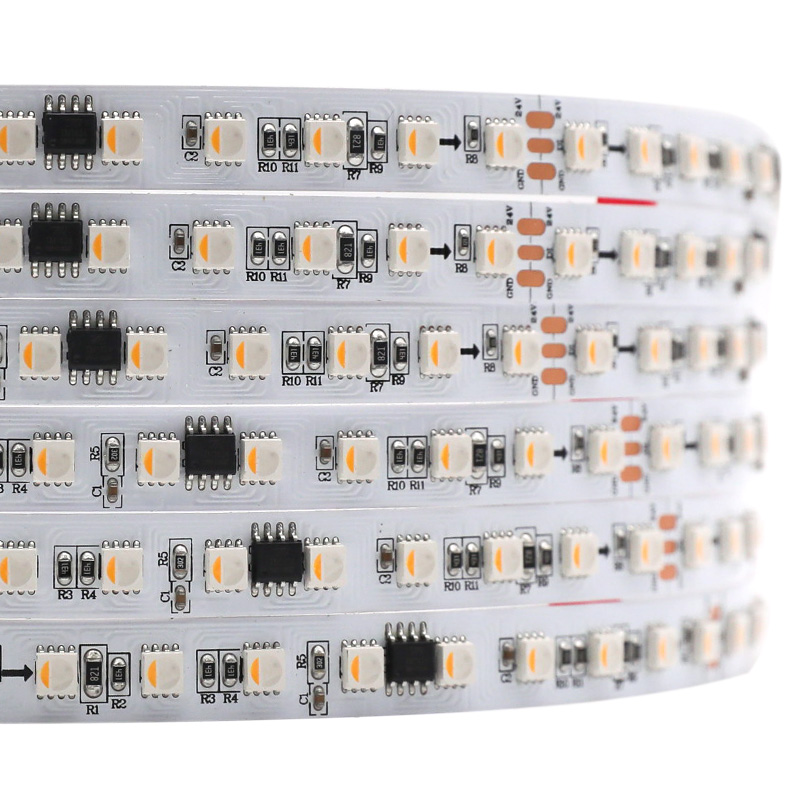
10m No Voltage Drop SK6812 4040 RGBW Addressable LED Strip
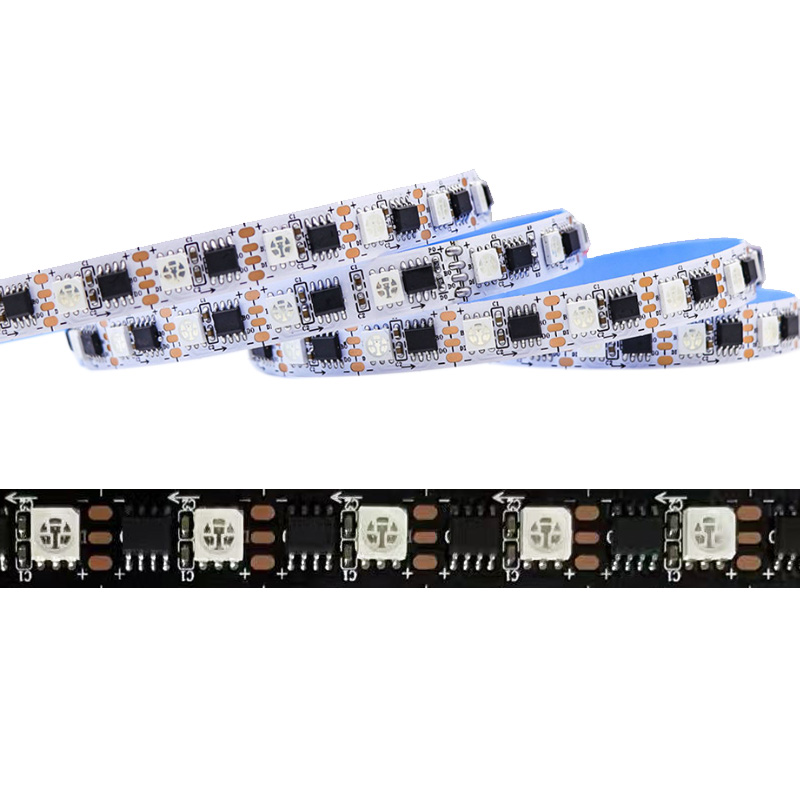
24V Individually Addressable 5050 RGB LED Strip (External IC)
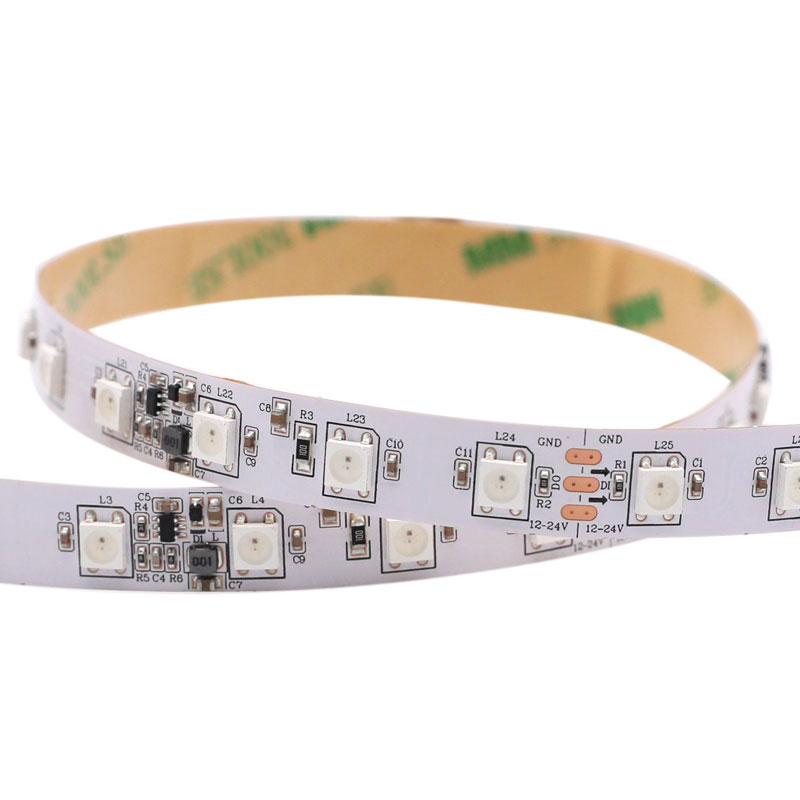
DC12-24V Individually Programmable SK6812 RGB LED Strip
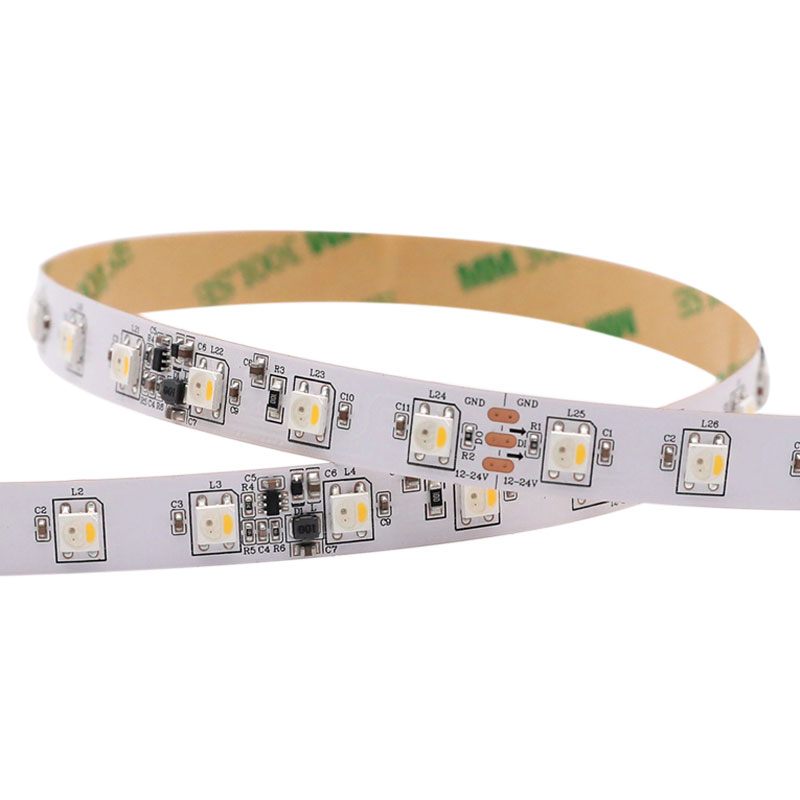
Engineering 12-24V Individually Addressable SK6812 RGBW LED Strip
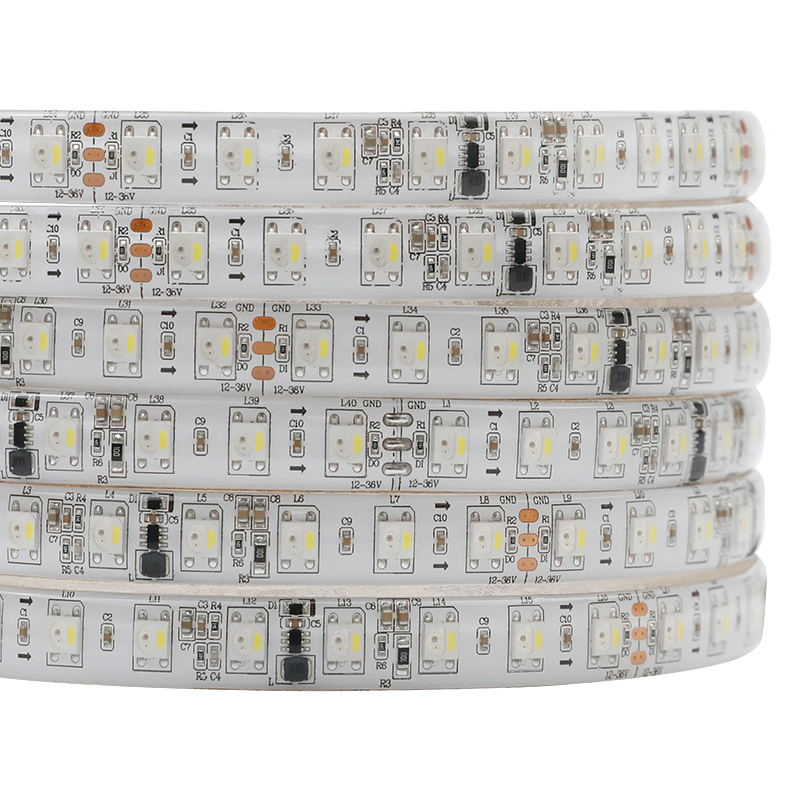
SK6812 12V to 36V Wide Voltage RGBW Individually Controllable LED Light Strip 80LEDs/m
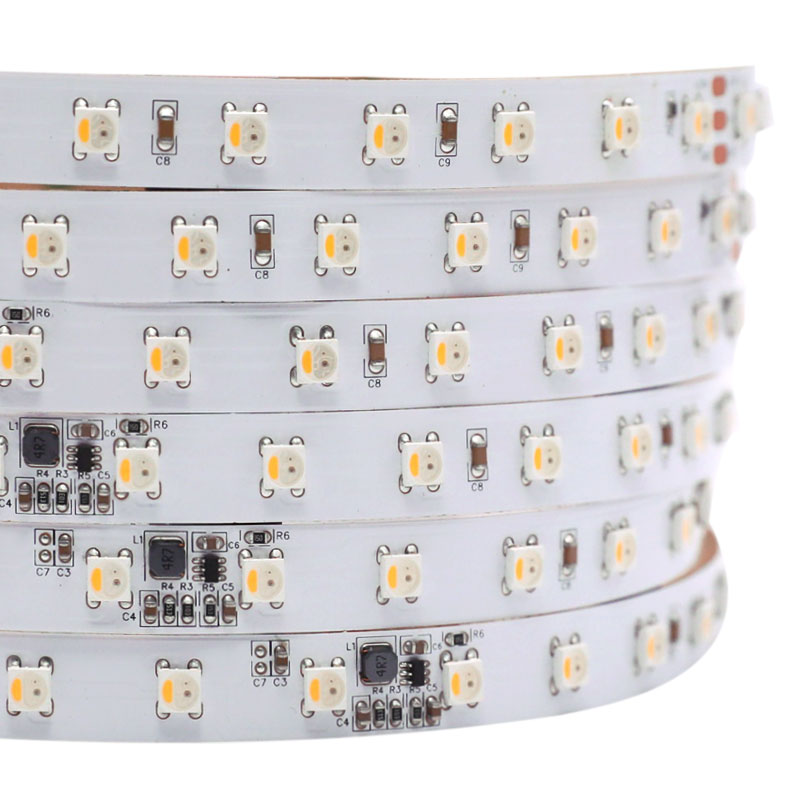
24V to 5V Individual Addressable SK6812 RGB & RGBW LED Strips
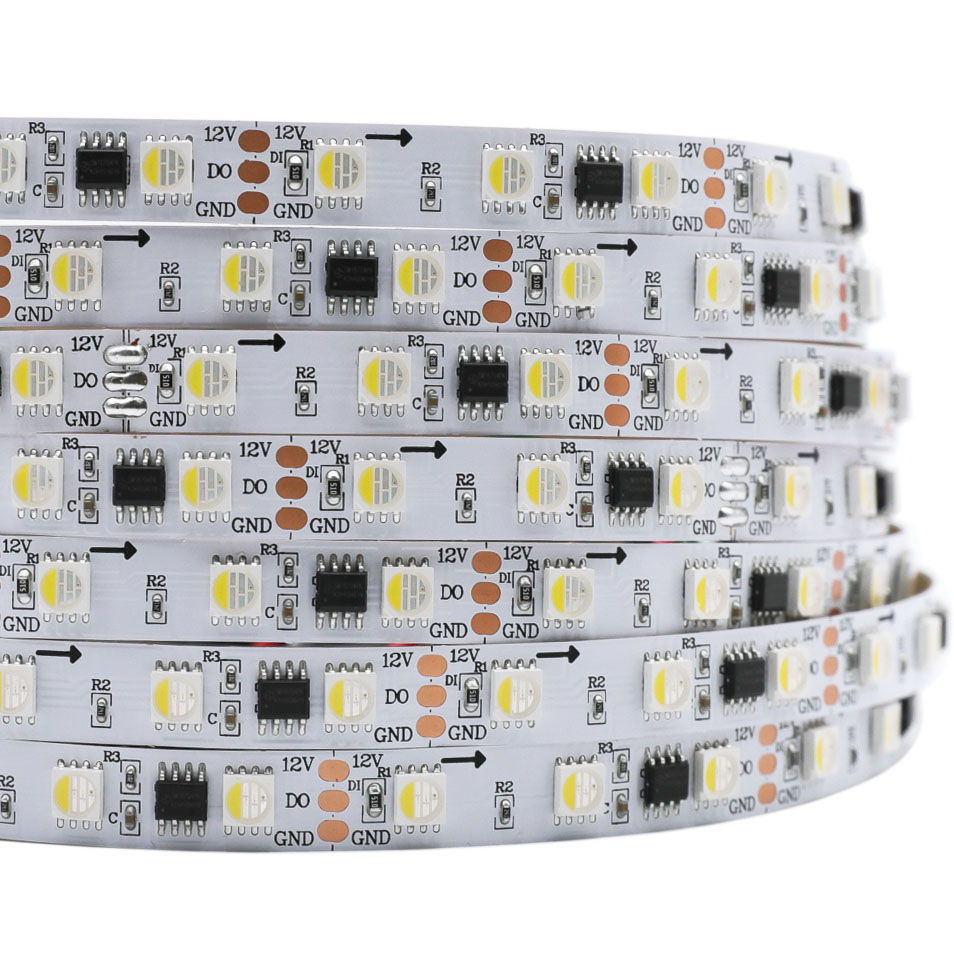
SM16704 Addressable RGBW Dream Color LED Strip Lights 60LEDs/m
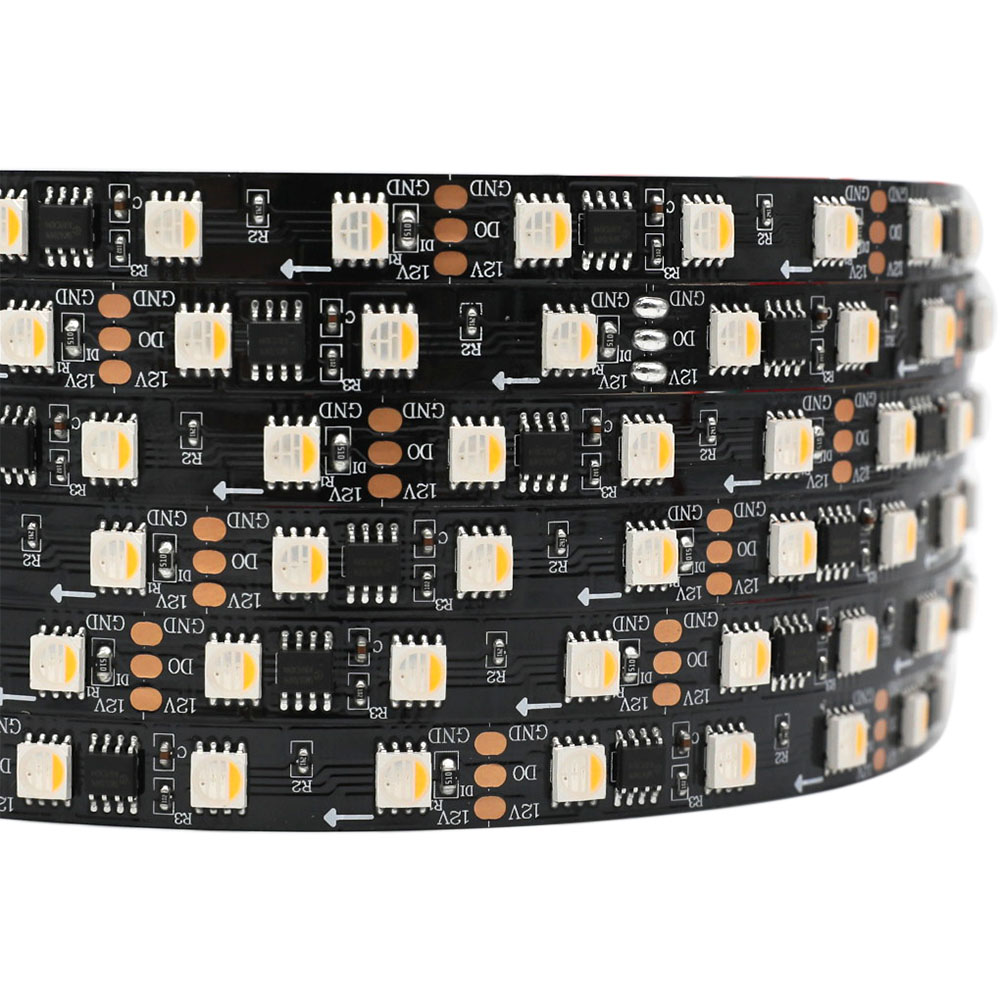
Color Chasing RGBW LED Strip Light - SK6812 4IN1 - DC12V
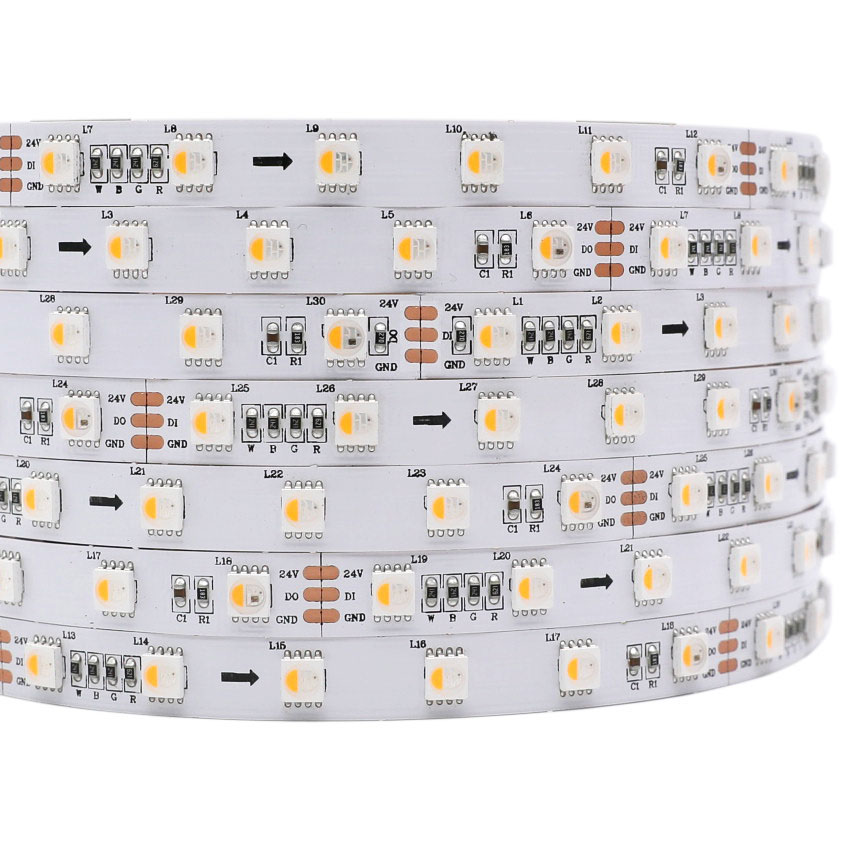
UCS2904 RGBW Addressable LED Strip Lights 60LEDs/m
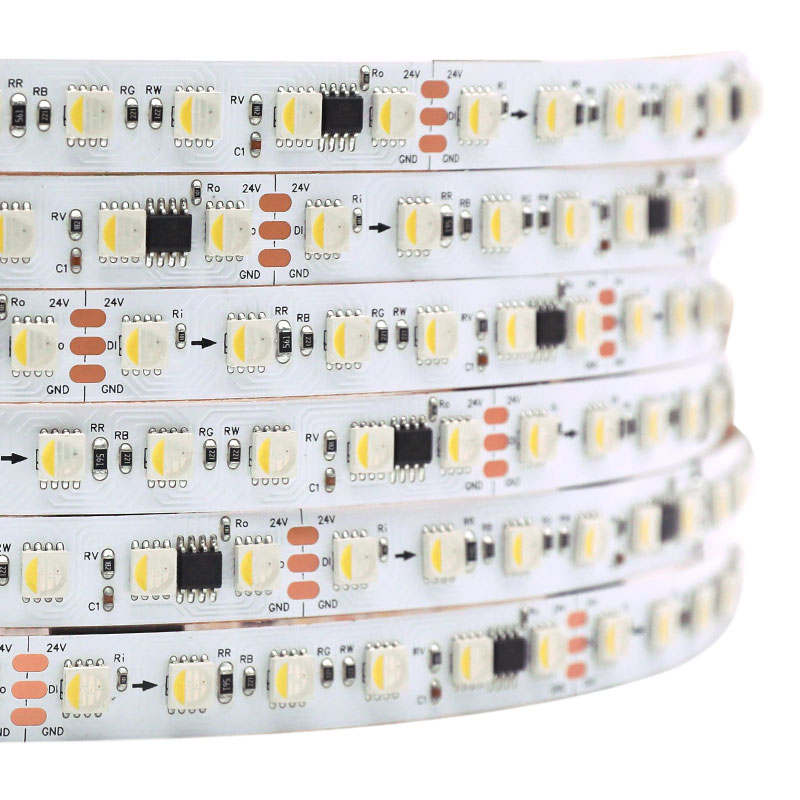
24V UCS2904 5050 4in1 RGBW Addressable LED Strip Lighting
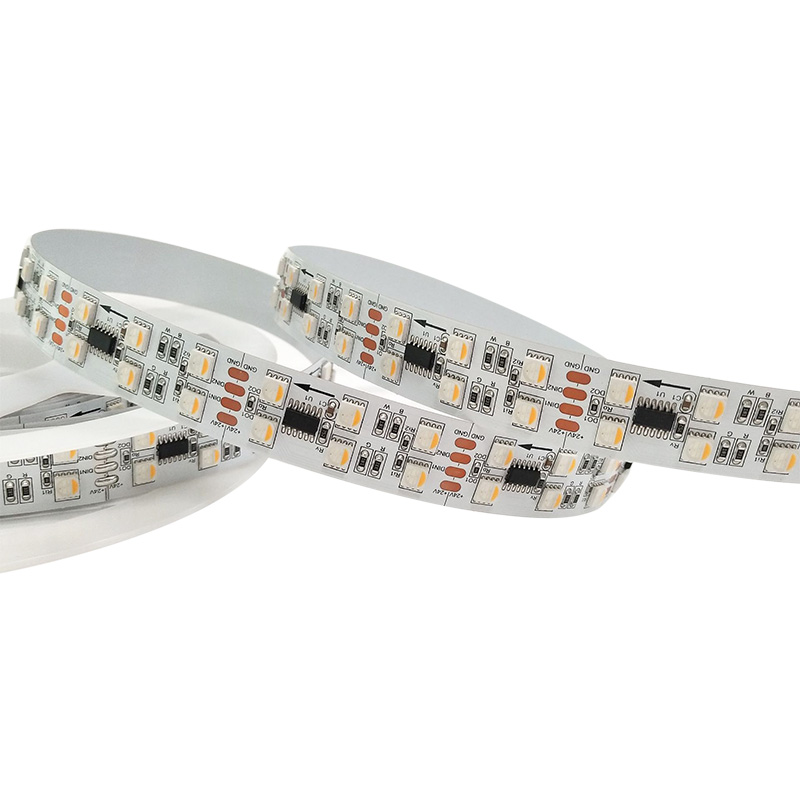
WS2814 Dual Row RGBW Addressable Led Strip 24V
24V SK6812 vs. 24V TM1834 vs. 24V SM16704 vs. 24V UCS2904
Our 24V SK6812 LED strips feature a specialized circuit board design that supports a wide input voltage range of DC 12V–24V or DC 12V–36V, and are all designed to be individually addressable; however, compatibility must be considered when selecting a 24V addressable controller.
In contrast, the 24V SM16704 and 24V UCS2904 use a single IC to control groups of LEDs, typically six pixels per group. The 24V SK6812, 24V SM16704, and 24V UCS2904 all use single-signal data transmission, while the 24V TM1834 provides redundant signals to ensure stability.
Please select a 24V addressable LED strip based on your needs.
Frequently Asked Questions About 24V SK6812 LED Pixel Tape
Your project's already on our shelf. Here are the common questions we answer before shipping it out.
The main advantage of a 24V SK6812 LED pixel tape is much less voltage drop. This means you can run longer continuous lengths—often 10 meters or more—from a single power connection before the lights at the far end start to dim or shift color. With 5V addressable light strips, you see that drop after just a few meters. For any large-scale installation like coves or long corridors, 24V saves a ton of wiring complexity.
Yes, but you'll do it much less frequently. A 24V individually addressable LED strip can typically run about 10 meters before needing power injected at the far end. For comparison, a 5V strip often needs it every 3-5 meters. Pushing past these limits without injecting power is the number one reason for seeing dim, reddish colors at the end of a long run. For very long runs, check out our guide on long LED strips.
It's all about resolution. A '6-LED control' 24V addressable LED strip groups six LEDs into one single pixel; you can change the color of that whole group, but not the individual LEDs within it. An 'individually addressable' 24V strip has tiny voltage regulators built right onto the PCB, allowing every single LED to be its own pixel. This gives you much finer, smoother animations, but the technology is newer and a bit more specialized.
Absolutely. The SK6812 data protocol is compatible with controllers designed for WS2811, WS2812B, and similar chips. The key is the wiring: the controller gets its own power (usually 5V or 12V), while the 24V SK6812 LED pixel tape gets its power directly from a separate 24V power supply. You just connect the Data and Ground wires between the controller and the strip.
Nine times out of ten, this is a power or data issue. First, check your power supply. If it doesn't have enough amperage for the strip's total length, it will struggle under load, causing flickers. Second, check your data line. A long wire from the controller to the strip (more than 15ft/5m) can weaken the signal, causing glitchy animations or 'stuck' pixels. A signal amplifier can fix that.
A 100 ft led tape light run is definitely an engineering project, but 24V makes it manageable. You can't power it from one end. You'll need to run a thicker gauge power bus (like 14 or 16 AWG wire) alongside the strip and inject power from that bus to the strip roughly every 10 meters (about 32 feet). This ensures the voltage stays consistent across the entire 100-foot length, keeping brightness and color perfect from start to finish.
For power injection lines on a 24V SK6812 pixel tape, don't go smaller than 18AWG for runs up to 10 meters. If you're running a main power bus for a very long installation, step up to 16AWG or even 14AWG to minimize your line losses. For the short data wire from the controller, 20-22AWG is fine. Using undersized wire is a common mistake that starves the strip of power, no matter how good your supply is.
You're right, on many standard 24V addressable LED strips, the cut points can be every 6 LEDs (about every 10cm or 4 inches). That's a trade-off for the higher voltage. If you need finer cut points, look for the 'individually addressable' 24V models in this category. Because of their advanced design, many of those can be cut after every single LED, giving you much more precision for fitting them into tight spaces.
This is a common wiring mix-up. For breakpoint resume to work, you must connect both the primary data (DI) and the backup data (BI) lines from your controller to the strip. Many people only connect DI and Ground, which makes the strip function as a standard single-signal tape. If one pixel fails in that setup, the rest of the strip goes dark. Wire up that BI line, and the signal will just hop over the dead pixel.
You'll need a converter. A 24V SK6812 LED pixel tape speaks a protocol called SPI, while DMX is the standard for stage and architectural lighting. The missing piece is a DMX-to-SPI decoder. This box takes the DMX signal from your console or software, and translates it into the data signal the SK6812 chips understand. We stock a wide range of DMX master decoders for exactly this purpose.
For indirect lighting where you need serious output, yes. A dual-row 24V addressable strip can be twice as bright as a standard strip, making it powerful enough for primary lighting in a cove or a wall wash. The trade-offs are power draw and size. They need a beefier 24V power supply and are wider (often 20mm), so they won't fit into our slimmest aluminum channels.
A wide voltage strip has on-board regulators that can accept a range of DC inputs, automatically converting it to what the LEDs need. This makes our 12V-36V SK6812 models incredibly robust for installations where the power source isn't perfectly stable, like in vehicles, boats, or off-grid solar systems. They provide consistent light output even if the input voltage fluctuates.
Yes, this is a huge part of our business. A lot of what we ship is built to a customer's drawing and never appears on the site. Send us your dimensions—even a sketch on a napkin is fine—and the specs you need, like IP rating for outdoors or specific connectors. An engineer will send back a complete wiring layout, parts list, and quote, usually the same business day. There's no fee for the consultation and no obligation to order.