
SK6812 3535 Mini LED Strips
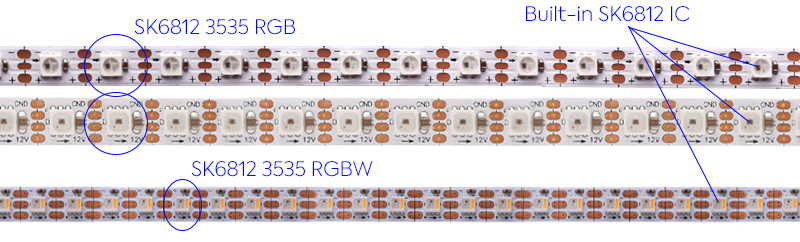
24 productsSK6812 3535 is a relatively small surface mount LED with built-in IC driver. Due to its mini and small size, it allows for more LEDs to be integrated into the LED strip, thus reducing the appearance of light spots and providing a smoother, more uniform light output. Each SK6812 mini 3535 LED can be controlled as an individual pixel point for a high-density phantom color programming effects. While SK6812 RGB 3535 and SK6812 RGBW 3535 are typically single-signal transmissions with a 5V input, we offer higher voltage driven and break-point continuous transmission versions of the 3535 SK6812 mini RGB LEDs to ensure stability and reliability for long light strips or complex systems.
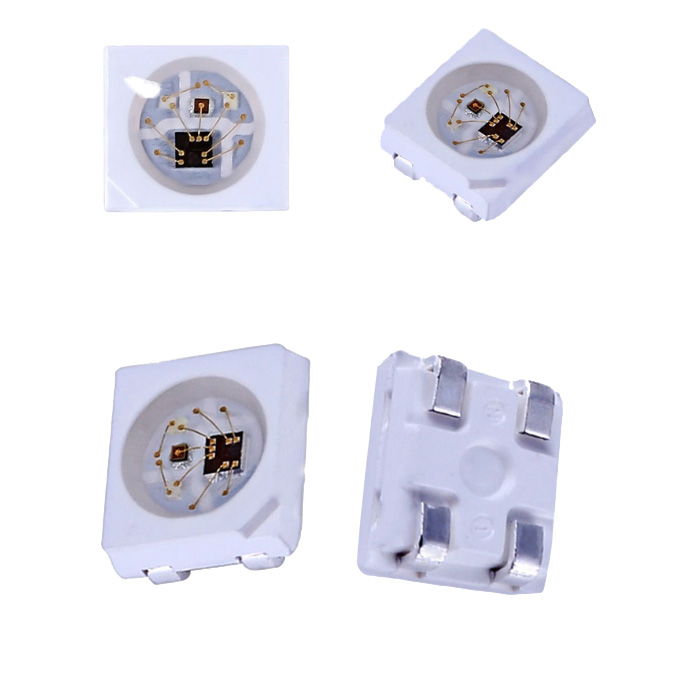
SK6805-2427 RGB Arduino LED Chip - 500PCS By Sale
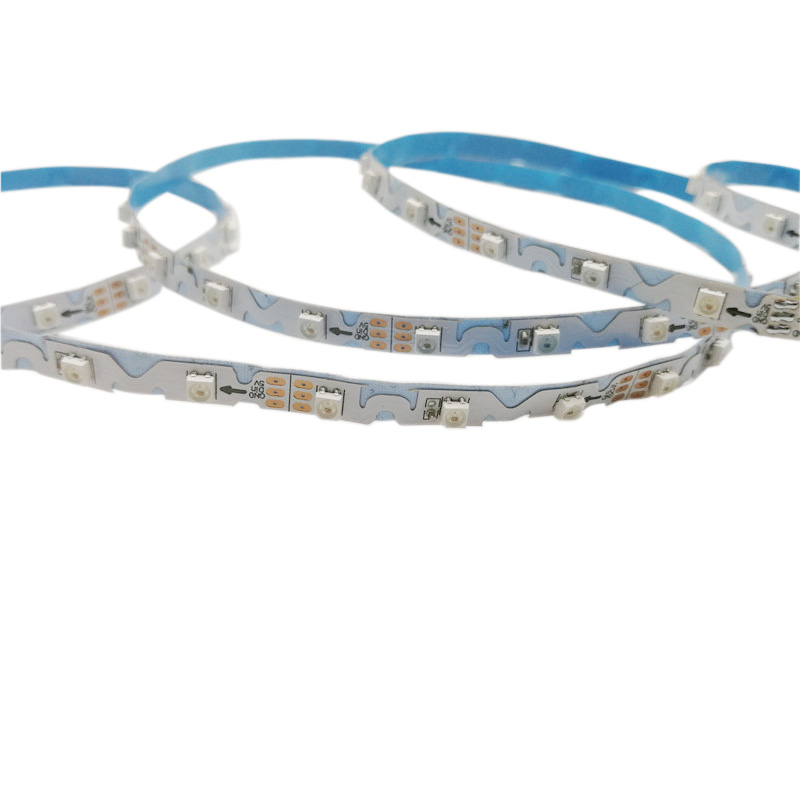
Ultra Slim 5mm SK6805/SK6812 ARGB DC5V S Type LED Strip
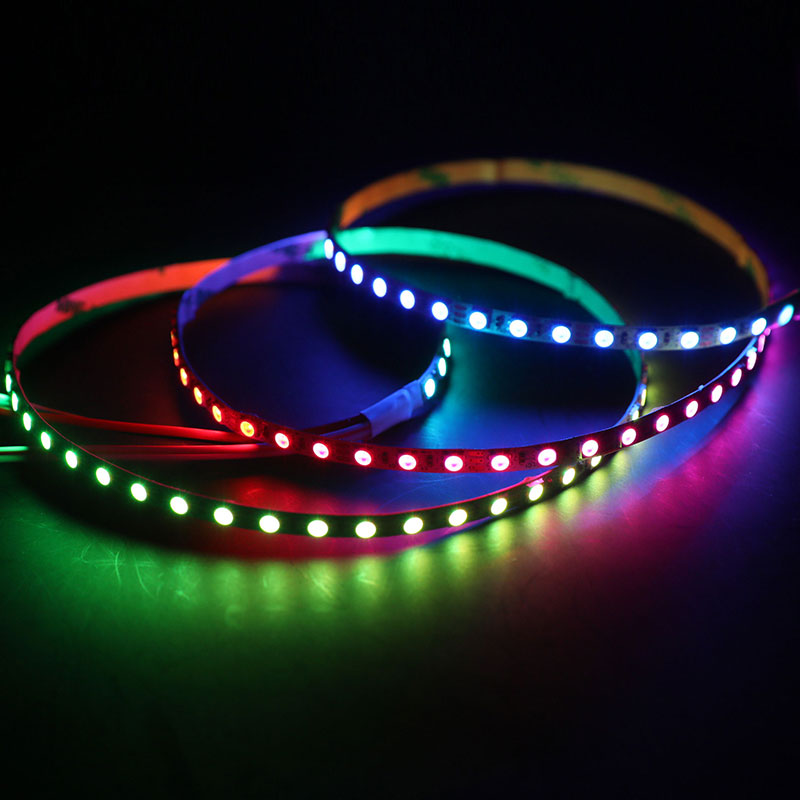
Super Narrow 5mm 12V SK6812 Individually Addressable RGB LED Pixel Strip

10m Super Long 5mm Slim RGB iC LED Strip Lights
FAQ About SK6812 3535 Mini LED Strips
Got a question before you spec your job? You're in the right place. Here are the common things people ask before buying our mini addressable strips.
Practically, they're very similar and often interchangeable. The SK6812 has slightly more forgiving data timing, which can make it a bit more stable on long runs or with certain controllers. The biggest difference is that the SK6812 chip is also used for our RGBW mini strips, which add a dedicated white LED for better whites than you can get by mixing RGB. For a standard RGB project, you can usually use either, but check your controller's library support if you're not using one of ours.
Some are. You need to check the IP rating on the specific model. IP20 is for indoor, dry locations only. For any moisture, you want at least an IP65 rating, which is a silicone coating. For fully outdoor use or where it might get submerged, you'll need our IP67 or IP68 waterproof mini lights, which come sealed in a silicone tube. Using an indoor-rated strip outside is one of the fastest ways to kill it.
That's a great question. We group them because they solve the same problem: getting individually controllable pixels into a very narrow space using the compact 3535 LED package. While SK6812 is a popular chip, we also offer WS2811 for group control (e.g., every 3 LEDs), WS2815 for 12V with a backup data line, and other ICs to give you options for voltage and features. The key thing is they all use the mini 3535 LED size, making them perfect for tight fits.
For portable projects like costumes or props, people often use a small 12V LiPo battery pack from the RC hobby world or a compact 8xAA battery holder. The key is checking the amperage. Add up the max current draw of your LEDs (the spec sheet lists it per meter) and make sure your mini 12V battery can supply at least that much. Under-powering the strip will cause flickering or incorrect colors. Don't just grab any 12V battery mini pack and hope for the best.
That's classic voltage drop. On a 5V rail, the resistance of the copper strip itself consumes voltage over distance. By the end of a few meters, the voltage might drop to 4V or less. For any run over 2-3 meters, you need to inject power at the far end, or start with a 12V or 24V strip.
It means you can tell each single LED on the strip what color and brightness to be, independently of all the others. This is how you create flowing rainbow effects, chasing animations, or complex patterns. Cheaper RGB strips can only show one color along the whole length at a time. With these SK6812 3535 mini LED strips, every single LED is its own pixel, giving you precise control.
It depends on your run length. 5V strips are great for high-density and short runs (under 3 meters) where power is close by. For longer runs, like 5 meters or more, a 12V or 24V strip is much better at fighting voltage drop. A 24V strip can often run 10 meters with a single power connection. The light output is the same; the higher voltage just lets the power travel farther down the strip. We even stock 24V individually addressable strips which used to be rare.
This depends on the controller's memory and processing power, not just its power output. It's measured in pixels. A common controller might handle 1024 or 2048 pixels per port. So, if you have a strip with 144 LEDs/meter, a 2048-pixel controller could run about 14 meters of it. Check the pixel count on both the strip and the controller spec sheet. You can find a huge range of addressable dream color controllers that handle anything from a few hundred to tens of thousands of pixels.
It's pretty simple. You'll have three or four pads: 5V/12V/24V (power), GND (ground), and DI or DAT (data in). Connect the power and ground to your power supply. The data line connects to the data output pin on your controller. If you have a backup data line (BI), that's for redundancy and connects to its corresponding pin. The most common mistake is getting a bad connection on the data line. Our guide on how to wire addressable strips has diagrams for all the common scenarios.