
SK6812 4020 Side View LED Strip
21 products
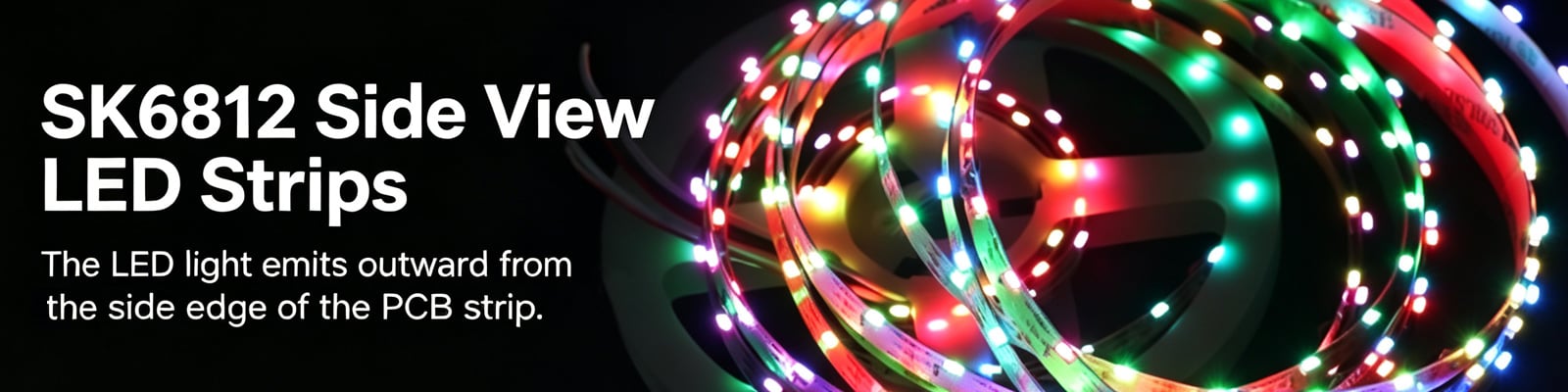
Directional Side View LED Strip Lights Collection with addressable color.
Surface mounted 4020 LEDs are designed to be side-view illuminated and are mainly used for edge lighting or applications where side-emitting illumination or glare avoidance is required. SK6812 4020 RGB utilizes the SK6812 as the built-in driver IC, each 4020 LED is a pixel, through a single-wire data transfer to achieve independently control, and achieve richer and more dynamic color effects than normal PWM 4020 RGB side emitting led strips.
Taking the PCB board as the reference plane, general SMD LED lights emit light from points on this plane, while the light emitting surface of 4020 LEDs is perpendicular to the PCB board, and the light strip is pasted on the surface of the object, so the light of 4020 LEDs is more directional.
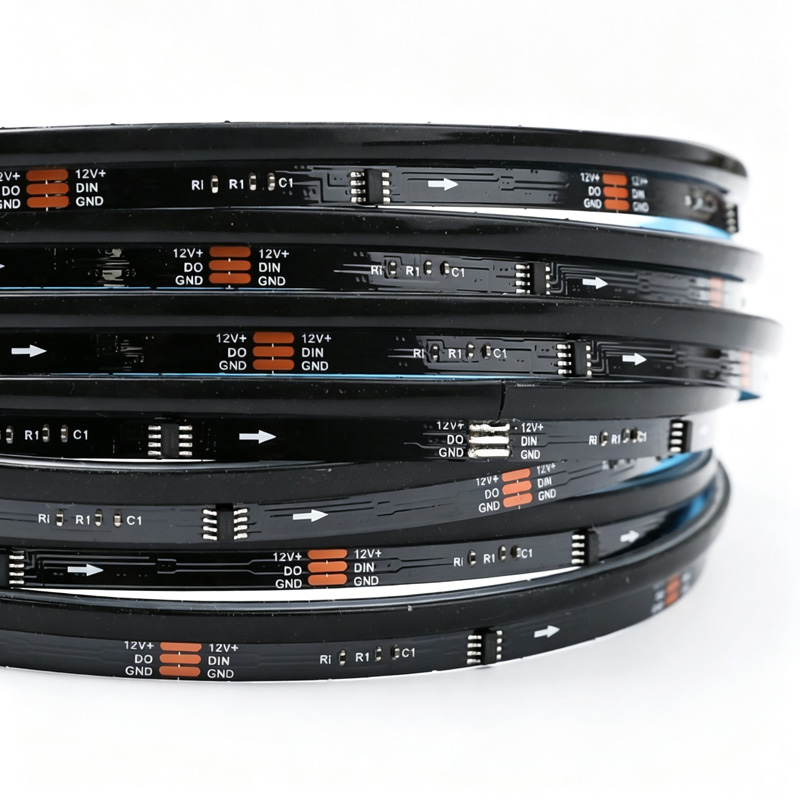
12V WS2811F Black RGB Continuous Edge-lit Cob LED Strip
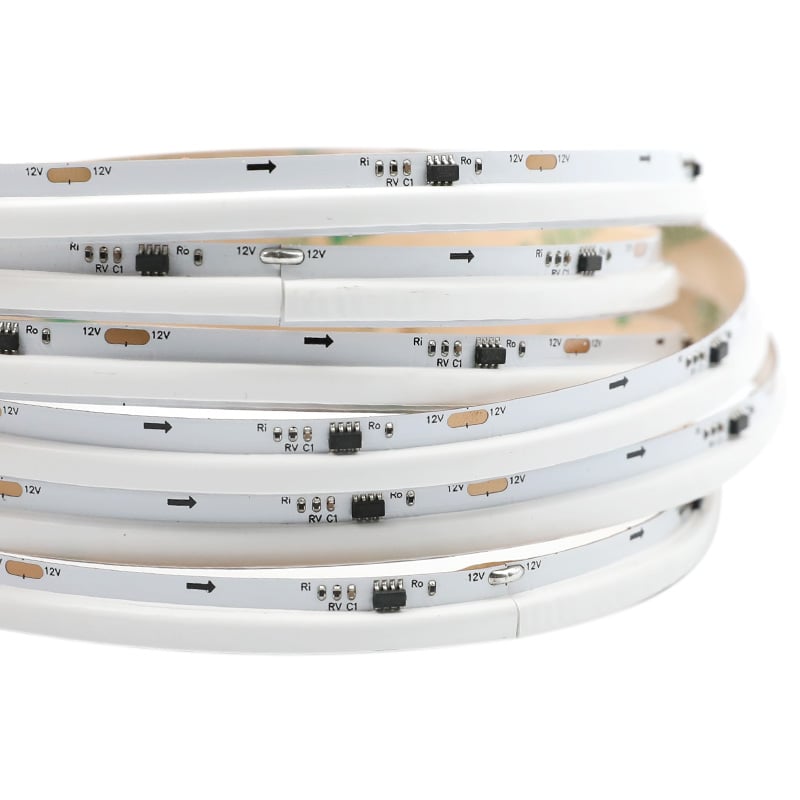
12V WS2811F Dotless Side Glow RBG Cob Edge Lighting Tape
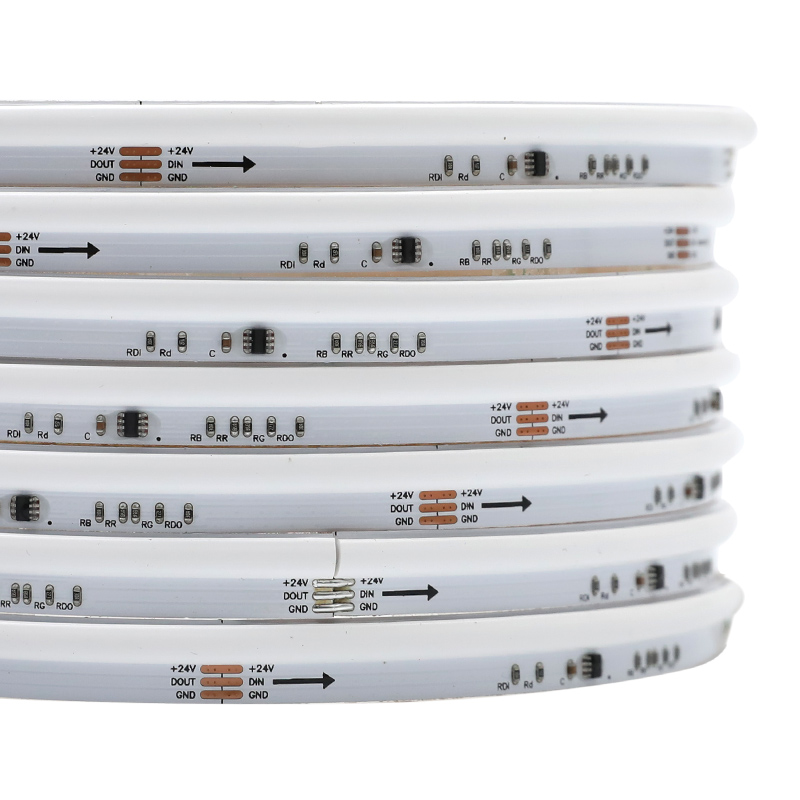
24V UCS1903 Spotless COB Chip on Board Addressable Side Emitting RGB LED Strip

DC24V WS2811 Side Lit Cuttable RGBIC LED COB Strip Light No Dot
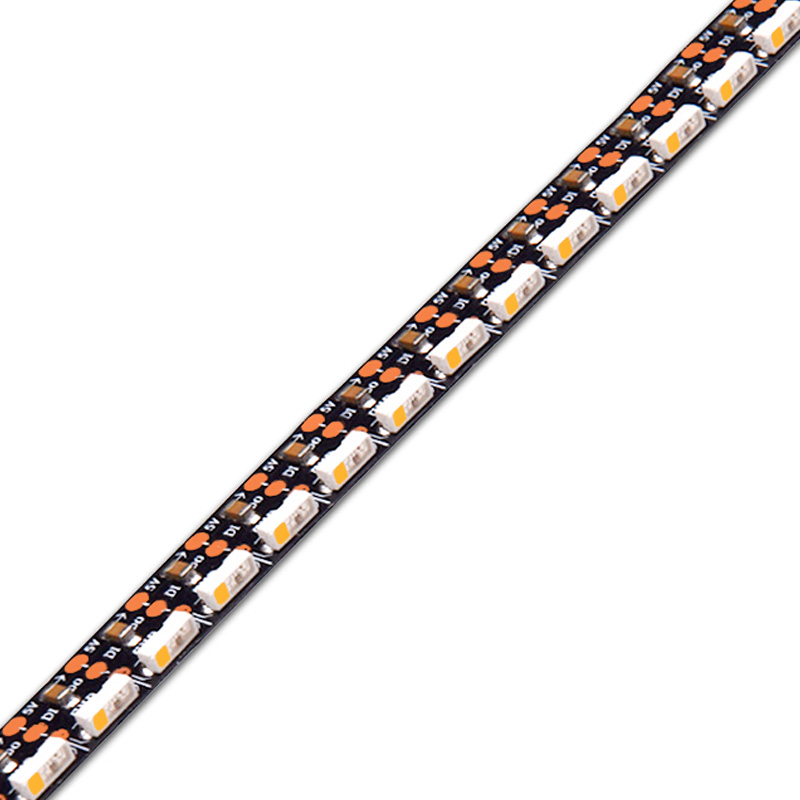
Neopixel 5V SK6812 4020 RGBW Side SMD Led Pixel Strip Light
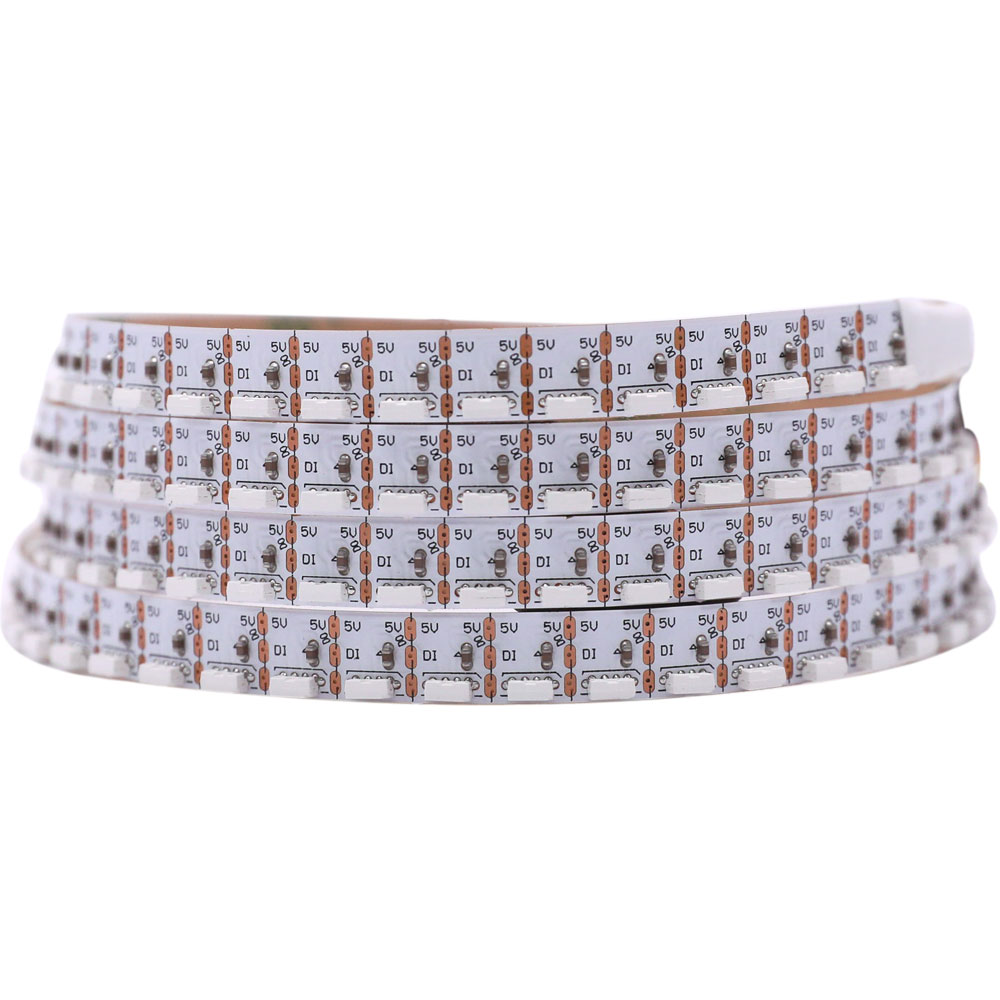
SK6812 RGB DC5V Side Emitting Individually Addressable LED Strip Lights
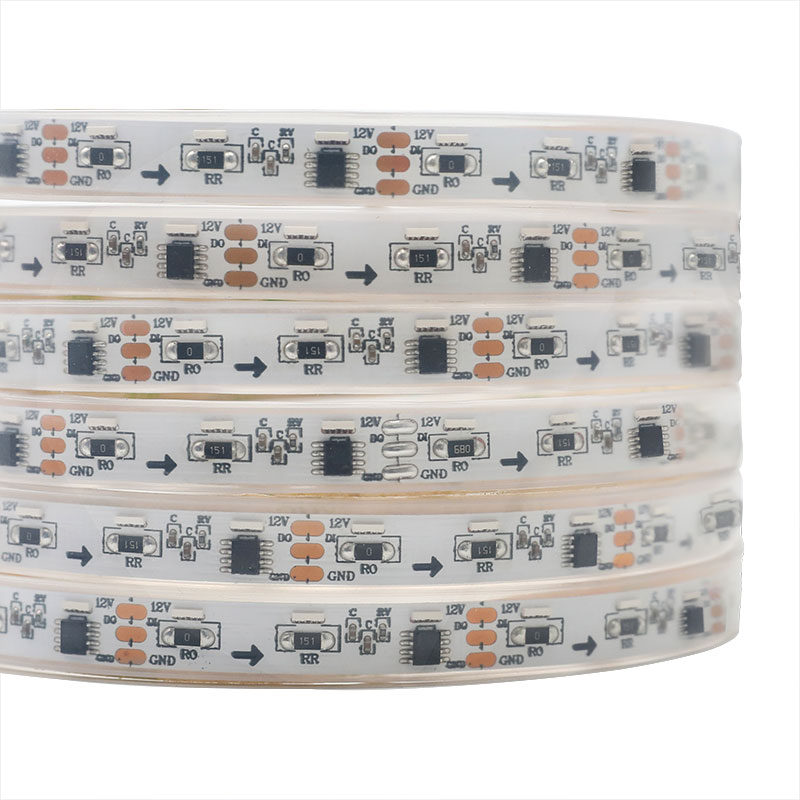
5m 12V WS2811 Side Emitting Addressable LED Strip 60LEDs/m
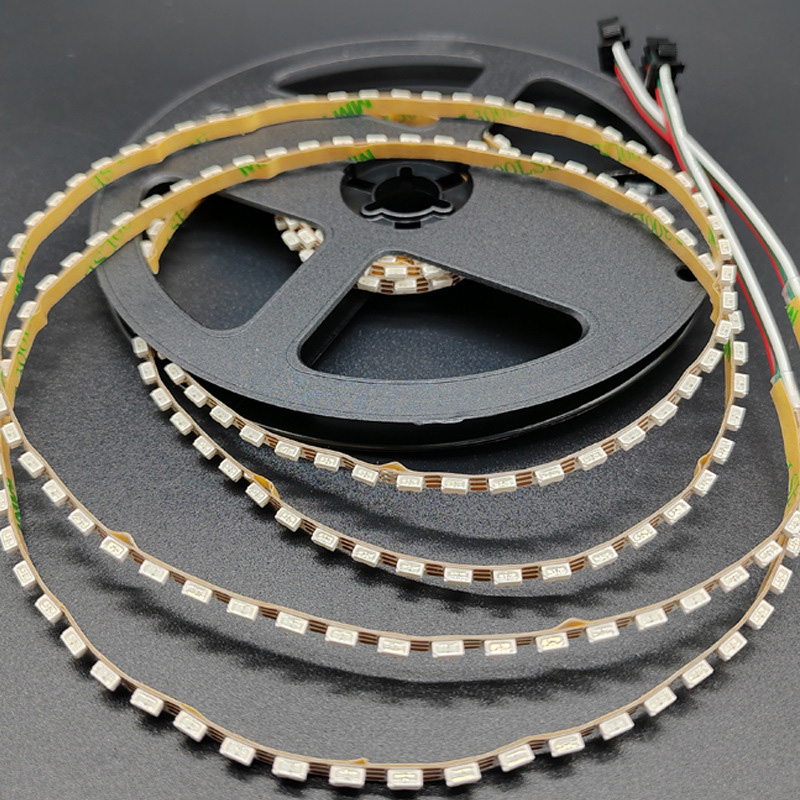
5V 4mm Super Slim SK6812 144 RGB Side Fire LED Strip 1m Reel
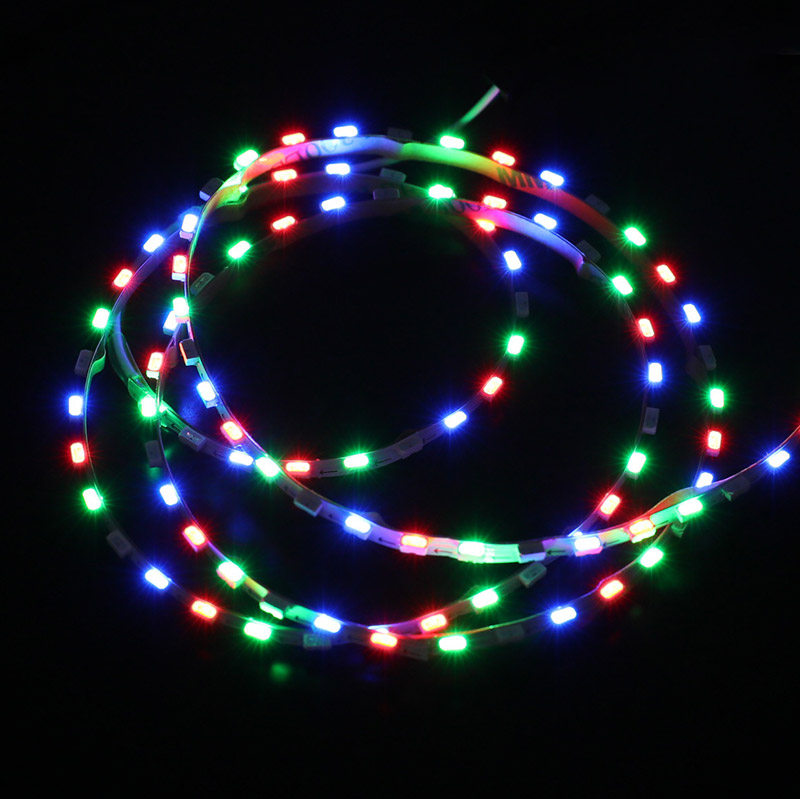
Mini 4mm Side Emitting SK6812 4020 Addressable RGB LED Strip
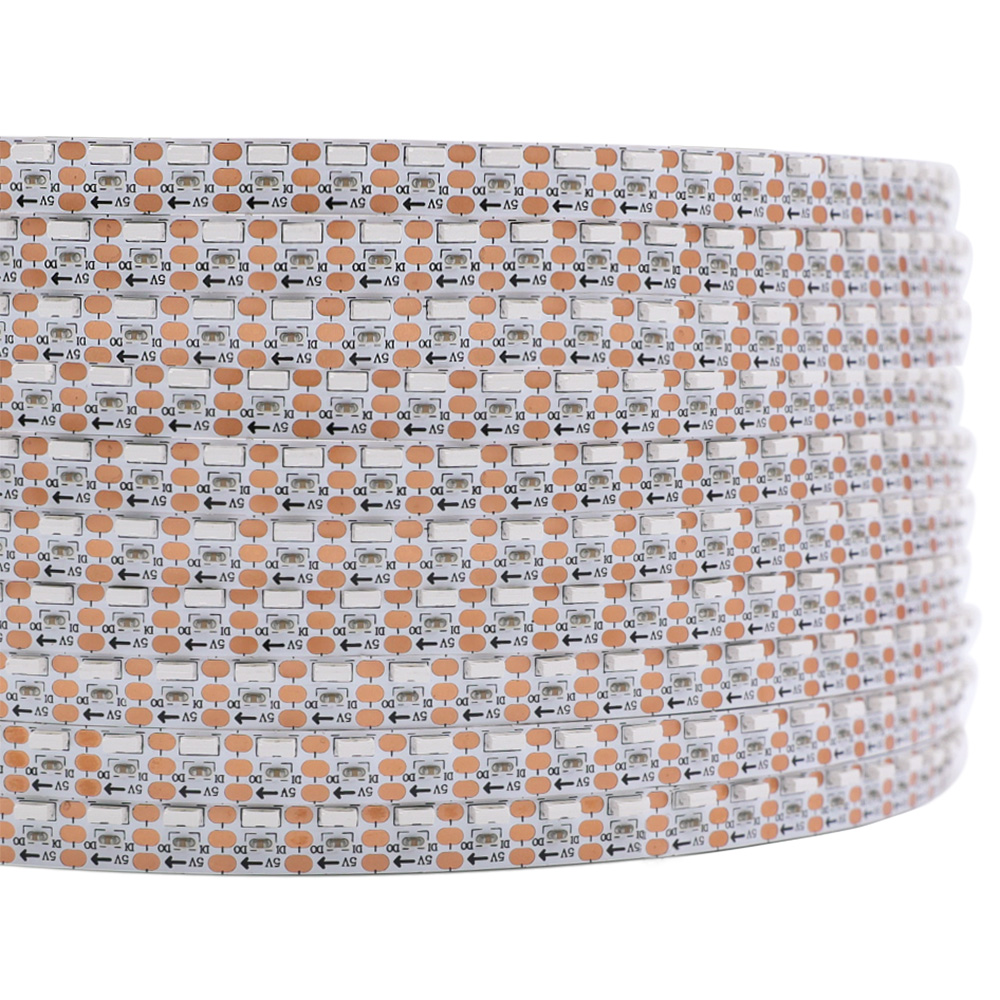
5V SK6812 RGB 120LEDs/m Side Emitting Addressable LED Strip Lights
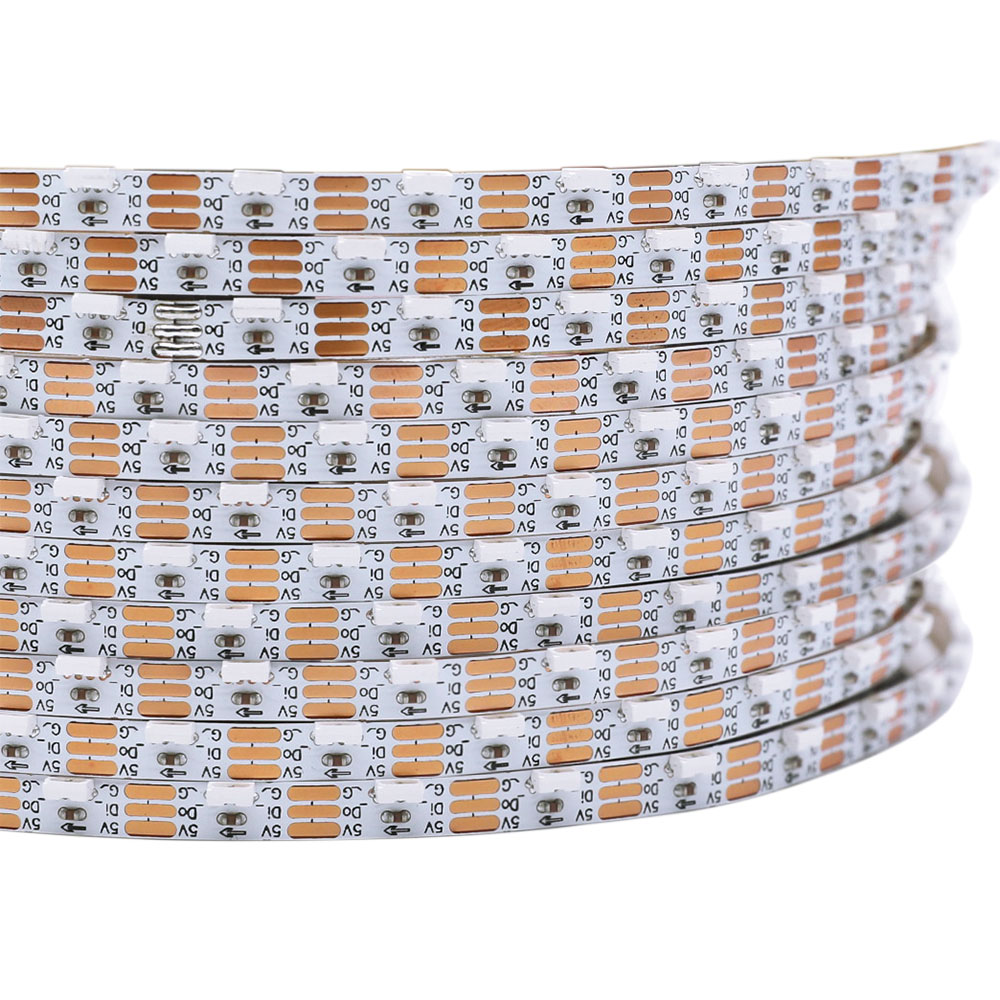
SK6812 360LEDs Side Emitting Individually Addressable LED Strip Lights
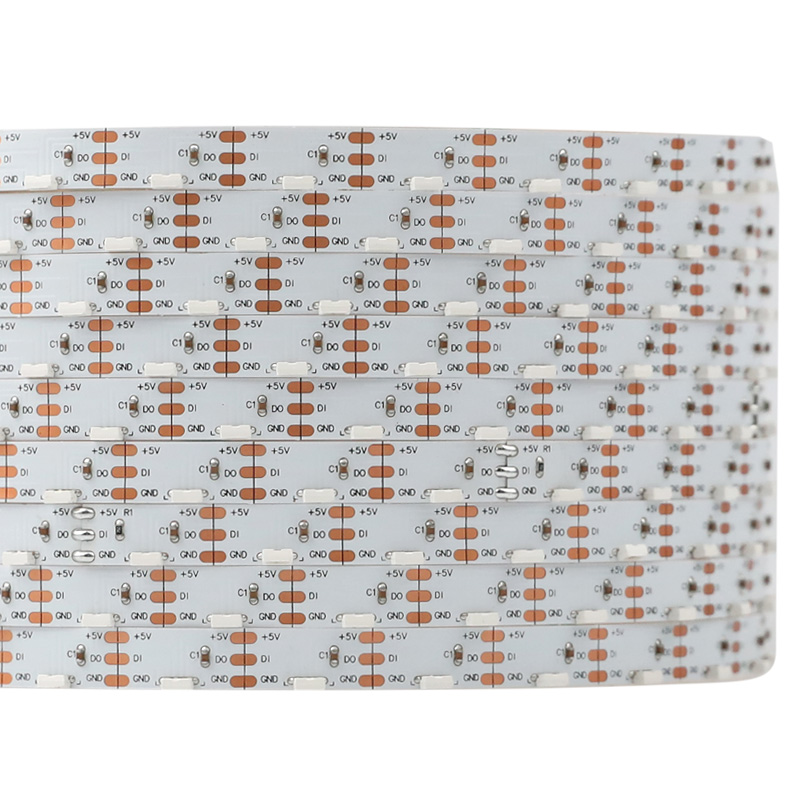
DC5V SK6812 RGB Side Emitting Addressable LED Strip Lights
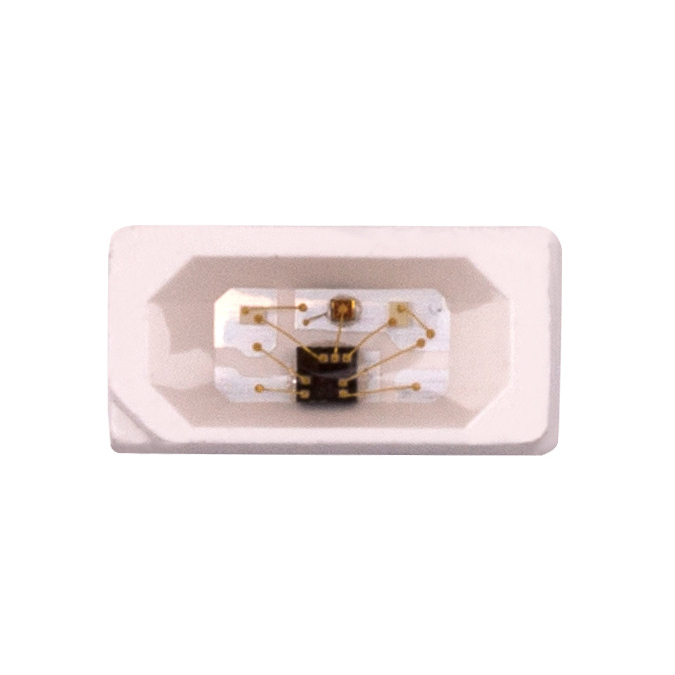
WS2812B Addressable RGB LED - 4020SMD Side Lighting
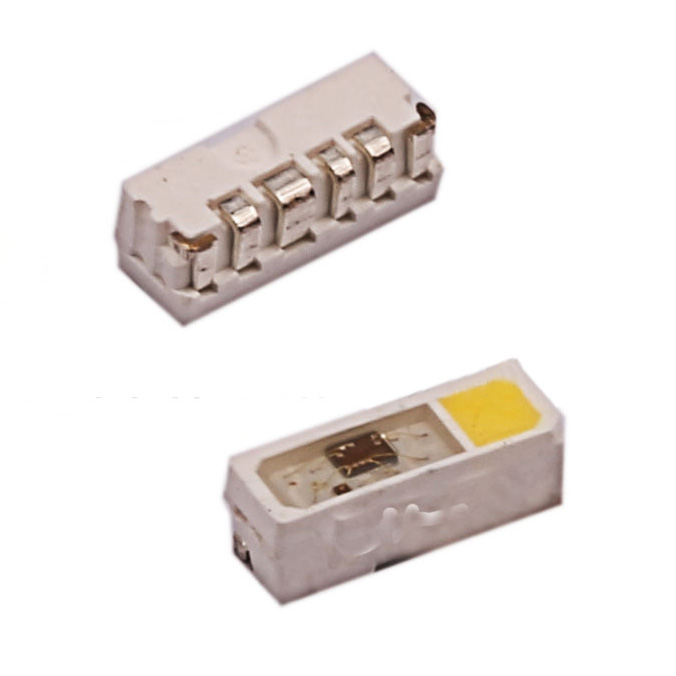
SK6812 Addressable LED Chip - 4018SMD RGBW - 500PCS By Sale
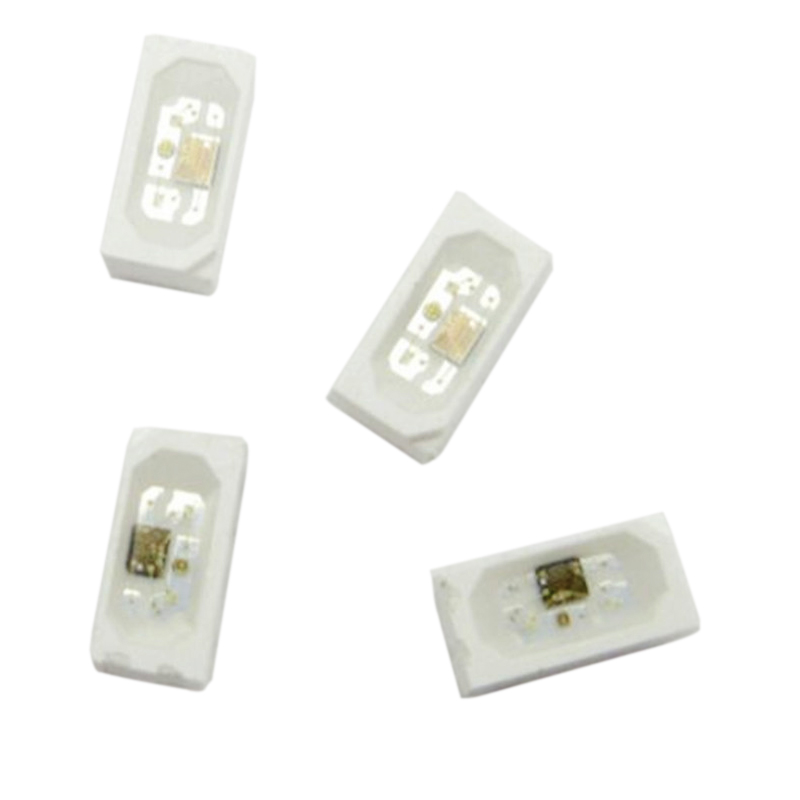
SK6812 RGB Addressable LED - 4020SMD Side Lighting - 500PCS By Sale
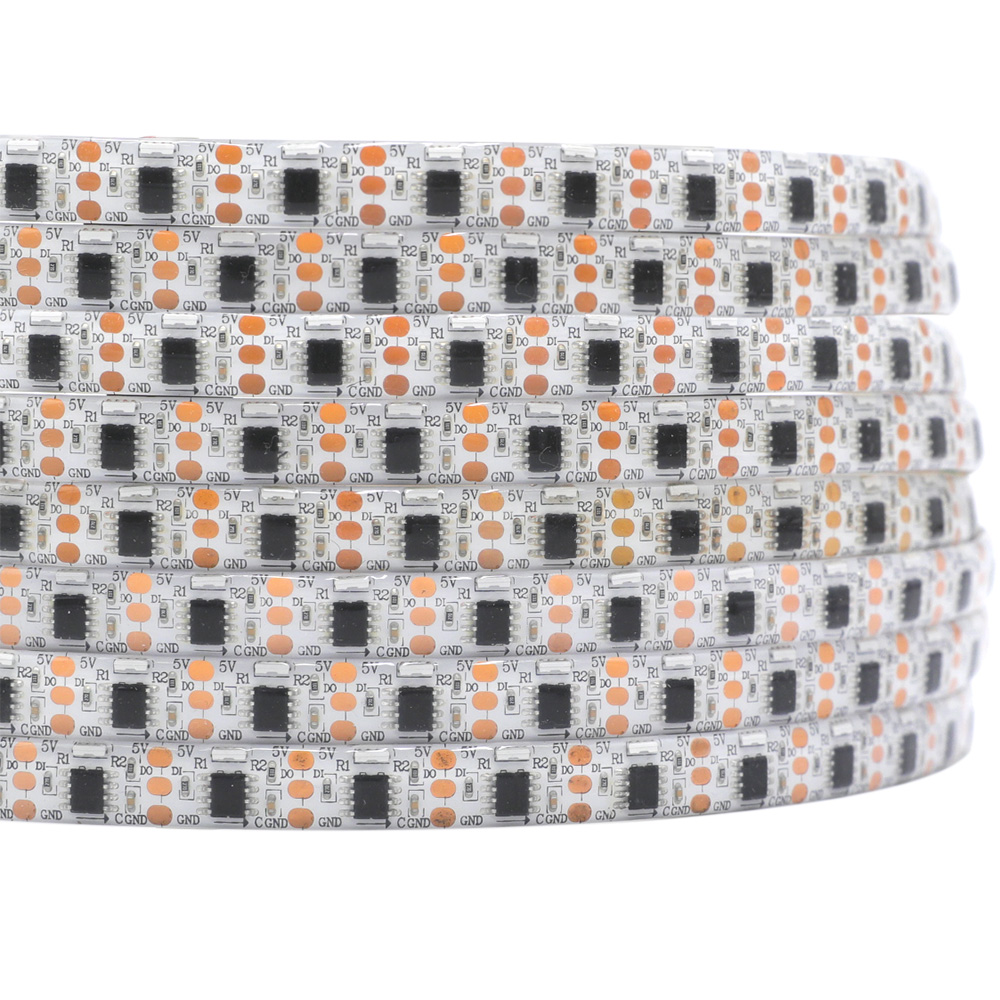
UCS1903 5V Side Emitting LED Strip Lights Color Chasing
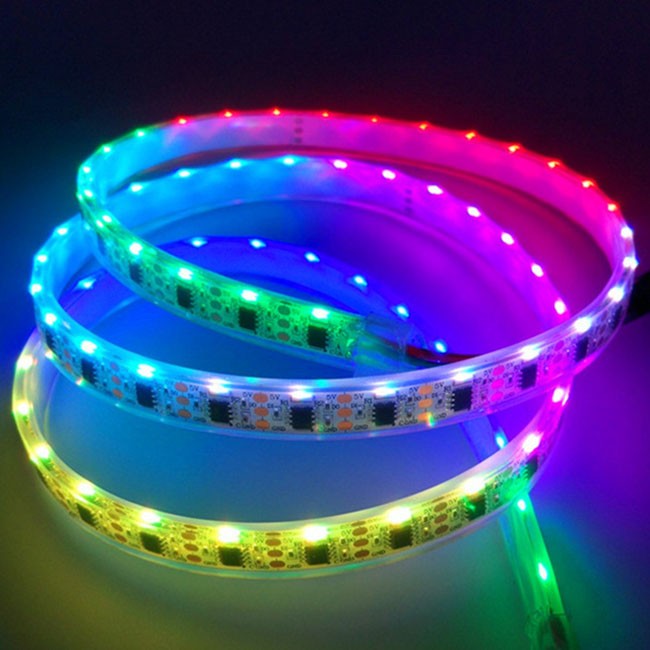
5V WS2811 Side Emitting Addressable LED Strip Lights 16.4ft
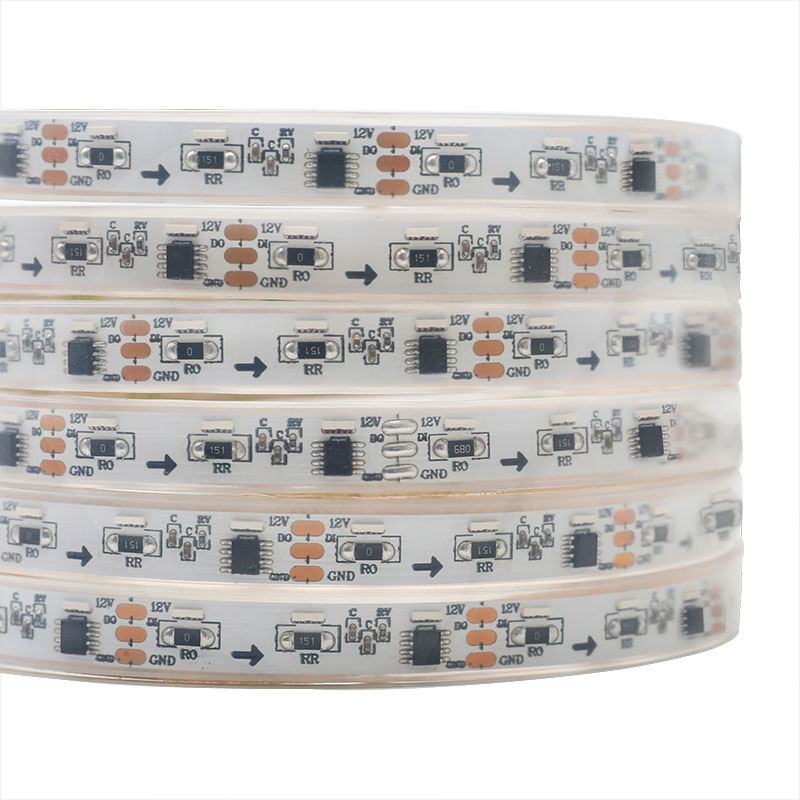
UCS1903 12V Side Emitting LED Strip Lights Full Color Chasing
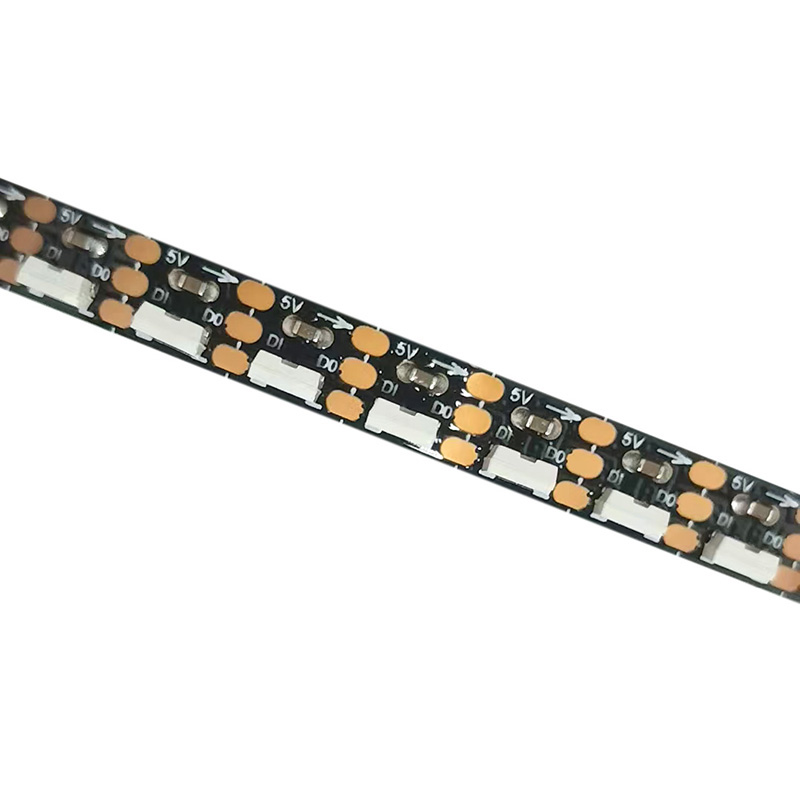
5-Volt SK6812 144 RGB Mini 5mm Blackboard Side Lit LED Strip
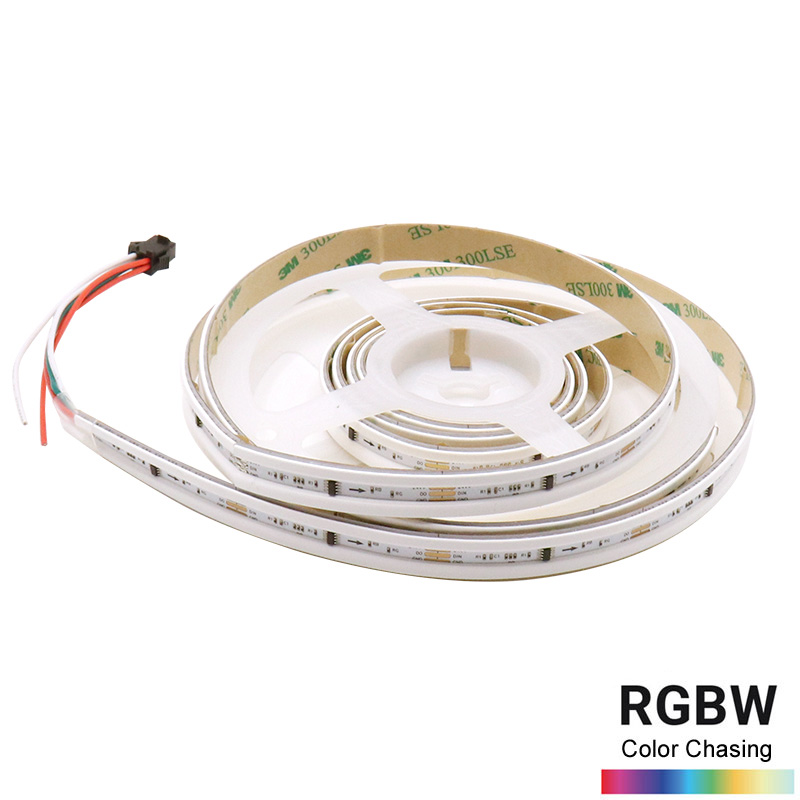
WS2814F COB Neopixel RGBW Bi-Directional Side LED Light Strip
Frequently Asked Questions About SK6812 4020 Side View LED Strips
Got questions before you spec your job? You've come to the right place. Here are the common issues and questions we answer every day for our SK6812 4020 side view LED strip lights.
A side view LED strip is designed for edge lighting, where you want the light to shoot out parallel to the mounting surface. Think of it for creating a 'glow' effect around signs, under shelves, or inside tight coves where a normal top-firing strip would just hit the back wall. It makes any edge-lit led project look clean because you can hide the strip itself completely from view.
It's all about the direction of light. On a standard LED strip, the LEDs point straight up, away from the PCB. A side emitting LED strip has its 4020 LEDs mounted on their side, so the light fires out at a 90-degree angle to the strip's surface. This lets you mount the strip flat on a surface and have the light project outwards along that surface, which is impossible with a top-firing strip.
For our SK6812 4020 side view LED strips, look at the connector or the markings on the PCB itself. The positive wire is almost always red for +5V or +12V/24V. The negative or ground wire is usually white or black (GND), and the data line is typically green (DIN/Data). It's a common mistake to mix these up, so always double-check the printed labels right next to the solder pads before powering it on.
These side glow LED strips are designed for accent and decorative lighting, not for primary room illumination. Their job is to create a distinct line of light or a halo effect. Brightness varies by density—a 144 LEDs/m strip will be much brighter than a 60 LEDs/m version. Always check the lumen (lm/m) rating on the product page, but plan on using them for visual effects, not for task lighting.
A DIY LED lighting project with these is very manageable if you get the three main parts right: power, data, and ground. Unlike simple strips, these are addressable, so you need a dedicated pixel controller, not a regular dimmer. You'll have three wires: positive, negative, and a data line that tells each LED what color to be. Just match the voltage of your strip, power supply, and controller, and you're most of the way there.
You must use an addressable, or 'pixel', controller that supports the SK6812/WS2811/UCS1903 driver IC. A standard RGB or RGBW controller won't work because it can't send data to individual LEDs. We stock a wide range of addressable SPI controllers, from simple remotes to powerful units that work with DMX or smartphone apps like WLED and Madrix. Match the controller's voltage to your strip's voltage (5V, 12V, or 24V).
The maximum run length for a SK6812 4020 side view LED strip before you see voltage drop depends heavily on the voltage. For 5V strips, we recommend injecting power every 5 meters (16.4ft). With 12V, you can often get to 10 meters, and with 24V, you might push it to 15 meters on lower-density strips. Running longer than that from one end will starve the LEDs at the far end of power.
Some are, but you have to select the right IP rating. A standard IP20 strip has no protection and is for indoor use only. For outdoor signs or damp locations, you'll need an IP65 (silicone coated) or IP67 (silicone tube) version. The coating protects against rain and splashes. For fully submerged use, you need IP68. Just remember to use waterproof connectors like our IP68 connector series to keep the whole installation sealed.
The main difference is how the light looks up close. An SMD (Surface Mounted Device) strip has visible, individual 4020 LED chips. A COB (Chip on Board) side emitting LED strip has the LEDs packed so tightly together under a continuous layer that it looks like a solid, dot-free line of light. If your strip is going to be visible or reflected in a glossy surface, COB gives a much cleaner, more professional look.
Absolutely. This is a huge part of what we do. A lot of the side emitting LED strips we ship are built to a customer's drawing. Just send us your required lengths, what kind of wire leads you need, and any other specs. An engineer will send back a complete parts list, wiring diagram, and a quote, usually within 12 hours. There's no fee for this service and no obligation to order. It's how we make sure your install goes perfectly the first time.