
DMX 512 RGB DMX Controller
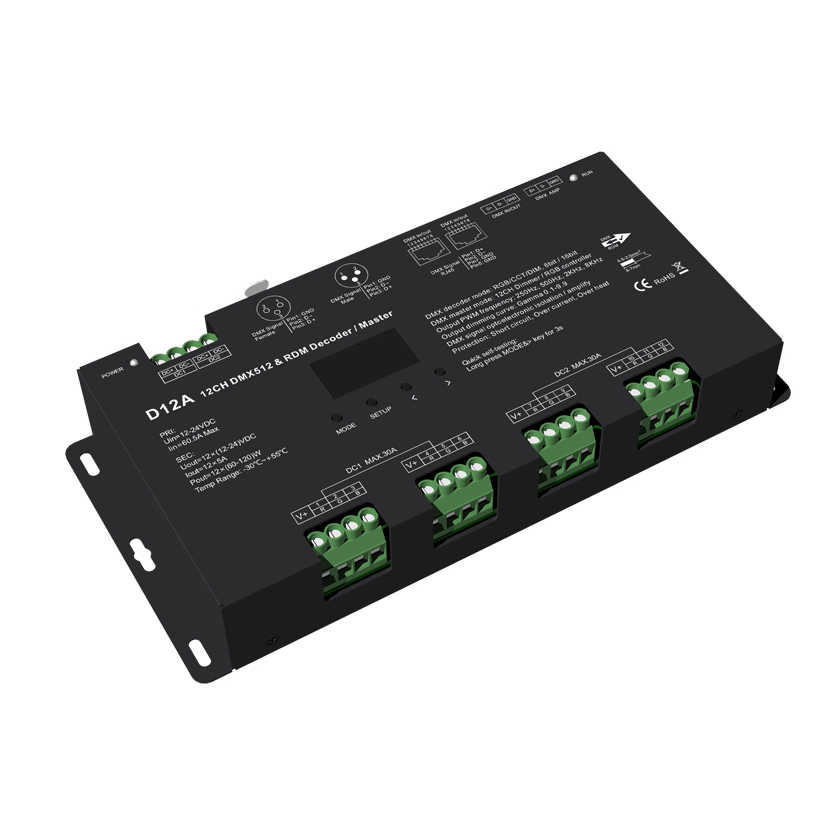
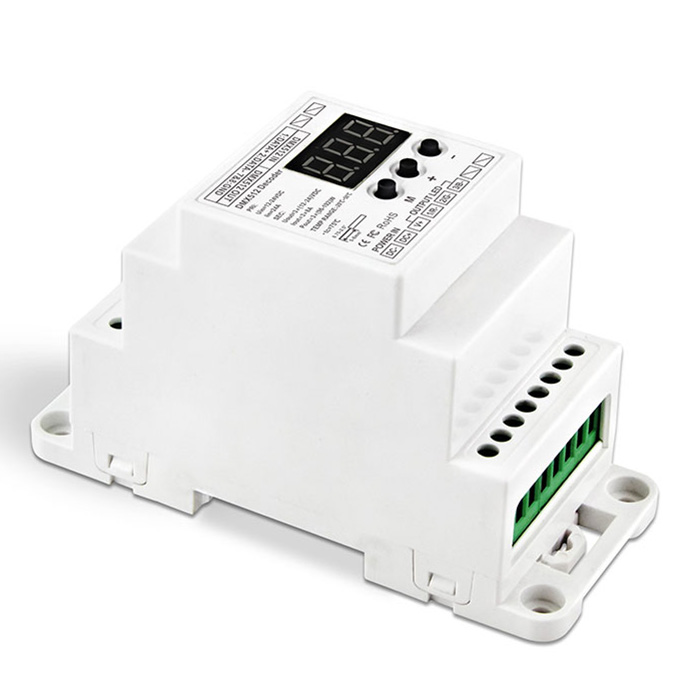
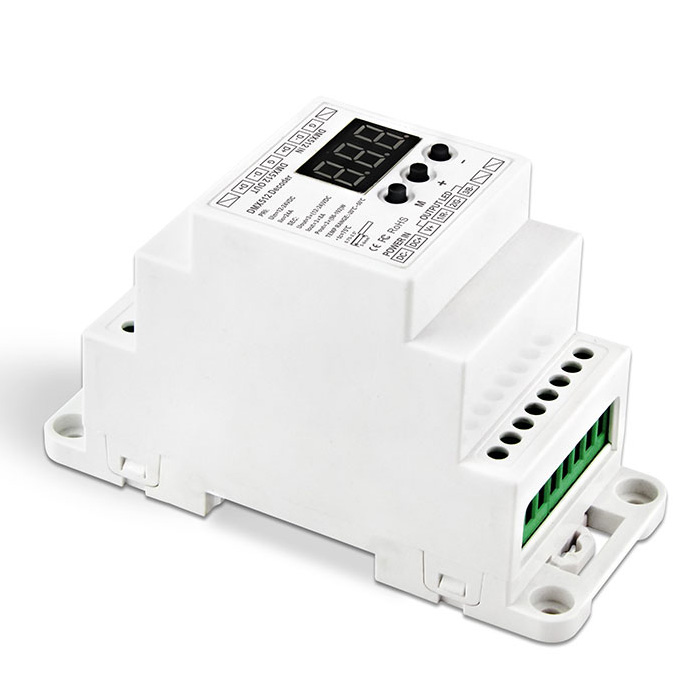
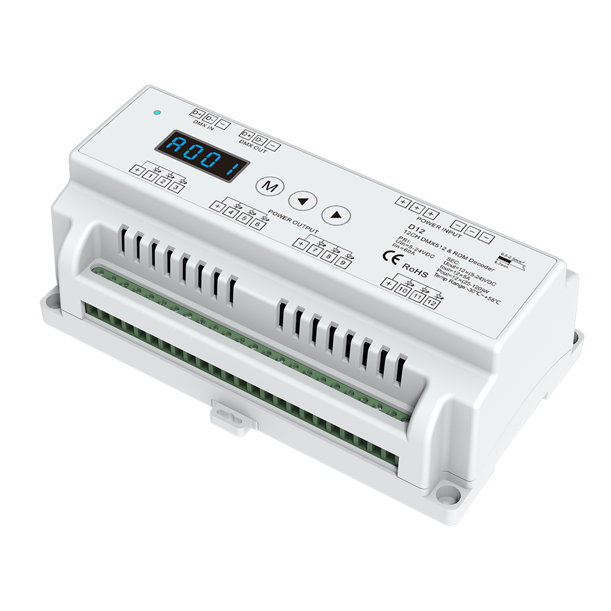
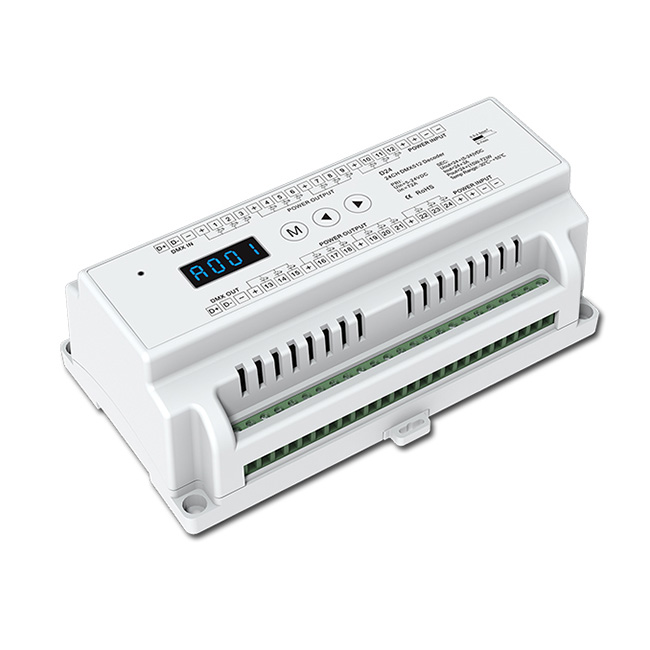
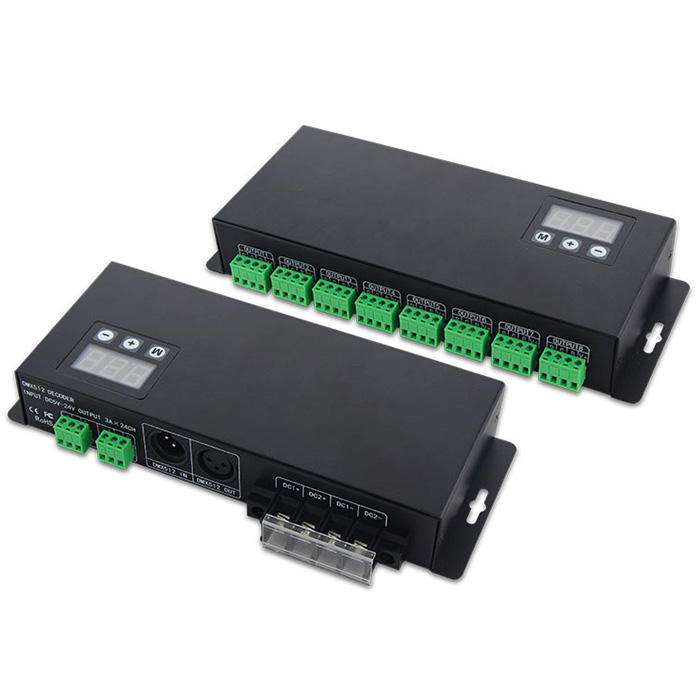
40 productsRGB dmx controller is a professional lighting control device, programmed autonomously through DMX software, for commercial lighting applications that require precise and sophisticated lighting control. These dmx RGB led controllers are compatible with standard DMX512 signal inputs and output PWM RGB signals, either single channel or even multiple 24 channels. This type of lighting control that converts DMX signals into another signal can also be called DMX RGB decoders.
In the event sites, DMX controller for RGB led strip seamlessly integrates with the lighting dmx console to realize complex light effects and scene changes. In landscape lighting and urban illumination projects, it can simultaneously control large-scale RGB strips to create dynamic and engaging lighting effects. LTECH's dmx RGB control integrates DMX 512 control with wireless Bluetooth control, allowing customers to control RGB led lighting through a range of intelligent means.
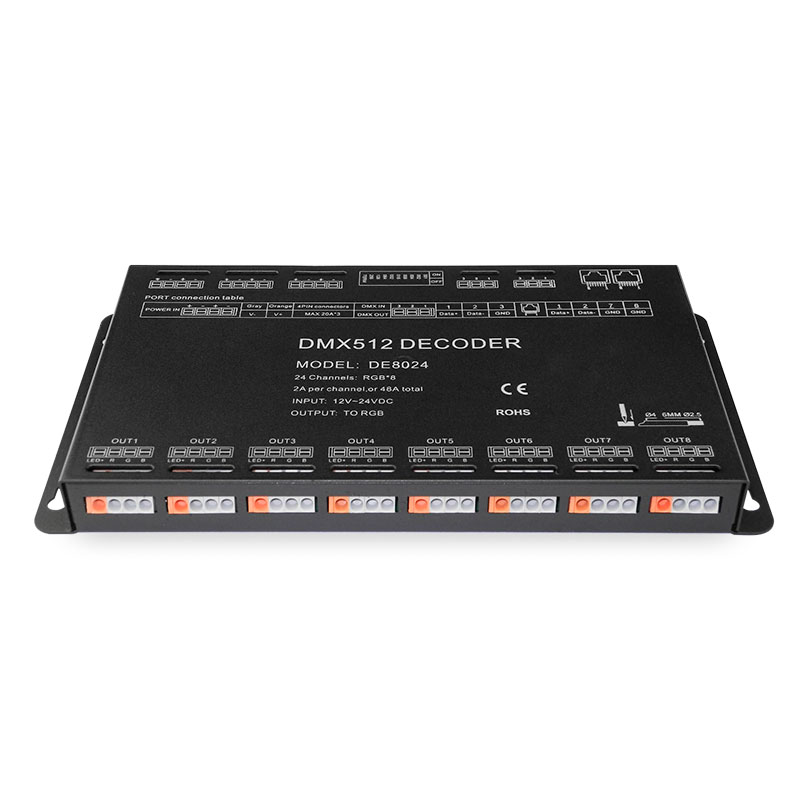
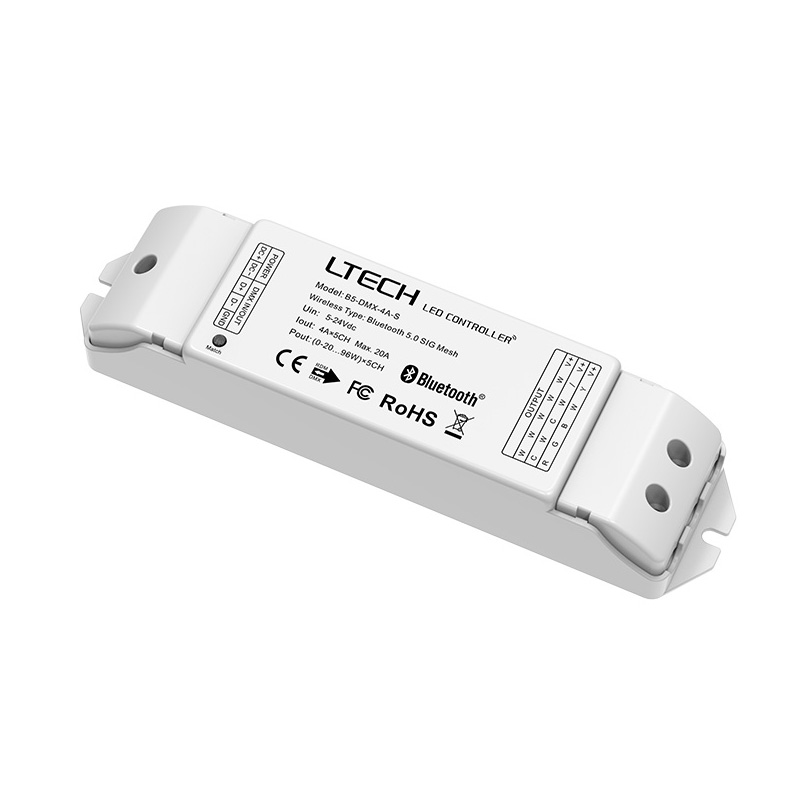
B5-DMX-4A-S 5CH LED Strip Wireless Bluetooth DMX Controller
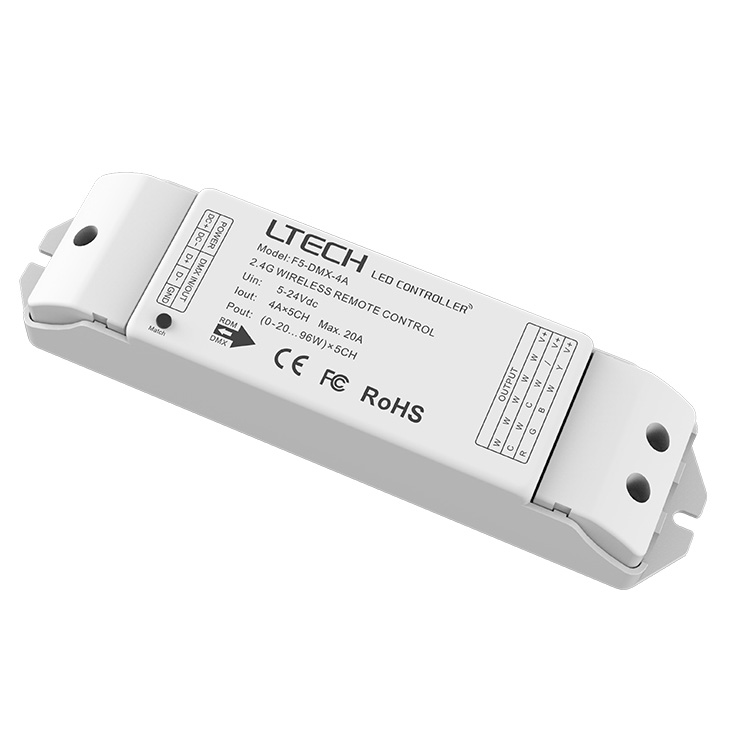
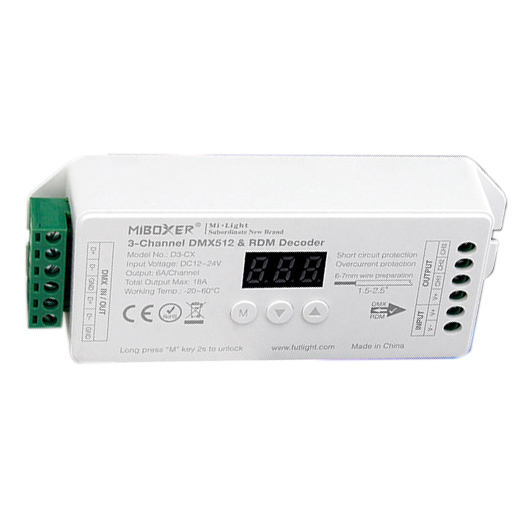
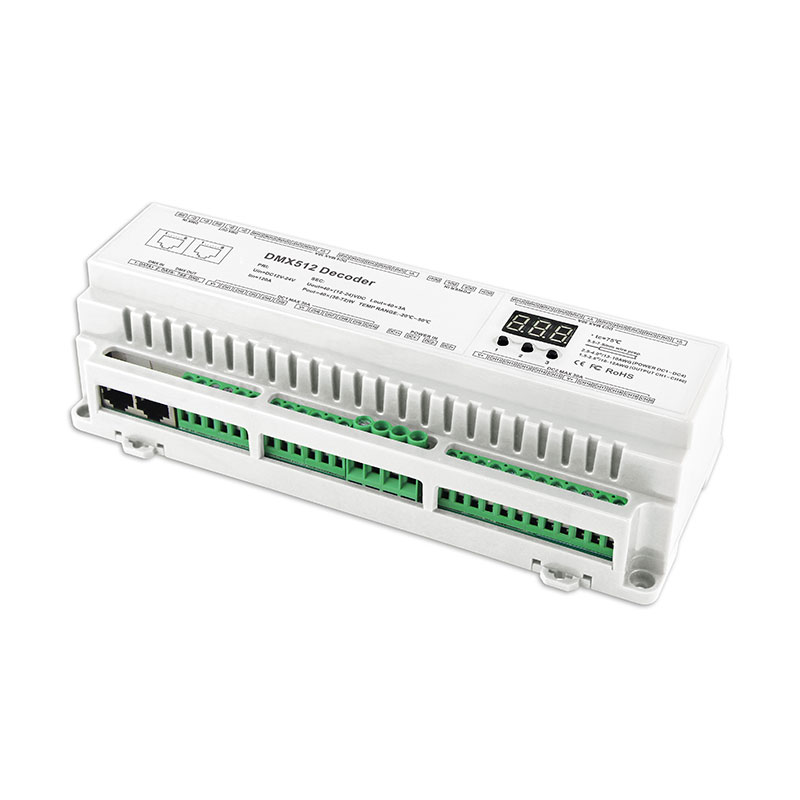
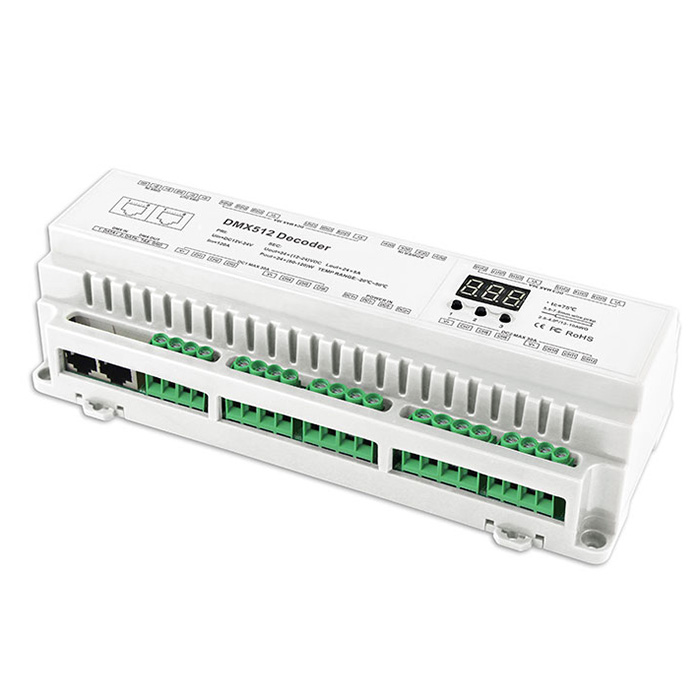
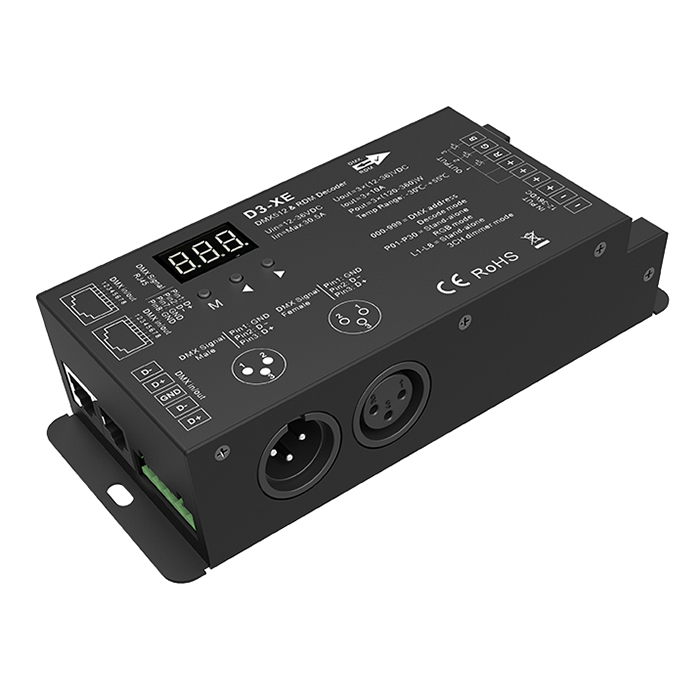
DMX Decoder D3-XE: 3-Channel 12-48V CV RDM Controller | LED Lighting
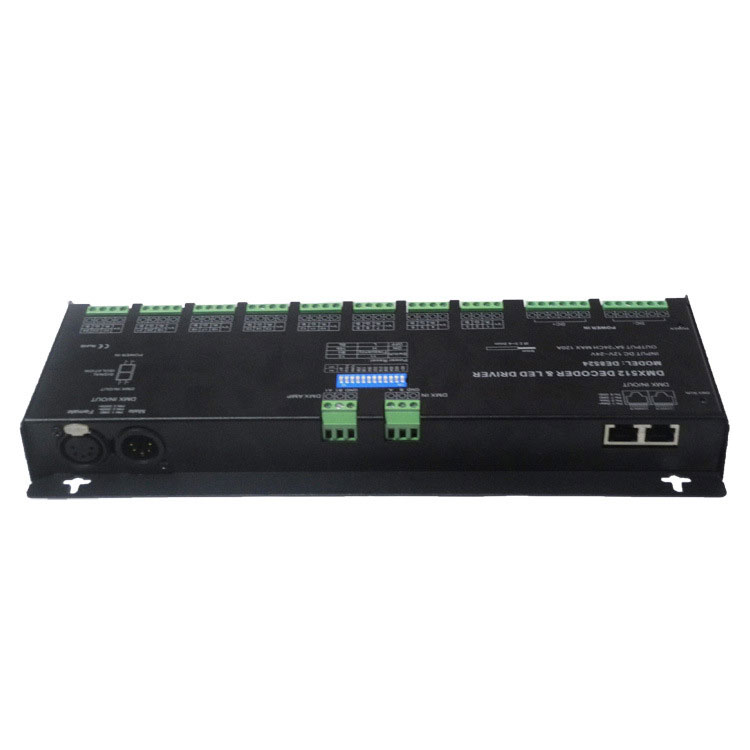
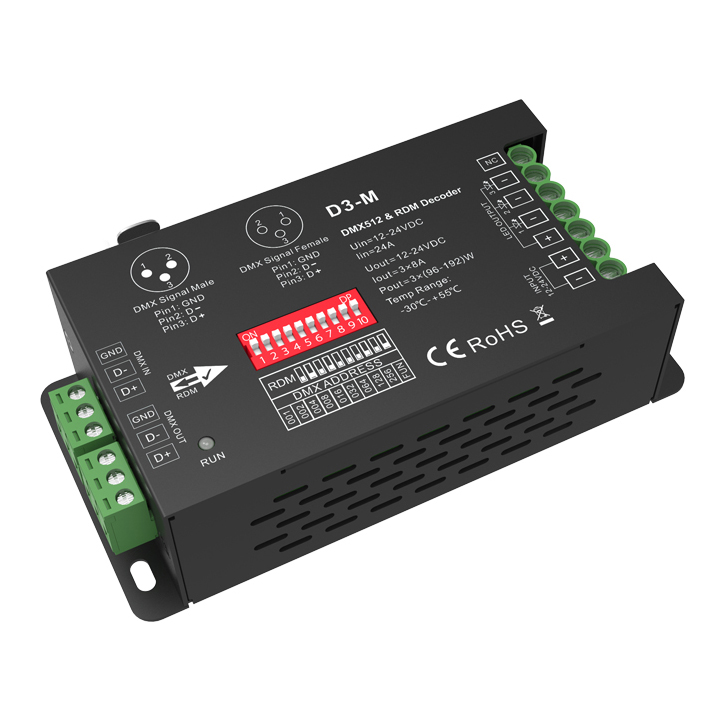
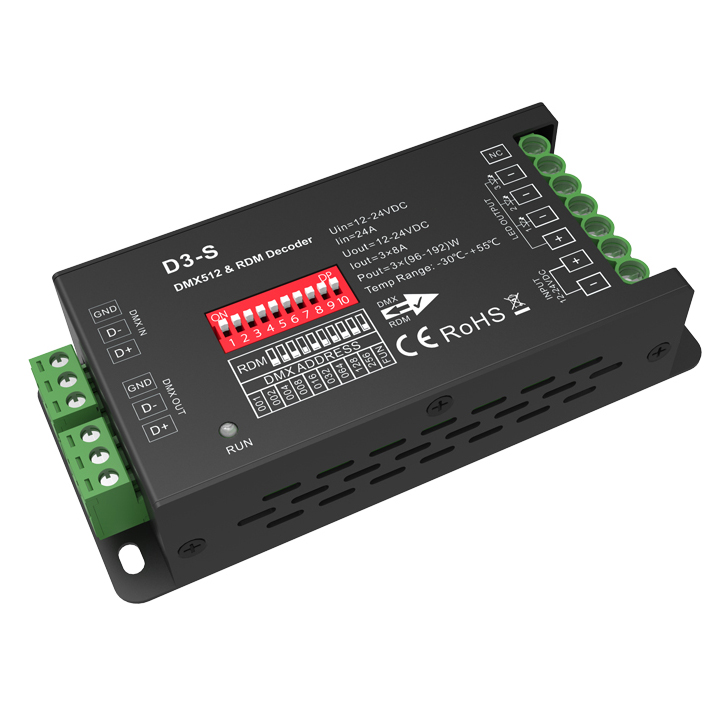
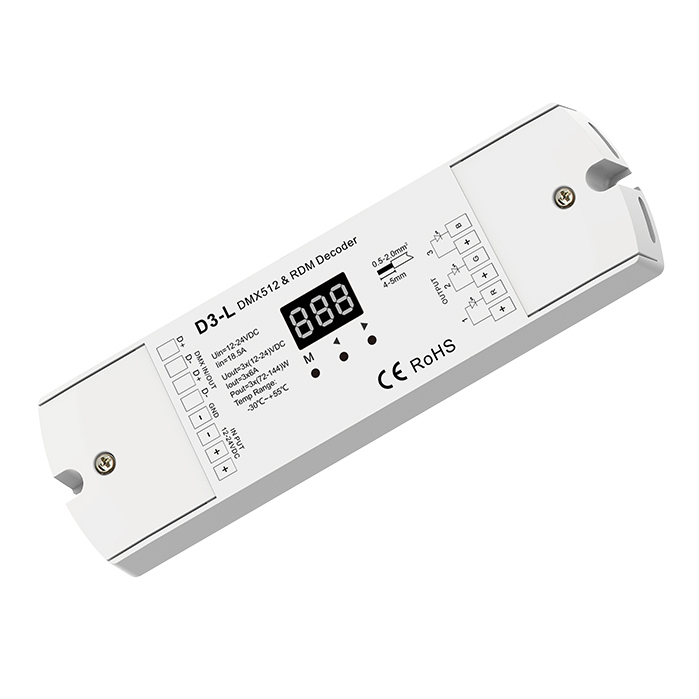
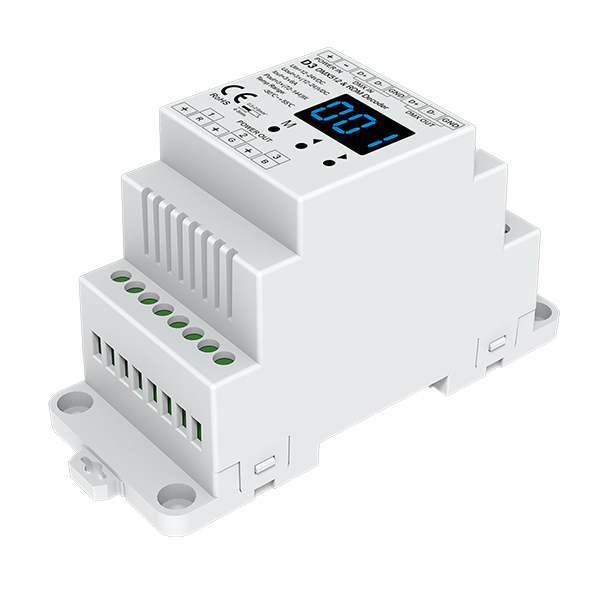
DMX Decoder D4-L (Upgraded) - 3CH 12-24V CV LED Controller | RDM
FAQ About DMX 512 RGB DMX Controllers
Your questions about setting up DMX decoders and controllers, answered by our engineers.
A DMX controller, or more accurately for this category, a DMX decoder, is a translator. It takes the universal DMX-512 signal used in professional stage and architectural lighting and converts it into the simple PWM signal your RGB LED strips need to change color and dim. You need one when you want to integrate your LED strips into a larger, centralized lighting system controlled by a DMX console or PC software. Without it, the DMX console and the LED strip can't talk to each other.
The 'best' DMX controller for a big job depends on your channel count and layout. Instead of one massive decoder, it's usually better to use multiple smaller decoders, one for each zone or area. This simplifies wiring and reduces voltage drop. For example, you might use a 24-channel decoder for a dense feature wall but separate 3- or 4-channel decoders for individual coves. Look for models with RDM (Remote Device Management)—it makes addressing and diagnostics much easier on a large network.
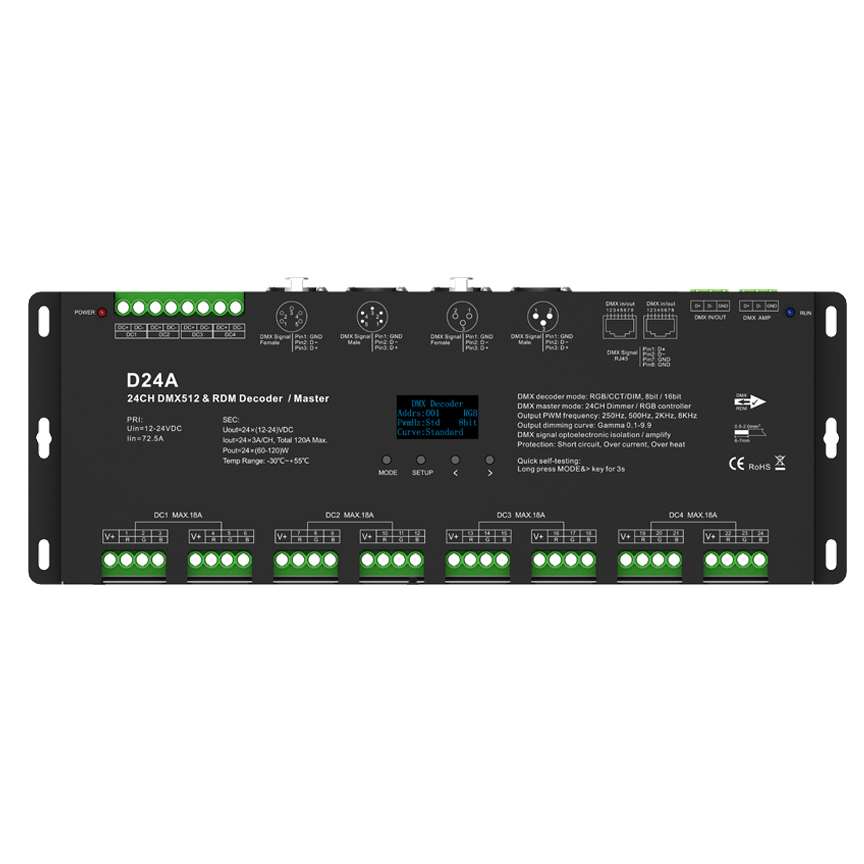
It's all about how many things you can control independently. A 3-channel DMX decoder is typically used for a single run of standard RGB strip light (one channel for Red, one for Green, one for Blue). A 24-channel decoder can control eight separate RGB strips (8 strips x 3 channels = 24). This is great for things like shelving units or display cases where you want each shelf to be controlled as its own fixture from your main DMX console.
Mostly, yes, as long as the voltage matches. If you have a 24V RGB strip, you need a DMX decoder that accepts 24V input and outputs 24V PWM. The DMX signal itself is universal, but the power handling of the decoder is not. Always check the decoder's voltage range (e.g., DC12-24V) and its amperage rating per channel to make sure it can handle the load of your specific LED strip.
This is limited by the decoder's maximum amperage, not a number of strips. Check the spec for 'Amps per channel' (e.g., 5A/Ch) and 'Total Output Current' (e.g., Max 18A). Add up the total wattage of the strips you want to connect, divide by the voltage to get the total amps, and make sure it's below the decoder's limit. If you need to run more strips than one decoder can handle, you'll need to add a LED power signal amplifier after the decoder's output.
RDM stands for Remote Device Management. It's a two-way communication protocol that runs over the same DMX cables. A standard DMX 512 RGB DMX controller only listens for commands. A controller with RDM can 'talk back' to the main console. This is incredibly useful for large jobs. It lets you remotely discover all the decoders on the network, set their DMX addresses, and get status updates without having to physically go to each device with a ladder.
Yes, you can bridge the two worlds. We have products that combine DMX output with wireless control. For example, some of our controllers act as a standard DMX decoder but also have a Bluetooth or WiFi receiver. This lets you use a smartphone app for quick, simple control, while still allowing a full Bluetooth DMX controller to take over for more complex event lighting. It gives you the best of both worlds.