
RF RGB CV Controller
28 productsThe SkyDance RF RGB CV Controller Series is specifically designed for constant-voltage (CV) RGB LED strip lights and fixtures, offering a variety of voltage options to suit different lighting installations. Depending on the model, available input and output voltage configurations include DC 5–24V, DC 12–24V, DC 12–36V, DC 12–48V, and AC 110–240V.
For more advanced lighting control, smart RF RGB controller models combine 2.4GHz RF with additional wireless technologies such as Wi-Fi, Zigbee, standard Bluetooth, and Casambi Bluetooth Mesh, which can also be operated through their corresponding compatible APPs or smart control systems.
Wireless RGB Light Control with SkyDance RF Remotes and Wall Panels
Pair these RGB controllers with compatible SkyDance RF RGB handheld remotes or RGB wall-mounted panel remotes to conveniently manage your RGB strip lighting wirelessly. Using 2.4GHz RF communication, these RGB LED controllers support wireless operation within a range of up to 30 meters under suitable conditions.
Multi-Remote Pairing and Wireless Controller Synchronization
Each Skydance RF RGB controller can be paired with up to 10 RF remotes/panels, allowing multiple users to operate the same lighting installation from different locations. Multiple RF RGB controllers can also synchronize wirelessly, making it possible to coordinate RGB LED strip lighting across different areas using compatible remotes or wall panels.

CB5 5CH Color Custom Casambi LED Strip Controller (Bluetooth + RF)

RF V3-C Mini Hardwired High Power 3-Button RGB Light Controller


S3 110-240VAC 3CH*1A 3-in-1 High Voltage LED Controller


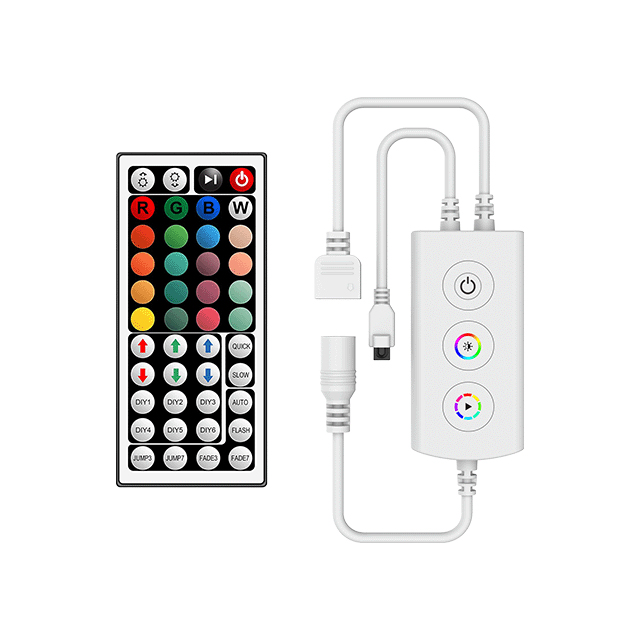
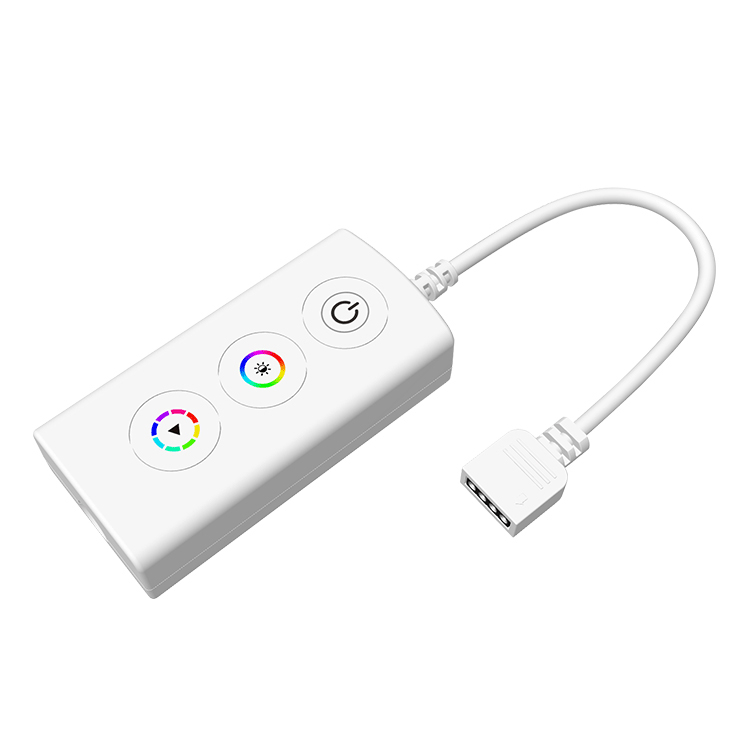
Mini 3 Button Tuya RF RGB LED Controller VD3(WT)


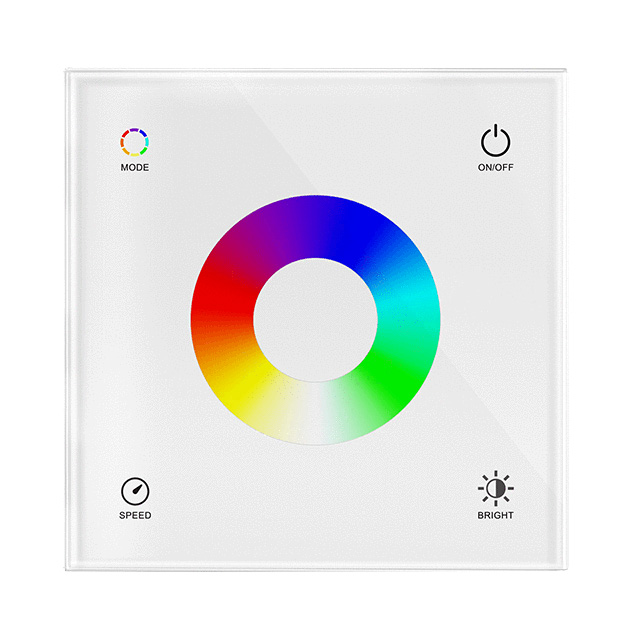

T3-1 DC12-24V LED RGB Touch Panel Remote Controller
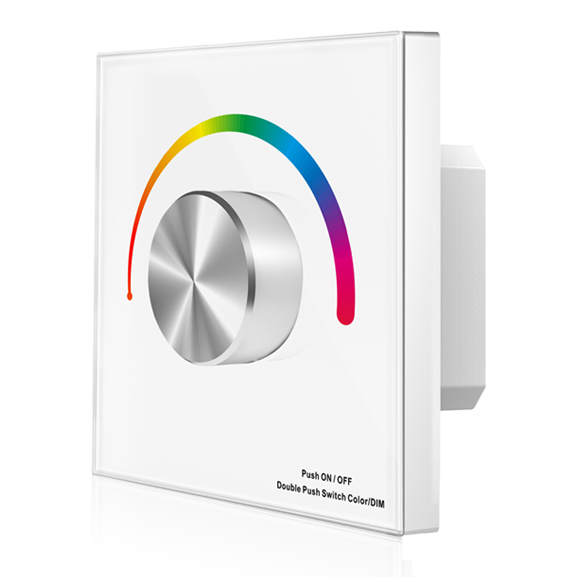
T3-K DC12-24V LED RGB Rotary Glass Panel Controller

V4-D 4CH 5-24VDC RF RGBW LED Strip Light Controller - superlightingled.com


Frequently Asked Questions About RF RGB CV Controllers
Direct answers from our bench engineers on wiring, pairing, power limits, and sizing constant-voltage RF RGB controllers for real installations.
An RF RGB CV controller regulates color balance and brightness by pulse-width modulating (PWM) the negative return lines of constant-voltage red, green, and blue channels against a shared positive terminal. Your incoming DC power connects directly to the controller input, and the receiver rapidly switches each ground line on and off hundreds or thousands of times per second to blend red, green, and blue light into your chosen static color or dynamic cycle. Because it operates strictly on constant voltage, your power supply voltage must match the rated voltage of your RGB LED strip lights—feeding 24V power into the controller delivers 24V PWM output directly to the diodes.
An RF RGB controller usually stops responding because the 2.4GHz RF pairing address was lost or the handheld remote has not been matched to that specific receiver. Press the controller's physical 'Match' button briefly, then immediately press the On/Off key or zone number on your RF remote within 5 seconds—the LED strip will flash rapidly when pairing succeeds. If it still fails, check that the remote's battery isn't below 2.7V and make sure the receiver isn't enclosed inside a fully sealed steel junction box, which acts as a Faraday shield and cuts the typical 30-meter line-of-sight wireless transmission down to zero.
No, standard low-voltage RF RGB CV controllers cannot take 120V or 240V AC power directly and will blow instantly if wired without an external AC-to-DC driver. The standard units require a dedicated DC 5V, 12V, 24V, or 36V power supply placed between your household wall circuit and the controller input. If your installation runs line-voltage tape without a bulky transformer box, our range does list 2 high-voltage AC mains models—such as the S3 and S3(WT)—which handle 100–240VAC directly for up to 50 meters of high-voltage strip, but never wire line voltage to a DC-marked terminal.
An RF RGB controller's run capacity depends on the receiver's rated amperage per channel and your LED strip's power draw per meter. Take our popular V3 receiver, which delivers 4A per channel across 3 channels (12A total): on a 24V RGB strip drawing 14.4 W/m (0.6A/m, or 0.2A per color), the controller can safely run up to 20 meters before reaching its 12A ceiling. If your run demands more current, you will overheat the terminal blocks. Rather than forcing all current through one box, add RGB signal amplifiers downstream or choose our heavy-duty 30A high-power V3-X receiver for runs needing up to 10A per channel.
Colors appear inverted or swapped on an RF RGB LED controller when the negative color-channel wire leads are landed in the wrong terminal positions. While nearly all constant-voltage strips share a common black or white positive (+/V+) lead, factory pinout orders vary wildly: some tape uses +RGB, while others use +BRG or +GRB. If pressing red yields blue on your tape, swap the wires landed in terminal 'R' and terminal 'B'. Our smart hybrid controllers like the WZ5 also let you reassign channel sequence digitally inside the Tuya app without physically unscrewing the terminal block.
Yes, a single 2.4GHz RF remote can link to an unlimited number of RF RGB LED controllers simultaneously, provided each unit sits within wireless transmission distance. SkyDance receivers feature automatic signal synchronization and auto-transmitting: each receiver relays the RF command to the next unit up to 30 meters away in free space, so your dynamic color chases stay in sync across distant rooms. Furthermore, every single receiver in this 28-model range can store pairings for up to 10 separate remotes or glass wall panels, letting you control the same room from bedside remotes and doorway keypads.
Yes, our multi-protocol smart RF RGB LED controller units combine 2.4GHz RF reception with onboard Wi-Fi, Zigbee 3.0, or Bluetooth Mesh. Units like the WZ5 work natively with the Tuya Smart or Smart Life apps and integrate with Amazon Alexa and Google Assistant, while the CB5 connects directly into Casambi Bluetooth commercial lighting networks. This dual-chip architecture gives you physical, zero-lag local RF control from handheld remotes and rotary wall panels while maintaining full cloud scheduling, group scenes, and voice adjustment over your home network without needing an external translator box.
Low-end flicker or humming on an led rgb strip rf controller happens when the PWM switching frequency conflicts with the internal switching circuit of a budget power supply. Budget power supplies struggle to smooth out rapid load swings when the controller switches channels on and off at low duty cycles. To resolve it, check our detailed guide on wiring RGB LED strip lights for proper wire gauge and grounding layouts. Using an industrial-grade power supply with tight voltage regulation and keeping low-voltage output wires under 10 meters prevents inductive resonance and eliminates audible coil whine.
Yes, every SkyDance RF RGB CV controller features non-volatile memory that automatically stores your last active color, brightness level, and dynamic mode. When you turn off power at an upstream wall switch or experience a temporary mains blackout, the receiver resumes its exact previous state as soon as power returns. You do not need to hunt for the remote to restore your accent lighting scenes every evening, making these controllers completely compatible with standard wall toggle switches and automated architectural mains timers.