
Single Color LED Strip Power Amplifier
13 productsA 1CH Single Color LED Strip Power Amplifier is designed to extend the controlled length and load capacity of 2-wire single-color LED strip lights when a single LED dimmer or controller cannot provide enough current for the entire installation. It works as a power expansion device between the dimmer controller and an additional section of LED strip, allowing the extended section to follow the same on/off and dimming commands as the original strip.
For a typical single-color PWM lighting system, the controller sends a dimming signal to the amplifier, while the amplifier uses a separate power supply to provide sufficient current to the additional LED strip. This helps prevent problems caused by excessive load or voltage drop, such as reduced brightness, uneven illumination, or unstable dimming, especially in longer LED strip installations.
The amplifier does not create a new lighting effect or independent control zone. Instead, it repeats the original single-channel dimming behavior to the extended strip section, making it a simple way to expand a single-color lighting system while keeping all sections under the same controller.
When selecting an amplifier, check the LED strip voltage, amplifier load capacity, power supply capacity, and wiring configuration to ensure they match your installation.
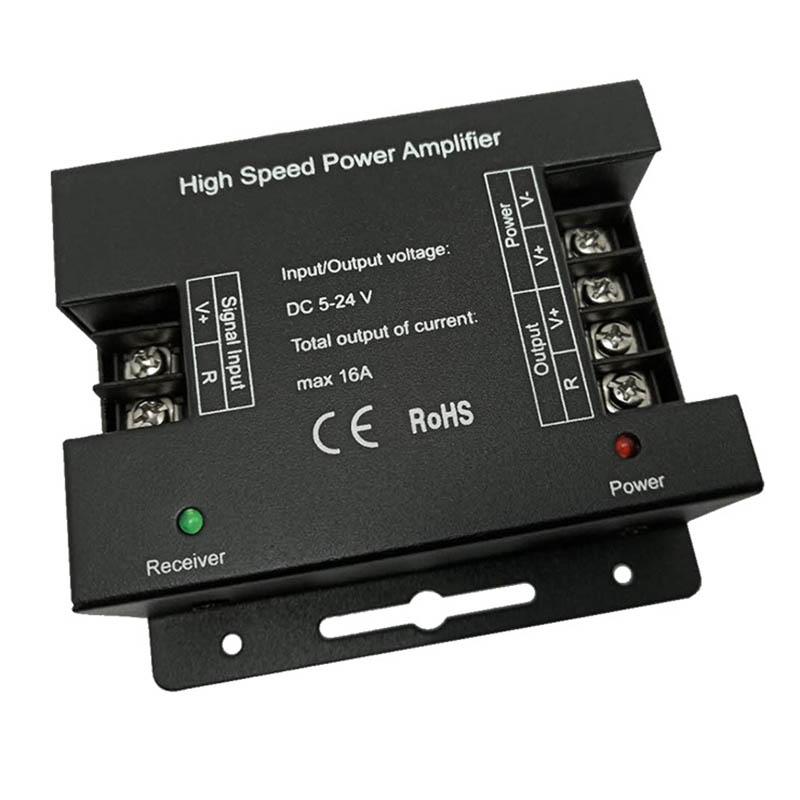
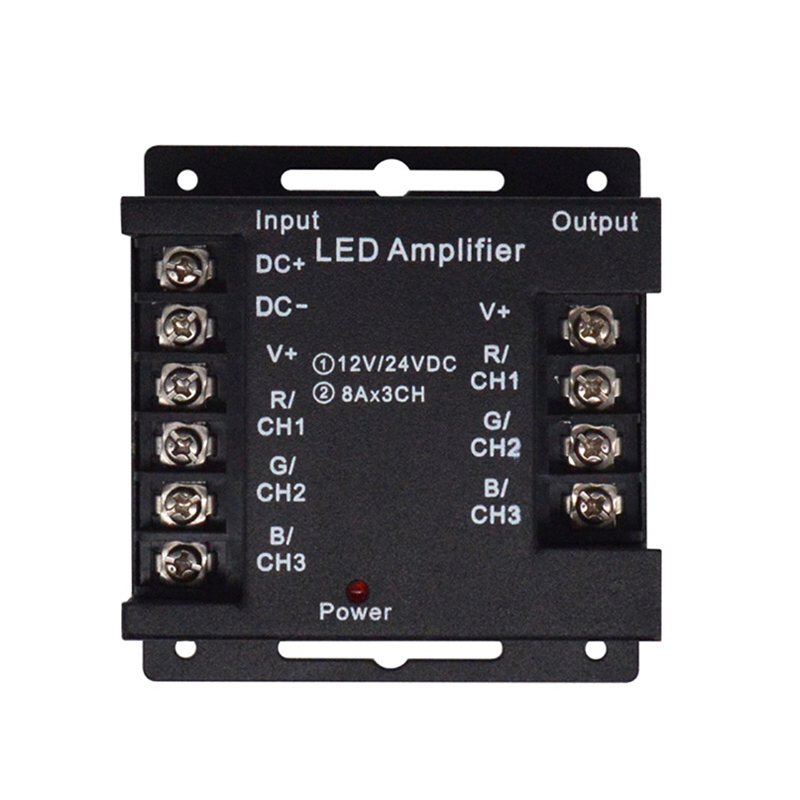
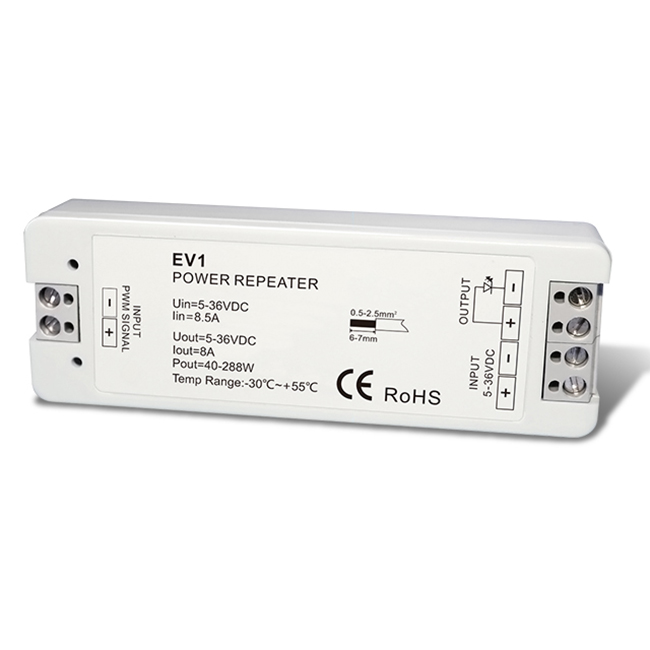
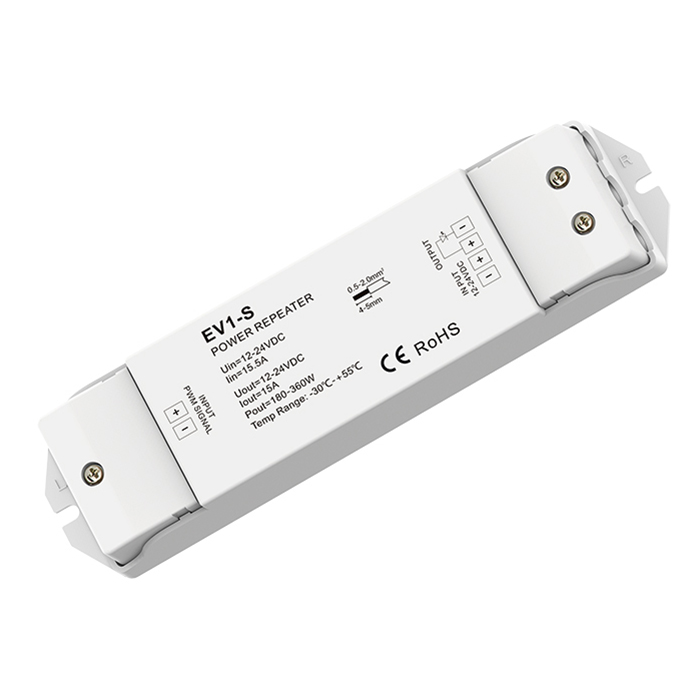
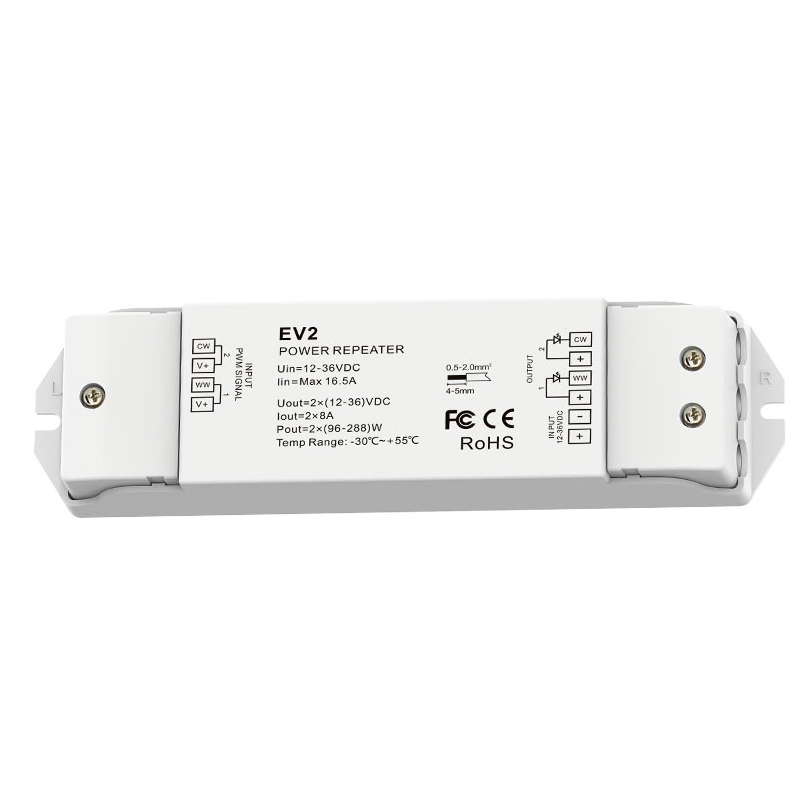
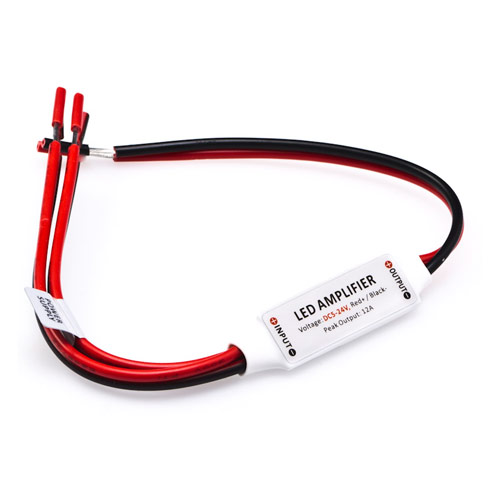
DC5/12/24V Single Color LED Amplifier - Inline Data Signal Booster | 12A, 144W
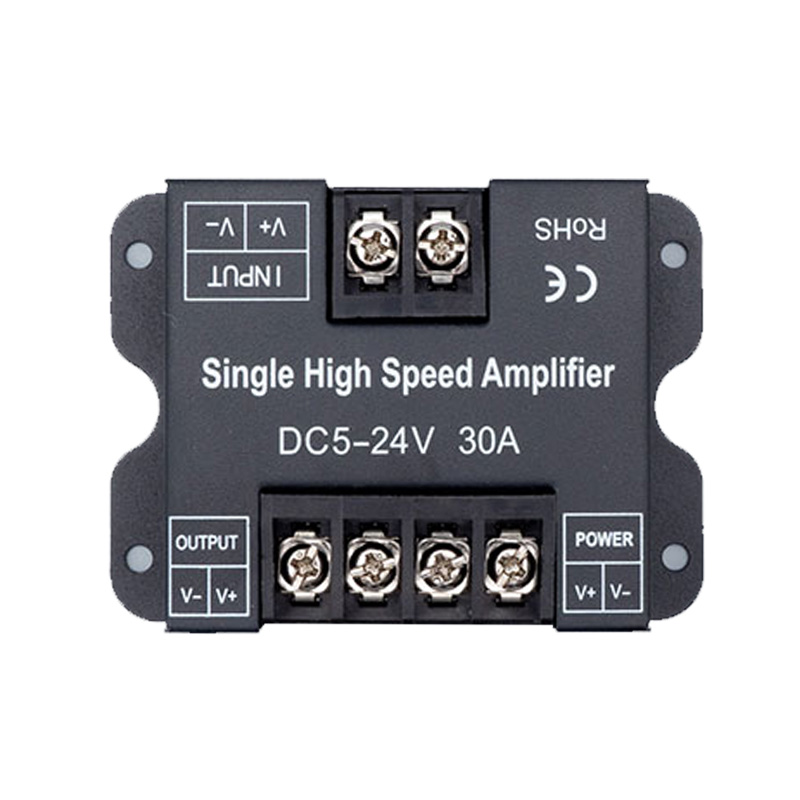
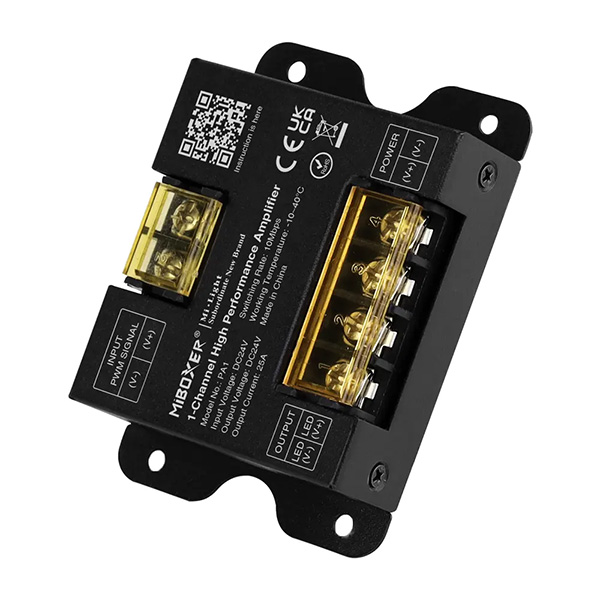
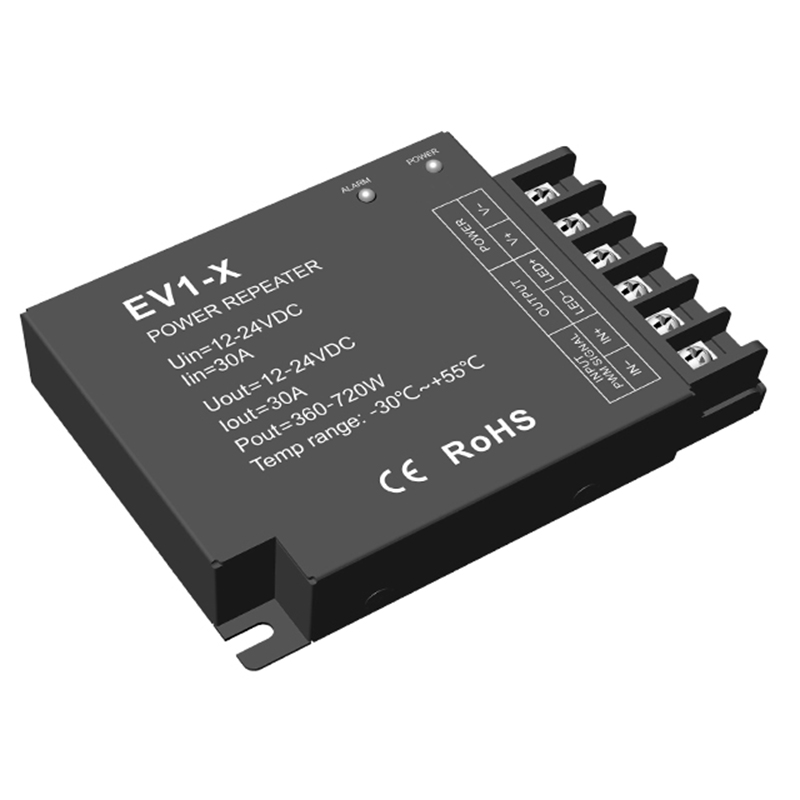
30A Single Color LED Amplifier 5-24V - Extend 5050 Strip Lengths
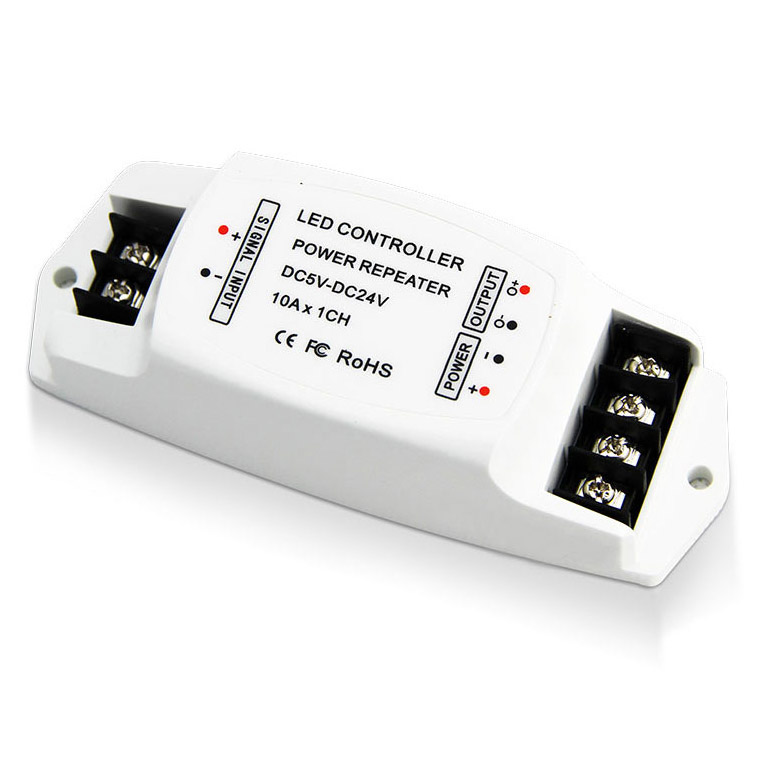
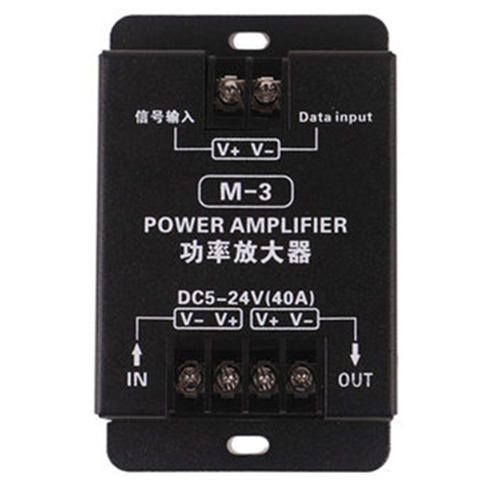
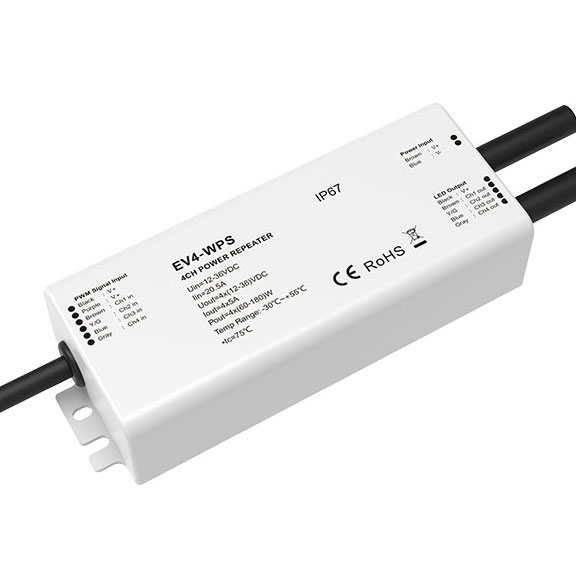

12A 0-10V Rotary Dimmer Amplifier for 3528/5050 LED Strips | LETCH 5-Year Warranty
Frequently Asked Questions About Single Color LED Strip Power Amplifiers
Got questions about extending your LED strip runs? You're in the right place. Here are the answers we give customers every day.
A single color LED strip power amplifier, or repeater, is basically a booster for your lighting signal. It takes the PWM dimming signal from your controller at the end of one strip and regenerates it with fresh power for the next strip. This lets you create very long, continuous runs of LED tape light without the lights at the far end getting dim or flickering. It doesn't dim the lights itself; it just faithfully copies the signal it receives.
When you're extending a run, you always connect the signal in series: controller -> strip 1 -> amplifier 1 -> strip 2 -> amplifier 2 -> strip 3, and so on. This keeps the dimming signal consistent. However, the power wiring to the amplifiers should be done in parallel. This means running a dedicated set of power wires from your main power supply to each amplifier independently. This ensures each amplifier gets the full, correct voltage to do its job.
You need to power both the strip and the amplifier itself, though the amp's consumption is tiny. The main thing is to size the power supply for the strip segment the amplifier is driving. For example, if you have a 5-meter strip that uses 15W per meter, that section needs a power supply of at least 75W (5m x 15W/m). We recommend adding 20% headroom, so you'd want a 90W power supply for that segment. Our guide can help you calculate the power draw precisely.
Flickering after adding a repeater usually points to a power issue or a signal problem. First, check that your power supply has enough wattage for the strip segment it's driving. An undersized power supply is the most common cause. Second, check your wiring connections; a loose wire can cause intermittent contact. Lastly, if you're using a dimmer, there might be an incompatibility.
Theoretically, you can cascade them indefinitely—we have customers who have run hundreds of meters this way for architectural projects. The signal is regenerated at each amplifier, so it doesn't degrade. The real-world limit is just your budget and the physical space for power supplies. As long as each amplifier and strip segment has its own correctly-sized power feed, you can keep extending the line.