
SK6812 5V Addressable LED Strip
46 productsSK6812 5V Addressable LED Strip has the ability to be individually addressable, you can independently control the color and brightness of each LED on the 5V SK6812 strip to achieve customized lighting effects and dynamic scenes. Due to the low 5 volt voltage, the voltage drop affects the performance of the LED lights far away from the power supply, thus limiting the normal running distance of the strip, usually 1-2 meters (3-6ft), therefore, the 5V adressable led strip is more suitable for DIY users and some short-distance applications.
In the field of 5V addressable pixel LED lights, SK6812 and WS2812 series (including WS2812, WS2812B, WS2812C) and WS2811 are common IC models. Among them, the WS281X series are basically RGB colors, while the 5V SK6812 offers richer color options. SK6812 VS WS2812
5V SK6812 Type
| Voltage | IC Model | LED Type |
| 5V | SK6812 RGBW | 5050, 3535 |
| 5V | SK6812 RGB | 5050, 3535, 2020, 4020 |
| 5V | SK6812 White | 5050 |
| 5V | SK6812 WWA | 5050 |
Strict 5V DC Input: All pixel LED light variants in this series operate strictly on 5V DC. Always connect to a regulated 5V power supply and a 5V-compatible digital SPI controller. Connecting directly to 12V or 24V power will permanently damage the 5V digital LEDs.
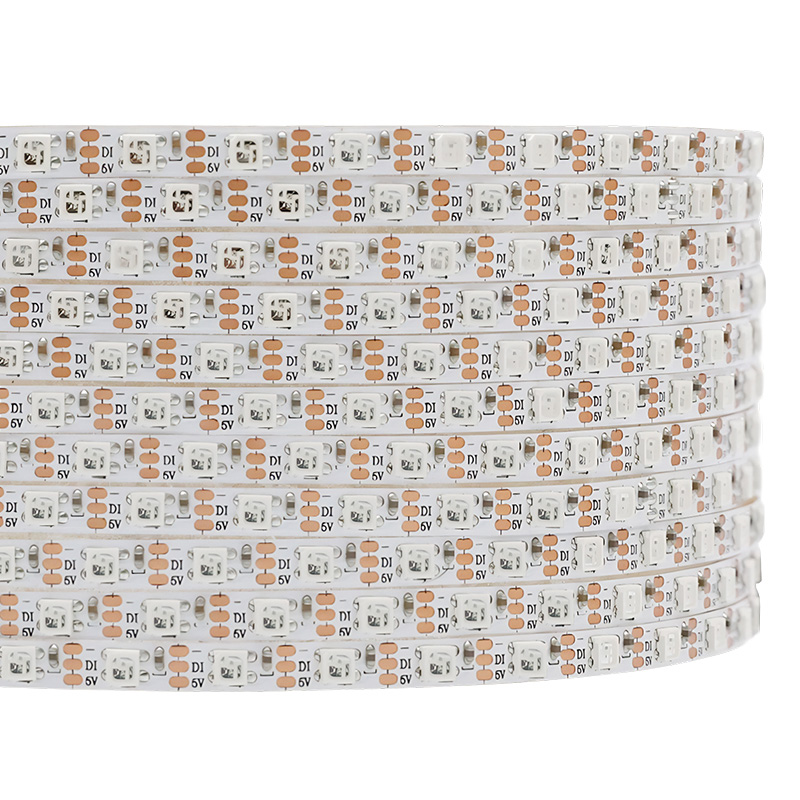
SK6812mini RGB 5mm 90LEDs/m Individually Programmable LED Strip
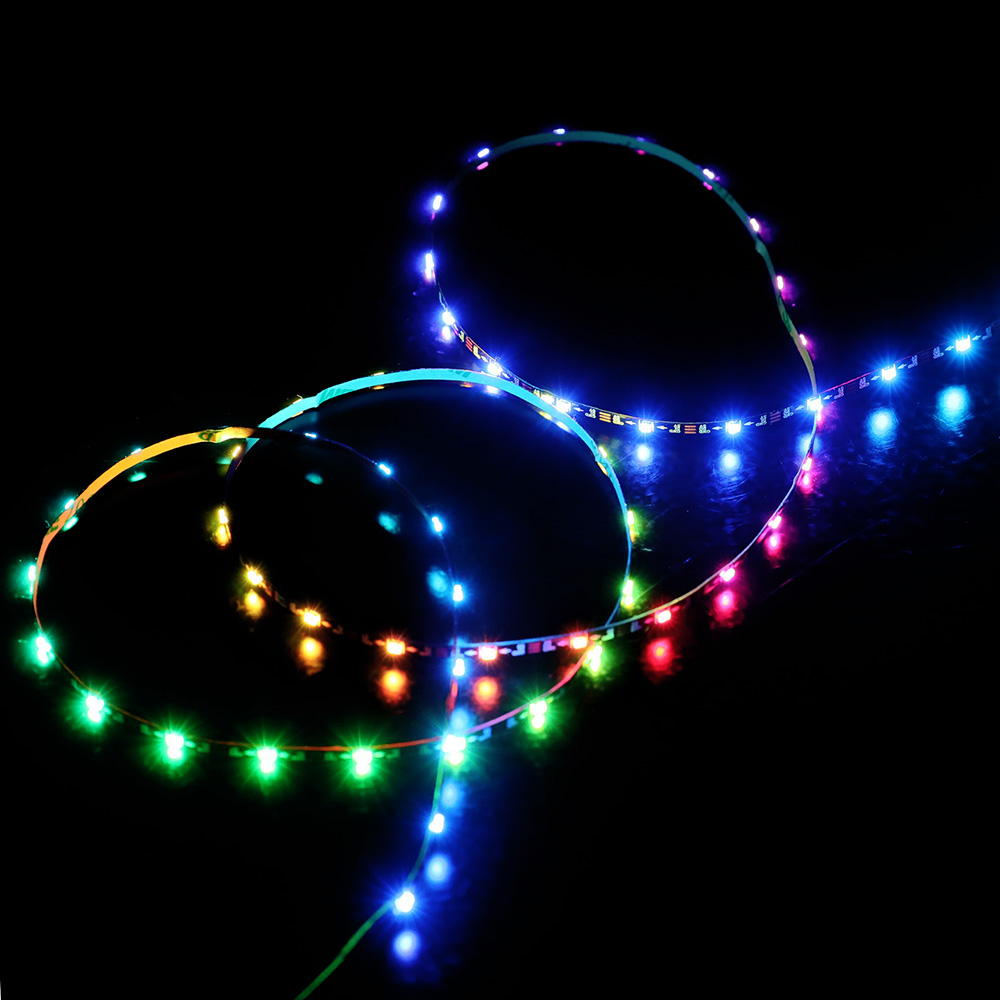
Narrowest 3mm SK6812 RGB Individually Addressable 5V LED Strip
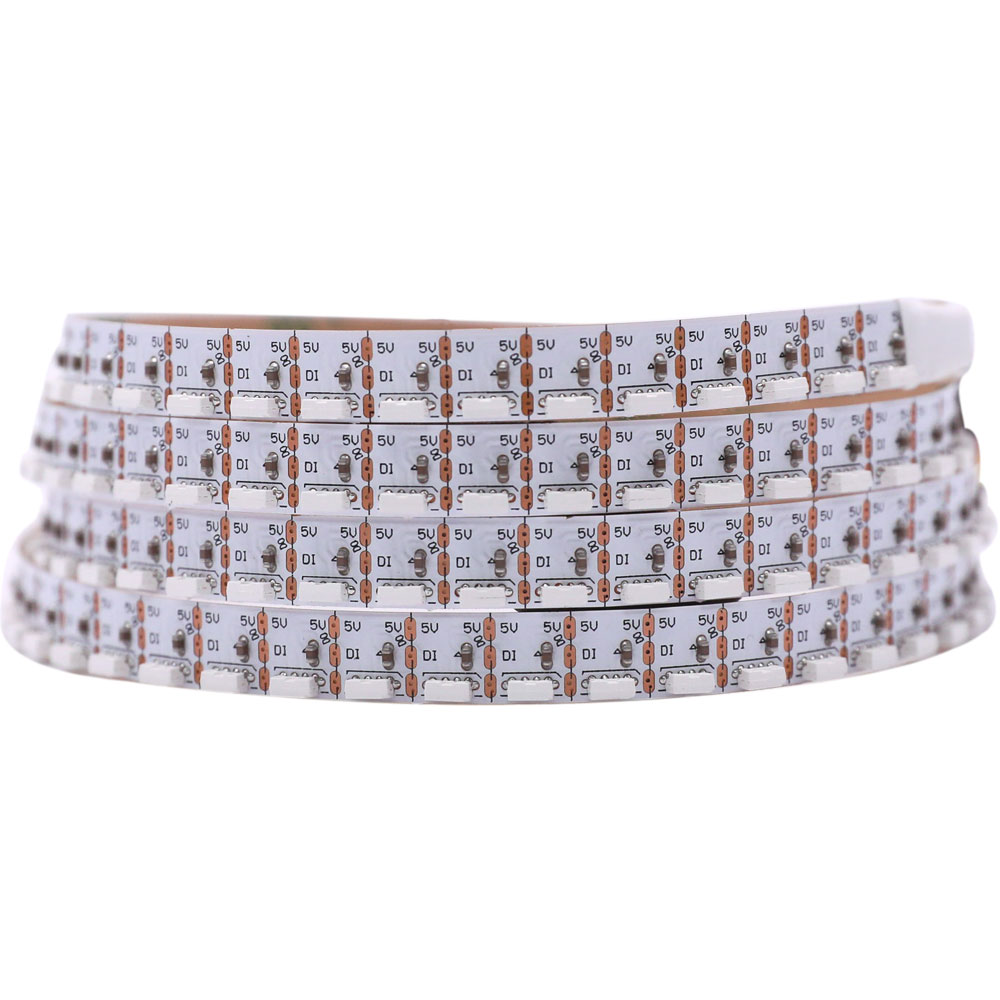
SK6812 RGB DC5V Side Emitting Individually Addressable LED Strip Lights
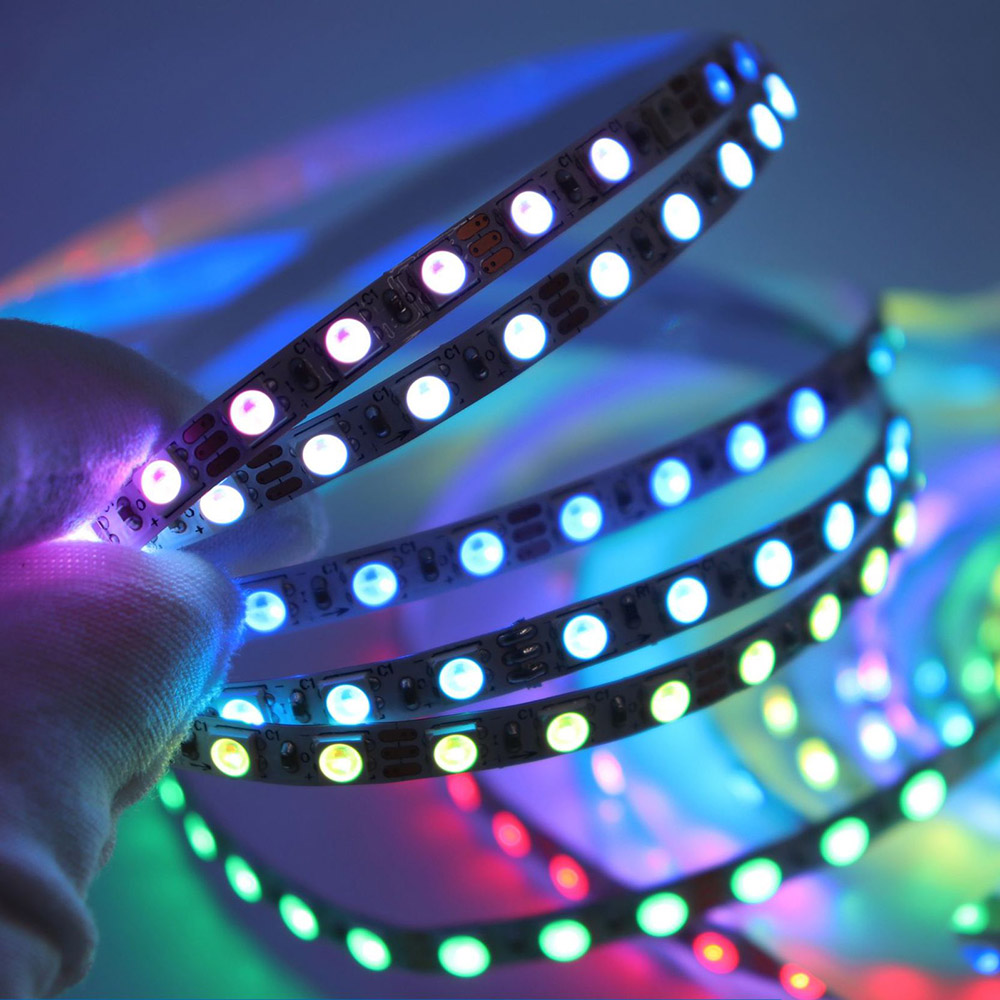
SK68xxmini 5V/12V 4-7mm Addressable RGB LED Strip
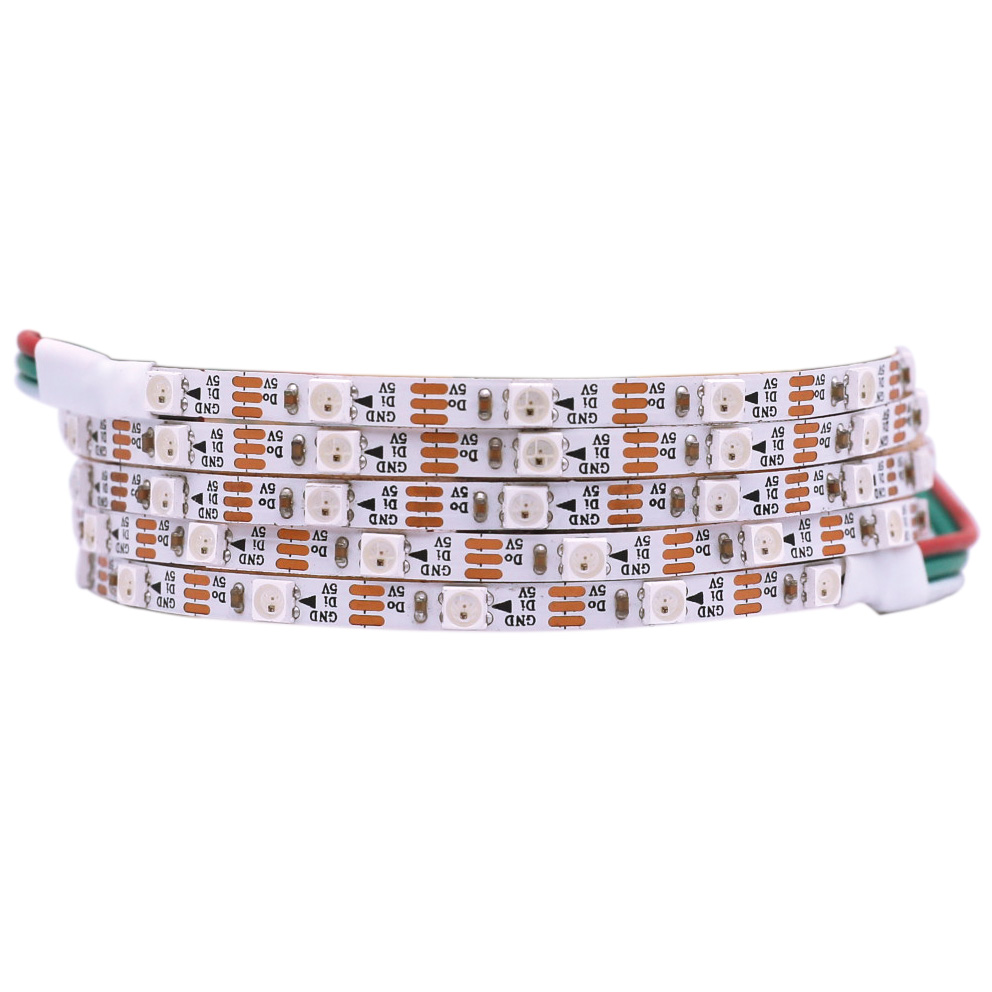
SK6812 Mini RGB 4mm 60LEDs/m Individual Addressable LED Strip
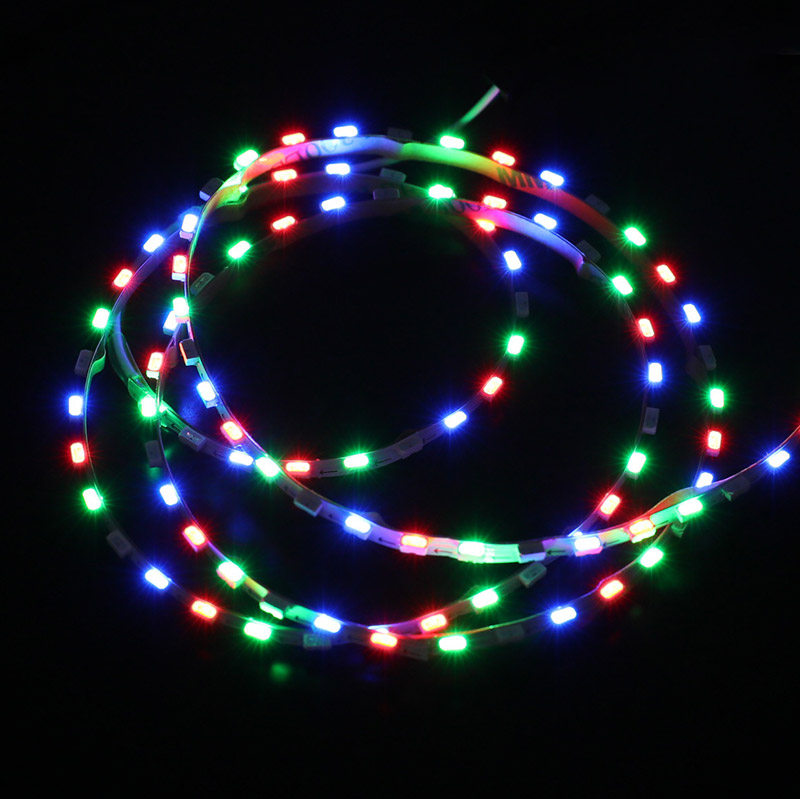
Mini 4mm Side Emitting SK6812 4020 Addressable RGB LED Strip
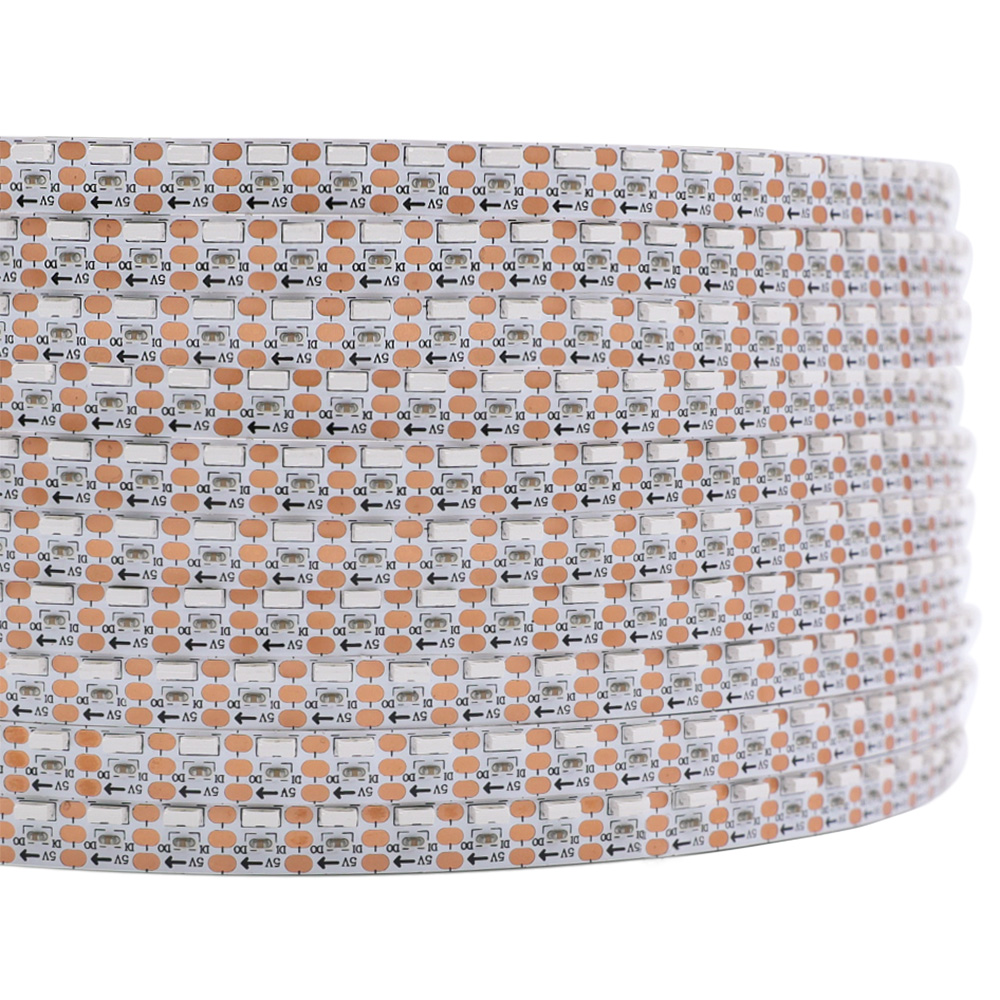
5V SK6812 RGB 120LEDs/m Side Emitting Addressable LED Strip Lights
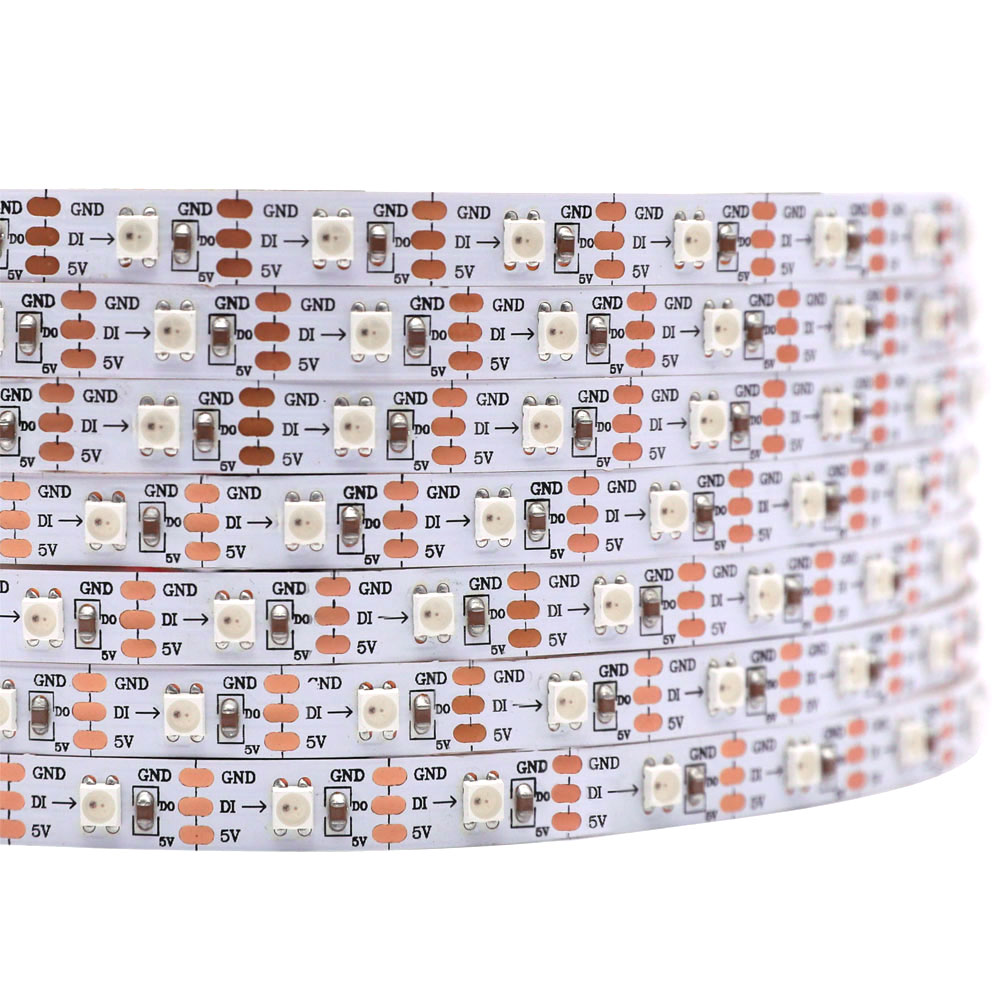
SK6812mini RGB DC5V Individual Addressable LED Strip 60LEDs/m
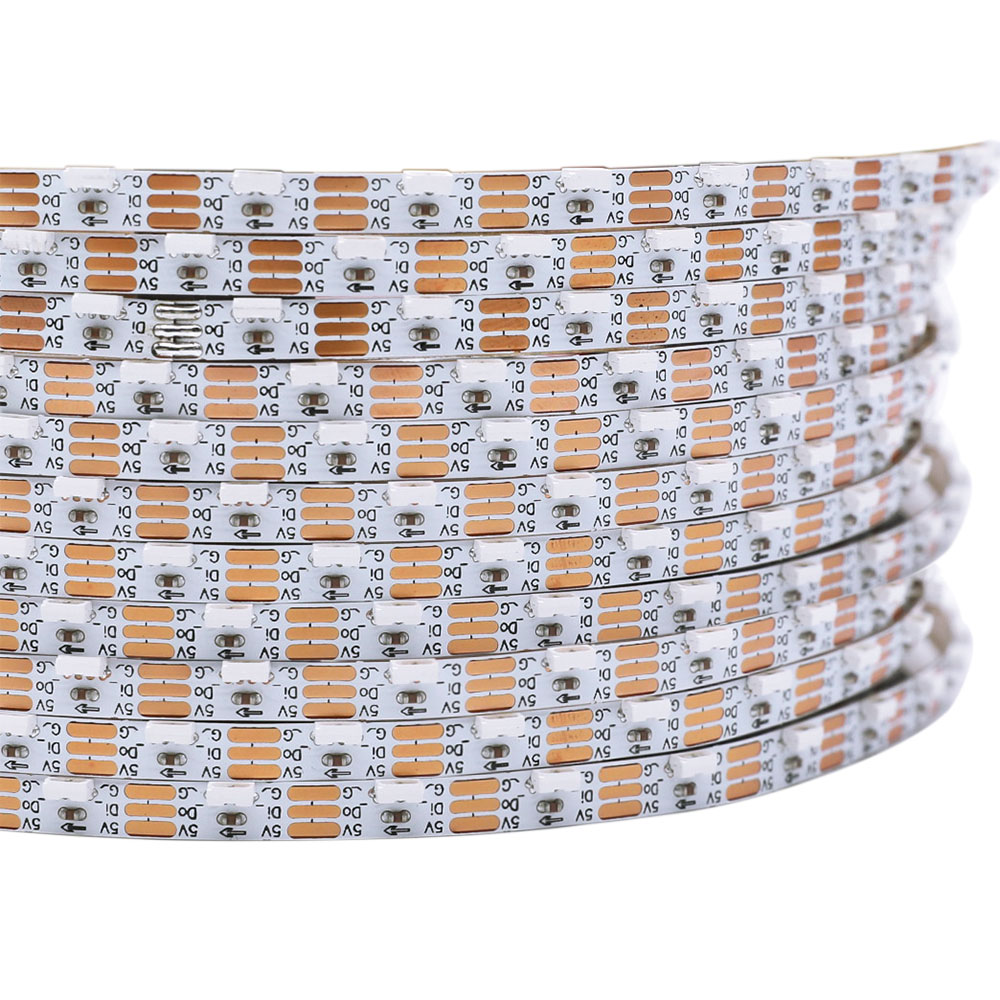
SK6812 360LEDs Side Emitting Individually Addressable LED Strip Lights
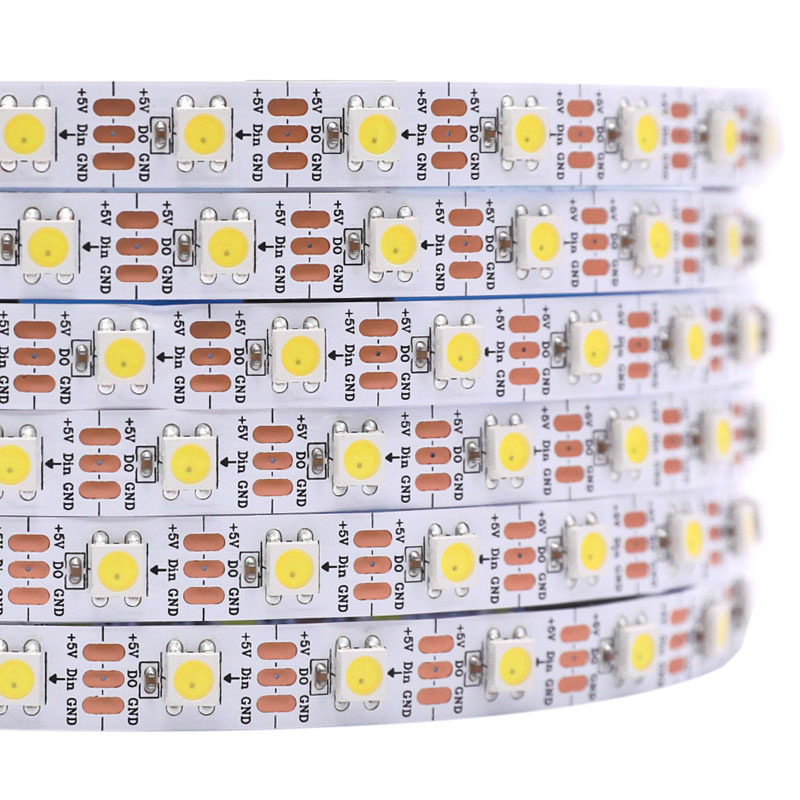
Digital 6000K 3000K SK6812 White LED Strip Lights - 5V Individually Addressable
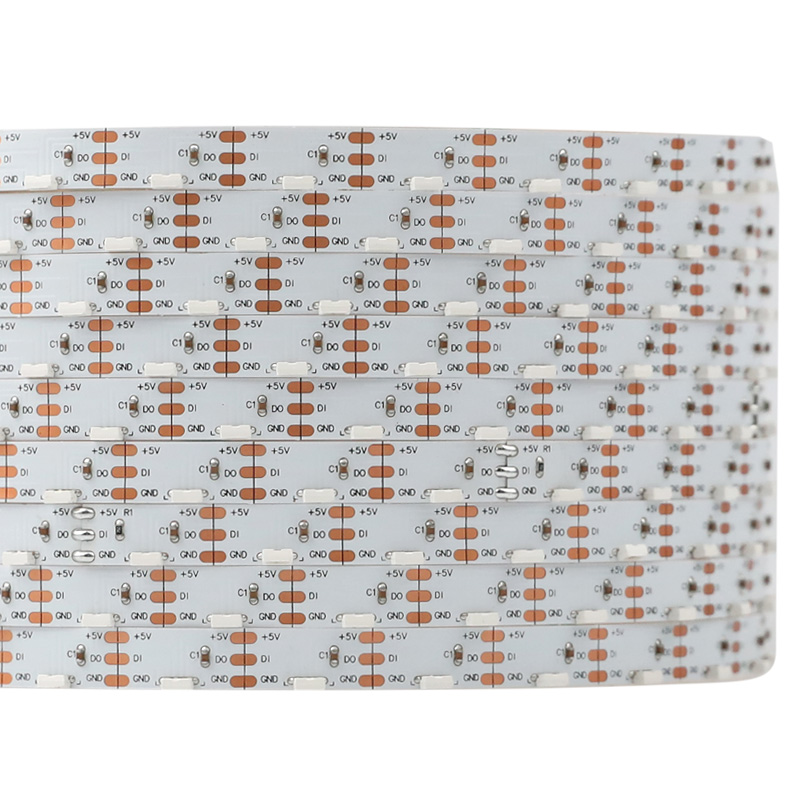
DC5V SK6812 RGB Side Emitting Addressable LED Strip Lights
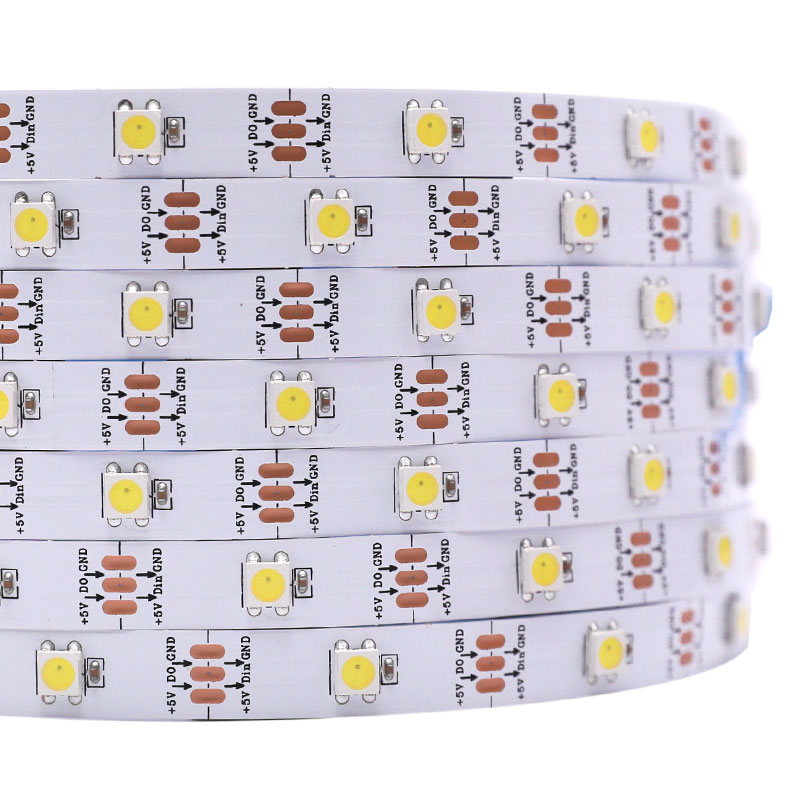
30LEDs/m SK6812B Digital Daylight/Warm White/WWA LED Strip
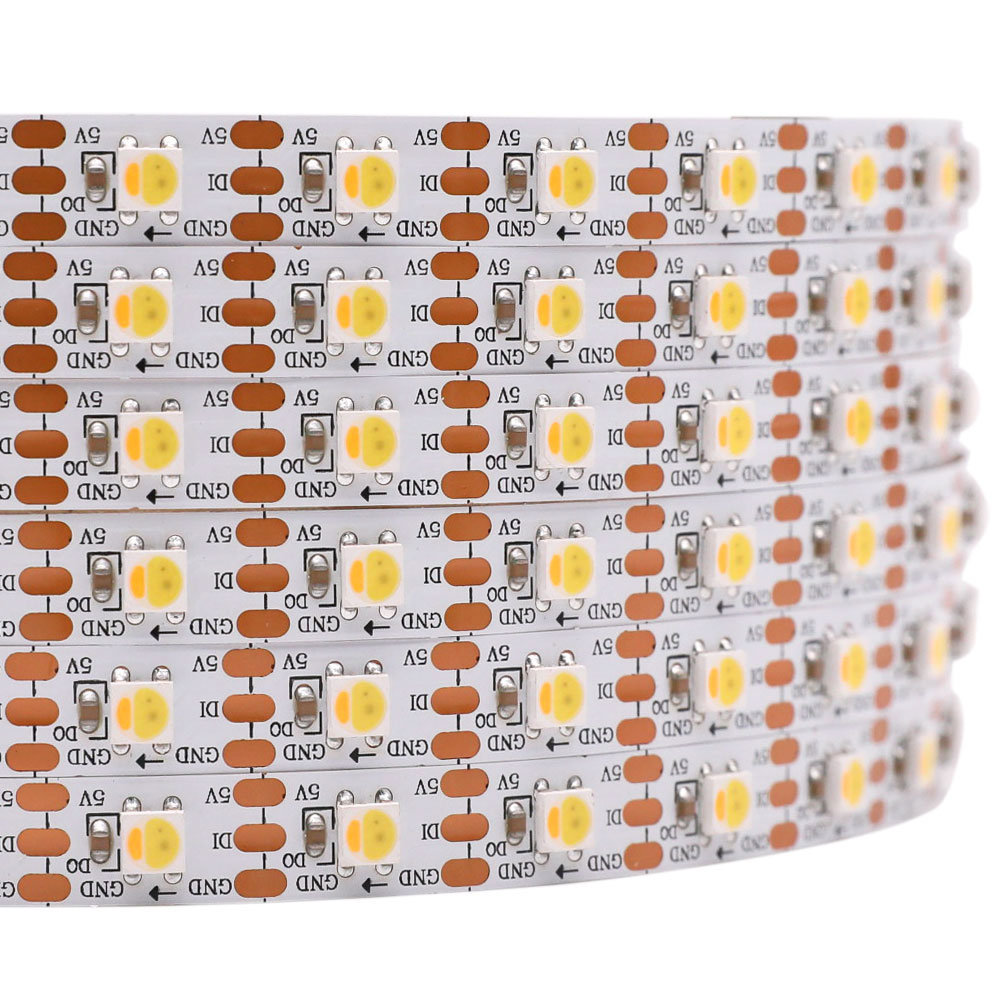
SK6812 WWA 2200K~6500K Adjustable LED Strip - Individually Addressable
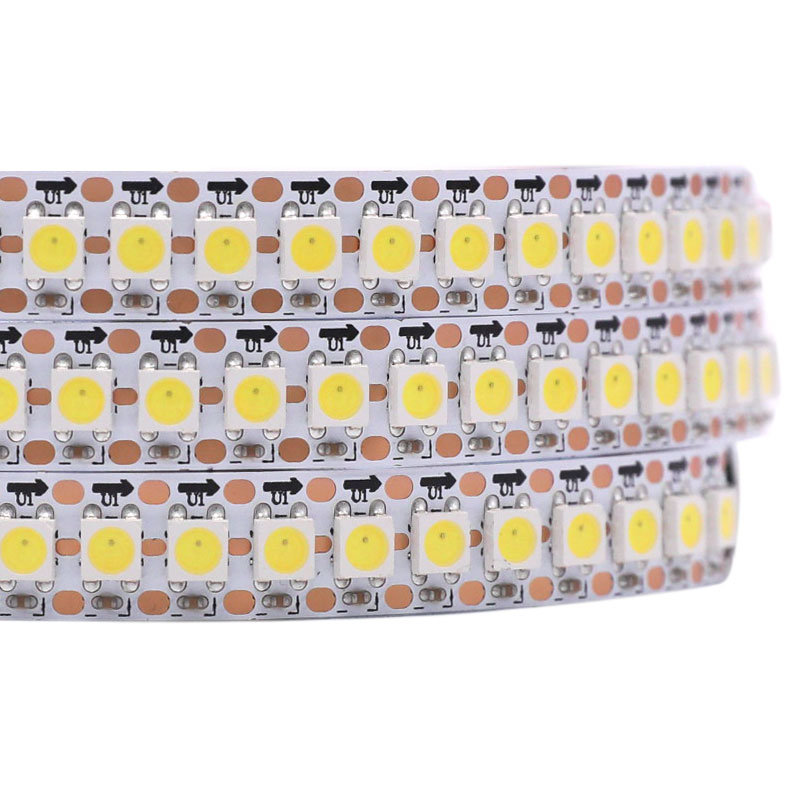
1m/3.28ft 144LEDs SK6812 Individually Addressable White LED Strip
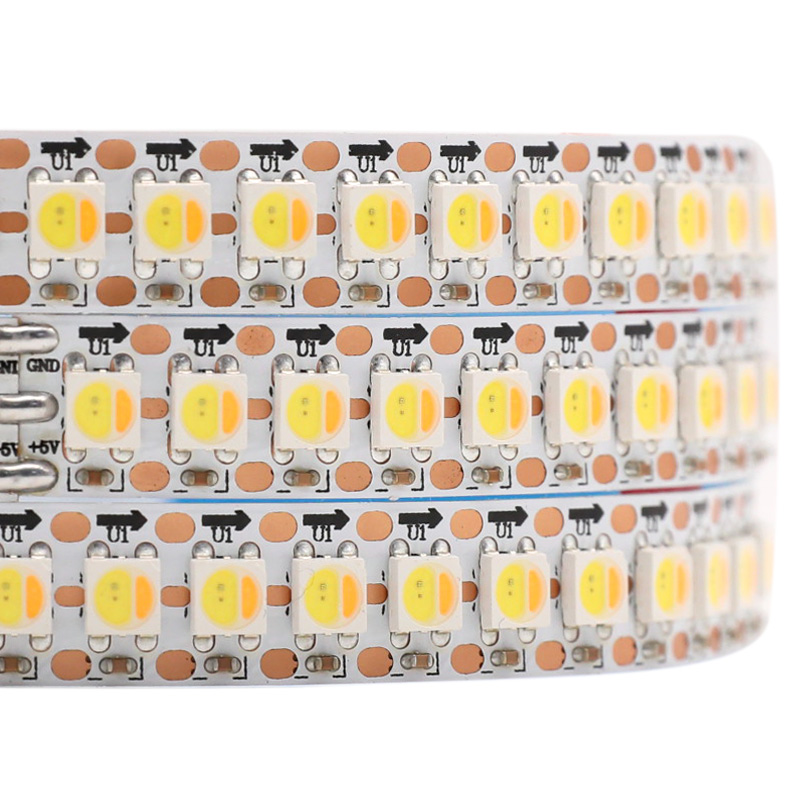
5V SK6812 144 1-Meter Digital Dim to Warm to Bright WWA LED Strip
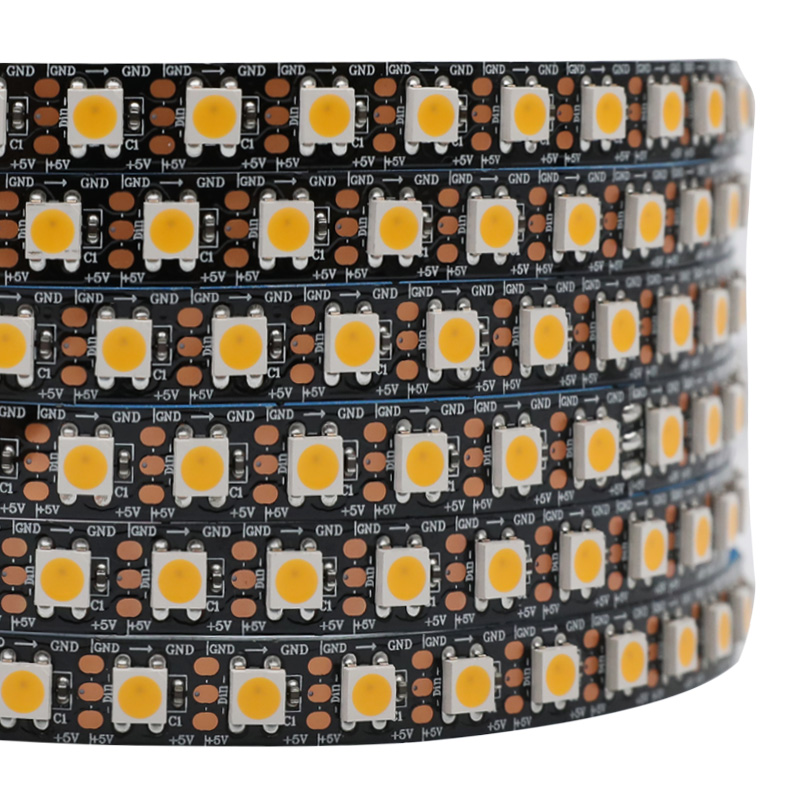
5V SK6812 480 Pixels Indepedently Addressable LED Strip White Warm or Cool

5V SK6812 Individual Control 370 Pixels Programmable White LED Strip
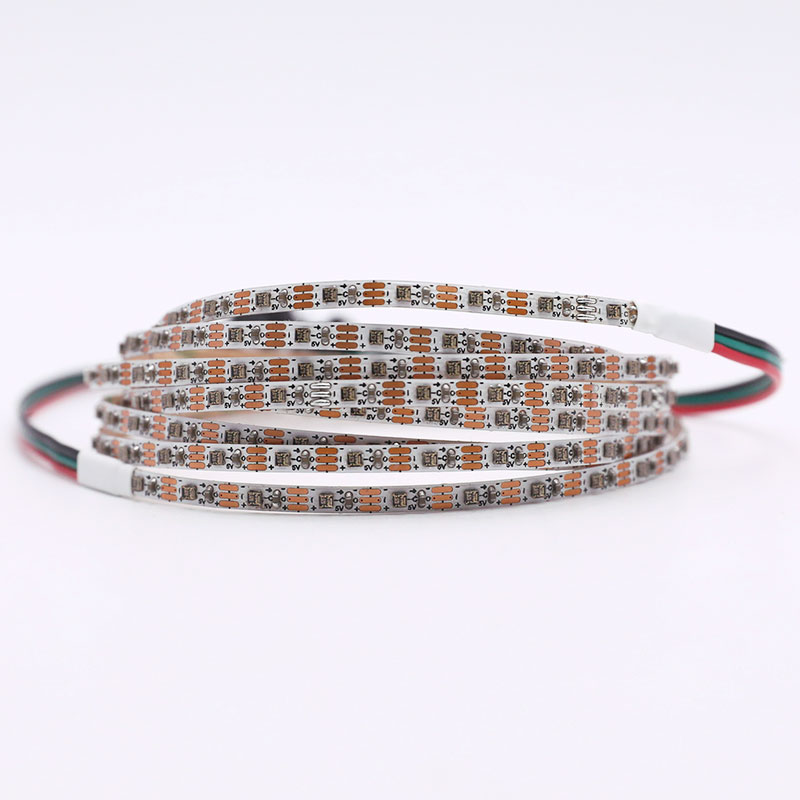
3.28ft DC5V 96LEDs 4MM LC8805B Addressable LED Strip Lights
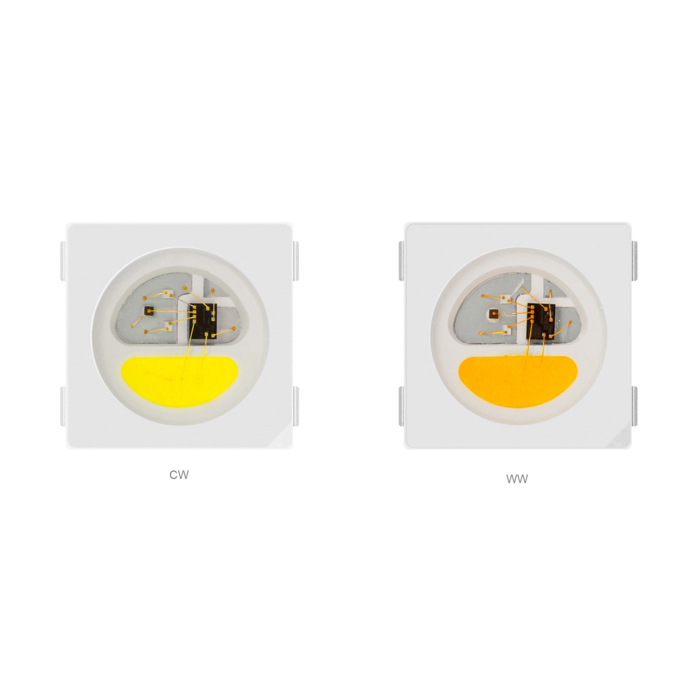
DC12V SK6812 Addressable RGBWW/DW 5050SMD LED Chip
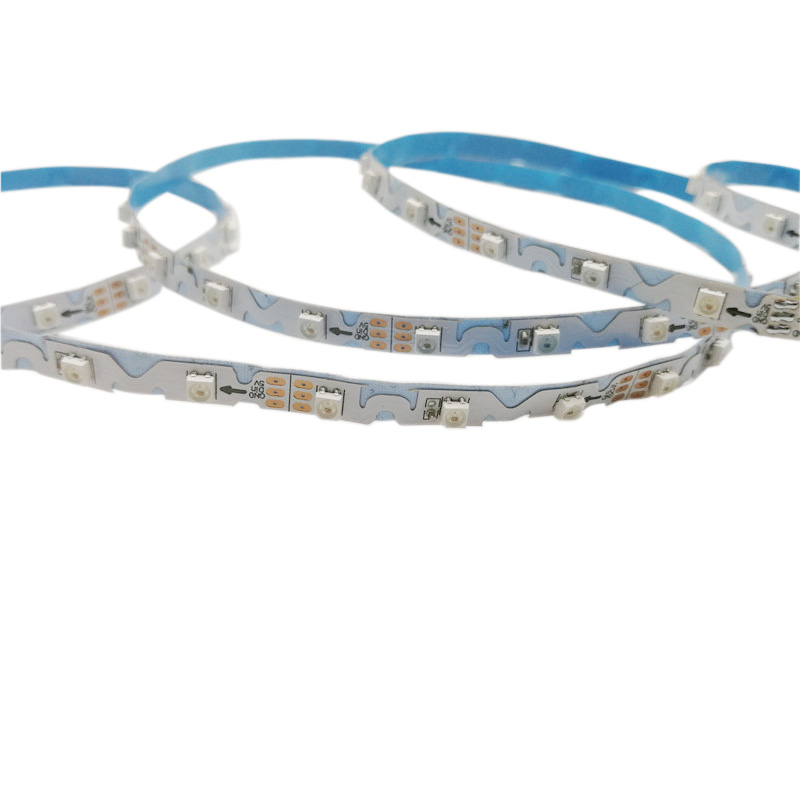
Ultra Slim 5mm SK6805/SK6812 ARGB DC5V S Type LED Strip
5V Adressable LED Strip vs 5V LED Strip
While both options run on 5V DC low-voltage power, 5V Addressable LED Strips and Standard 5V LED Strips serve completely different lighting purpose and control requirements:
Control & Customization: Standard 5V LED strips operate as a single unit—the entire strip dims, turns on, or changes color all at once. In contrast, 5V addressable LED strips (such as SK6812 or WS2812B) feature integrated micro-ICs that allow you to control every single LED diode individually (pixel by pixel). This enables complex dynamic effects like chasing, flowing waves, rainbow gradients, and custom animations.
Controller Requirements: Standard 5V strips use basic PWM dimmers, simple single-color controllers, or standard RGB controllers. Addressable 5V strips require digital SPI pixel controllers (or microcontrollers like Arduino, ESP32, or K-1000C) capable of sending digital data signals.
Wiring Setup: Standard single-color or RGB strips typically use 2-wire (+/-) or 4-wire (+/R/G/B) connections. Addressable strips utilize a 3-wire system (+5V, Data, GND), where the dedicated data line transmits individual instructions to each pixel down the run.
Ideal Applications: Standard 5V light strips are perfect for static, uniform accent lighting such as under-cabinet illumination, TV backlighting, or display cases. Addressable 5V strips are designed for interactive projects, gaming setups, commercial light shows, signage, and custom decorative scenes requiring precise animation control.
Frequently Asked Questions About 5V SK6812 Addressable LED Strips
Got a question about wiring, power, or controllers for your 5V pixel project? I've probably answered it a thousand times. Here are the most common ones.
That's voltage drop, the number one issue with any 5V LED strip. Because the voltage is so low, the electrical resistance of the copper strip itself consumes power over distance. The LEDs at the far end get less voltage, so they appear dim or shift towards red. For a 5V SK6812 strip, you should inject power at both ends if your run is longer than 2-3 meters. For a full 5m (16ft) run, injecting power in the middle as well is the best practice.
It depends entirely on the LED density. A 5-meter strip of 60 LEDs/m SK6812s at full brightness white will pull around 90 watts, which is 18 amps at 5V. A high-density 144 LEDs/m strip will need much more. A common mistake is buying a power supply that can only handle the average load, not the peak. Always calculate for worst-case: all pixels on, full white brightness. Then add a 20% buffer. We stock a full range of 5V power adapters to match any project size.
For most new designs, the SK6812 outperforms the WS2812B. They use the same protocol, so controllers and code are compatible. The SK6812 has a wider PWM frequency range, which means less flickering when photographed. However, the SK6812’s biggest advantage is that it comes in multiple versions, such as RGBW, which provides a dedicated white channel, resulting in softer tones and purer white. The WS2812B, on the other hand, is available almost exclusively in RGB versions.
The main difference is the length you can run before voltage drop kicks in. A 5V SK6812 addressable LED strip gives you individual LED control, which is great for high-resolution effects, but you're limited to short runs of 1-3 meters before needing to re-inject power. Our 12V addressable strips can run longer, typically 5 meters, but you can only control them in groups of 3 LEDs. It's a trade-off: 5V for pixel density, 12V or 24V for longer runs.
You'll need a dedicated SPI pixel controller that's compatible with the SK6812/WS2812B protocol. This includes popular DIY options like Arduino with the FastLED library, WLED on an ESP32, or dedicated hardware controllers. The key is to make sure the controller's data output is at a voltage level the strip can read, and that its power output matches the strip's 5V requirement. Many of our addressable RGB controllers are designed specifically for these.
Yes, and that's exactly the right way to do it. You need a DC-to-DC step-down converter, often called a buck converter, rated for the total amperage your strip will draw. Never connect a 5V strip directly to a 12V source like a car battery or a common 12V power supply. It will permanently destroy the LEDs instantly. Using a proper `12v to 5v converter` is the safe and correct method.
For 5V strips, thicker wire is always better. Because the voltage is low, the amperage is high for the same amount of power, and high amps mean you need thicker wire to avoid overheating and more voltage drop. For short connections under a meter, 20AWG is usually okay. For longer power injection lines on a 5m led strip, I'd strongly recommend 18AWG or even 16AWG wire to minimize power loss.
We do. We have several S-type or 'cobra' shaped strips with a 6mm PCB width that are perfect for tight bends inside sign letters or cases. But if you need something even thinner for a really tight spot, we stock some of the narrowest strips available, including our 3mm SK6812 strips. They use tiny 2020-size LEDs to fit where nothing else will.
For most 5V SK6812 strips, especially the lower density ones (30 or 60 LEDs/m), a channel isn't strictly required for heat dissipation. They don't typically run hot enough to damage themselves. However, we always recommend using one. An aluminum channel provides physical protection, makes for a much cleaner and more professional-looking installation, and the diffuser cover will soften the light and eliminate hotspots from the individual LEDs.
Yes, this is a huge part of what we do. Many of our customers are building products or custom installations and can't waste time soldering. Just send us a drawing—even a photo of a sketch on a napkin is fine. Tell us the exact lengths you need for each segment, the type of SK6812 strip, the wire lengths for connections, and the style of connector you need on the ends. An engineer will send back a complete parts list and quote, usually the same business day, with no fee or obligation to order.