
Top Emitting Silicone LED Strip Diffuser
87 products
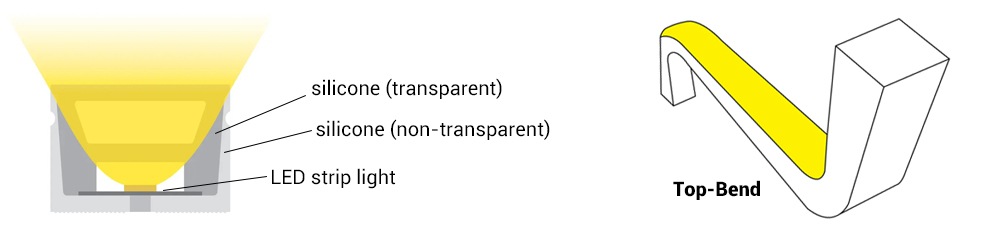
The top-lit neon tube follows the lighting and bending methods of LED light strips. The light-diffusing section of the silicone tube is semi-transparent, will convert the point light from the LEDs into soft linear light.
The design and configuration of the light-transmitting silicone section of the top-emitting silicone led strip channel significantly influence the lighting angle. Different configurations can achieve diverse lighting effects, ranging from 120 to 180 degrees, meeting the needs of various application scenarios and design requirements.
How to find the best silicone led diffuser channel for your light strip?
We typically confirm whether a neon led strip diffuser tube is suitable for a specific light strip by checking the maximum PCB width it can accommodate. This parameter is crucial for ensuring the light strip fits perfectly with the neon tube and performs at its best. Please note that some light strips' LED packages may not fit into smaller neon tubes.
Threading LED Strips into Neon Sleeves: DIY Tips & What Not to Do
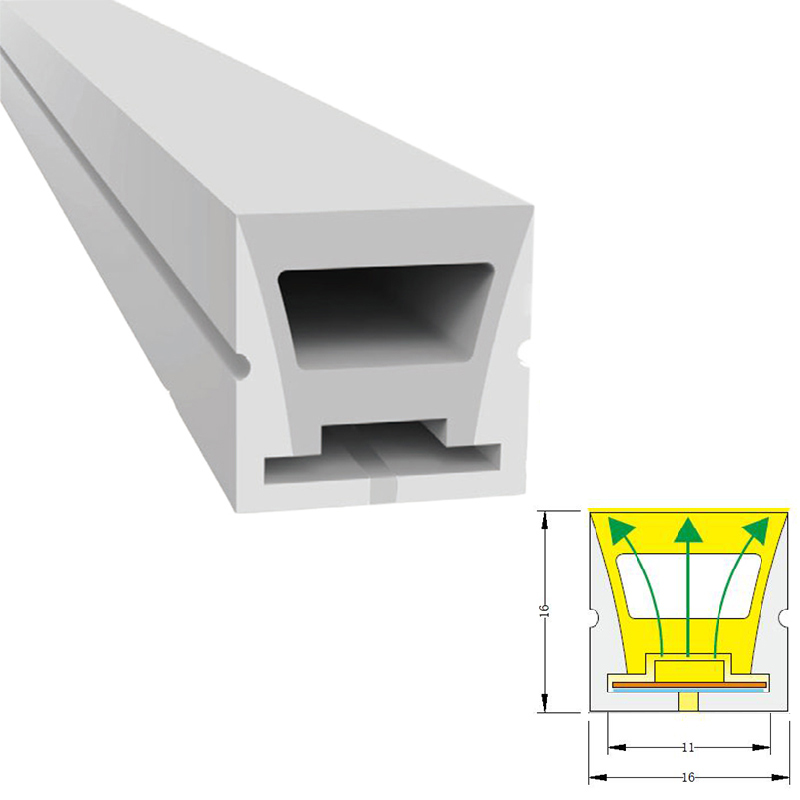
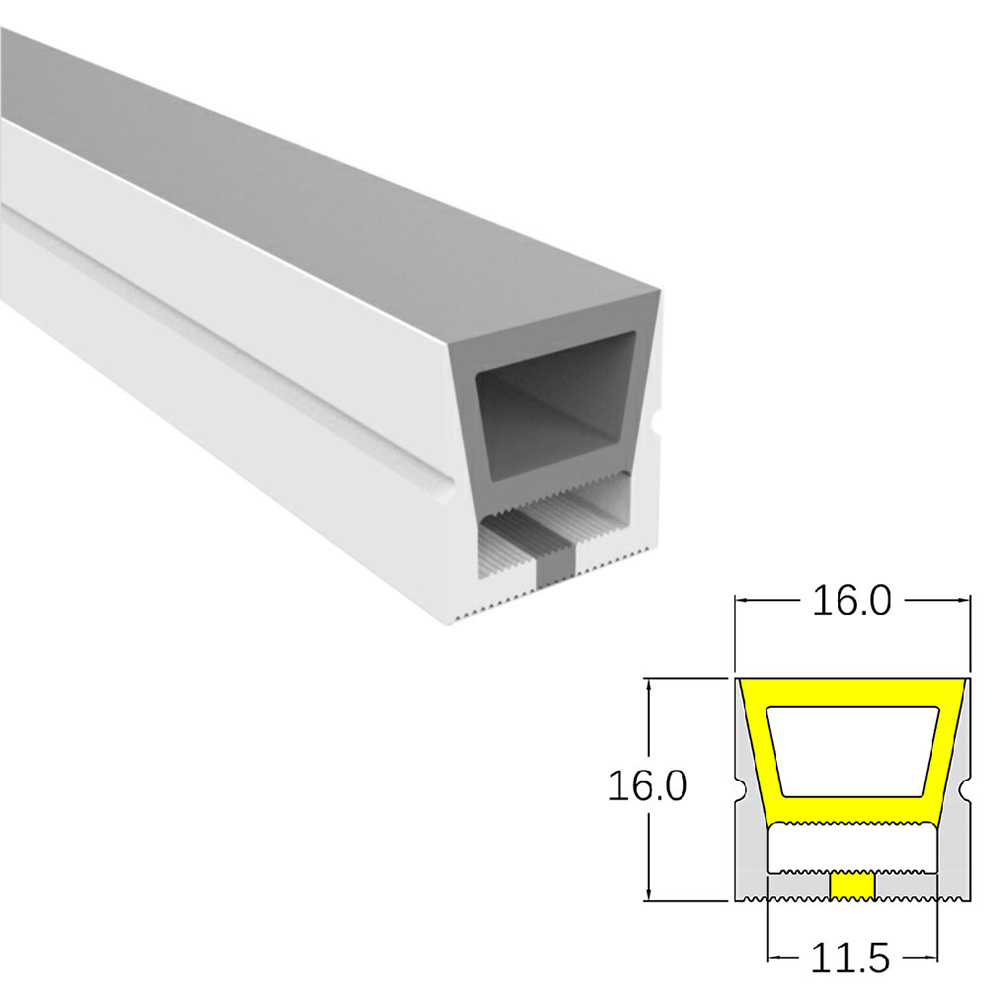
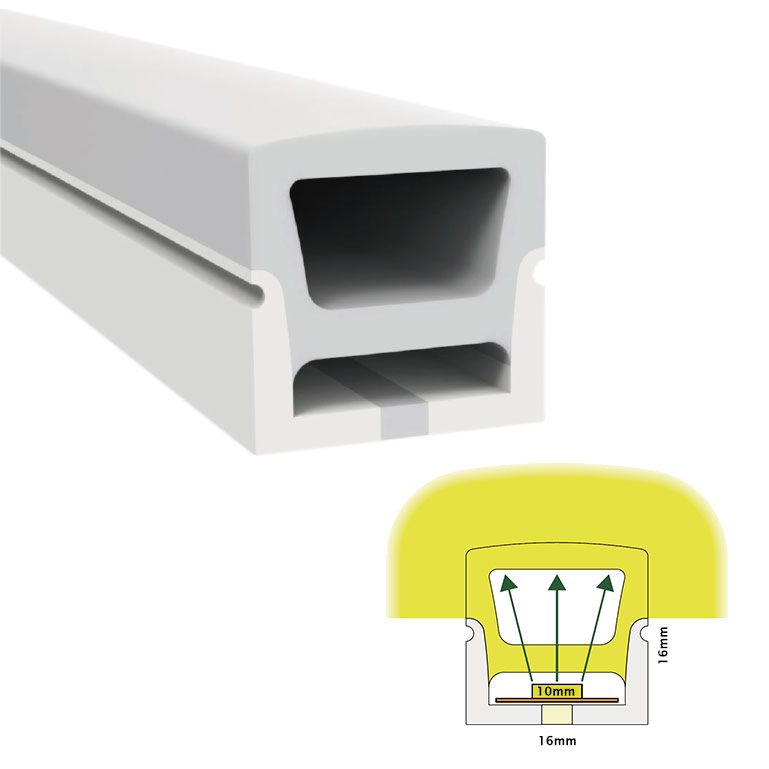
16*16mm LED Neon Tube - 180° Top-Emitting - For 10mm LED Strip
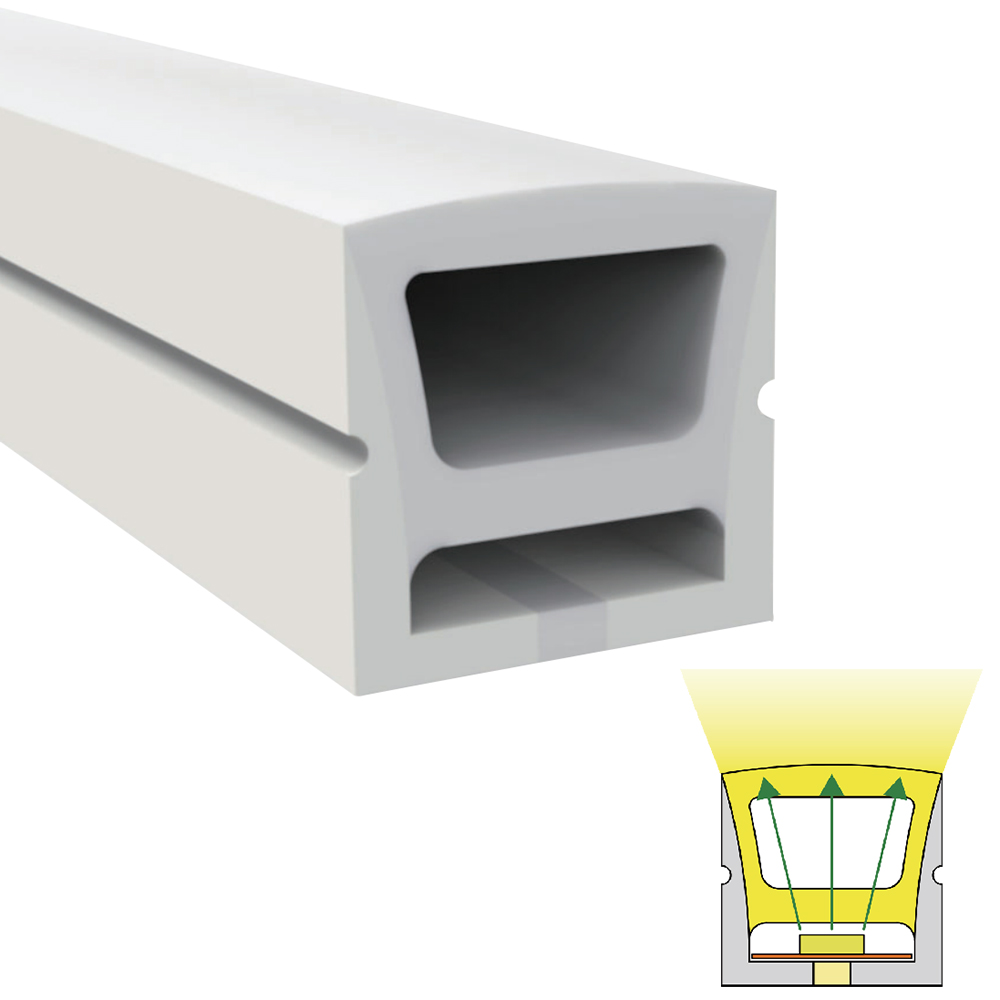
16*16mm Flex LED Neon Tube - 120° Top Emitting - For 10mm LED Strip
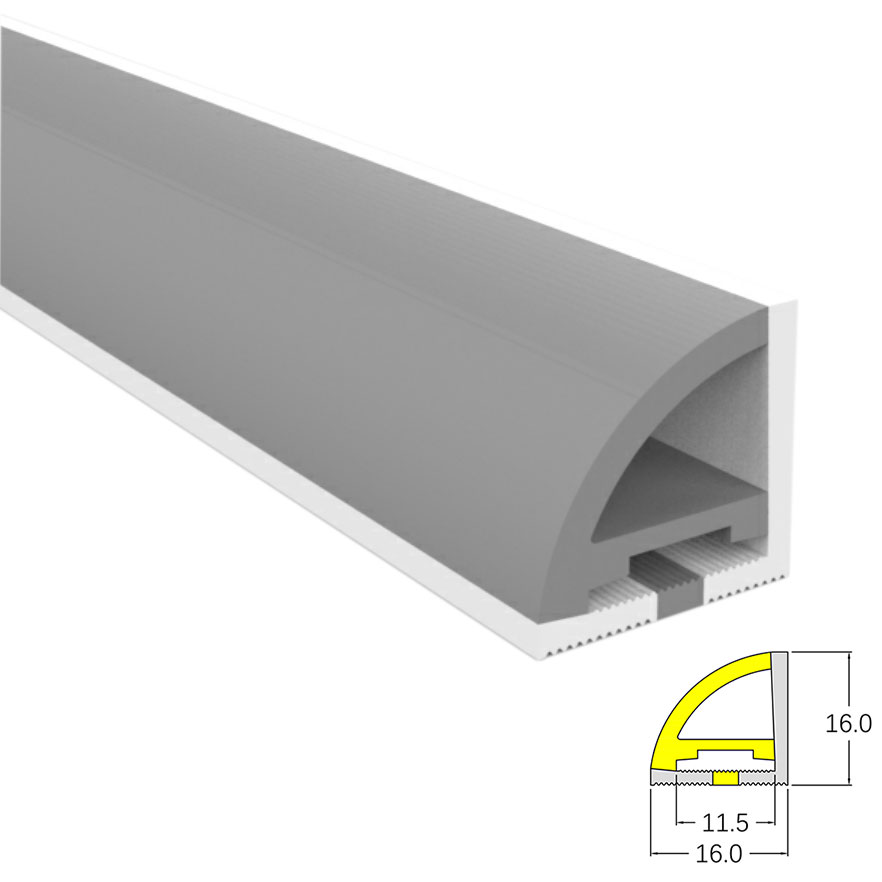
16*16mm Neon Tube - 90° Sector Top Emitting - For 10mm LED Strip
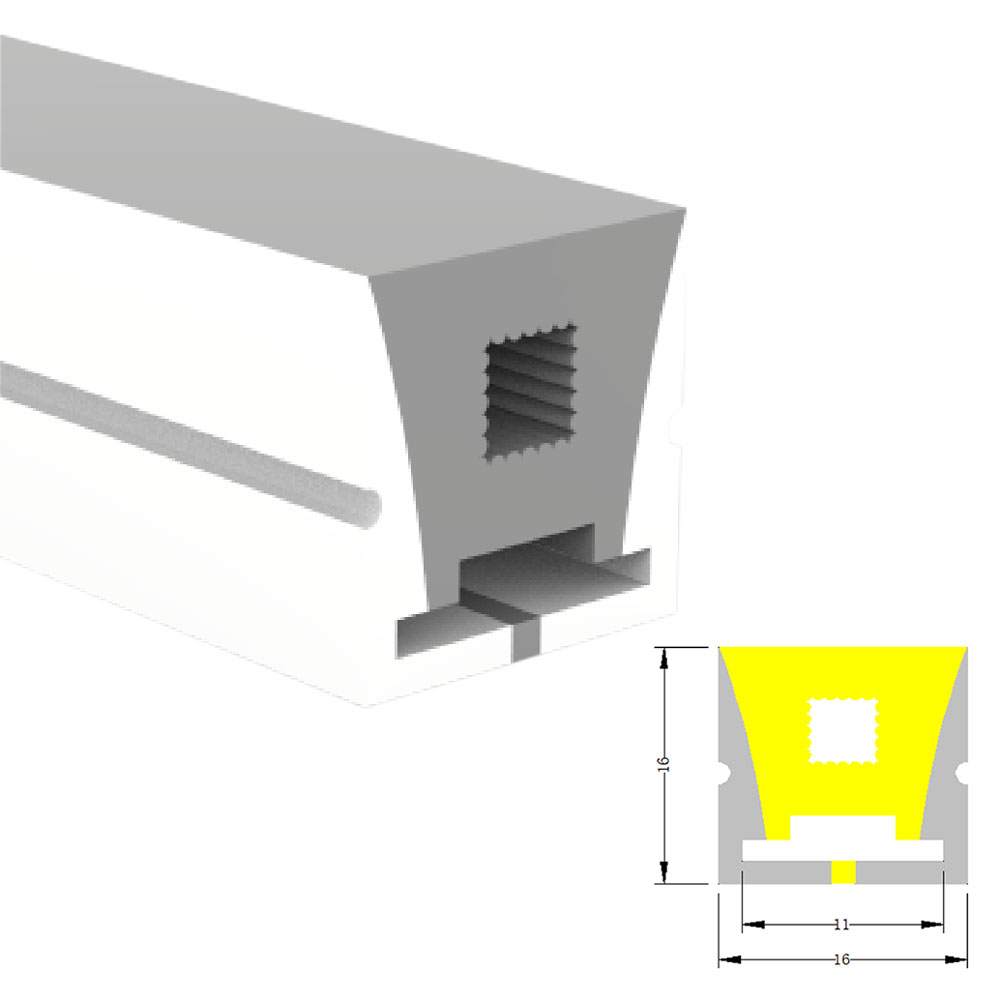
16*16mm Outdoor Neon Light Silicone LED Strip Diffuser Cover
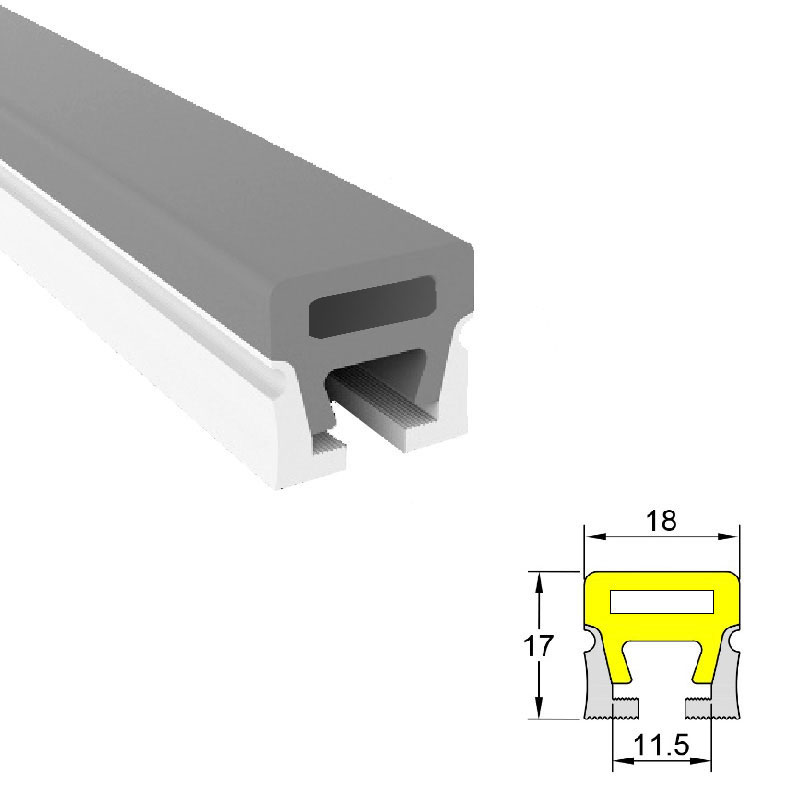
Flexible Silicone LED Channel - 180° Open Bottom for 10mm Strips
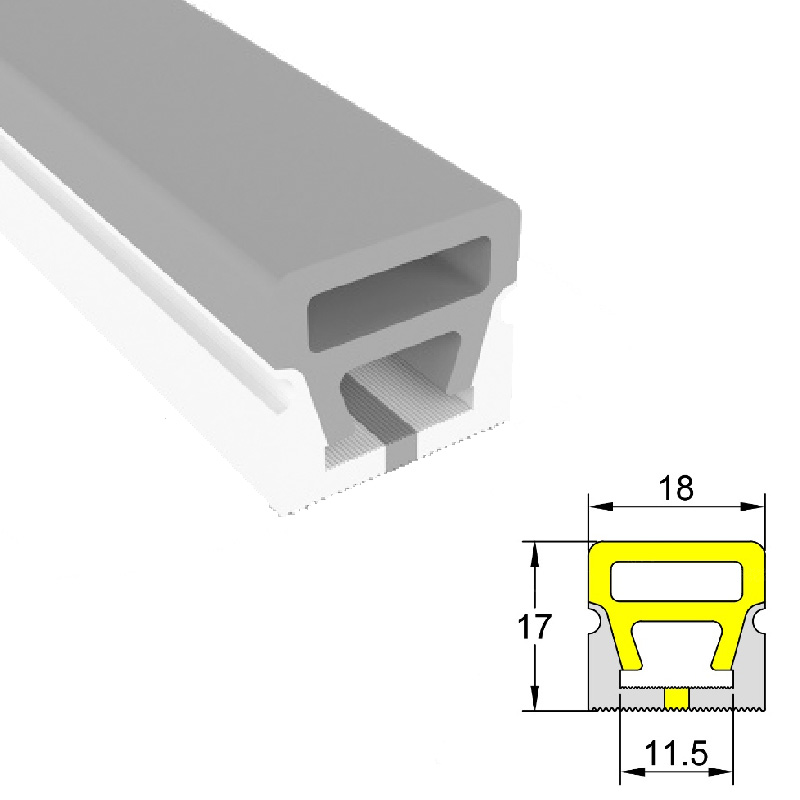
Silicone LED Strip Channel for 10mm LED Light - 18*17mm 180° Emitting
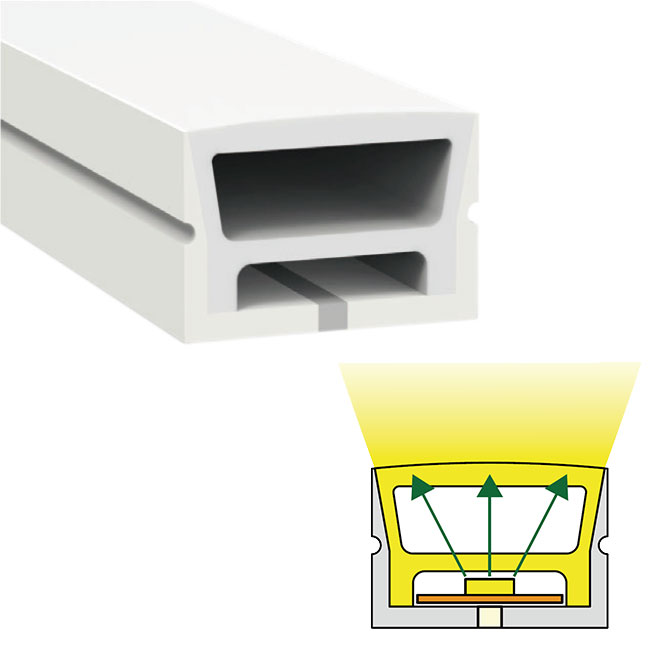
20*10mm LED Neon Tube - 120° Top Emitting - For 10/12mm LED Strip
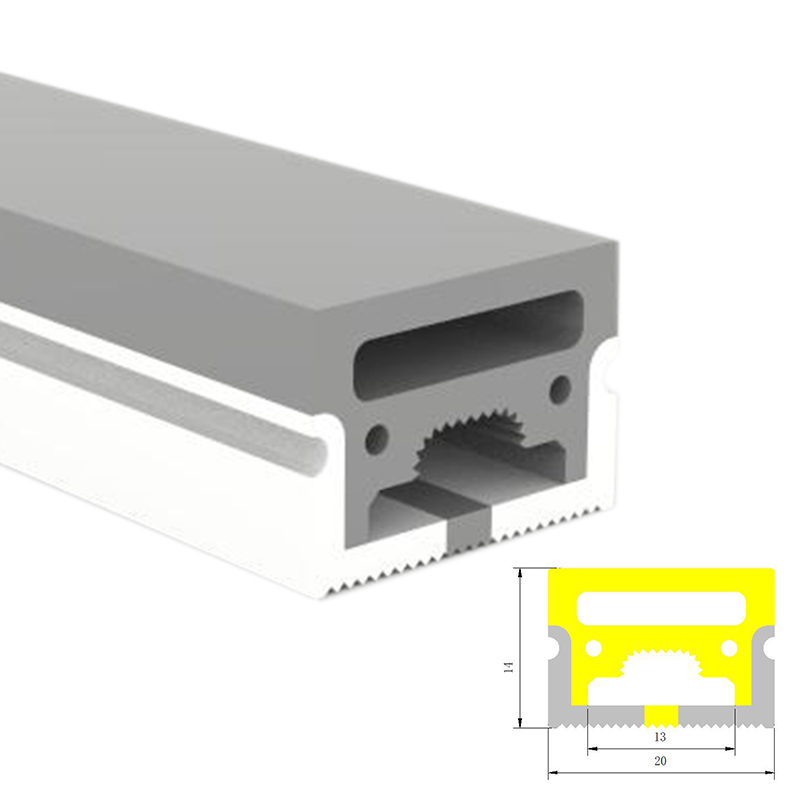
20*14mm Neon Tube - Three Sides Emitting - For 12mm LED Strip
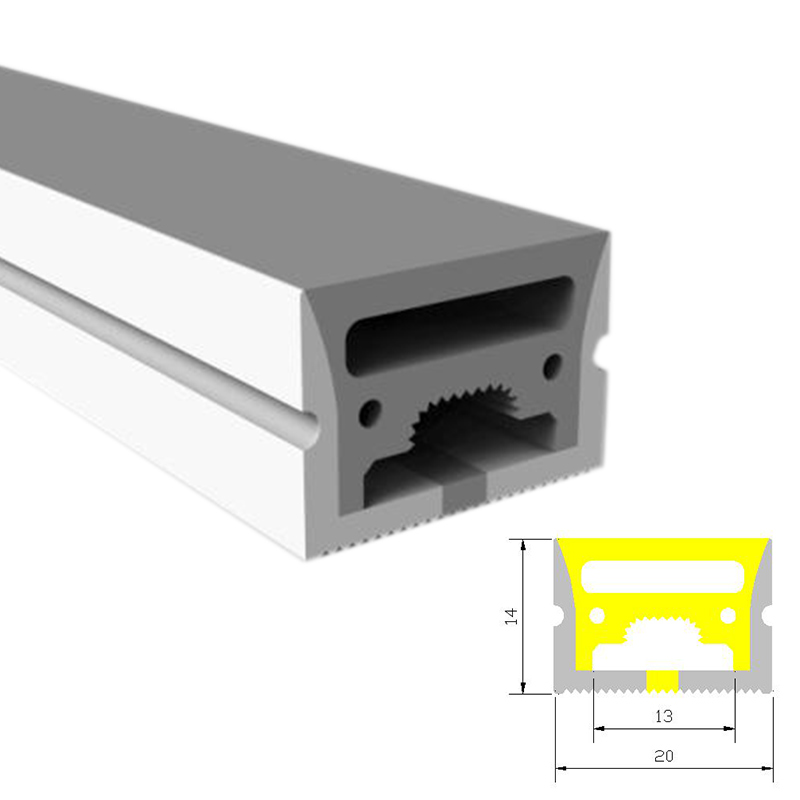
20*14mm Neon Tube - 120° Top Emiting - For 12mm LED Strip
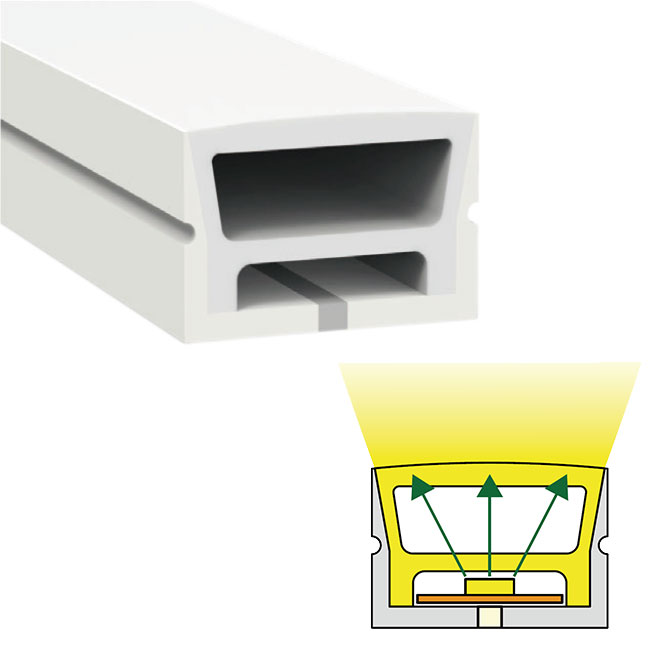
20*14mm LED Neon Tube - 120° Top Emitting - For 10mm LED Strips
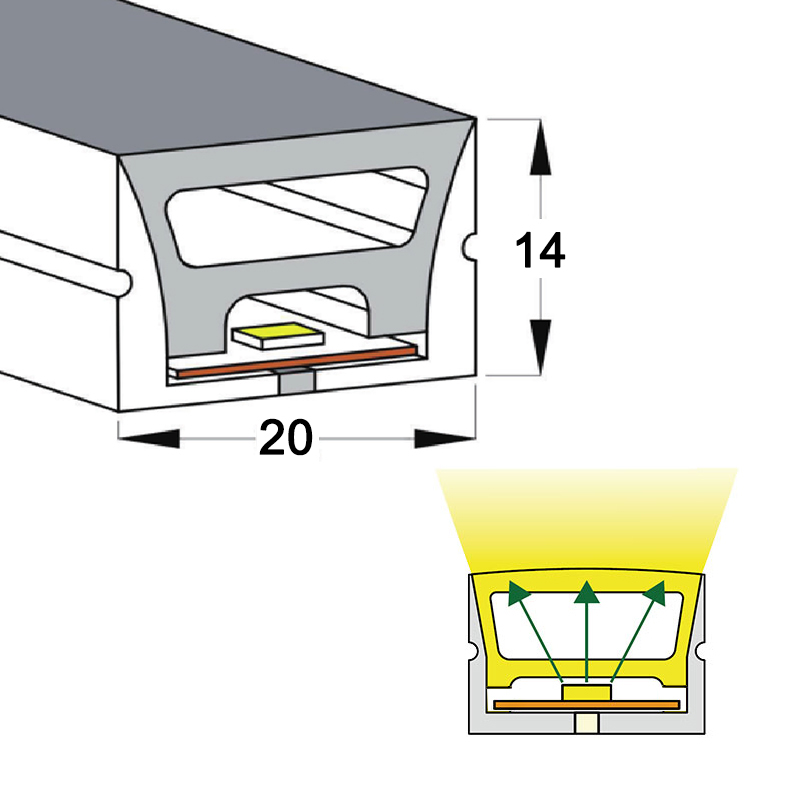
20*14mm Anti-Break Flexible LED Neon Tube - 120° Top Emitting - For 10/12mm LED Strips
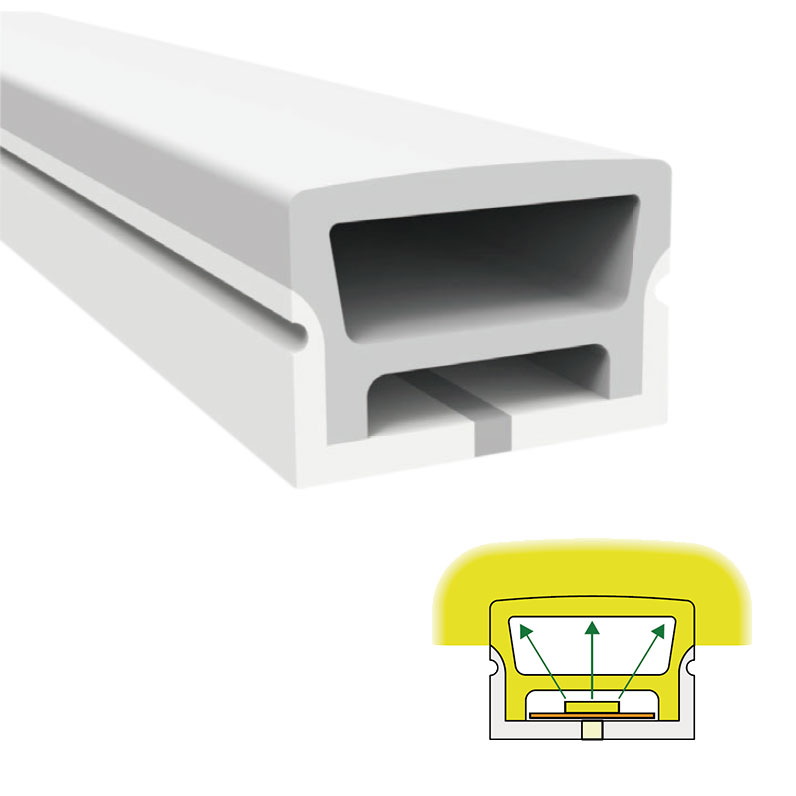
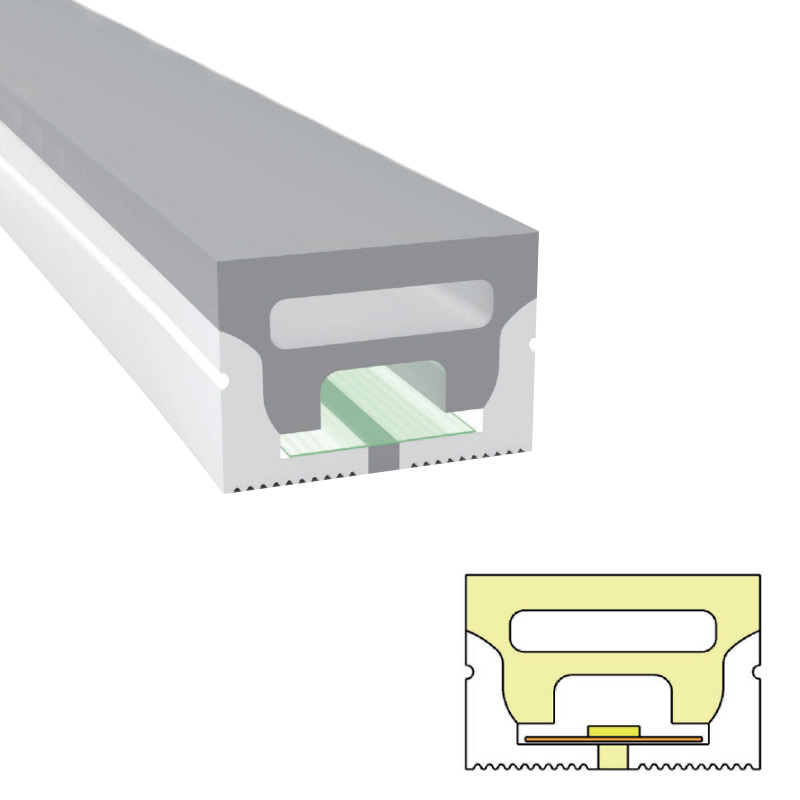
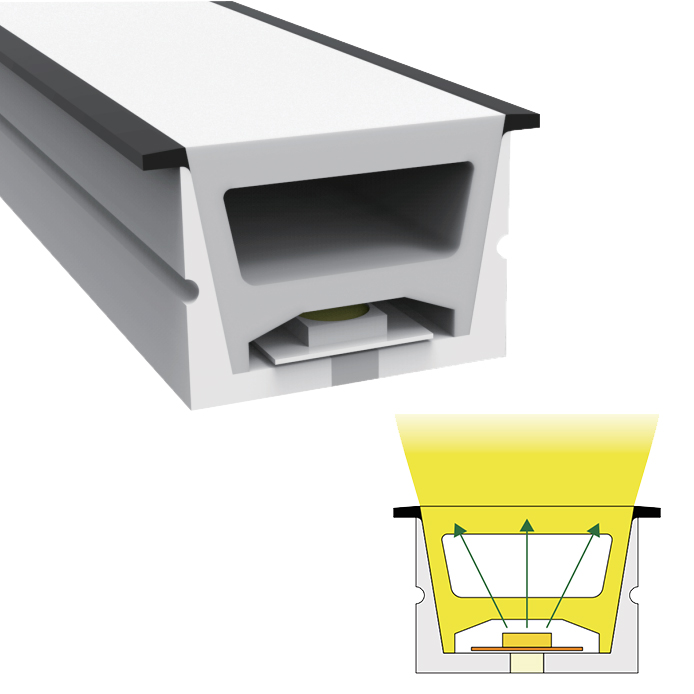
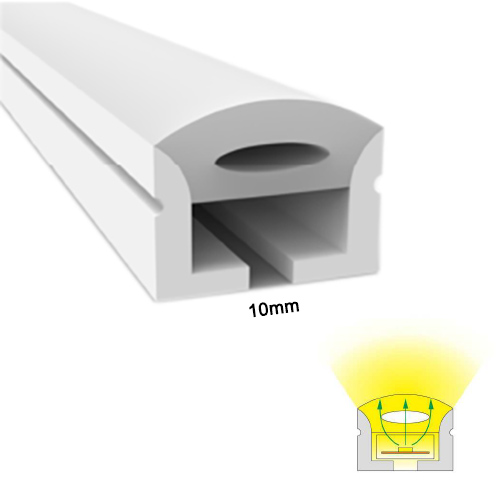
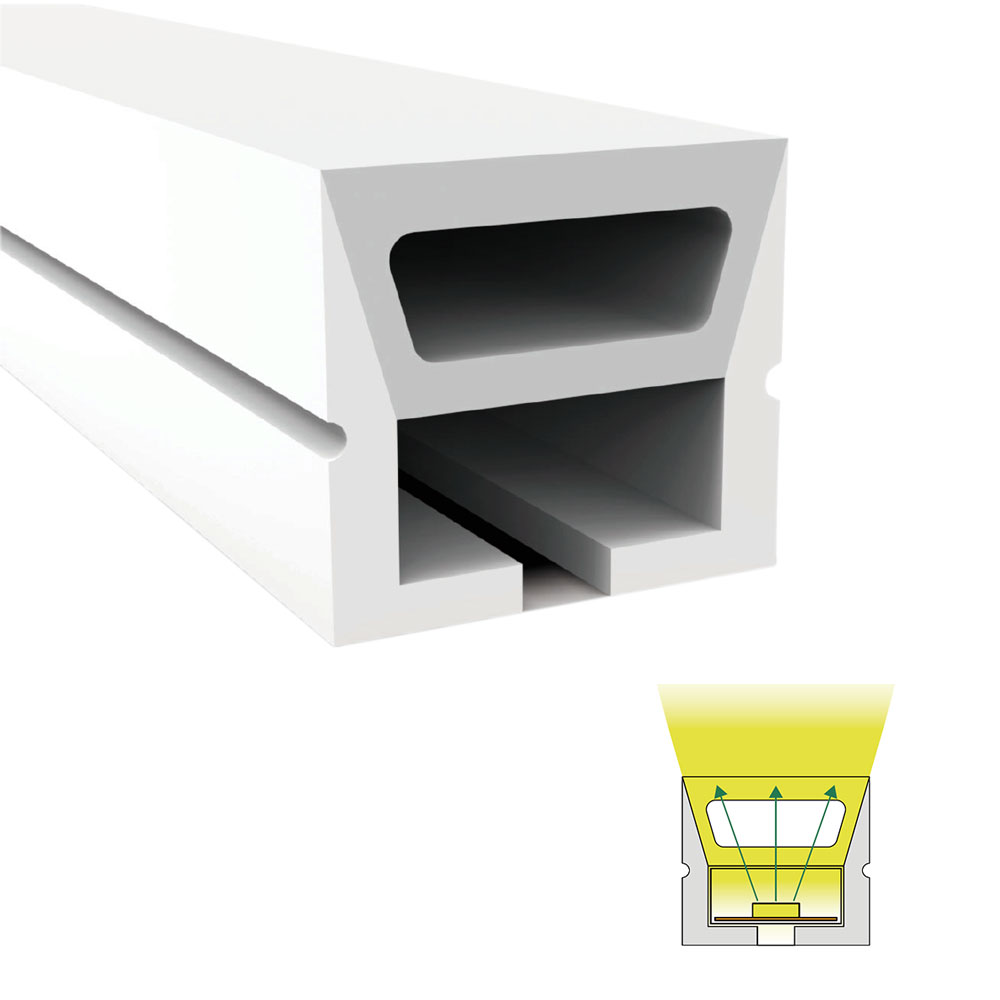
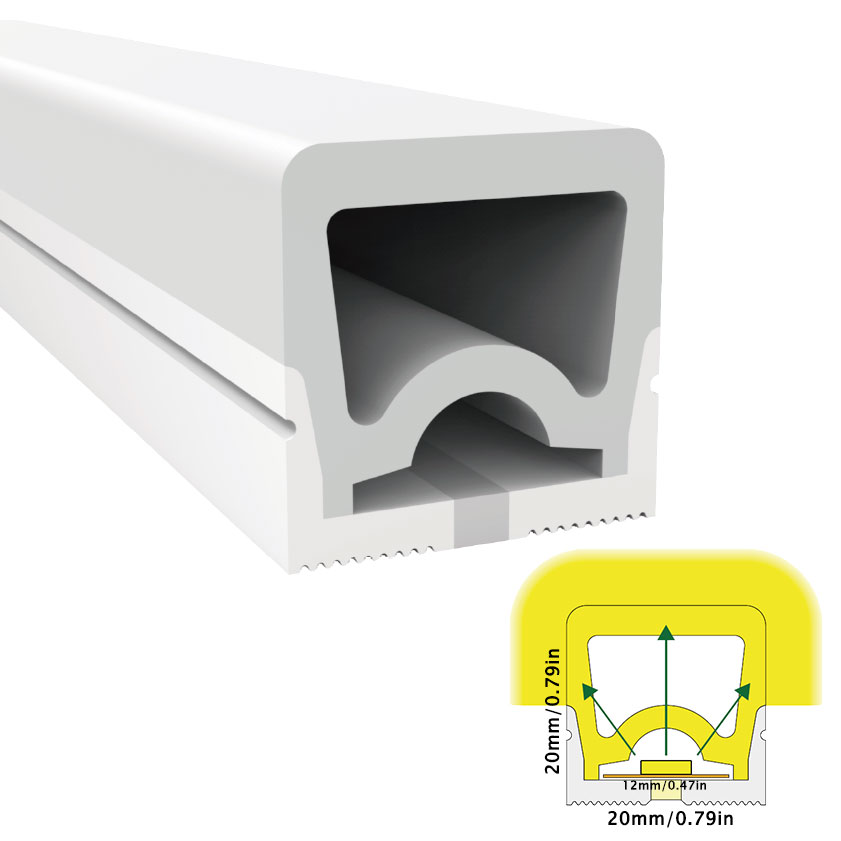
20*20mm LED Neon Tube - 180° Top Emitting - For 10/12mm LED Strips
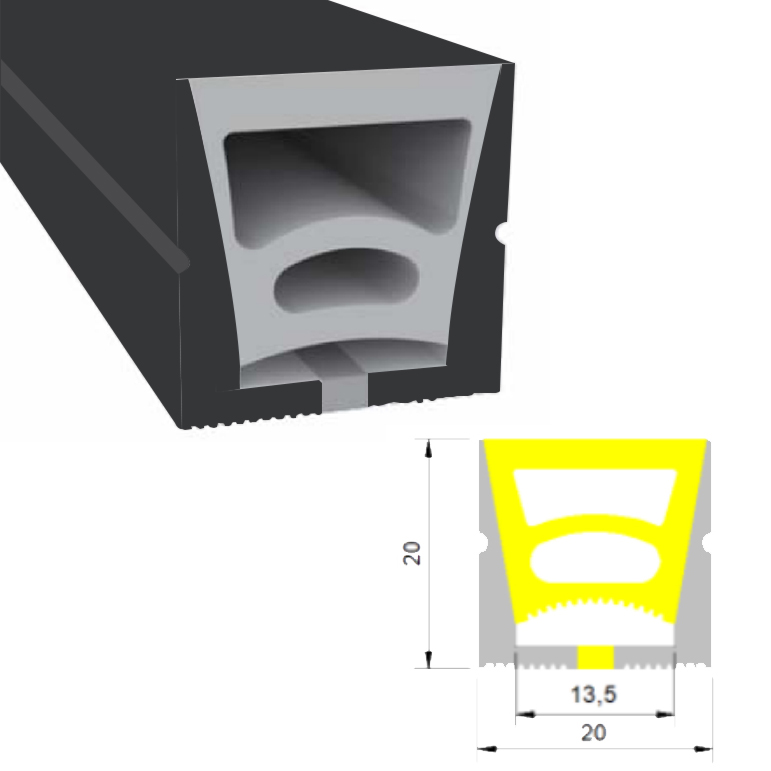
20*20mm LED Neon Tube - 120° Top Emitting - For 12mm LED Strip
Frequently Asked Questions About Top Emitting Silicone LED Diffusers
Got a question about getting that perfect, dotless neon look? I've answered thousands of these over the years. Here are the most common ones that come up right before an install.
Look for the 'Maximum PCB Width' on the diffuser's spec sheet. That's the only number that really matters. If your LED strip's circuit board is 10mm wide, you need a diffuser that accepts at least a 10mm PCB. Don't try to cram a 10mm strip into an 8mm channel—you'll damage the strip and it won't sit flat, which causes ugly hotspots. Always measure the bare board, not the overall width including the LEDs.
The best DIY LED strip light diffuser starts with a good quality silicone sleeve. The trick to getting the strip inside isn't brute force. Tie a strong, thin string to the end of your LED strip, feed just the string through the silicone channel first, and then gently pull the strip through. For runs over a few meters, a tiny bit of wire-pulling lubricant helps, but avoid any oils that could degrade the silicone over time. You can find more tips in our guide to making your own neon lights.
This almost always comes down to LED density versus the diffuser's depth. A sparse strip, like one with 60 LEDs per meter, will struggle to look perfectly smooth inside a shallow profile. For a truly dot-free line, you need a high-density strip (120 LEDs/meter or more) or, even better, a COB LED strip. The more space between the LED chip and the diffusing surface, the better the blending, so a 'taller' top glow led tube will always give a smoother result.
The silicone tube itself is waterproof, but the final fixture's rating depends entirely on how you seal the ends. You have to use the correct silicone end caps and a high-grade, non-acidic silicone sealant to create a durable, watertight seal around the wires. When you do it right, you can achieve an IP67 rating, which protects against rain and temporary submersion.
It's a combination of diffusion and distance. Each light emitting diode is an intense point of light. The semi-translucent, milky silicone in a top glow led tube scatters that point of light in thousands of directions. When the scattered light from one LED begins to overlap with the light from its neighbors, your eyes perceive it as a single, continuous line. That's why the LED density and the diffuser's thickness are so important.
Silicone is the far superior material for this application, and it's not close. It's much more flexible, especially in cold weather, and it's UV stable, meaning it won't turn yellow or get brittle when exposed to sunlight. We've seen PVC channels crack after a single year outdoors. Silicone also handles heat better, which is critical for the lifespan of the LED strip inside. It's the professional-grade choice for any installation that needs to last.
Yes, we build custom diffuser assemblies all the time; a large part of what we ship is made to a customer's drawing and never appears on the site. You can specify the exact length of the top glow led tube, the type of end caps you need (with or without wire holes), and even the color of the silicone for large enough orders. Just send our engineers your requirements—even a photo of a sketch is enough to start—and you'll get a full quote back, usually within 12 hours. There's no fee or obligation.
Yes, you should plan for some light loss. Any diffuser, by its nature, is going to absorb and block a portion of the light passing through it. You can typically expect a drop in brightness of 20% to 40%, depending on the thickness and opacity of the silicone. The pro tip is to start with an LED strip that's brighter than you think you need. A high-output strip in a good diffuser looks much better than a dim, bare strip.
That number is the beam angle—how wide the light spreads out. A 120° profile has opaque sides, so it only lets light out of the top face, creating a very defined, focused line of light. A 180° profile, which we sometimes call 'three-sided illumination,' has translucent sides as well, letting light spill out for a wider, more ambient glow. You'd choose 120° for sharp architectural lines and 180° for a broader wash effect.
No, they don't. We use high-grade, UV-stabilized silicone for all our diffusers. Unlike cheaper plastics like PVC or acrylic that will yellow and become brittle with sun exposure, our silicone is designed for outdoor and architectural use. It will remain flexible and optically clear for years, even in direct sunlight. This is one of the key differences between a professional-grade product and a cheap knock-off.