
Ultraviolet丨UV LED Light Strips
4 sub-categories

What is UV light? What is a black light LED strip?
Ultraviolet light (UV light) is an invisible light, also known as UV black light, which has a wavelength from 100nm to 400nm, divided into three common ultra violet lights, UV A light (315nm-400nm), UV B light (280nm-315nm), and UV C light (100nm-280nm), application fields include industry, biotechnology, medical like money detection, air purification, UV mosquito control, UV curing, whitening and sterilization, etc. Below are our ultra voilet led strip products.
Our led UV lightstrip emits 395-405nm 365-370nm 260-270-280nm UV wavelengths on the basis of LED chips, belongs to UVA and UVC light, with flexible PCB board and 3M adhesive backing, DC5-24V low voltage input. The length of the UV led strip can be cut according to your project. UV LED blacklight strip lights with LED dimmer can achieve 0-100% dimming, suitable for black art light, black Christmas lights, black light clothing, black light parties, black light painting, black light human body art, etc. 395nm and 365nm UV led tape light is mostly used as backlight decoration, while the main feature of 260nm 265nm 270nm 275nm 280nm UVC led strip is sterilization.
We offer UV LED light strips, individual blacklight LEDs, UV LED downlights, UV LED track lights, and UV LED bulbs in different SMD LEDs, LED densities, power, and waterproof ratings for you to choose from, suitable for various black lighting.

395nm UV LED Strip
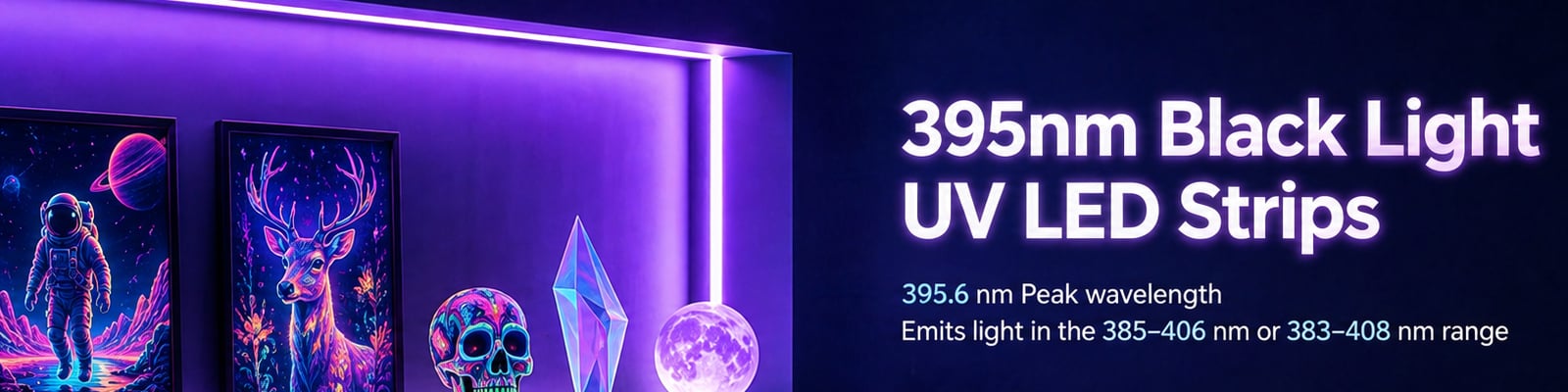
SUPERLIGHTINGLED True 395nm UV LED Blacklight Strip Light features a peak wavelength of 395.6nm with a spectral bandwidth (FWHM) of 10–12nm, emitting light within the range of 385–406nm (or 383–408nm). These near-ultraviolet 395 nm black light LED strips emit a deep purple light close to the end of the visible spectrum (400nm-780nm).
Ideal for displaying fluorescent reactions and widely used in entertainment activities such as black light parties, art creation, and fluorescent graffiti, the 395nm UV light is also a preferred tool for general fluorescence testing, commonly applied in daily applications like detecting pet urine and hotel cleanliness. For more advanced fluorescence testing, consider using 365nm ultraviolet led tapes.
We offer a complete range of professional UV 395nm black light fixtures engineered to meet any architectural, industrial, or decorative demand.
395nm Near Ultraviolet LED Wavelength Test PDF395nm led test report490 KB
365nm UV LED Light Strip
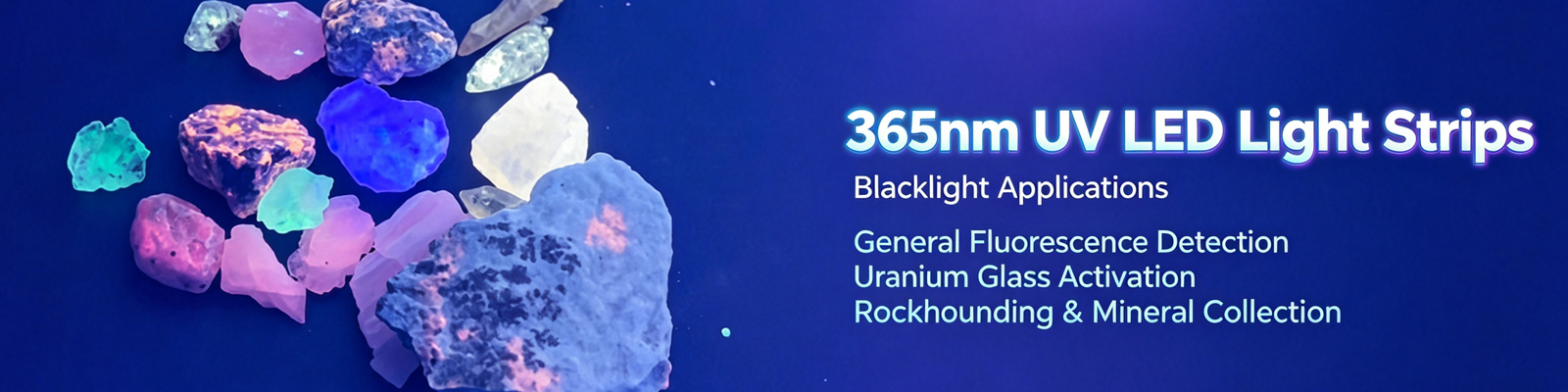
The 365 nm UV light strip is a flexible tape that emits ultraviolet light with a wavelength centered at 365nm-370nm (longwave UV-A band). SuperLightingLED 365nm series utilizes SMD2835, SMD5050, and SMD3528 diodes as the light source, featuring a peak wavelength of around 370nm. These 365nm-370nm light strips are ideal for blacklight applications, general fluorescence detection, uranium glass activation, UV curing, as well as rockhounding and mineral collecting. If you intend to use LEDs for exciting manganese, cadmium, selenium glass, or for curing dried industrial inks, please verify whether the technical specifications meet your specific requirements beforehand.
What Color Is the 365nm LED Strip Light?
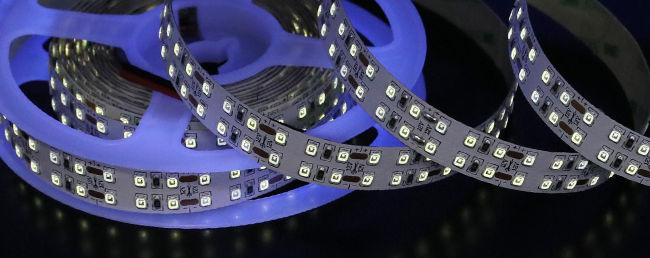
Our SMD2835 and SMD5050 365nm LED strips/panels, emit a bluish-white light with a blue halo. This visual appearance marks a clear distinction from 395nm lights; Also, 365nm excites fluorescent substances far more effectively and offers higher detection accuracy, allowing for professional curing applications.
Alternatively, our SMD3528 365-370nm LED strips display a dark bluish-purple hue with a more pronounced violet tone. You can select the ideal option based on your desired blacklight ambiance.
365nm Ultraviolet LED Wavelength Test

UVC LED Strip Lights
UVC LED strip is a shortwave ultraviolet light strip with precisely aligned UV LEDs on the PCB that emits 200-280nm invisible light. It is commonly used to sterilize air, surfaces, and water since UVC LED light can penetrate germs' cell walls and break their DNA or RNA, effectively eliminating pathogens. With the advantages of high-efficiency, energy-saving and long lifespan, UVC LED light strips are suitable for hospitals, offices, public transportation, and other places to provide a safe and effective disinfection solution.
We offer professional UV LED strip for sterilization, with emitting light ranging from 270nm-280nm. All UV-C LED sanitizing light strips are equipped with strong adhesive backing for convenient installation. Red black wires exit at both ends for quick connection with power adapters. Germicidal LED strip lights are flexible and trimmable, providing versatility for a wide range of applications.
Please note that UVC LED strip lights must not come into contact with eyes or skin. They are more suitable for sterilizing and disinfecting purposes. If a noticeable fluorescent reaction is required, it is recommended to use ultraviolet LED strips with a wavelength of 365nm or 395nm. We also provide UV-A+UV-C dual wavelength LED tape for a more comprehensive UV illumination effect.

Ultraviolet LED UV Chip
Ultraviolet LEDs use semiconductor technology to produce exact wavelengths of ultraviolet light, offering advantages over traditional mercury vapor UV lamps such as lower energy consumption, a longer lifespan, and the absence of dangerous mercury. We provide a complete line of UV LEDs covering UV-A, UV-B, and UV-C to meet different application requirements.
UV-A LED (320nm-400nm): typically includes near UV 405nm LED, 395nm LED, 380nm LED, 365nm UV LED, mainly used for fluorescent reaction, art creation, plant growth, UV curing, etc.
UV B LED (280nm-320nm): commonly includes 308nm LED, widely used in medical therapy, plant lighting, reptile lighting, experimental research, and so on.
UV-C LED(200nm-280nm): Includes 265nm LED, 270nm LED, 275nm LED, and 280nm LED, used for air, water, and surface disinfection and sterilization.
Our UV light diode chips feature a high-lumen design with 99% gold wire and copper base to ensure stability and reliable UV&LED ultraviolet output performance. Easy to DIY and integrate into various lighting devices, LED and UV chip is widely applicable to the needs of electronic engineers, researchers, medical sterilization equipment developers, art creators and maintenance personnel.
Best-selling Ultraviolet丨UV LED Light Strips
1–20 of 48 products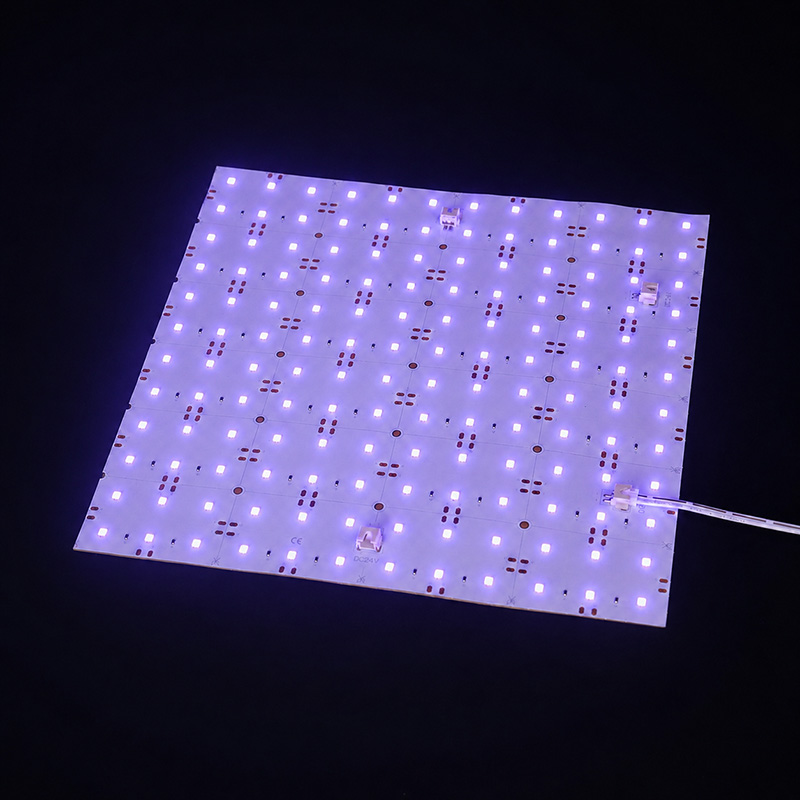
24V 365nm UV LED Light Sheet 245x245mm Flexible Blacklight Panel
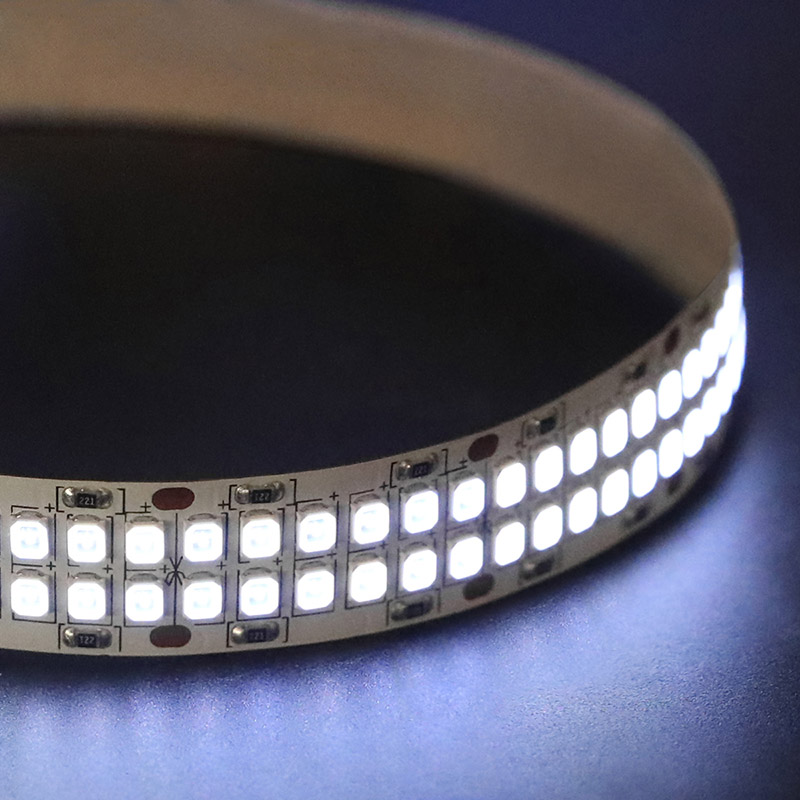
Bright UV Light 365 nm High Power LED Two Rows 2835 Ultraviolet Diode Tape
 (2)
(2)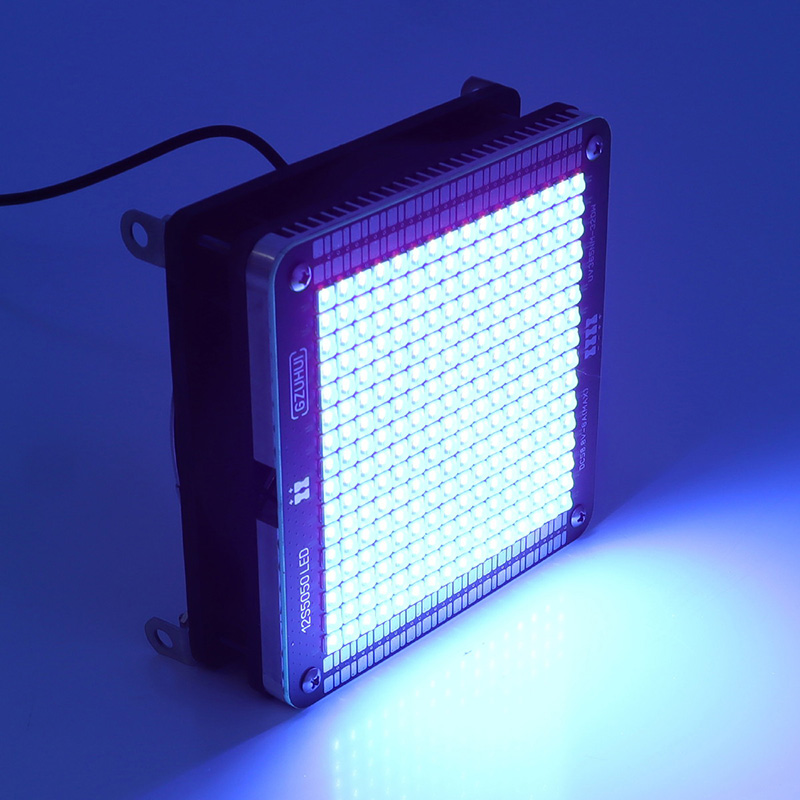
365nm High Power LED UV Panel Light For Curing Resin And Glue
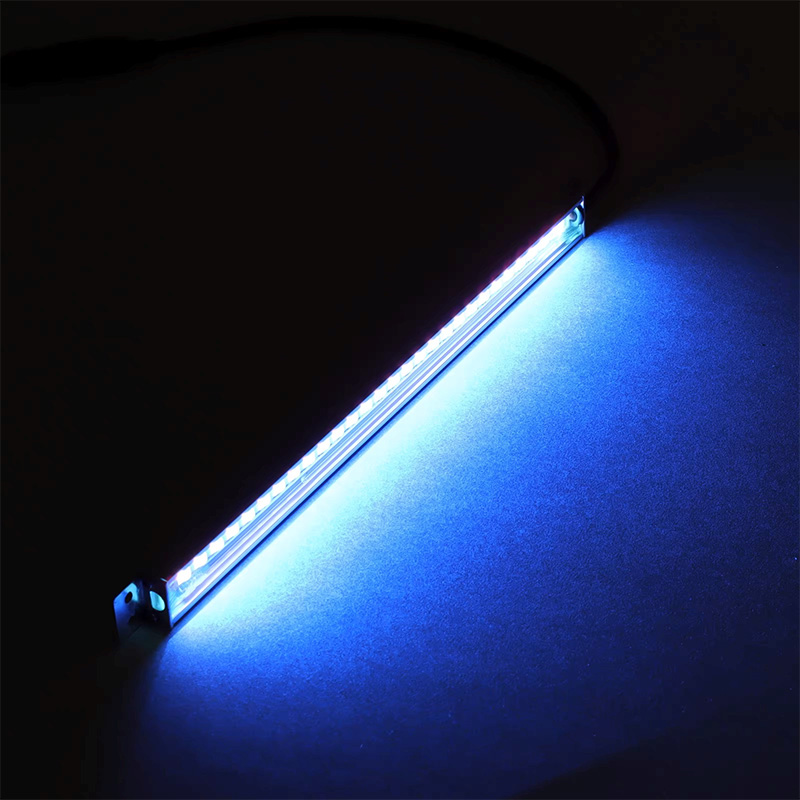
Waterproof Small High Power 28W 365nm UV LED Light Bar Aluminum
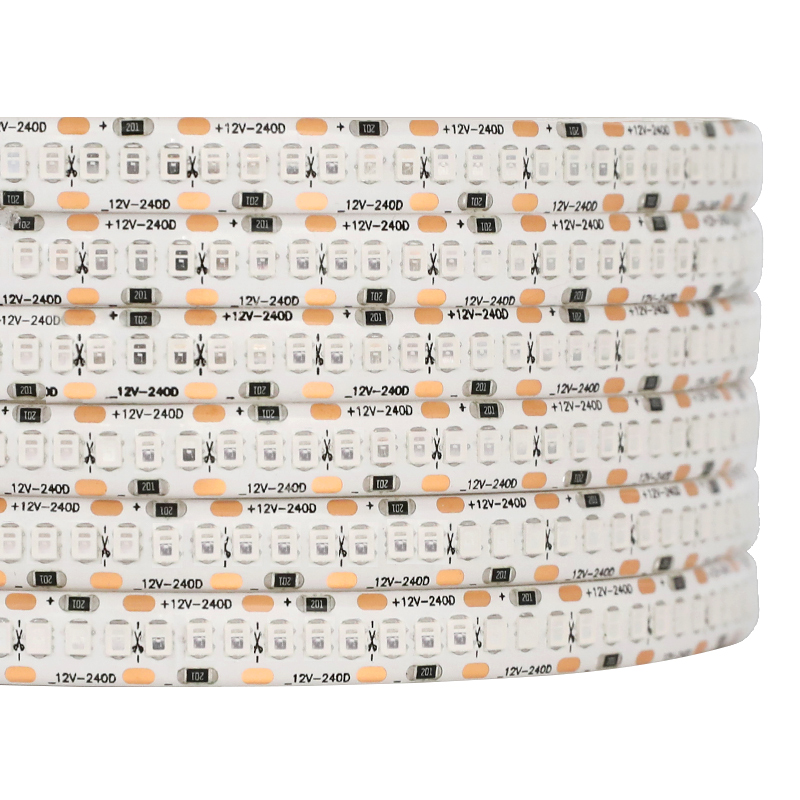
365nm 12 Volt 2835 UV LED Strip High Density 240 LEDs Per Meter
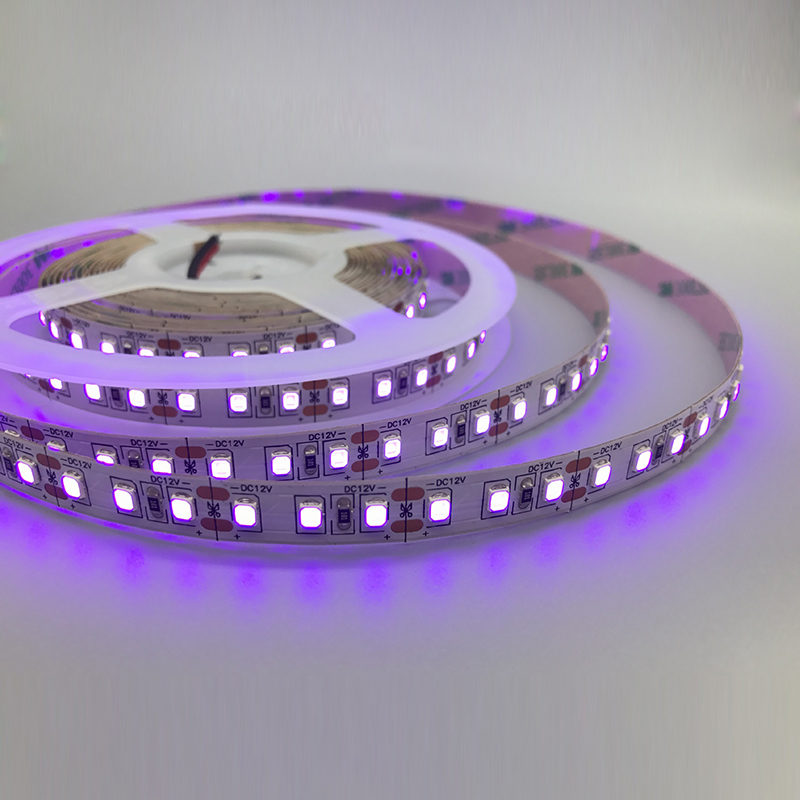
395nm 365nm UV Lights 2835 LED Blacklights Strip 12V
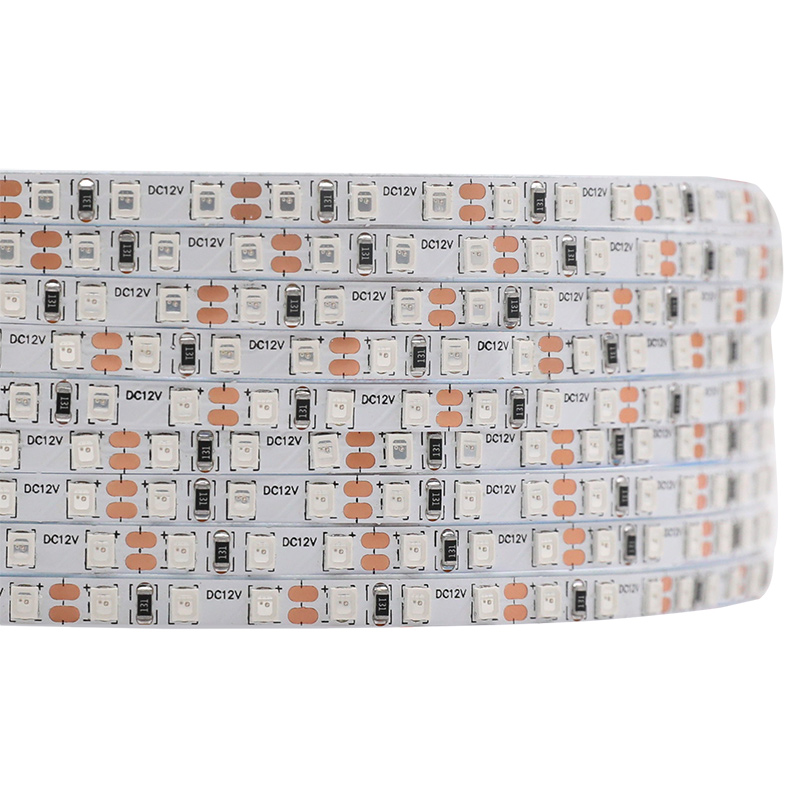
5mm Wide 365nm 395nm UV Lights 2835 LED Strip
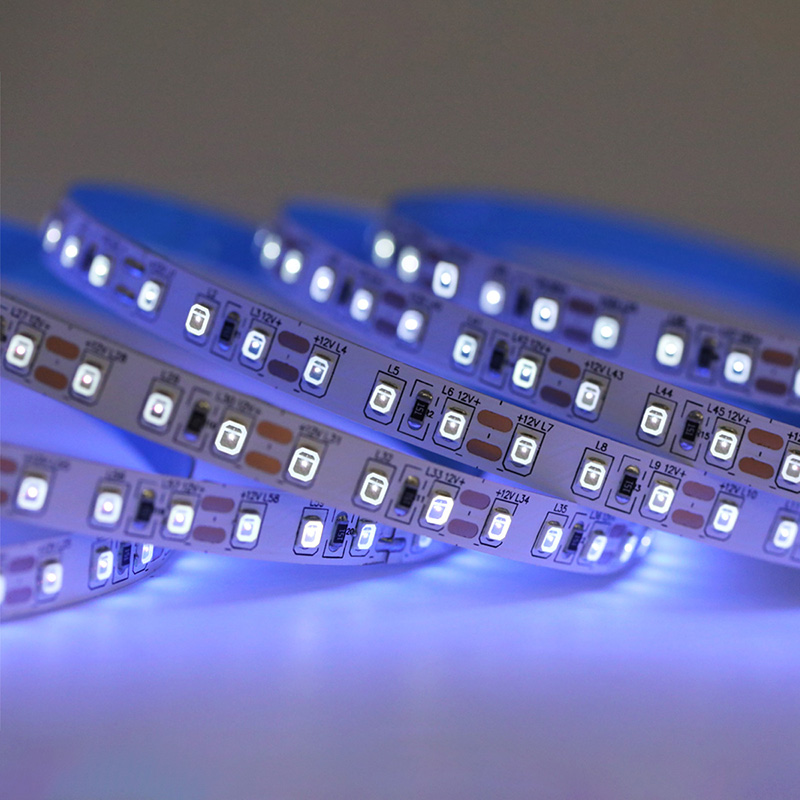
DC12V High Density Flexible True 365nm UV LED Cuttable Light Strips
(1)
DC5V 2835SMD 600LEDs Flexible Single Color LED Strip Light - Waterproof Optional
(1)
DC24V Dual-Band UV Germicidal & Photochemical Ultra Violet LED Light Strip

270nm/275nm/280nm USB-Powered SMD3535 LED UVC Light Strip 30LEDs/m 3.28ft~16.4ft
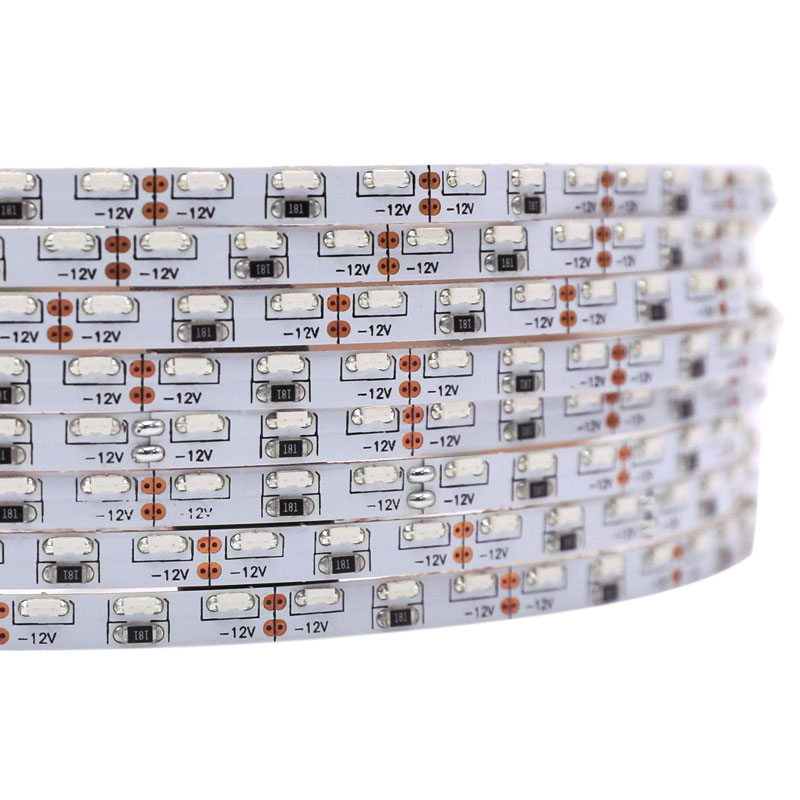
395-405nm 5mm Narrow Side Emitting LED UV Black Light Strip 120LEDs/m
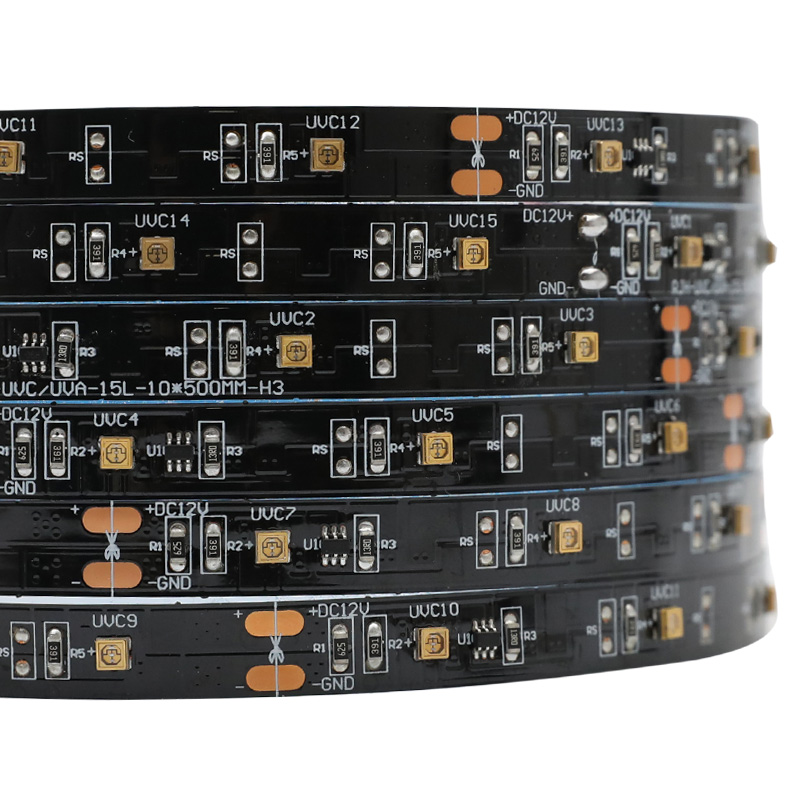
12V SMD3535 UVA 395nm And UVC 275nm Dual UV LED Light Strip
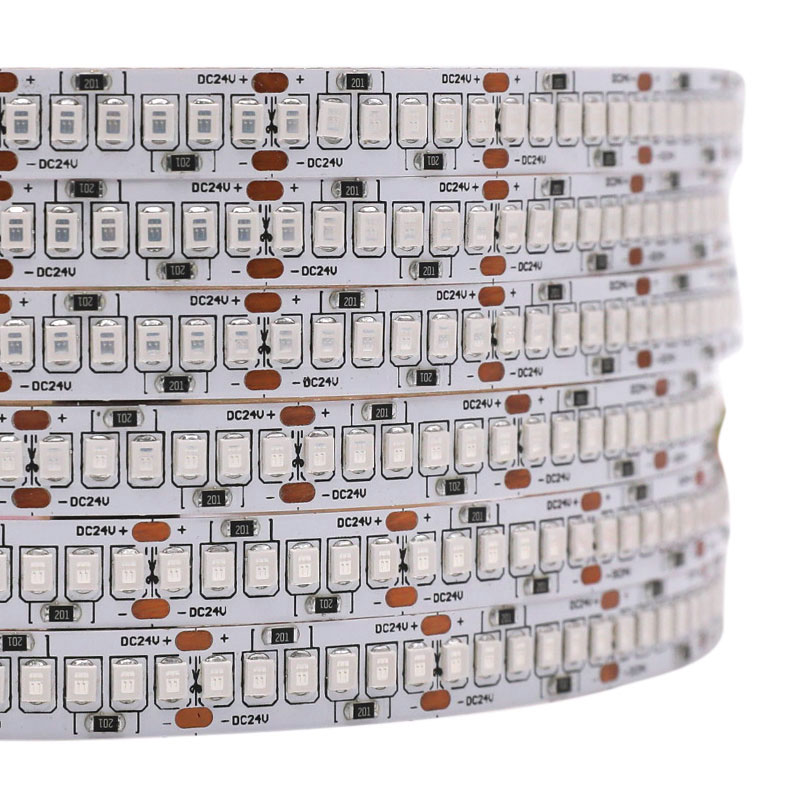
DC24V SMD2835 LED 395nm-405nm 365nm UV Lightstrip 240LEDs/m 16.4ft
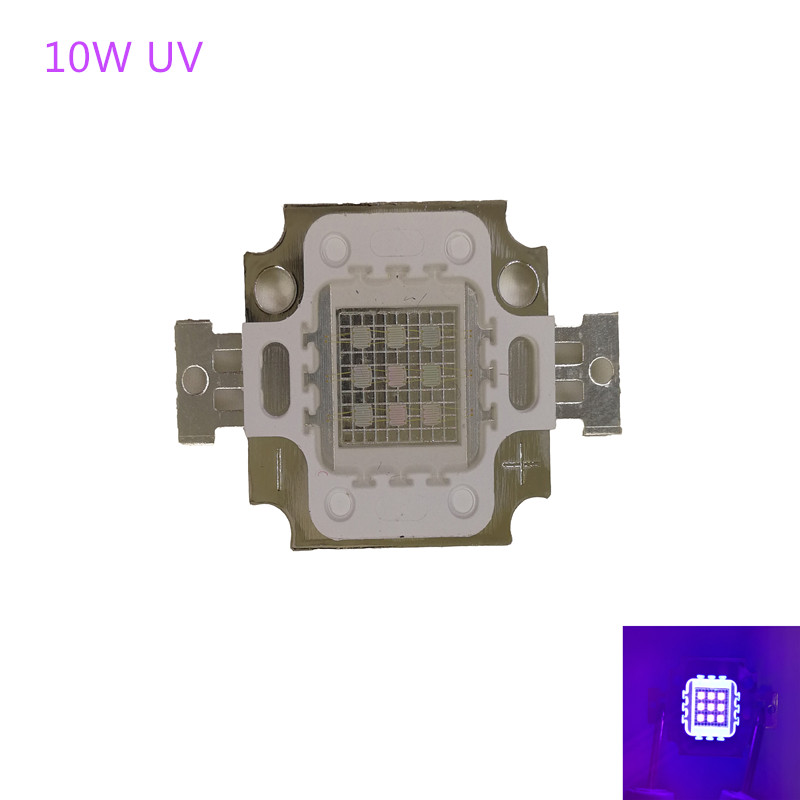
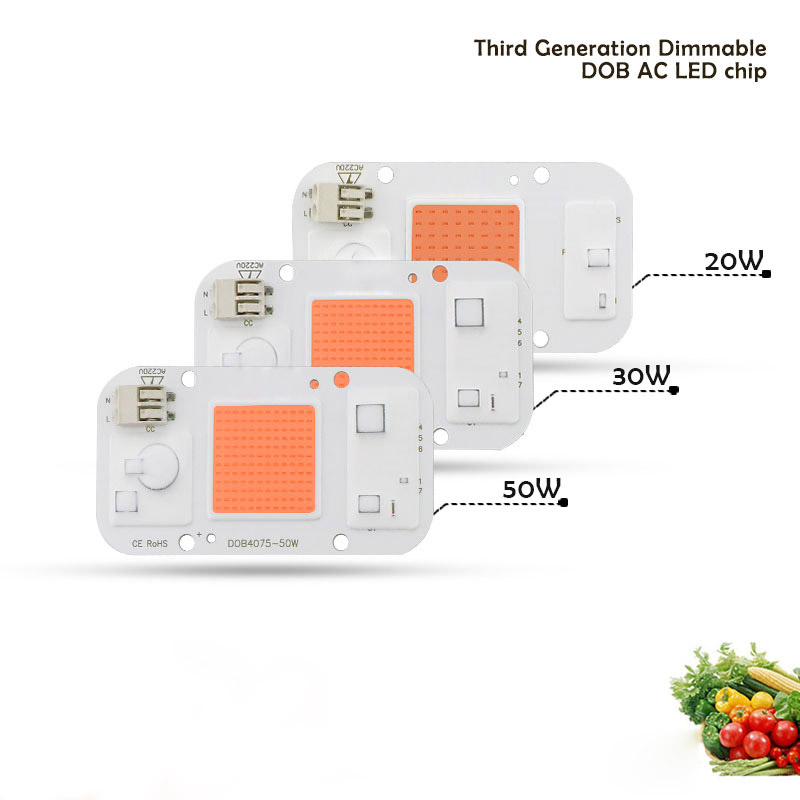

12-Volt 3528 Ultraviolet 370-375nm Blacklight LED Light Strip (8mm 120LEDs/m)
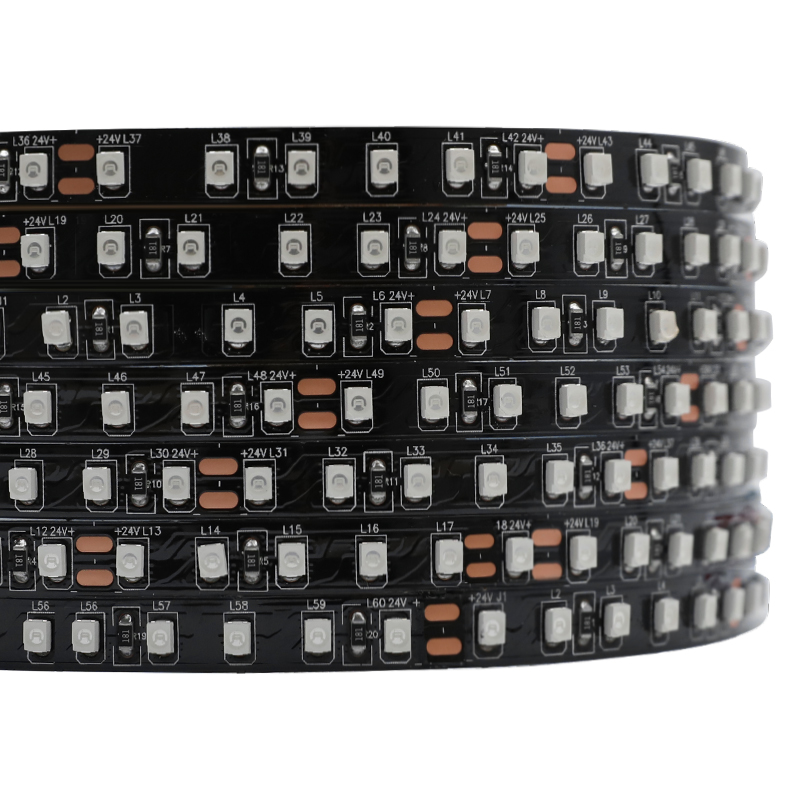
DC24V 365nm or 405nm Flexible Ultraviolet LED Strip UV Black Light
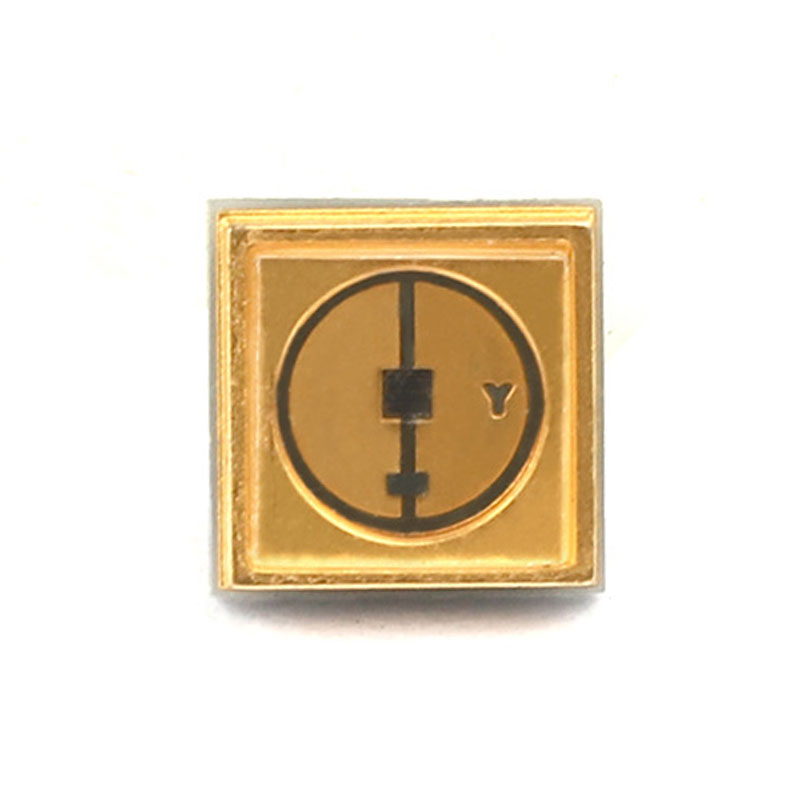
265nm-280nm Efficient Sterilization SMD3535 UV C LED, 30pcs/pack
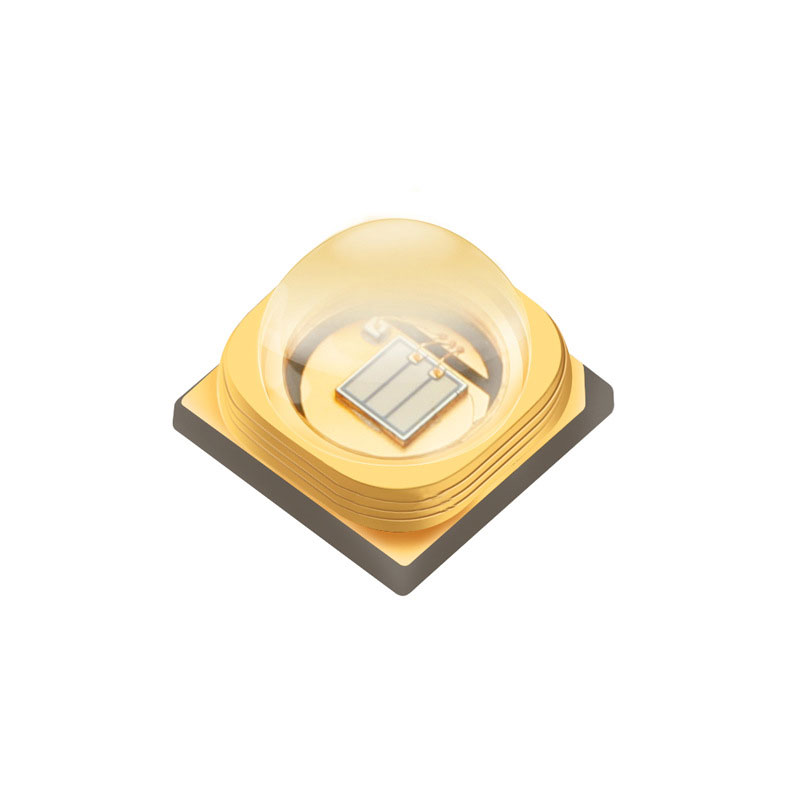
365nm SMD3535 UV A Light LED For Curing, 3D Printing, 30pcs/pack
What are the types of ultraviolet LED strip lights?
UV-A strip: wavelength between 315nm-400nm, with common bands at 395nm or 365nm, mainly used for fluorescent detection and glue curing.
UV-B strip: wavelength between 280nm-315nm, less common, mainly used for medical treatment, plant light, and animal lighting.
UV-C strip: wavelength between 100nm-280nm, we mainly provide 270nm-280nm UVC LED strip lights, used for sterilization.
1. What is long-wave UV light? What is short-wave UV light?
We can categorize “long-wave UV light” as UV-A and “short-wave UV light” as UV-C.
Although UV-B (280nm-315nm) also belongs to the shorter wavelength band, it is usually not directly referred to as “short-wave UV” due to its relatively small number of applications.
2. Can strip UV lights come into direct contact with human eyes and skin?
Prolonged direct contact with UV-A light is not recommended, while UV-B and UV-C light should be avoided.
UV-A: Prolonged exposure may cause skin aging or eye strain.
UV-B: may cause skin burns or eye damage.
UV-C: Harmful to humans and can cause severe skin burns or eye damage.
Please wear protective eyeglasses and gloves when handling ultraviolet LED strips.
3. What are the advantages of UV light strips?
Environmentally friendly: no mercury pollution.
Long lifespan: typically up to 10,000-20,000 hours.
Flexibility: Adjustable intensity, bendable, cuttable, connectable, and multiple waterproof levels are available.
Easy to install: usually with adhesive backing.
4. What is the difference between 365nm and 395nm LED strip UV light?
365nm: shorter wavelength, higher UV purity, faint blue-white light. Suitable for professional applications such as glue curing and high-precision fluorescence detection.
395nm: Slightly longer wavelength with visible violet light, suitable for black light parties, decorative lighting, and general fluorescent effect needs.
5. Should I choose 365nm or 395nm blacklight strip LED for a black light party?
We recommend 395nm black light strip LED. Its violet color has higher visibility, and can better enhance the atmosphere. Meanwhile, the fluorescent excitation effect is also strong enough.
If you choose 365nm black light LED tape, it may stimulate the fluorescent reaction of dust and other substances, which could affect the visual effect.
6. Should I choose 365nm or 395nm ultra violet LED strip for resin curing?
It is more appropriate to choose 365nm. Its wavelength can stimulate the UV curing reaction more efficiently and improve the curing effect.
7. How long does it take to finish sterilizing with UVC ultraviolet light LED strips?
It depends on power, distance, and space size, and usually takes 10-30 minutes.
8. What do I need to pay attention to when installing the UV strip light?
Make sure to use a suitable power supply (e.g. 24V or 12V).
Wire correctly to ensure polarity and voltage match.
Avoid installing in humid or overheated environments (unless choosing a waterproof rating).
9. How to maintain the UV lighting strips?
Regular Cleaning: Clean the surface with a soft cloth to avoid dust accumulation.
Check the power supply: Make sure the power supply and controller are working properly to prevent unstable current from causing damage to the black light LED strips.
Storage: Ultra violet LED light strip needs to be stored in a dry, light-tight environment to avoid moisture or vibration.
Guide To Know LED UV Light Strip And UV Light Fixtures
Frequently Asked Questions About UV LED Light Strips
Got a question about UV, blacklight, or UVC strips? I've answered thousands of them over the years. Here are the most common ones that come up before a project gets started.
They're mostly the same thing, just different terms. 'Blacklight' is the common name for UV-A light, which is what makes fluorescent materials glow. When we talk about ultraviolet light vs blacklight, we're usually talking about UV-A (the 'fun' stuff for parties and inspections) versus more industrial or germicidal types like UV-C. All blacklights are UV lights, but not all UV lights are blacklights. It's really just a nickname.
A whole lot, actually. On the commercial side, 365nm strips are critical for curing resins and adhesives in manufacturing. We see them used for counterfeit money detection, forensic analysis, and non-destructive testing of materials. The shorter wavelength UVC LED strips are used for water purification and surface sterilization in labs and medical settings. They're powerful tools when you get the right wavelength for the job.
You're right, pure ultraviolet light is invisible to the human eye. What you see from a UV LED light strip is the visible violet light 'spillover' from the LED chip. A 395nm strip will have a noticeable deep purple glow. A 365nm strip, which is further from the visible spectrum, will look much dimmer, sometimes just a faint whitish-blue, but its fluorescent effect is actually much stronger. The visible glow isn't a measure of its UV output.
UV light causes things to 'fluoresce,' which means they absorb the invisible UV energy and re-emit it as visible light. What a UV light shows you are the phosphors in materials. This is why it reveals security strips in currency, hidden markings in IDs, pet urine stains on carpet, scorpions, and even dust and lint you'd never see otherwise. It's also what makes fluorescent paints and posters pop in the dark.
For most professional resin curing, 365nm is the industry standard. Most UV-curable resins are formulated to react most efficiently at this specific wavelength, leading to a faster, harder cure. While a 395nm strip will eventually cure some resins, it's often slower and may result in a tacky surface. Always check the technical data sheet for your resin, but if it just says 'UV,' it almost always means you need one of our 365nm UV strips for the best results.
You can, but you have to plan for voltage drop. On a 12V strip, you'll see the far end get dimmer after about 5 meters (16.4 ft). With a 24V strip, you can push that to about 10 meters. For a full room perimeter, you'll need to run parallel feeds from the power supply to multiple segments or inject power at both ends of a single long run. It's a common issue, and we have a full guide to avoiding voltage drop that shows you the wiring diagrams.
Be careful with this. All UV light, even UV-A, can degrade materials over time. Prolonged exposure can cause plastics to become brittle and yellow, and it will fade dyes in fabrics and artwork. That's why museums use UV-filtered glass. For a party or temporary effect, it's no problem. But if you're planning a permanent installation that shines on valuable or sensitive items, you should factor in potential fading over a period of months or years.
Yes. For any work with UV-A (365nm, 395nm), you should wear UV-blocking safety glasses. While it's not instantly damaging like a laser, direct, prolonged exposure isn't good for your eyes. For UV-C strips, it's not a suggestion—it's a requirement. Never operate a UVC LED strip without proper skin and eye protection, and never use it in an occupied space. It's designed for sterilizing surfaces, and it can cause serious burns.
UV light for sterilization uses the UVC wavelength, typically around 260-280nm. This specific band of light has enough energy to penetrate the cell walls of microorganisms like bacteria and viruses. Once inside, it scrambles their DNA and RNA, which prevents them from reproducing and effectively kills them. It's a physical disinfection method, not a chemical one, which is why it's used in water treatment and for sterilizing medical equipment.
Probably not! Human eyes are not very sensitive to the deep violet end of the spectrum where UV LEDs operate. The strip might look dim to you, but it's putting out a lot of invisible UV light. The best way to check is to shine it on something fluorescent, like a white t-shirt, a highlighter, or a driver's license. If those things glow brightly, the strip is working perfectly.
For finding pet stains, the best ultraviolet light is a 365nm source. While a 395nm light will work and is usually cheaper, it produces more visible purple light. This purple light can wash out the faint yellow-green glow of the urine, making it harder to see. A good 365nm light source makes the stain pop with much higher contrast against the background. It's what professional cleaners and inspectors use.
Absolutely. A huge part of our business is building custom lighting for OEM applications. You can send us your requirements—even a quick sketch on a napkin is fine. We can build strips to exact lengths with pre-soldered leads, use specific UV wavelengths beyond our standard stock, mount them on different PCBs, or even conform them to a specific shape. An engineer will send you back a complete parts list and quote, usually the same business day, with no fee or obligation to order.