
Addressable LED Pixel Module Lights
45 productsOur LED modules take on TOP SMD5050 LED light source, these pixels with IC chips for complete 24-bit color. Addressable LED Pixel Module String Lights consist of many small LED components (a led module, a pixel dot, a light ball, etc.). Each pixel light module has its own control chip such as 3-wire SK6812 / UCS2904 RGBW, WS2811 / UCS1903 RGB, 4-wire LB1934 RGB, 4-wire clock WS2801 RGB, DMX RGB/RGBW.
This means that each pixel LED module can have individual color and brightness. Therefore addressable led string lights can be rendered in a variety of colors, animations, and effects by control commands from an external addressable programmable controller.
• Each pixel led module light can be controlled independently.
• The pixel light strings can be bent into various shapes at will. Adaptable to different application scenarios.
• Various shapes and types of led pixel lights modules are available.
• With bare wires or connectors at both ends.

WS2811 12V Programmable LED Pixel Modules - Waterproof 5050 RGB Dot Matrix
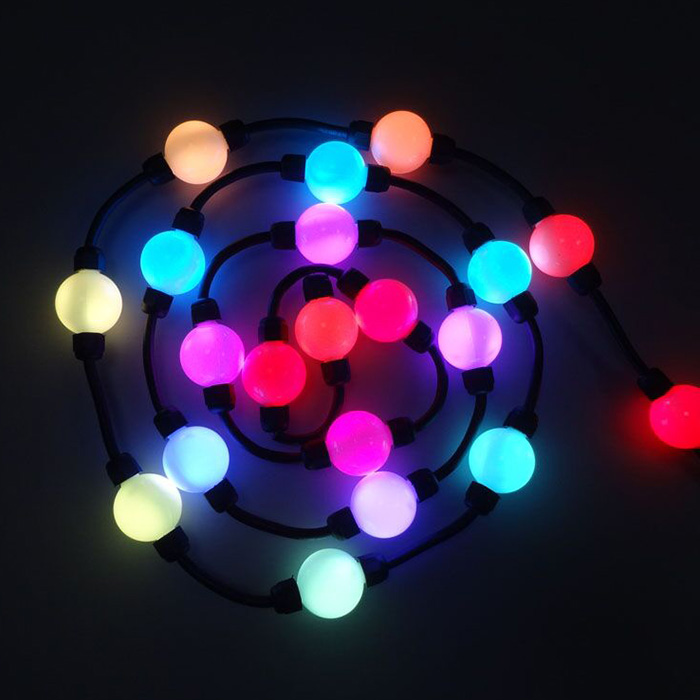
50mm 3D LED Pixel Ball Light | DC12V/24V RGB 360° Epistar Outdoor
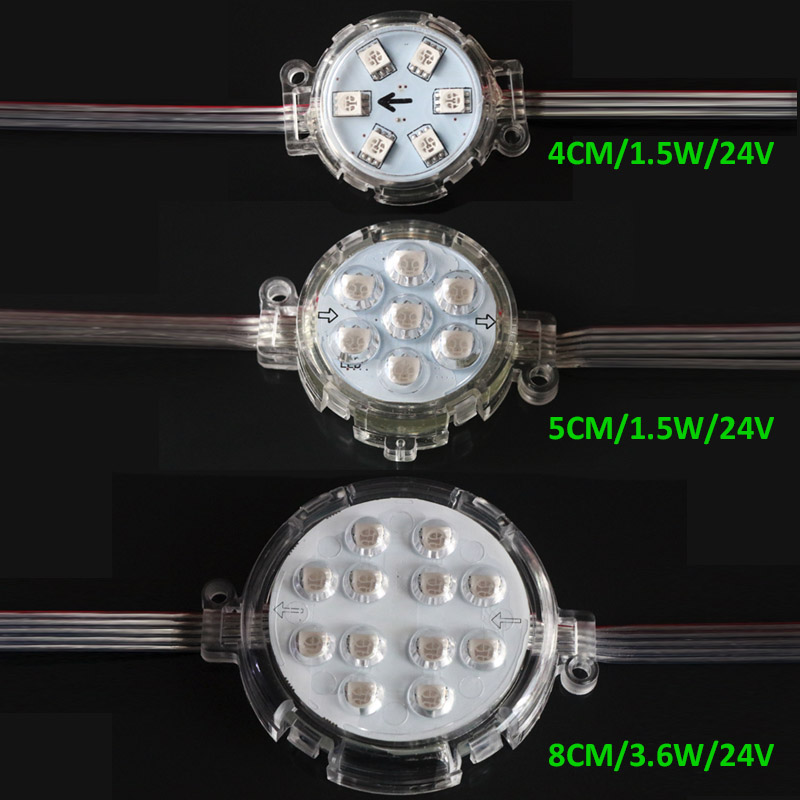
24V Addressable RGB Pixel LED Modular String Light | 30mm 40mm 50mm 80mm Diameter
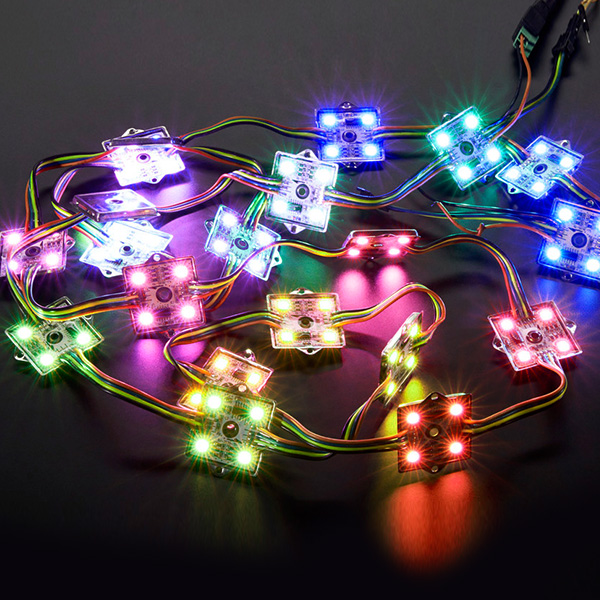
Addressable RGB Pixel Module LED String Lights Outdoor
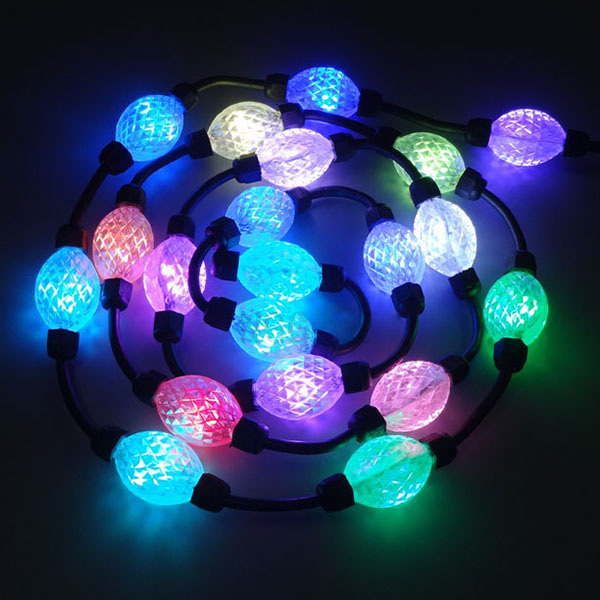
DC24V 3D LED Pixel String - Addressable RGB Glowing Balls 360° | IP68
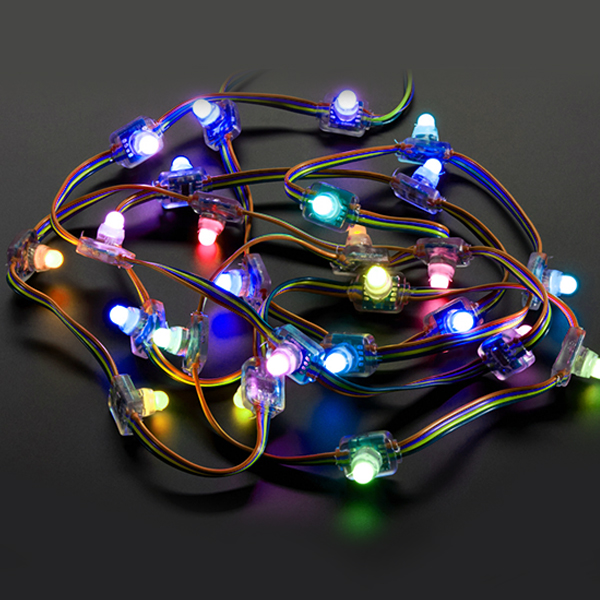
DC5V WS2811 Full Color Pixel Modules - DMX Addressable Outdoor IP68
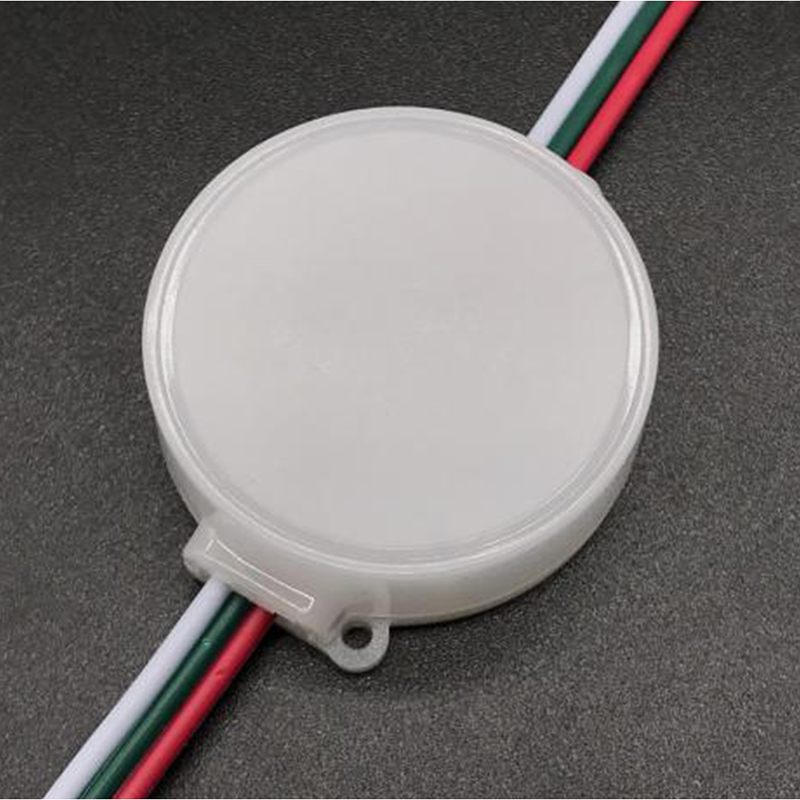
DC12V Addressable LED Pixel Module - FRGB SMD5050, IP65, High CRI 90
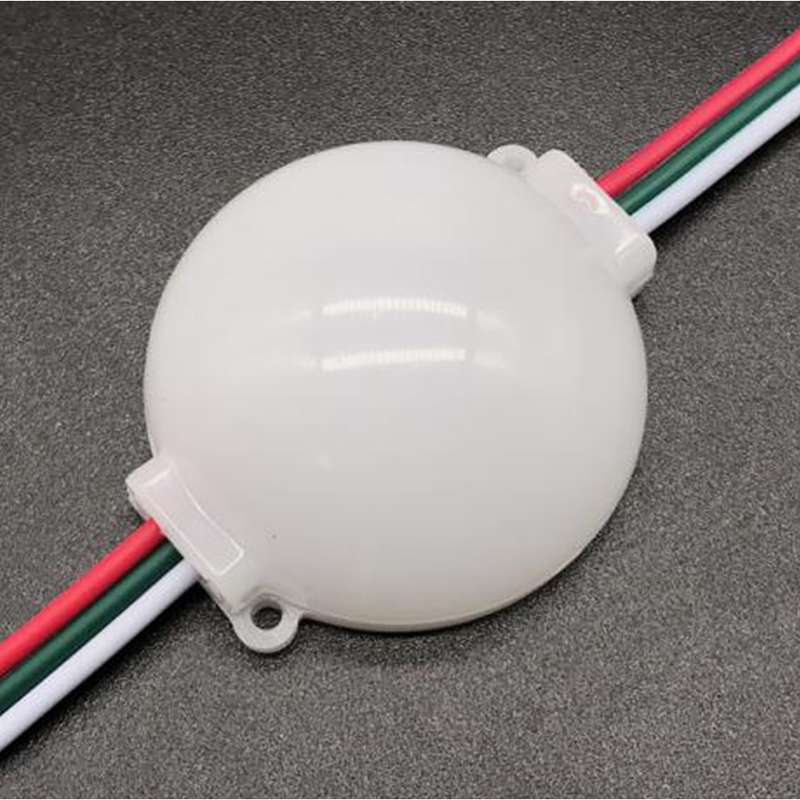
DC12V Addressable WS2811 LED Pixel Modules - IP65 RGB, Arduino/Pi Ready
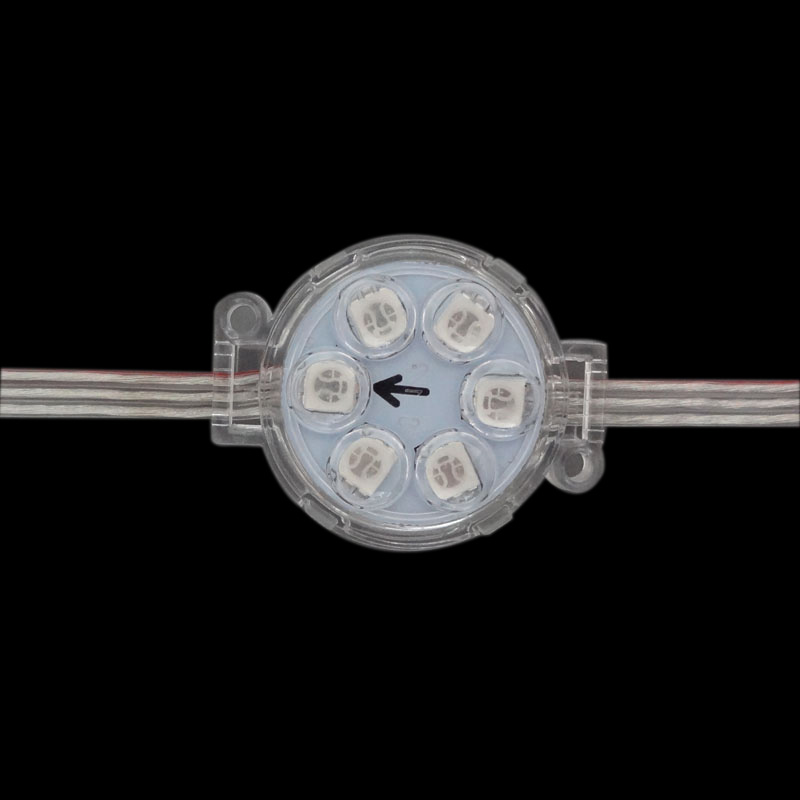
DC24V 40mm 6-LEDs WS2811 RGB LED Pixel Module, 1 Piece
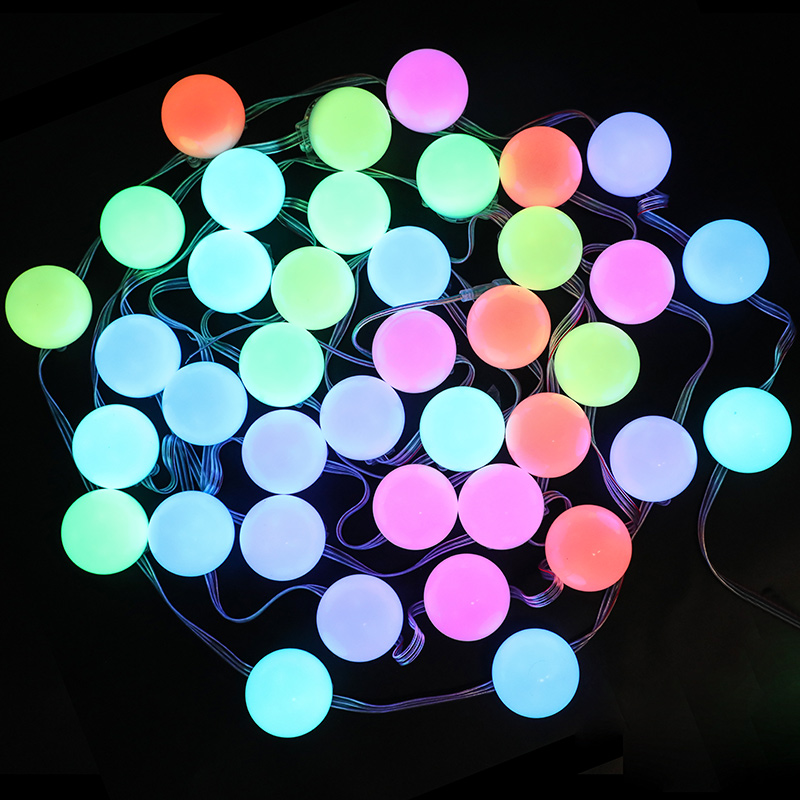
DC24V 4cm Base WS2811 Pixel RGB Coloured Ball String Lights Outdoor
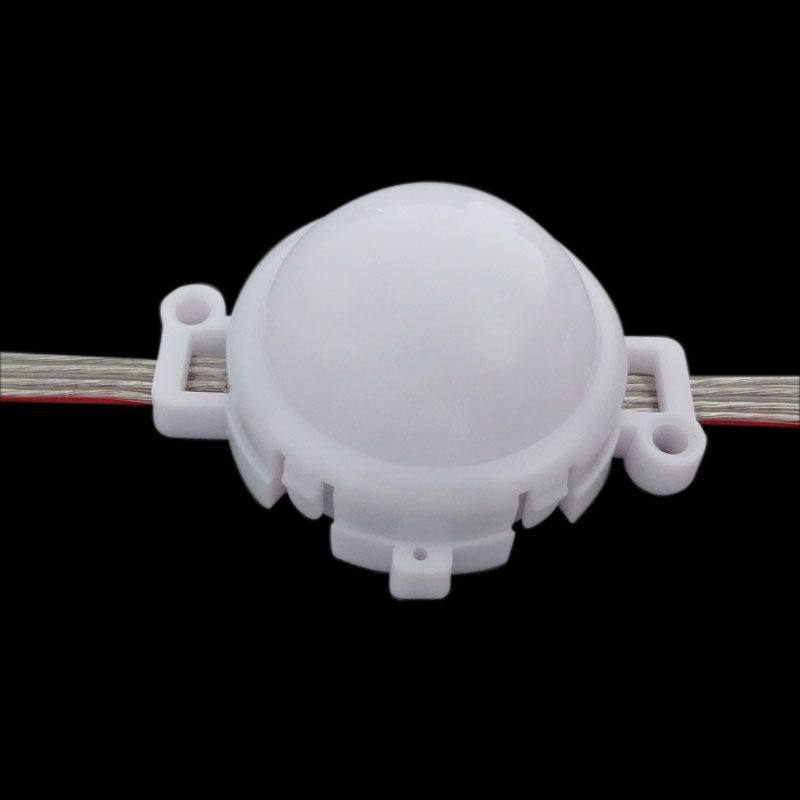
40mm DC24V IP67 Programmable Digital LED Pixel Light - Breakpoint-Continue
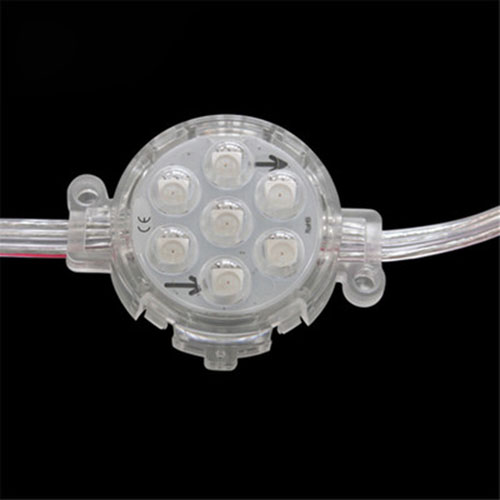
DC24V UCS1903 RGB LED Pixel Module - D50mm Programmable, IP67 | 7-LED
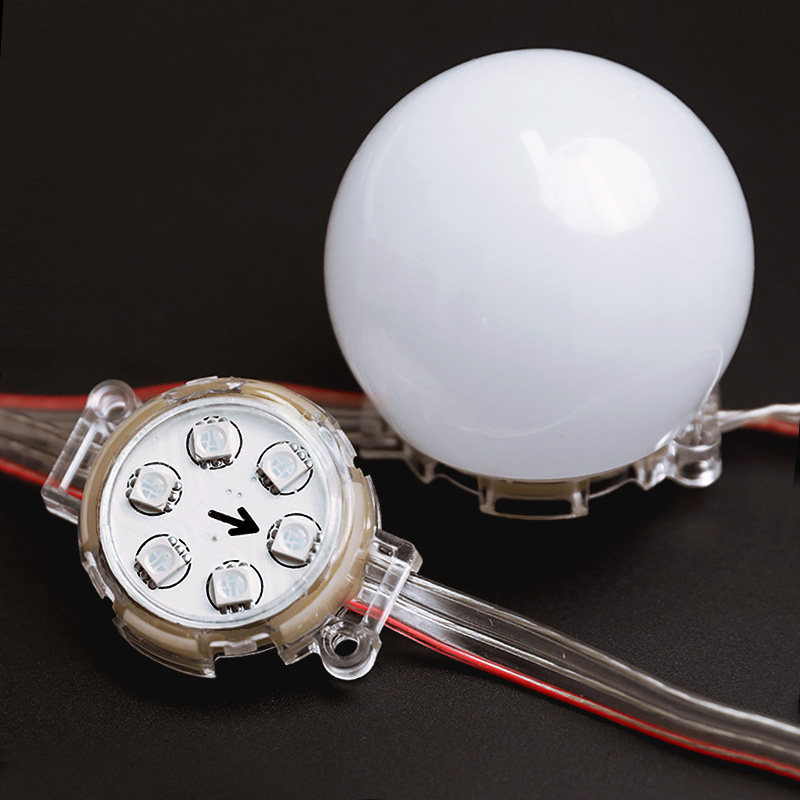
DC24V 5cm Base Exterior WS2811 Smart Color LED Sphere String Lights
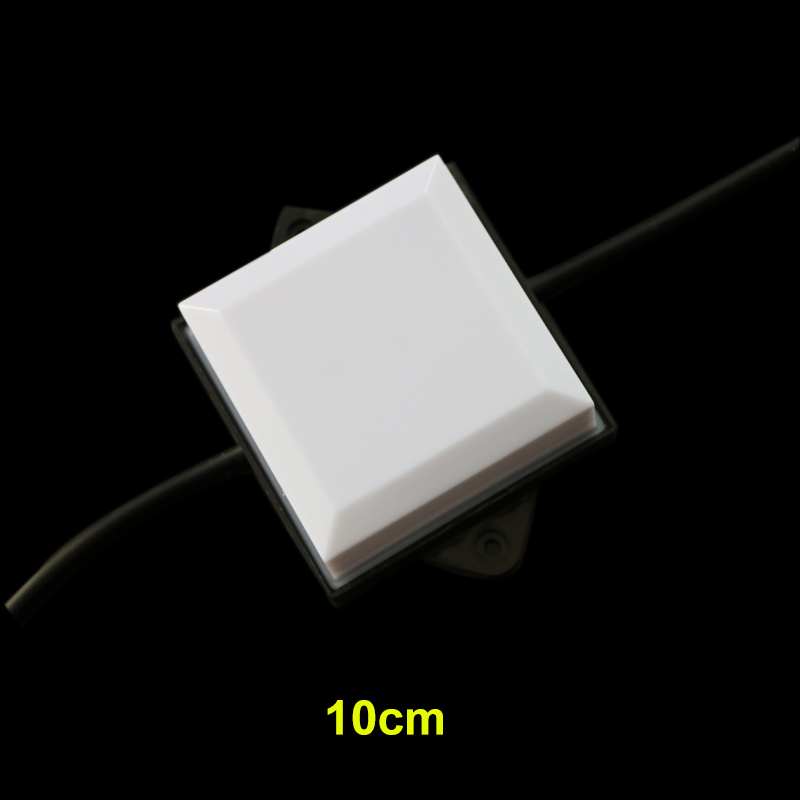
DC24V IP67 Full-Color Square Pixel Light - UCS1903/DMX512 Programmable LED
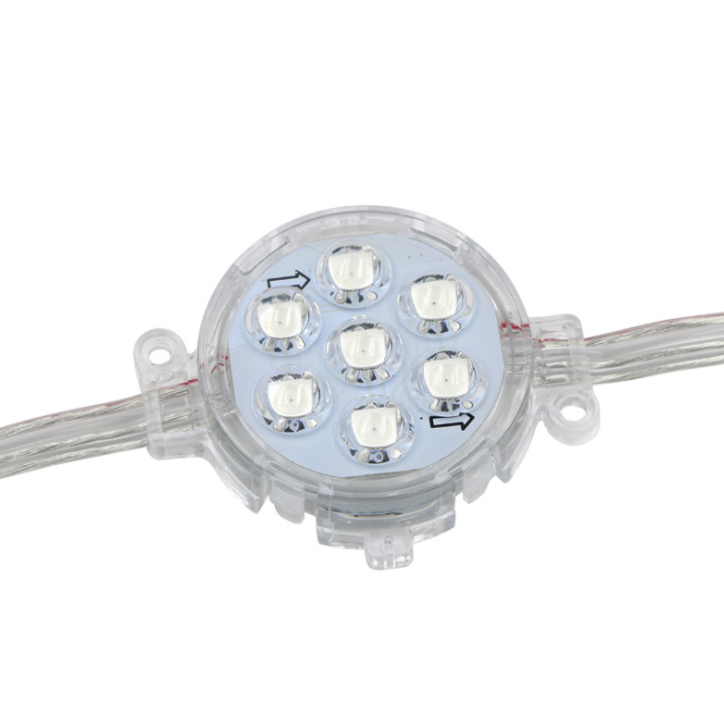
7-Chip Super Bright 24V SPI DMX Digital LED Pixel Light String 50mm Diameter
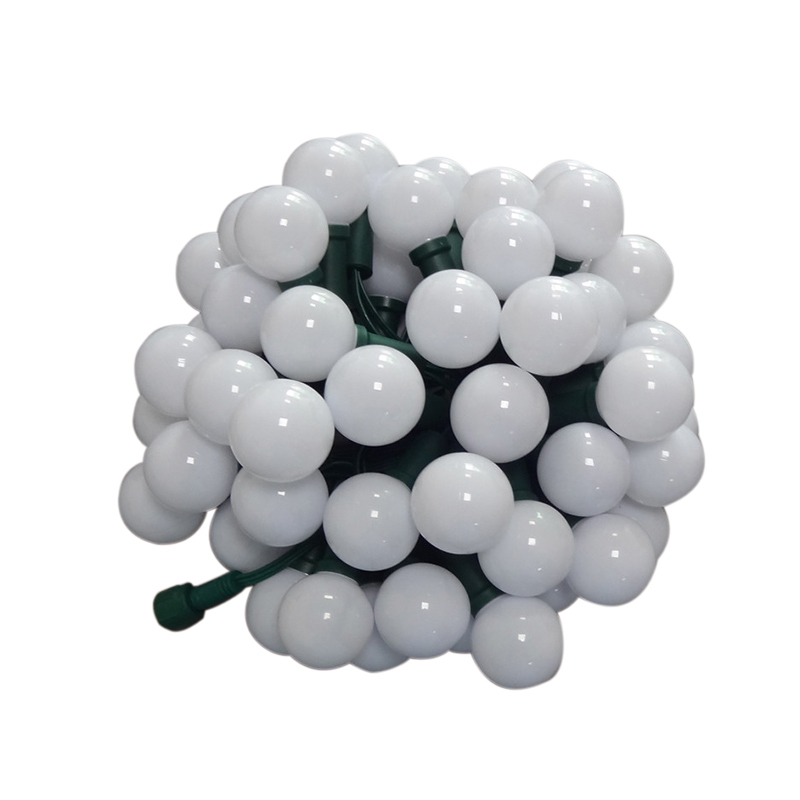
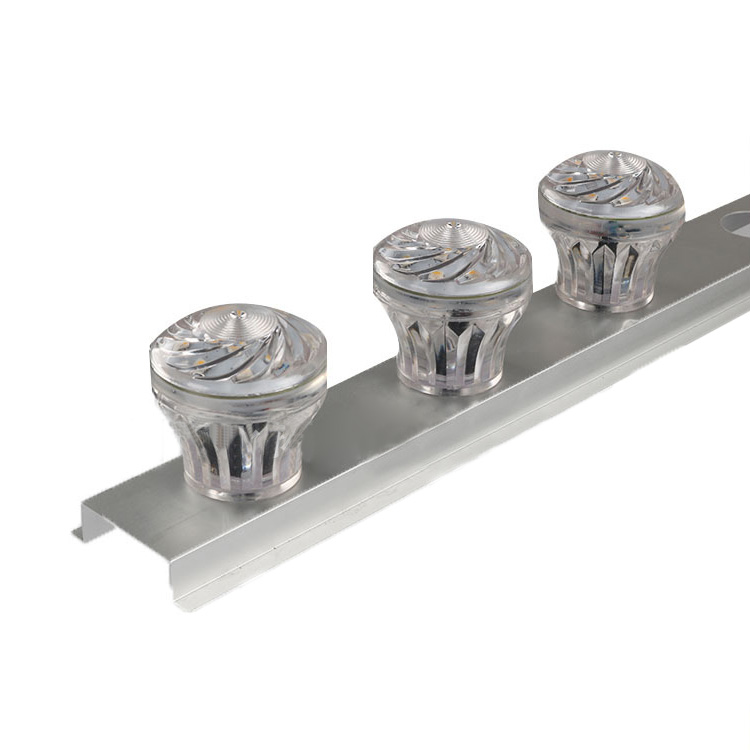
D60 UCS2903 RGBIC Modular LED Bulb Crystal Ball String Lights 24V
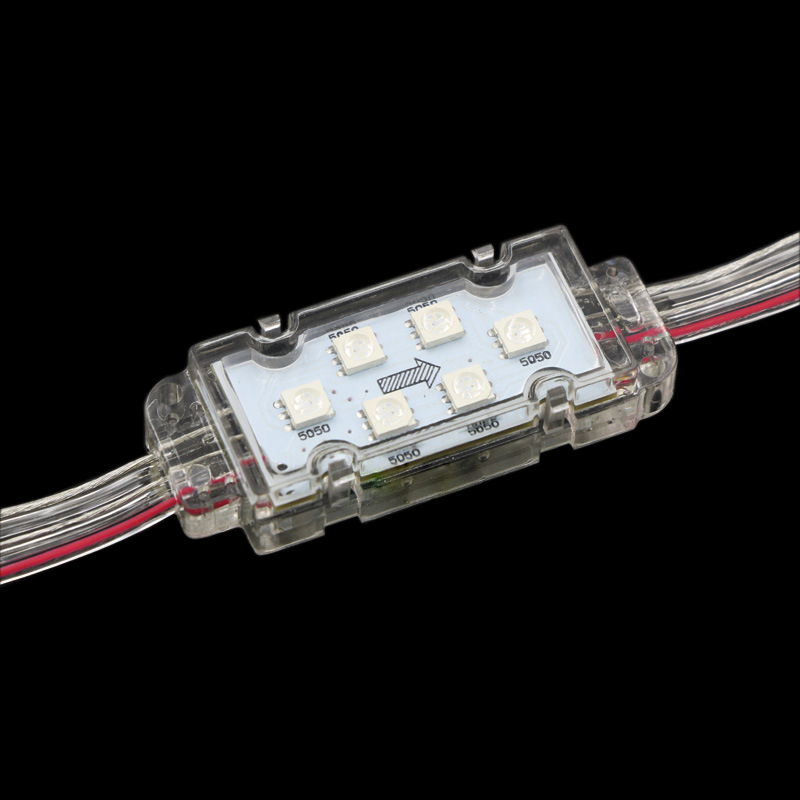
DC24V 50mm Full-Color Pixel Light - UCS1903/DMX512 Outdoor IP67
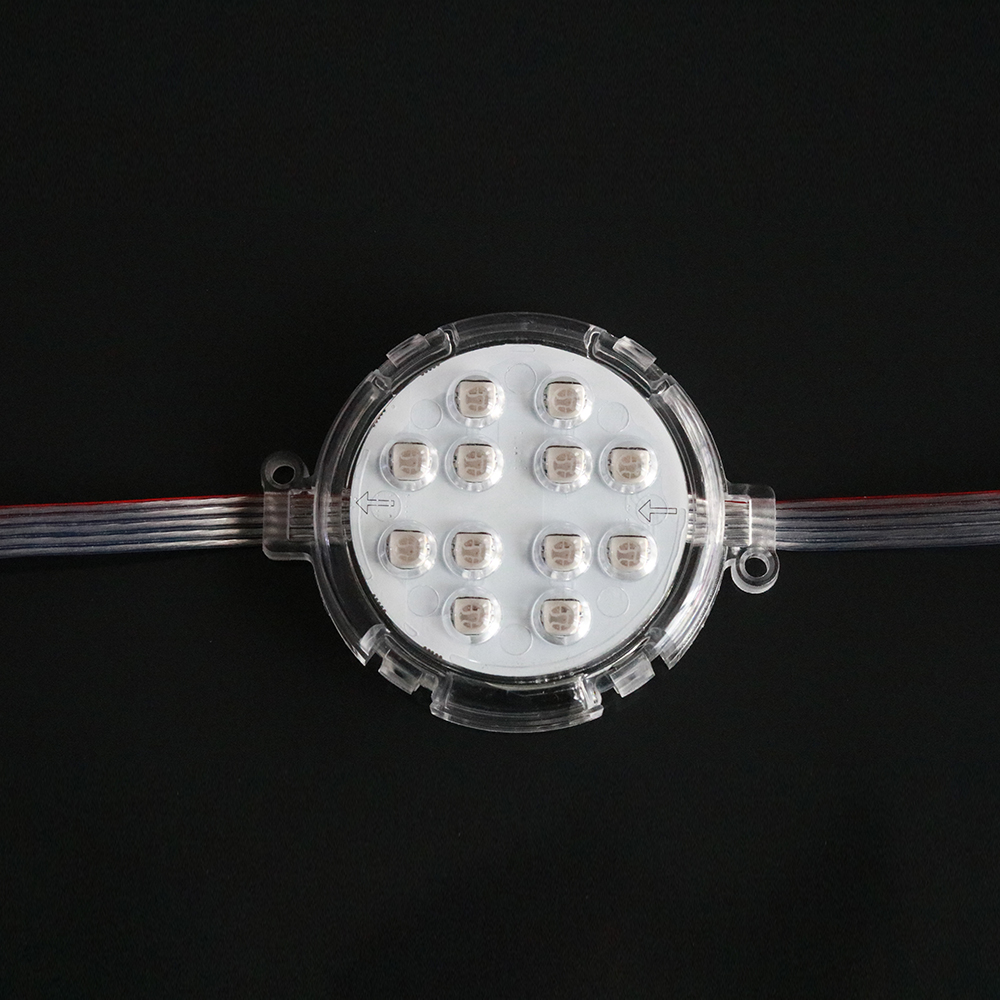
DC24V 8cm UCS1903/DMX512 Pixel Light - IP67 Outdoor Full-Color Chase LED

6 Inch Large Hemisphere DMX RGB LED Pixel Modular Light Outdoor
Addressable LED Pixel Strings with JST Connectors
Engineered with color-coded interconnecting wires and pre-installed JST-SM quick-connectors, this addressable LED pixel string type provides an effortless plug-and-play solution for indoor decorative lighting, commercial signage, and custom DIY electronics projects.
Each pixel node is interconnected with flexible, color-coded copper wires—typically red for V+, white for GND, and green/blue for Data—allowing quick visual signal identification and preventing wiring errors during installation. The pre-soldered male and female JST connectors at both ends enable instant daisy-chaining without requiring soldering equipment.
Fully compatible with popular microcontrollers (such as Arduino, Raspberry Pi, and ESP8266) as well as commercial SPI controllers, these pixel light strings can be easily contoured around corners, integrated into light boxes, or arranged into custom matrix grids for dynamic color-chasing effects.
Outdoor Landscape LED Pixel Strings with Weatherproof Connectors
Built specifically to withstand harsh outdoor environments, this landscape LED pixel string type combines heavy-duty injection-molded node housing with industrial-grade waterproof connectors to deliver vibrant, reliable digital RGB lighting for year-round exterior applications.
Featuring fully epoxy-potted LED modules and UV-resistant thick PVC/silicone jacketed cables, the entire string achieves an IP67/IP68 ingress protection rating.
Designed for long-run outdoor installations, these durable LED pixel strings are ideal for architectural edge highlighting, building facade illumination, theme park installations, tree wrapping, and large-scale holiday light shows that demand high tensile strength and weather resistance.
Individually Addressable Single-Pixel LED String Modules
Based on a true point-source control architecture, every single pixel LED node in the string houses an independent integrated circuit (IC), allowing precise, individual 24-bit color and brightness customization across every single light point.
Constructed as a series of isolated digital nodes spaced along highly flexible wiring, the modular structure allows effortless bending, twisting, and spatial arrangement without exerting mechanical strain on the LEDs.
Available in various node shapes (such as bullet, pebble, or flat modules), the pitch distance between pixels can be customized to match complex installation geometry.
Supporting high-speed SPI data transmission and compatible with DMX512/Art-Net systems and MADRIX software, these single-pixel LED addressable light strings are capable of executing complex 2D curtain video mapping, 3D volumetric light sculptures, text scrolling, and music-synchronized light animation.
Frequently Asked Questions About Addressable LED Pixel Module Lights
Got questions about wiring, controlling, or choosing the right pixel modules? I've answered the most common ones we get on the tech support desk right here.
Yes, absolutely. This is a very common use for our addressable LED pixel light modules, especially the ball or sphere types. The key is to look for the IP rating. You need a waterproof LED module rated at IP67 or IP68 for reliable outdoor use.
You need a dedicated SPI (Serial Peripheral Interface) controller that can speak the language of the IC chip on your modules (like WS2811, UCS1903, SK6812, etc.). For smaller projects, many people use Arduino or Raspberry Pi. For larger or standalone installs, we have a full range of dedicated addressable controllers that can run pre-programmed effects or be controlled via DMX or an app.
That dimming is called voltage drop, and it's a fact of life with low-voltage lighting. The solution is power injection. Instead of powering a long string from just one end, you run parallel power wires from your power supply and 'inject' power at the beginning, the end, and maybe in the middle of your run. Starting with 24V modules helps a lot, as you can go much further before injection is needed. We have a full guide on how to wire them correctly for long runs.
They're all ways to control individual pixels, but they work differently. WS2811 and similar ICs (like UCS1903) are the most common for hobbyist and semi-pro projects, using a single data wire. UCS2904 is an RGBW chip, giving you a dedicated white channel plus RGB. DMX512 is the industry standard for stage and architectural lighting — it's more robust, uses differential pairs for signaling, and is better for large, professional jobs.
That's a classic problem with the original 3-wire pixel protocols. The data goes in one pixel and out the next, so if one IC fails, the chain is broken. The solution is to use pixel modules with a 'breakpoint continue' or 'dual signal' feature. ICs like WS2813, WS2815, or our MT16703 modules have a backup data line. If one chip dies, the backup line bypasses it and the rest of the string keeps working. Our guide on WS2815 vs WS2812B explains this well.
For a professional look, you want even spacing. The most common method is to drill holes in your mounting surface (like aluminum, PVC, or wood) and push the modules through from the back. We offer specific aluminum mounting channels that hold them securely and hide the wiring.
Yes, we do this all the time. A large share of the modules we ship are built to a customer's drawing. You can specify the wire length between each module, the type of wire, and the exact connectors you need on the ends—whether that's a specific JST model or a waterproof pigtail. Just send us a sketch or a description of what you need. An engineer will send you back a wiring diagram and a quote, usually within 12 hours.