
DC24V Addressable LED Strips
49 products
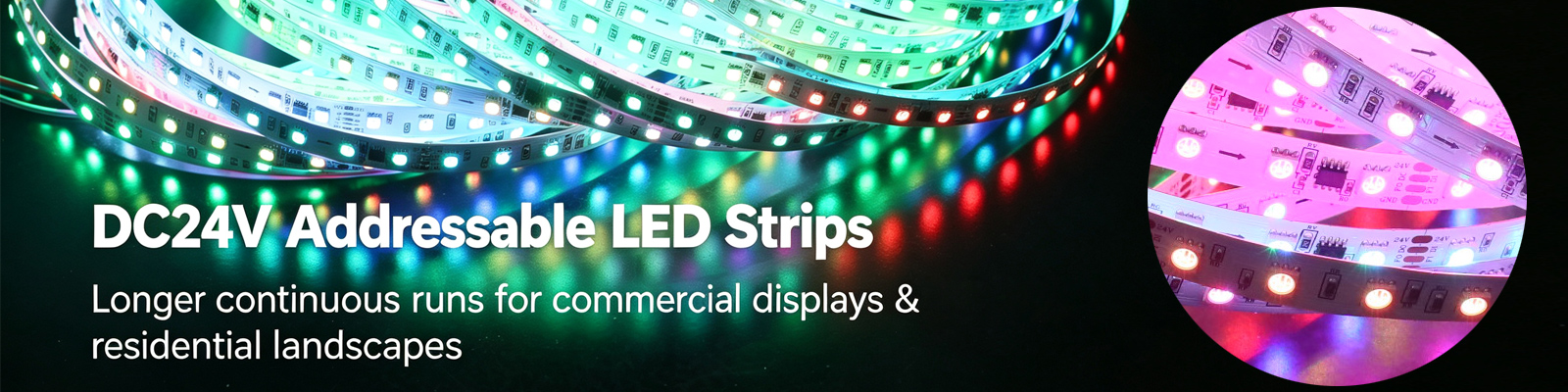
When your project demands long, continuous runs of addressable lighting, our DC24V addressable LED strips are the professional's choice. Because run on higher voltage, there is a significant reduction in voltage drop. This means you can power runs of 10 meters (about 33 feet) or even longer from a single power supply, with minimal brightness or color decay towards the end of the strip. This makes 24 volt LED strip lights perfect for architectural coving, outdoor perimeter lighting, and large-scale signage where multiple power injection points would be impractical.
Understanding 24V Addressable ICs and Cut Segments
One key technical difference with 24V addressable LED strips is the grouping of LEDs. To handle the higher voltage, LEDs are wired in series. This means that a single IC (Integrated Circuit) chip typically controls a group of 6 LEDs. This group acts as one pixel. So when you see a 24V WS2811 or 24V UCS1903 light strip, the cut lines will be spaced every 6 LEDs, and that entire 6-LED segment will always be the same color.
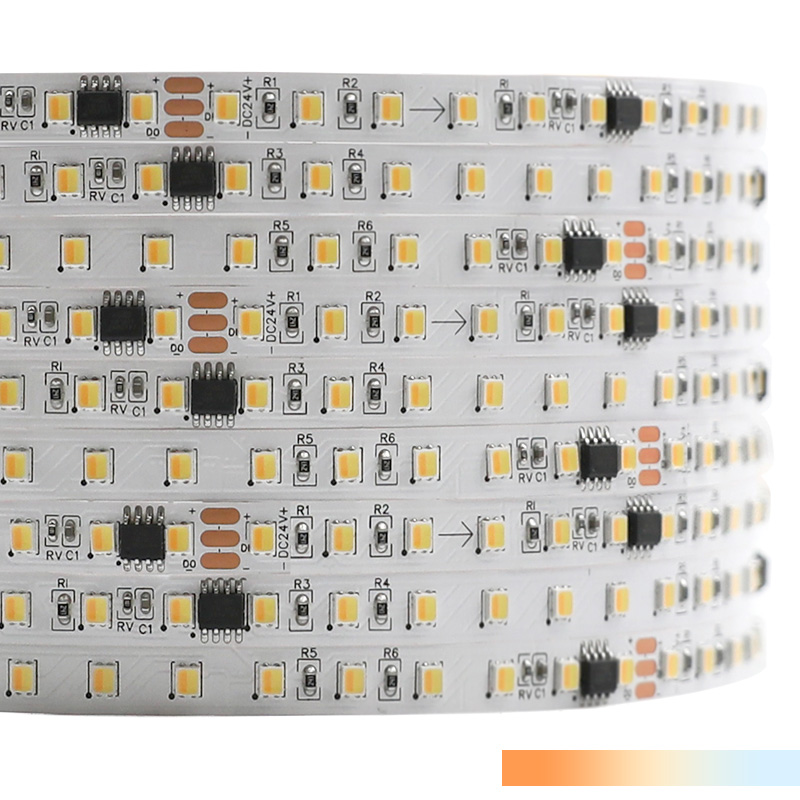
Long Thin Addressable 2-in-1 2835 CCT LED Strip
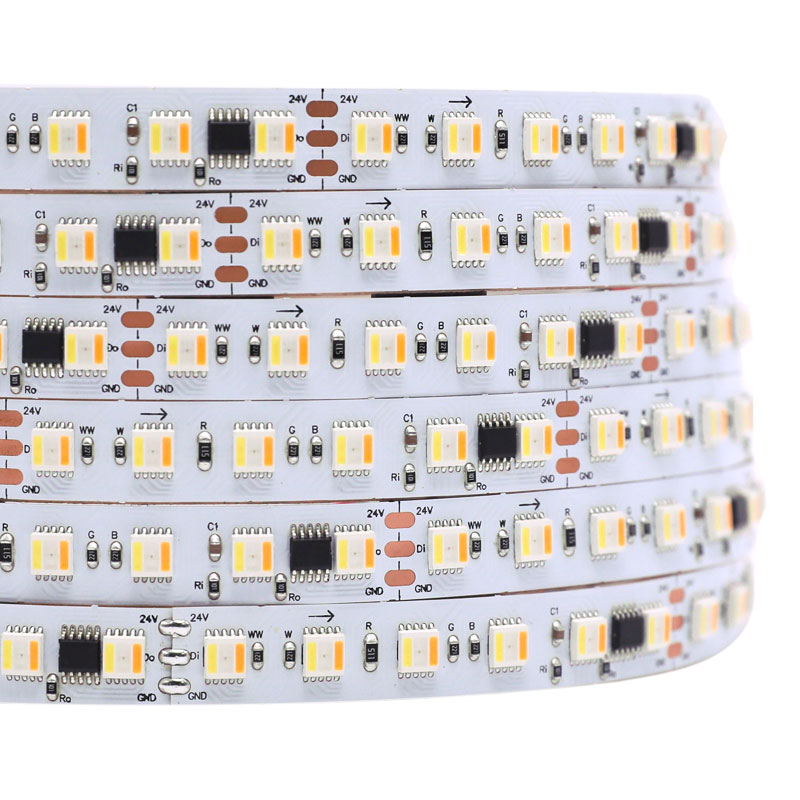
24V Digital 5in1 RGB+CCT 84LEDs/m Addressable LED Strip Light
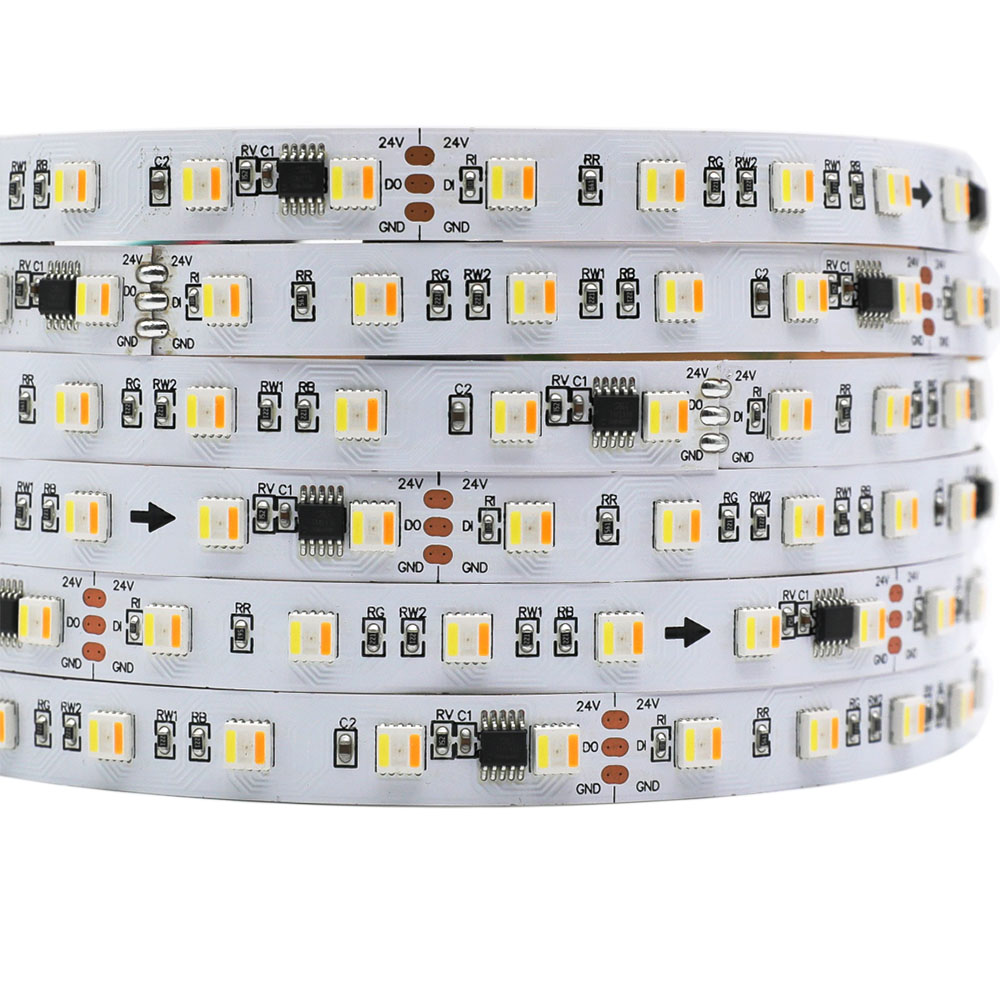
FW1906 Addressable RGBCCT 5in1 Color Chasing LED Strip Lights
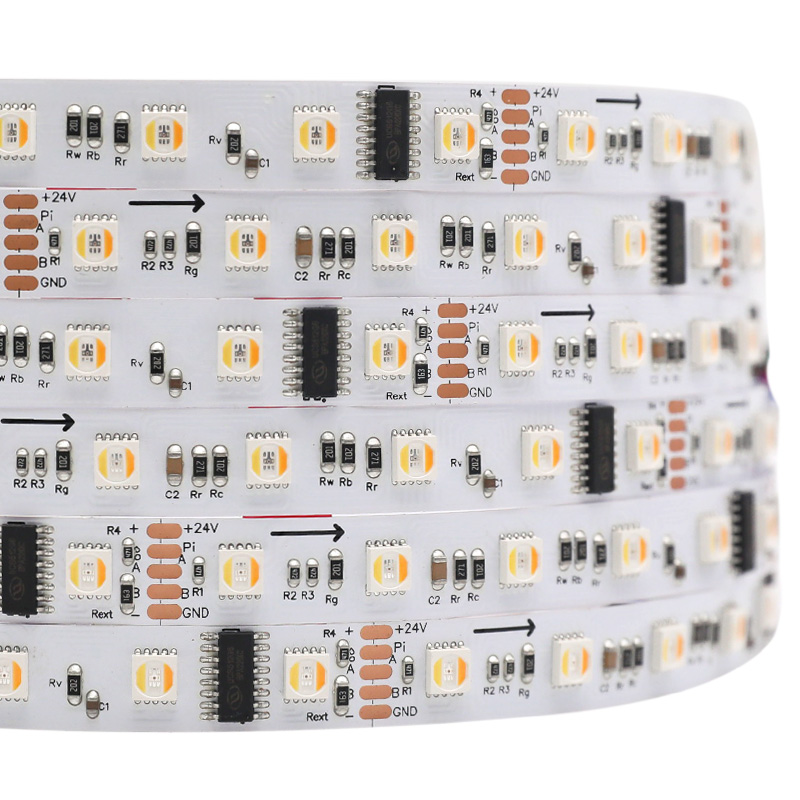
24V DMX 5in1 Addressable RGBCCT LED Strip Light, 60LEDs/m
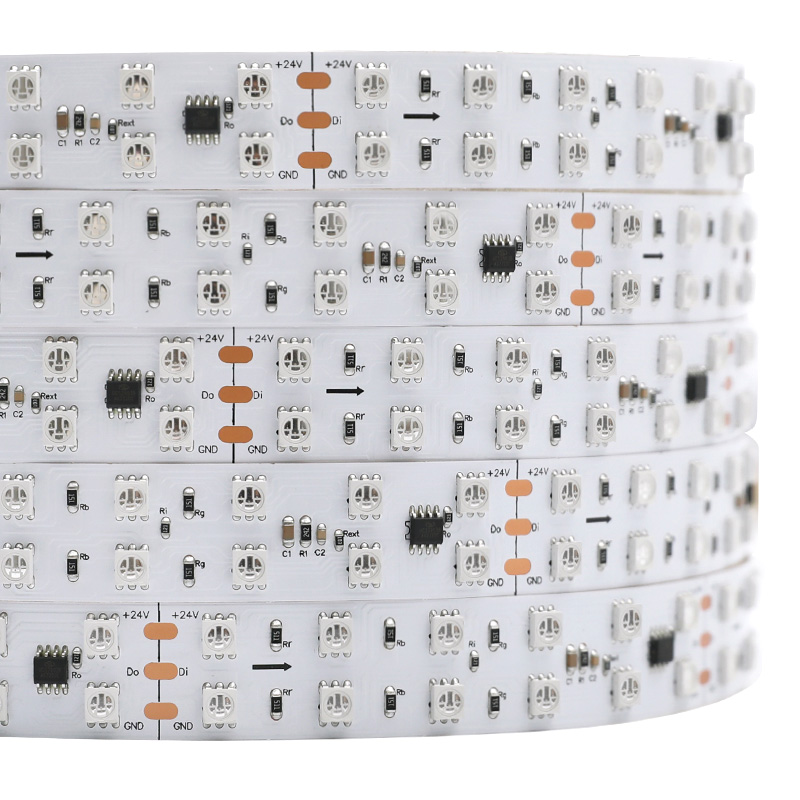
UCS2903 Addressable Double Row RGB LED Strip 120LEDs/m
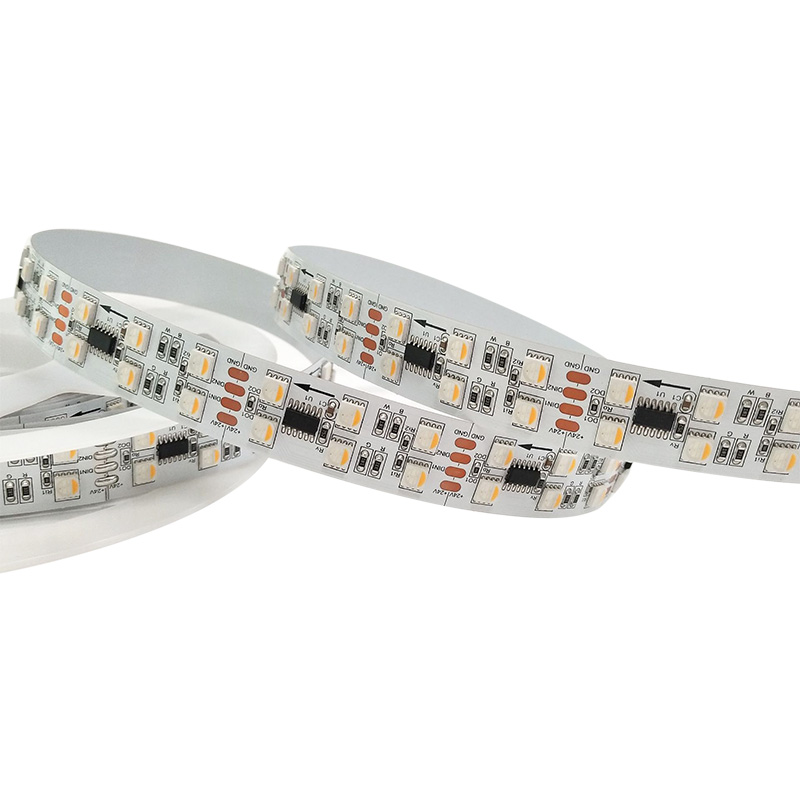
WS2814 Dual Row RGBW Addressable Led Strip 24V
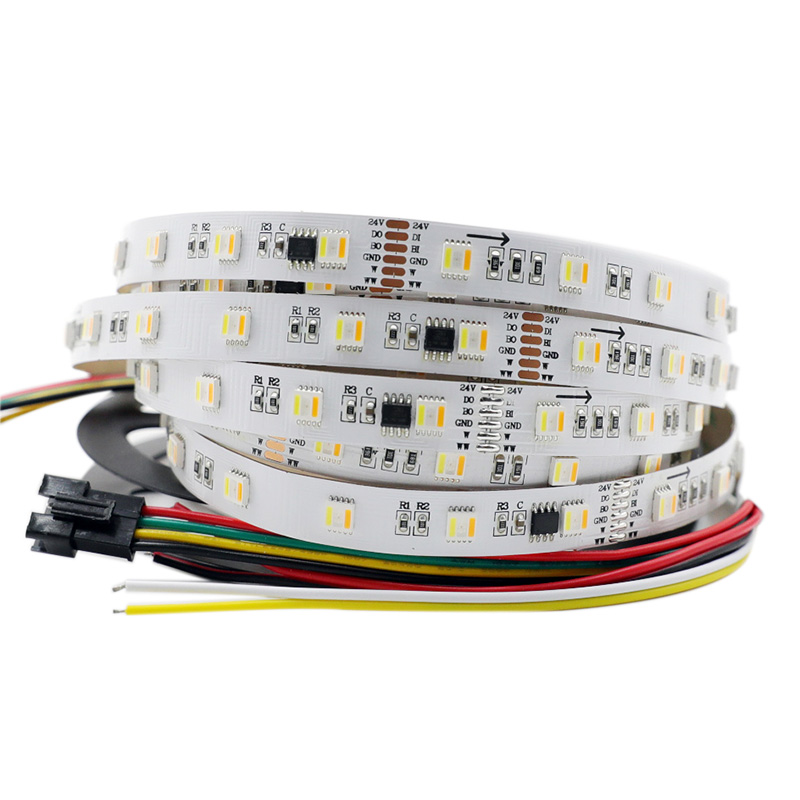
24V TM1914 Addressable RGB CCT LED Strip Lights 48LEDs/m
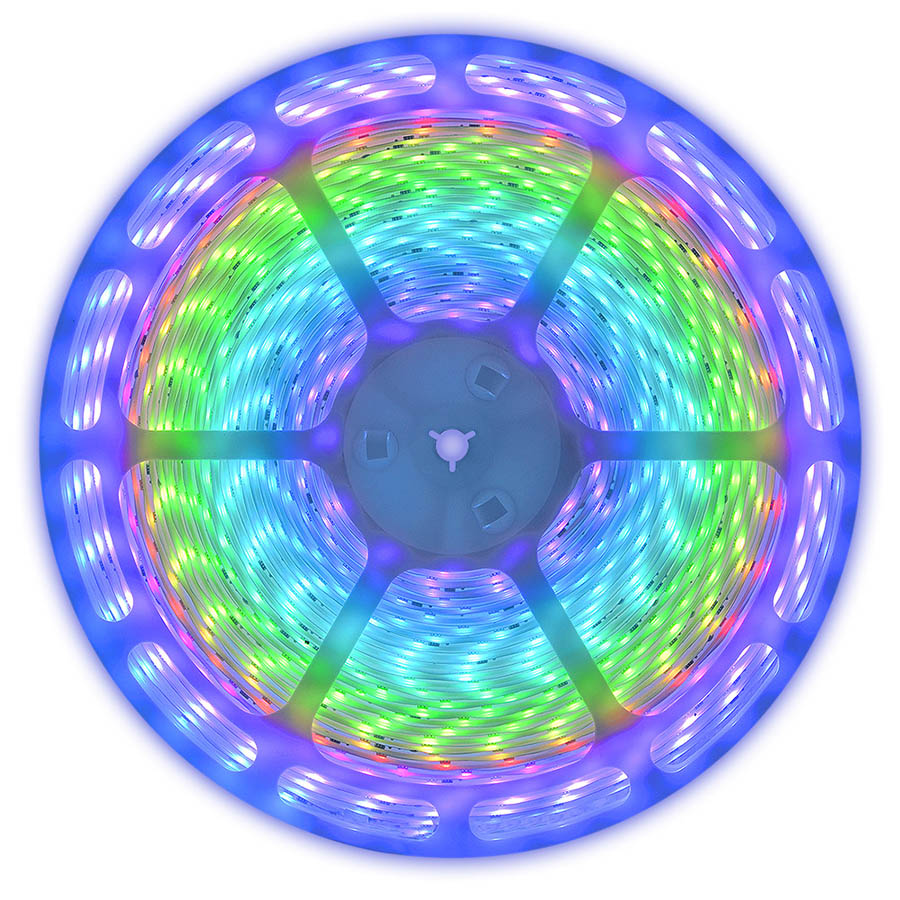
65ft/20m WS2811 Multi Color Chasing IP67 Waterproof LED Light Strips
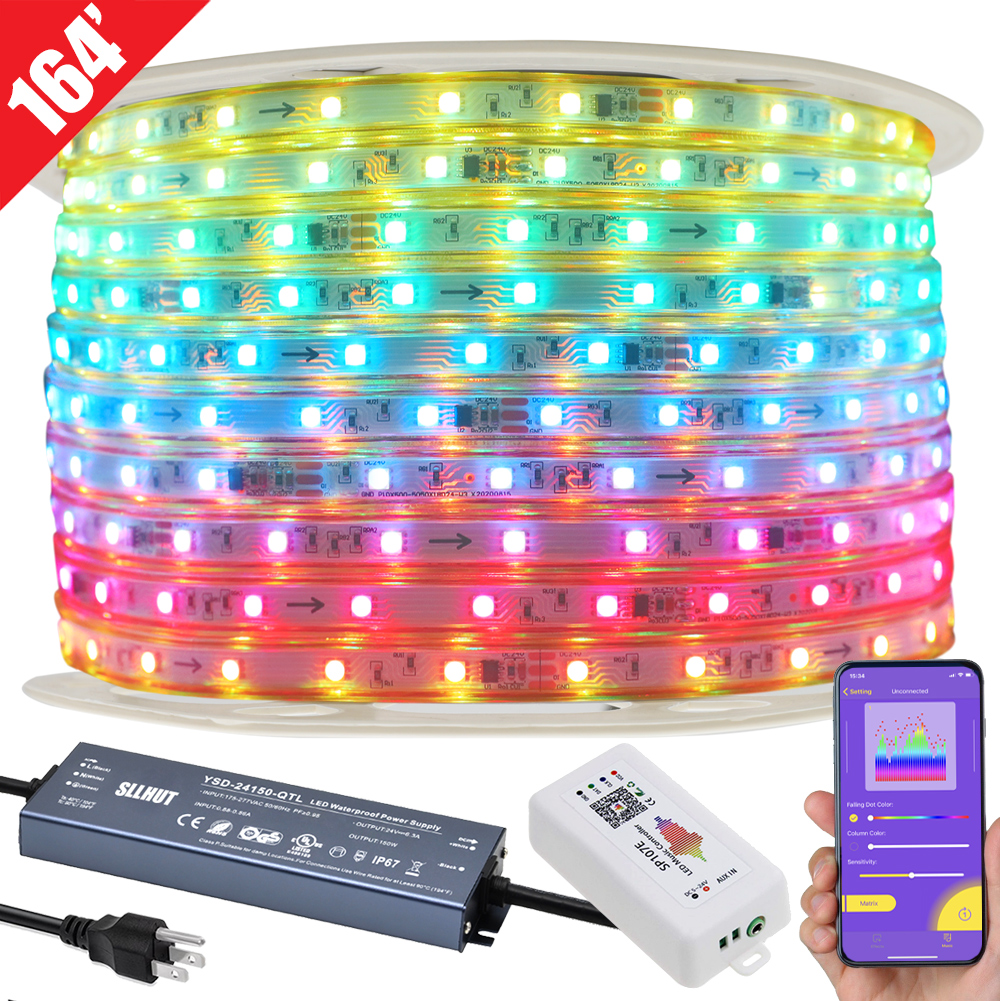
WS2811 IP67 Waterproof LED Light Strips Kit 16.4-164ft
When to Choose 24V vs. 12V for Your Addressable LED Project
The decision between 12V and 24V really comes down to the length of your run and the precision you need. For most large-scale projects, 24V is the clear winner for efficiency and ease of installation. Here’s a direct comparison:
| Factor | DC 24V Addressable LED Strips | DC 12V Addressable LED Strips |
| Max Run Length (Single Power Feed) | Up to 10m (32.8 ft) + | Typically 5m (16.4 ft) |
| Voltage Drop Effect | Noticeably lower; colors stay true longer | Significant after 5m; reds appear first |
| Current Draw | 50% lower for the same wattage | 2x higher than 24V equivalent |
| Cutting Resolution | Larger segments (typically every 6 LEDs) | Smaller segments (often 3 LEDs, sometimes 1) |
| Best For | Long architectural runs, signage, outdoor lighting | Shorter runs, vehicle lighting, detailed work |
Frequently Asked Questions about DC24V Addressable LED Strips
Your project's already on our shelf. Here are the questions we hear most often before an order gets placed. I've answered them the same way I would on the phone.
The main reason is run length. With a 24V addressable LED strip, you can typically run up to 10 meters (about 32 feet) on a single power feed before you see any voltage drop. A 12V strip starts to dim or shift color after just 5 meters. If your project involves long, continuous lines for things like ceiling coves or architectural accents, 24V saves you a lot of wiring headaches. The trade-off is that the cut segments are usually longer—typically every 6 LEDs instead of every 3.
A 100-foot (or 30-meter) run is definitely achievable with the right 24V strip. This is where models using a TM1934A IC really shine, as they're designed for these long-distance projects. You'll need to power the strip from both ends to keep the voltage and color consistent across the entire length. We stock specific reels, like our ultra-long TM1934A strips, that come in lengths up to 40 meters (131ft) precisely for this kind of large-scale job.
It comes down to the white light. A 24V WS2811 addressable strip is pure RGB, creating white by mixing red, green, and blue. This works, but it's often a bit cool or bluish. A 24V WS2814 RGBW strip adds a fourth, dedicated white LED into each package. This gives you a much cleaner, higher-quality pure white light when you need it, and better pastels when mixing colors. If the quality of your white light matters, go for the WS2814 or other addressable RGBW LED strips.
That's classic voltage drop. Even though 24V is much better than 12V, it's not immune. On runs longer than 10 meters (32 ft), the voltage will eventually fall low enough that the blue LEDs—which need the most voltage—start to underperform. This leaves the red and green, making the end of the strip look dim, yellowish, or orange. The fix is to inject power at both ends of the strip, or every 10 meters on very long installations. We have a whole guide to long runs explaining exactly how to wire it.
In most cases, yes. The WS2811 and UCS1903 ICs use a very similar single-wire data protocol. When you set up your controller, whether it's a dedicated hardware unit or software like WLED or MadLED, you can usually just select 'WS2811' as the chip type and it will control the UCS1903 strip without any issues. It's always a good idea to double-check your controller's documentation, but they're typically cross-compatible.
There are, but they are less common than in 5V or 12V. Most 24V addressable strips group the LEDs into segments of 3 or 6 that are controlled by a single IC. This is a physical constraint of the higher voltage. However, we do stock some 24V strips, like those with the external IC design, where each individual LED is its own pixel. They're great for high-resolution effects, but be aware that your controller and power supply need to handle a much higher pixel count.
Stability and distance. The TM-series ICs are workhorses designed for long-distance signal integrity. That's why you see the TM1934 and similar ICs in our products designed for 20, 30, and even 40-meter runs. They are less susceptible to the data signal degradation that can cause flickering or dropouts in other IC types over long wiring distances. If your project is architecturally scaled, choosing a strip with a TM-series chip is a smart move. You can learn more in our complete guide to addressable strips.
Heat and water are the enemies. First, use a proper IP67 or IP68 rated strip. Second, mount it in an aluminum channel, even a simple surface-mount one. The channel acts as a heat sink, drawing damaging heat away from the LEDs, which can double their lifespan. It also provides physical protection. Finally, make sure all your connections are perfectly sealed with adhesive-lined heat shrink tubing. Water will find its way into any weak spot.
Yes, we do this all day long. It's a huge part of our business that never shows up on the website. Just send us your project requirements—a CAD file, a sketch on a napkin, whatever you have. We will custom-cut the 24V strips to your precise lengths, solder on IP67-rated pigtails or connectors. An engineer will send you back a full parts list and wiring diagram, usually within 12 hours. There's no fee for this and no obligation to order.
It depends on the kind of white you need. A 24V UCS2904 RGBW strip gives you RGB colors plus a single, fixed-color-temperature white channel (like warm white 3000K). It's great for adding a clean white to your color palette. An addressable RGBCCT light strip goes a step further: it has RGB plus two white channels, one warm and one cool. This lets you dynamically tune the white light anywhere from 2700K to 6500K. If you need to match existing lighting or change the mood from warm to cool, you need RGBCCT.