
LED Artnet DMX Controller
33 productsAn Art-Net DMX LED controller is a professional network-based lighting controller that sends large amounts of DMX or pixel data over a standard Ethernet network. It acts as the bridge between lighting-control software such as MADRIX, Resolume, MadMapper, or other Art-Net-compatible platforms and your DMX512 fixtures or SPI/TTL addressable LED lights.
Compared with a conventional DMX512 connection, which is limited to 512 channels per universe, Art-Net transports multiple DMX universes over Ethernet. This makes it much easier to build lighting systems containing thousands of addressable pixels, multiple LED zones, matrix displays, building outlines, stage fixtures, or other large-scale installations.
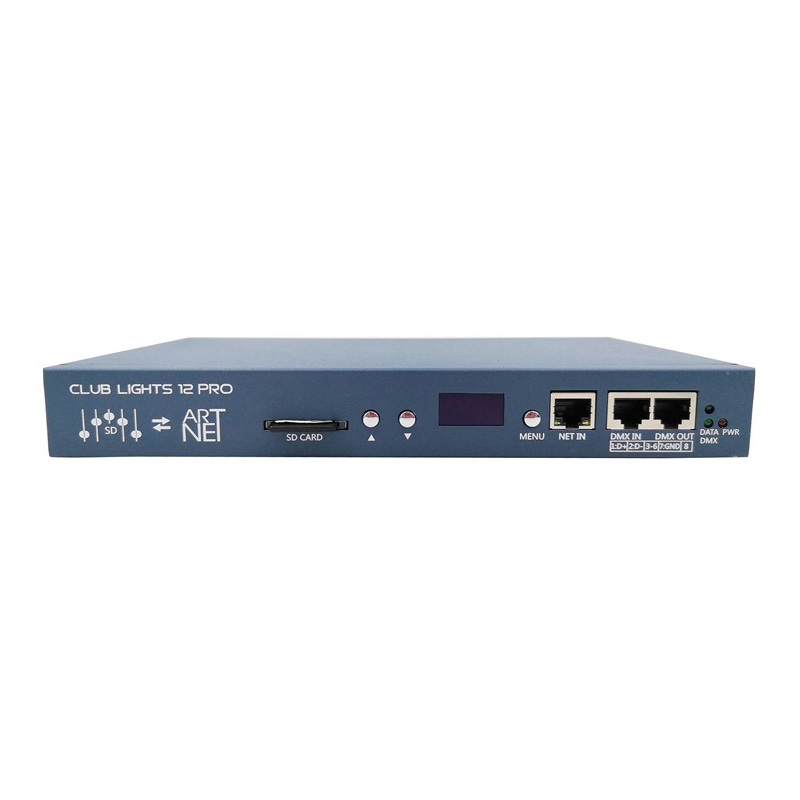
12CH Artnet TTL SPI LED Controller MADRIX Online SD Card Offline
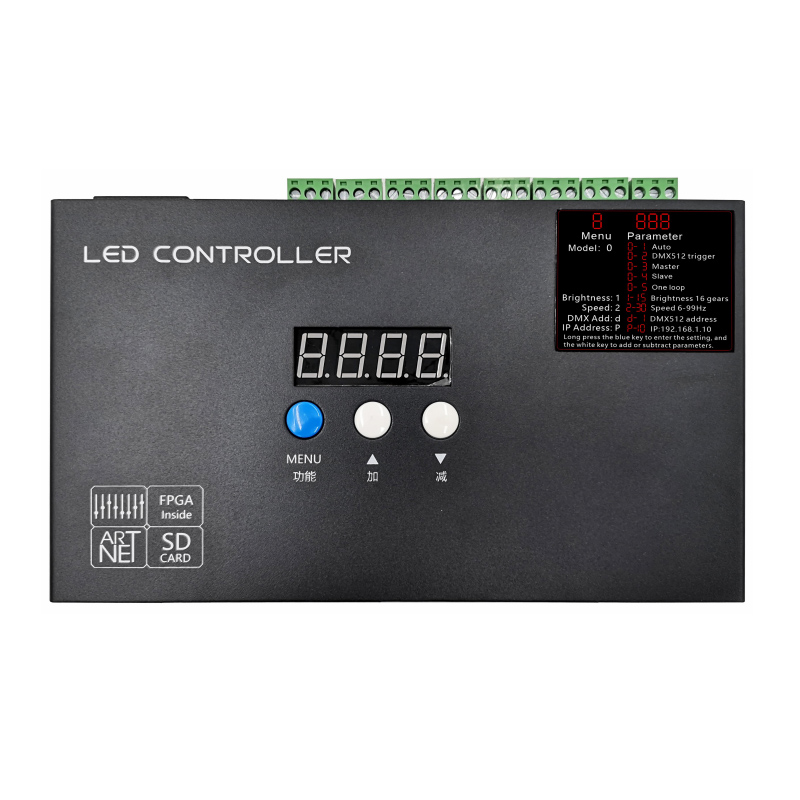
8 Channel Online and Offline Madrix Artnet DMX SPI Controller for LED Lights 508S
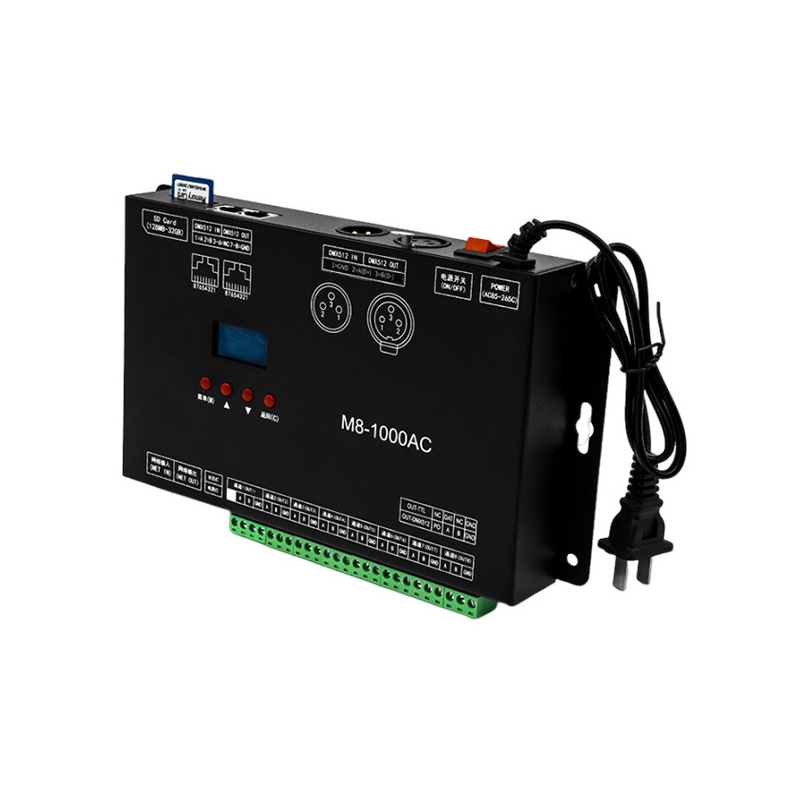
8-Port LED Pixel Controller: TTL & DMX512 for Dynamic Lighting
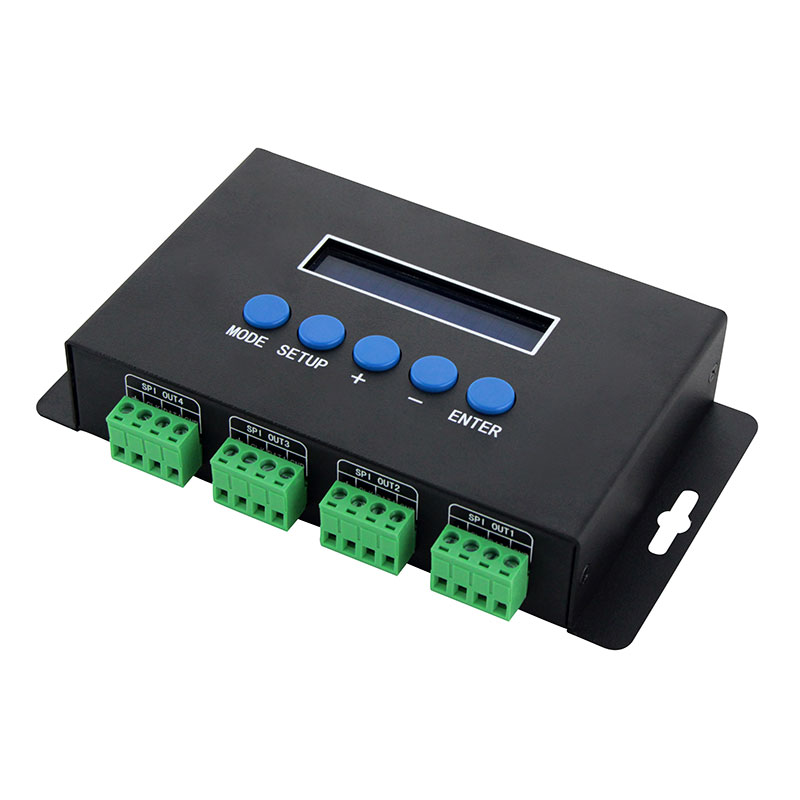
DC5-24V Ethernet-SPI/DMX pixel light controller BC-204, Support Madrix Software
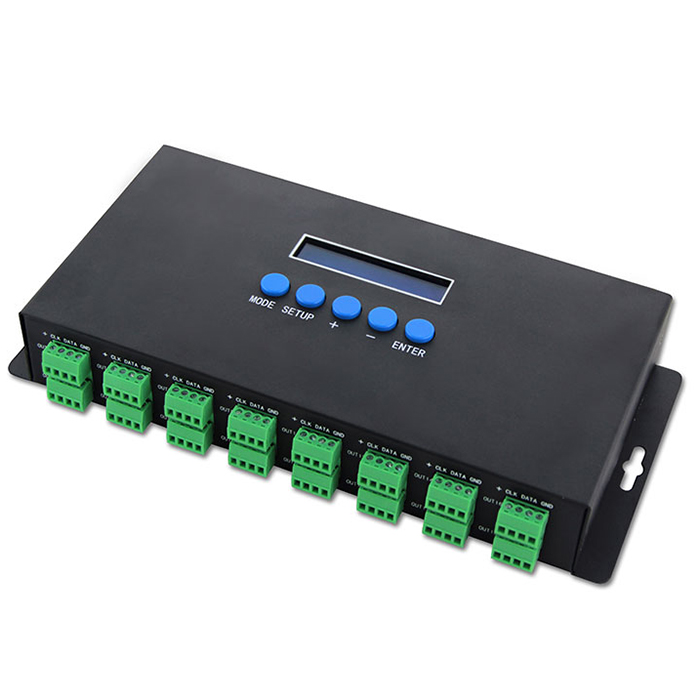
DC5-24V Ethernet-SPI/DMX pixel light controller BC-216, Support Madrix Software

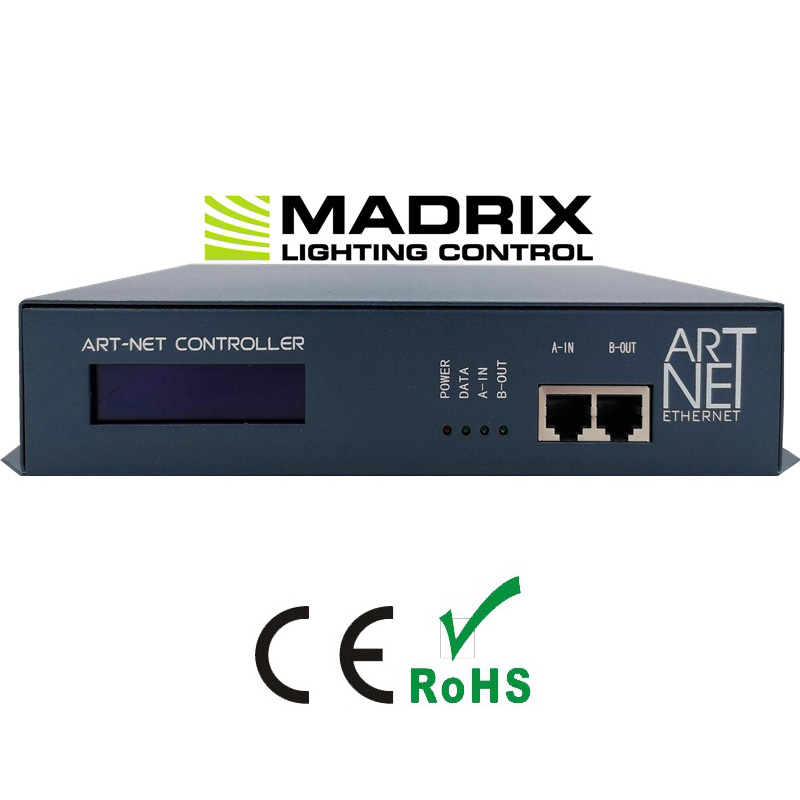
8-Channel MADRIX Control System Supports ART-NET Jazz Controller
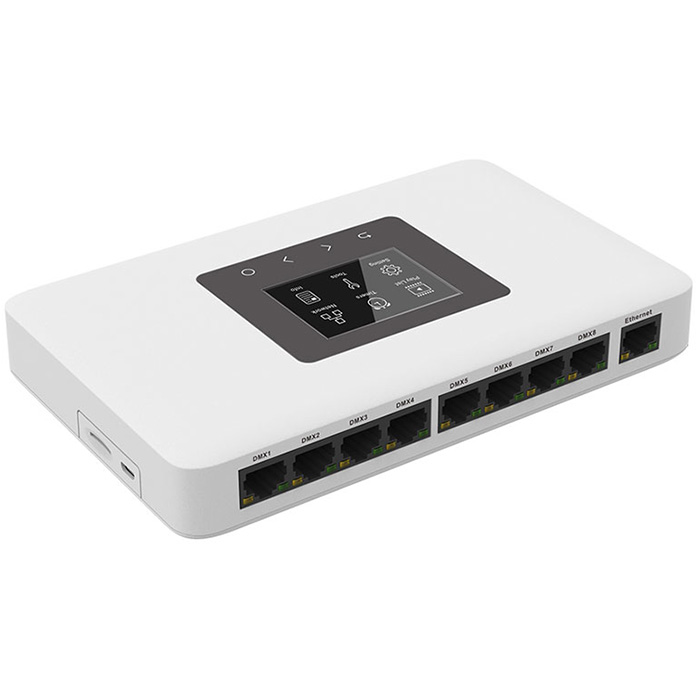
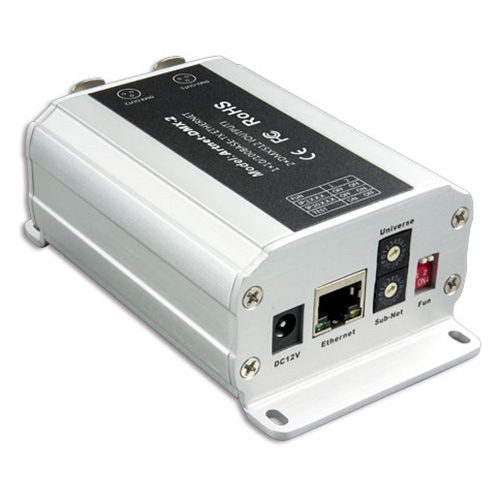
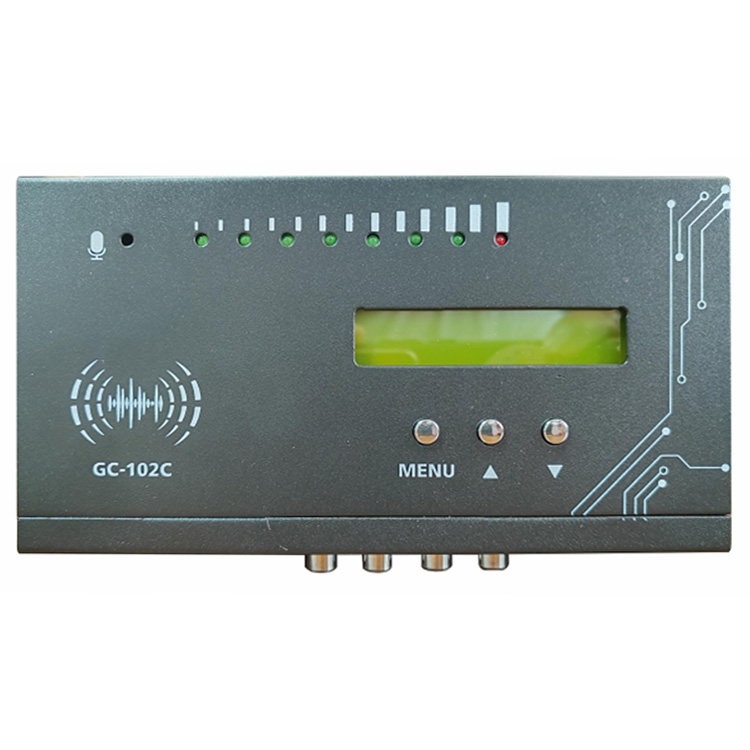
DMX512 Dream Color Spectrum Music LED Controller GC-102C
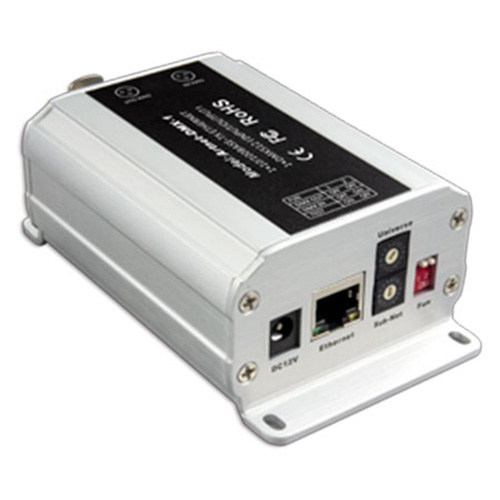
Artnet-DMX-1 Converter: Bidirectional DMX512 to Artnet Bridge | 512 Ch
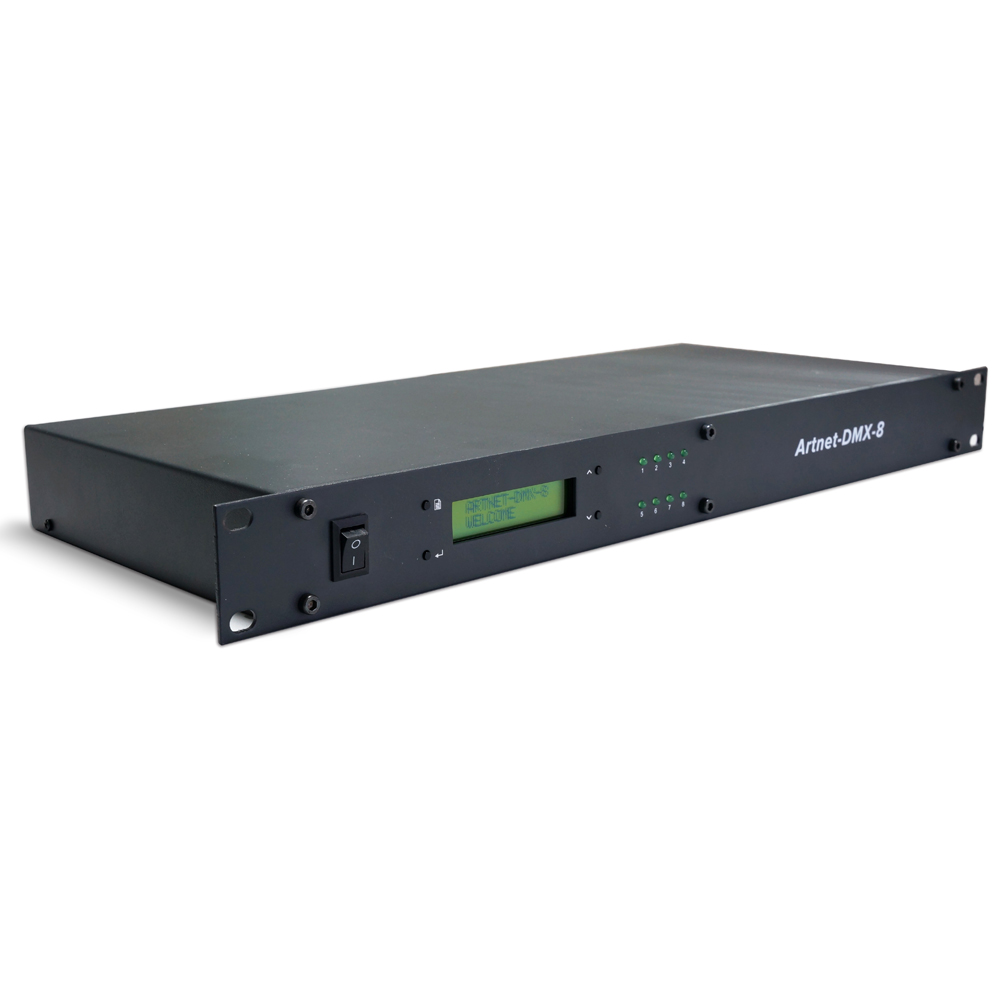
Artnet-DMX-8 Converter 8-Port - 4096 Channels for Stage & Matrix Lighting
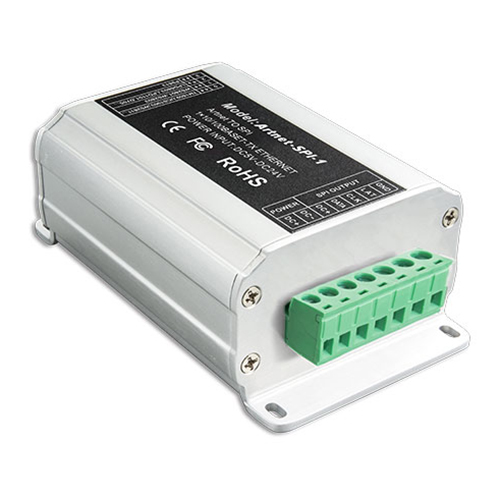
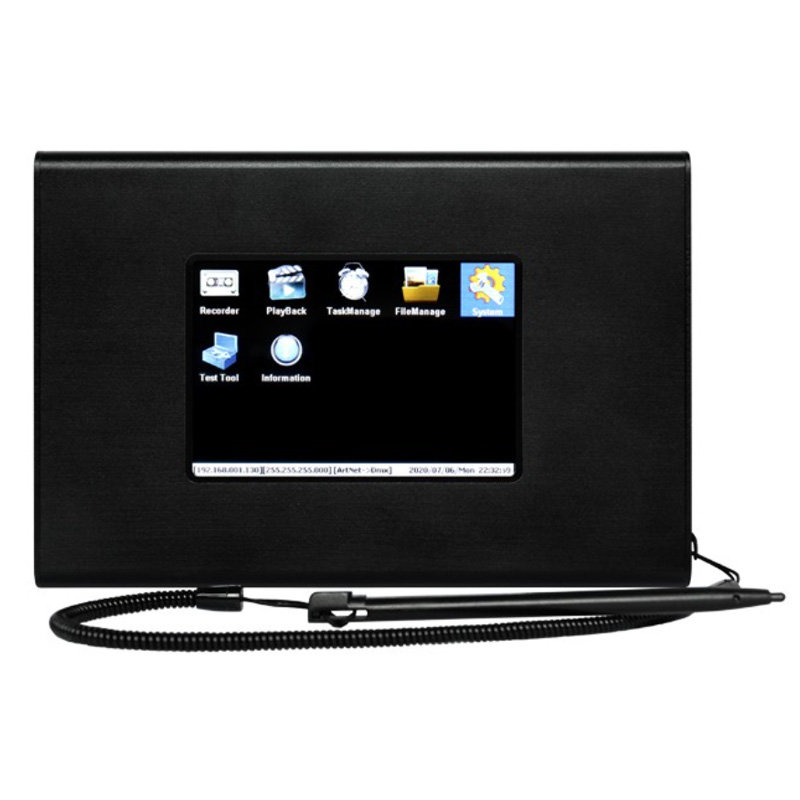
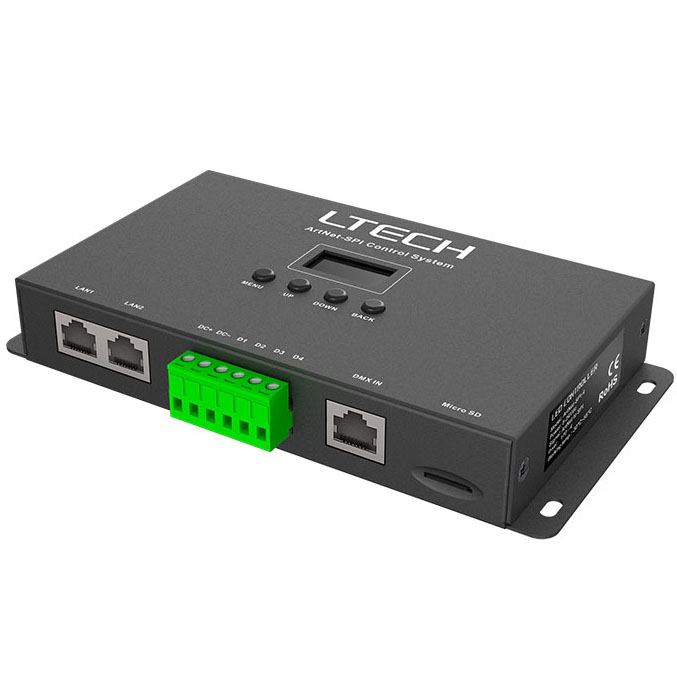
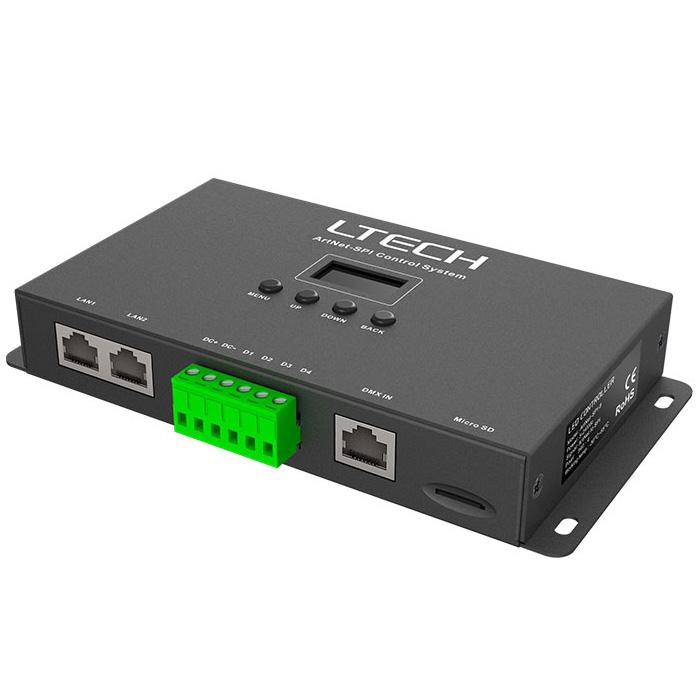
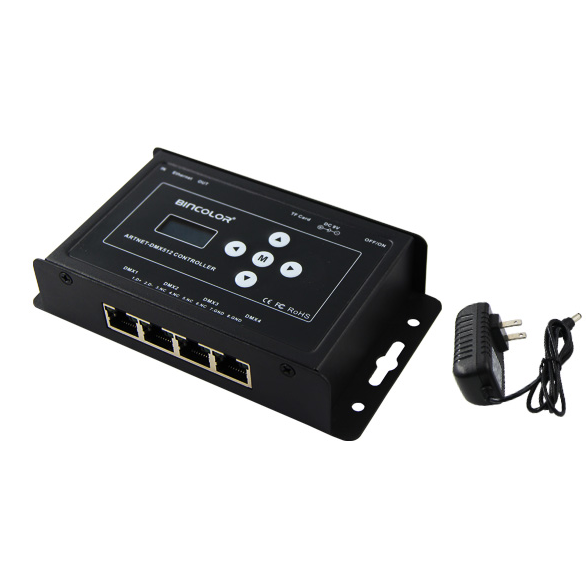
DMX512 4CH LCD Controller | ArtNet Compatible | BC-204-DMX512
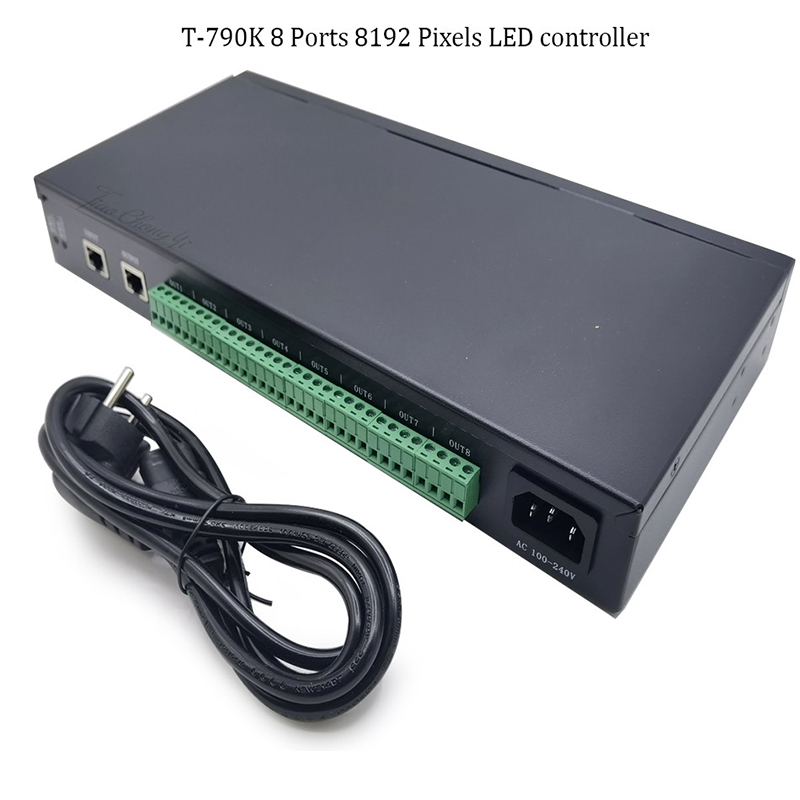
T-790K 8 Ports 8192 Pixels Programmable LED Controller
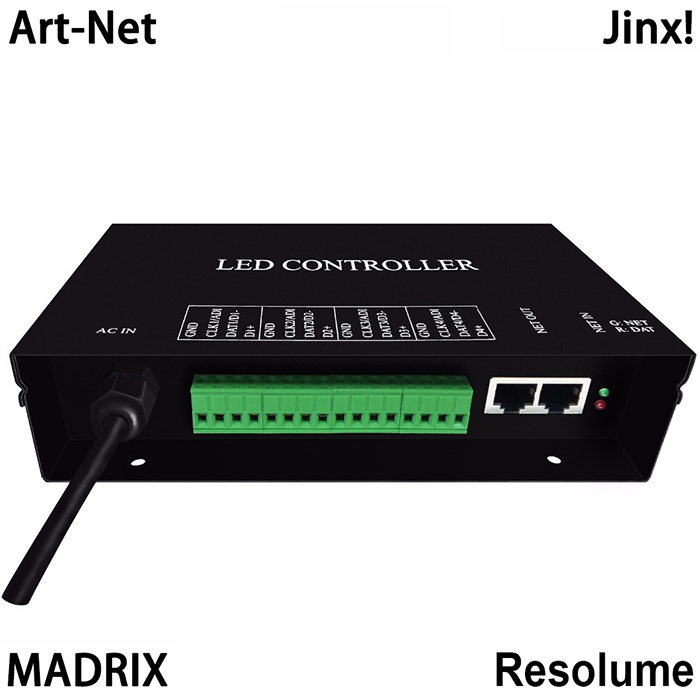
ArtNet LED Controller H802RA - Resolume, MADRIX, Jinx | 680 Pixels/Universe
Who Should Use an Art-Net LED Controller?
Art-Net controllers are best suited for lighting designers, system integrators, installers, stage technicians, commercial lighting contractors, and advanced DIY users who need to control a large number of addressable LEDs or multiple DMX universes from a computer or network.
They are especially useful for projects such as stage and event lighting, clubs and bars, hotels, retail displays, architectural façades, building outlines, LED pixel matrices, signage, entertainment venues, TV studios, and synchronized commercial lighting installations.
For a small bedroom, TV backlight, gaming desk, or a single addressable LED strip, however, an Art-Net system may be more powerful than you actually need.
Why Choose SuperLightingLED Art-Net Controllers?
SuperLightingLED offers more than basic Art-Net-to-DMX conversion. Our range includes controllers designed for different levels of professional pixel and DMX lighting—from compact WiFi Art-Net controllers to multi-port Ethernet controllers for large synchronized installations. Depending on the model, available features include Art-Net to SPI/TTL or DMX512 conversion, simultaneous SPI and DMX output, multi-universe control, MADRIX online operation, SD card offline playback, multi-controller synchronization, bidirectional Art-Net/DMX conversion, web-based configuration, and support for large pixel installations.
Frequently Asked Questions About LED Artnet DMX Controllers
Your project questions, answered by an engineer. Here’s what people usually ask us before specifying an ArtNet controller.
An ArtNet DMX controller is a bridge. It converts lighting control data from an Ethernet network (ArtNet) into DMX512 or SPI signals that your fixtures or addressable LED strips can understand. Think of it as a translator that lets you control a huge number of lights from software on your computer, like Madrix or Resolume, over a standard network connection instead of old-school DMX cables.
This is an IP address mismatch. Your computer and the ArtNet controller must be on the same network subnet. For example, if your computer is 192.168.1.100, your controller needs to be something like 192.168.1.150. They can't have the same exact address, but the first three sets of numbers must match. Check the controller’s manual for its default IP and how to change it.
An ArtNet node is just a converter. It takes ArtNet data from the network and outputs it as DMX. A full ArtNet controller, like many we stock, can do more. It often has onboard processing and an SD card slot, allowing it to store and play back complex lighting shows offline, without a computer connected. If you just need to get data from Madrix to your lights, a node is fine. If you need standalone playback, you want a controller.
Yes, they're designed for it. ArtNet is a standard protocol, so any controller that speaks ArtNet will work with any software that speaks ArtNet. We test our controllers extensively with Madrix, Resolume, and other popular VJ and lighting control software. As long as your network is set up correctly, they'll discover each other and you can start patching your universes.
It depends entirely on your lights. If you're controlling professional stage fixtures, theatrical dimmers, or DMX-based LED strips, you need a DMX output. If you're using addressable pixel strips like the WS2812B IC type or WS2811 strips, you need an SPI output. Many of our more advanced controllers, like the GC-508 Pro, have both DMX and SPI ports, giving you the flexibility to run different fixture types from one box.
This varies by model. A simple controller might output 4 or 8 universes. Our larger units, like the GC-6612-PRO, can output 12 universes, and high-capacity master controllers can manage hundreds. One DMX universe controls 512 channels, which equals 170 individual RGB pixels. So, an 8-universe ArtNet controller can handle up to 1,360 RGB pixels. Always check the spec sheet for the universe count.
Yes, that's a key feature of our programmable ArtNet controllers. You use software like LEDEdit or Madrix to design your show, export the effect file to an SD card, and plug it into the controller. It will then play back the sequences on a schedule or trigger, completely standalone. This is perfect for architectural installs, retail displays, or anywhere you need a reliable show to run 24/7 without a dedicated PC.
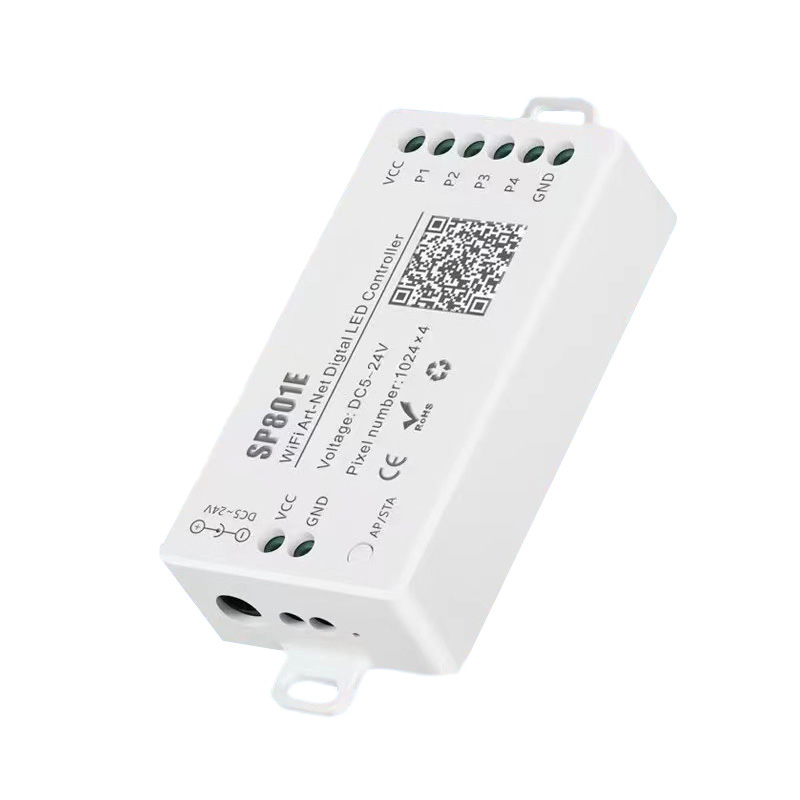
If you're new to this, don't jump straight to a massive 16-universe ArtNet system. Start with a simple USB-to-DMX interface or a small, 4-universe ArtNet-to-SPI/DMX controller like the SP801E. It's more affordable and lets you get the hang of patching and programming in software like xLights or Jinx without the complexity of network configuration.
For smaller setups, any decent consumer-grade router or switch will work fine. For large, high-universe-count professional shows, we strongly recommend a dedicated gigabit network switch just for the lighting data. This prevents traffic from other devices on the network from interfering with your ArtNet signal, which is critical for smooth, flicker-free playback.
No, and this is a critical safety point. The ArtNet controller is a data device; it only sends the control signal. It does not provide the high-amperage power the LED strips need to light up. You must use a separate, correctly sized DC power supply to power your LED strips directly. The controller and the strips will share a common ground, but the main power runs from the PSU to the strips.
They are two different protocols for sending DMX data over an Ethernet network. ArtNet is older and very widely supported. sACN (Streaming ACN) is a newer standard that's a bit more efficient and supports multicast, which can be better for very large networks. Most modern software and hardware, including many of our controllers, support both.