
DC 48V LED Strip Lights
24 products
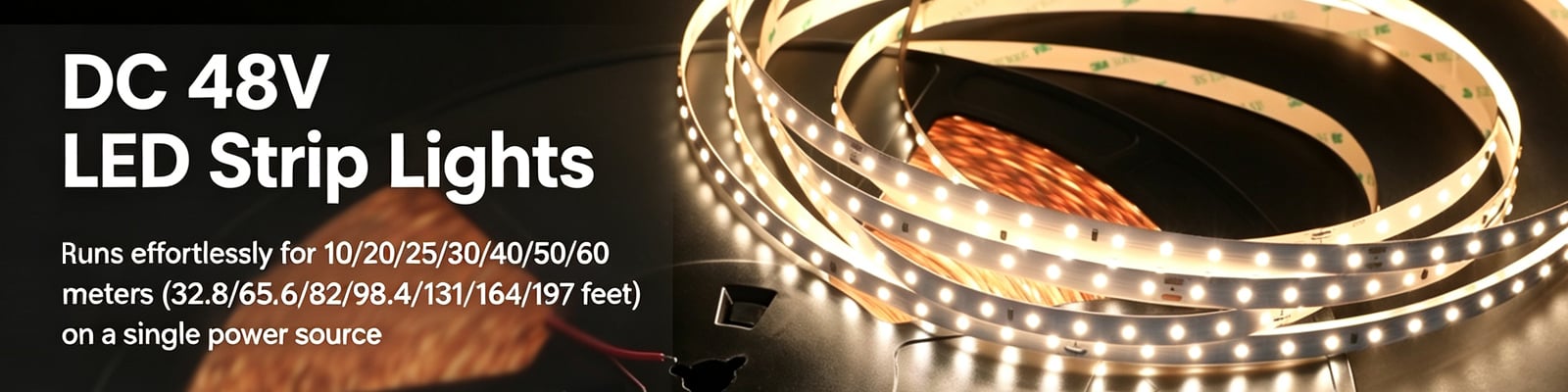
With over a decade of expertise in LED lighting, SUPERLIGHTINGLED 48V LED strip series is the ultimate solution for projects challenged by long-distance illumination requirements in white, CCT, RGB, RGBW, RGBCW light colors. Choosing 48 volt to run LED strip lights is great for large home and commercial projects.
Due to good current planning, 48V led strip can run up to 60 meters. Typically, low voltage LED strips cause brightness degradation and color change due to voltage drop over long running distances. 48V LED lights can solve these problems very well. 48V, while higher than the common 12V or 24V, still meets safe voltage requirements.
Inline controller installation is the most common and user-friendly method for connecting LED strip lighting. In this direct current led 48V lighting setup, the LED strip is connected to the controller, which is then linked to the power supply. For 48V led light strip, a 48V controller and a 48V power supply are required, and their wattage and amperage must be sufficient to support the flexible led 48V light bar.
SuperLightingLED 48 Volt LED Lights Strips Specifications PDF48V Extra Long LED Light Strips SPEC12.2 MB
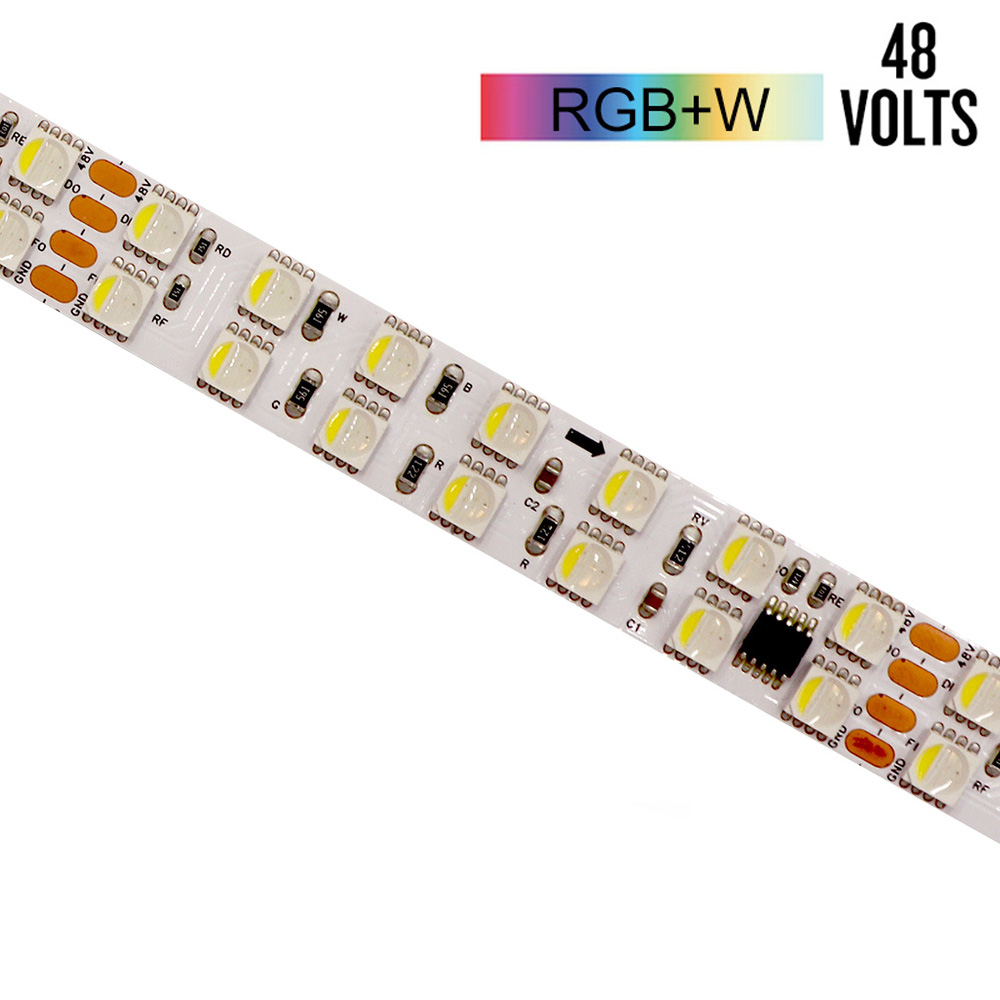
Dual-Row Bright 48V Long Addressable UCS7624 RGBW LED Strip
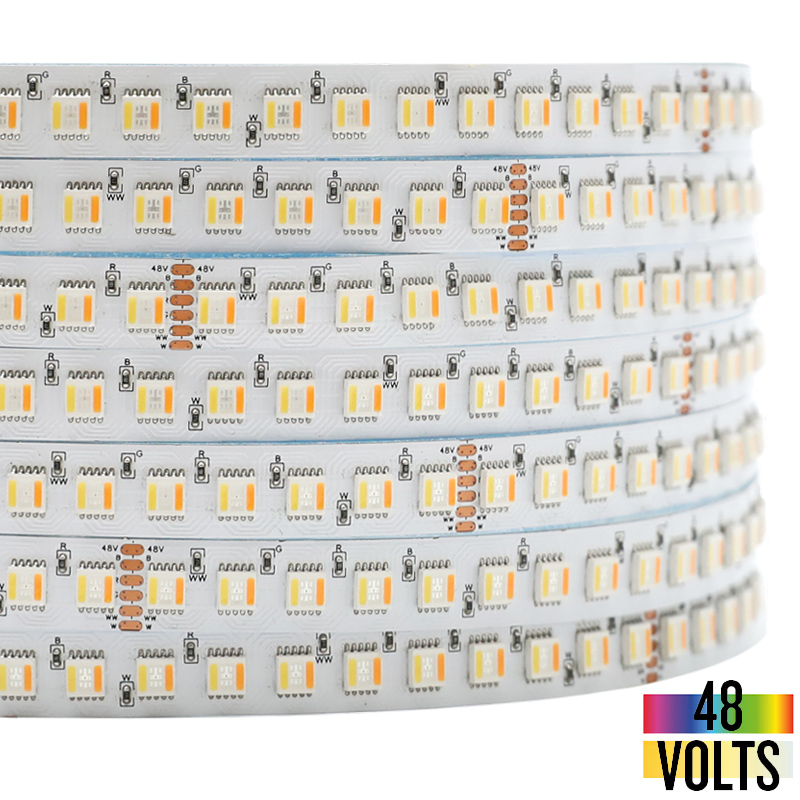
Bright 48V RGBTW 5-in-1 LED Strip Lights 20M - Consistent Brightness
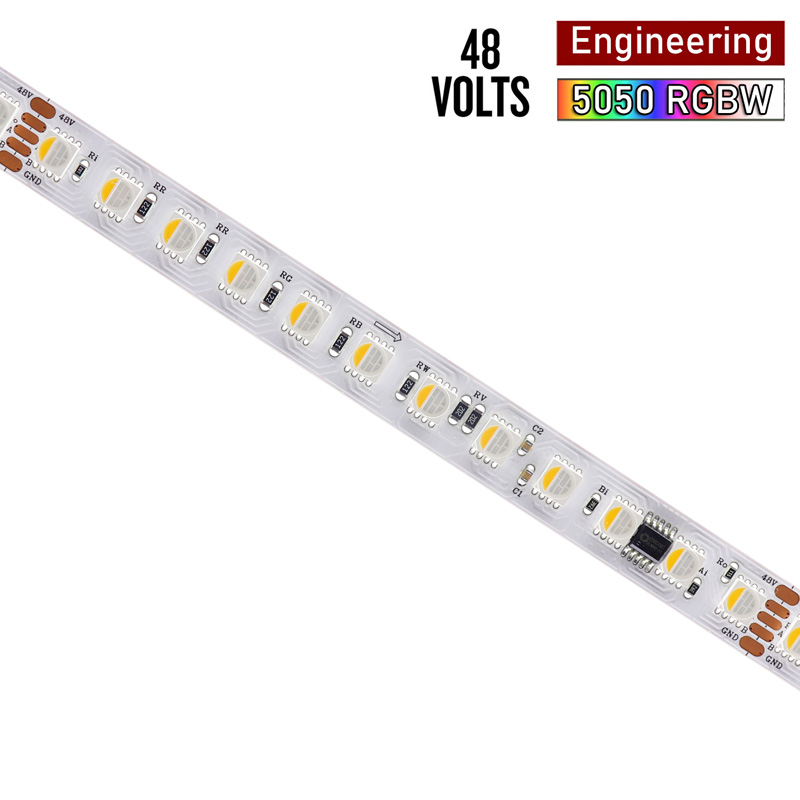
UCS512H4 48V DMX Strip Light 300LEDs 5050 RGBW, 5m to 20m Long
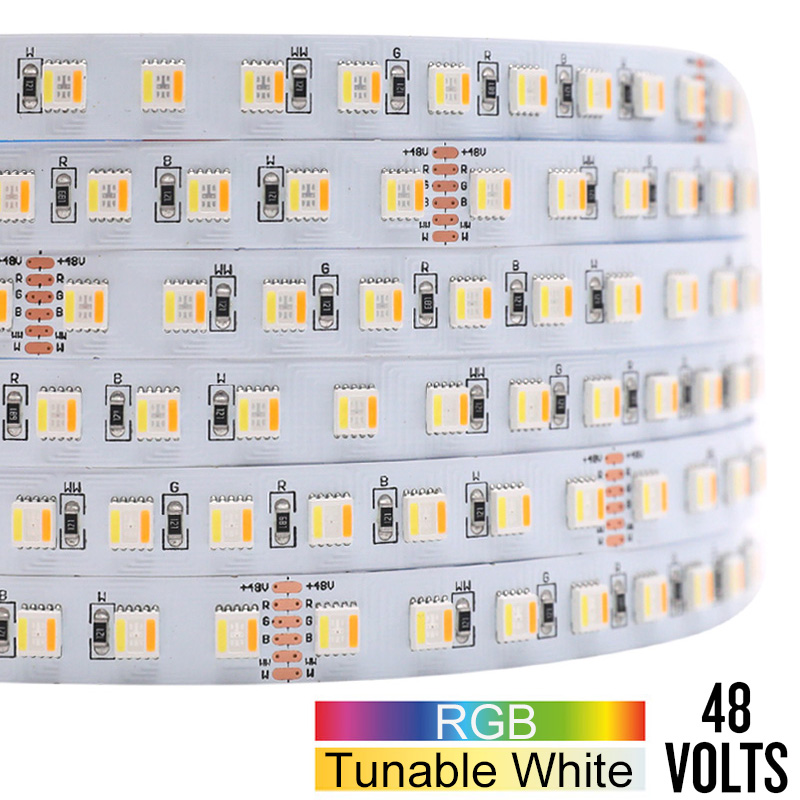
Long Run 20m/65.6ft-30m/98.4ft 48V 5-In-1 RGBWW LED Strip

48V Color changing 4in1 5050SMD 30m Long Run LED Strip Lights
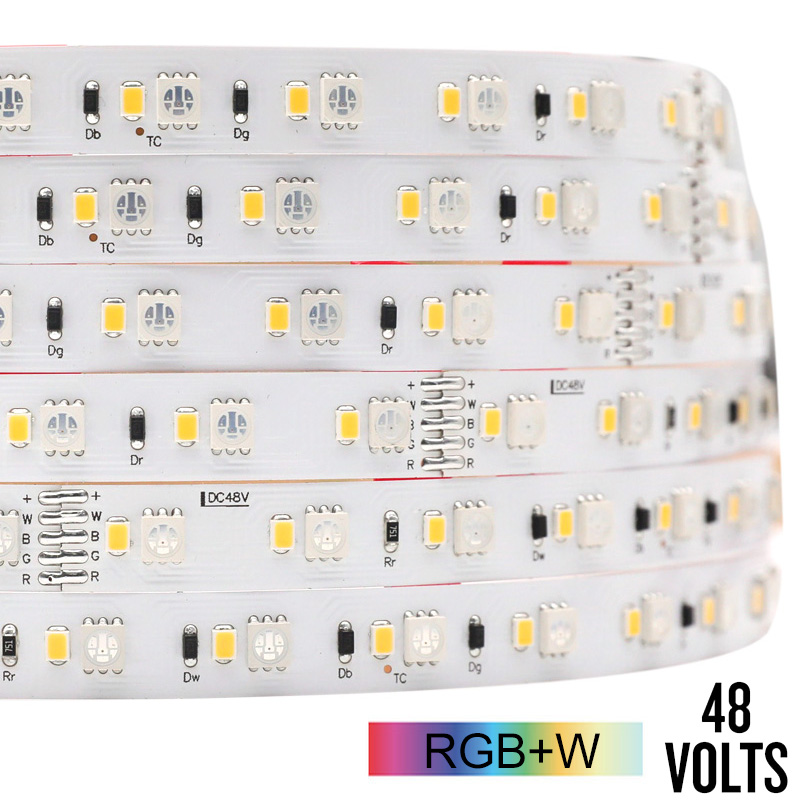
48V Super Long 40m 130ft RGB W LED Strips Lights
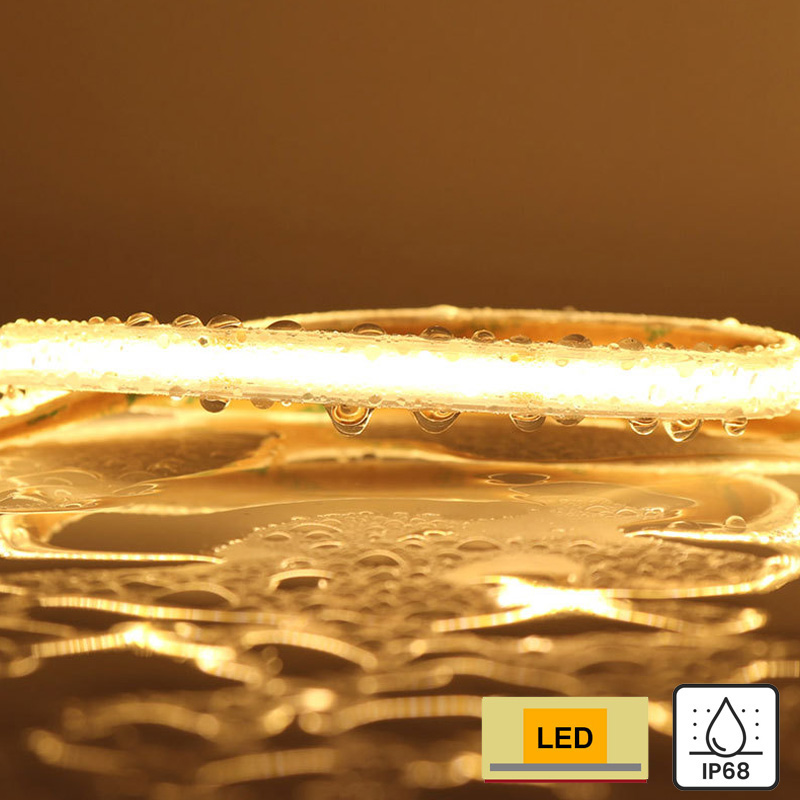
48V DC 32' Continous Outdoor COB LED Strip Lights IP68 Rated

Ultra Long 48V 8mm White COB LED Strip Tape Lights - 16.4' to 98.4'
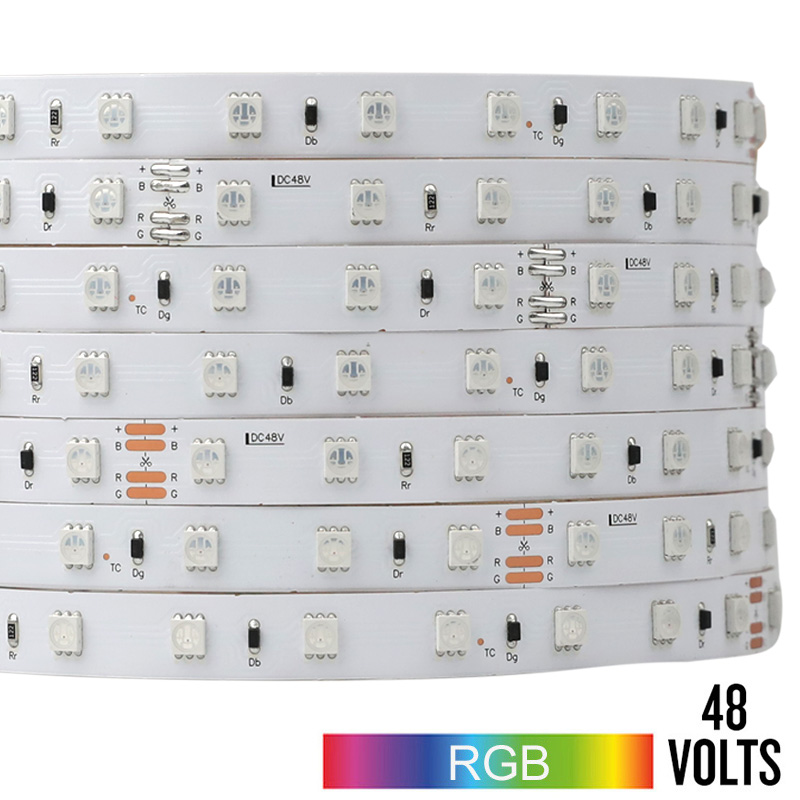
48 Volt Super Long 50m 164ft 5050 RGB LED Strip
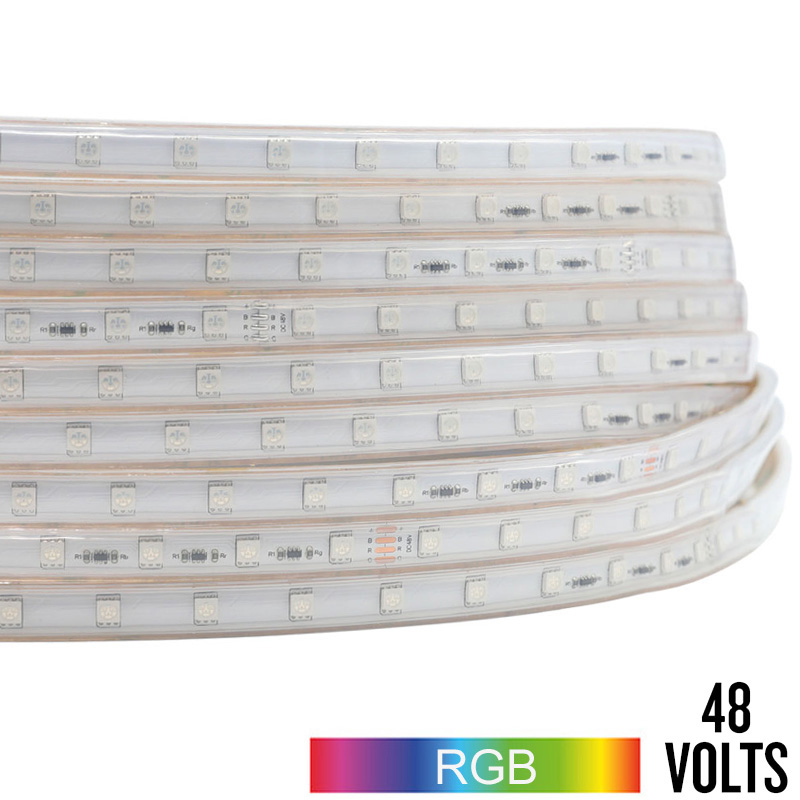
48V 30m 98.4ft Long Color Changing RGB LED Strip

60m (197ft) Ultra Continuous Long Run White Ambiance 48V LED Strip
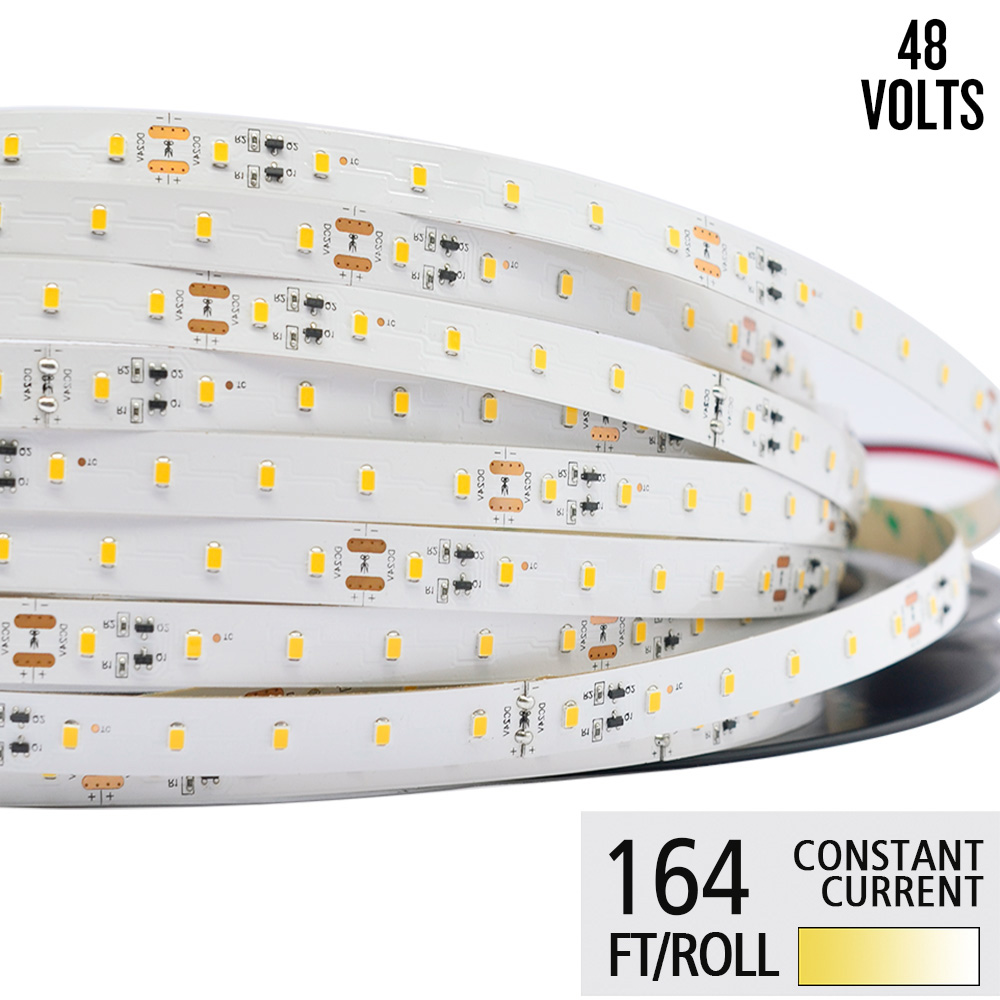
48V 2835 High-Efficiency 10m to 50m Long Run White Light Strip

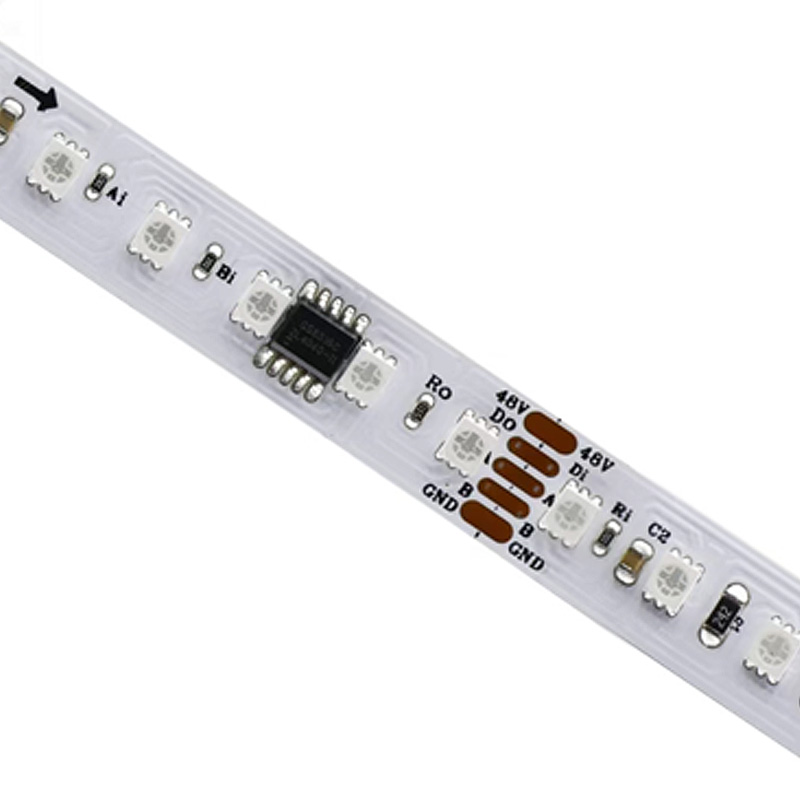
48 Volts 65.6FT Long DMX-Driven RGB Pixel Mappable LED Tape

48V White High Density 30m Extra Long LED Strip Lights
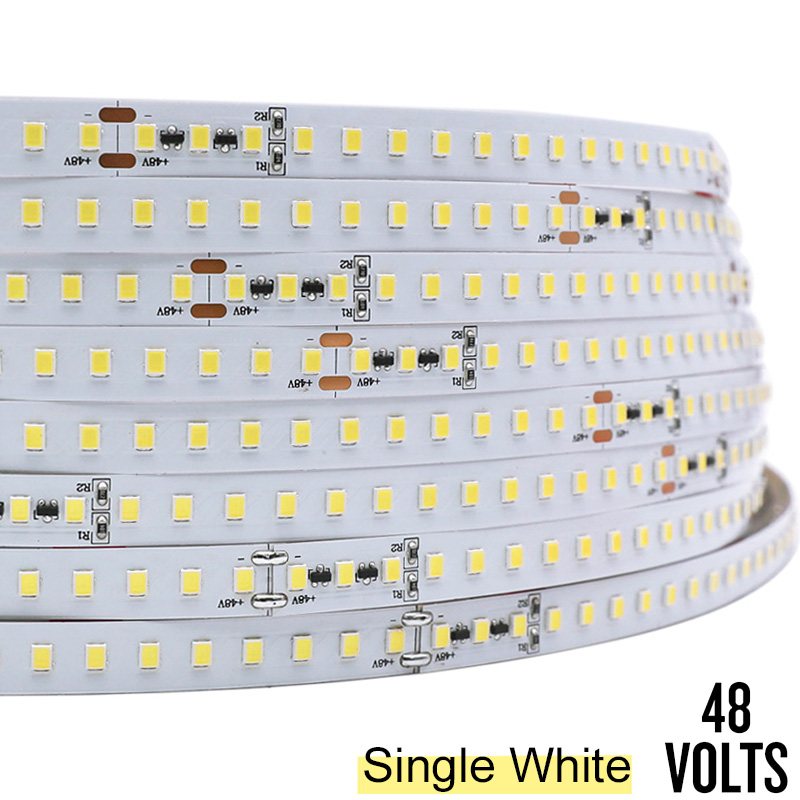
48V 2835 136LEDs/m 30m to 60m Long Running White LED Strip

Professional Grade 48V High-Output 10m Task Lighting LED Strip
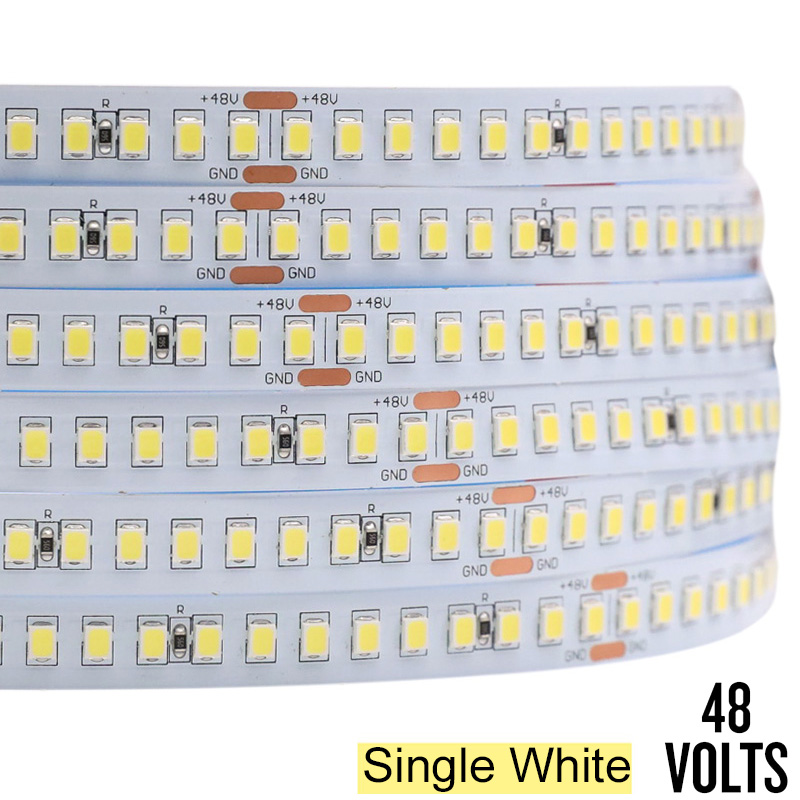
48V 30m Long Continuous White Color LED Light Strip 180LEDs/m
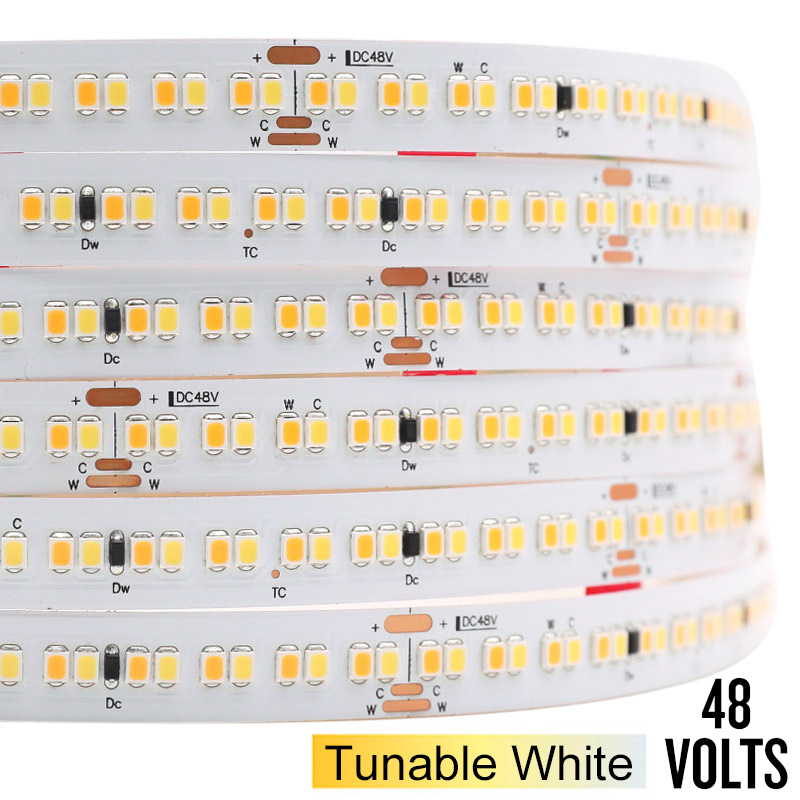
48V Extra Long 40m Adjustable Color Temperature LED Strip
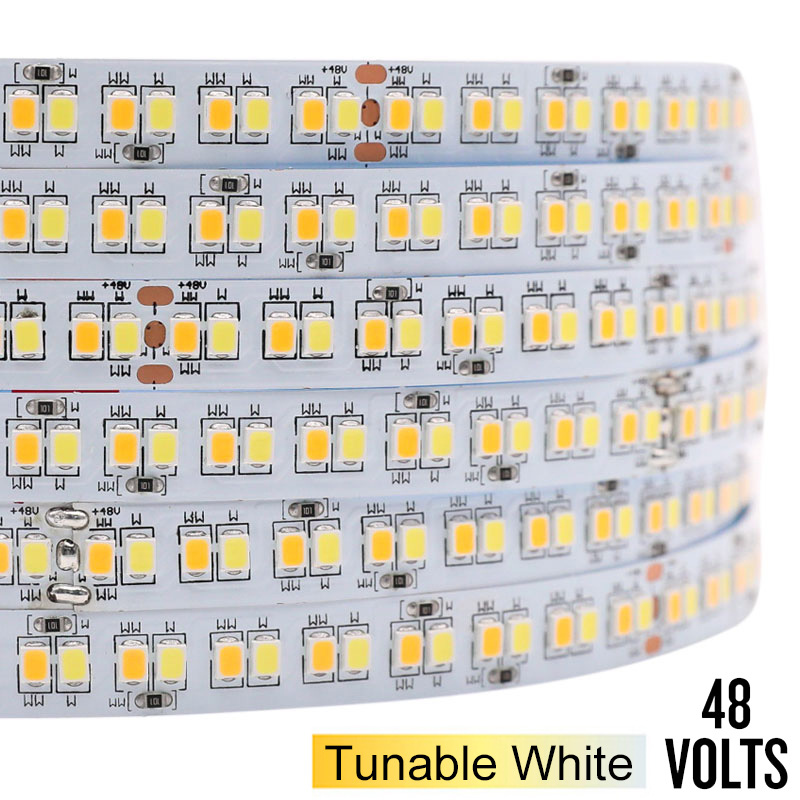
48-Volt 30m Long Distance Dimmable White CCT LED Strip Light
Frequently Asked Questions About DC 48V LED Strip Lights
Got a question about our 48V strips? After 12 years on the support desk, I've probably heard it. Here are the most common things people ask right before they buy.
The main reason is run length. With a 12V DC LED strip light, you'll see brightness drop after about 5 meters. With 48V, you can run a single strip up to 60 meters—that's nearly 200 feet—from one power supply with no visible dimming at the far end. It's the same principle as high-voltage power lines; higher voltage means lower current for the same power, which massively reduces loss over distance. For long coves, building facades, or hallways, 48V is the only way to go for a clean install.
For the strip itself, usually not—that's the whole point of them. Our product specs list the maximum single-ended run length, like 30m or 60m, and we guarantee consistent brightness for that distance. However, you still need to use a voltage drop calculator for the wiring *between* your power supply and the start of the strip, especially if that lead wire is long. A long run of undersized wire can still cause problems before the power even gets to the tape. Our long run guide has a chart for this.
Yes, they usually are. Because the LEDs are grouped in larger series circuits to handle the higher voltage, the cut marks are less frequent. For a 12V strip, you might be able to cut every 3 LEDs (about 1 inch). For a 48V strip, it might be every 12 or 15 LEDs, which could be 4-6 inches. Always check the product spec sheet for the exact cut increment before you plan your layout, especially for projects with tight corners or precise lengths.
For a 130ft (or 40-meter) run, our 48V strips are the perfect fit. You can power the entire length from a single, heavy-duty 48V power supply located at one end. This avoids the common installation nightmare of trying to hide multiple power supplies and run extra wiring mid-way down the hall. Just make sure the power supply's wattage is rated for the total load of the strip—calculate (Watts per meter) x 40 meters, then add a 20% buffer.
No, you can't. You must match the voltage. A 48V LED strip light requires a 48V DC power supply. If you connect it to a 12V or 24V supply, it simply won't light up, or it will be incredibly dim. If you connect a 12V strip to a 48V supply, you'll instantly destroy the LEDs. The voltage rating is the first rule of compatibility.
Yes, it is. Internationally, anything under 60V DC is considered Safety Extra-Low Voltage (SELV). You can touch the contacts on a live 48V strip and you won't get a dangerous shock. It operates on the same safety principle as common 12V DC lights. Of course, we still recommend turning off the power during installation to prevent any accidental short circuits, which could damage the components.
The operating voltage doesn't determine the brightness—the LED chip type, density, and power draw (wattage) do. A 15W/meter 48V strip will have the same brightness as a 15W/meter 12V strip. The difference isn't in lumens, it's in performance over distance. The 12V strip will only hold that brightness for a few meters, while the 48V strip can hold it for its entire maximum run length.
This is a great question, and it's a common point of confusion. 48V solves the *power* problem (voltage drop), but not necessarily the *data* problem. DMX and other addressable data signals can degrade over long distances, causing flickering or incorrect colors at the far end of the strip, regardless of power. For runs over 10-15 meters, you may still need a data signal booster or a DMX512 decoder placed mid-run to keep the signal clean.
No, they don't. A standard DC 2.1mm plug is typically rated for only a few amps. Because these long strips carry significant power, even at 48V, they use screw-down terminals or require you to solder heavy-gauge wires directly to the PCB pads. For high-power and outdoor-rated strips, we use specialized IP68 connectors with a much higher current rating to ensure a safe and reliable connection.
All else being equal, yes, there's a small thermal advantage. Since P=I²R (power loss as heat is the current squared times resistance), the lower current of a 48V system means less heat is generated within the copper traces of the flexible PCB itself. This can lead to slightly cooler operation and potentially a longer lifespan for the components. However, the biggest factor in lifespan is still proper heat sinking with an aluminum channel.
While 48V drastically reduces voltage drop, it can't eliminate the laws of physics entirely, especially on very high-power or extreme-length strips. If you're pushing the absolute maximum rated length, a very slight drop might be perceptible to a trained eye. The most common cause, though, is using a lead wire from the power supply to the strip that is too long or too thin. Try testing the strip with a short, heavy-gauge wire right at the power supply terminals. If it's bright end-to-end, your lead wire is the problem.
Only if you pair it with a compatible dimmable 48V driver. You can't wire a 120V AC wall dimmer (like a Lutron or Leviton) directly to a 48V DC strip. The dimmer controls the power going *into* the 48V power supply. You must use a driver that is specifically listed as TRIAC or 0-10V dimmable, matching the protocol of your wall control. Alternatively, you can use one of our low-voltage PWM single color dimmers that sits between a non-dimmable power supply and the strip.
Absolutely. A huge portion of what we ship is built to customer drawings. You can send us a sketch or a list of lengths, and we'll build it. For a 48V outdoor strip, we can cut it to the nearest cut mark, solder on IP67-rated lead wires of a specified length, and seal the ends with silicone and heat shrink. We can do this for single color, CCT, RGB, or even addressable strips. Just send our engineers your requirements—even a photo of a napkin drawing—and we'll send back a full parts list and quote, usually the same day. There's no fee and no obligation to order.
Great question. While most LED strips are 'Constant Voltage' (they expect a steady 48V), some of our most advanced long-run strips use 'Constant Current' drivers built right onto the strip itself. Each small group of LEDs has its own micro-regulator. This makes them even more resilient to voltage drop than standard 48V strips, ensuring perfectly uniform brightness from the first LED to the last. They are the ultimate solution for runs where consistency is critical, and you can find them in our ultra-long CC strips category.