
RGB/RGBW/RGBCCT LED Strip Amplifier
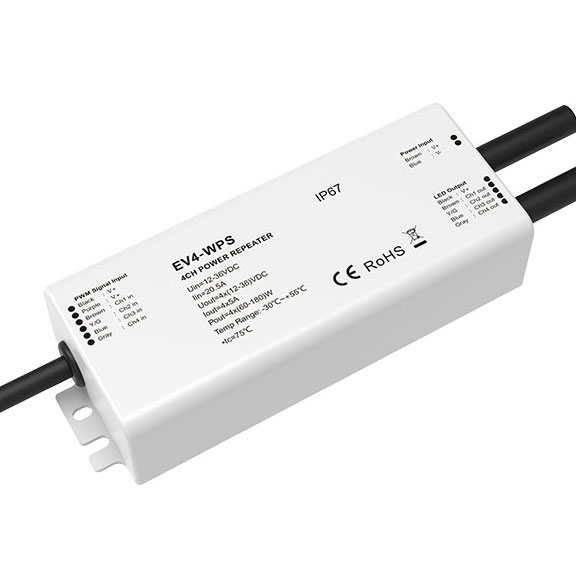
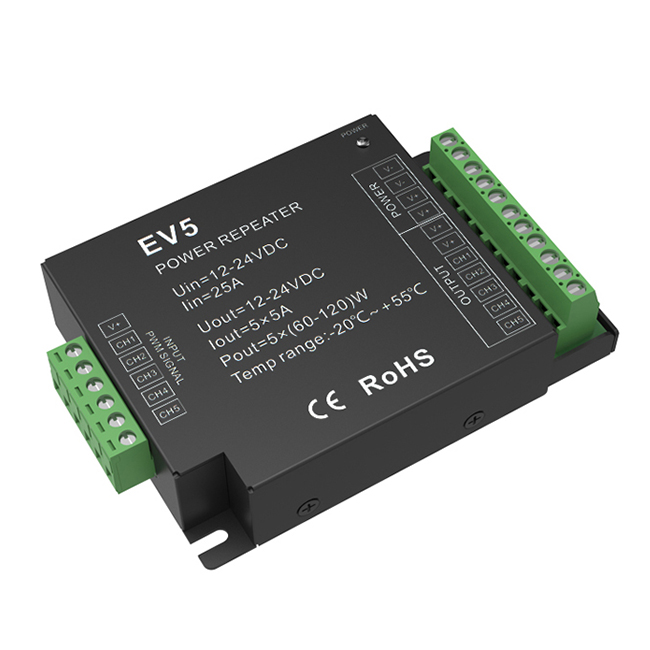
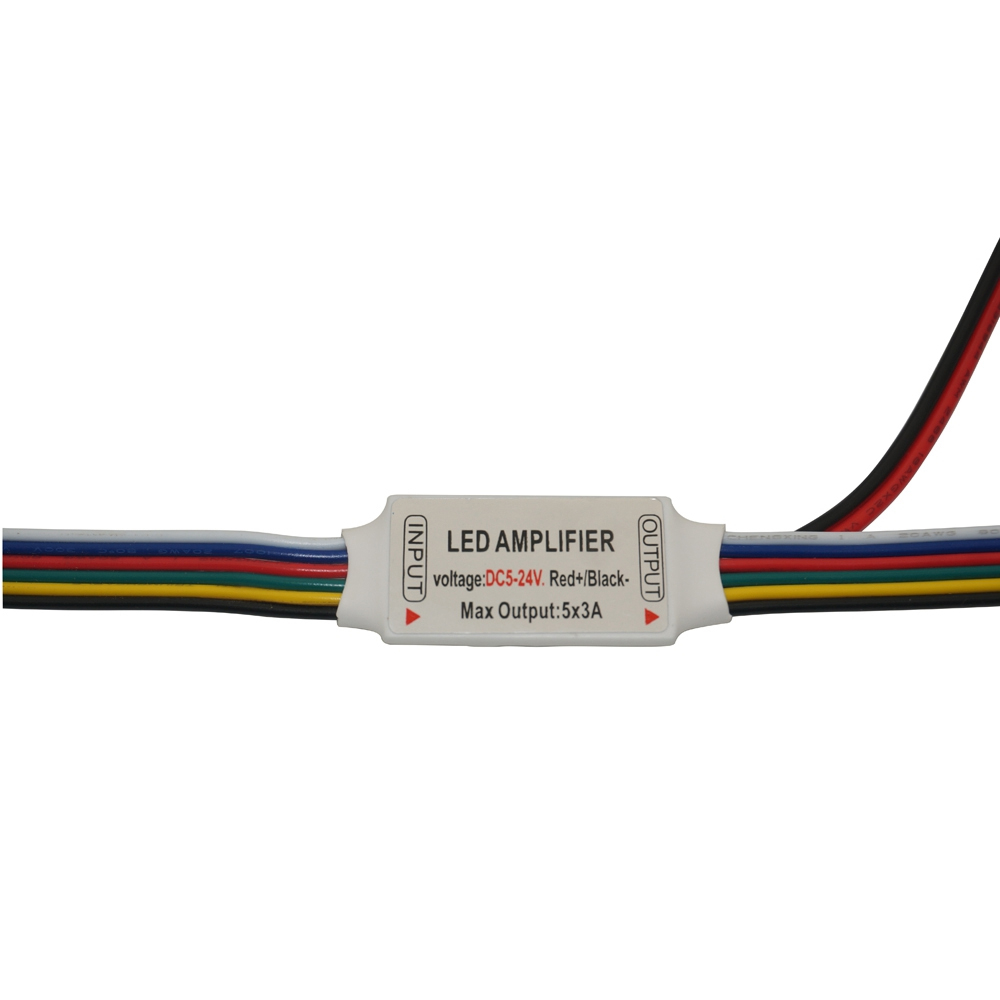
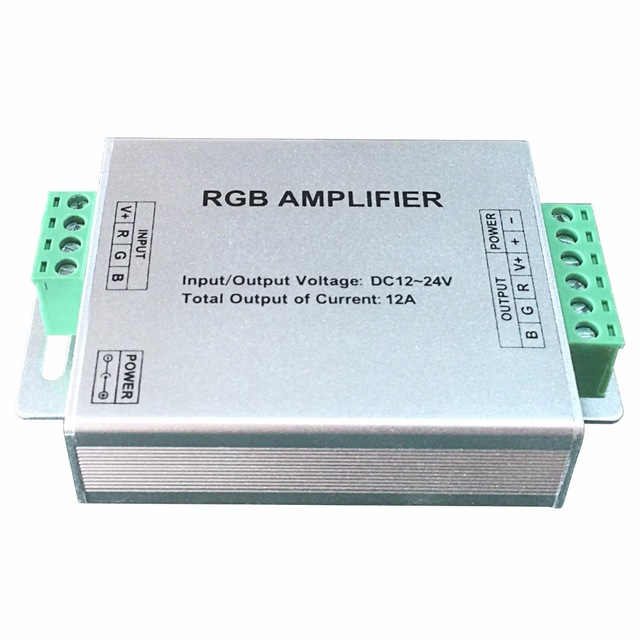
27 products3CH 4CH 5CH LED power amplifiers for color changing RGB RGBW RGBCCT led strip lights. These power amplifiers are used in multi-channel LED strip lighting systems such as RGB (red, green, blue), RGBW (red, green, blue, white), or RGBCCT (red, green, blue, warm white, cool white). They are designed to enhance the LED control signals and to ensure a stable and even variation of LED lighting.
When a long RGB, RGBW, or RGBCCT LED strip exceeds the output capacity of the original controller, connecting additional strip sections directly to the controller can cause overloading, voltage drop, reduced brightness, or uneven color output. A multi-channel LED power amplifier solves this problem by receiving the controller's PWM signals and using a separate power supply to drive the additional LED strip section. The extended color-changing LED strip follows the same color, brightness, dimming, and CCT commands as the original LEDs.
The basic connection is LED Controller → Power Amplifier → Additional LED Strip, with a separate power supply connected to the amplifier. The number of channels should match the LED strip type: 3CH for RGB, 4CH for RGBW, and 5CH for RGBCCT. This allows you to expand the total LED load and controlled strip length while keeping multiple strip lighting sections synchronized under the same controller. For long installations, power should be distributed appropriately to minimize voltage drop and maintain consistent brightness and color across the entire system.
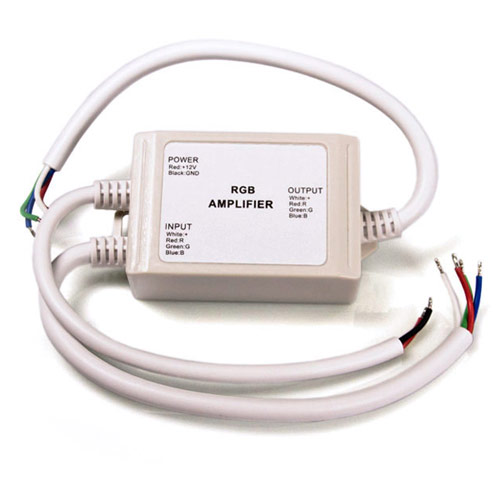
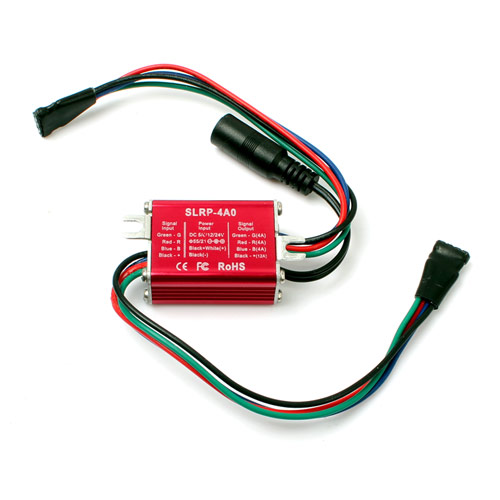
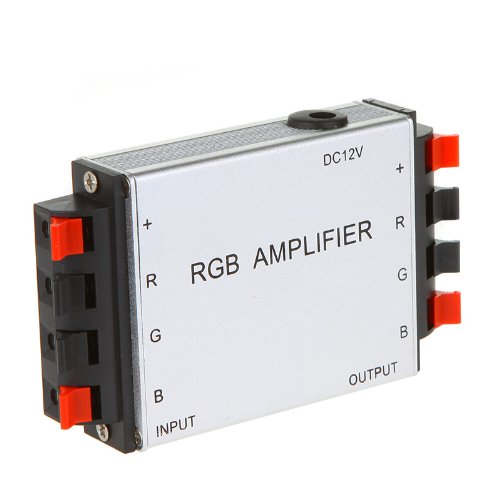
DC 12V 9A RGB LED Amplifier - Extend 5050 3528 Strip Lights | 108W Output
Frequently Asked Questions about RGB/RGBW/RGBCCT LED Amplifiers
Your questions about extending and powering long runs of color-changing LED strips, answered by our engineers.
A bigger power supply gives you more power, but it doesn't solve the two main problems with long LED strip runs: voltage drop and controller capacity. An RGB amplifier, also called a power repeater, takes the signal from your main controller and uses a *second* power supply to run the *next* section of strip. This means the second strip gets a fresh, full-voltage start and doesn't overload your controller. It's how you keep color and brightness perfectly consistent over very long distances.
Wiring a 4-channel RGBW amplifier is straightforward. You'll have an input side and an output side. The input connects to the end of your first RGBW strip (or directly to the controller) — you'll connect R, G, B, W, and V+. The output side connects to the start of your new strip, again matching R, G, B, W, and V+. Then, you connect a separate, appropriately sized power supply to the amplifier's dedicated power terminals. That's the key: the amp powers the new strip, not the original controller. We have a full guide on how to wire RGBW strips that shows this exact setup.
The number of channels on the amplifier must match the number of channels on your LED strip. It's a simple one-to-one rule. Use a 3-channel amplifier for standard RGB LED strips. Use a 4-channel amplifier for RGBW LED strips (which adds a white channel). And use a 5-channel RGBCCT amplifier for LED strips that have RGB plus two white channels (warm white and cool white). Using the wrong one will mean some of your strip's colors won't work at all.
Install the amplifier at the end of the first full strip run, right before the next one begins. For example, if your controller can handle 5 meters of RGBW strip, you'd run that first 5m strip, then connect the amplifier's input to the end of it. The amplifier's output then connects to the start of the second 5m strip. This ensures the signal it receives is still clean and strong, and the new strip starts with fresh power, preventing voltage drop.
Common anode is the standard wiring configuration for most multi-channel LED strips and controllers, including nearly everything we sell. It just means that all the different color channels (Red, Green, Blue, etc.) share a common positive connection (V+). The controller or amplifier then switches the negative side of each color channel to mix colors. As long as you stick with common anode components throughout your system, you won't have any compatibility issues.
The main difference is the amount of current (Amps) they can handle. A tiny, plastic-cased mini amplifier might only handle 3 or 4 Amps per channel, which is fine for a short, low-density strip. A larger amplifier in a metal case, like our 10A per channel model, is built for high-density strips or longer runs. The metal case acts as a heat sink to dissipate the extra heat generated by switching that higher current, ensuring reliability and a long life.
Generally, yes. Our amplifiers are designed to work with any standard PWM (Pulse Width Modulation) constant voltage controller. This is the technology used by the vast majority of RGB, RGBW, and RGBCCT controllers on the market, including all the major brands we stock like Ltech, SkyDance, and MiBoxer. As long as the controller outputs a standard common-anode PWM signal, our amplifier will repeat it faithfully.