
UVC LED Strip Lights
4 productsUVC LED strip is a shortwave ultraviolet light strip with precisely aligned UV LEDs on the PCB that emits 200-280nm invisible light. It is commonly used to sterilize air, surfaces, and water since UVC LED light can penetrate germs' cell walls and break their DNA or RNA, effectively eliminating pathogens. With the advantages of high-efficiency, energy-saving and long lifespan, UVC LED light strips are suitable for hospitals, offices, public transportation, and other places to provide a safe and effective disinfection solution.
We offer professional UV LED strip for sterilization, with emitting light ranging from 270nm-280nm. All UV-C LED sanitizing light strips are equipped with strong adhesive backing for convenient installation. Red black wires exit at both ends for quick connection with power adapters. Germicidal LED strip lights are flexible and trimmable, providing versatility for a wide range of applications.
Please note that UVC LED strip lights must not come into contact with eyes or skin. They are more suitable for sterilizing and disinfecting purposes. If a noticeable fluorescent reaction is required, it is recommended to use ultraviolet LED strips with a wavelength of 365nm or 395nm. We also provide UV-A+UV-C dual wavelength LED tape for a more comprehensive UV illumination effect.

270nm Germicidal & 395nm Photochemical Ultra Violet LED Light Strip

270nm/275nm/280nm USB-Powered SMD3535 LED UVC Light Strip
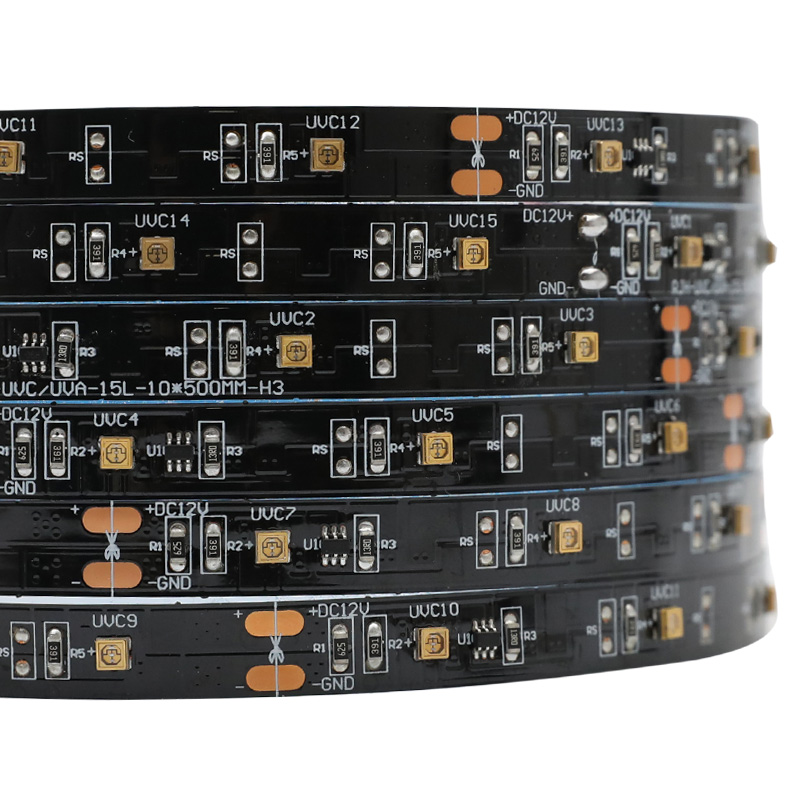
12V SMD3535 UVA 395nm And UVC 275nm Dual UV LED Light Strip
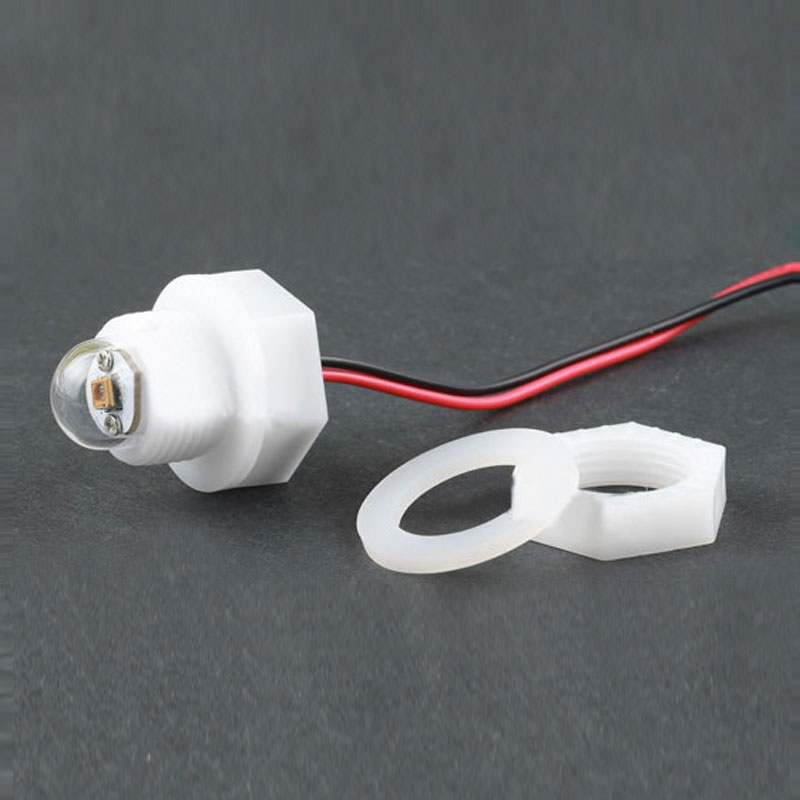
DC12V/24V UV Static Water Sterilizer LED Module, 10pcs/pack
FAQ About UVC LED Strip Lights
Your questions about UVC germicidal LED strips, answered by our engineers.
A UVC light is a strip that produces short-wavelength ultraviolet light, specifically in the 200-280nm range, which is invisible to the human eye. This is the germicidal range, capable of deactivating bacteria and viruses by scrambling their DNA. It's completely different from the more common UVA light (320-400nm) used for blacklight effects and resin curing. Our UVC LED strips operate at a peak wavelength of 270-280nm for maximum effectiveness.
UV sterilization is a disinfection method that uses UVC light to neutralize microorganisms. When the light hits a pathogen like a virus or bacterium, it penetrates the cell wall and damages its DNA or RNA. This prevents it from reproducing or causing infection. It's a physical process, not a chemical one, so it leaves no residue. It's been used in hospitals and water treatment for decades; these UVC LED strips just make the technology more accessible.
Our UVC light strips incorporate 395-nanometer violet light as visible light, allowing you to easily check the operating status of the UV lights at any time.
Yes, direct exposure to UVC light is harmful to skin and eyes and you should never be in the room when they are on. These are not for general lighting. The UVC light only activates when the space is empty and sealed. No people, no pets, no plants.
This depends entirely on dosage, which is a function of the UVC light intensity and exposure time. Intensity decreases significantly with distance. For a surface 12 inches from the strip, a 5-to-10-minute cycle might be effective. For air disinfection, you need much longer run times and ideally an air circulating fan. We recommend using a UVC radiometer to measure the actual dosage for any critical application.
Honestly, for the purpose of a UVC LED strip, there's very little practical difference. The peak germicidal effectiveness is around 265nm, and all these wavelengths are very close to that peak and highly effective. Instead of focusing on the exact nanometer, it's more important to look at the strip's total output power, measured in milliwatts (mW) or watts per meter. Higher power and density mean faster disinfection times.
Absolutely, and for safety reasons, you should. A UVC LED strip is a single-color device, so it just needs power to turn on. You can wire its power supply to be controlled by a standard wall switch, a timer, or a relay connected to a motion or door sensor. This is the most common setup for applications like disinfection cabinets or unoccupied rooms. You don't need any complex dimmer controller unless you have a specific need to adjust intensity.
The effective range is quite short. UVC intensity follows the inverse-square law, meaning it drops off very quickly with distance. For surface disinfection, you want the strip to be as close as possible—ideally within 12 inches (30 cm). Beyond a few feet, the intensity is too low for effective sterilization in a reasonable amount of time. These are for close-proximity applications, not for disinfecting an entire room from the ceiling.
No, they do not. Our UVC LED strips are designed to operate at 270-280nm, which is well above the wavelength that generates ozone (which is typically below 240nm). This is a significant safety advantage over some older mercury-vapor UV lamps that did produce ozone as a byproduct.
A dual-band UV strip gives you two functions in one. The UVC LED component, typically around 275nm, provides the germicidal action for sanitization. The UVA LED component (around 395nm) provides a visible violet light, which acts as a helpful 'on' indicator and can also be used for basic fluorescence and inspection tasks. Our dual-band UV strip is a popular choice for getting both capabilities from a single installation.
This is a critical factor. All UVC LEDs degrade with use, meaning their germicidal output decreases over time. A quality LED might be rated for an L70 lifespan of 10,000 hours, which means it will retain 70% of its initial output after that time. For any serious disinfection system, you must account for this degradation and plan to replace the strips periodically to maintain effectiveness.