
COB LED Strip RGB+W
10 products
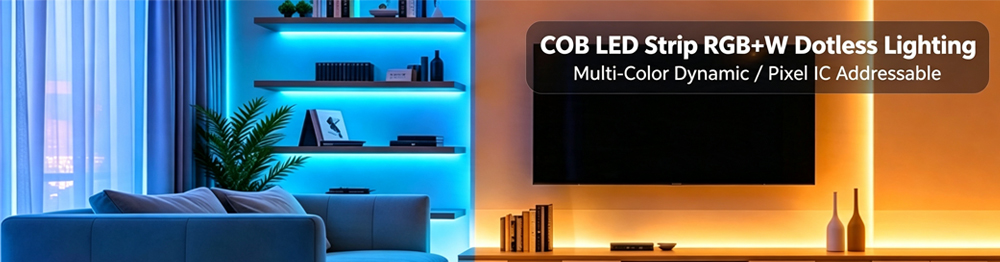
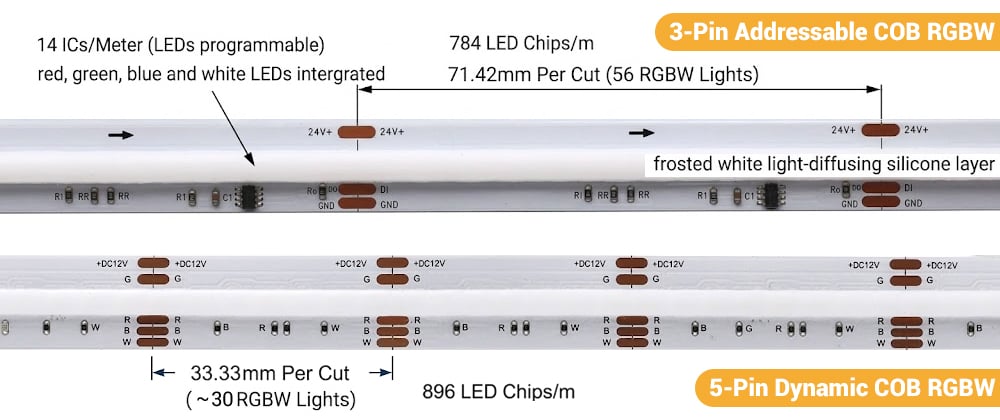
SUPERLIGHTING LED RGBW COB LED strips include 5-pin color-changing dynamic RGBW COB types and 3-pin addressable IC RGBW COB types. These two types of RGBW COB lights use completely different control signals and control systems, and they also differ in color performance.
RGBW COB LED strip, as the name suggests, refers to a COB LED light strip that not only has red, green and blue LEDs mounted on PCB, but also comes with additional white LEDs. This design allows rgb+w cob led strip to emit a more natural pure white light apart from colorful lights. Besides, white LEDs of COB RGBW LED strip can also add brightness to other colored lights, providing a more even and smooth glow. In our COB LED RGBW strips, white LEDs are available in color temperatures of warm light 2700K, 3000K, netural light 4000K and daylight 6000-6500K.
5-Pin Dynamic COB RGBW vs. 3-Pin Addressable COB RGBW: How to Choose
Addressable COB RGBW is an upgraded version of dynamic COB RGBW. Not only can it display a rich variety of static colors and dynamic modes, but it also allows you to program the color and brightness of each IC segment to achieve countless color combinations on a single strip. These two types of COB LED RGBW lights strips are not interchangeable; please select the one that best fits your project’s vision.
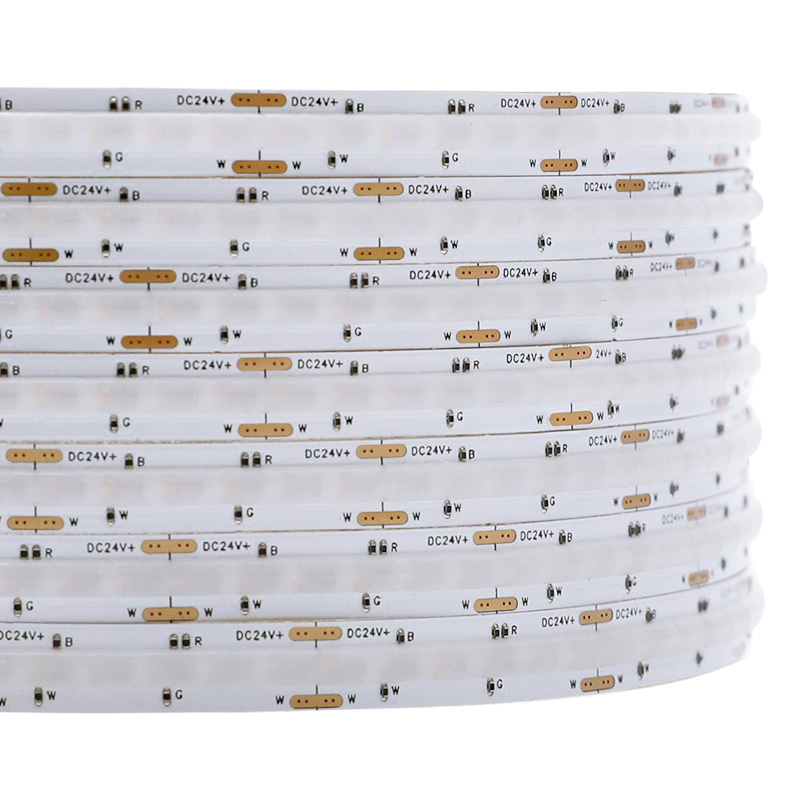
Small 8mm RGBW Cob 24V LED Color Changing Strip For Cabinet
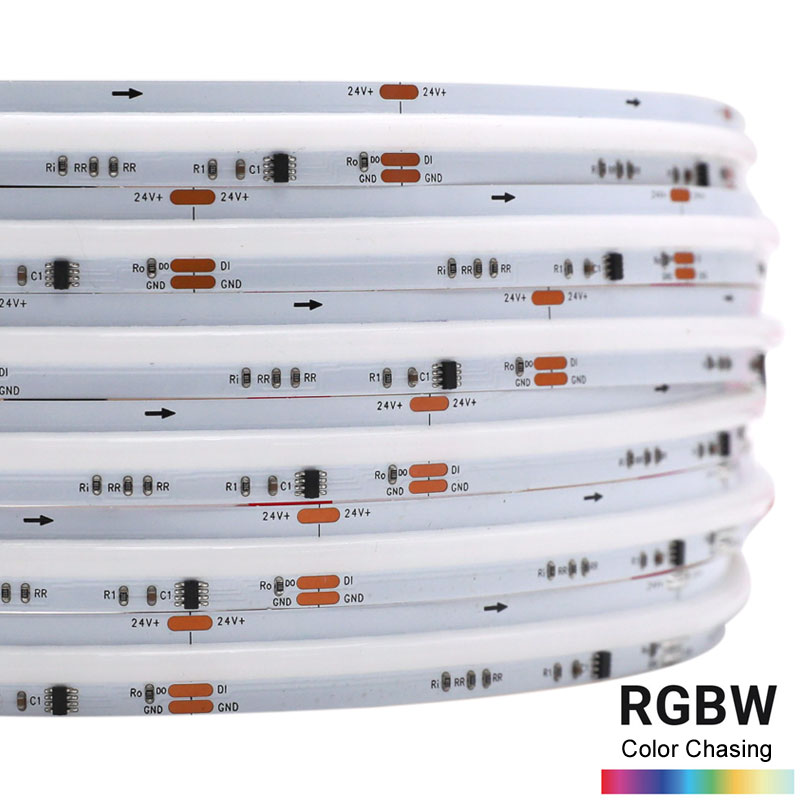
24 Volt WS2814 Fcob RGBWIC Addressable RGBW LED COB Light Strip
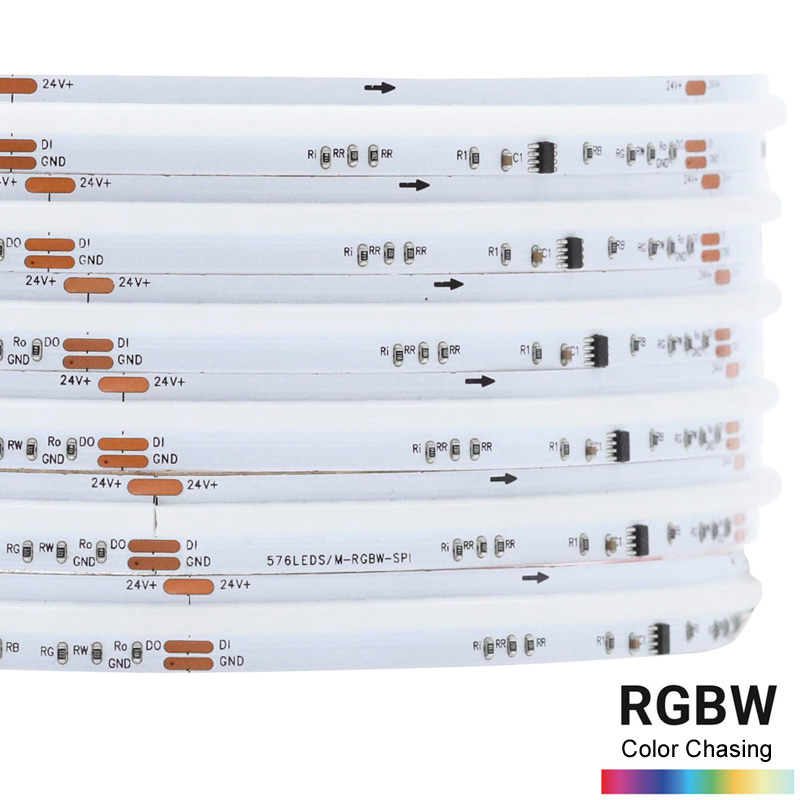
24V FCOB SPI RGBW IC LED Strip Light WS2814 Addressable 576 LEDs / m
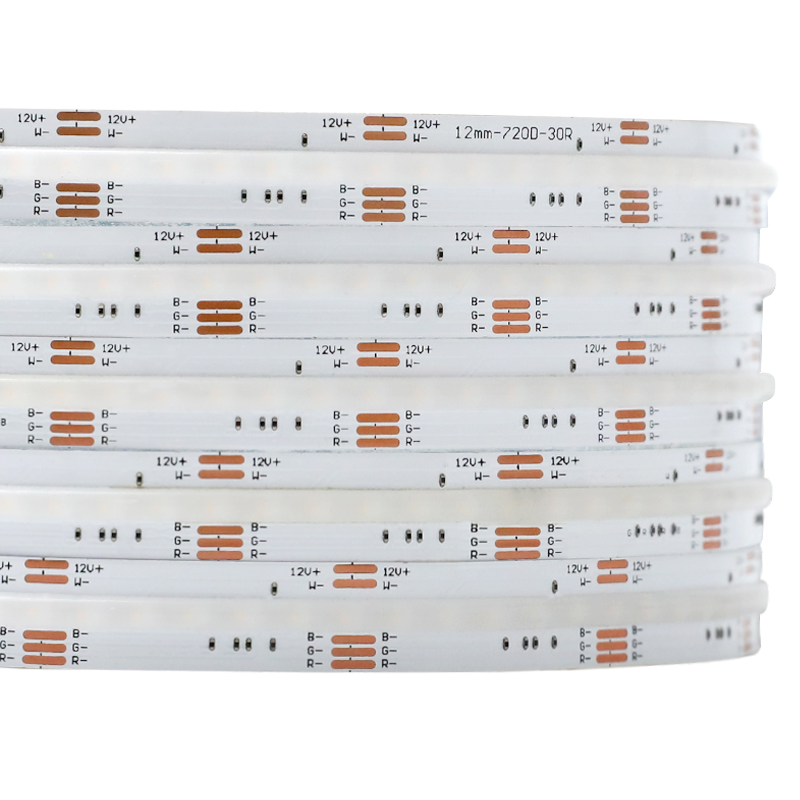
DC12V 896Chips/m Bright Cob RGBW Led Strip
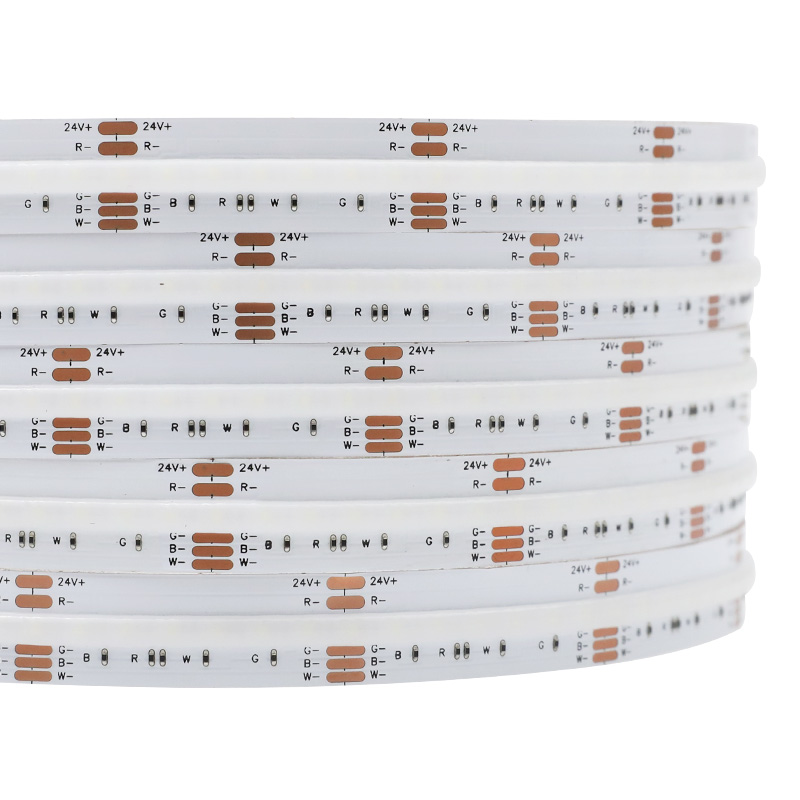
24V High Density RGBW COB LED Strip with a Thinner Cover Layer 840 LEDs / m
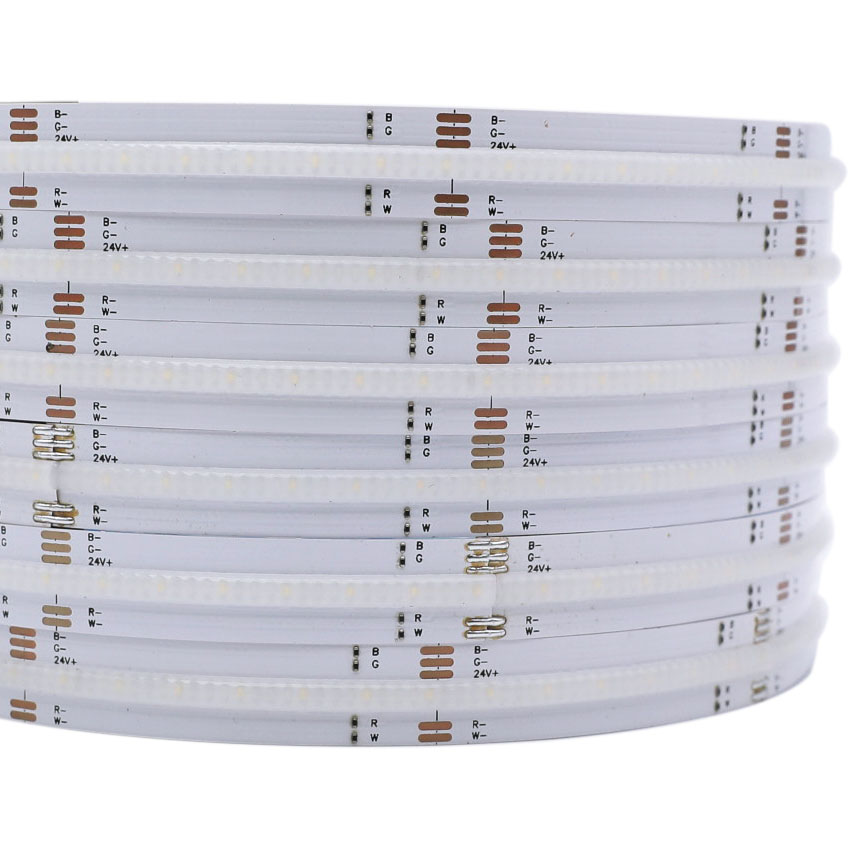
DC24V Color Change RGBW 16.4Ft Flexible COB LED Strip Lights
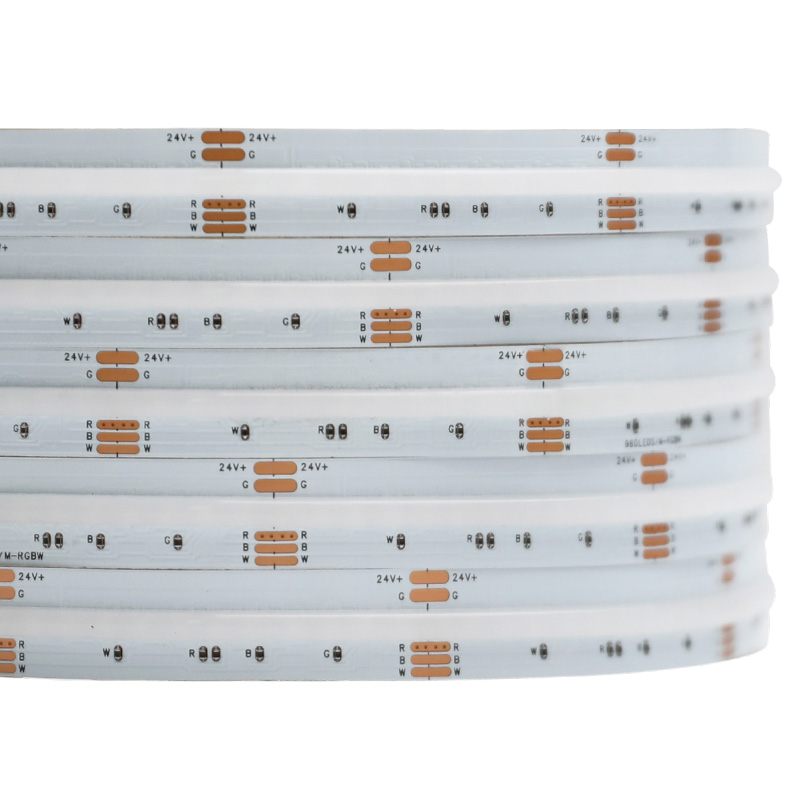
24V 960 Fcob RGBW Dotless LED Strip Ceiling Cove Lighting
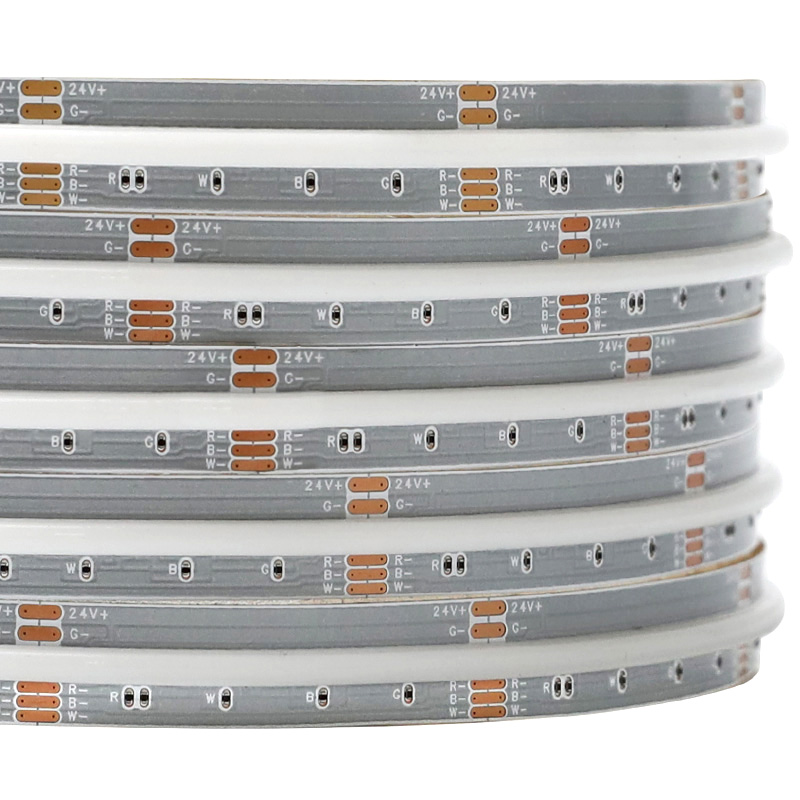
Silver-PCB Ultra Bright RGBW Led COB Flex Strip Light
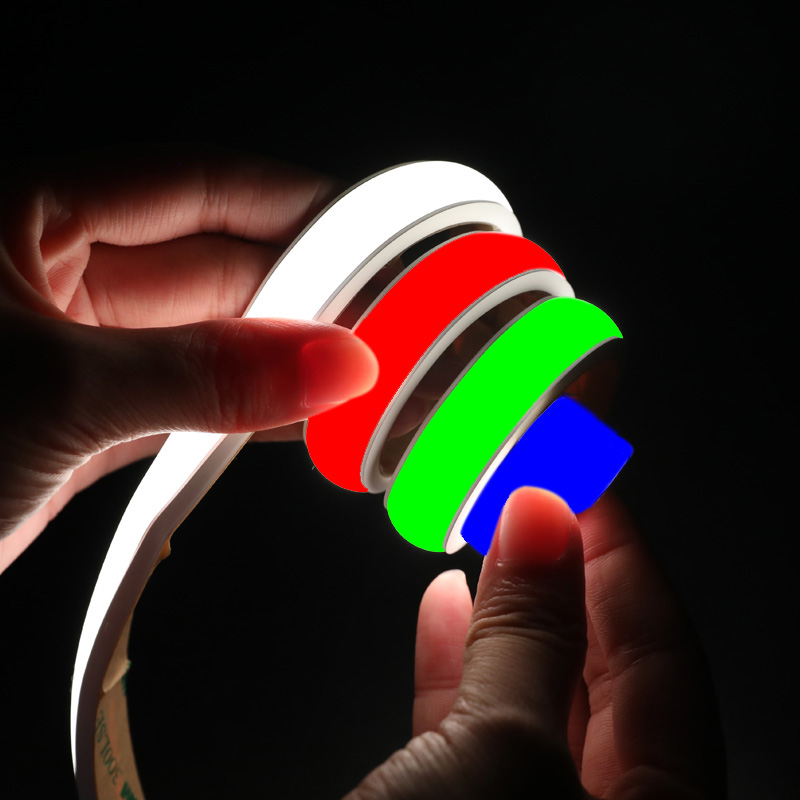
Cob RGBW Flexible Led Neon Cuttable Permanent Outdoor Rope Lights
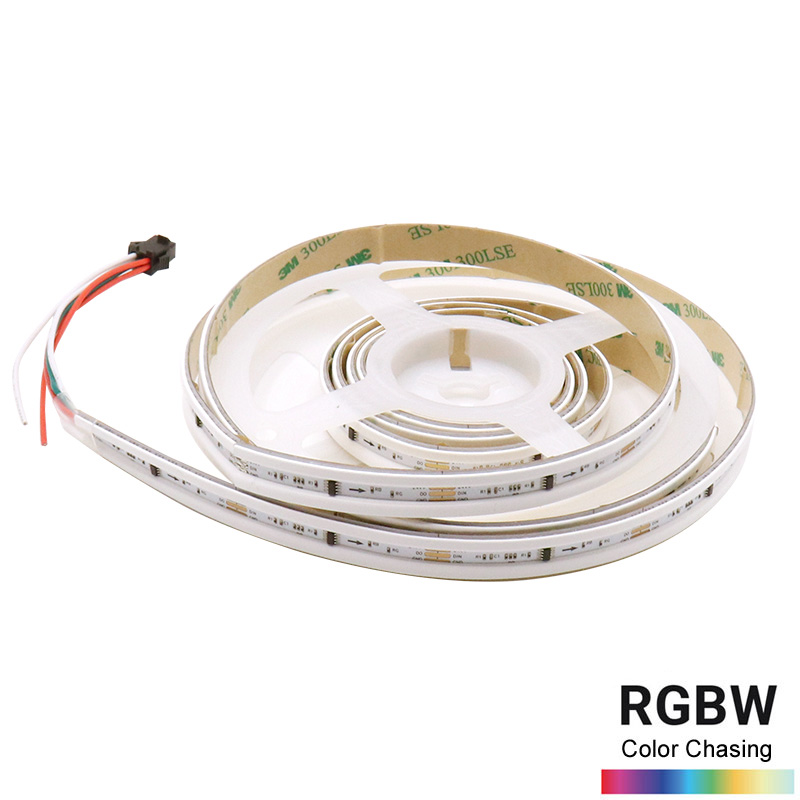
WS2814F COB Neopixel RGBW Bi-Directional Side LED Light Strip
COB LED Strip RGB+W: Spectrum Test Reports (3000K / 4000K / 6000K)
RGBW 3000K COB LED Strip Spectrum Test Report
RGBW 4000K COB LED Strip Spectrum Test Report
RGBW 6000K COB LED Strip Spectrum Test Report
FAQ About RGBW COB LED Strip Lights
A few quick answers to the most common questions we get about these strips. If your question isn't here, just ask us.
It's all about control. A standard 5-pin RGBW COB LED strip shows one color at a time—the whole strip is red, or blue, or warm white. An addressable (or 'pixel') 3-pin strip has IC chips that let you control small segments independently. That's how you get rainbow chases and other flowing effects on a single strip. They use completely different controllers and are not interchangeable, so pick the one that matches the effect you're after.
Go with 24V for almost everything. The higher voltage lets you run longer lengths of the RGBW COB light before voltage drop kicks in and dims the far end. For a 24V LED strip, you can usually run up to 10 meters with power from one end.
First, check if your tape is standard or addressable. If it's a standard 5-pin light strip, you need a standard RGBW controller. If it's a 3-pin addressable strip with ICs (like WS2814), you need a specific addressable RGBW controller. They are not cross-compatible. Mixing them up is the #1 mistake people make. The controller's power rating also has to exceed the total power of your strip.
That's classic voltage drop. It happens when you run the LED strip too long for its voltage. The fix is to use a 24V strip for runs over 5m COB RGBW light, or inject power at both ends of the strip. Our guide on how to wire RGBW strips shows diagrams for this.
Absolutely. You'll see copper pads at designated cut points. Just cut along the line with sharp scissors. To rejoin them, especially around corners, it's best to use our solderless COB strip connectors. They just clip on or piercing and make a solid connection without needing a soldering iron. Make sure you get the right connector for your strip's PCB width and pin count (5-pin for standard, 3-pin for addressable).
For visual quality, yes. A traditional 5050 RGBW strip has visible LED chips, creating dots of light, especially on reflective surfaces. An RGBW COB LED strip packs hundreds of tiny chips together under a continuous phosphor layer. The result is a completely seamless, dot-free line of light. It just looks more professional, especially for things like under-cabinet lighting or in visible aluminum channels.
The wires are in the wrong terminals on the controller. Your RGBW COB strip has separate wires for Red, Green, Blue, White, and Power (V+). If you accidentally swap the Red and Green wires, the controller will send the 'red' signal down the green wire, and vice-versa. Just double-check your wiring sequence against the controller's labels (R, G, B, W, V+). It's an easy fix.
The LED density, like 840 LEDs/m or 960 LEDs/m, tells you how many individual LED chips are packed into each meter of the strip. With an RGBW COB LED strip, higher density means more brightness and an even smoother line of light. While all COB is 'dotless', a higher density strip will have a higher light output (lumens per meter), which is important for primary lighting tasks versus just accent lighting.
Yes, we do this all day. A huge amount of what we ship is built to a customer's drawing and never even appears on the site. Just send us what you need—a sketch, a CAD file, even just a description of the lengths and wire exits. Our engineers will send back a complete wiring layout, parts list, and price, usually within 12 hours. We can do custom lengths, add waterproof connectors, and seal it to IP67 for outdoor use. There's no fee for the consultation and no obligation to order.
Because the 'white' you get from mixing 100% Red, Green, and Blue light is never a pure, clean white. It usually has a bluish or pinkish tint and looks unnatural. More importantly, it has a terrible Color Rendering Index (CRI). A dedicated white chip on an RGBW COB strip gives you a high-CRI, high-quality white light that looks great on skin tones and surfaces. It's the difference between 'circus lighting' and 'architectural lighting'.
For under-cabinet, you want something bright, clean, and slim. I'd recommend our 8mm wide RGBW COB under cabinet strip. Its narrow profile fits easily behind the cabinet lip, and the COB design means you won't see ugly dots reflected in your granite countertops. The dedicated white chip is perfect for task lighting when you're cooking, and you can switch to colors for atmosphere.