
WiFi RF Power Adaper
11 productsA Smart LED Driver combines an LED power supply and LED controller in one integrated unit, simplifying the installation, wiring, and control of LED strip lighting. Instead of connecting a separate power adapter and controller, a smart driver can provide the required DC output while also receiving wireless control commands through technologies such as RF, WiFi, or Bluetooth.
These smart drivers can be used with DC12V or DC24V low-voltage LED strips. The integrated design makes them a convenient solution for residential lighting, cabinet and furniture lighting, accent lighting, DIY projects, and other installations where space, wiring, and simple operation are important.
How Do You Connect a Smart LED Driver?
The basic connection is simple: AC Power → Smart LED Driver → LED Strip. For a typical DC12V or DC24V installation, connect the AC input to the smart driver's power input and connect the driver's DC output to the corresponding V+ / V− terminals of a single-color LED strip, or to the appropriate multi-channel outputs for CCT, RGB, RGBW, or RGBCCT strips, depending on the driver.
Once powered, pair the RF remote or connect the WiFi/Bluetooth driver to the compatible App or smart-home system. The integrated controller then manages the LED output without requiring a separate external LED controller.
When selecting a smart LED driver, make sure the input voltage, output voltage, LED type, channel configuration, maximum load, and wireless control method match your LED strip and application.
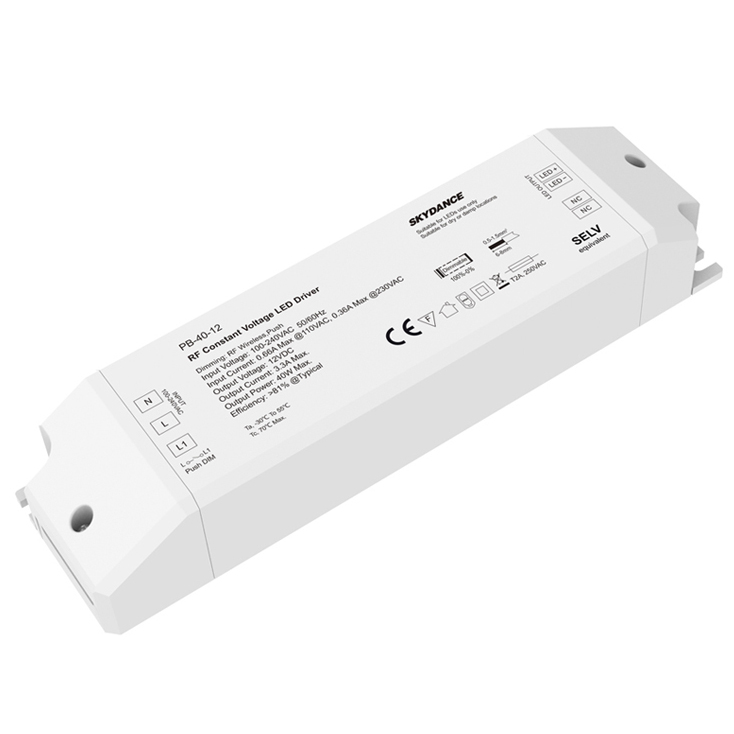
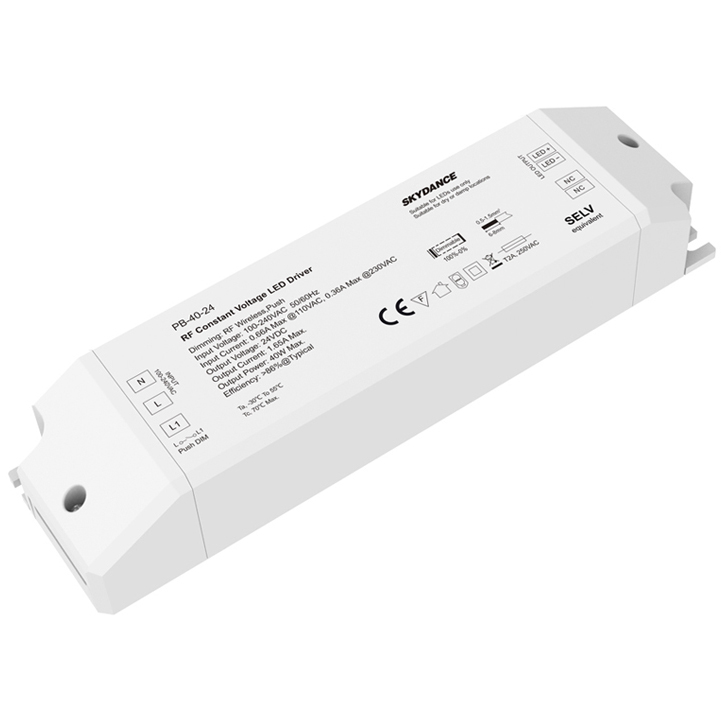
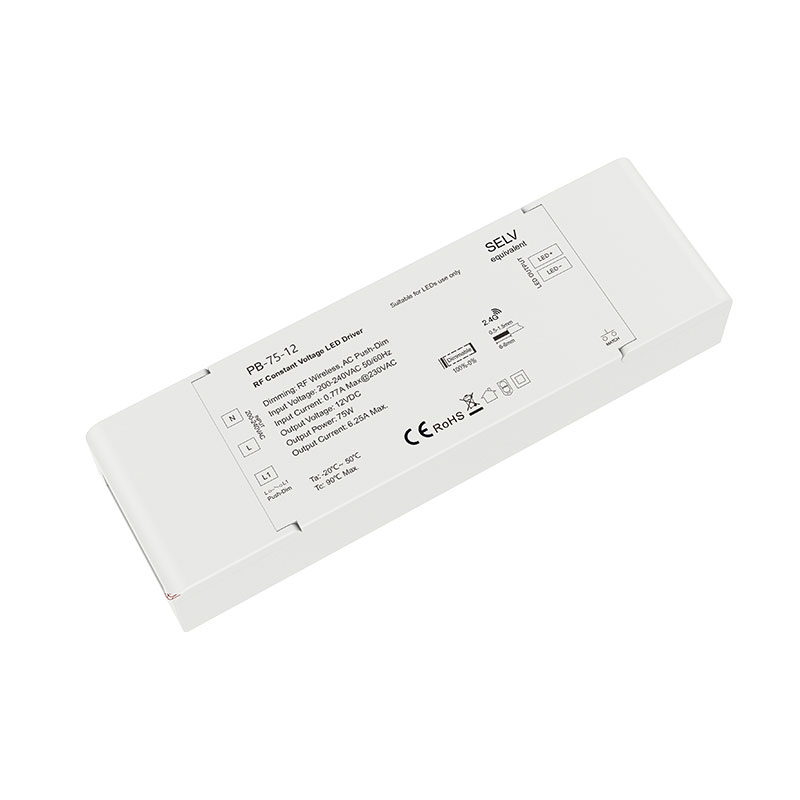
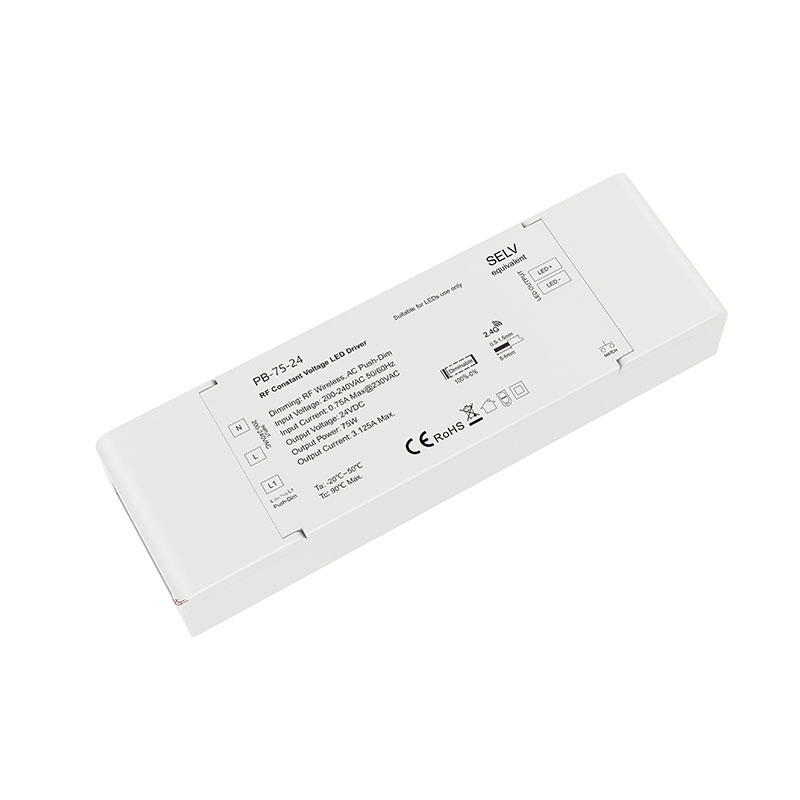
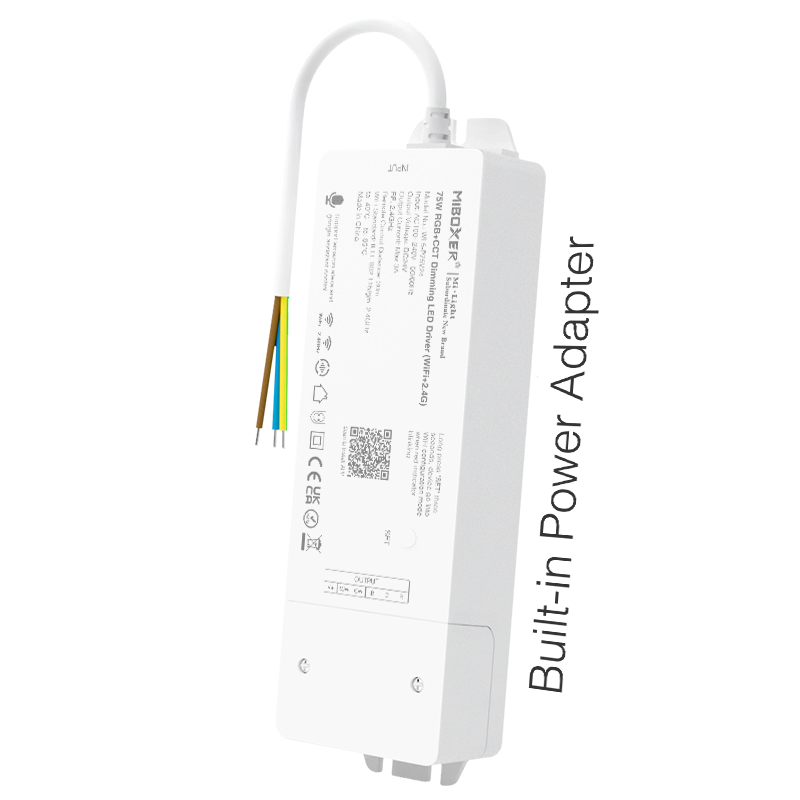
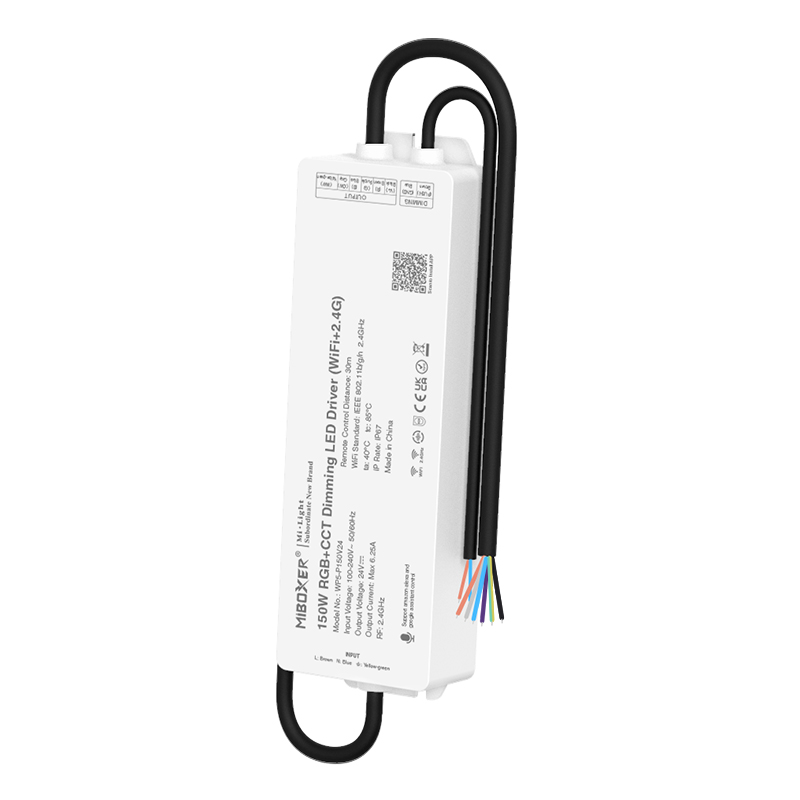
150W RGB+CCT WiFi LED Driver: Seamless Dimming & Control
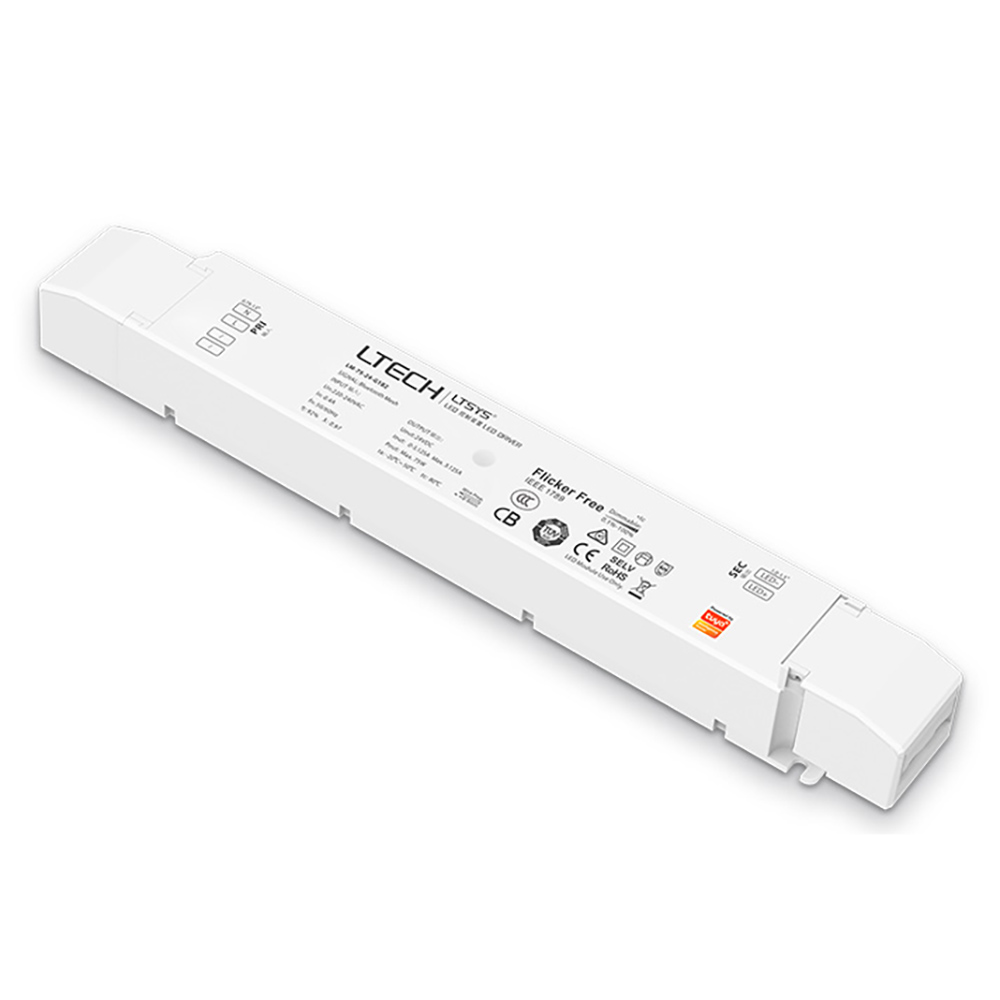
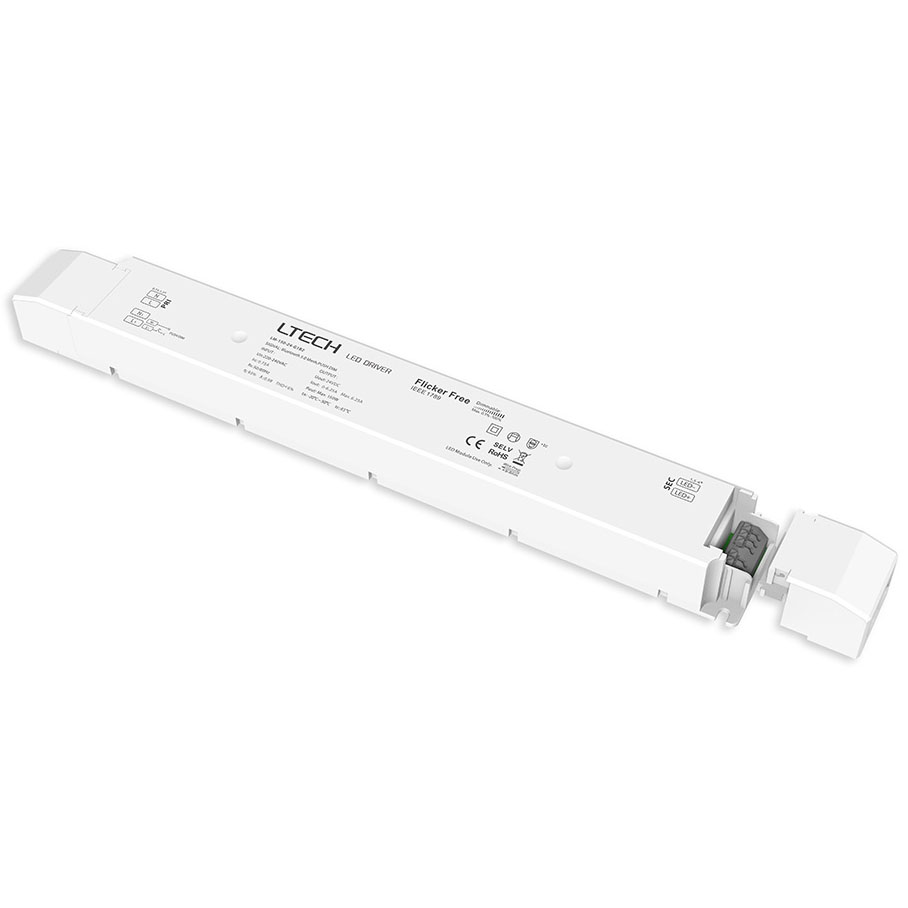
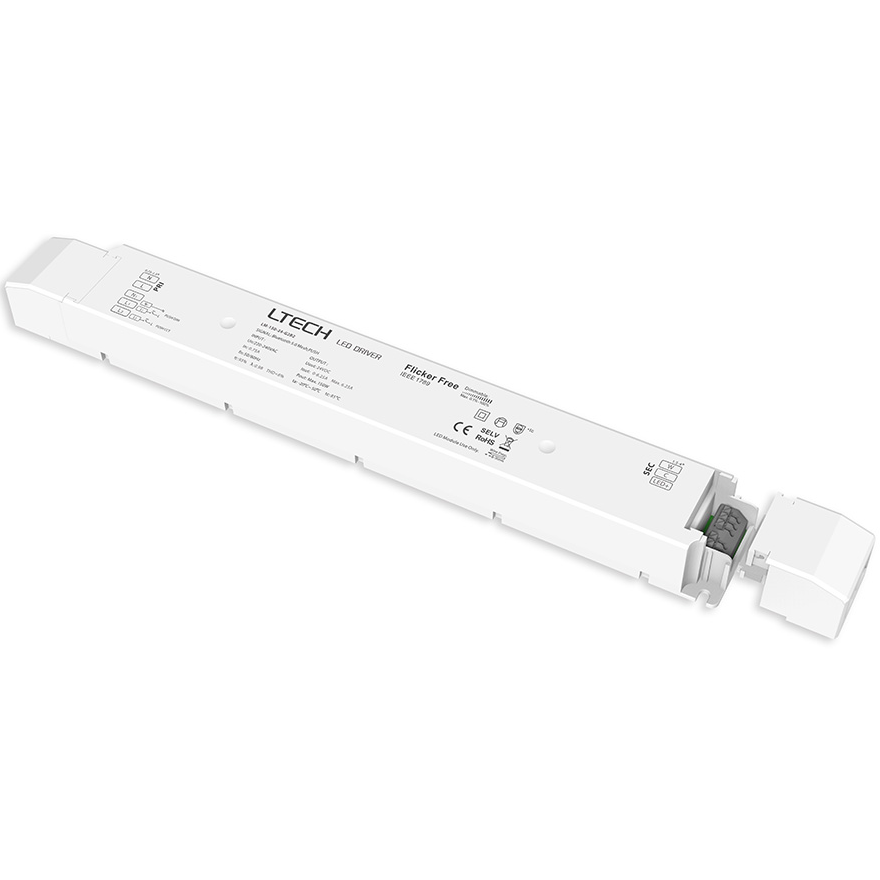
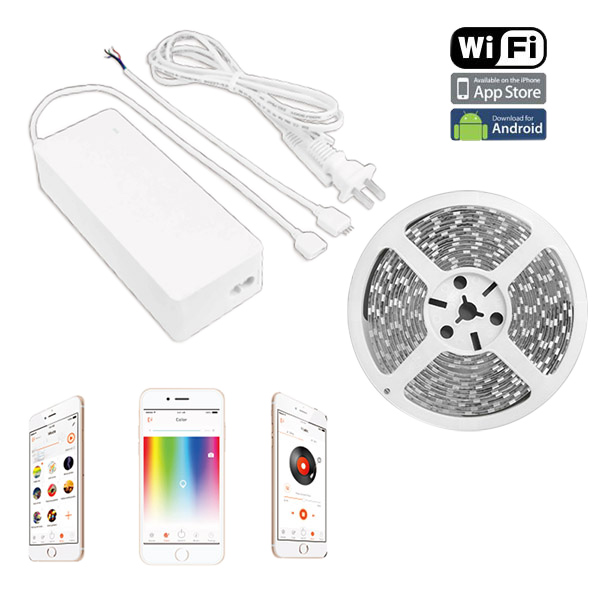
100-240Vac 2.1A 3CH 75W WiFi Smart LED Driver CV-7512-WF03-A for home led lighting strip ,stadium lighting strip
How Does a WiFi or RF Smart LED Driver Work?
A smart LED driver performs two functions at the same time. The power supply section converts the input power into the appropriate output voltage for the LED strip, while the integrated controller receives wireless commands and regulates the LED output.
For an RF model, the driver receives commands directly from a compatible RF handheld remote, wall panel, or other wireless control device. No WiFi network is required, making RF a simple and reliable option for everyday lighting control.
For a WiFi or Bluetooth model, the driver can communicate with a smartphone App or compatible smart-home platform, depending on the product. Users can typically adjust brightness, colors, color temperature, lighting effects, schedules, or scenes from their mobile device. Selected models may also support smart-home or voice-control integration.
Smart Driver vs. Separate Power Supply + LED Controller
A conventional LED lighting system may require: AC Power → LED Power Supply → External LED Controller → LED Strip.
A smart LED driver combines the power supply and controller: AC Power → Smart LED Driver → LED Strip. It is particularly useful for small to medium-sized LED installations where a separate controller and power supply would add unnecessary complexity.
For larger projects, however, a separate power supply + dedicated LED controller may provide greater flexibility for higher power loads, multiple lighting zones, longer LED runs, advanced control protocols, or system expansion.
Your Questions About WiFi & RF Smart LED Drivers, Answered
Got questions before you buy? I've been answering these on the support desk for 12 years. Here are the things people usually ask.
A Smart LED Driver combines the power supply and controller into one unit. Instead of wiring AC power to a power supply, then DC power from the supply to a controller, and then from the controller to the strip, you just have one box. It simplifies the job with fewer components and half the wiring, which means fewer places for things to fail.
It's simple math, but it's the most common mistake people make. Find the watts per foot (or meter) on your LED strip's spec sheet. Multiply that by the total length of your run. Then, add a 20% buffer. So, if your total load is 80W, you need a driver that's at least 96W. That 20% headroom is critical for lifespan and safety; don't run a driver at 100% load.
Best case, its overload protection will kick in and the driver will shut down or start flashing. You'll think it's broken, but it's just protecting itself. Worst case, it will overheat and fail permanently. Always calculate your load and add that 20% safety margin we talked about. Our guide to calculating power walks you through it.
You don't need both, but the combination is what makes it so reliable. The WiFi connects your Smart LED Driver to an app like Tuya or Smart Life for control from your phone and integration with Alexa or Google Home. The 2.4G RF is a direct link to a handheld remote. If your WiFi network ever goes down, your remote will still work perfectly. It's the best of both worlds.
This is almost always about timing. Most smart drivers enter pairing mode for just a few seconds after you first apply power. Unplug the driver, plug it back in, and immediately—within 3 to 5 seconds—press the pairing button on your remote or follow the 'add device' steps in the app. For WiFi models, also make sure your phone is connected to your 2.4GHz WiFi network, as most smart devices won't pair on a 5GHz network.
Yes, as long as the key specs line up. A WiFi RF Power Adapter doesn't care about the brand name of the strip. It only cares about three things: voltage (a 24V driver needs a 24V strip), type (an RGBW driver needs an RGBW strip), and total power load. Match those three things, and you'll be fine.
Absolutely, that's a core feature of these systems. You can pair multiple Smart LED Drivers to a single multi-zone RF remote, assigning each driver to a different zone (e.g., Zone 1 for under-cabinet, Zone 2 for cove lighting). In a WiFi app like Tuya, you can group drivers together to control them as one, or operate them individually, no matter what room they're in.