
GS8206 IC Programmable LED Strips
6 productsThe GS8206 has IC technical specifications similar to those of the top-tier GS8208—for example, it also features built-in 12-bit gamma correction, a refresh rate of up to 8 kHz, and excellent resistance to electromagnetic interference. The main difference is that the GS8206 IC controls 3 LEDs at a time at 12V and 6 LEDs at a time at 24V. The GS8206 is a cost-effective engineering version designed for commercial lighting solutions.
The standout feature of the GS8206 chip is its dual-mode operation. You can drive it with an addressable RGB controller for custom LED programming. But if you don't connect a controller and just power on the GS8206 RGB lights, it defaults to a series of built-in programs, providing dynamic color-chasing effects right out of the box. This makes it a fantastic plug-and-play solution for projects that need motion but not complex setup.
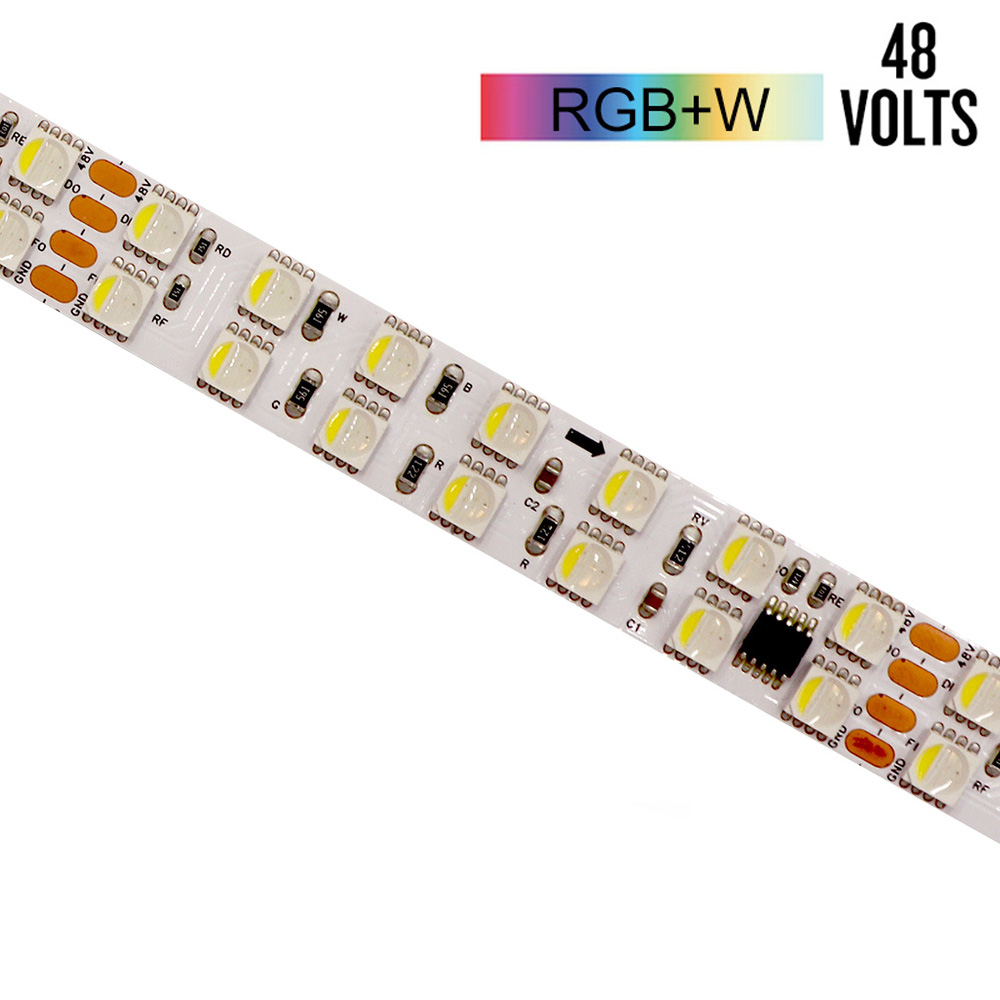
Dual-Row Bright 48V Long Addressable UCS7624 RGBW LED Strip
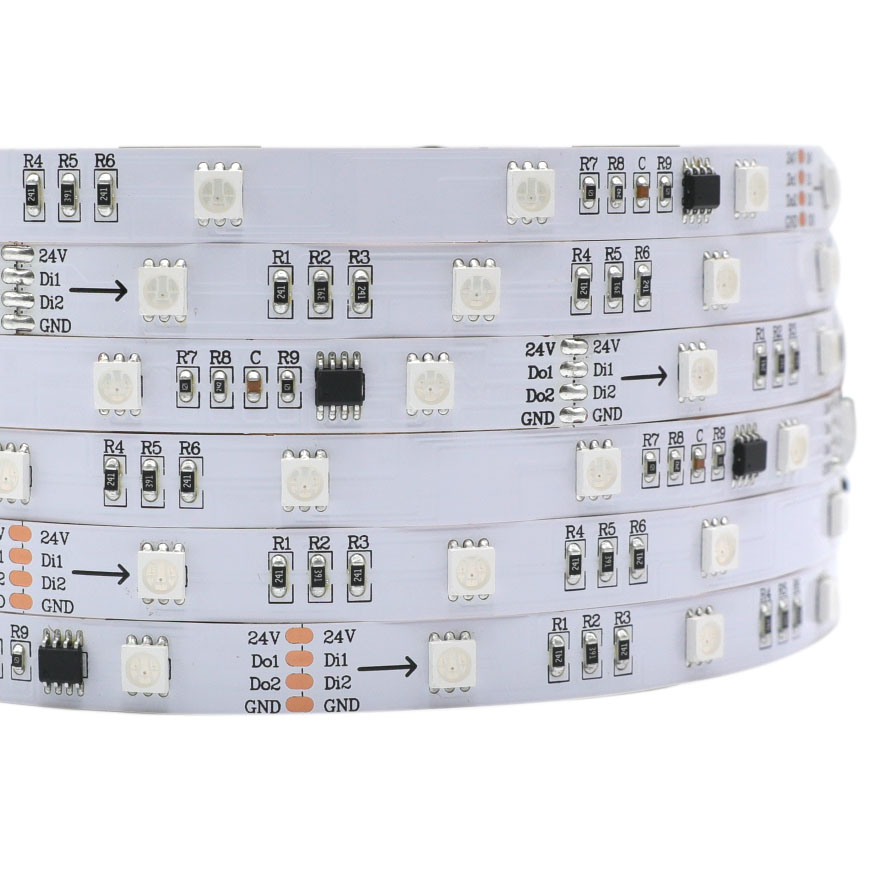
GS8206 5050 RGB LED Dream Color Addressable Strip Lights
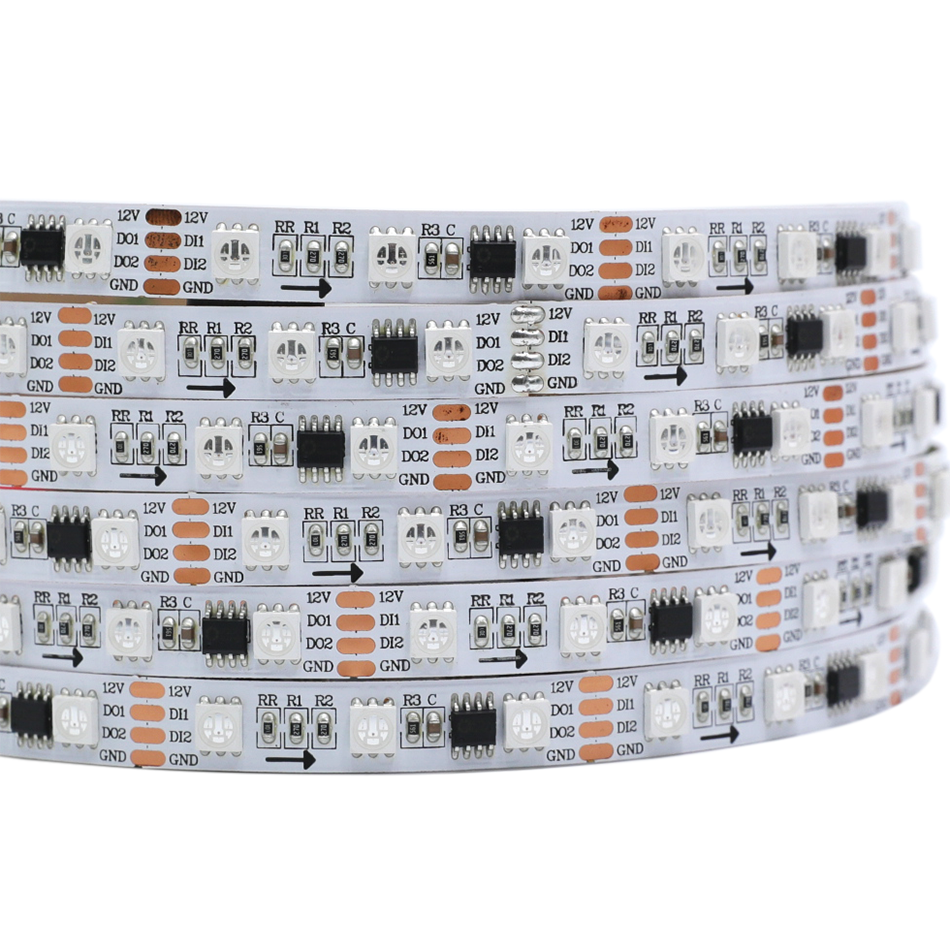
5m 300LEDs 12V GS8206 RGB Digital Strip Lights Breakpoint-continue
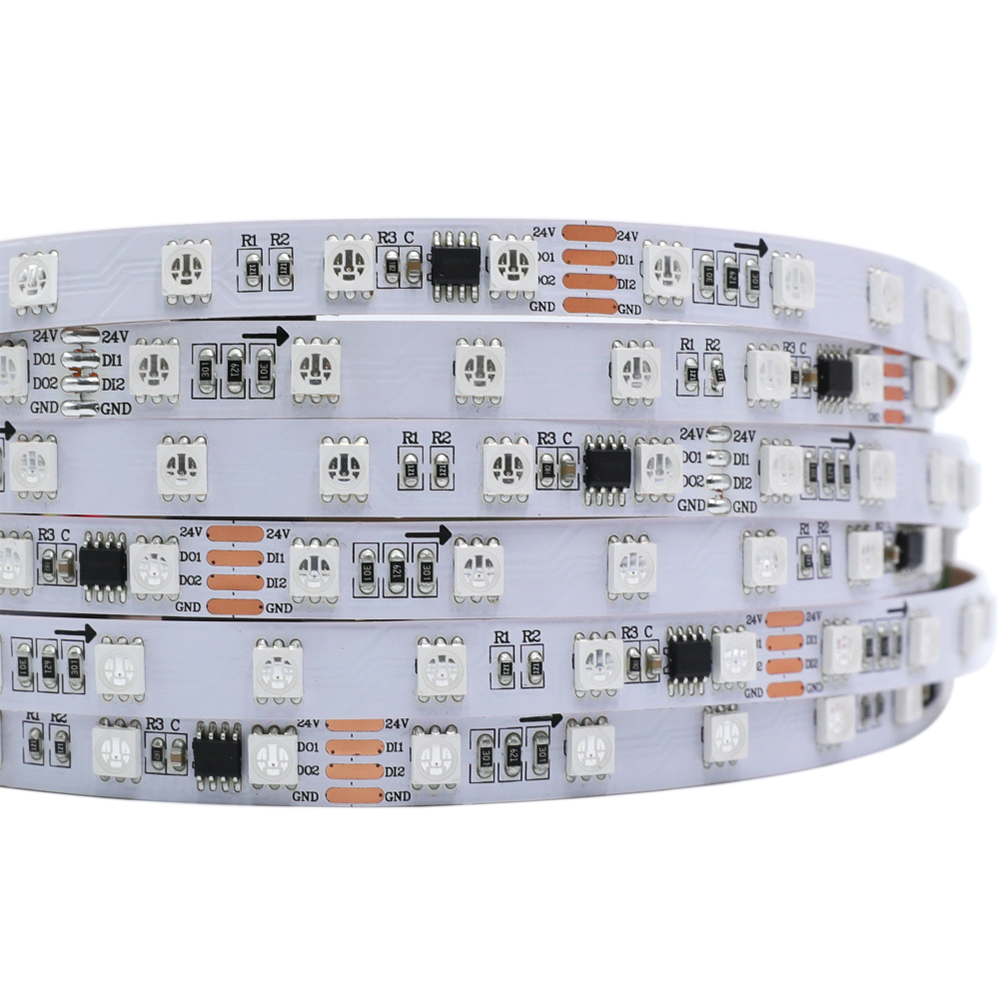
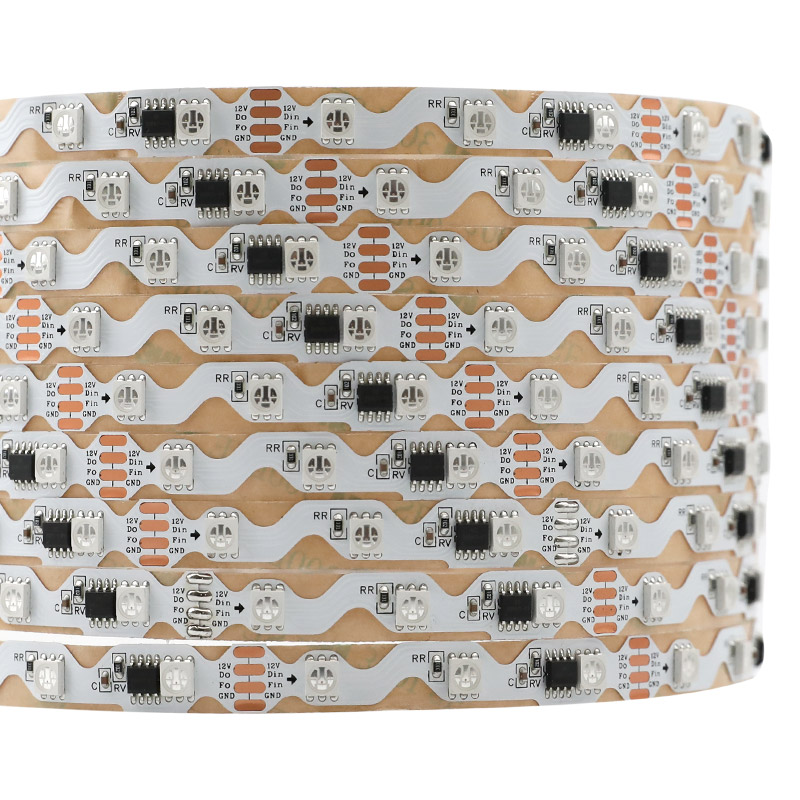
12V GS8206 Auto RGB Color Changing Cobra Light Strip
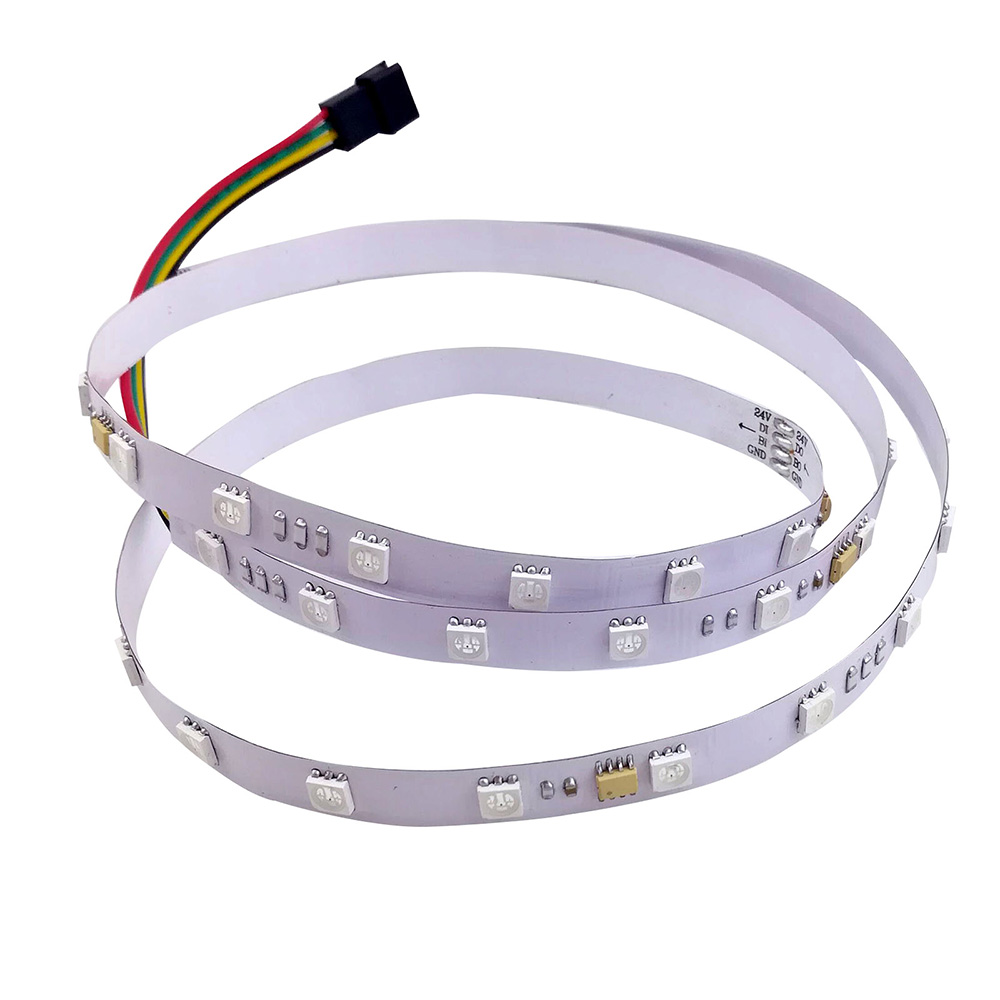
Dream Color LED Strip - WST2906 - DC24V Breakpoint-continue
What are the built-in LED light patterns?
The GS8206's ability to generate its own led light patterns without an external controller is its key advantage for simple projects. When you power up the strip without a data signal from a controller, the ICs automatically begin cycling through a pre-programmed sequence of effects. These typically include multi-color chases, fades, strobes, and flowing rainbow effects.
This self-running mode is perfect for creating instant eye-catching displays, trade show booths, or accent lighting where you just need to set it and forget it. It eliminates the need for an expensive controller and complex programming, saving both time and money on installation.
Frequently Asked Questions About GS8206 IC Programmable LED Strips
Got a question about our GS8206 strips? I've probably answered it a few hundred times. Here are the most common things people ask before they buy.
Breakpoint resume means that if a single LED pixel fails, the data signal just skips over it to the next one. On older strips like the WS2812B, one dead pixel would kill the signal for the rest of the strip. The GS8206 IC programmable LED strip light keeps the rest of the run working perfectly, which is a lifesaver for permanent installs where you can't easily replace a section.
Yes, it should. The GS8206 IC uses a standard NZR (return-to-zero) data protocol that's compatible with most controllers designed for WS2811/WS2812B. Just set your controller to the WS2811 setting. The GS8206 is just a more robust chip with the added breakpoint feature and a higher PWM refresh rate, so you'll get less flicker in video.
Not always. One of the neatest features of the GS8206 IC is its built-in test modes. If you just connect power (12V or 24V, depending on the strip) and leave the data line disconnected, the strip will automatically start cycling through a series of built-in color-chasing effects. For a simple effect without programming, you don't need a controller at all. For custom scenes, you'll need one of our addressable SPI controllers.
A GS8206 RGBIC strip offers a few key upgrades. It has a much higher PWM refresh frequency (up to 8kHz) which means it's basically flicker-free on camera, making it great for film sets or streamers. It also has 12-bit gamma correction built-in, which gives you smoother, more nuanced color fades compared to the 8-bit color on most other chips. It's an engineering-grade choice for when visual quality really matters.
It's a simple calculation. First, find the watts per meter (W/m) on the product page for the GS8206 IC programmable LED strip you're using. Multiply that by the total meters you'll be running. That gives you your total power draw. Then, add 20% headroom to that number. So, if you have 10 meters of a 10W/m strip, that's 100 watts. You'll want a power supply rated for at least 120 watts. Don't skip the headroom; it keeps the supply running cool and extends its life.
Yes, it is. Since the GS8206 IC responds to the same signal timing as the WS2811/WS2812, you can select 'WS281x' in your WLED or other controller software and it will work just fine. You get all the benefits of the advanced GS8206 hardware—like the breakpoint resume and high PWM rate—while using the flexible, powerful software you already know.
If one of the 5050 SMD LEDs containing the GS8206 IC fails, that single pixel (or group of 3 or 6 LEDs, depending on the strip's voltage) will go dark. However, the data signal will automatically be routed past the dead chip to the next one in line. The rest of the LED strip will continue to work and display your animations perfectly. You just lose one tiny segment instead of the whole run.
Absolutely, as long as you choose the right IP rating. For outdoor use, you need a GS8206 IC programmable LED strip with at least an IP65 rating for protection against rain. For areas that might get submerged or hit with pressure washers, go for an IP67 (silicone tube) or IP68 (fully potted) version. We stock all of them. Just remember that the power supply and controller need to be protected from the elements, too, inside a rainproof power supply box.
Yes, we do this all the time. A huge part of our business is building custom-length strips for specific jobs. Just send us a sketch or a list of the lengths you need for your project—even a photo of a drawing on a napkin works. We'll send back a complete wiring diagram and a quote, usually within 12 hours. We can pre-solder any lead wires you need and add waterproof IP68 connectors so it all just plugs together on site. There's no fee for the consultation, and you're not obligated to order.
That's a feature, not a bug! The GS8206 IC has a power-on self-test function. When it first receives power, it runs a quick check to make sure the internal circuitry is working correctly before it starts looking for a data signal. It's a quick flash of red, green, and blue, and then it's ready to go. It's a sign that the strip is healthy.