
Warm And Cool White LED Strip
48 products
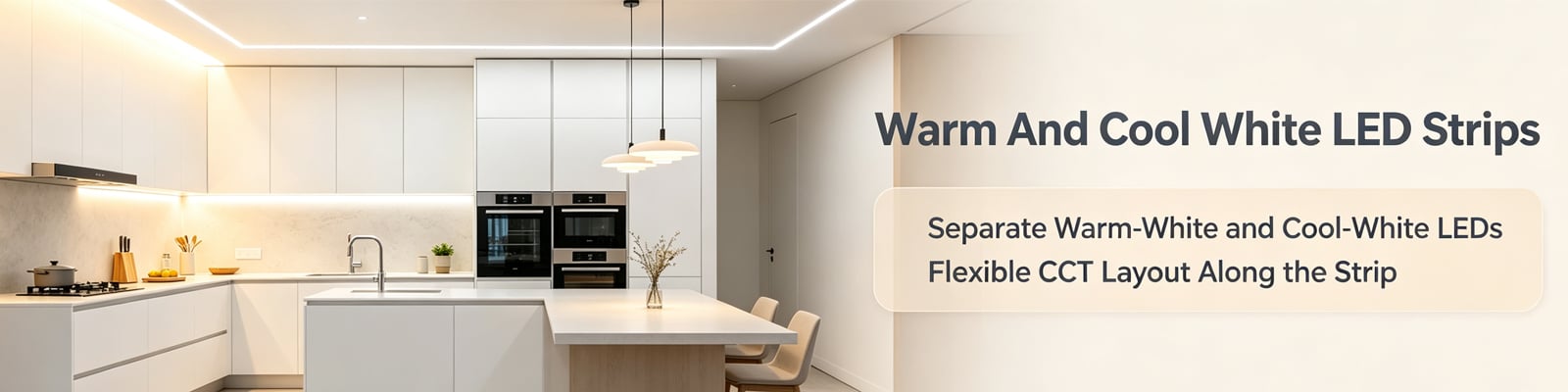
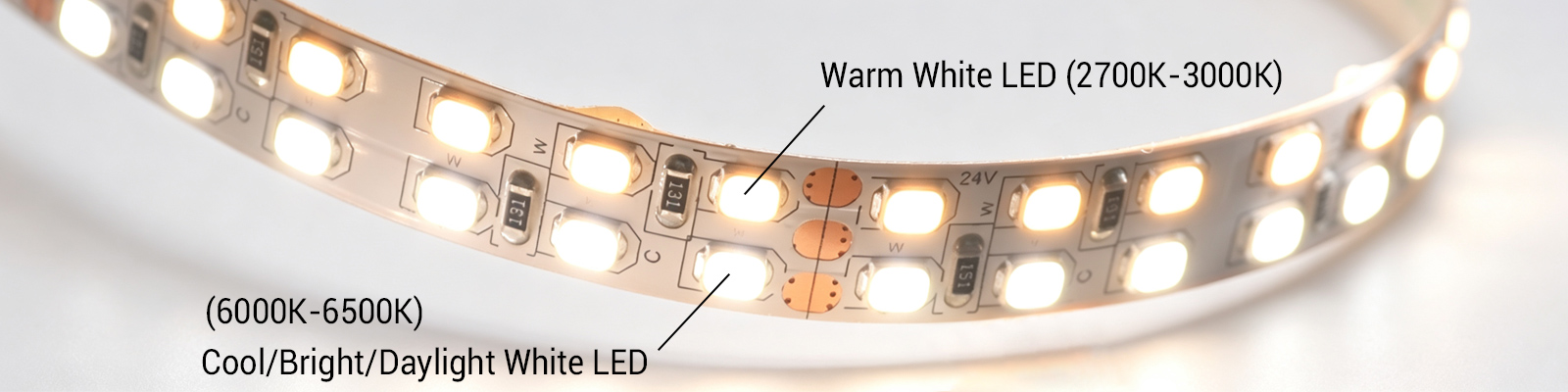
These warm white (WW) and cool white (CW) led strips allow both cool and warm light to be emitted on the strip. The cool and warm LED chips are independent of each other, and their brightness can be adjusted individually by the CCT controller to achieve a color temperature change from warm white to cool white.
Compared with the 2-in-1 dual-color led chip of bi-color white led strip, separate cold LED and warm LED have a larger light-emitting surface can provide a wider lighting coverage, while more LED chips can be arranged on the same tape such as five meters with 1200, 1600, 2400, etc. LEDs. Tunable white COB led strip is more dense. The separate SMD led bead design also accommodates a wider range of color temperatures. Usually, dual color led strip only includes 2700K warm light and 6500K white light, while the separate warm cool led strip allows for amber to cool white, such as 1800K-4000K-6500K.
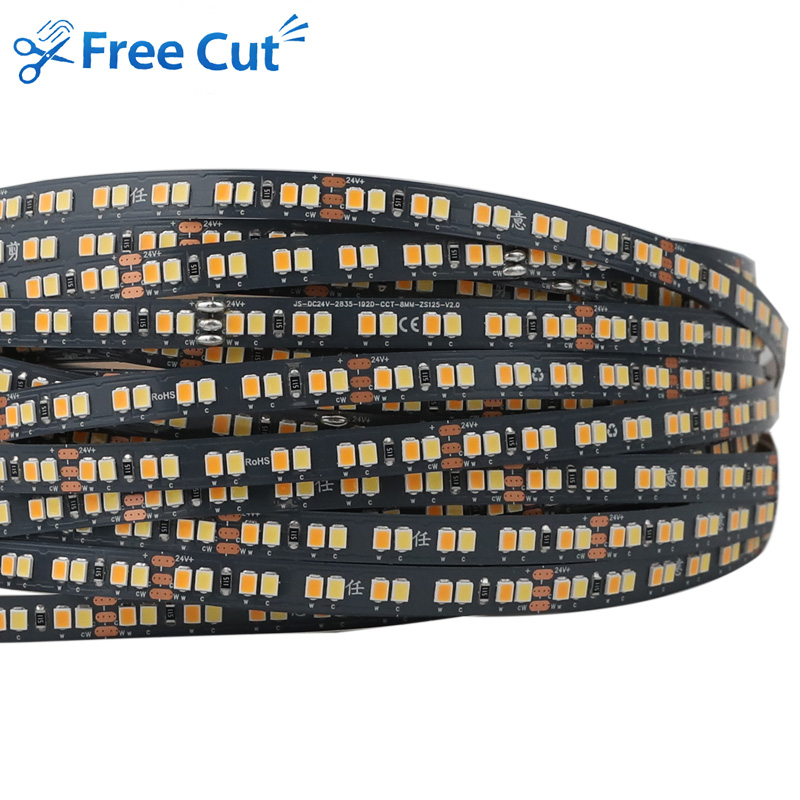
Free Trim LED Color Temperature Changing Light Strip (2700K ~ 6500K)
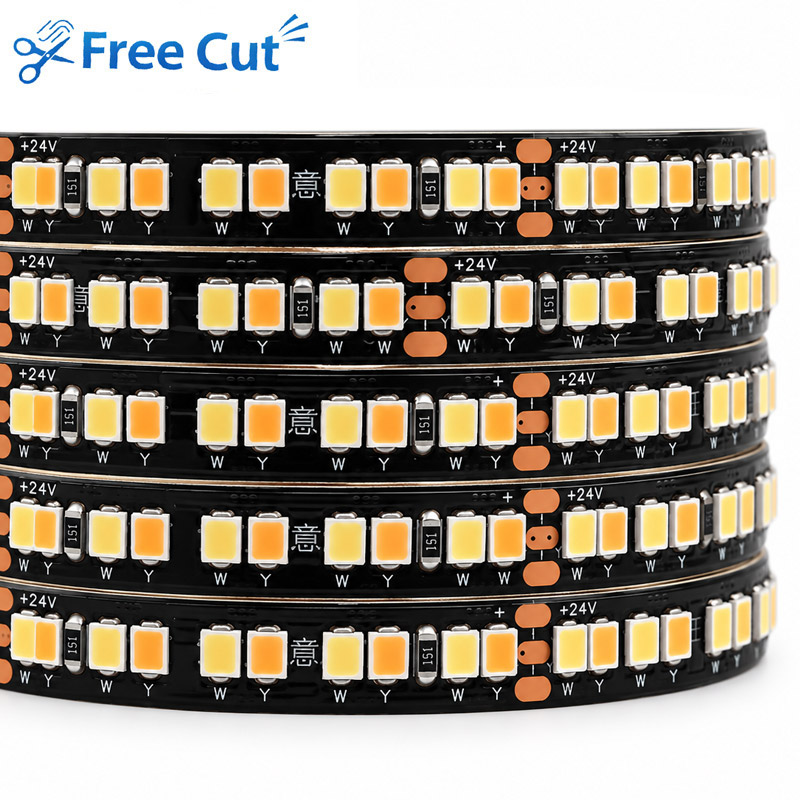
24V Cut Anywhere Ra97 Tunable White LED Strip Black PCB

25.8FT² Ultra Large UL 2700-6500K Tunable Circadian LED Light Sheet Roll
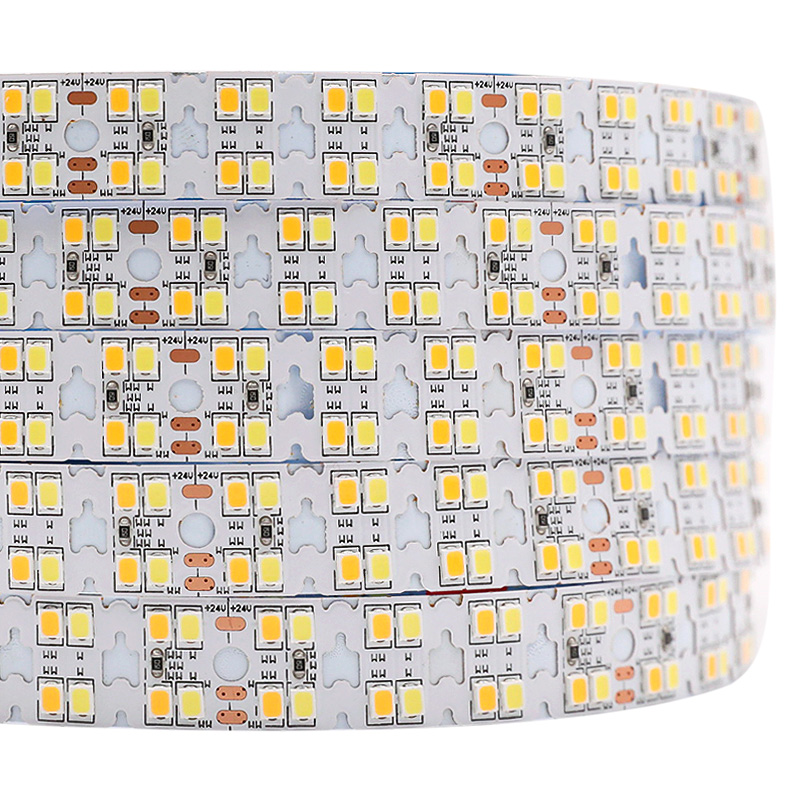
Flexible S Double Row CCT Color Temperature Signage LED Strip
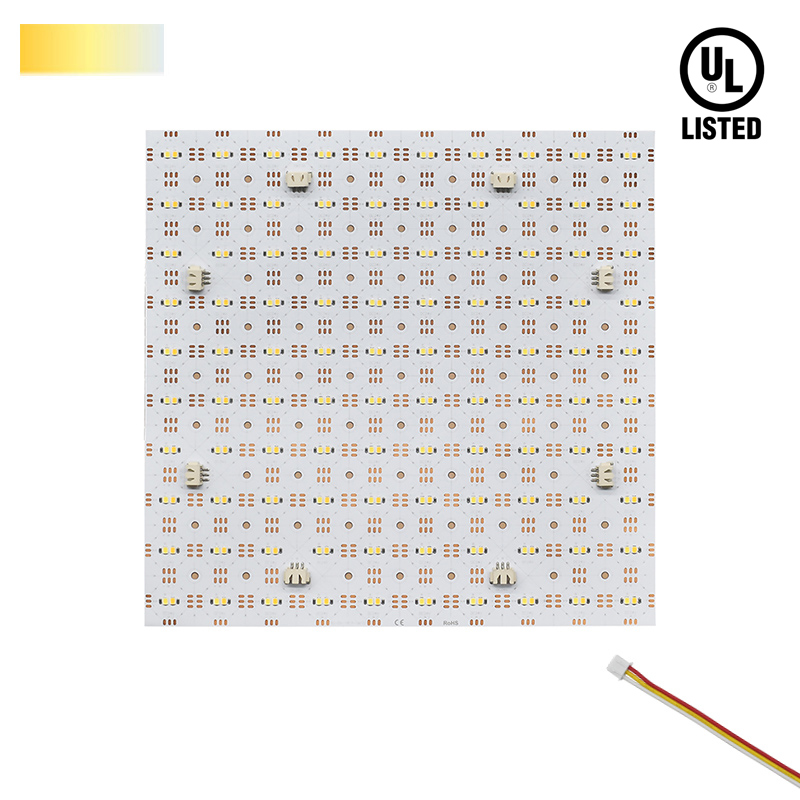
96.8in² 24W Mini CCT Dual White 24V UL Backlighting LED Sheets
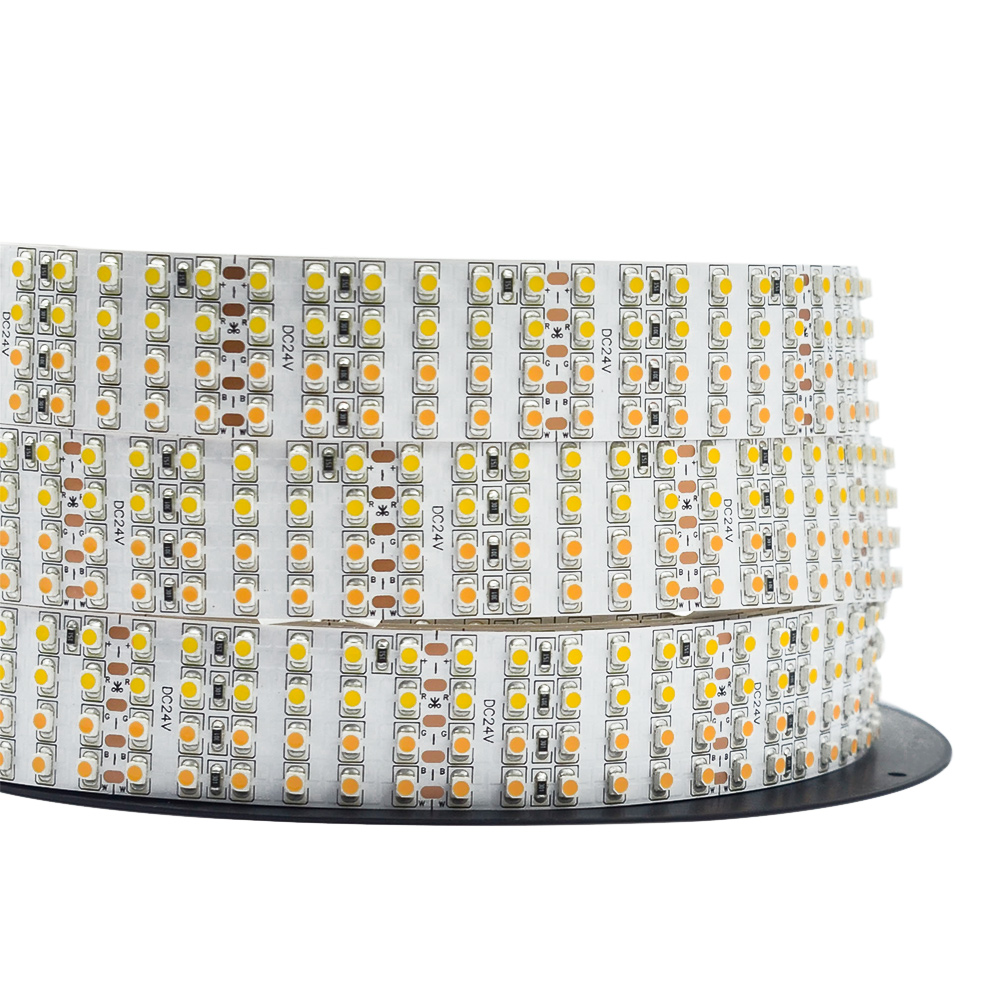
Brightest Wide CCT White Light Adjustable 3528 Quad Row LED Strip 24V
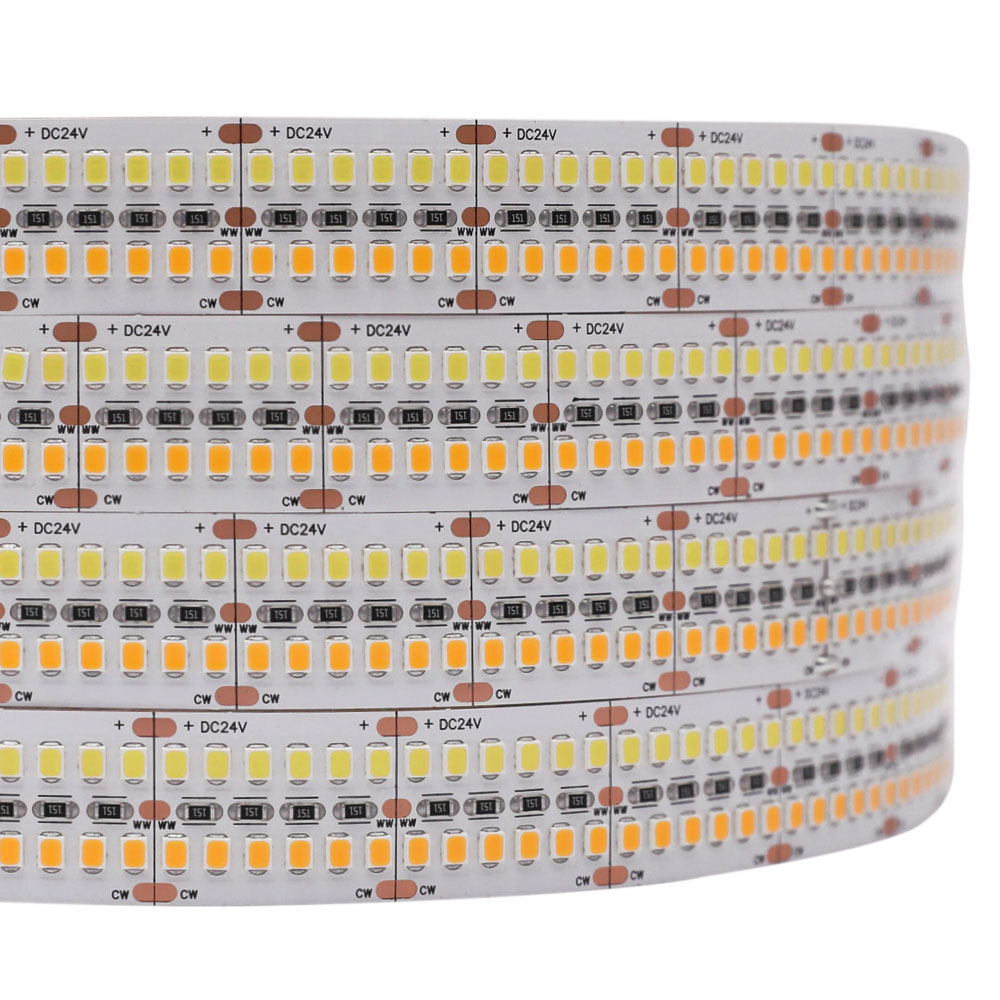
DC24V Tunable White LED Strip - Double Row 2400LEDs - WW+DW
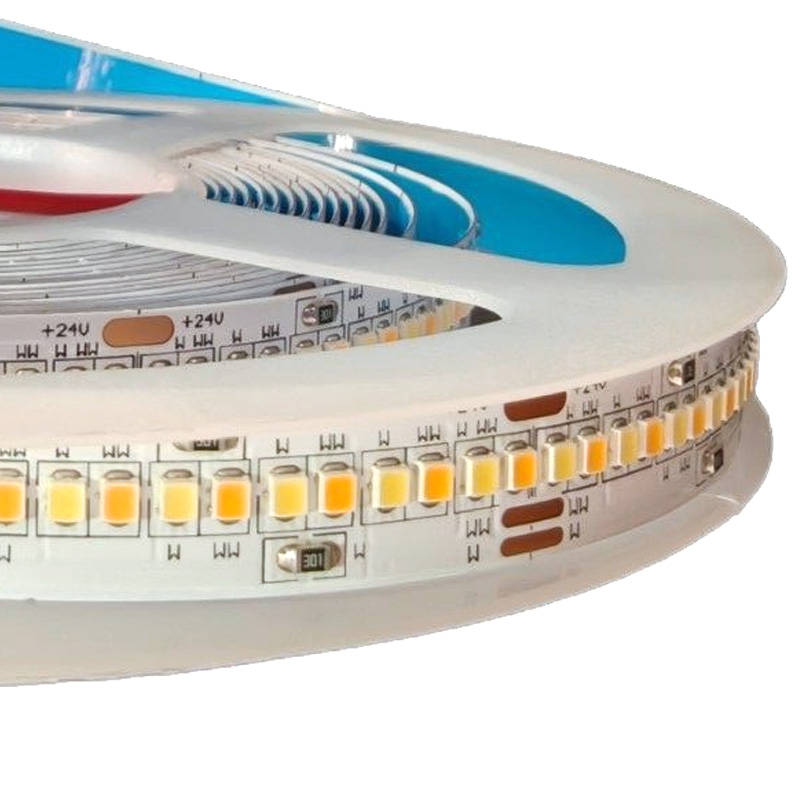
Ultra Uniform LED 2700K And 6500K White Switchable Light Strip
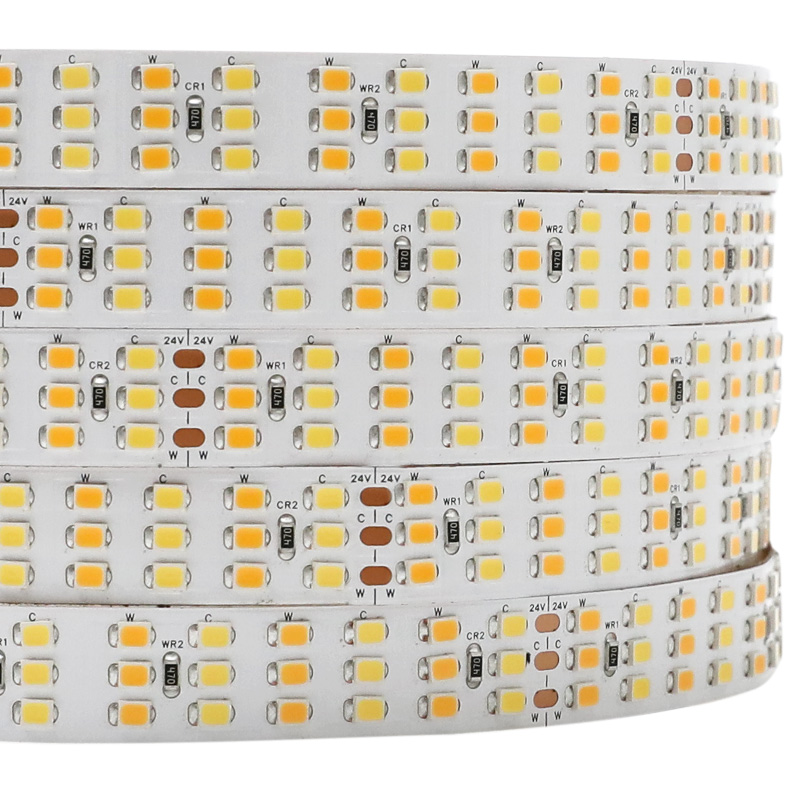
Ultra Bright Triple LED Tunable 3000K~6500K White Light Tape
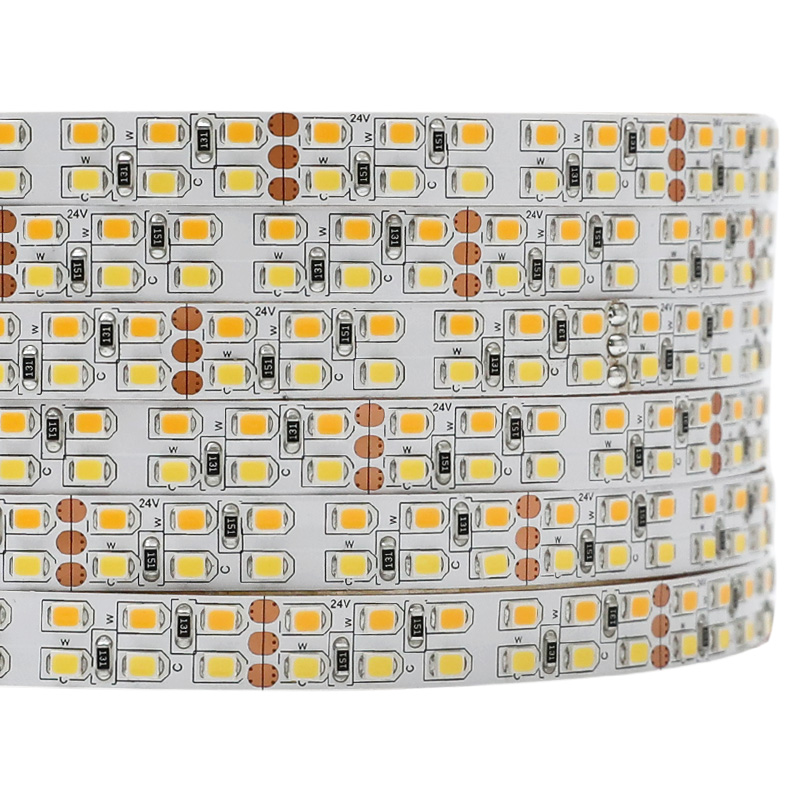
10mm Dual Row 2835 CCT Adjustable Kelvin LED Light Strip
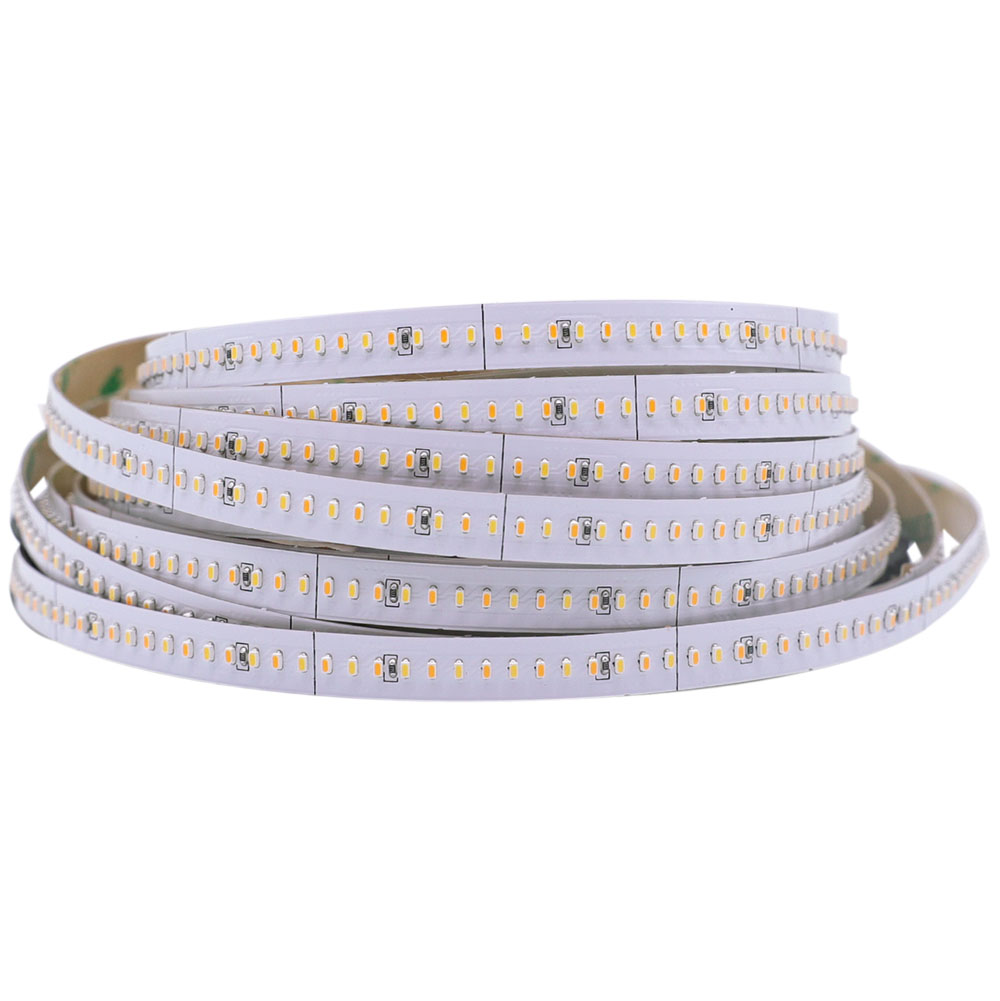
95 High CRI 2110SMD 24V Tunable White CCT LED Strip Lights
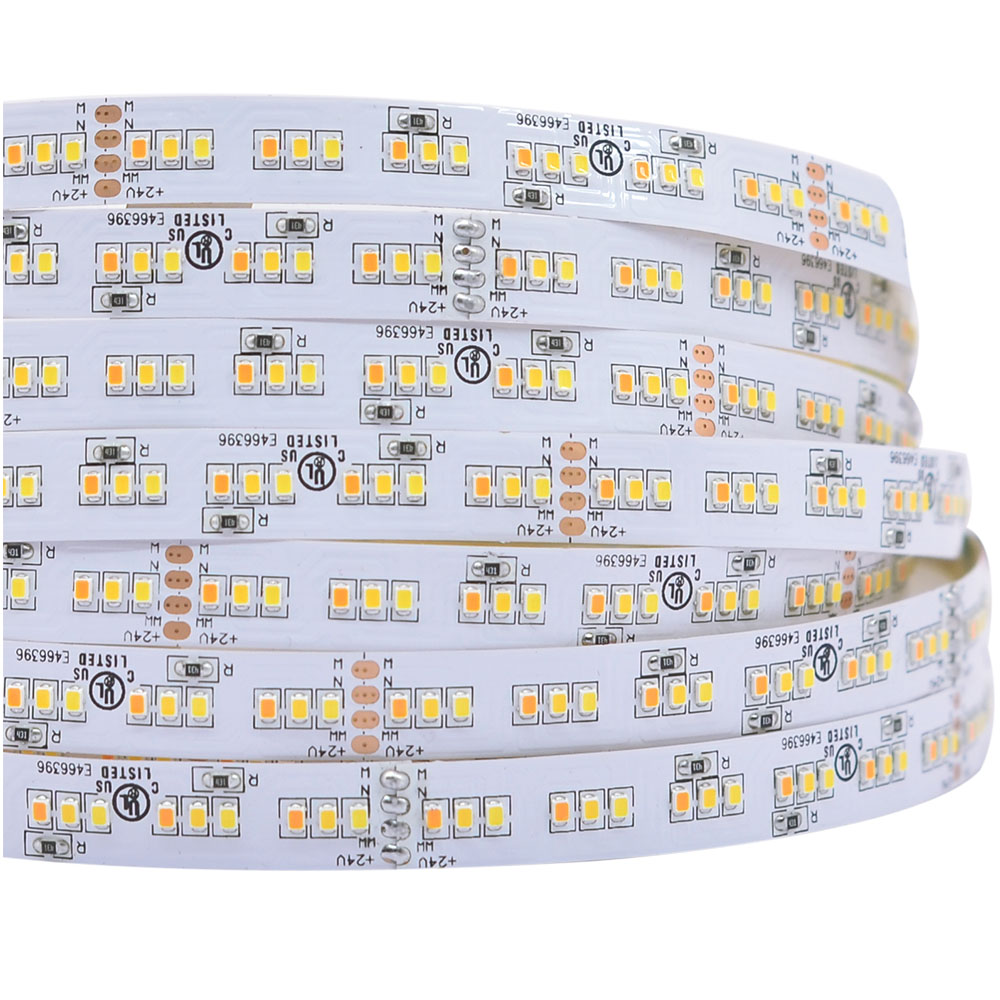
DC24V Pure White+Warm White+Nature White LED Strip Light
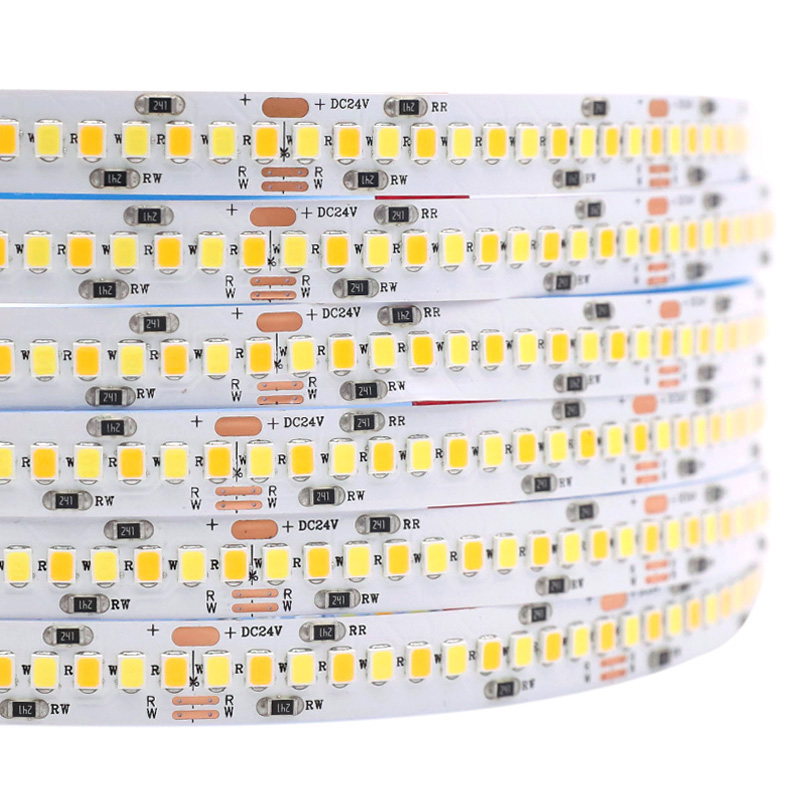
240LEDs/m 2835 Color Temperature Adjustable LED Strip
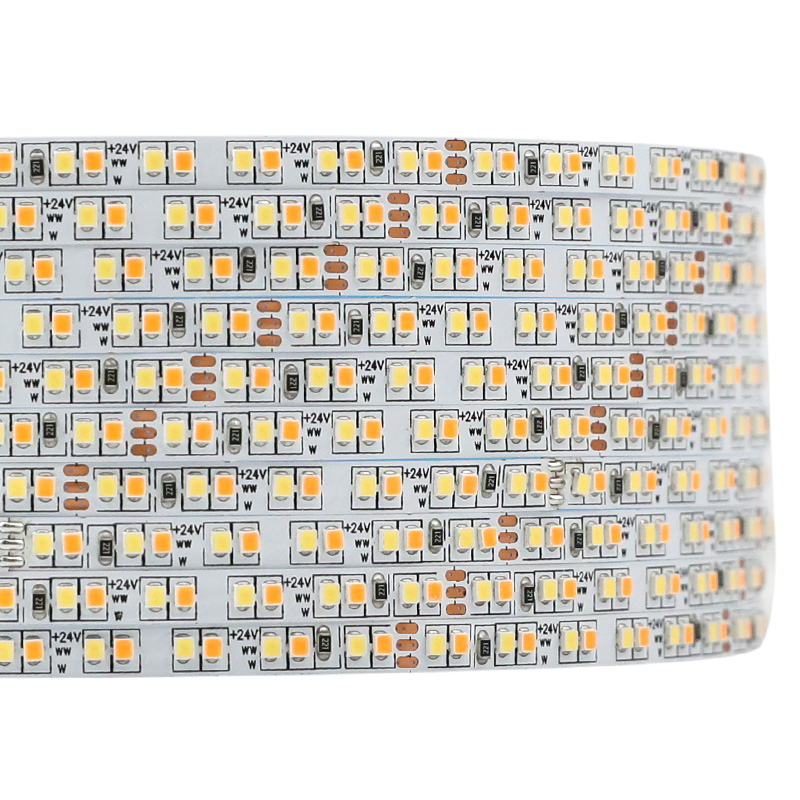
24V 2216 5mm Narrow CCT Dimmable LED Strip Lights
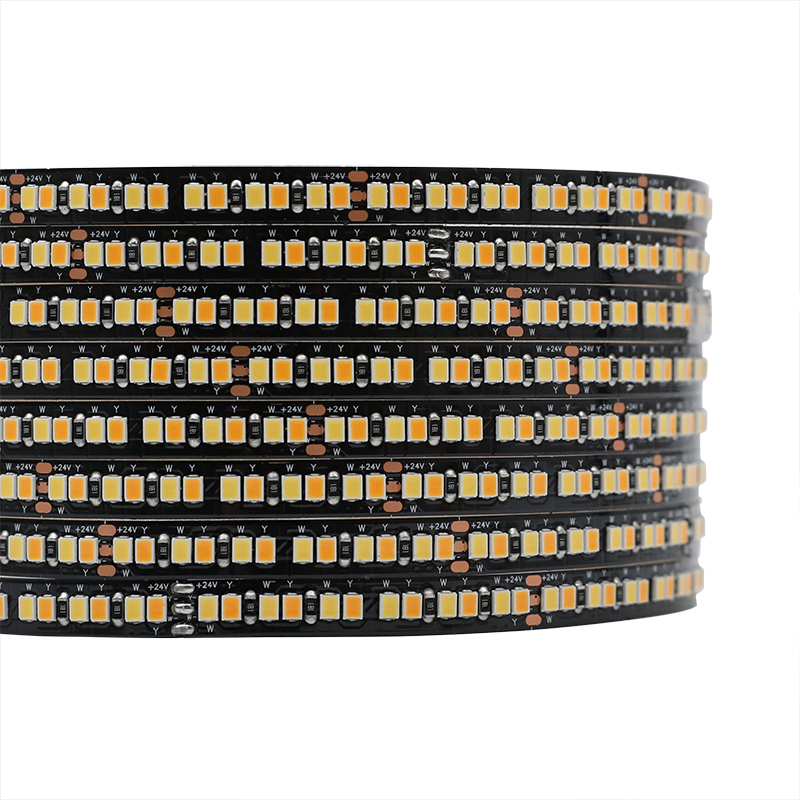
24V Super Long CCT Adjustable High CRI 98 LED Strip Lights 20m Voltage Stable
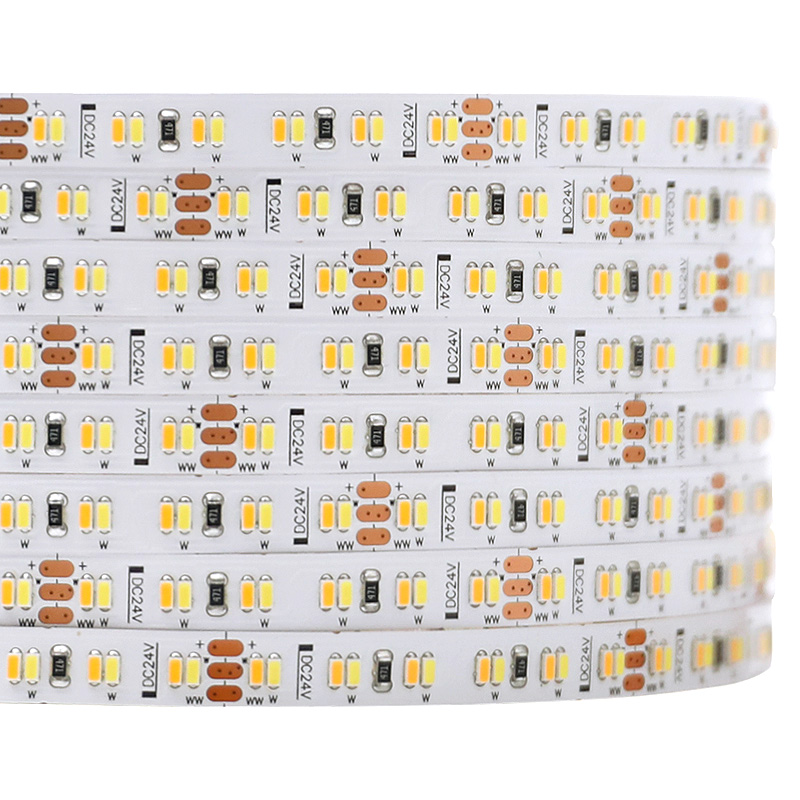
240LEDs/m 2-Wire CCT 2700K-4000K Tunable White LED Strip Light
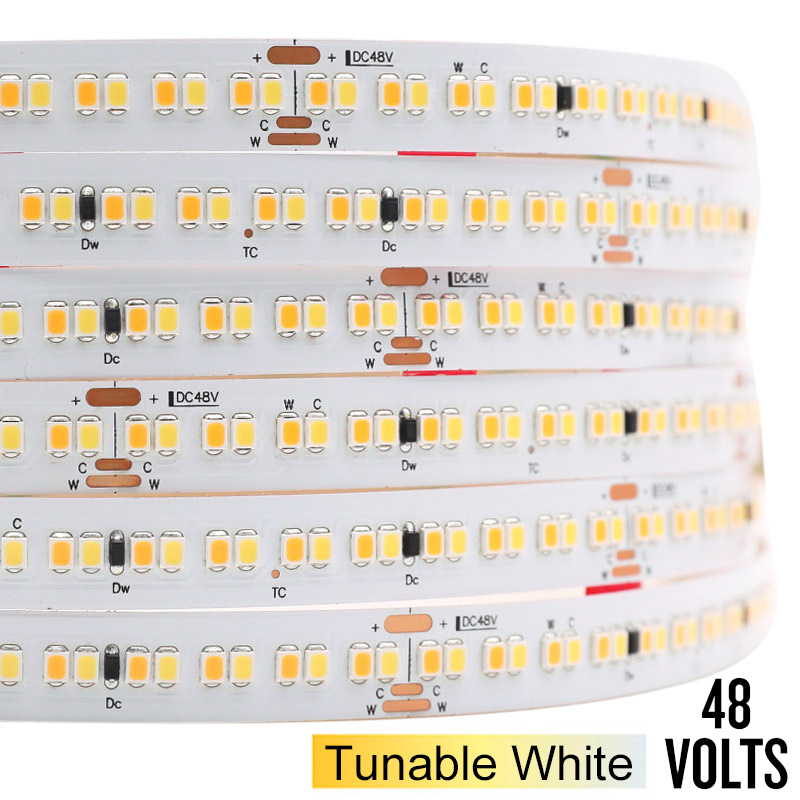
48V Extra Long 40m Adjustable Color Temperature LED Strip
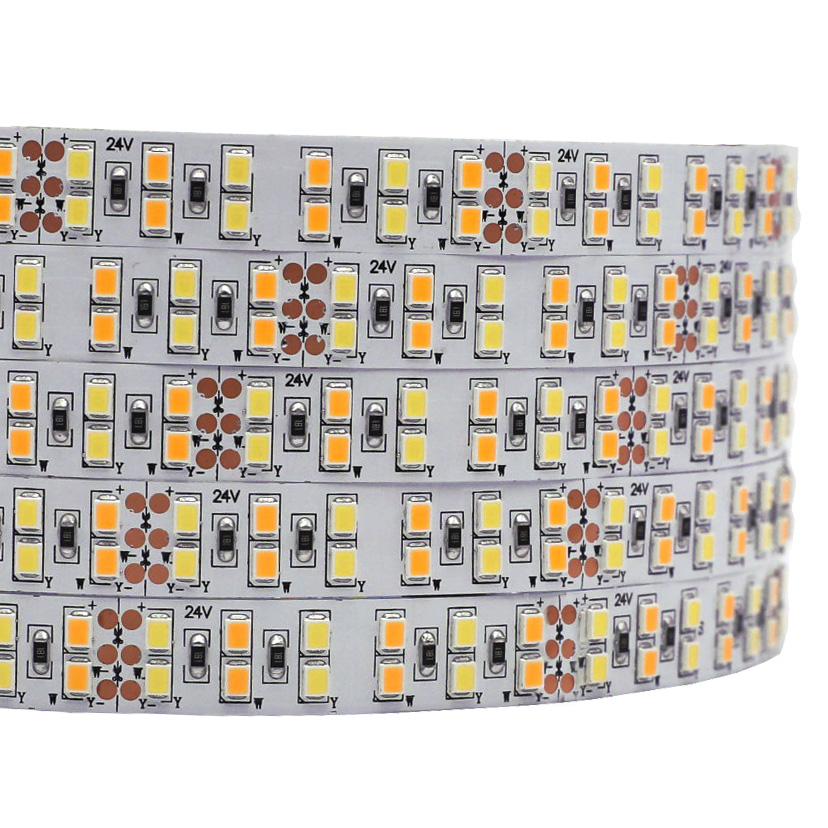
Double Row DC24V 2538/3528 White 1200LEDs CCT LED Light Strip
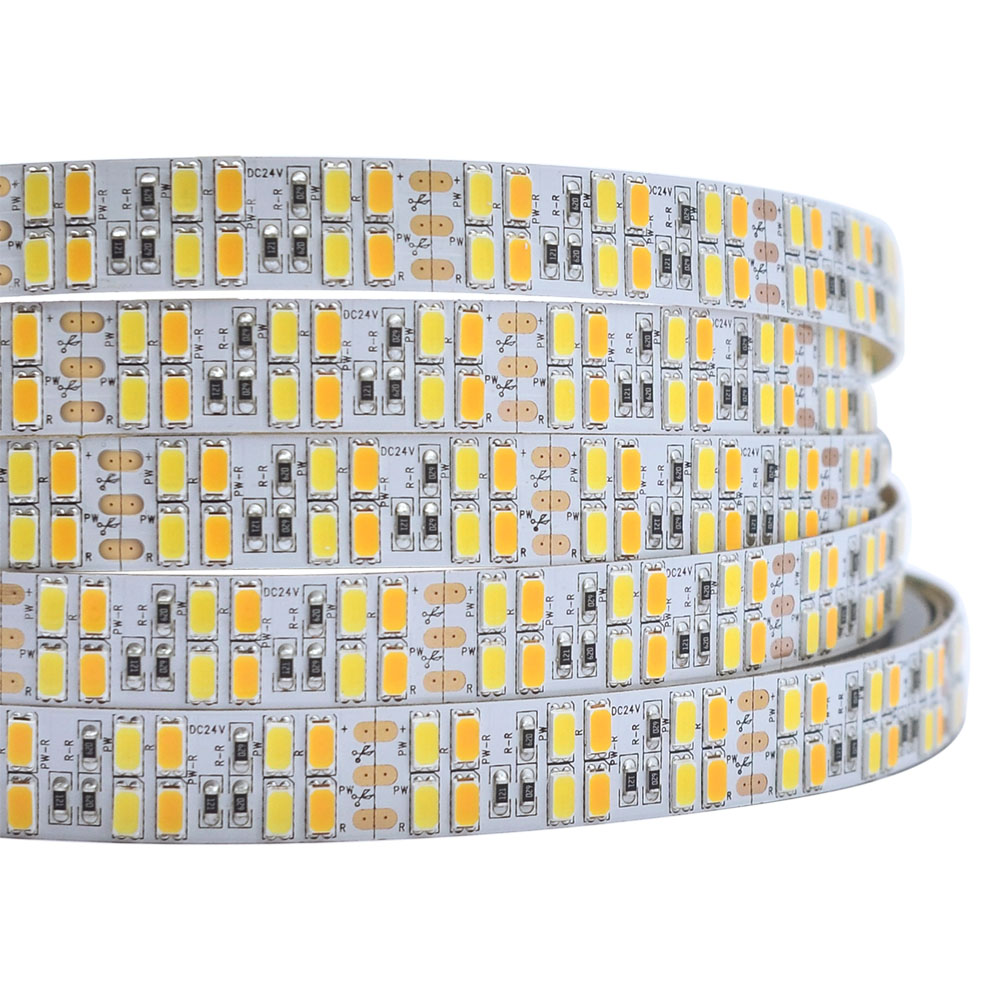
Dual Row DC24V 5630SMD 240LEDs CCT LED Light Strip WW+CW
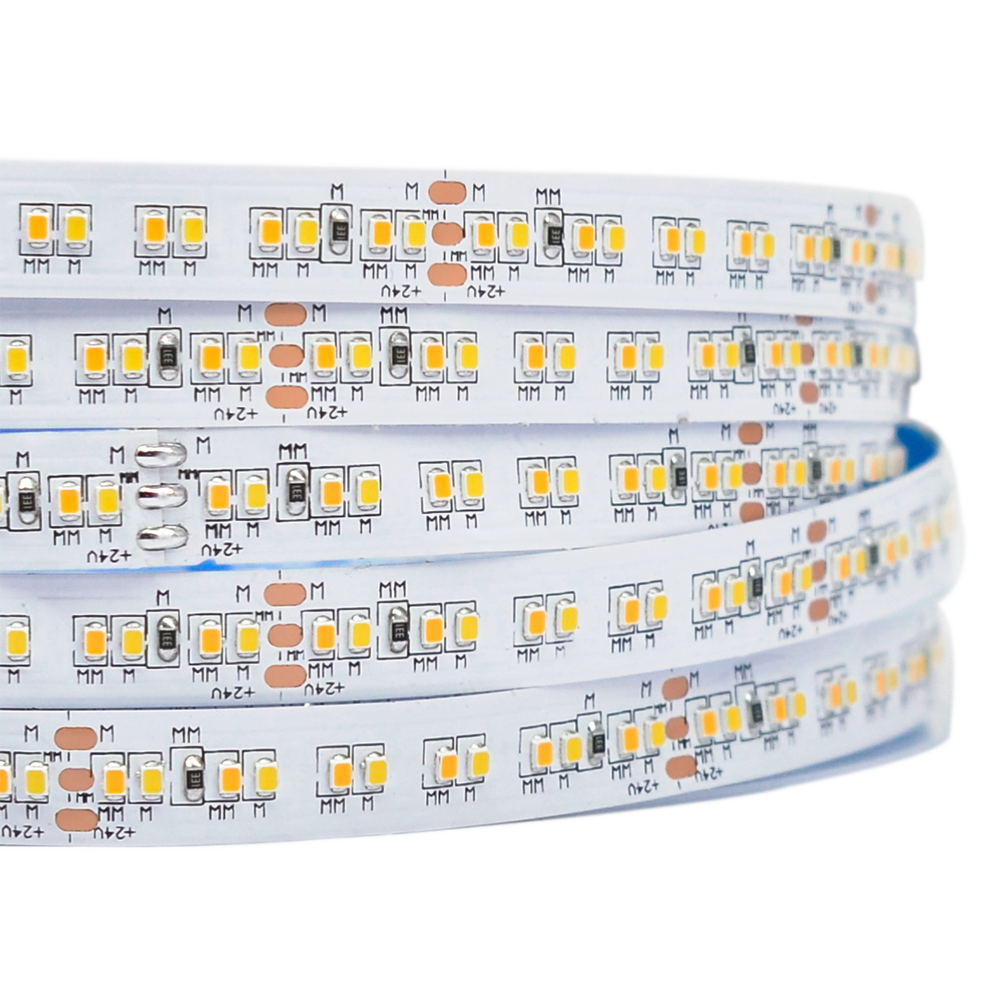
SMD2216 24V CCT White Dimmable LED Strip Lights 240LEDs/m
Why Adjustable Warm White and Cool White LED Strips Ideal for Kitchens
In high-activity areas, we need task lighting. Spaces like kitchens and living rooms serve both our daily activities and our need for rest and relaxation. The cozy ambiance provided by warm white light and the clarity offered by daylight white light are perfectly suited for such areas.
Separate warm white LEDs and cool white LEDs offer greater flexibility for installation on flexible strips, allowing for three- or even four-row layouts to accommodate larger spaces. For example, they can be recessed into a kitchen drywall ceiling to evenly illuminate the entire kitchen or accent a kitchen island. Single-row warm and cool light strips are ideal for under-cabinet lighting.
What Is LED Color Temperature?
Color Difference Between Warm White, Daylight, And Cool White
FAQ About Warm and Cool White LED Strips
Got questions before you spec your tunable white lighting? You're in the right place. Here are the answers we give designers and installers every day.
The main difference in the warm vs cool light debate is the mood they create, which we measure in Kelvin (K). Warm white (typically 2700K-3000K) has a yellowish, cozy glow like an old incandescent bulb, great for living rooms. Cool white (6500K+) is more bluish and energizing, like daylight, which is better for task areas like workshops. A warm and cool white LED strip gives you both on one tape, so you can tune the light to fit the time of day or what you're doing.
Yes, for all practical purposes, 'soft white' and 'warm white' are the same. Both terms describe a color temperature around 2700K to 3000K. The name 'soft white' is just marketing language some bulb manufacturers use for that classic, inviting yellowish light. So when you hear people discuss warm white versus soft white, they're usually talking about the same cozy color.
It all comes down to the length of your run. For a 12V tunable white LED strip, you can run about 5 meters (16.4 ft) before voltage drop makes the far end look dim. With a 24V strip, you can typically go 10 meters (32.8 ft). If you need an even longer single run for a big architectural cove, our 48V CCT strips can go up to 30 or even 40 meters on a single power feed. Longer runs mean fewer drivers and less wiring.
That's a classic case of voltage drop, and it's the most common issue we see. It happens when you try to run an LED strip longer than its rated maximum length from a single power feed. For example, trying to run 10 meters of a 12V strip will always result in the end being dimmer and possibly a different color tint. The fix is to either power the strip from both ends or, for new installs, choose a 24V or 48V strip from our guide on long runs.
Yes, you absolutely do. A warm and cool white LED strip won't work with a simple single-color dimmer. You need a dedicated CCT controller that has separate outputs for the warm white and cool white channels. This lets you independently control the brightness of each set of LEDs to blend them and change the color temperature. We stock dozens of CCT dimmers, from simple remotes to wall panels and smart app controllers.
Most of our standard warm and cool white LED strips have three wires. There's one common positive wire (usually red or black) and two separate negative wires: one for the warm white LEDs (often yellow) and one for the cool white LEDs (often white). You'll connect these to the corresponding V+, WW, and CW terminals on your CCT controller. It's a simple setup, and our tunable white wiring guide has diagrams for the most common installs.
This is a simple wiring mistake at the controller. You've likely connected the positive wire correctly, but only one of the negative wires (either the warm white or cool white) is making a solid connection in its terminal. Check that both the WW and CW wires are fully seated and clamped down in the CCT controller's output. If that doesn't fix it, the other possibility is a faulty channel on the controller itself.
This is exactly why tunable white strips were invented! For kitchen lighting, there isn't one 'best' color. You want bright, clean, cool white light (around 4000K-5000K) for tasks like chopping vegetables. But in the evening, you might want warm, relaxing light (around 3000K) while you eat. A warm and cool white LED strip under your cabinets lets you have both. You can set it to a crisp cool white vs daylight for prep, then dim it down to a warm glow later.
CRI stands for Color Rendering Index, a score from 0 to 100 that measures how accurately a light shows true colors. For tunable white lighting, especially in homes and retail, a high CRI is critical. A low CRI light (below 80) can make food look unappetizing or clothes look a weird color. We specify CRI 90+ for most of our CCT strips because you want colors to look vibrant and natural whether you're set to a warm 2700K or a cool 6500K.
Sometimes when you mix a very warm (e.g., 2700K) and a very cool (e.g., 6500K) LED, the middle point can look slightly pinkish or greenish. This is because your eye is seeing two distinct color peaks instead of a smooth spectrum. For applications where a perfect neutral white is critical, you might consider a strip with a dedicated neutral white LED chip alongside the warm and cool, or choose one of our strips with a tighter CCT range, like 3000K to 5000K.
Yes, all our tunable white LED light strips can be cut. Each strip has clearly marked cut lines, usually with a little scissor icon, that run between copper pads. The cutting interval varies by model—some can be cut every 25mm, others every 50mm or 100mm. We even have a 'Free Trim' model that can be cut anywhere. Just make sure you cut exactly on the line to avoid damaging the circuit.
Absolutely. A huge part of our business is building warm and cool white LED strips to a customer's exact drawing. We can source LEDs to create a specific CCT range, adjust the LED density, change the PCB width, or add a specific IP rating. For your shelves, you'd send us the exact lengths, and we would cut the strips, solder on the lead wires you need, and test each piece before shipping. Just send us a sketch. An engineer will send back a full parts list and quote within 12 hours, with no fee or obligation to order.