
Multi Spectrum Red NIR Light Strip
5 productsSuper Lighting LED multi-spectrum LED lights strips innovatively integrate deep red light 660nm wavelength, near infra red light 810nm / 850nm wavelengths, and blue light 450nm wavelength into a single low-voltage flexible and cuttable tape light. We utilize a 3-in-1 SMD5050 package (3 separate chips per LED) to achieve multi-wavelength synergistic light therapy, solving the limitations of single LED wavelength applications. Three different light wavelengths are encapsulated inside the same 3-core SMD 5050 diode, each core is a separate wavelength color, 450nm+660nm+810nm, 450nm+660nm+850nm, 450nm+660nm+730nm or 660nm+850nm+660nm red IR LED wavelength combination.
Our 3 in 1 multi-band LED light design realizes the uniform presentation of the light effect of each band of NIR, red, blue. Fixed position LED light-emitting unit effectively avoids light jumping phenomenon during wave band switching. Compared with the independent multi wavelength LED source, this integrated design ensures high light intensity output while significantly improving the light density, optimizing the optical performance of the NIR red light.
The switching of LED wavelengths and mode adjustment can be realized by intelligent three-channel controller, which allows you to flexibly adjust the parameters according to your experimental or application needs, and customize the programming of the tri-band lights in the logic control like WLED.
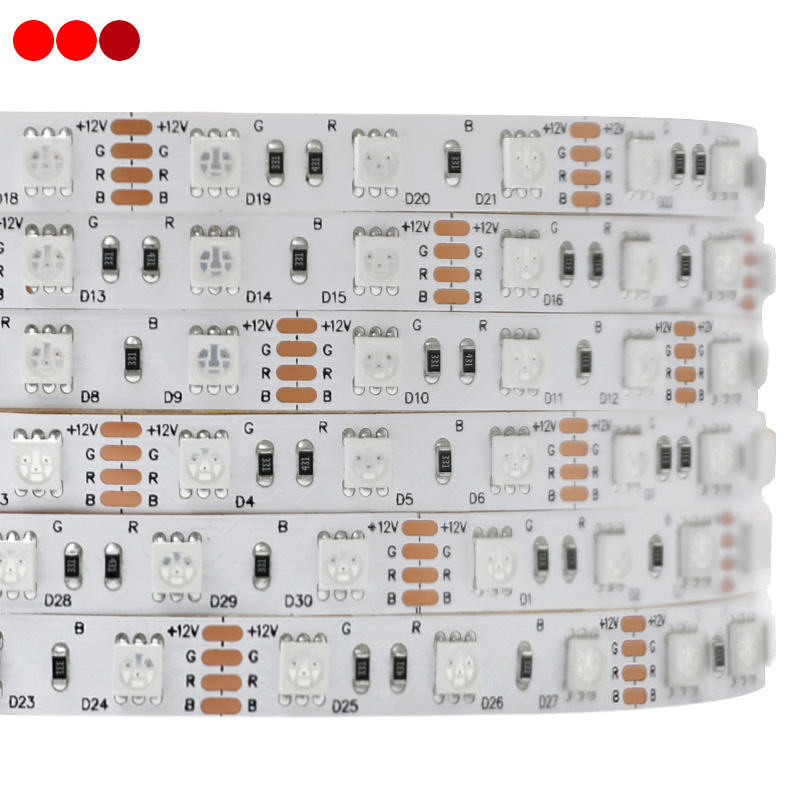
Dual Red 660nm NIR 850nm 3-in-1 LED Tri-band Strip Light
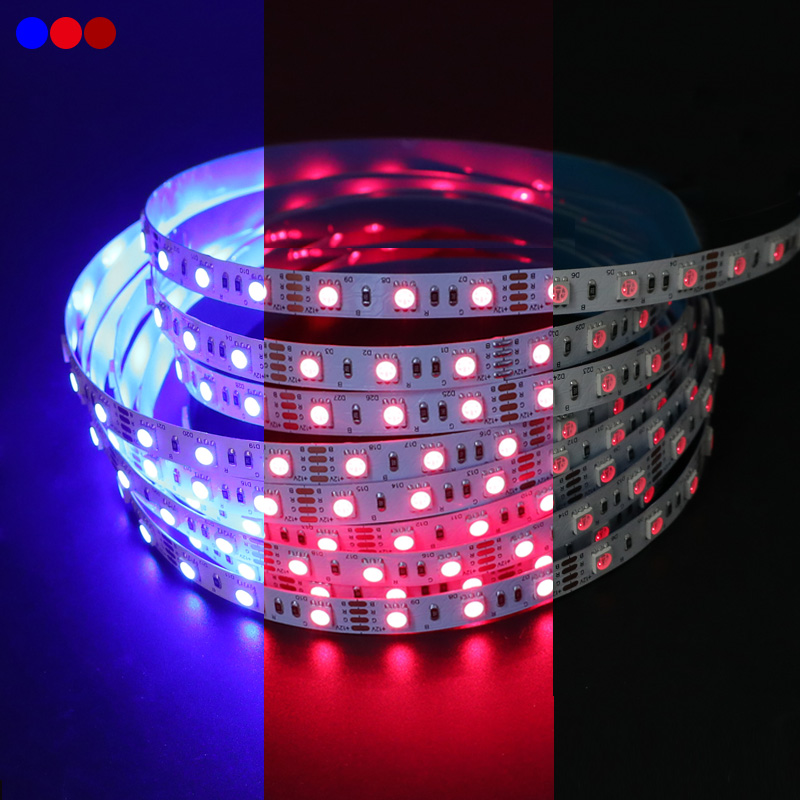
450nm+660nm+730nm Tri-Spectrum Tunable Red Blue LED Grow Light Strip

Ultra Bright 3-in-1 Infrared Red Blue Light Therapy LED Strip
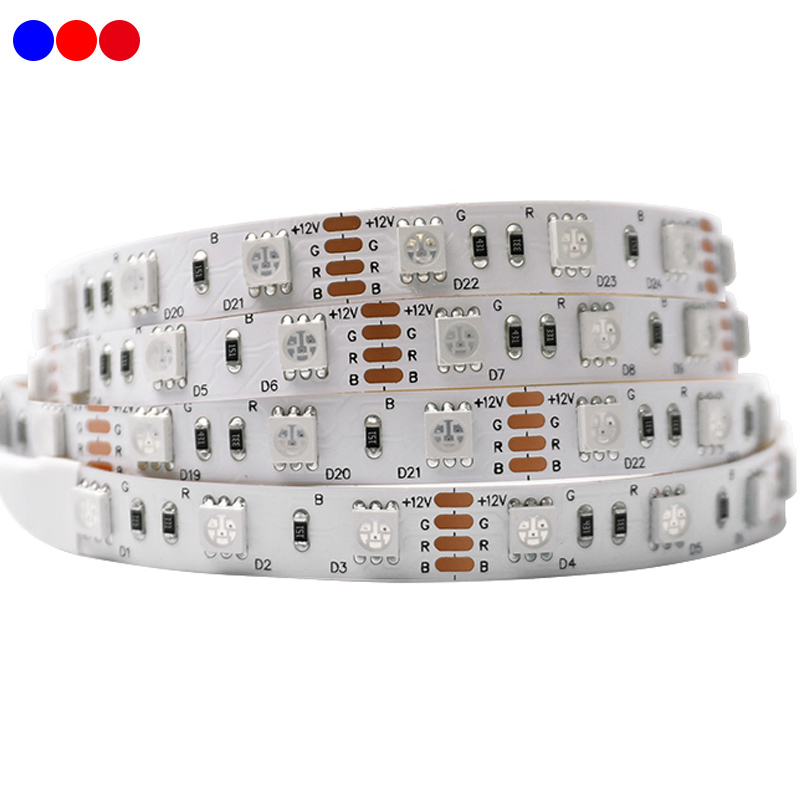
660nm Red + 810nm IR + 450nm Blue 3-in-1 Multi Wavelength LED Strip
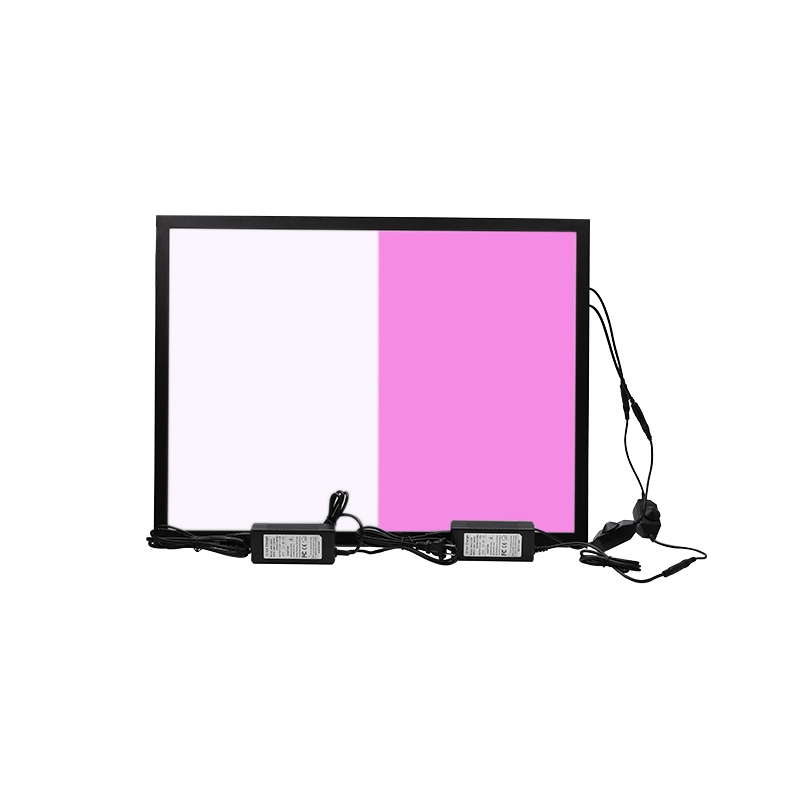
Bi Color Near IR Light + White Led Flat Panel Light Machine Vision Lighting
Frequently Asked Questions About Multi-Spectrum Red & NIR Light Strips
Got a question before you buy? I've probably answered it a thousand times. Here are the most common ones I hear on the support desk.
The LED light spectrum is just the specific range of colors, or wavelengths, a light source puts out. These multi-spectrum LED strips combine wavelengths like 660nm deep red and 850nm near-infrared because each one does a very different job. The red light is great for skin health, while NIR penetrates deeper for muscle recovery. For plants, blue light drives photosynthesis while far-red can trigger flowering. It's about delivering a precise recipe of light for a specific biological response.
They're almost certainly working! The near-infrared (NIR) wavelengths like 810nm and 850nm are invisible to the human eye. You might see a very faint red glow from the chip in a pitch-black room, but that's it. The easiest way to check is to look at the strip through your phone's camera—most cameras can see NIR, and the LEDs will show up as bright purple or white dots.
You'll need a three-channel controller. Think of this 3-in-1 wavelength LED tape light like an RGB strip, but instead of Red, Green, and Blue, you have channels for Red, IR, and Blue. A standard RGB controller or a dedicated 3-channel dimmer will let you turn each wavelength on and off or dim them individually. This is how you can switch from a red-only mode to an IR-only mode, or blend them for a custom effect.
For our 24V multi-spectrum Red NIR light strips, plan on about 5 meters (16.4 ft) for a single run powered from one end. Any longer than that and you'll see voltage drop, where the far end of the strip looks dimmer than the start. For runs longer than 5m, you must inject power at both ends of the strip or run parallel feeds from the power supply. Our guide to long LED runs explains exactly how to do this.
They work on different levels, so it depends on the target. The 660nm red light is fantastic for skin issues—it helps with surface-level repair, wound healing, and collagen production. The 850nm near-infrared (NIR) light penetrates much deeper into tissues, making it more effective for joint pain, muscle soreness, and deep recovery. That's why our 3-in-1 wavelength strips are so effective; you get both benefits at the same time.
The 730nm far-red light acts as a powerful signal for plants, mainly to regulate flowering and growth. It mimics the light conditions at sunset, telling the plant that the day is over. Using it at the end of the light cycle can significantly speed up the transition to the flowering stage. Our horticulture-specific strips combine it with 660nm red and 450nm blue light to give you precise control over the entire growth cycle.
The spectrum of light from these strips is not a continuous rainbow but a set of very specific, narrow peaks at the stated wavelengths. For example, a 660nm+850nm strip produces light almost exclusively at those two points in the red and near-infrared parts of the light spectrum. This precision is what makes them so effective for targeted applications, unlike a standard white light which covers a broad range of colors at once.
Yes, for any area with humidity, steam, or direct spray, you need an IP65 rating or higher. An IP65 strip has a silicone coating that protects it from splashes. For a grow tent that gets misted or a shower area, I would go for an IP67 rated strip, which comes in a fully sealed silicone tube. Using an unprotected IP20 indoor strip in a damp environment is a common mistake that will cause it to fail from corrosion within months.
That's a great question, and it points to a common mix-up. Kelvin (K) ratings, like 2700K warm white or 6000K cool white, only describe the color temperature of *white* light. Because these multi-spectrum LED light strips produce very specific, individual wavelengths of red or infrared—not white light—they do not have a Kelvin rating. The key specification here isn't Kelvin, but the precise nanometer (nm) wavelength of each LED.
Yes, we strongly recommend it for long-term reliability. The 3-in-1 LED chips pack a lot of technology into a very small space and they do generate heat. Mounting the strip inside one of our aluminum profiles acts as a heatsink, drawing heat away from the LEDs. This prevents the chips from degrading over time and ensures you get the full 50,000-hour lifespan.
Flickering is a power supply issue, not a faulty strip. It usually means the driver is overloaded or can't provide stable DC voltage. Always choose a power supply with at least 20% more wattage capacity than your strip requires. For a 5-meter strip that draws 72 watts, you need at least an 86W power supply; a 96W or 100W 24V power supply would be the correct choice.
The biggest advantage of our 3-in-1 multi-spectrum strips is the perfectly uniform light mixing. Since all three wavelengths are emitted from the same tiny point (the SMD 5050 package), the blended light is completely even. If you use separate strips side-by-side, you'll get color 'striping' and uneven coverage. Our integrated design guarantees that every part of the target surface gets the exact same ratio of light, which is critical for consistent results in both therapy and horticulture.
Absolutely. We can combine different wavelength chips into the 3-in-1 package, alter the LED density, change the PCB width, or deliver it at a precise length with connectors pre-soldered. Just send us your requirements—even a napkin sketch is fine. An engineer will reply with a full wiring diagram and a quote, usually within 12 hours. There's no fee for the consultation and no obligation to order.
You should expect 50,000 hours of use from a properly installed multi-spectrum LED light strip. 'Properly installed' is the important part. It means running it on the correct, stable voltage, using a quality power supply with adequate wattage headroom, and mounting it on a surface that dissipates heat, like an aluminum channel. The most common causes of premature failure are always overheating and unstable power, not the LEDs themselves.