
Wall Mount RGB LED Controller
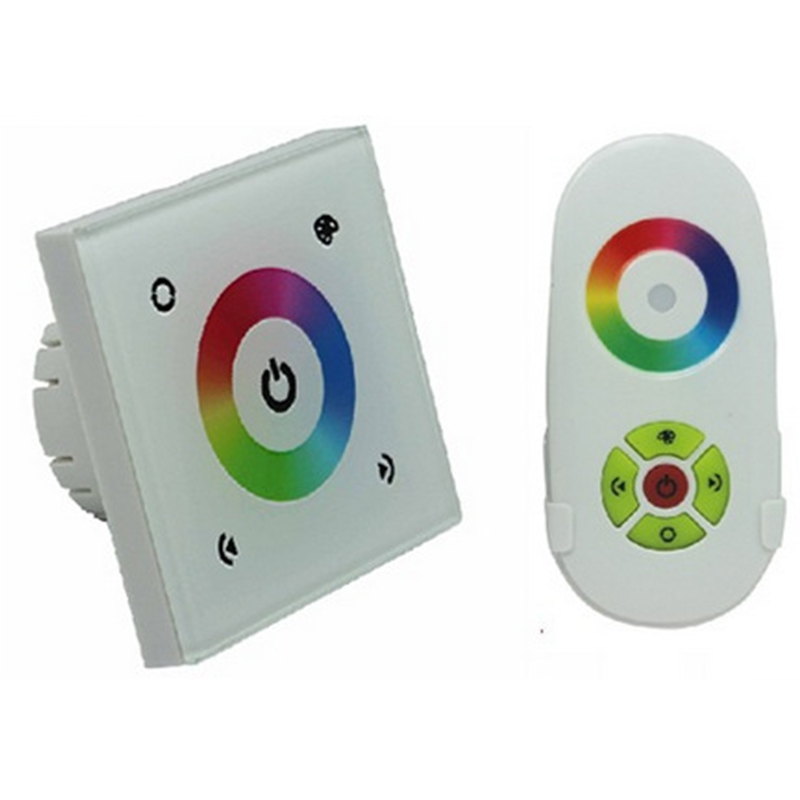
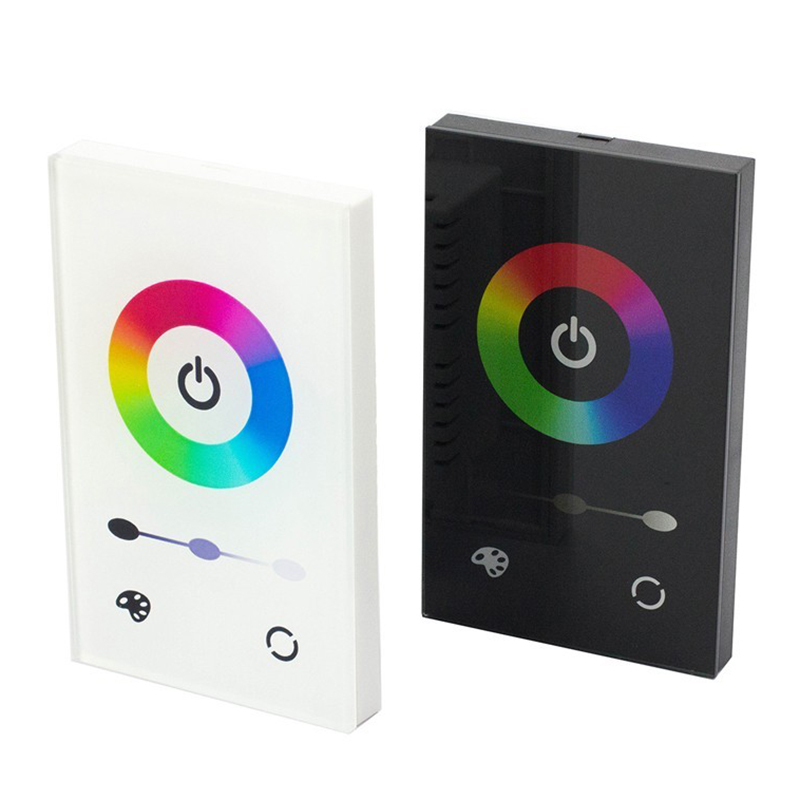
12 productsHard-wired wall mount RGB LED controllers are the traditional standard for both high-end residential lighting projects and professional commercial lighting environments. Unlike basic handheld remotes that are easily lost or suffer from dead batteries, these fixed RGB panels provide a permanent, reliable interface for architectural lighting.
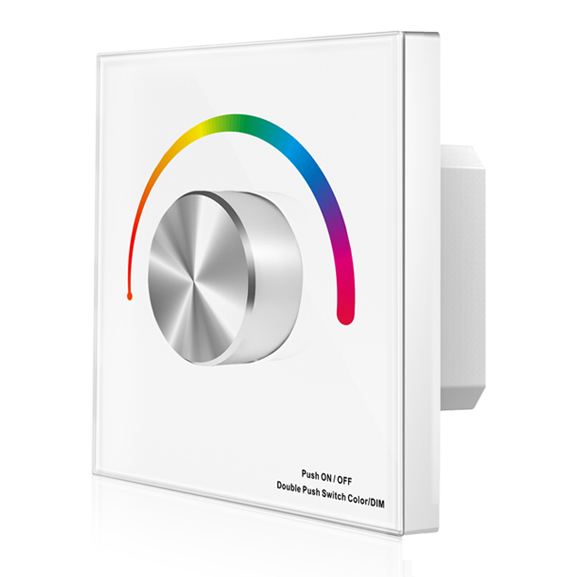
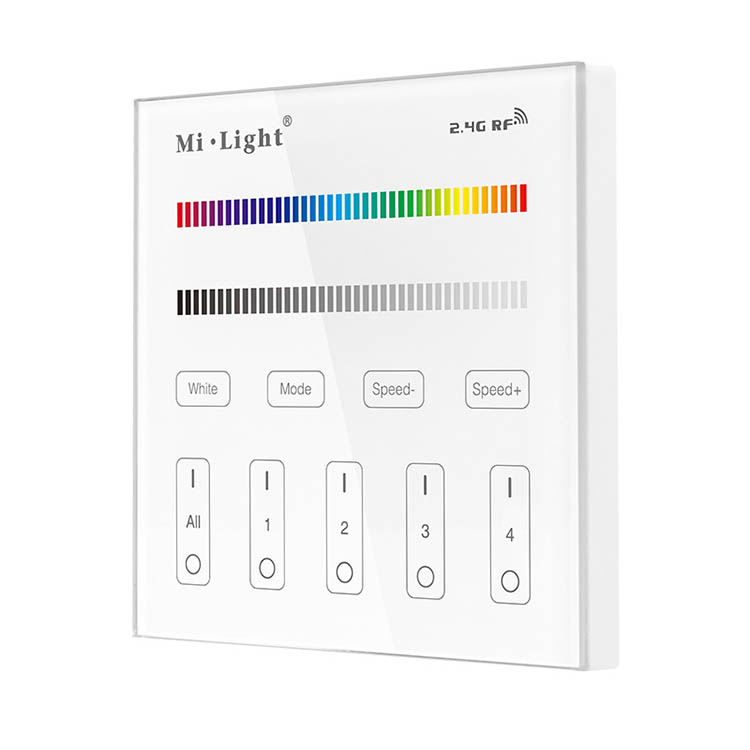
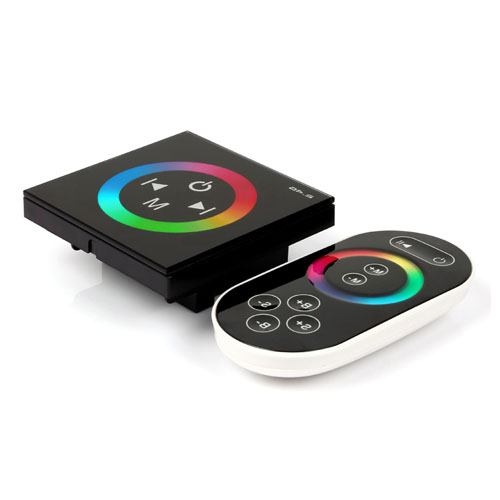
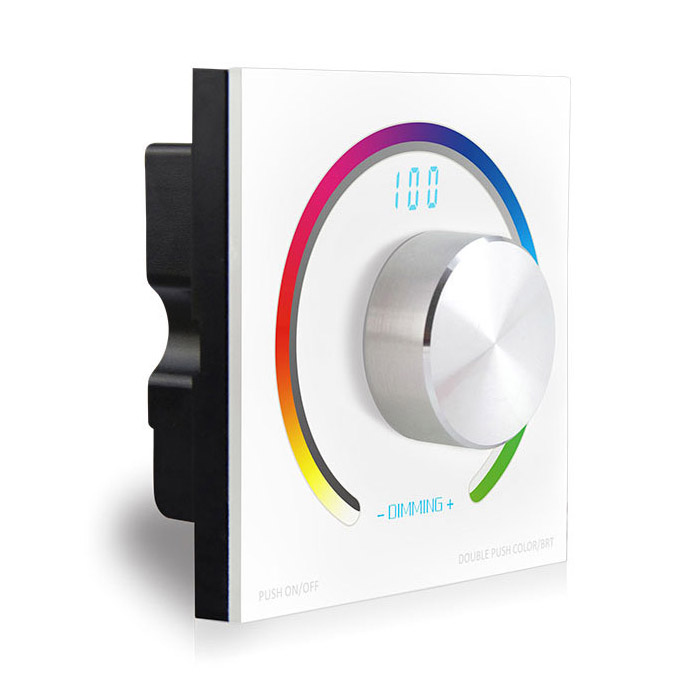
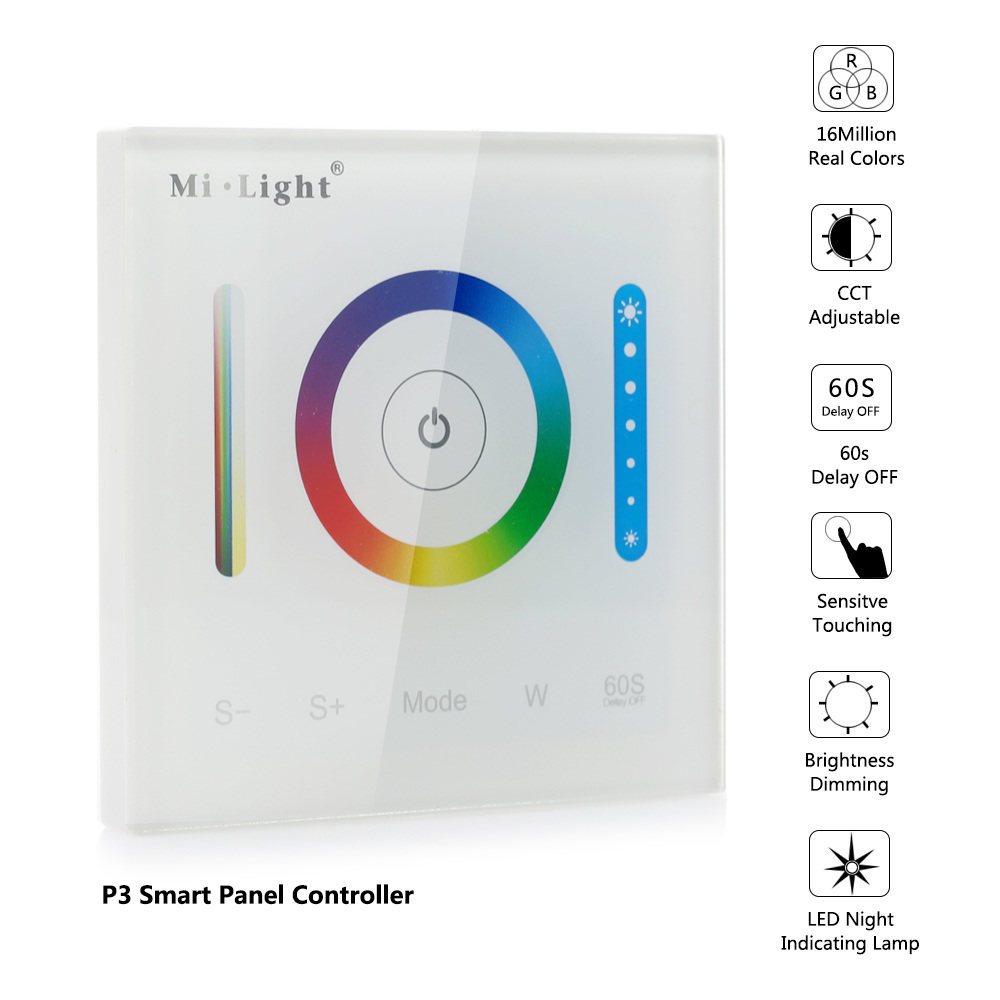
While DIY enthusiasts appreciate the sleek aesthetics of glass or rotary wall-mount touch color RGB controllers, small business owners—such as those managing retail boutiques, bars, or offices—prioritize them for their "always-ready" accessibility and robust performance. Choosing a wall-mounted RGB control solution ensures that color adjustments for your multi-color LED strips are integrated directly into your space's infrastructure.
Why choose a hard-wired wall controller over a purely RF wireless system?
• Unmatched Signal Reliability: Hard-wiring eliminates the latency or "dead zones" common in wireless-only environments, ensuring the RGB lights respond instantly every time.
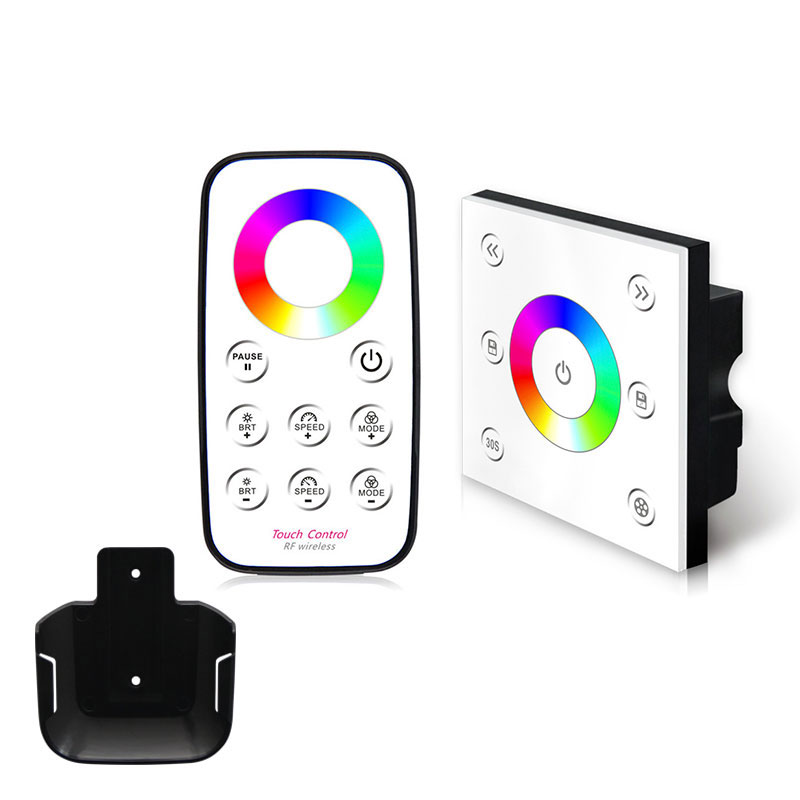
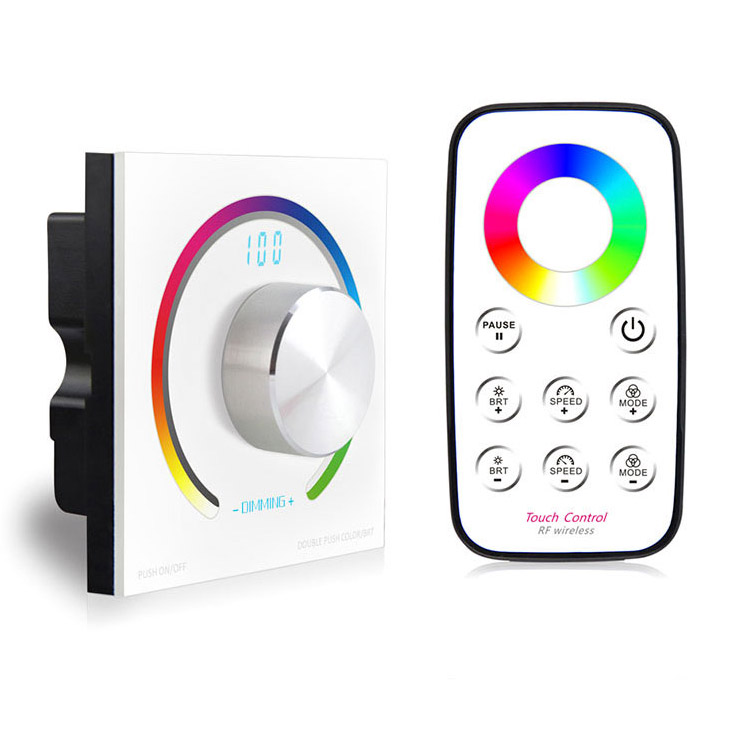
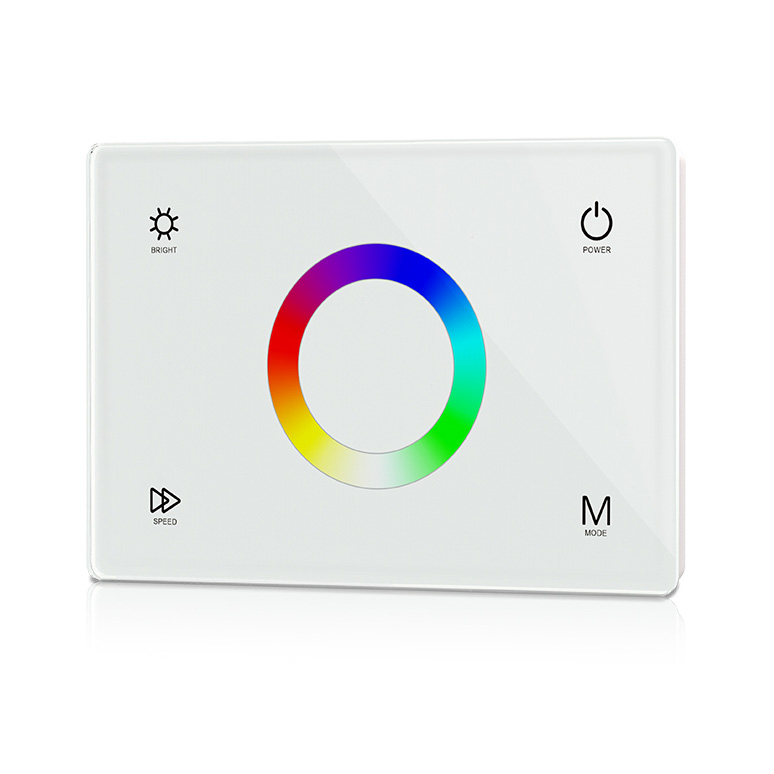
• Flexible Hybrid Ecosystem: These wall-mounted RGB lights panels are not limited to local control; models such as the Skydance T3 series are compatible with other RF remotes. This allows you to install a permanent wall station as your primary hub while adding optional handheld RF remotes for convenience from a distance (up to 30m).
• High Power Handling: Supporting up to 12A total load (4A per channel), these LED RGB controllers wall mount can handle significant lengths such as 15 meters (49 feet) of RGB LED strips, ranging from 144W at 12VDC to 288W at 24VDC.
.jpg)
Frequently Asked Questions About Wall Mount RGB LED Controllers
Got a question about hard-wired RGB panels? You're in the right place. Here are the common questions we answer for customers every day.
This is almost always a crossed wire. Your RGB LED strip has four pins: a common positive (+), and then separate negatives for Red, Green, and Blue. If you connect the controller's 'G' output to the strip's 'R' input, for example, the colors will be swapped. When you press red on the panel, you'll get green light. Just double-check your wiring sequence (R-G-B) between the controller output and the start of the strip.
Yes, nearly all modern wall-mounted controllers have a power-off memory function. When power is restored, whether from an outage or just flipping a wall switch, the controller will return to the last color and brightness setting it had. This is a critical feature for architectural and commercial lighting where you want the lights to return to their programmed scene automatically.
Absolutely, that's what they're designed for. Many of our wall panels, especially from Skydance, function as RF remotes themselves. You install the panel, wire it to power, and then pair it wirelessly to one or more RF receivers that actually control the strips. You can then pair additional handheld remotes to those same receivers. This gives you a hybrid system with a fixed controller and portable ones.
You'll overload the output channels. Best case scenario, the controller has over-current protection and will just shut down or flicker. Worst case, you'll permanently damage the MOSFETs on the controller's circuit board. Always calculate your total load in Amps before you buy. If your total run exceeds the controller's rating, don't risk it.
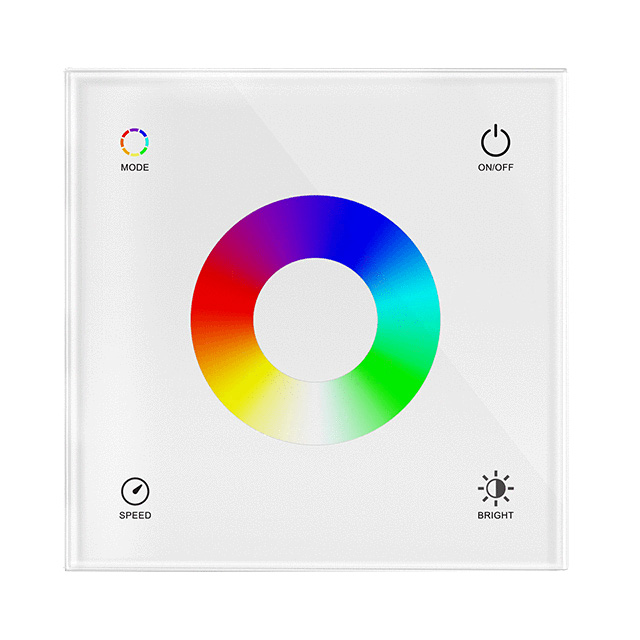
It's just two different design approaches to the user interface. A touch-sensitive color wheel, like on the T3 series, allows for very fast, direct color selection. A rotary knob, like on our K3 series, provides more precise, tactile control, which some users prefer for fine-tuning brightness or color. Neither is technically better; it's a matter of how you want to interact with the lights.