
5V COB LED Strip
17 products
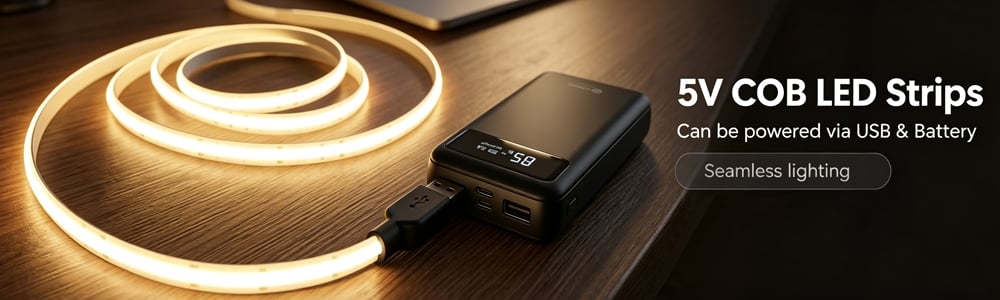
5V USB COB LED strip can be powered using the USB port with low voltage and high security. There are multiple colors options for you to choose from, including white and color changing. 5V COB LED strip light is powered by a 5V power supply, which reduces energy consumption and has a longer service life. These flexible light strips can be formed into different shapes. COB LED strip 5V is often used as car interior decorative lights to provide dazzling color effects.
When Should You Choose a 5V COB Strip Over 12V or 24V?
The main reason to pick a 5 volt COB LED strip is for convenience and portability. Unlike their 12V and 24V counterparts, which need dedicated power supplies, 5V cob strips run perfectly off common USB ports, phone chargers, and battery power banks. This makes them the absolute best choice for projects where you don't have a wall outlet nearby: think cosplay outfits, trade show displays, accent lighting in a car, or DIY projects powered by a simple battery pack. We see them used all the time for model-making, drone lighting, and portable signage.
The trade-off for this convenience is voltage drop. Because the voltage is lower, it doesn't push as far down the copper traces on the strip. This means a DC5V LED strip is best for shorter runs, typically under 2 meters (about 6.5 feet). Go much longer, and you'll see the light dim and potentially shift in color toward the end of the strip. For runs longer than that, a 12V or 24V cob strip is a better bet unless you're prepared to inject power every couple of meters.

Ultra-Slimmest DC5V Micro 2mm Width Cob LED Strip
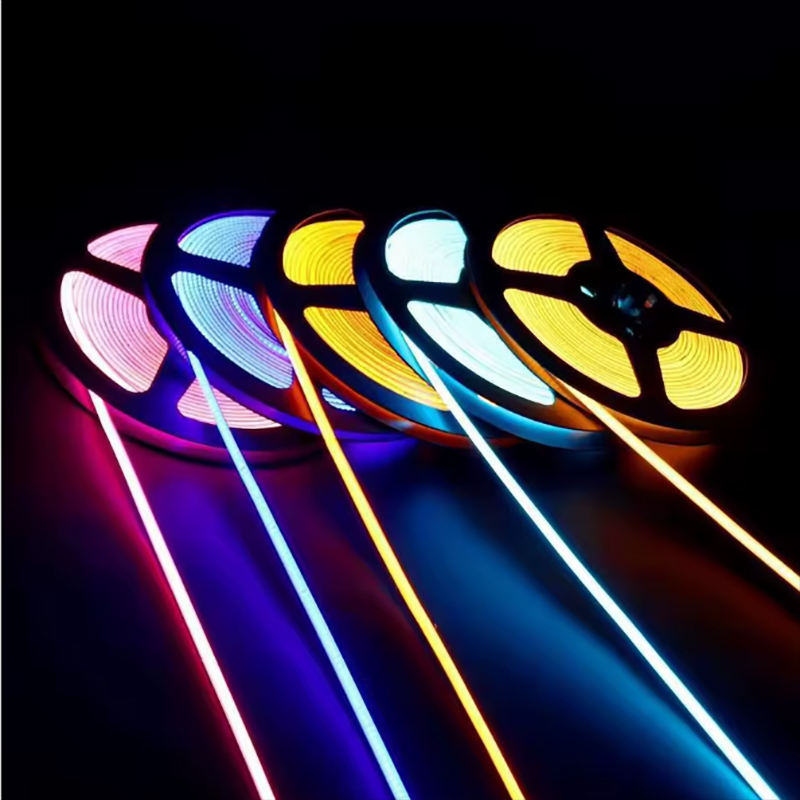
5V COB 3mm Mini Width Flexible Bright Multi Color LED Tape Light

Addressable COB LED Strip Lights - Without Light Spot - DC5V Input
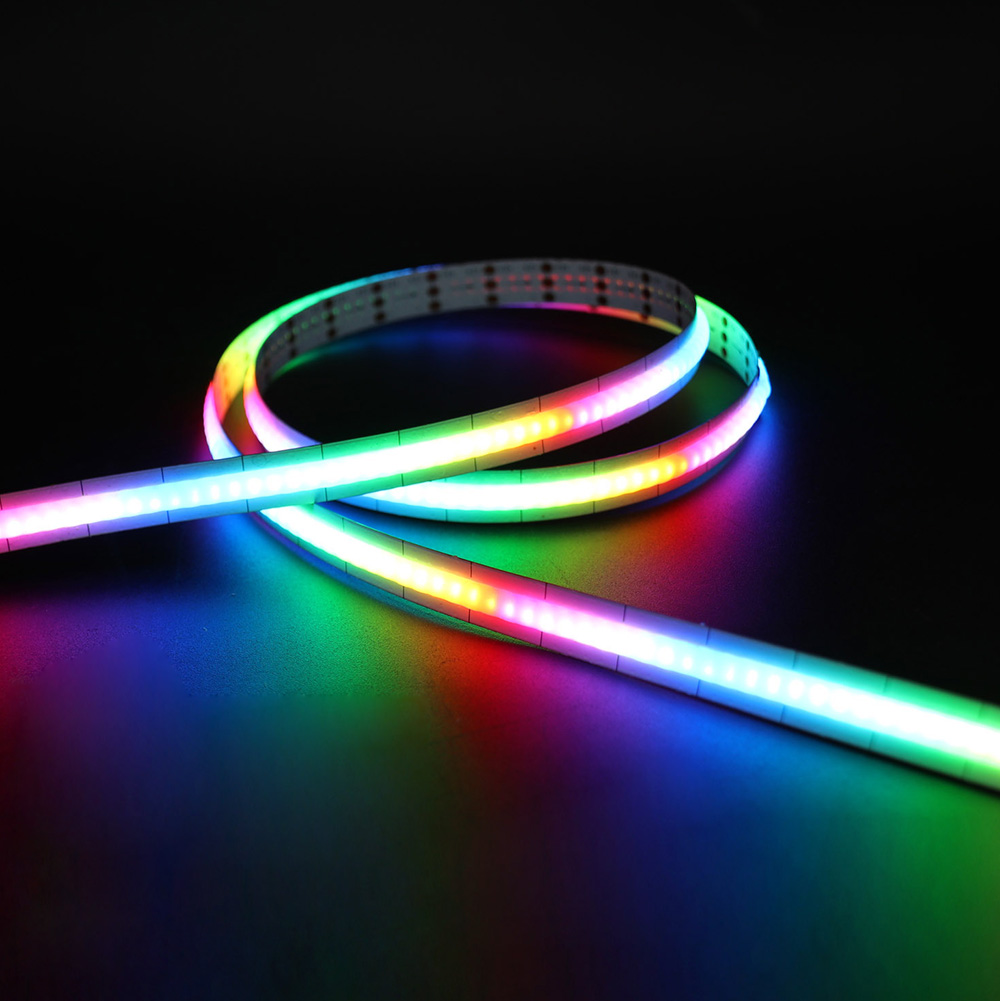
Highest Density SK6812 320 Chips/m Addressable RGB COB LED Strip Lights
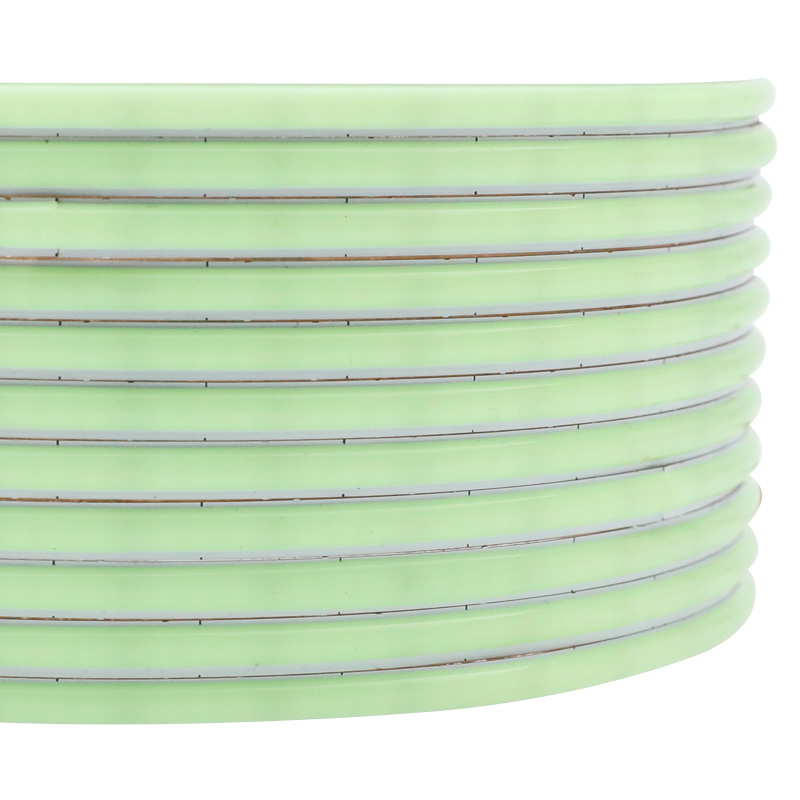
DC5V Tiny Flexible Ice Blue COB LED Strip 5mm Width 320 LED Chips per Merter
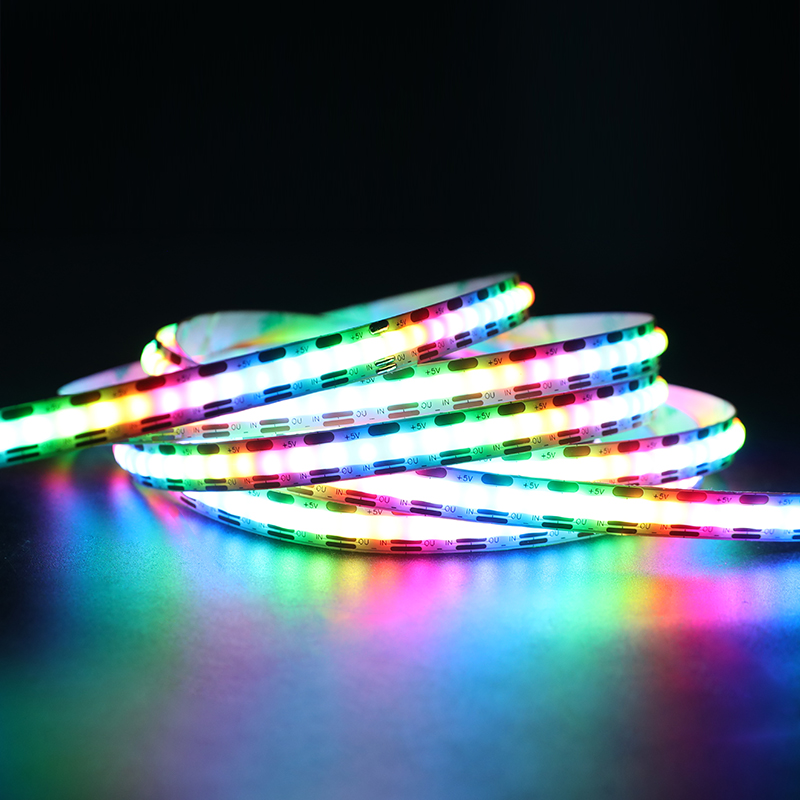
Raspberry Pi & FastLED Programming WS2812 5V COB LED Band
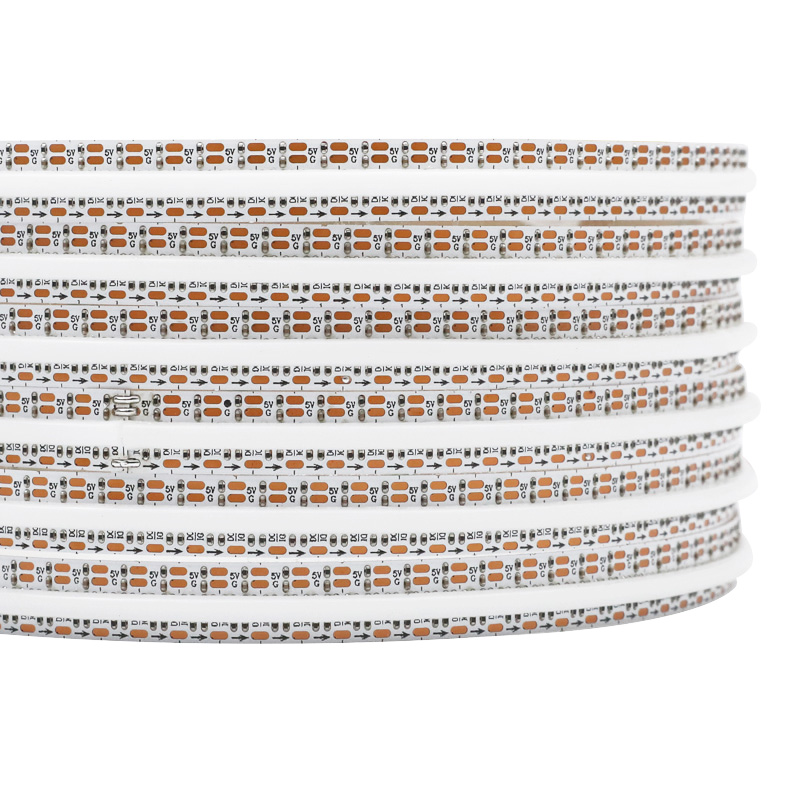
WS2812C 5V Programmable RGBIC COB LED Strip Light
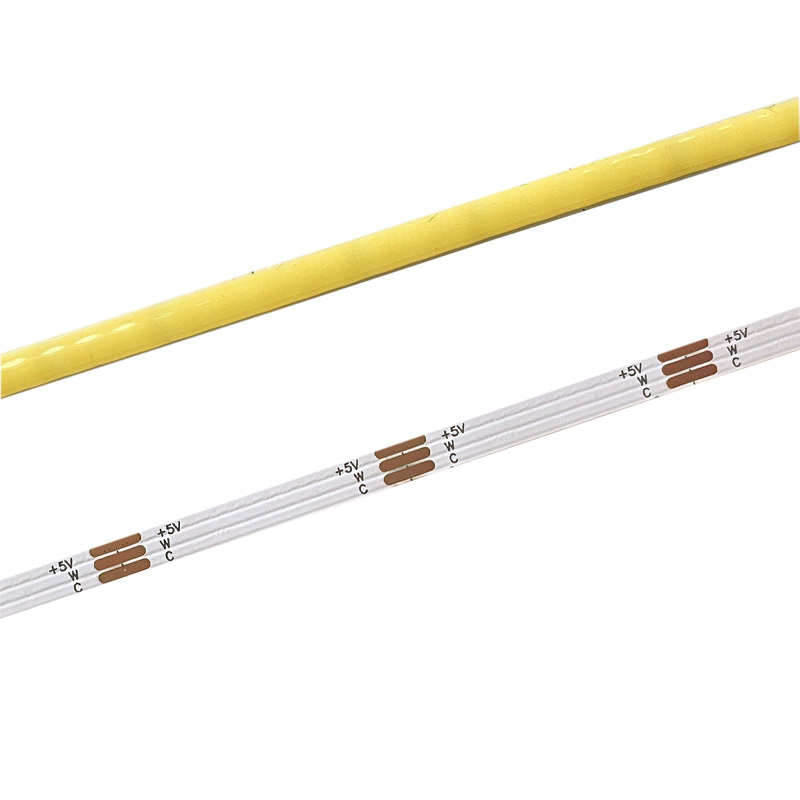
5V 5mm Ultra Thin CCT Dual White COB LED Strip

5mm Thin Dimmable White 5V Battery Powered COB LED Strip Light 320 Chips/m
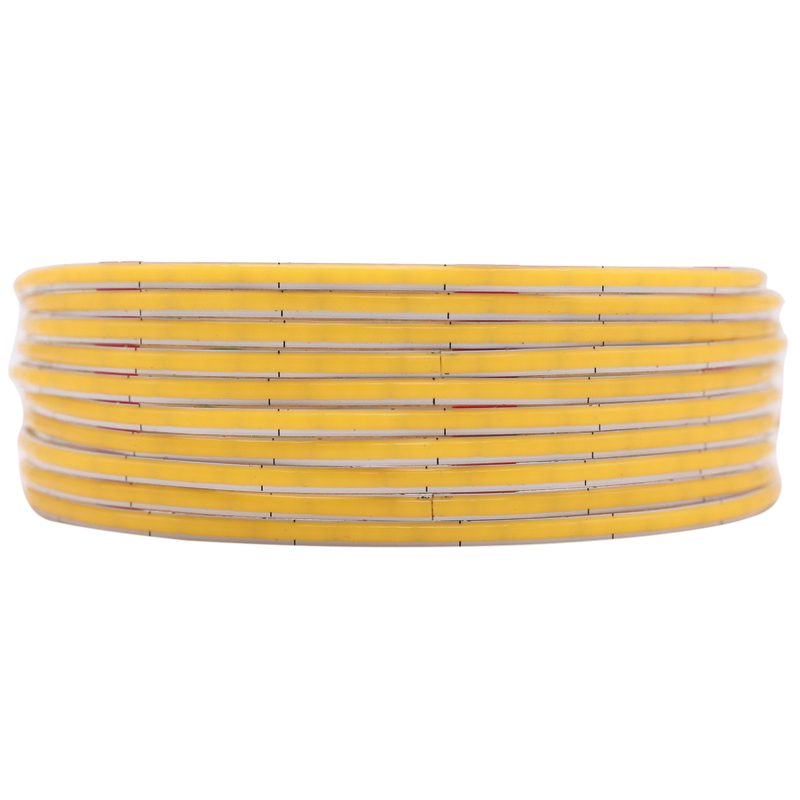
Super Slim 4mm Wide 5V COB LED Strip 320LEDs/m
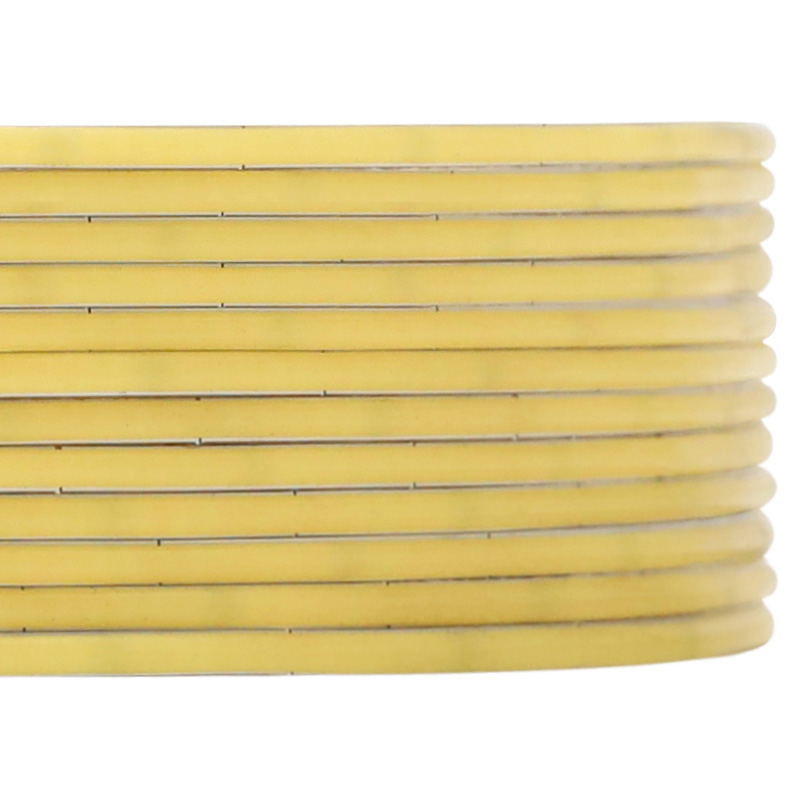
5V 2.7mm Skinnier LED Strips COB for Tight Spaces 480 Chips per Meter

DC5V 3mm Small Strip Lights LED White COB Tape for Hidden Lighting
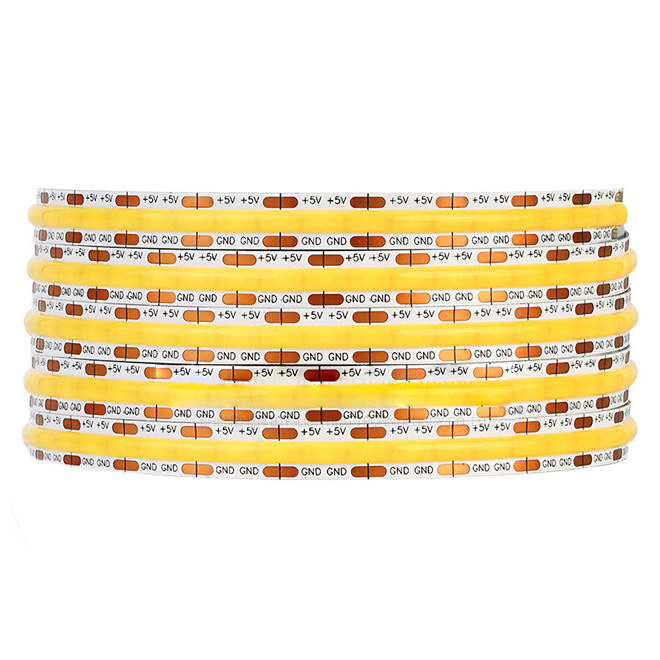
320 Chips/m DC 5V COB LED Strip Light 90CRI

5 Volt COB Slim 5mm Diffused RGB LED Tape Lights Flexible
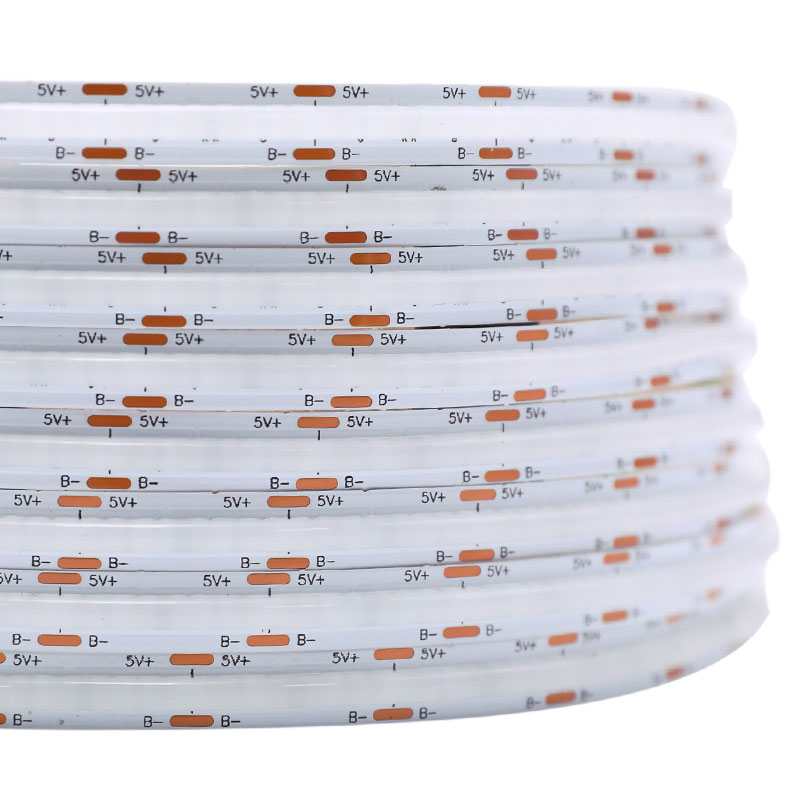
DC 5V 576Chips/m 8mm Color Changing COB RGB LED Strip Lights
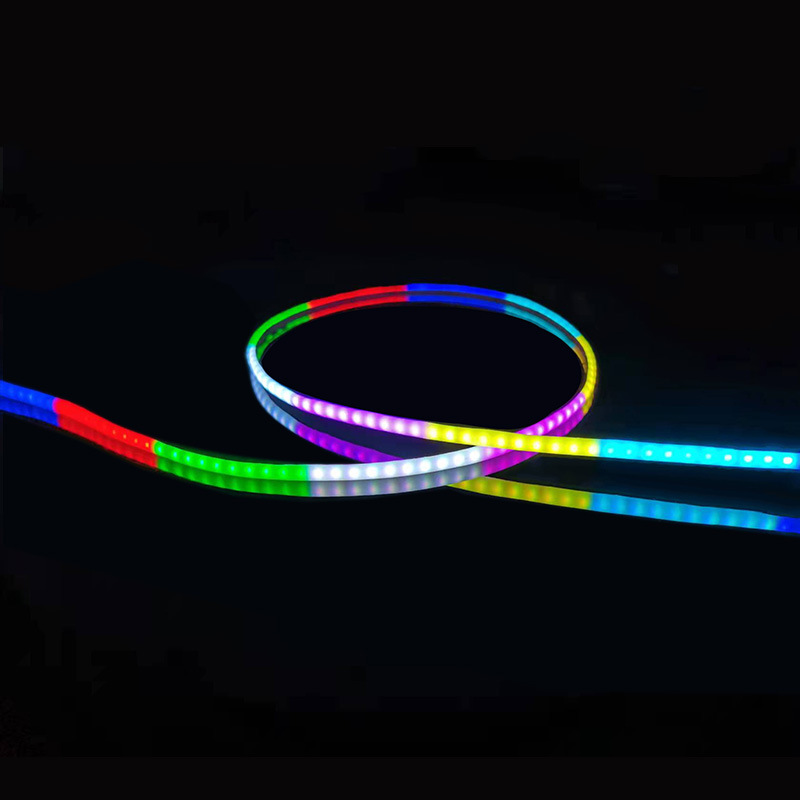
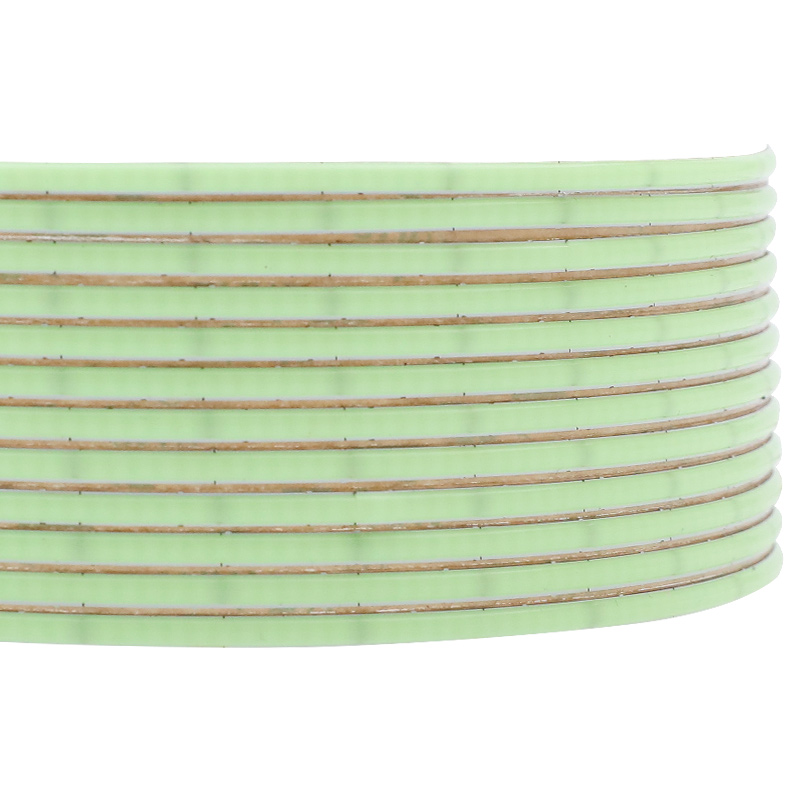
5V COB Tiffany Blue 3mm Ultra Narrow Width LED Strip Light No Voltage Drop
What Kinds of 5V COB Light Strips Can I Get?
Just because they're low voltage doesn't mean they're low on options. We've built out our 5V COB family to cover pretty much any small-scale project you can dream up.
Static White and Single Color Strips
These are your workhorses for simple, clean accent lighting. They provide a beautiful, continuous line of light with no hotspots. We offer them in standard whites (3000K Warm, 4000K Neutral, 6000K Cool) and vibrant colors like Ice Blue, Pink, Green, and Red. Many of these are available on incredibly narrow PCBs, some as thin as 2.7mm or even 3mm wide, perfect for sneaking light into the tightest channels and crevices.
Addressable RGB and RGBIC Strips
If you want dynamic, color-chasing effects, this is what you need. Our 5V addressable COB strips use popular ICs like the WS2812B, making them fully compatible with Arduino, Raspberry Pi, and FastLED libraries. Because each LED chip (or small group of chips) can be controlled independently, you can create flowing rainbows, strobes, and complex animated patterns. They're a favorite for custom PC case lighting, wearables, and interactive art installations. For details on wiring these, check out our guide to addressable strips.
Are 5V Strips Good for Battery Powered LED Lighting?
Yes, they're ideal. A 5V COB LED strip is the most efficient and straightforward option for any battery-powered project. A standard USB power bank (the kind you use for your phone) outputs 5V DC, meaning you can often plug the strip directly in with a USB connector.
This completely eliminates the need for bulky power supplies or complex voltage converters. For custom battery packs using Li-ion or LiPo cells, a simple 5V regulator is all you need to get clean, stable power for your lights.
| Feature | 5V COB LED Strip | 12V / 24V COB LED Strip |
| Ideal Power Source | USB ports, power banks, battery packs | Wall-plug AC/DC power supplies |
| Max Run Length | ~2-3 meters (6.5-10 ft) before dimming | 5-10+ meters (16.4-32.8+ ft) |
| Typical Cut Points | Often shorter, 5-25mm | Typically 25-50mm |
| Best For | Portable projects, wearables, models, cars | Architectural lighting, under-cabinet, coves |
Why Trust SuperLightingLED for 5V COB Strips?
We specialize in the parts that make projects work. While others just sell a basic strip, we stock the ecosystem to support it: dozens of addressable dream color controllers, hundreds of aluminum channels (even for our 2.7mm strips), and all the connectors and wires you need.
If you have a unique idea, send us a sketch. Our engineers can turn it into a complete, ready-to-install kit, often within 12 hours, ensuring you get the right strip, controller, and power source for your specific 5V COB application.
Frequently Asked Questions About 5V COB LED Strips
Got a question about getting your 5V project wired up? I've answered thousands of them over the years. Here are the most common ones that come up.
You should choose a 5V COB LED strip for short runs, portable projects, or anything powered by USB. They're perfect for accent lighting inside a computer case, wearables, or detailed model work where you only need a meter or two. For longer runs like room coving or under cabinets, 12V or 24V is the better choice. Low voltage like 5V suffers from voltage drop much faster, meaning the strip will get noticeably dimmer after just a few meters.
I wouldn't recommend it. A standard computer USB 2.0 port only supplies 0.5 amps (500mA), and USB 3.0 provides 0.9 amps. Many 5V COB strips can draw 1-2 amps per meter or more at full brightness. Plugging that in can overload your USB port and potentially damage your motherboard. Always use a dedicated 5V power supply or a wall adapter that's rated for the strip's total current draw.
The most common 5V COB application is anywhere you need a short, bright, dotless line of light powered by a low-voltage source. Think car interior accents, display case lighting, backlighting for monitors, creative DIY projects, and wearable tech. Since they can run off USB power banks, they're fantastic for things that need to be portable. They solve a lot of problems where running a traditional power supply is a pain.
First, check your controller settings. Many LED libraries like FastLED require you to specify the color order (RGB, GRB, BRG, etc.), and getting it wrong will swap your colors. Also, double-check that your data line connection is solid and you have a common ground between the strip and the controller. A poor data signal will corrupt the color information.
Because the voltage is low, the current is higher for the same amount of power. This means you need slightly thicker wire for a 5V COB LED strip than you would for a 24V one to avoid dimming. For short connections under a few feet, 20 or 22 AWG is usually fine. For longer power injections up to 10 feet, it's safer to use 18 AWG. Using wire that's too thin is a very common mistake and the main cause of brightness problems.
Yes, this is a perfect use for a 5 volt COB LED strip. Just make sure the battery pack has a 5V DC output (most USB power banks do) and that it can supply enough amperage. To figure out what you need, check the strip's wattage per meter. A 2-meter strip that uses 10 watts/meter needs 20 watts total. Divide watts by volts (20W / 5V) to get 4 amps. You'd need a battery pack capable of supplying at least 4A.
Generally, they are better for accent and ambient lighting. While some of our high-density 5V strips are quite bright, they're limited by the power they can draw over 5V. For true task lighting, like under a kitchen cabinet where you're chopping vegetables, you'll get more performance and run length from a 12V or 24V system. Always check the lumens-per-meter (lm/m) spec on the product page to be sure.
A little warmth is normal, but if it's too hot to comfortably hold your finger on, it's a sign of a problem. The most common cause is not having proper heatsinking. While they don't get as hot as old halogen bulbs, they still produce heat that needs to go somewhere. We always recommend mounting any COB strip in an aluminum channel to dissipate heat effectively. It dramatically improves its lifespan and safety.
You must use a regulated DC 5V power supply. Using a 12V or 24V supply, even for a second, will permanently destroy the DC5V LED strip. To find the right size, calculate the total power your strip will use (watts per meter × total meters) and then add a 20% safety margin. For example, if you have 4 meters of a 10W/m strip, that's 40W. Add 20% (8W), and you'll need a 5V power supply rated for at least 48W.
Absolutely. Our addressable 5V strips using WS2812B, WS2811, or similar chips are made for exactly this. They're fully compatible with common libraries like FastLED and NeoPixel. The key wiring rule is to power the strip with your main 5V power supply and only run the data and ground wires to the Arduino or Pi. Don't try to power the strip from the board's own 5V pin; it can't handle the current.
That's a direct result of the low voltage. LEDs are wired in series groups, and at 5V, that group needs to be a certain length to work with the circuit. This often means the cut points are every 25mm, 50mm, or sometimes even more. If you need to cut to a very specific length, check the 'Cut Increment' on the spec sheet before you buy. Some of our newer models have much smaller cut points, but it's a key difference between strips.
Yes, we do this for customers every day. A large part of our business is building custom-length assemblies that never appear on the website. Just send us your requirements — for example, 'a 1.35-meter strip of 4000K 5V COB with a 2-foot wire lead to a USB-A connector.' An engineer will review it, draw up a wiring diagram, and send you a quote and parts list, almost always within the same business day. There's no fee for the consultation.