
Addressable RGBCCT LED Strip
14 productsWhat is RGBCCT addressable LED strip?
RGBCCT addressable led strip is an upgraded version of color changing led strip lights, incorporating the functions of RGB LEDs and CCT LEDs. It is a smarter version of PWM RGBCCT led strip. With special IC such as FW1906, WS2805, DMX512 to precisely control each group of LEDs (or each LED), these addressable RGBWW led strip tapes can present dynamic color effects and natural light changes via digital signals of addressable RGBCCT led controllers.
For clarity, we define RGBCCT, RGBWW, RGBCW and RGBTW as the same: RGB+ Cool White+ Warm White (RGBCW 2700K-6500K). Compared to RGBW, addressable RGBCCT can not only produce RGB colors, but also point to point control color temperature of every single LED group, ranging from 2700K to 6500K.
In this programmable RGBTW LED strip category, we offer four specific product lines:
1. Digital 5-in-1 RGBCCT light
2. Digital 3-in-1 RGB light + PWM 2-in-1 CCT light (RGB+CCT)
3. Digital 4-in-1 RGBW light + individual white light (RGBW+W)
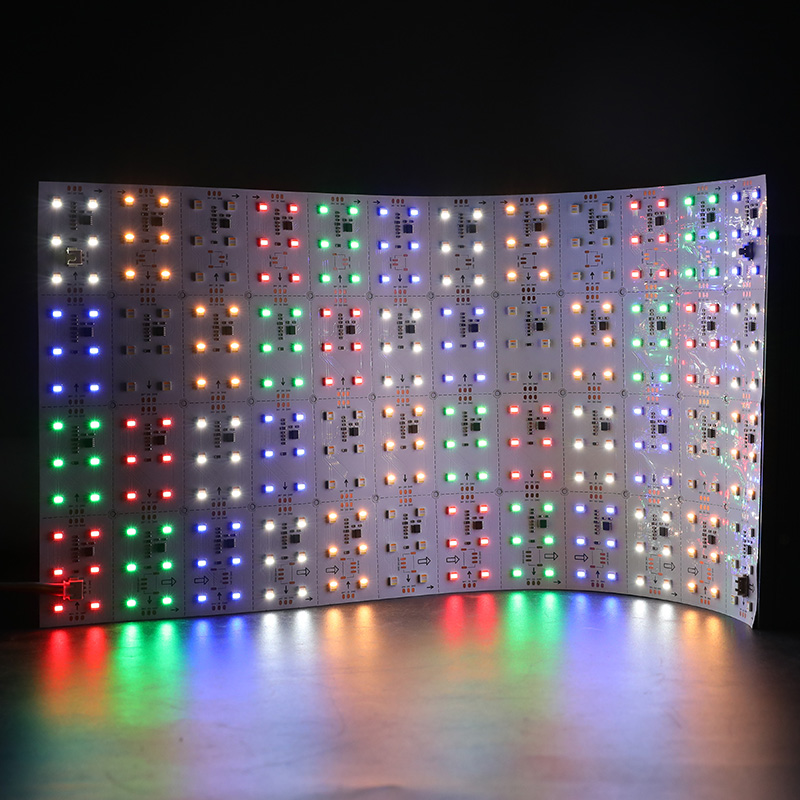
WS2805 Digital 5-in-1 RGBCW LED Matrix Light Sheet 1.24FT²
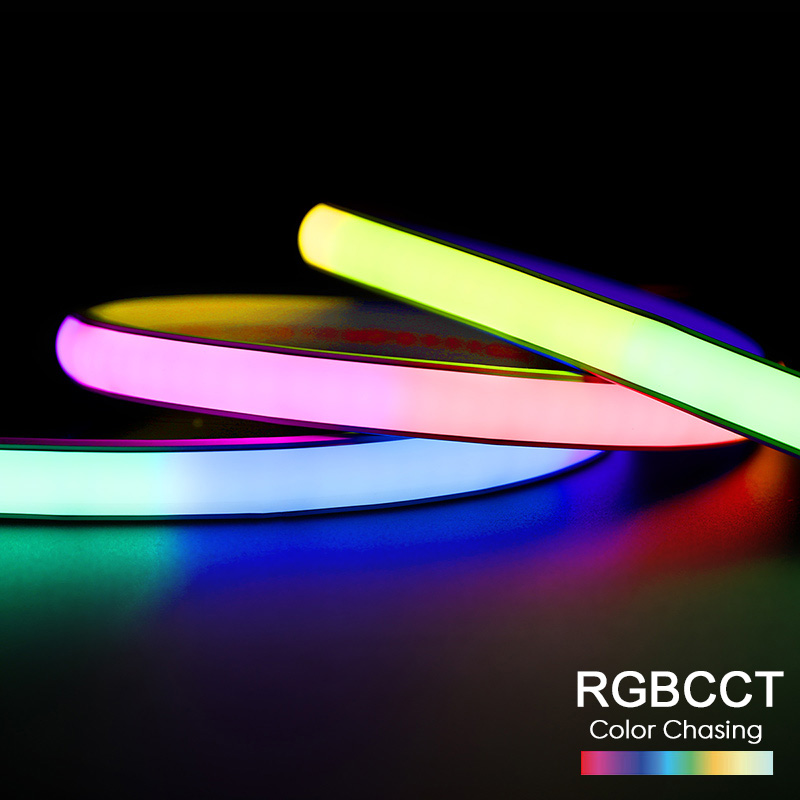
DC24V WS2811 15x7mm Neon RGBCCT Dotless COB LED Strip 840LEDs / M
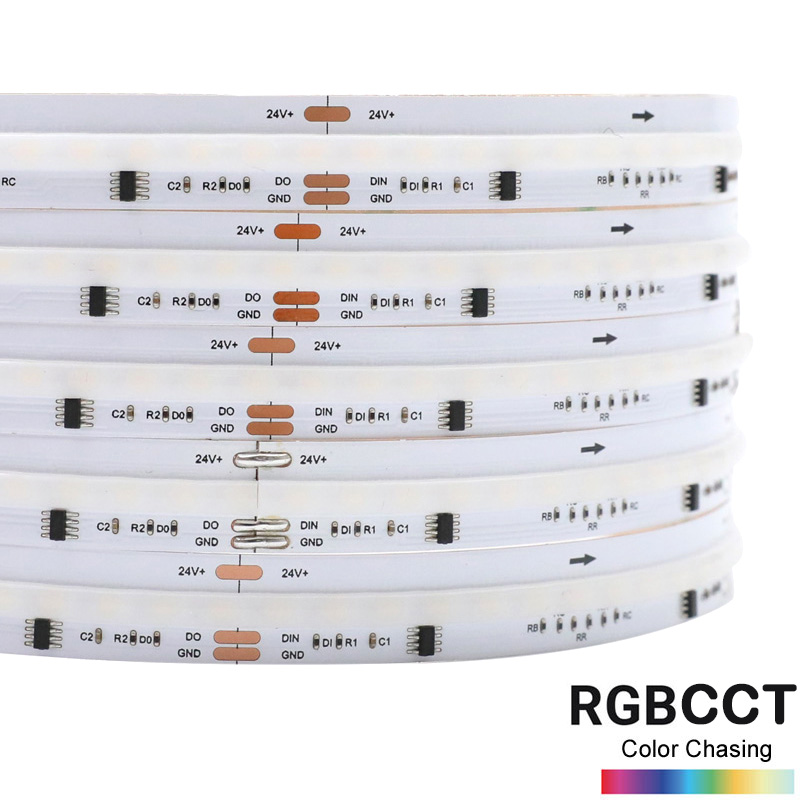
WS2811 Smart Addressable RGBCCT COB LED Strip 24V

DC24V RGB CCT Addressable COB LED Strip Breakpoint Resume
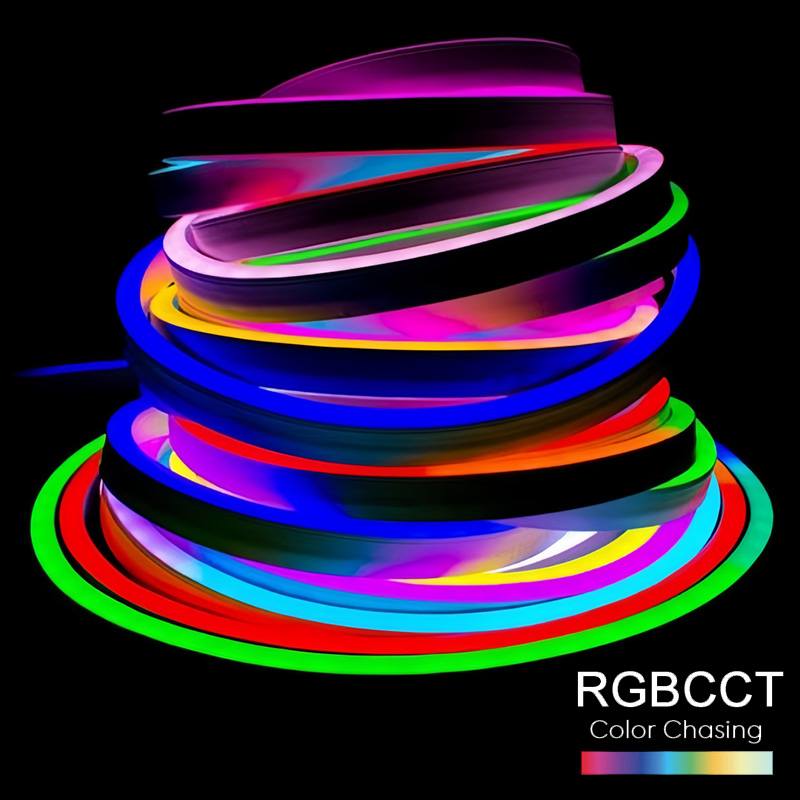
24V FW1906 RGBWW Addressable LEDstrip Outdoor Neon Side Rope
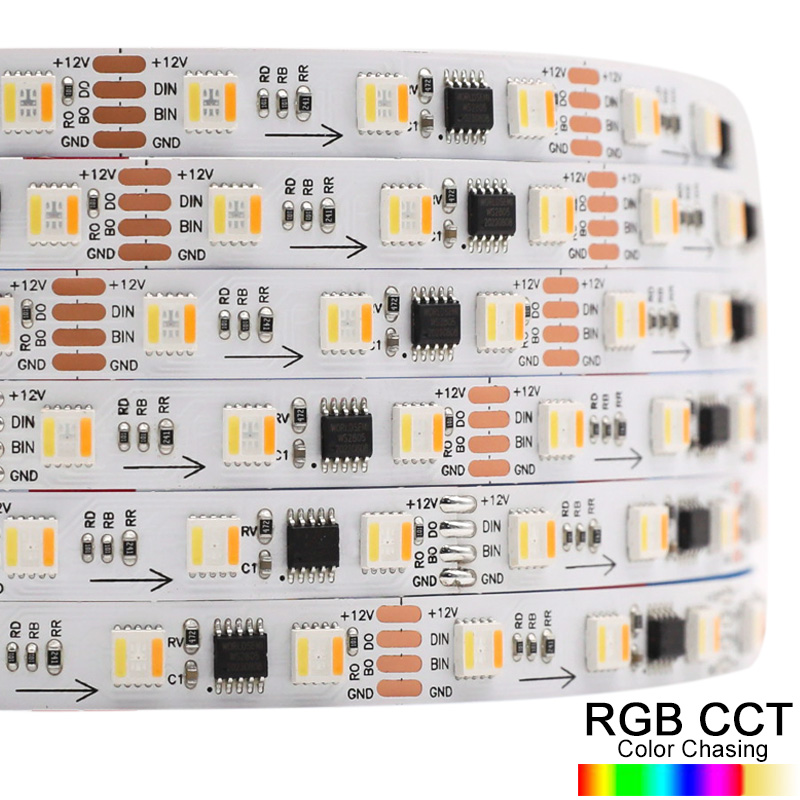
WS2805 Dual Signal 5-In-1 Addressable RGBWW LED Strip
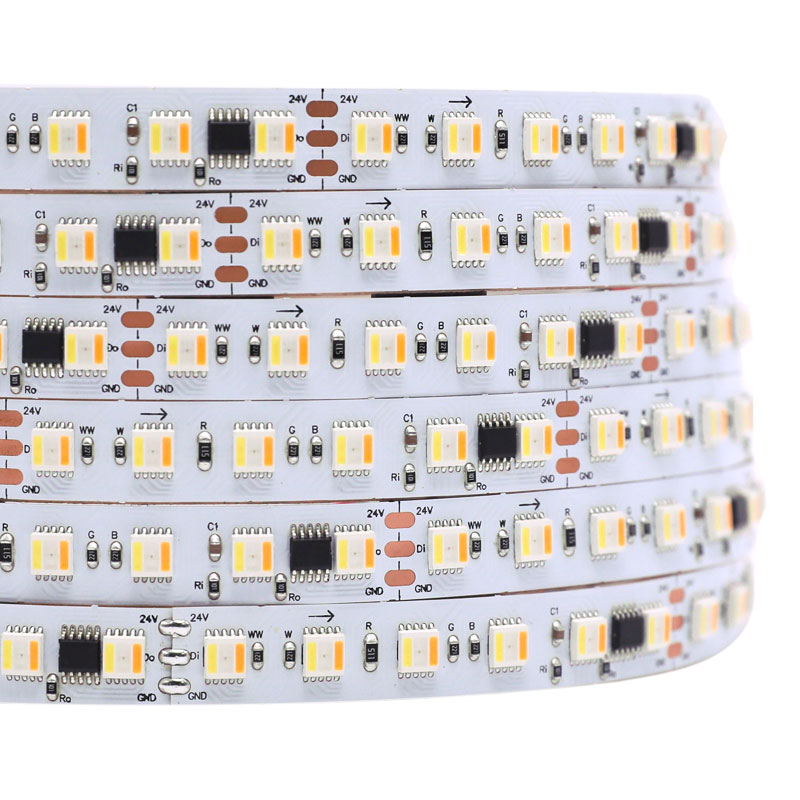
24V Digital 5in1 RGB+CCT 84LEDs/m Addressable LED Strip Light
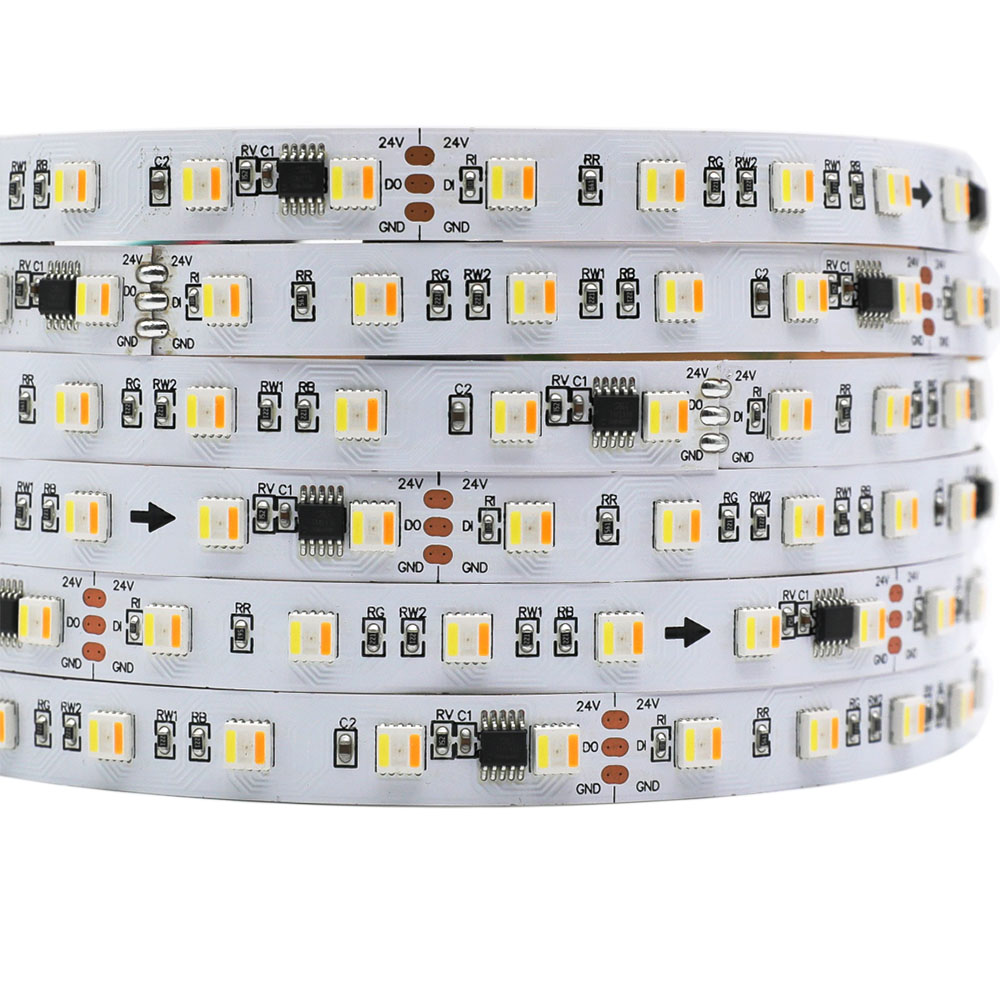
FW1906 Addressable RGBCCT 5in1 Color Chasing LED Strip Lights
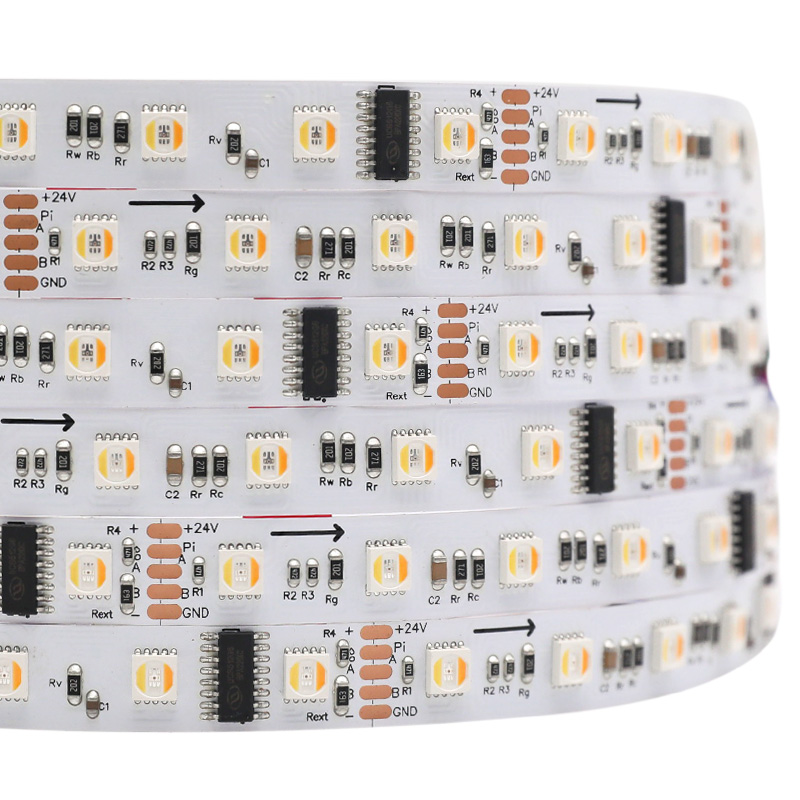
24V DMX 5in1 Addressable RGBCCT LED Strip Light, 60LEDs/m
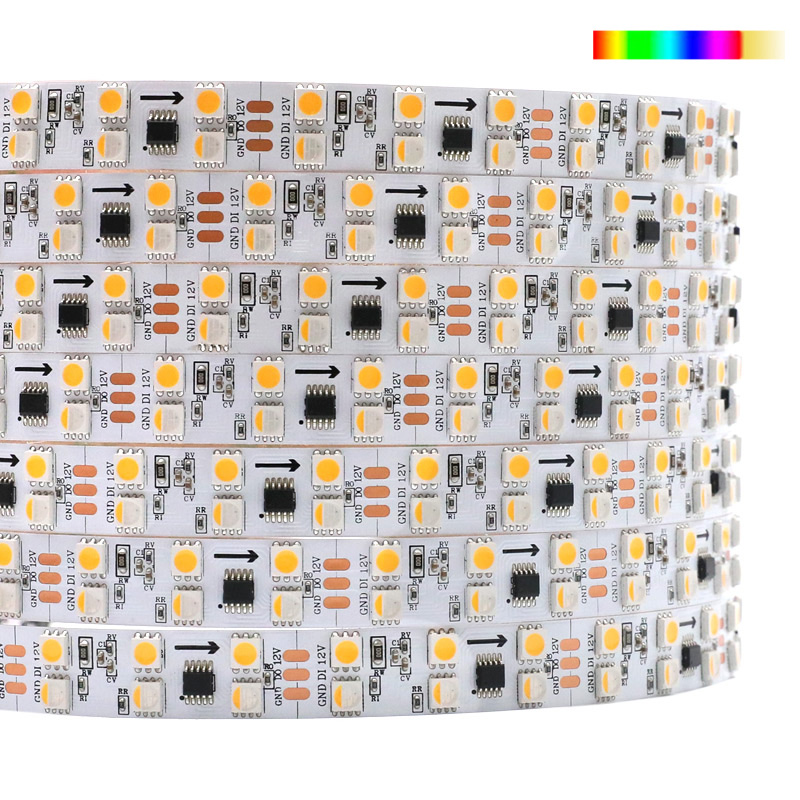
Double Row 5050 FW1906 RGBWW Programmable LED Strip Lights 120 LEDs Per Meter
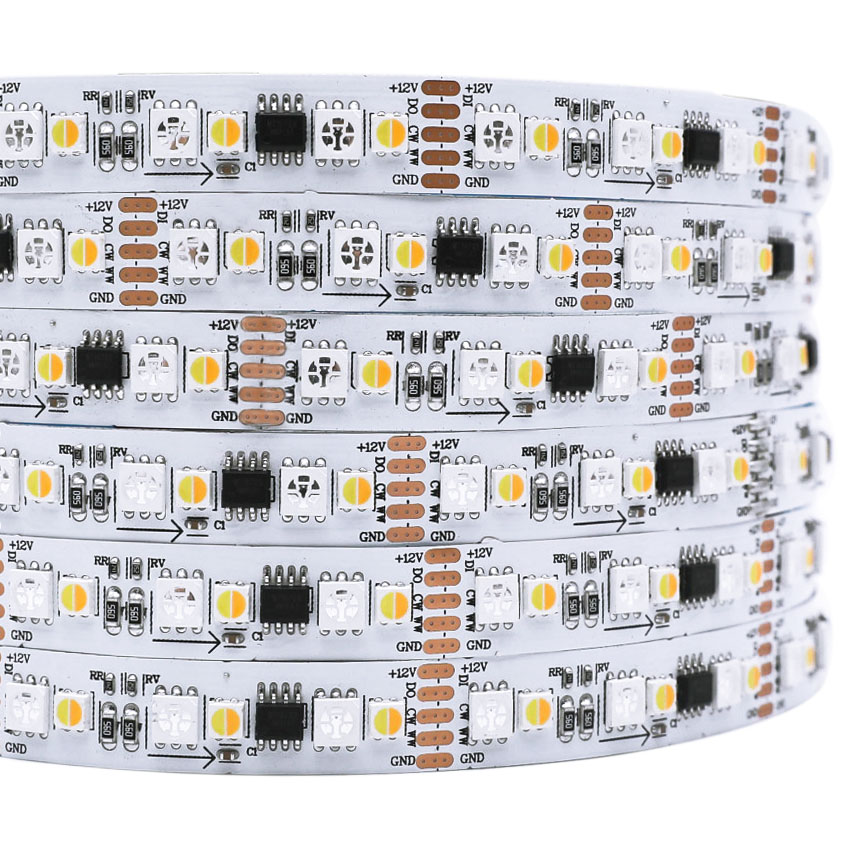
WS2811 Addressable RGB+CCT Color Chasing LED Strip Lights
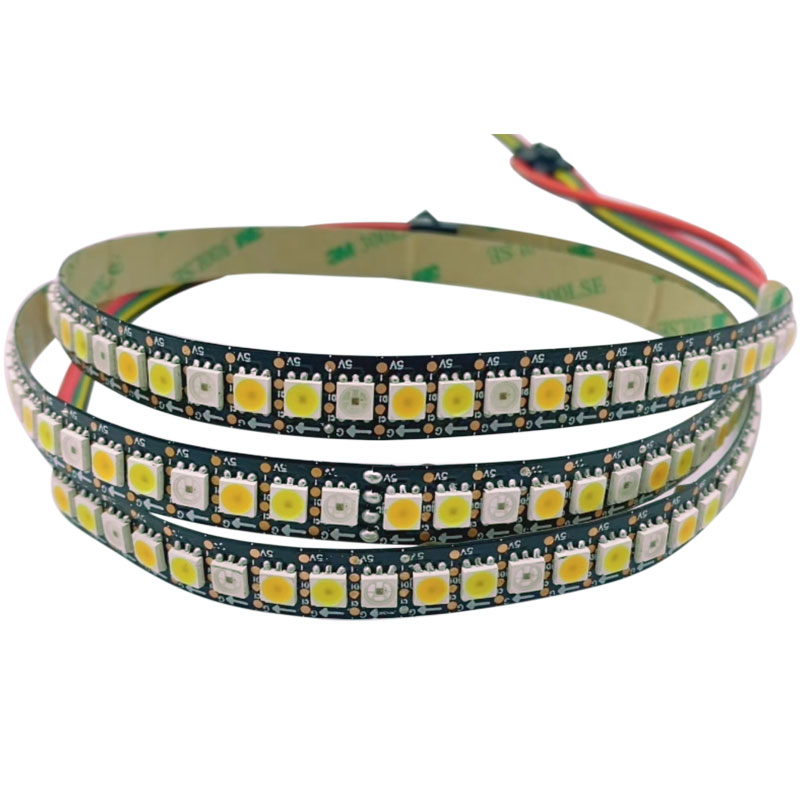
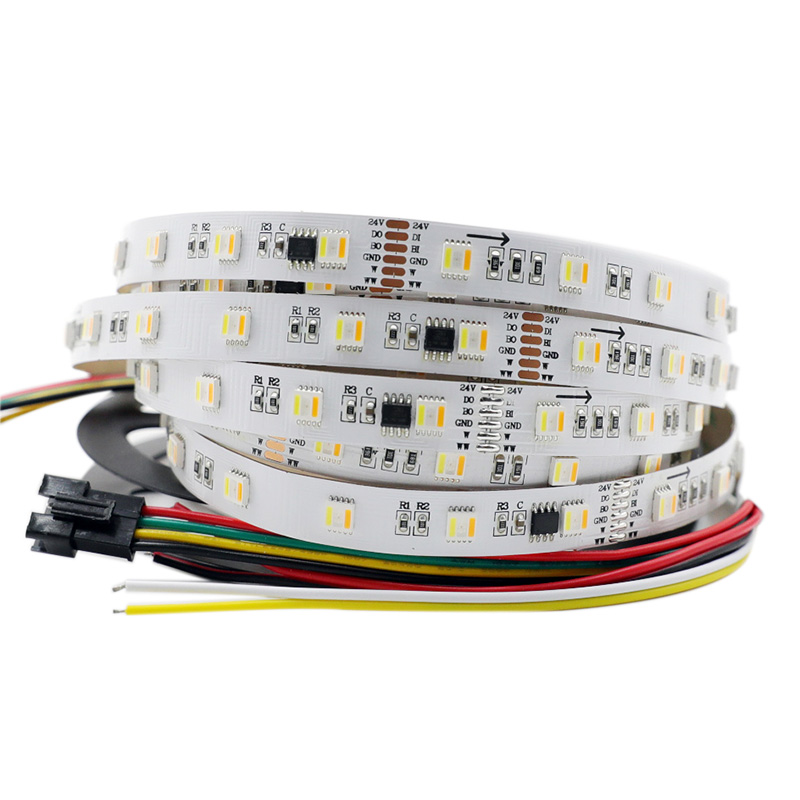
24V TM1914 Addressable RGB CCT LED Strip Lights 48LEDs/m
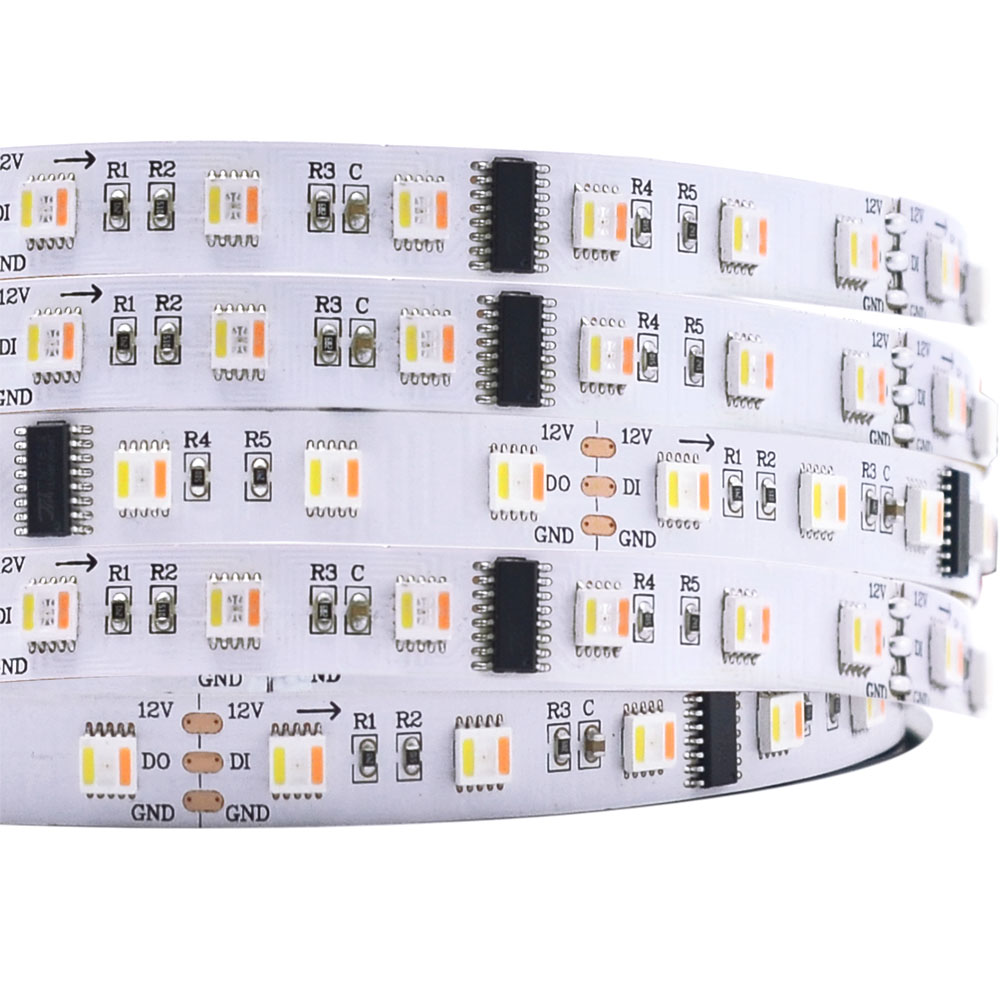
12V TM1812 5IN1 RGB+CCT Addressable LED Light Strip 60LEDs/m
Frequently Asked Questions About Addressable RGBCCT LED Strips
Your project specs, answered. Here are the common questions we get on addressable RGBCCT strips before an order goes out the door.
RGBIC is just RGB with a chip. An addressable RGBCCT LED strip adds two more dedicated channels for warm white and cool white LEDs. This means you get pure, high-quality white light from 2700K to 6500K, plus millions of RGB colors, all controllable down to a single section. RGBIC tries to make white by mixing red, green, and blue, and it always looks a bit 'off'. RGBCCT gives you the best of both worlds without compromise.
It's all about the look. A 5050 5-in-1 RGBCCT strip uses individual LED chips, so you'll see distinct 'dots' of light, which is fine if it's hidden in a channel or cove. A cob rgbcct strip packs the LEDs so tightly under a layer of phosphor that it creates one continuous, dotless line of light. For direct-view applications like under-cabinet lighting or anywhere with reflections on a shiny surface, COB is the only way to get a perfectly smooth look.
Not quite. The controller has to specifically support RGBCCT or 5-channel addressable LEDs. A standard RGB or RGBW addressable controller won't know what to do with the two extra white channels. In the controller software (like WLED, Madrix, or our own apps), you'll need to set the strip type to a 5-channel configuration. If you pick the wrong profile, you'll get strange colors or the white LEDs won't turn on at all. Always check the controller's spec sheet first.
For accent lighting, under-cabinets, or coves, absolutely. For the main, primary source of light in a room, probably not on their own. While some of our high-density models are very bright, their strength is creating dynamic effects and saturated colors. You'd typically use them alongside traditional downlights. An addressable LED sheet is a better choice for creating a large, bright, animated surface like a faux skylight.
Reliability. A standard single-signal strip has one data line. If a single LED chip fails, the data signal stops right there, and the rest of the strip goes dark. A dual-signal addressable RGBCCT strip (using an IC like WS2805) has a primary and a backup data line. If one chip dies, the backup line automatically takes over and the signal bypasses the dead chip. The rest of the strip keeps working perfectly. For critical commercial installs, it's worth it.
Yes, that's what the cut marks are for. They're usually marked with a little scissor icon every 3 or 6 LEDs. You can cut right on that copper line with sharp scissors. To rejoin them, you'll need to solder wires to the copper pads. Honestly, soldering is always more reliable than solderless connectors.
This is a classic data configuration problem. In your controller software, the color order is probably set incorrectly. Most of our strips use a GRB (Green, Red, Blue) order, but some controllers default to RGB. The data is telling the wrong channel to light up. Just go into your controller's settings, find the 'Color Order' option for your LED strip, and cycle through the settings (RGB, GRB, BGR, etc.) until a test color matches what you see on the strip. It's a software fix, not a hardware problem.
We do this all day. A huge amount of what we ship is built to a customer's drawing and never even appears on the website. Just send us your requirements—length down to the millimeter, the IP rating you need (like IP67 for outdoor), and the type and length of the lead wires and connectors. An engineer will send back a complete wiring diagram and parts list within 12 hours. There's no fee for this, and you're not obligated to order. We can build a sample with your next order or go straight to production.
Absolutely. An rgbcct led sheet is perfect for this. They are flexible panels with an array of addressable 5-in-1 LEDs, designed for backlighting and low-resolution video displays. You can tile them together to create large, dynamic surfaces. You'll need a controller capable of handling a high pixel count and mapping video content, like something running Madrix or a high-end addressable controller. This gives you full control over color, temperature, and animation across the entire wall.