
0/1-10V Series
4 sub-categoriesStandard 0–10V & 1-10V Dimming Architecture
0-10V or 1-10V lighting control system is one of the most reliable analog dimming solutions for commercial and residential lighting. It typically consists of:
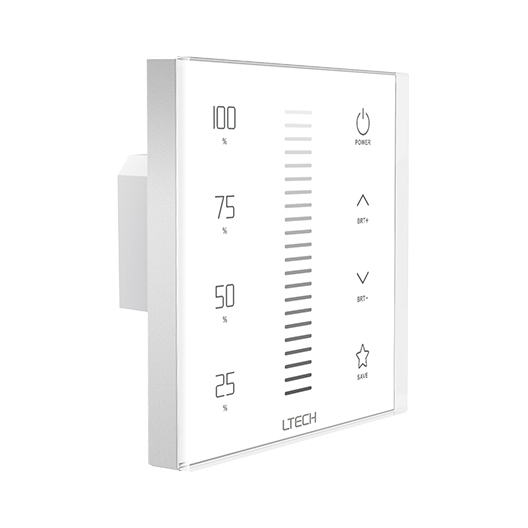
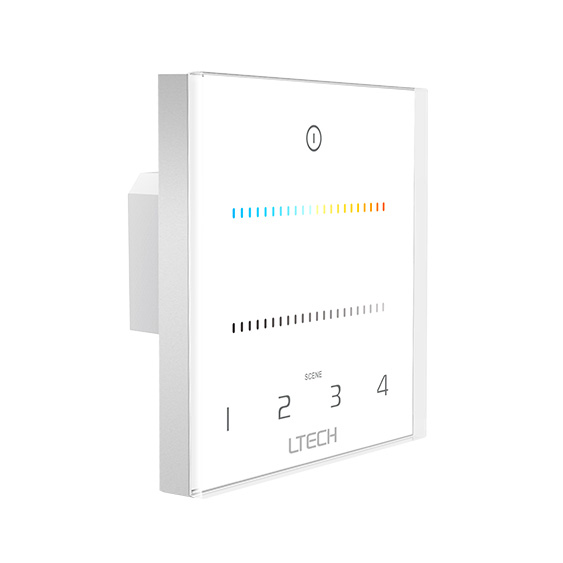
In most systems, the control signal (0–10V) is sent from a wall-mounted controller—commonly seen in products from brands like Skydance, BinColor, and LeyNew—using touch panels or rotary dimmers to adjust brightness. The driver or controller then converts this signal into output for the lighting load, allowing smooth and continuous dimming of the entire lighting circuit.
Smart Upgrade: Ltech 0–10V & 1-10V Lighting Control Solutions
Beyond traditional wired controls, Ltech introduces wireless flexibility and intelligent automation to the classic 0-10V system.
Multi-Way Smart Control
- RF Remote: Wireless dimming from a distance.
- Bluetooth 5.0: Advanced SIG Mesh networking.
- App Control: L-Home & NFC Lighting App.
- Hybrid Mode: Connects with touch panels or physical switches.
Advanced Automation
Integrate with professional sensors for hands-free energy saving:
Perfect for high-end residential and modern commercial projects.
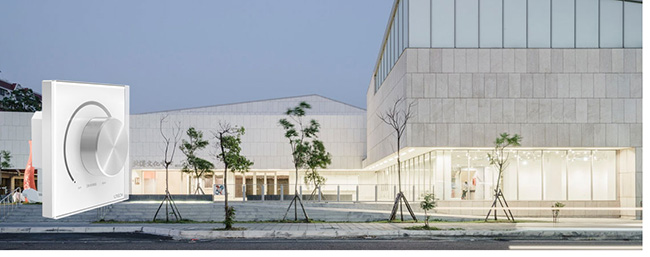
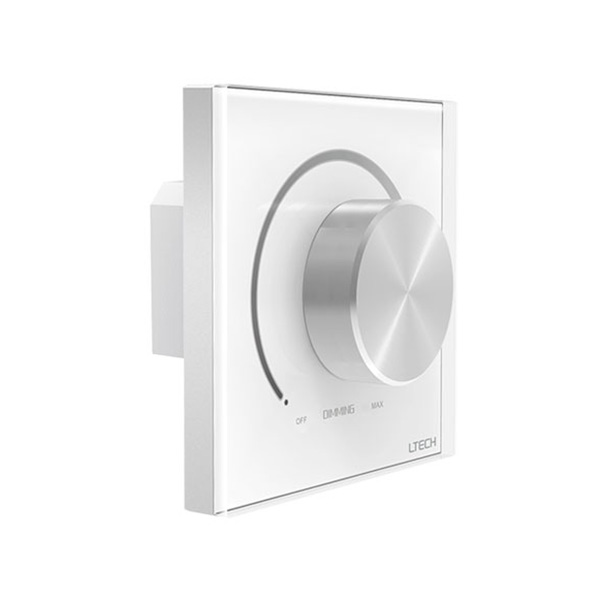
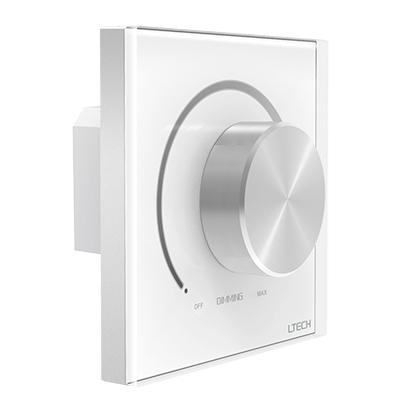
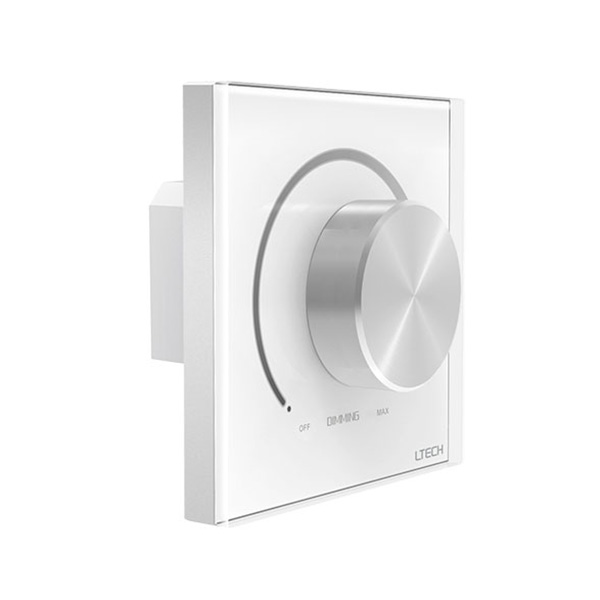
0/1-10V Dimmer
Support 0/1-10V, 10V PWM, Push Dim.
Dimming range:0~100%, LED start at 0.1% possible.
Suitable for indoor environments.
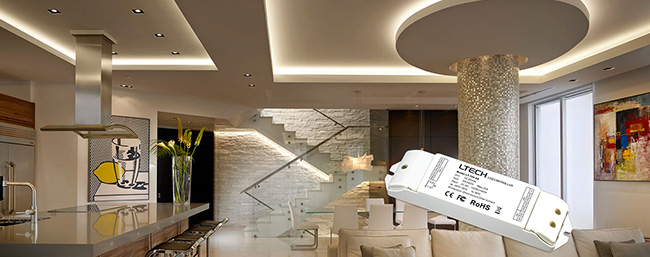
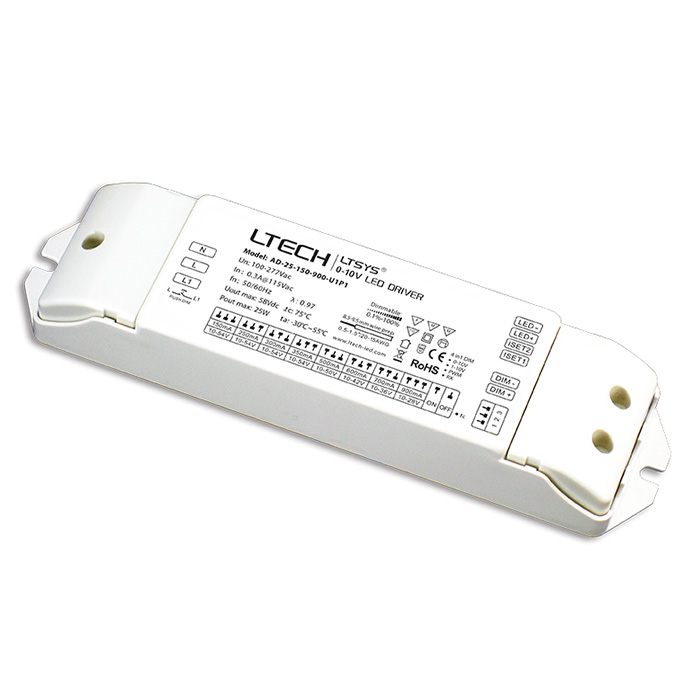
CV 0/1-10V Low Voltage Driver
LTECH Intelligent dimmable led driver have excellent performance:
Support 0/1-10V, 10V PWM, Push Dim.
Dimming range:0~100%, LED start at 0.1% possible.
Suitable for indoor environments.
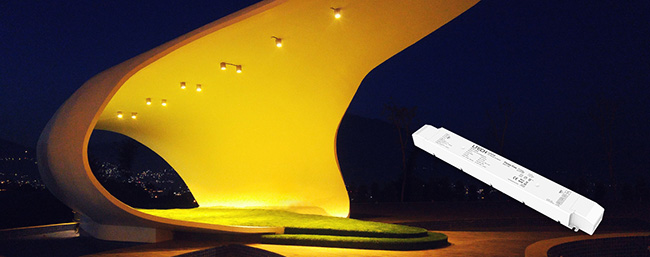
CV 0/1-10V Dimmable Driver
TECH Intelligent dimmable led driver have excellent performance:
0~100% flicker-free, High-Frequency Exemption.
Built-in SCM, dimming curve, and smoothing time of power on can be customized.
Automatic recognition of 0-10V, 1-10V input signal. T
-PWM digital dimming, maintains CRI(color rendering index).
Short circuit / Over-heat / Over load / Non-load protection.
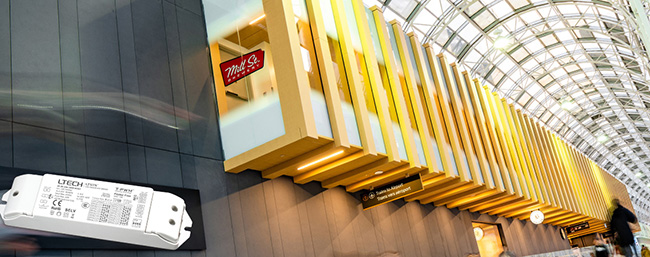
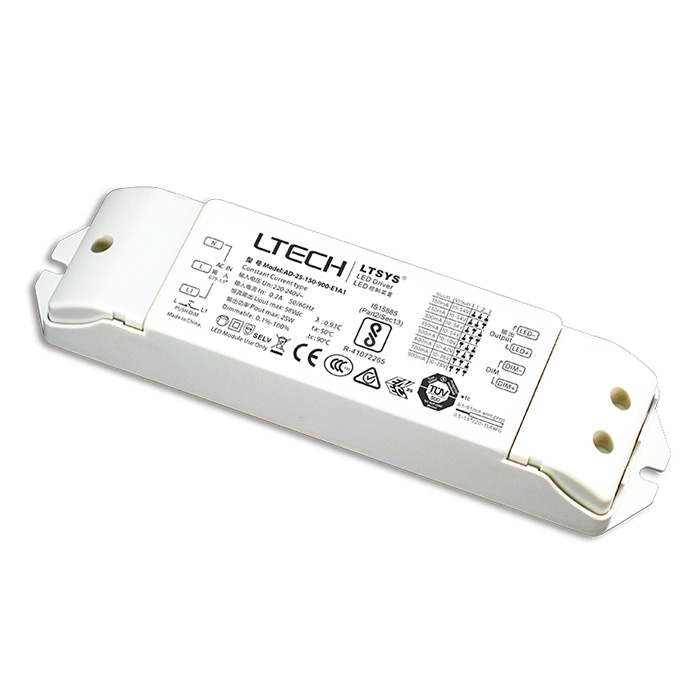
CC 0/1-10V Dimmable Driver
LTECH Intelligent dimmable led driver have excellent performance:
T-PWM digital dimming maintains CRI (color rendering index). Support 0/1-10V, RX, 10V PWM, Push Dim.
Dimming range: 0~100%, LED start at 0.1% possible.
Multiple current, wide voltage, compatible with a variety of LED lights.
Short circuit / Over-heat / Over load / Non-load protection.
Best-selling 0/1-10V Series
21–40 of 71 products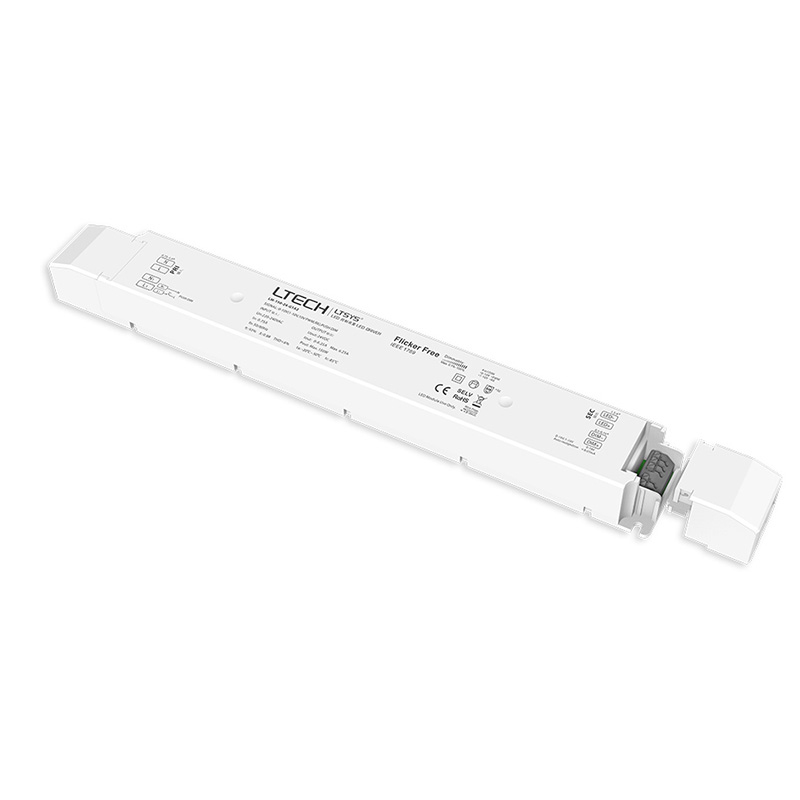
LM-150-24-G1A2 150W 24VDC CV 0-10V Driver, the upgraded version of AD-150-24-F1M1
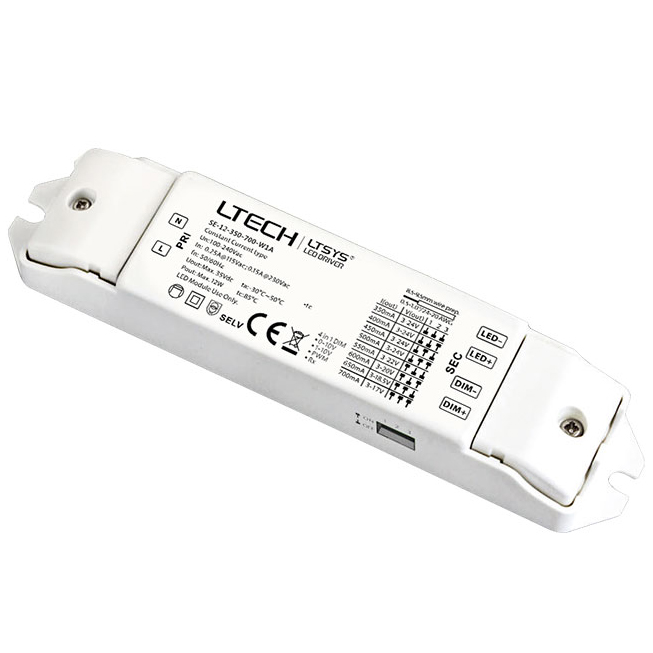
LED Intelligent Driver, 12W 350-700mA(100-240Vac) 4 in 1, SE-12-350-700-W1A
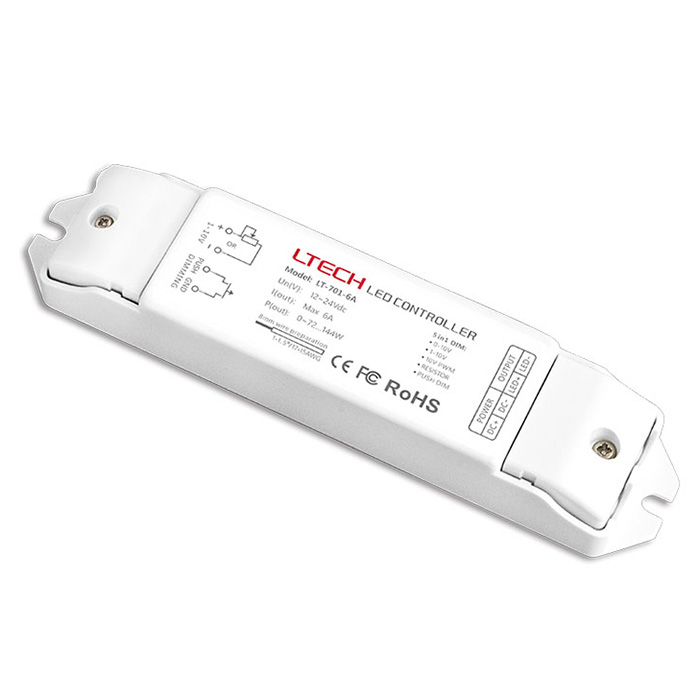
LT-701-6A DC12V~DC24V 6A 1CH easy used dimming driver applied for stadium lighting ,led strip...
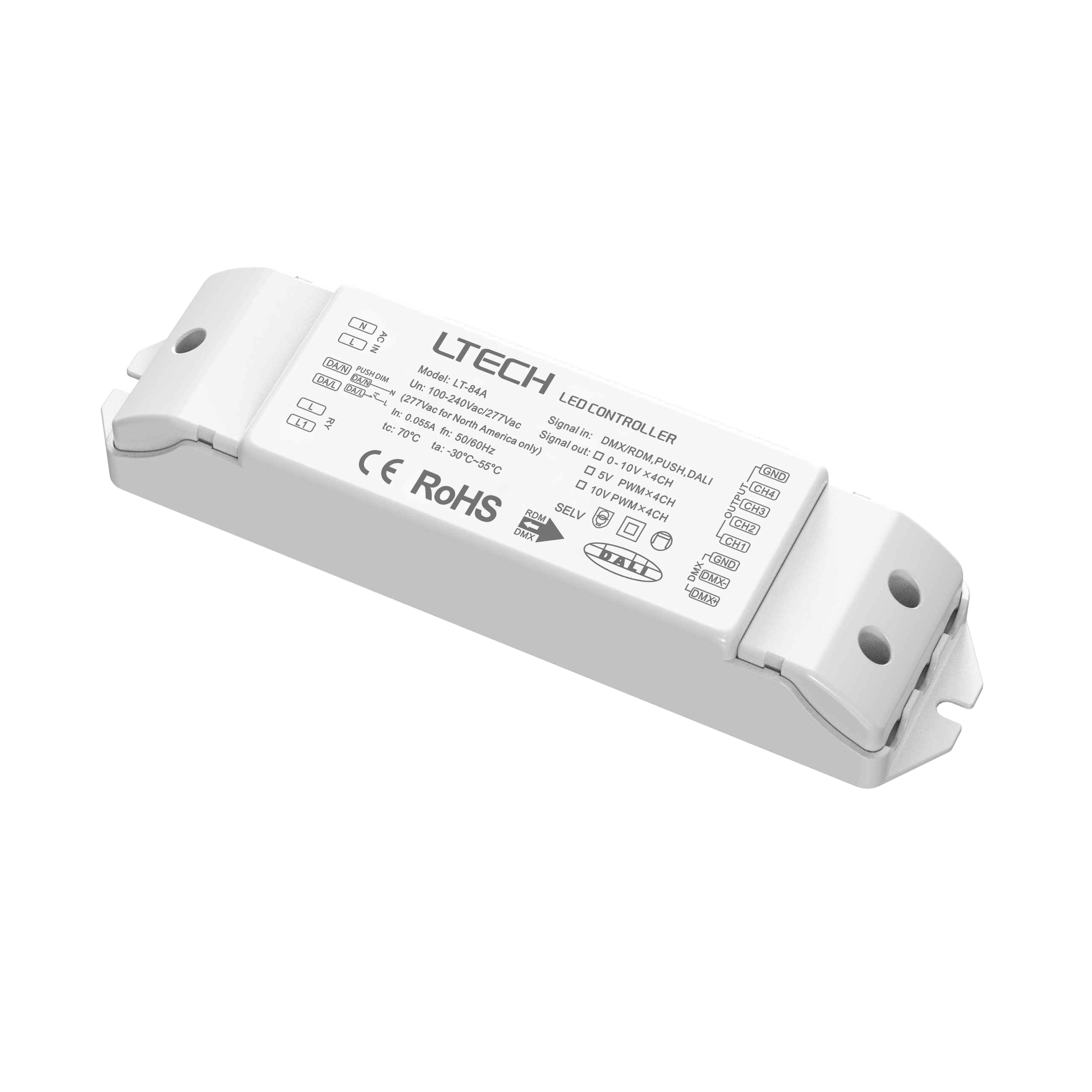
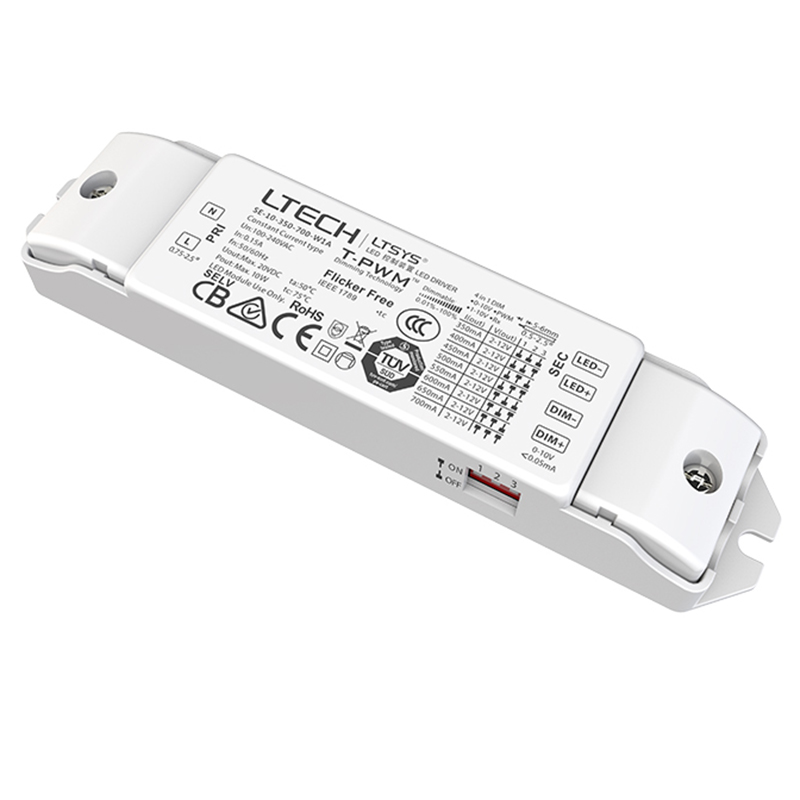
SE-10-350-700-W1A 10W 350-700mA(100-240Vac) 4 in 1 LED Intelligent Driver
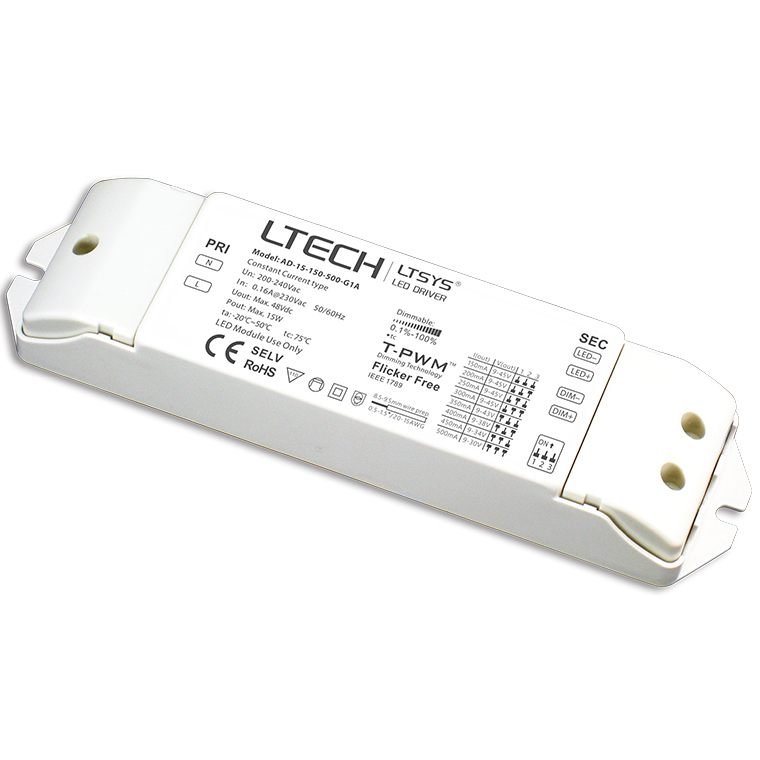
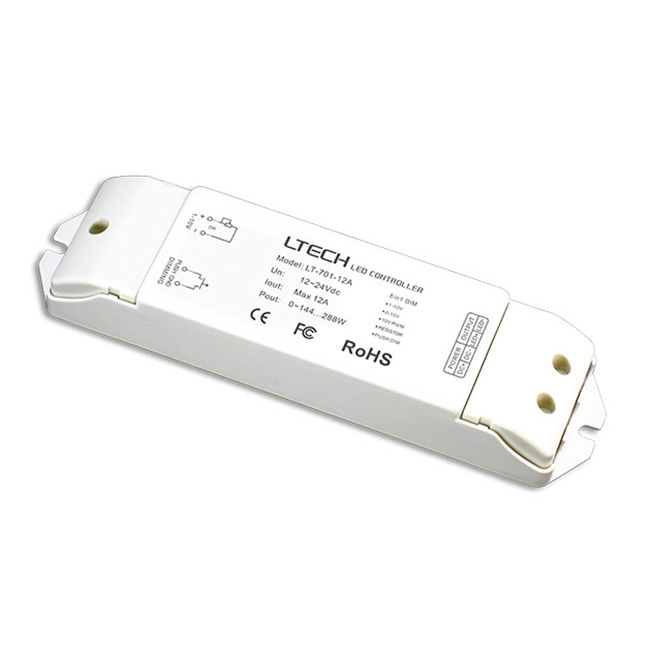
LT-701-12A DC12V~DC24V 12A 1CH easy high technique dimming driver applied for temporary stage show...
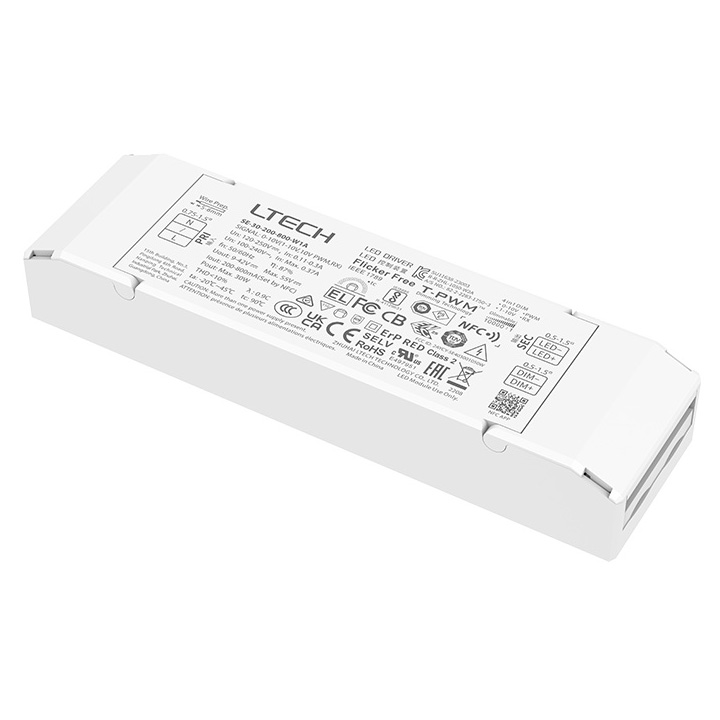
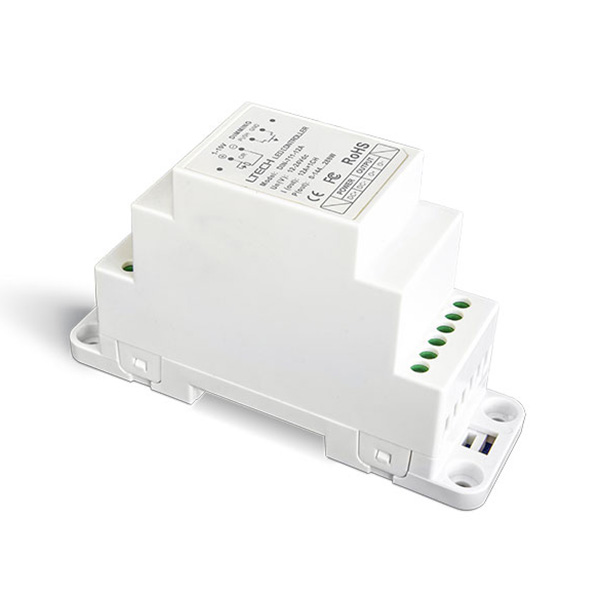
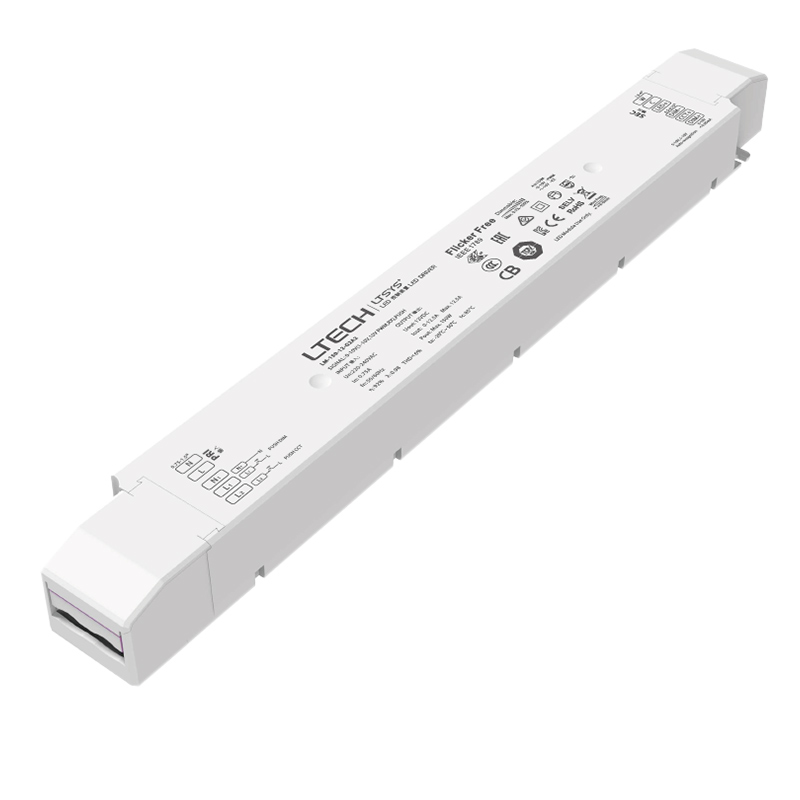
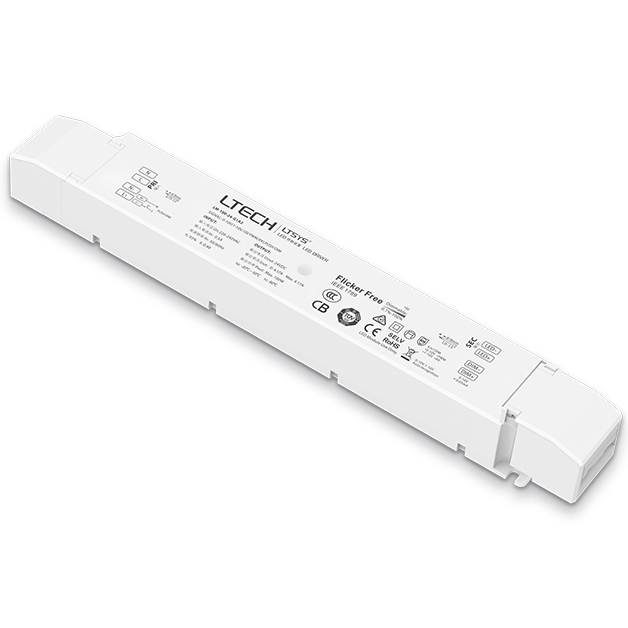
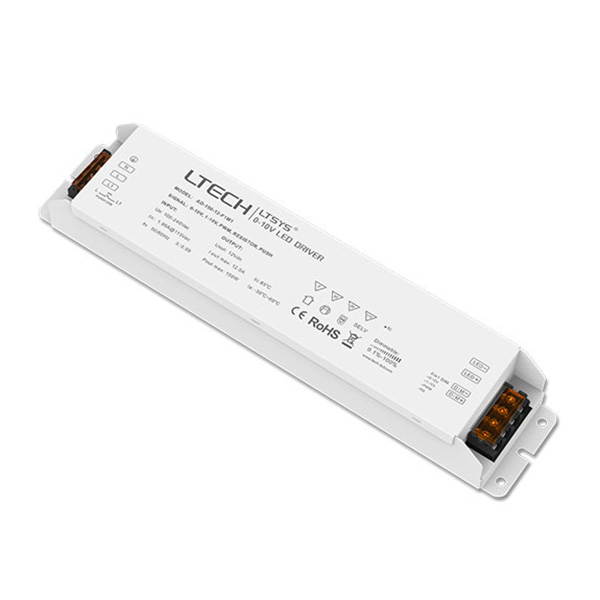
LED Intelligent Driver, 100W 24VDC CV 0-10V/1-10V DIM&CT Driver(200-240Vac)LM-100-24-G2A2
Can 0–10V / 1-10V Control LED Strip Lights?
Yes, 0–10V / 1-10V systems can control LED strip lights when used with compatible 0–10V LED controllers or drivers.
0–10V / 1-10V controllers support multi-channel outputs, allowing control of Single color LED strips, Tunable white (CCT) LED strips, RGB or RGBW LED strip lights (up to 4 channels).
0-10V / 1-10V drivers typically output 2 channels for dimming and color temperature adjustment.
What is the Difference Between 0–10V Dimming and PWM Dimming?
Both 0–10V / 1-10V dimming and PWM dimming are used to adjust brightness, but they work in fundamentally different ways and can produce different lighting results.
• 0–10V / 1-10V dimming is an analog method that adjusts light output by varying voltage levels (from 0V / 1V to 10V). Since it does not rely on rapid on/off switching, 0-10V / 1-10V generally produces smooth, flicker-free lighting to the human eye. However, the actual performance still depends on the quality of the LED driver and the LED controller, and some systems may exhibit instability at very low dimming levels.
• PWM (Pulse Width Modulation) dimming controls brightness by rapidly switching the LED on and off at high frequency. The perceived brightness changes based on the duty cycle. At low PWM frequencies, this can result in visible flicker or light banding (strobing effect) on camera, especially with rolling shutter cameras.
For a deeper comparison of dimming methods and real-world applications, explore our 0–10V dimming guide.
0/1-10V LED Dimming FAQ
Yes. A 0–10V dimming system requires compatible components.
You need a 0–10V controller or dimmer to generate the control signal. Standard non-dimmable drivers or non-0-10V dimmable drivers will not work with 0–10V control.
Yes. The lighting fixture must be equipped with a 0–10V dimmable driver or be connected to a compatible 0–10V controller.
0–10V dimming is a low-voltage DC control signal, separate from the main power supply.
The AC power (120V / 220V) is used to power the lighting fixture. The 0–10V DC signal is used only for dimming control. This separation allows safe and stable brightness adjustment without affecting the main power line.
0–10V and 1–10V are similar analog dimming systems, but there is a key difference:
0–10V can dim down to 0V, allowing lights to turn off completely;
1–10V typically dims down to 10% brightness, and requires a separate switch to turn lights off.
1. Simple and reliable technology;
2. Widely supported across lighting products;
3. Easy to install and maintain.
1. No individual addressing;
2. No feedback or bidirectional communication.