
24VAC Transformer
7 productsThe 24vac transformer, also known as a 24v ac adapter or 24v ac power supply, is an electrical device that steps down alternating current (AC) to a stable 24-volt AC output. Choosing a qualified ac to ac converter is important. It not only helps ensure an efficient power output, but can also significantly extend the lifespan of your equipment.
Our transformer 24vac provides optimal and low-loss 24vac output, specially designed for a wide range of devices requiring ac 24V power input. The 24v ac charger is widely applied in LED lighting equipment. Its stable power delivery ensures the reliability of the equipment during long-term operation and significantly improves the overall stability of the system.
We specialize in IP68-rated waterproof 24v ac transformer for LED lights used in underground or underwater environments, perfect for exterior landscape lighting such as LED swimming pool lights, LED fountain lights and LED wall wash lights. These 24v outdoor ac power supplies are made of high-quality epoxy resin and combined with advanced gluing technology. Each terminal is professionally waterproofed to promise a long-term operation in harsh environments, guaranteeing high performance and durability of your equipment.
To cover the needs of different power systems around the world, we offer 110v/ 120vac to 24vac transformer, and 220vac to 24vac transformer, with a variety of power options. No matter which country or region you are in, you can easily find the ideal 24V ac/ac power solution.
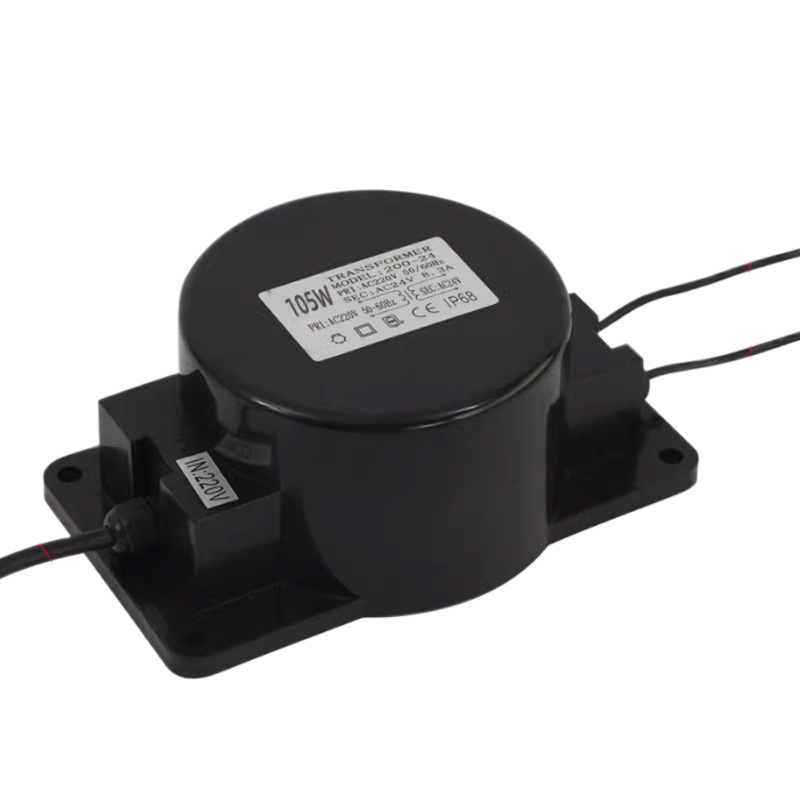
IP68 Underwater 105W AC 24V Transformer for LED Landscape Lighting
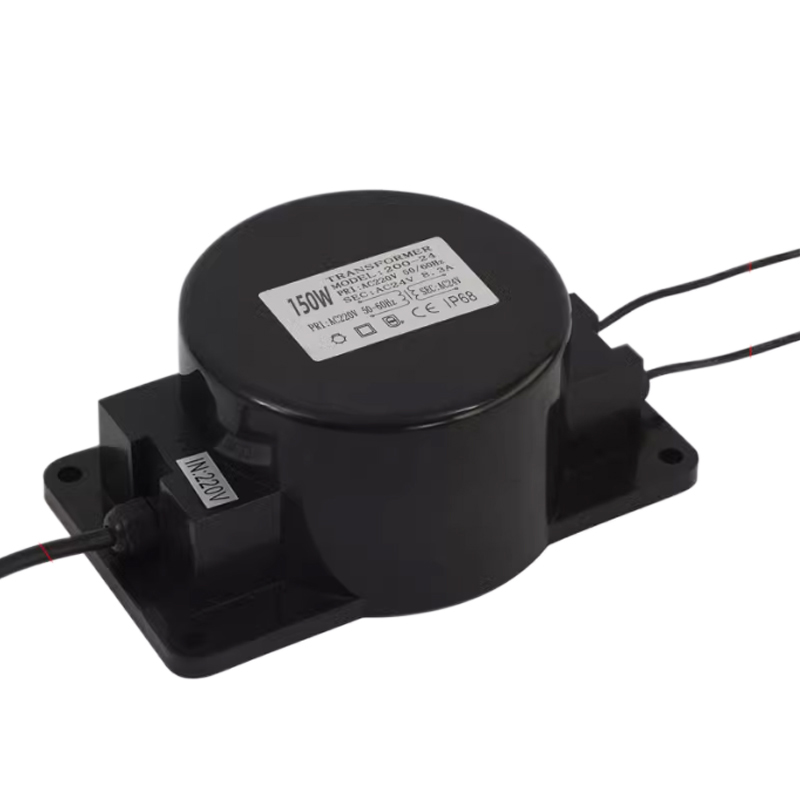
IP68 Waterproof 150W Small Outdoor AC 24 Volt Transformer for LED Lights
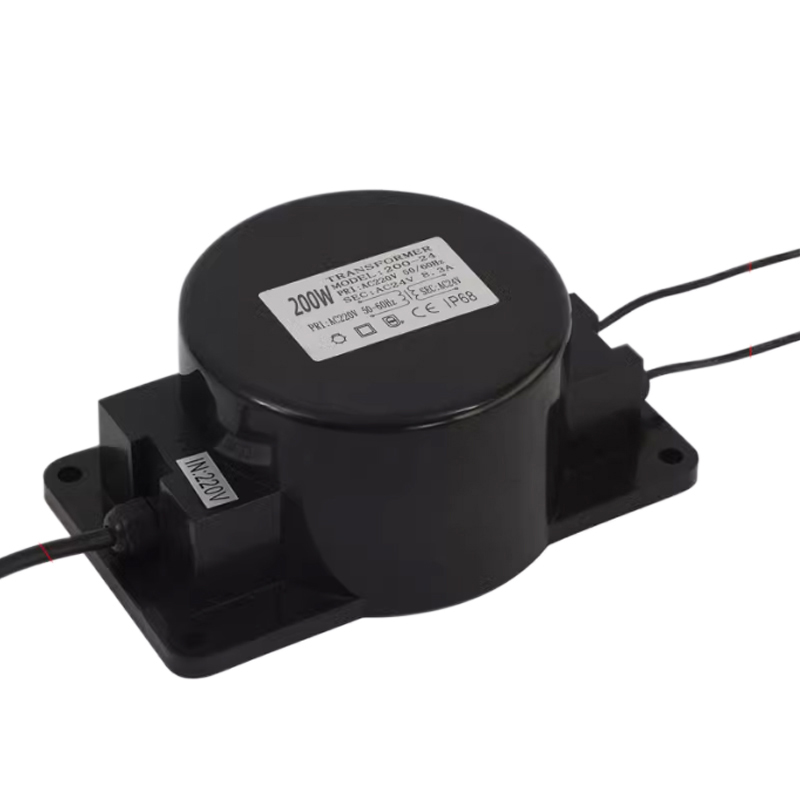
IP68 Submersible 200W Low Voltage 24 Volts AC Transformer for LED Lights
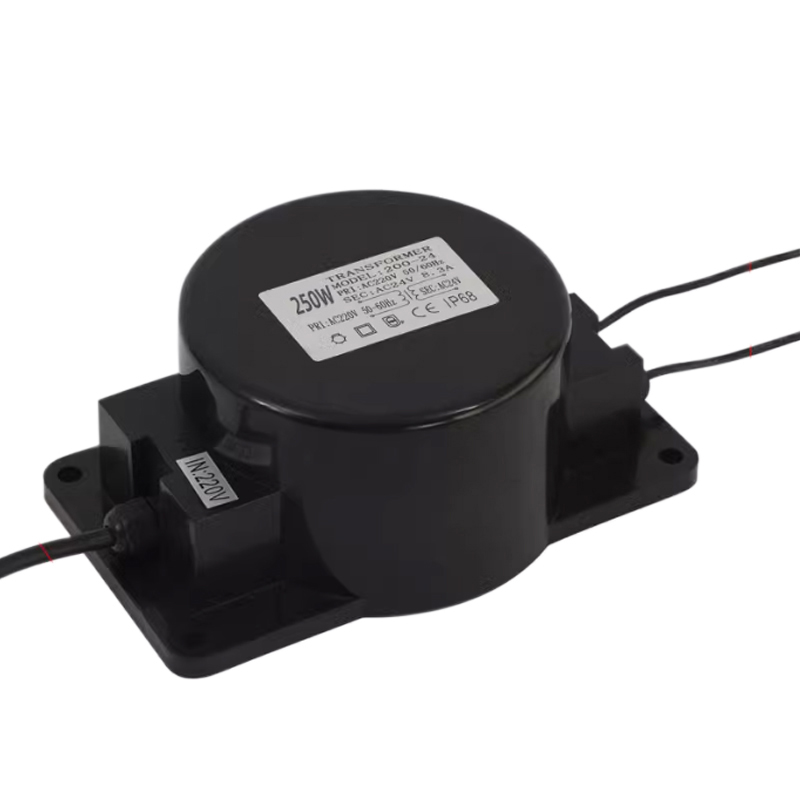
IP68 Water Resistant 250W 24V AC Adapter Step Down Transformer for LED Lights
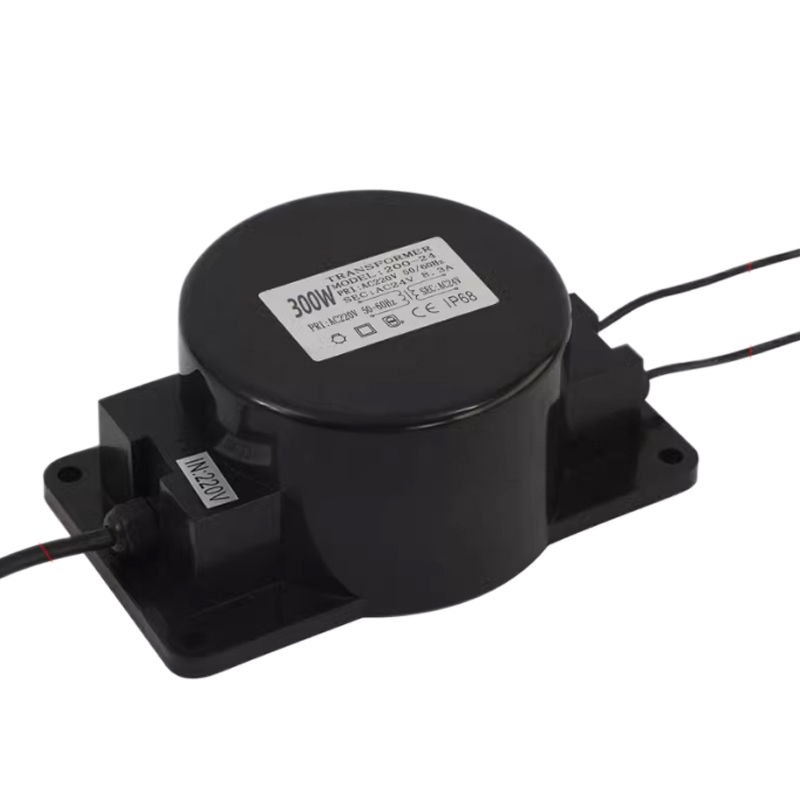
IP68 High Waterproof AC 24V 300W Swimming Pool Light Transformer
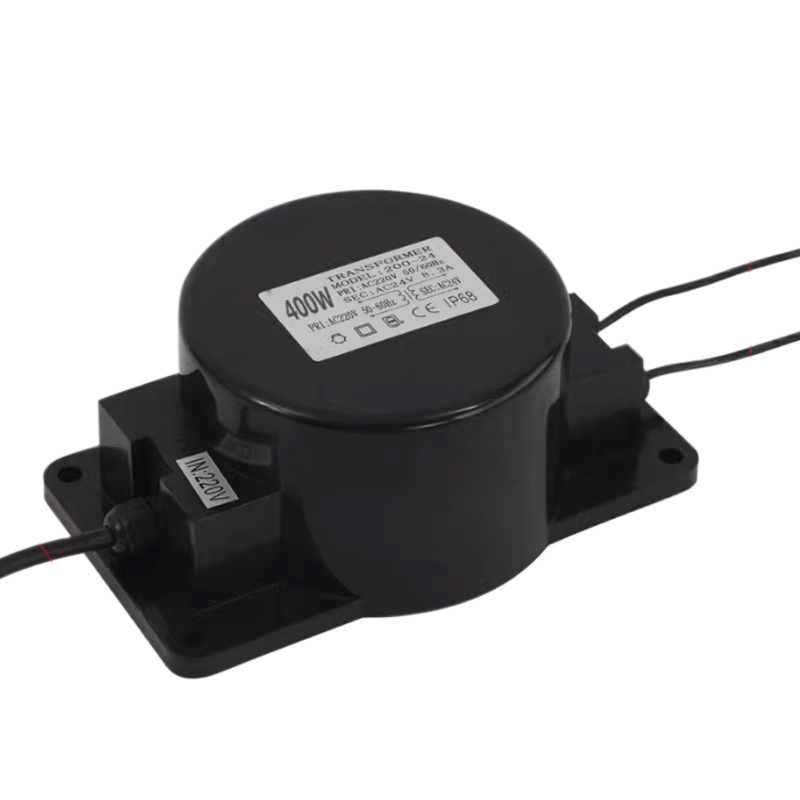
IP68 Waterproof 400W 24V Adapter AC Outdoor Transformer for LED Lights
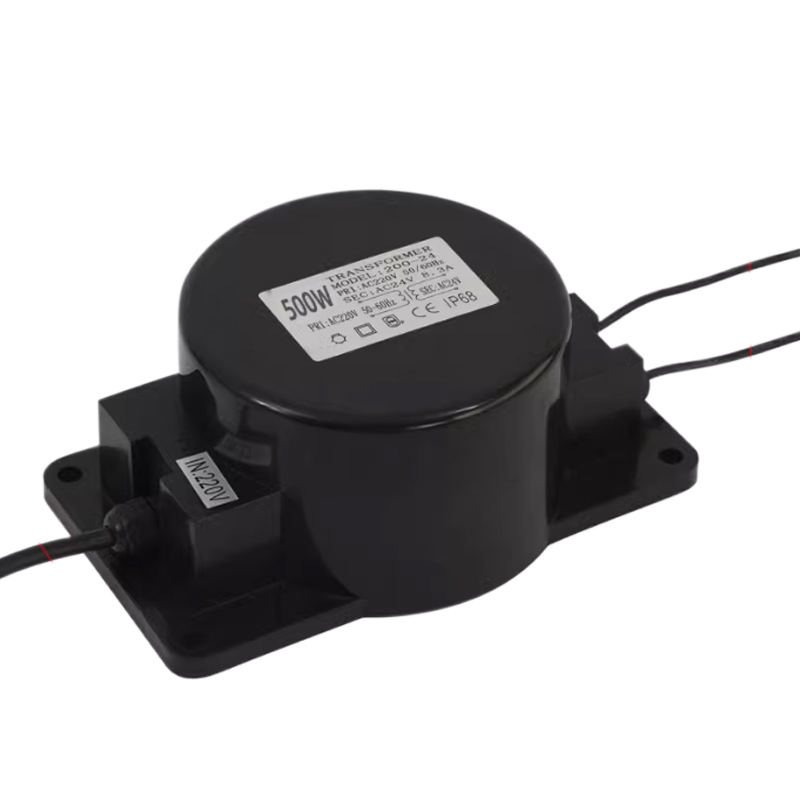
IP68 Underground 500W AC to 24 Volt AC Transformer for LED Pool Light
Frequently Asked Questions About 24VAC Transformers
Got a question about choosing or wiring a 24V AC transformer? I've answered thousands of them over the years. Here are the most common ones.
It's a huge difference, and mixing them up is a common mistake. A 24V AC transformer outputs alternating current, which is required for specialty outdoor lights like pool and fountain LEDs. A 24V DC driver outputs direct current, which almost all standard LED strips use. You absolutely cannot swap them. Powering a DC strip with an AC transformer will destroy it instantly, and a DC driver won't run an AC-rated light.
First, make sure your lights actually require 24V AC. That's the critical first step. Next, add up the total wattage of all the lights you're connecting. To prevent overheating and ensure a long life, always choose a transformer with at least 20% more capacity than your total load. So, if you have 80W of lights, you need a transformer rated for 100W or more. This is called the 80% rule.
It's almost always one of two things: overload or a short circuit. If you've connected too many lights, the transformer is working harder than it was designed for. Check the 80% rule I mentioned earlier. The other cause is a short in your wiring, maybe from a bad connection or damaged cable. That's extremely dangerous in wet locations. Disconnect power immediately and inspect every inch of your wiring.
You must use an IP68-rated, low-voltage AC transformer. That's exactly what these are for. The whole point is safety: the transformer takes your dangerous 120V or 220V mains voltage and steps it down to a much safer 24V AC before the cable goes anywhere near the water. For sizing, our 300W and 400W models are popular because they can handle several modern, high-output pool lights on a single run.
That depends on the transformer's wattage and, just as importantly, the length of your wire run. The longer the distance and the higher the power, the thicker your wire needs to be to avoid voltage drop. For a typical 150W load going 75 feet, you should use at least 12-gauge low-voltage landscape wire. Using wire that's too thin is a classic mistake that leads to dim lights at the end of the run.
The transformer itself, no. It's a solid block of potted electronics with no serviceable parts. The maintenance part is all about your connections. Before you bury the unit or put it in the water, you must be 100% certain your connections using waterproof wire nuts or other connectors are perfect. A leaky connection is the number one reason these installations fail a year or two down the road.