
LED Ultra Slim Mini Power Supply
26 productsWhen a standard switching LED power supply is too bulky to hide, you need a driver that can disappear. Our LED Ultra Slim Mini Power Supplies are engineered for exactly those jobs. These miniature LED strip power supplies with slim, thin, and slender appearances, easier to hide in compact spaces for a cleaner and more professional installation.
They are the go-to choice for professional-grade under-cabinet lighting, retail displays, and architectural builds where the hardware needs to be invisible. Here you can purchase a slim mini power supply with 60 watts to 400 watts capacity for your low-voltage LED lighting projects. It convents 120VAC (110VAC±20%) and 220VAC (220VAC±20%) to 12VDC, 24VDC, 36VDC, and 48VDC.
These compact switching power supplies deliver stable, reliable DC power for your LED light strips but in a package thin enough to fit inside custom cabinetry, narrow signage, or even some of our larger LED aluminum channels. The ultra-slim and compact design does not mean compromising durability or reliability. Many models are CE and RoHS compliant, and some models also carry SELV and UL certifications, providing additional assurance for projects with specific safety and compliance requirements.

12V 100W 0-10V Dimmable LED Power Supply - Indoor, Overload Protect
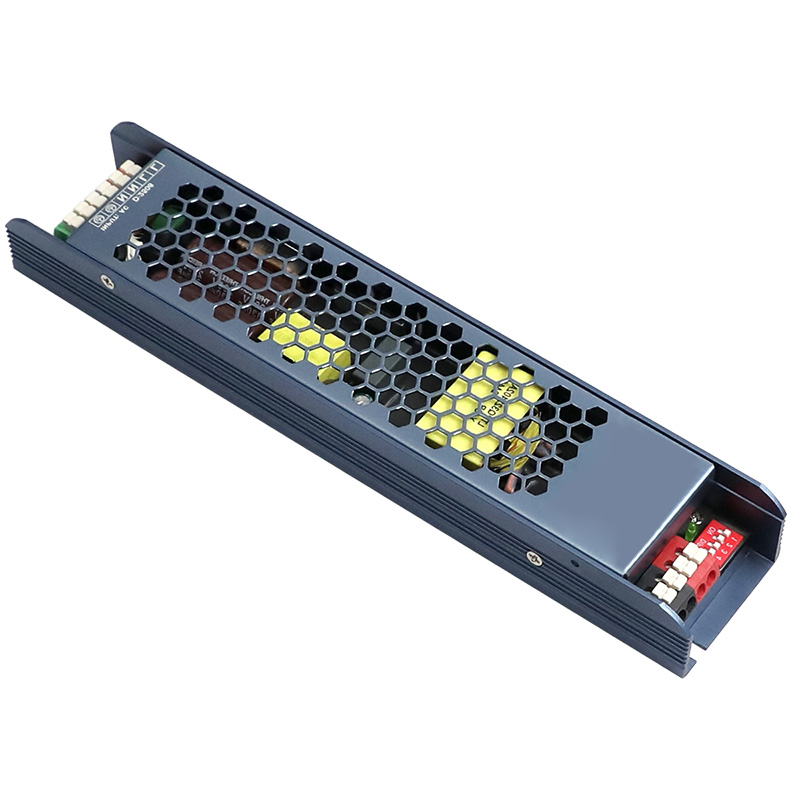
24V 300W Slim LED Power Supply (DIP Switch Dimmable)
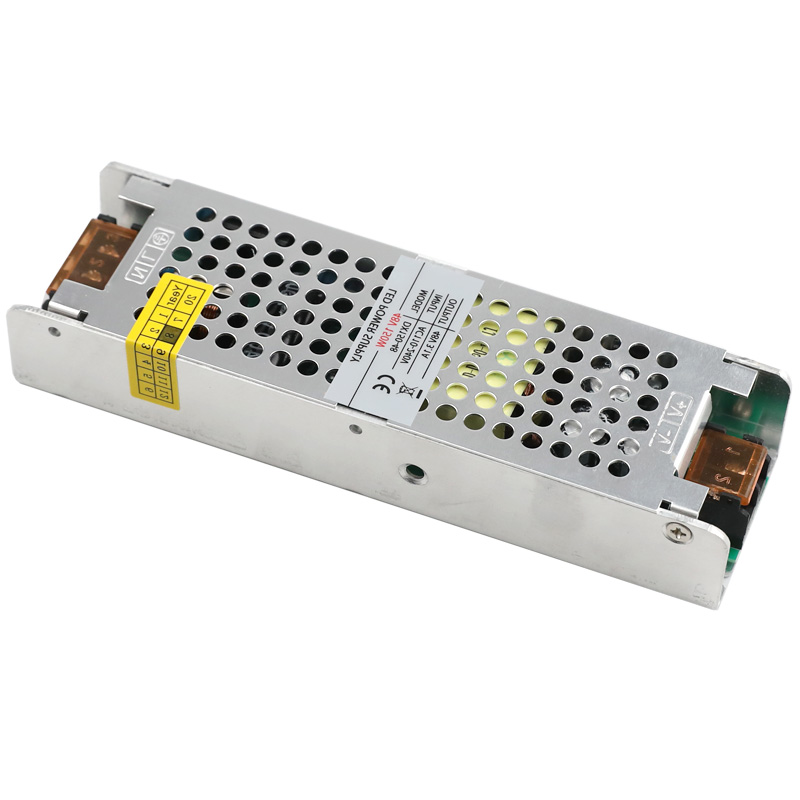

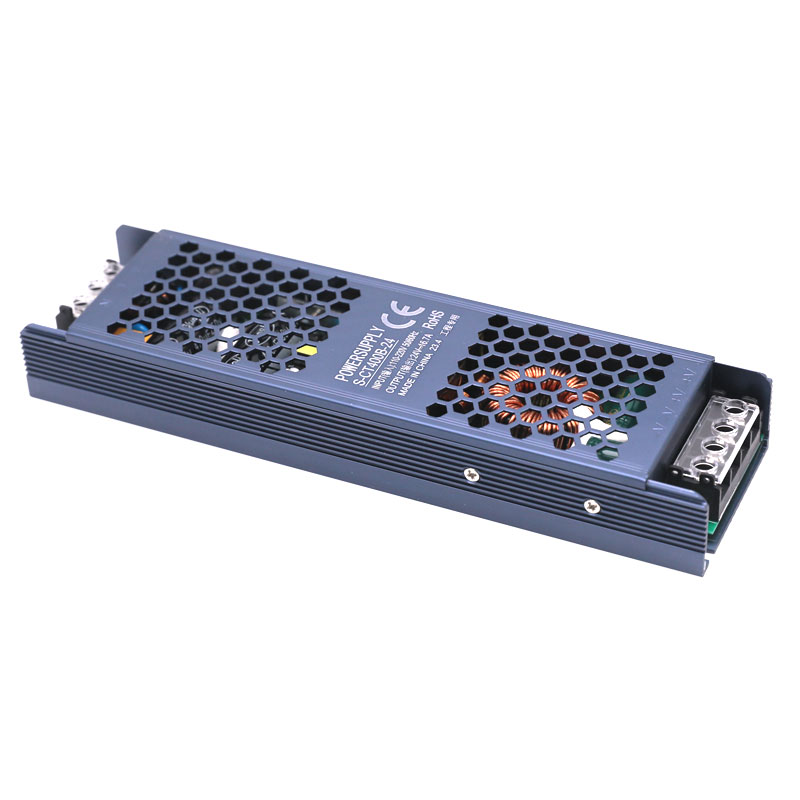
400W Slim Slectable Input Universal Power Supply For LED
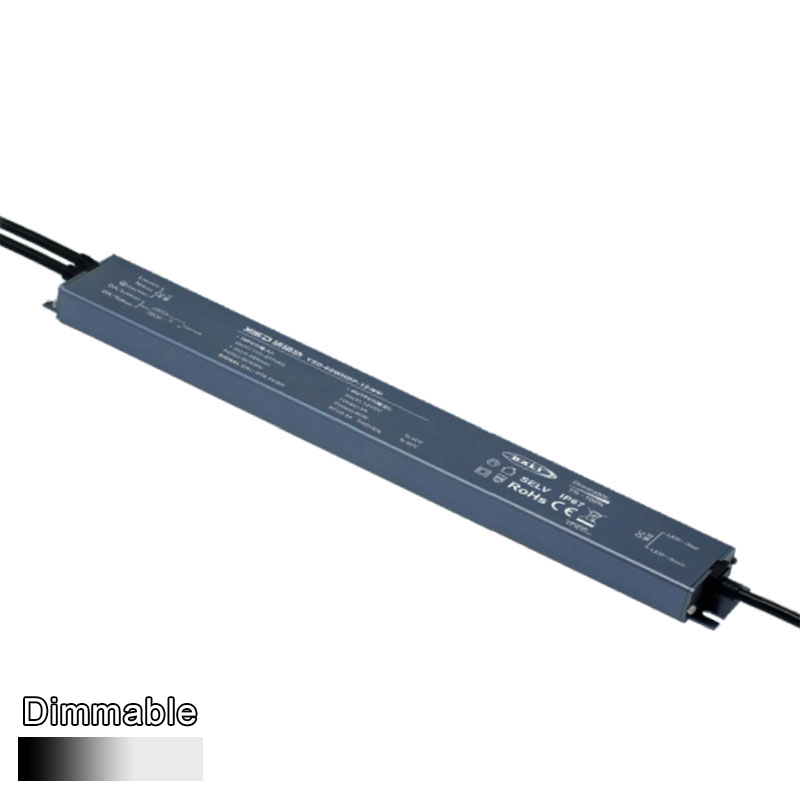
DALI-2 DT6/DT8 Dimmable IP67 Waterproof LED Power Supply

6-in-1 Dimming LED Driver DALI-2 & 0-10V & Push Dim Flicker Free
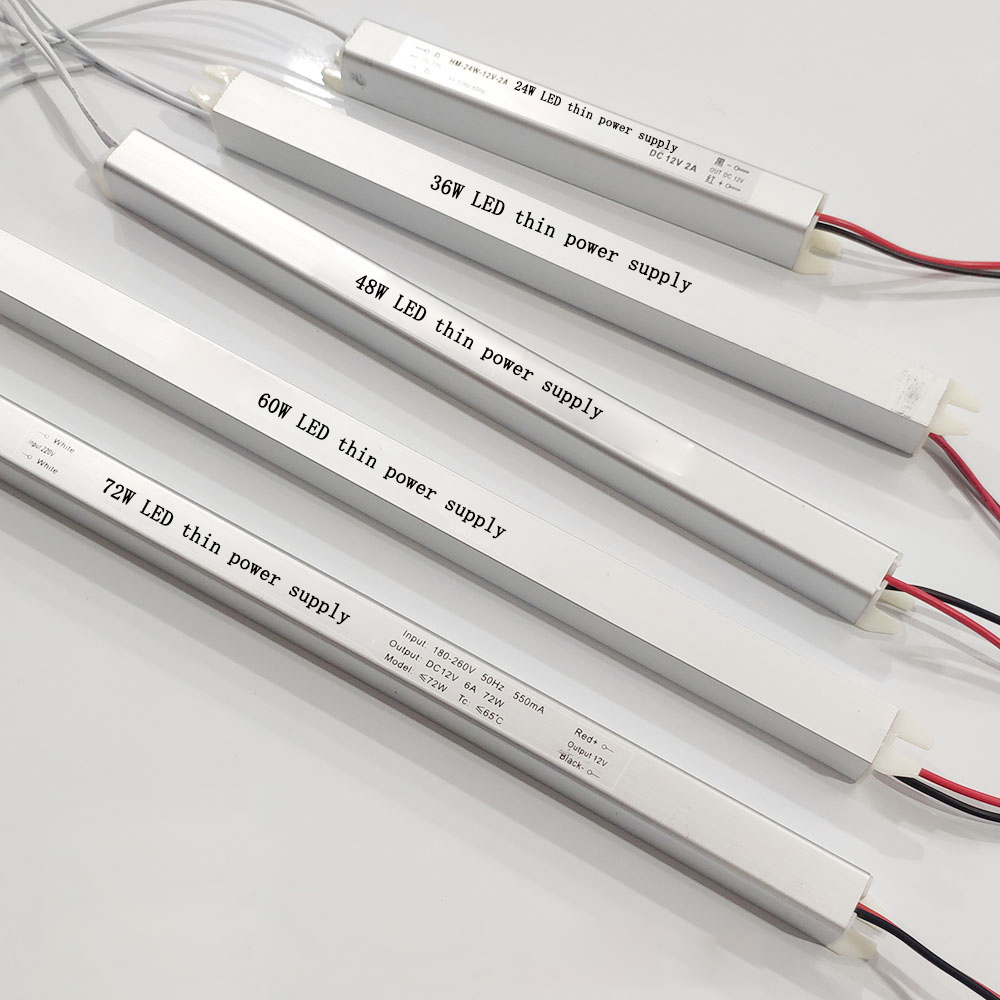
72W 24V 12V DC Switching LED Small Power Supply

50W 4.16A DC12V CV Outdoor Waterproof IP67LED Driver Power Supply
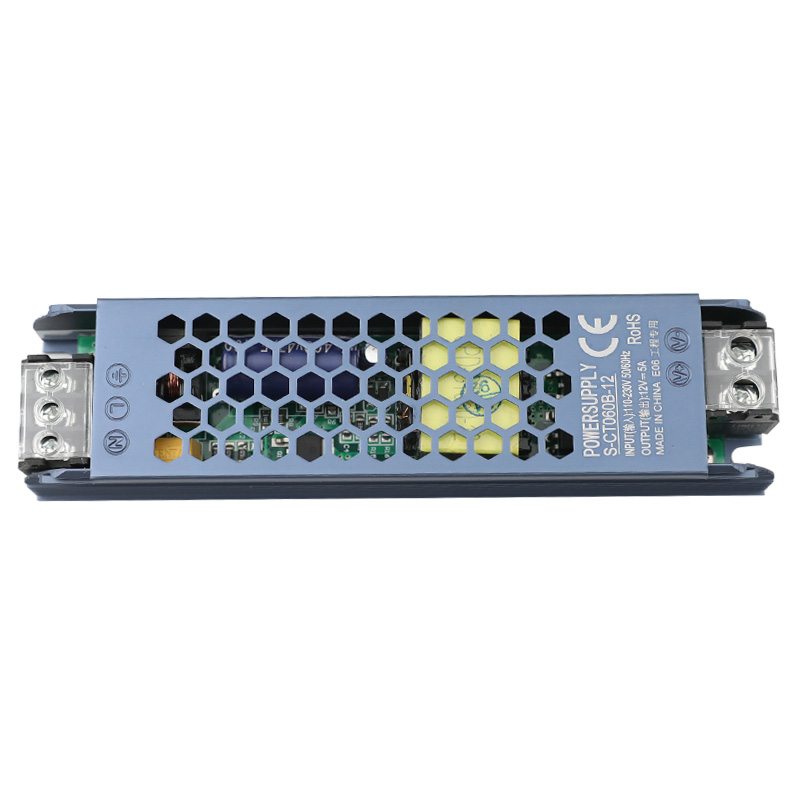
Ultra Slim Switching 12V 5A Power Supply For LED Strip Lights
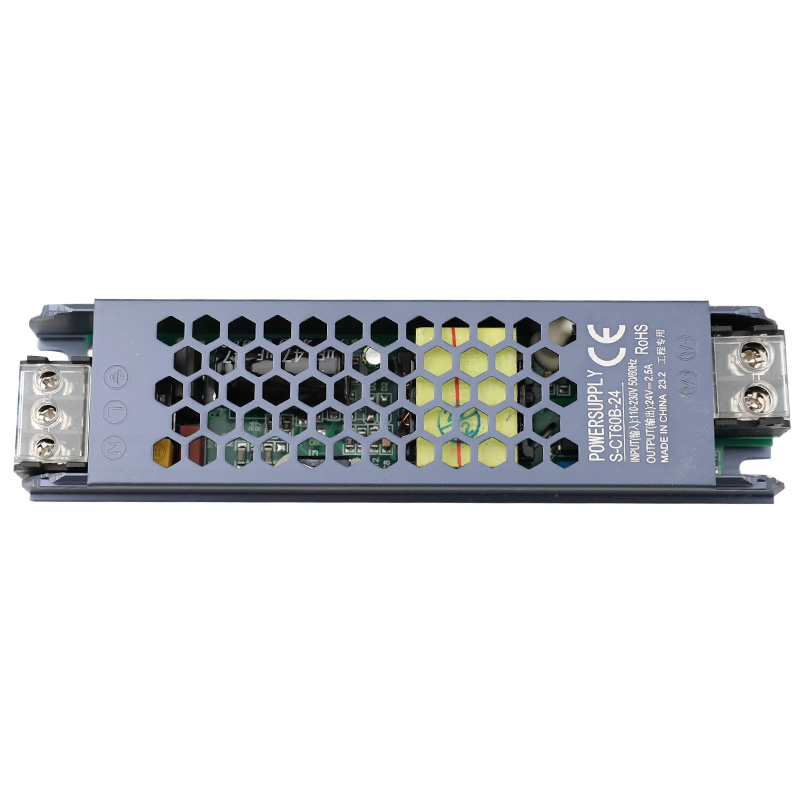
DC24V 2.5A 60W Ultra Slim LED Switching Power Supply
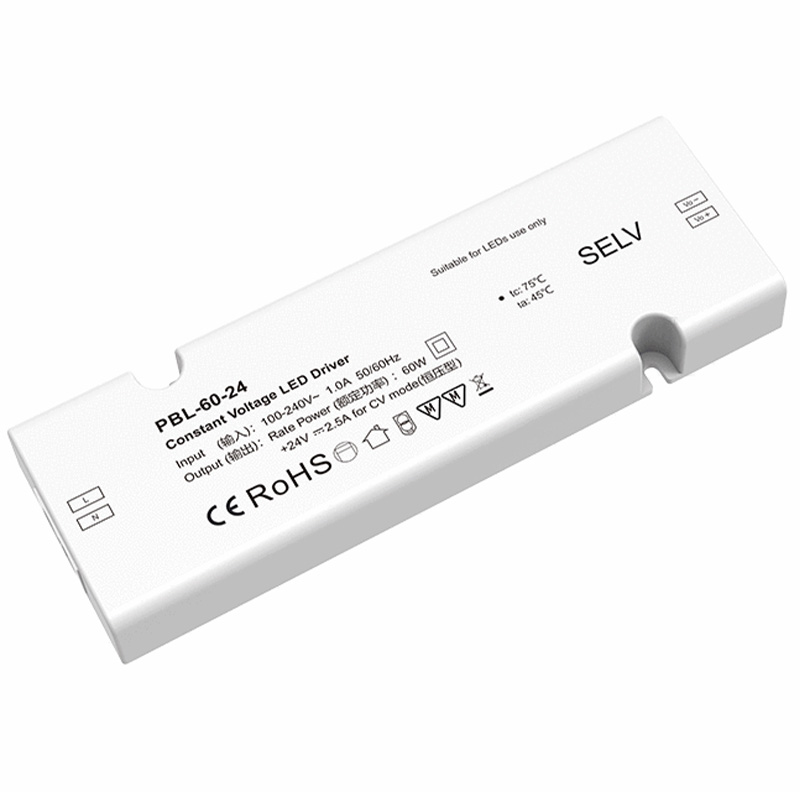
PBL-60-24 60W 100 to 240VAC Constant Voltage SELV LED Driver
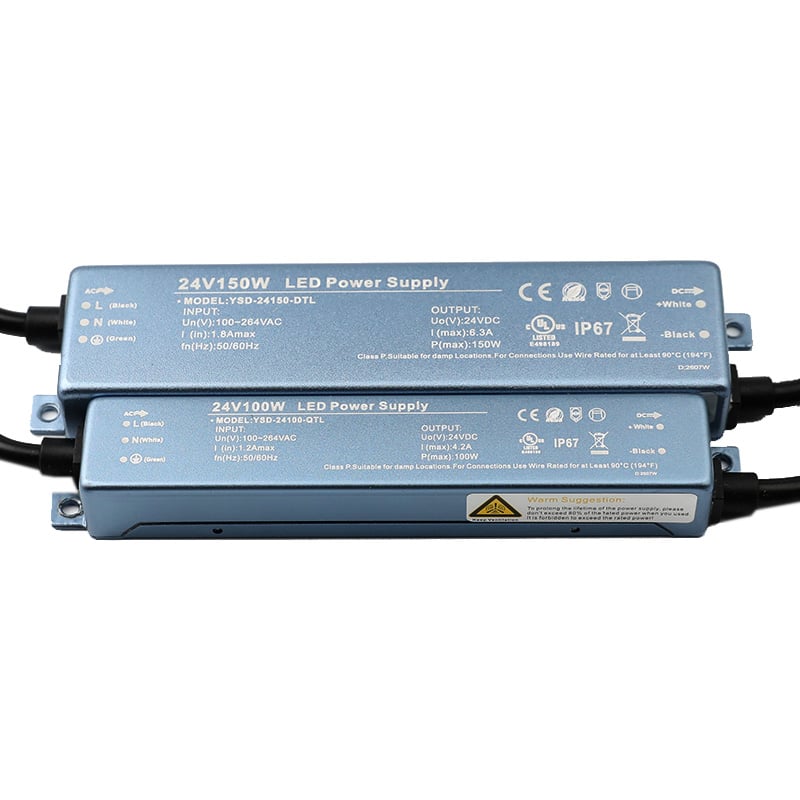
UL Listed 100W 150W Ultra Small LED Power Supply Waterproof

Thin 24V 100W Waterproof LED Power Supply (IP67)
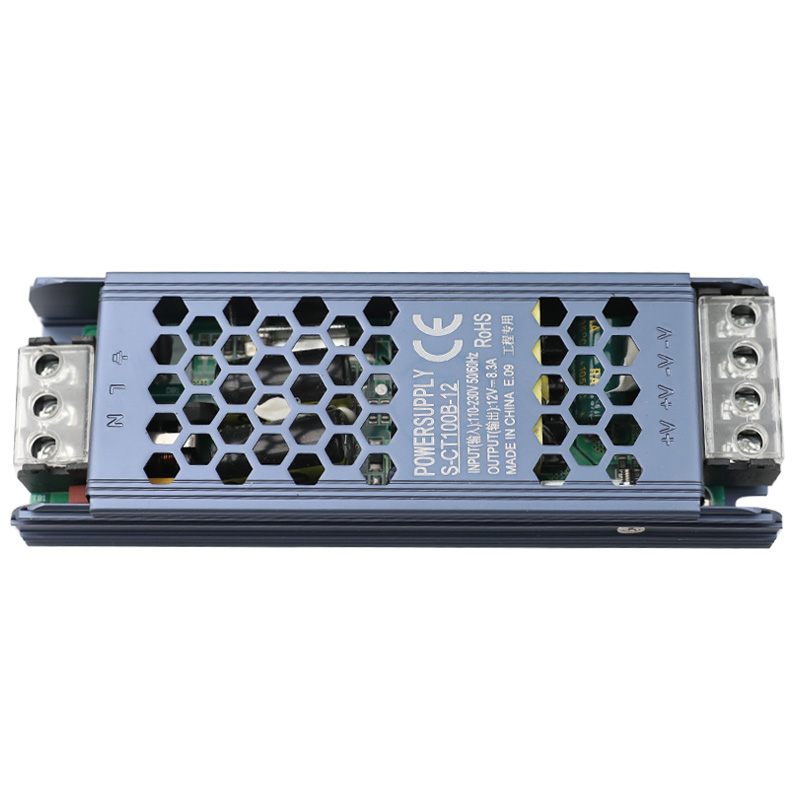
DC12V 8.3A 100W Ultra Slim LED Switch Power Supply
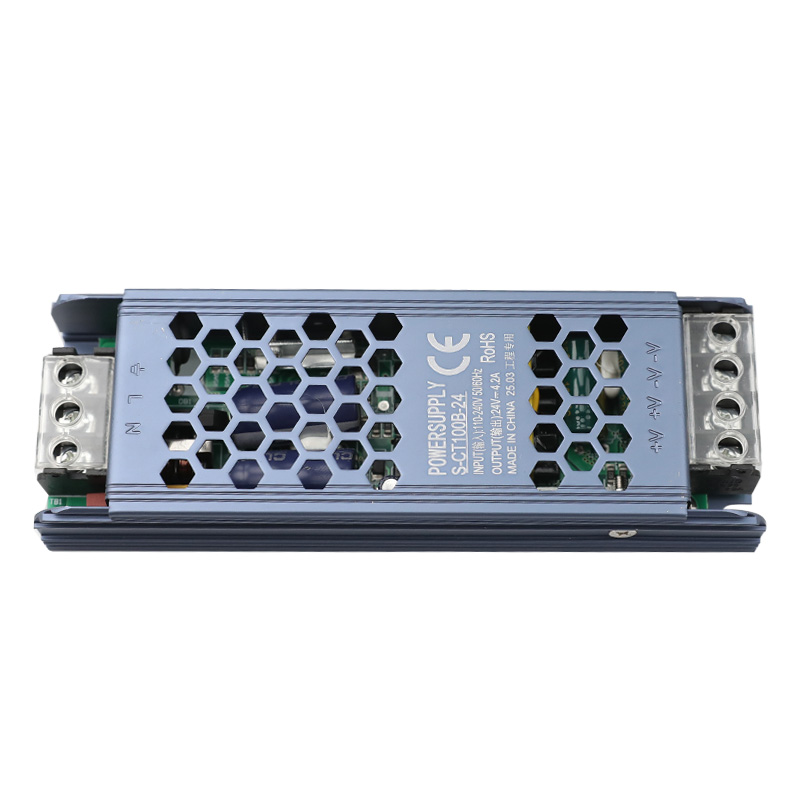
DC24V 4.17A 100W Ultra Thin LED Switch Mode Power Supply

DC24V 100W TRIAC 0/1-10V PWM Dimming 5 in 1 LED Driver
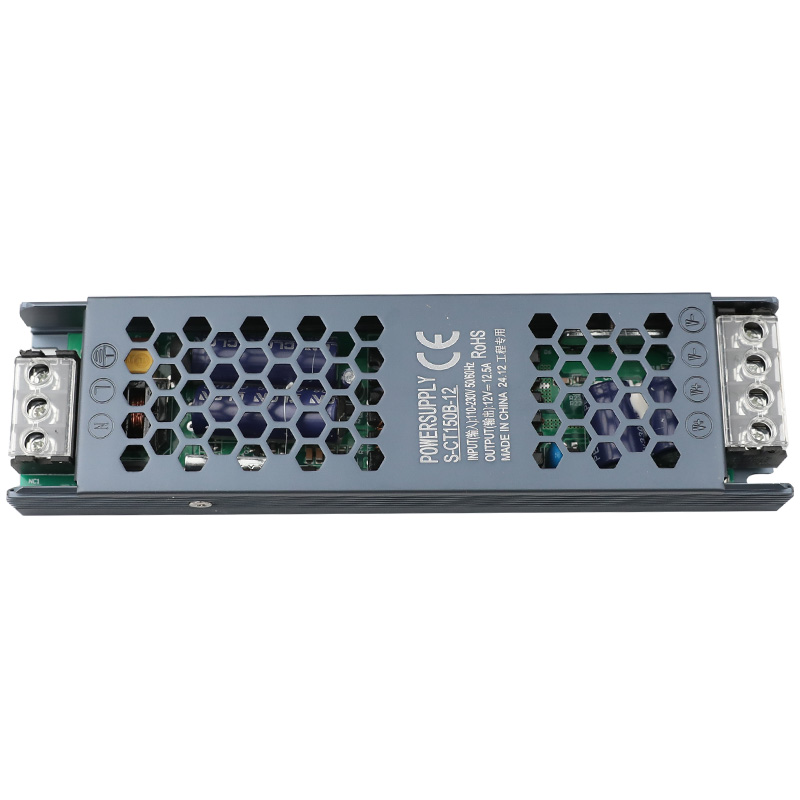
DC12V 12.5A 150W Slender LED Switched Mode Power Supply
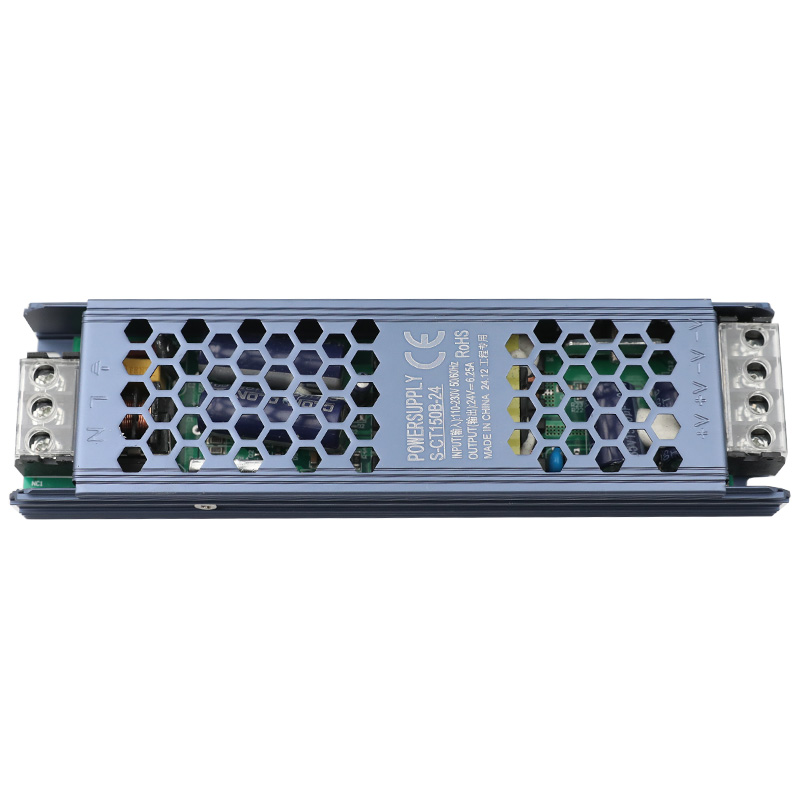
DC24V 6.25A 150W Slim LED Switching Mode Power Supply

12V 150W 0-10V Dimmable LED Driver - Indoor Power Supply
Non-Dimmable vs. Dimmable Ultra Slim LED Power Supplies
Ultra-slim LED power supplies are designed for installations where space is limited but a reliable LED power source is still required. When choosing an ultra-slim power supply, one of the most important decisions is whether your LED lighting system requires dimming.
Non-dimmable and dimmable ultra-slim power supplies provide the same basic function of converting AC power to the required DC output, but they are designed for different control requirements.
Non-dimmable ultra-slim power supplies are the straightforward choice when your LED strip only needs to be powered on and off without brightness adjustment. They are ideal for cabinet lighting, display lighting, furniture lighting, signage, accent lighting, and other installations where the LED output remains at a fixed brightness. The simple design can also make wiring and installation easier when no external dimming system is required.
Dimmable ultra-slim power supplies, on the other hand, are designed to work with a compatible dimming or control system, allowing the brightness of the connected LED strip or fixture to be adjusted. Depending on the model, the supported control method may include TRIAC, 0-10V, 1-10V, PWM, or other dimming interfaces. These drivers are better suited to residential lighting, commercial interiors, architectural lighting, task lighting, and applications where brightness needs to change according to the time, activity, or scene.
Which Ultra-Slim Power Supply Should You Choose?
Choose a non-dimmable ultra-slim power supply when you simply need stable power for a fixed-brightness LED installation. Choose a dimmable ultra-slim driver when brightness control is an important part of the lighting system.
For either type, always match the AC input voltage, DC output voltage, rated wattage, LED load, installation environment, and wiring requirements before installation. For dimmable models, also verify the exact dimming method and controller/dimmer compatibility.
The ultra-slim design is particularly valuable when the driver needs to fit inside shallow cabinets, furniture, display structures, narrow ceiling spaces, or other concealed locations where a standard-size power supply may not fit.
Frequently Asked Questions About Ultra Slim Mini LED Power Supplies
Your project's clean finish depends on hiding the hardware. Here are the common questions we get about fitting and wiring these compact drivers.
To find the right size for a power supply for led lights, calculate the total wattage of your LED strips (wattage per foot times total length). Then, add a 20% buffer. So if your lights use 80 watts, you'd do 80W * 1.2 = 96W. You should choose the next size up, like a 100W driver. This buffer is crucial—it keeps the power supply from running at 100% capacity, which makes it run cooler and last much, much longer.
It's normal for them to get warm, but "really hot" to the touch could be a sign of a problem. Most of these drivers are designed to operate up to a certain case temperature, often around 80-90°C (176-194°F). The most common causes for overheating are overloading—running it too close to its max wattage—or poor ventilation. Make sure it has some breathing room and isn't smothered in insulation. If it's correctly sized and still too hot, it could be faulty.
The best way to connect multiple LED strips to one power source is to wire them in parallel, not in series. This means running separate wires from the power supply's output terminals to each individual strip. Don't just connect the strips end-to-end-to-end in one long chain, because you'll get significant voltage drop and the last strip will be very dim. Our guide shows a few ways to wire single color strips correctly.
This depends entirely on the power supply's electrical rating and your local building codes. For an in-wall installation, you typically need a Class 2, UL-Listed driver that is rated for in-wall use and often housed in a junction box. Many of our slim drivers are designed for concealment in cabinets or channels, but not necessarily for burial in insulation inside a wall. Always check the product's spec sheet and consult a qualified electrician to ensure a safe, code-compliant installation.
A constant voltage DC LED power supply provides a steady, unchanging DC output like 12V or 24V, regardless of how much current the LEDs are drawing (up to its maximum rating). LED strips are designed to run on this kind of power. Using the wrong type, like a constant current driver meant for a single high-power LED, would send too much voltage to the strips and burn them out almost instantly. All the models here are constant voltage, which is what you need.
Some are, but most are not. You have to check the IP rating. An IP20 rating means it's for dry, indoor locations only. If you need a power supply for outdoor or wet locations like a bathroom, you need one with an IP67 or IP68 rating, which means it's sealed against dust and water. We have specific waterproof 12V power supplies and waterproof 24V power supplies built for that. Never use an indoor-rated power supply outside; moisture will cause it to fail quickly and create a safety hazard.
Yes, absolutely. A huge part of our business is building power solutions to a customer's drawing. If you need a specific DC barrel plug, a JST connector, or exact lead wire lengths to make your cabinet or display wiring plug-and-play, we can do that. Just send us a sketch or a description of what you need. One of our engineers will spec out the parts and send back a wiring diagram and quote, usually within 12 hours. There's no fee for this service and no obligation to order.
If you overload your led strip power supply, one of two things will happen. A well-designed power supply will go into a protection mode—it will either shut down completely, or it will "hiccup," turning on and off repeatedly. This protects it from damage. A cheaper, poorly designed one might just overheat and burn out permanently. This is why following the 80% rule (using only 80% of the driver's max wattage) is so important. It prevents overload and dramatically increases the lifespan of your equipment.