
LED Power Signal Amplifier
5 sub-categoriesAn LED power amplifier or signal amplifier is an expansion device used when an LED strip lighting system becomes too long, too large, or too complex for a single controller to drive reliably. These devices allow you to extend the controlled LED length, add more LED strips or fixtures, and maintain consistent brightness, color, and lighting effects without replacing the original controller with a much larger one.
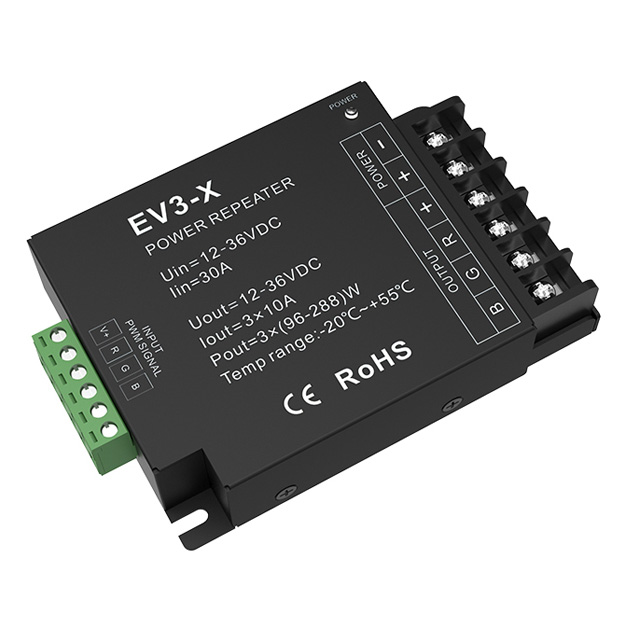
Power amplifiers and signal amplifiers solve different problems. A power amplifier or power repeater is mainly used with conventional PWM LED strips to provide additional current to another section of LED strip while reproducing the same control signal. A signal amplifier, such as an SPI or DMX repeater, is primarily used to strengthen or regenerate a digital control signal when transmission distance or the number of connected devices exceeds the reliable range of the original signal.
An amplifier is not a replacement for the LED controller. It works as an expansion component between the controller, power supplies, and additional LED sections.
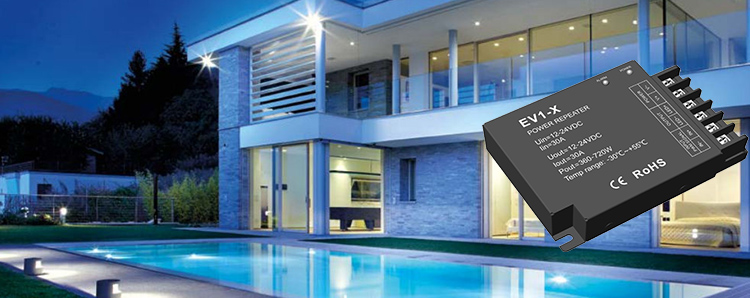
Single Color LED Strip Power Amplifier
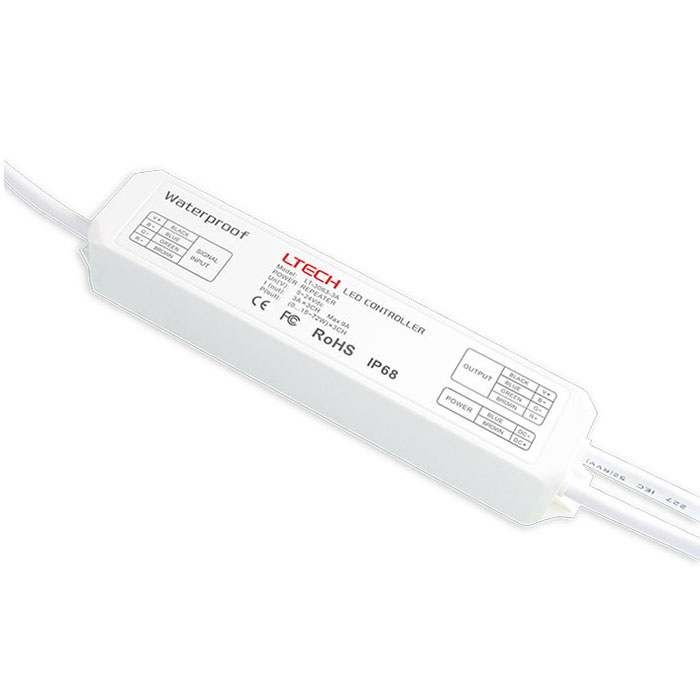
A 1CH Single Color LED Strip Power Amplifier is designed to extend the controlled length and load capacity of 2-wire single-color LED strip lights when a single LED dimmer or controller cannot provide enough current for the entire installation. It works as a power expansion device between the dimmer controller and an additional section of LED strip, allowing the extended section to follow the same on/off and dimming commands as the original strip.
For a typical single-color PWM lighting system, the controller sends a dimming signal to the amplifier, while the amplifier uses a separate power supply to provide sufficient current to the additional LED strip. This helps prevent problems caused by excessive load or voltage drop, such as reduced brightness, uneven illumination, or unstable dimming, especially in longer LED strip installations.
The amplifier does not create a new lighting effect or independent control zone. Instead, it repeats the original single-channel dimming behavior to the extended strip section, making it a simple way to expand a single-color lighting system while keeping all sections under the same controller.
When selecting an amplifier, check the LED strip voltage, amplifier load capacity, power supply capacity, and wiring configuration to ensure they match your installation.
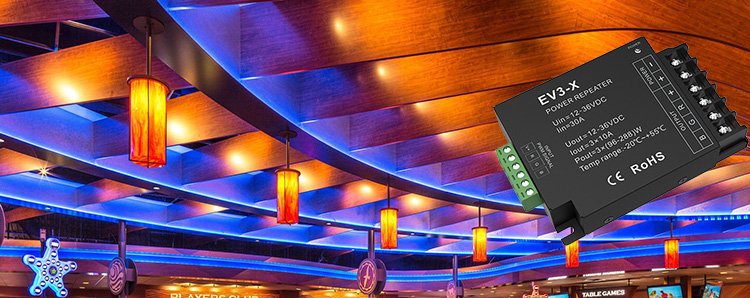
RGB/RGBW/RGBCCT LED Strip Amplifier
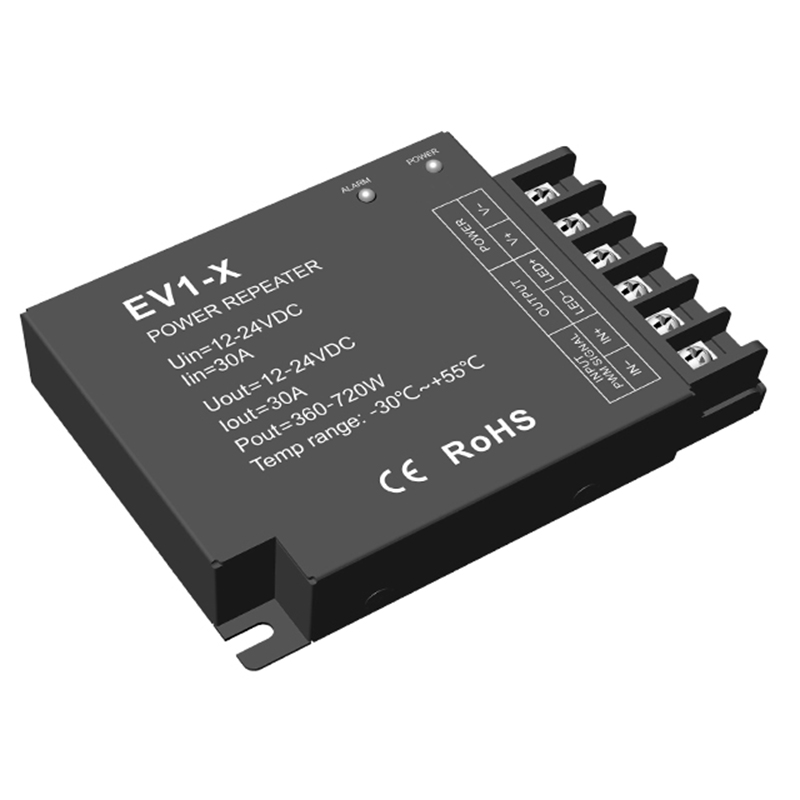
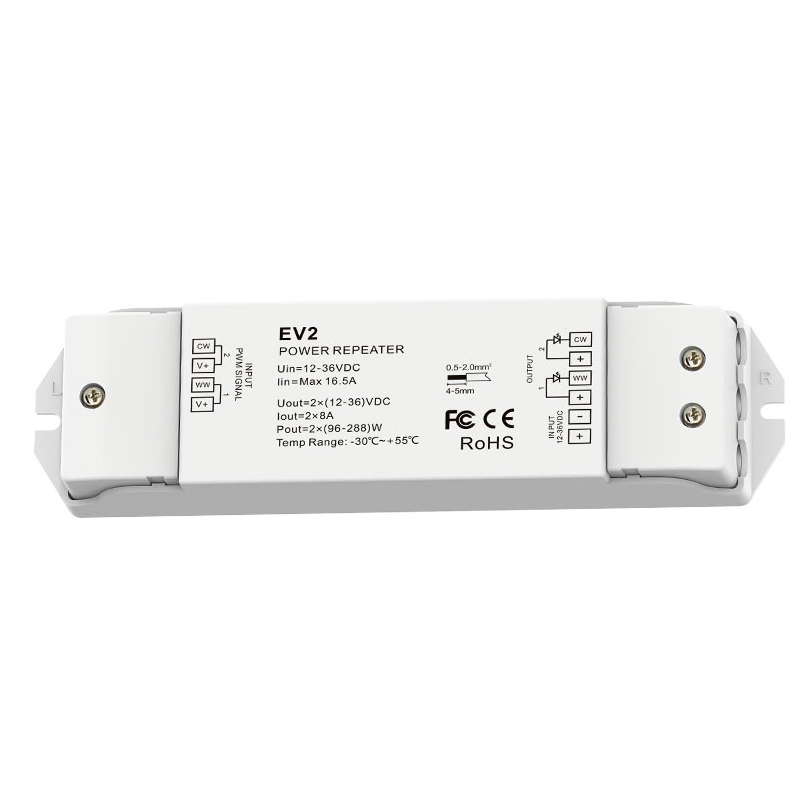
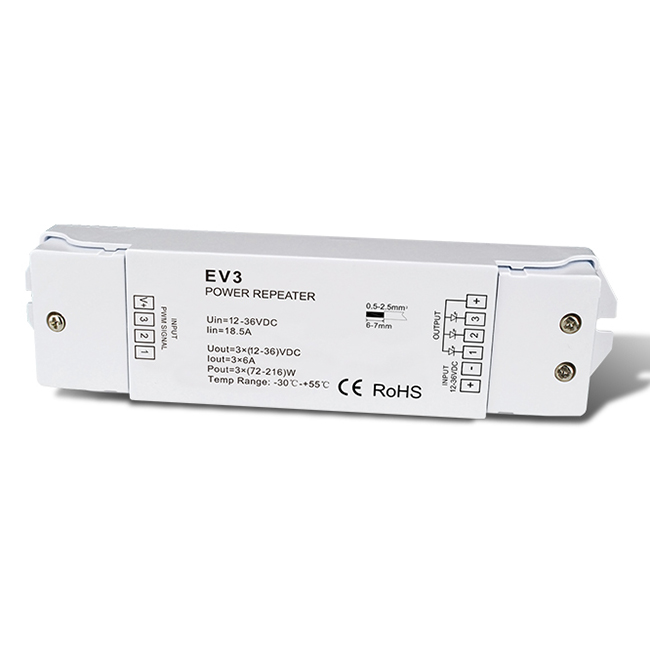
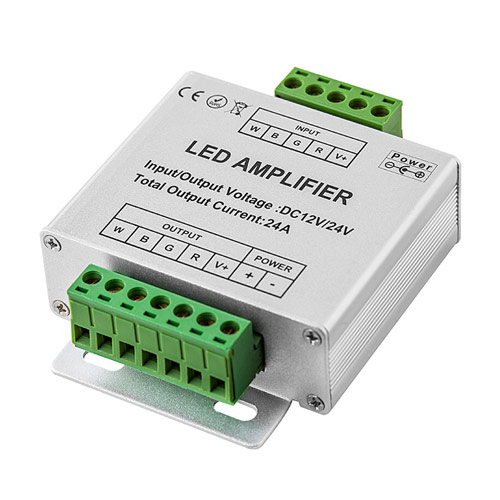
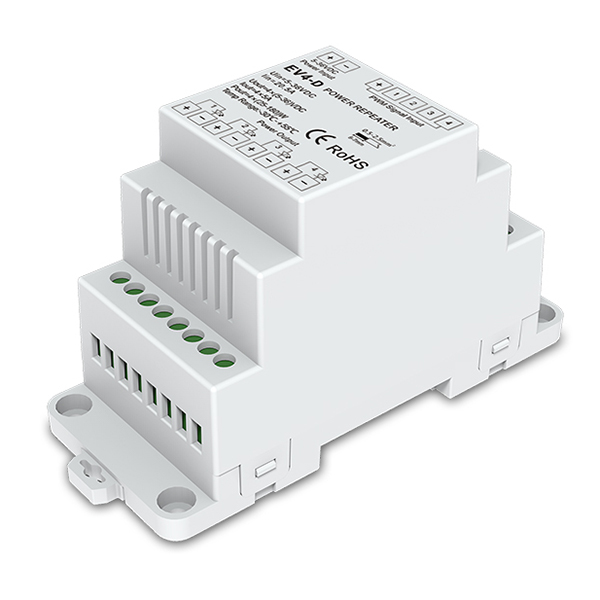
3CH 4CH 5CH LED power amplifiers for color changing RGB RGBW RGBCCT led strip lights. These power amplifiers are used in multi-channel LED strip lighting systems such as RGB (red, green, blue), RGBW (red, green, blue, white), or RGBCCT (red, green, blue, warm white, cool white). They are designed to enhance the LED control signals and to ensure a stable and even variation of LED lighting.
When a long RGB, RGBW, or RGBCCT LED strip exceeds the output capacity of the original controller, connecting additional strip sections directly to the controller can cause overloading, voltage drop, reduced brightness, or uneven color output. A multi-channel LED power amplifier solves this problem by receiving the controller's PWM signals and using a separate power supply to drive the additional LED strip section. The extended color-changing LED strip follows the same color, brightness, dimming, and CCT commands as the original LEDs.
The basic connection is LED Controller → Power Amplifier → Additional LED Strip, with a separate power supply connected to the amplifier. The number of channels should match the LED strip type: 3CH for RGB, 4CH for RGBW, and 5CH for RGBCCT. This allows you to expand the total LED load and controlled strip length while keeping multiple strip lighting sections synchronized under the same controller. For long installations, power should be distributed appropriately to minimize voltage drop and maintain consistent brightness and color across the entire system.
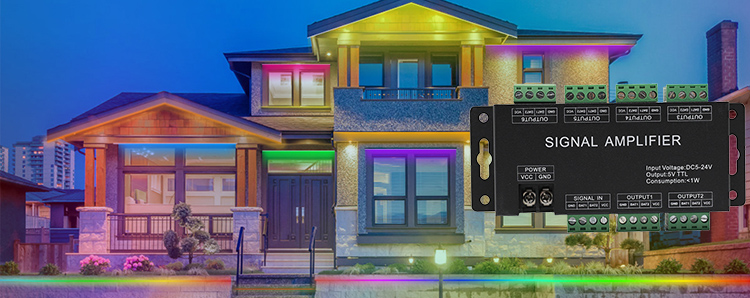
Addressable SPI LED Strips Amplifier
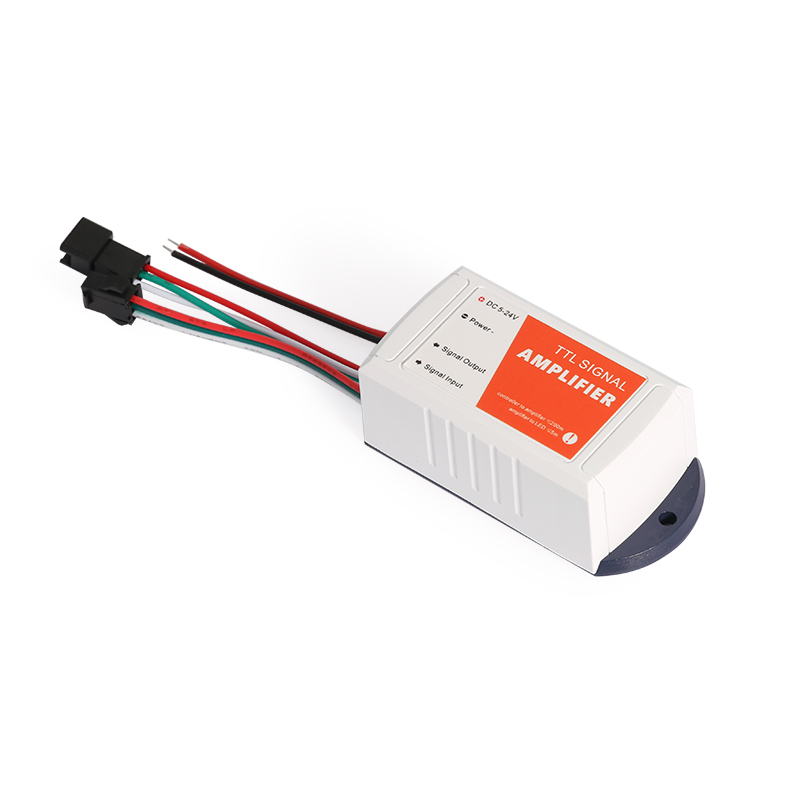
An SPI signal amplifier is designed for addressable LED strips and digital pixel lighting systems that use SPI/TTL data signals. It is used when the distance between the addressable LED controller and the addressable LED strip becomes too long for the original data signal to travel reliably.
As the SPI data signal travels through a longer cable or between multiple LED sections, signal integrity can gradually decrease due to cable length, electrical interference, impedance, and other factors. A weakened signal may cause flickering pixels, delayed responses, incorrect colors, missing sections, or unstable lighting effects. An SPI signal amplifier receives the incoming digital data, regenerates or strengthens the signal, and sends a clean signal to the next section of addressable LEDs.
The amplifier should match the SPI signal type, data direction, voltage level, and supported addressable LED protocol of your controller and LED strip. It is important to remember that not every SPI signal amplifier supports every addressable IC, so check protocol compatibility before installation. Some models are compatible only with RGBIC light strips, such as WS2811/SM16703, SK6812, UCS1903, WS2815/CS8812, WS2801, APA102, SK9822, and so on; other models are compatible with both RGBIC and RGBWIC, such as the SK6812 RGBW.
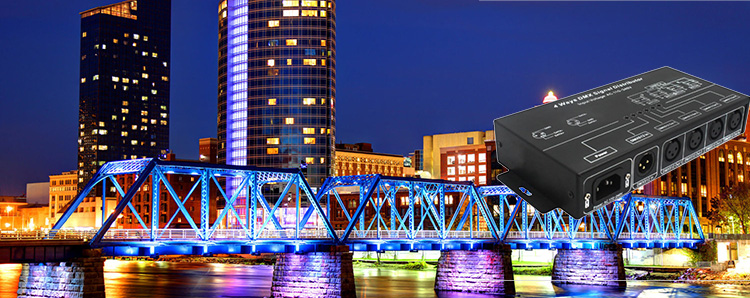
DMX Signal Distributor Amplifier
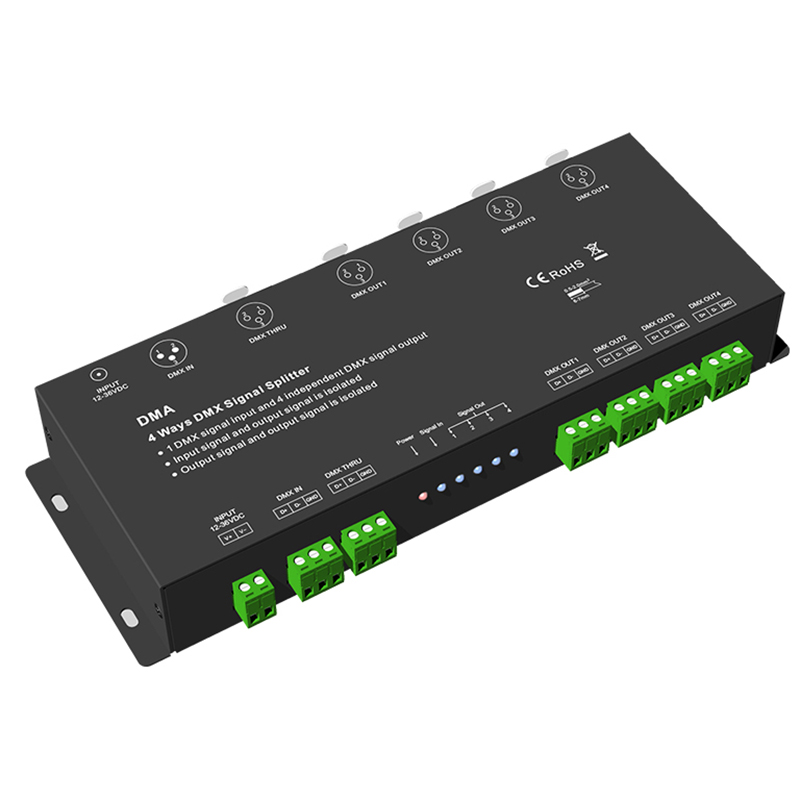
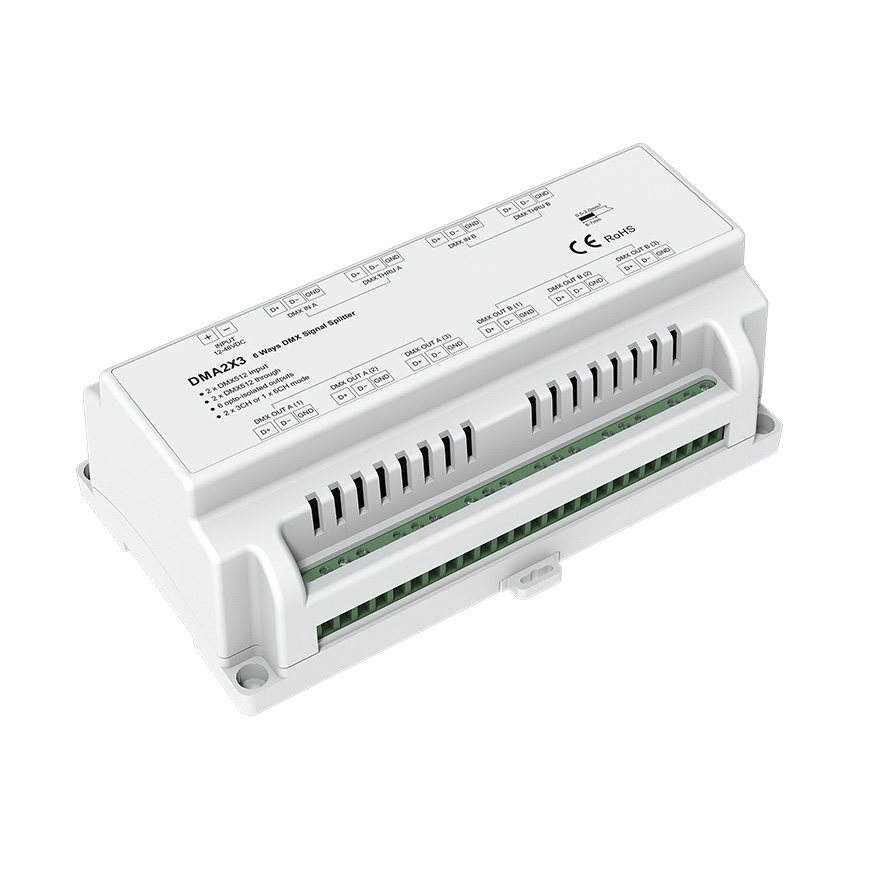
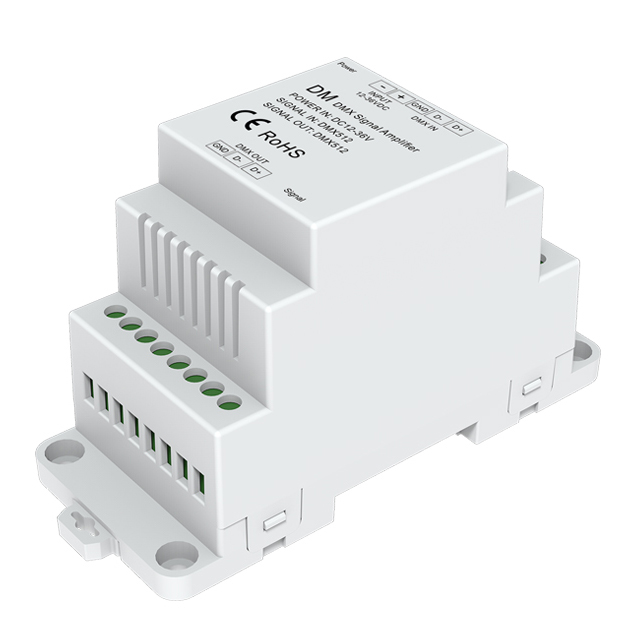
When DMX signals need to be transmitted over long distances or connected to multiple lighting devices, the signals may attenuate, resulting in unstable or inaccurate control. The role of these DMX signal amplifers and distributors is to enhance the strength of the signal during the transmission, and ensure that the DMX512 signals can be stably delivered to the target devices, maintaining the consistency and accuracy of the lighting effects. Used for DMX led strips and lights.
DMX Signal Amplifier vs. DMX Distributor vs. DMX Extender
Although the terms DMX amplifier, DMX distributor, and DMX extender are sometimes used interchangeably, they emphasize different functions. A DMX signal amplifier regenerates and strengthens the DMX512 signal to maintain reliable communication over longer cable runs. A DMX distributor takes one DMX input and provides multiple DMX outputs, allowing a single DMX source to be distributed to several lighting branches. A DMX extender generally refers to equipment designed to extend the usable transmission distance of a DMX signal, sometimes by regenerating the signal or using a different transmission method.
Many professional DMX distributors combine these functions, allowing you to regenerate the signal and split it into multiple outputs at the same time. This makes them particularly useful for large lighting systems with multiple branches, long cable runs, or multiple DMX fixtures.
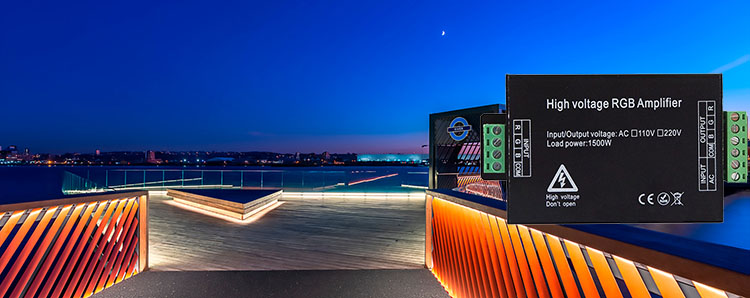
AC120V RGB LED Tape Light Amplifier
A High-Voltage RGB LED Strip Amplifier is designed specifically for AC100–240V RGB LED strip lighting systems. It allows you to extend the load capacity and controlled length of a high-voltage RGB installation while keeping the additional LED strip synchronized with the original RGB AC controller. Unlike a low-voltage RGB power amplifier, this type of amplifier is designed to work directly within a line-voltage RGB lighting system.
The amplifier repeats the high-voltage controller's three RGB channels for the extended section, allowing the additional RGB strip to follow the same lighting commands. High-voltage RGB amplifiers are particularly useful for outdoor lighting, landscape lighting, building outlines, architectural accents, commercial displays, large decorative installations, and other long-run RGB projectst; because the lighting system can maintain synchronized RGB control across additional sections.
Best-selling LED Power Signal Amplifier
21–40 of 77 products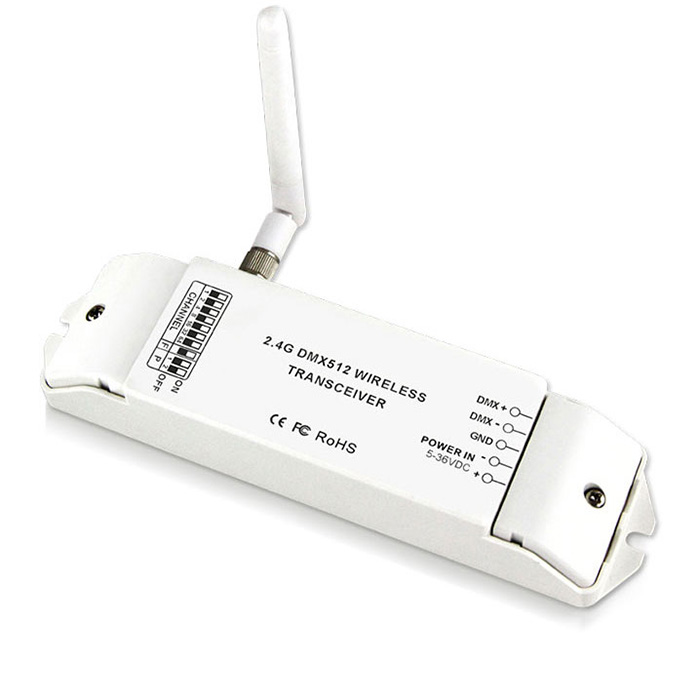
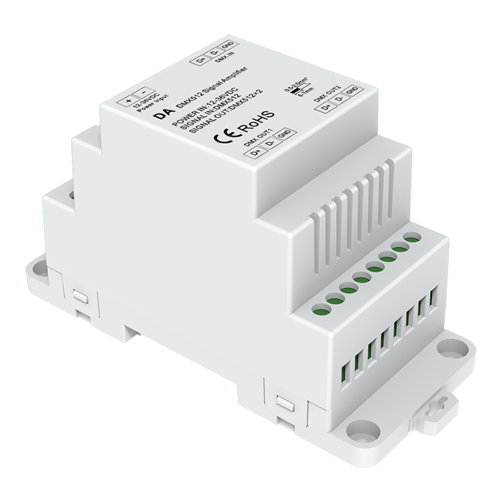
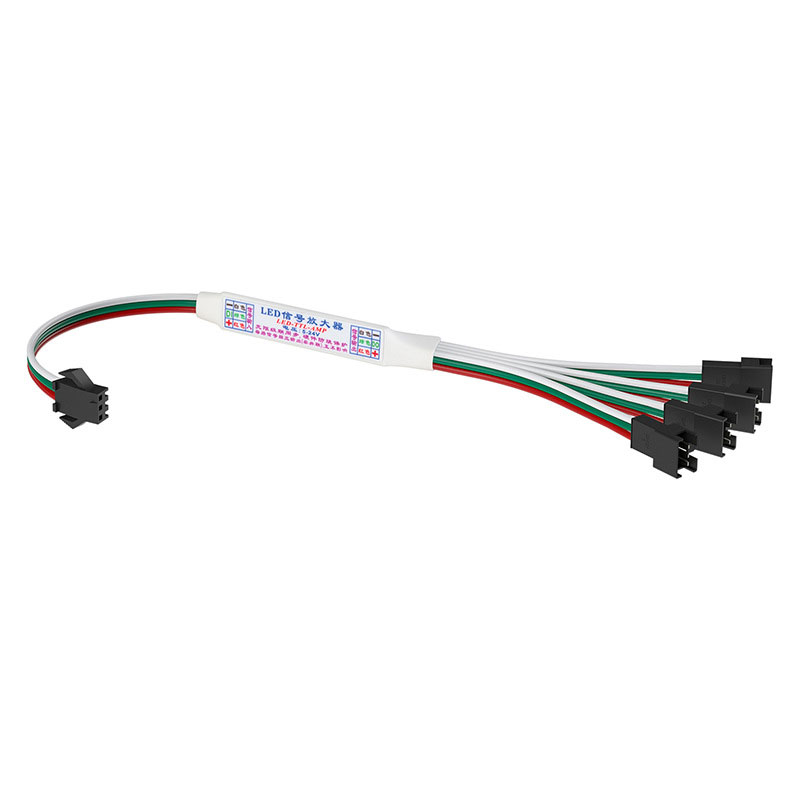
Mini Signal Sync 4 Channel Amplifier For 3 Pin Addressable LED Strip
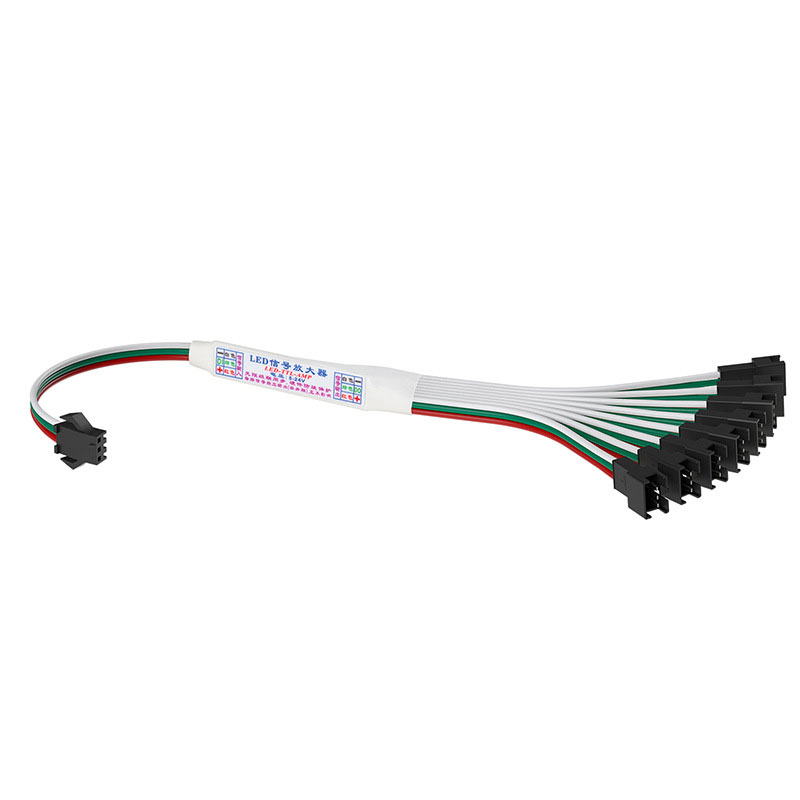
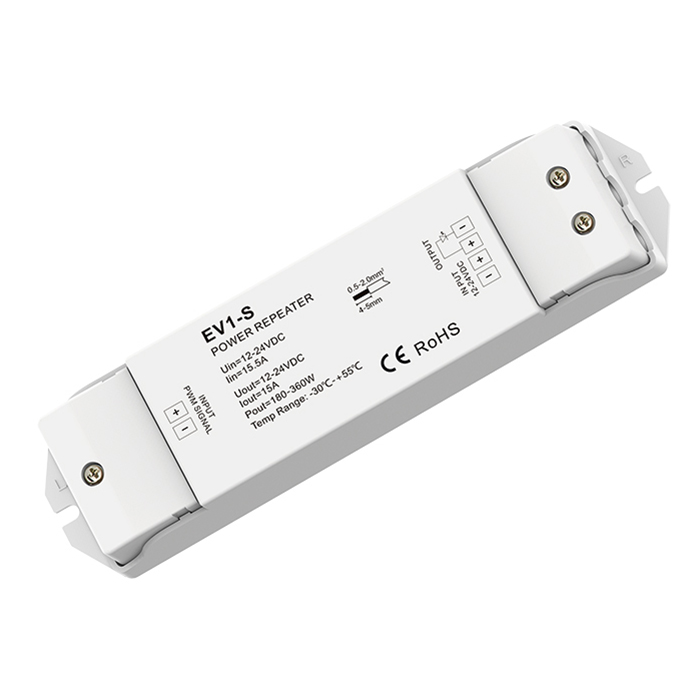
Digital Signal Mini 8 Channel Amplifier For WS2812B WS2811 LED Strip
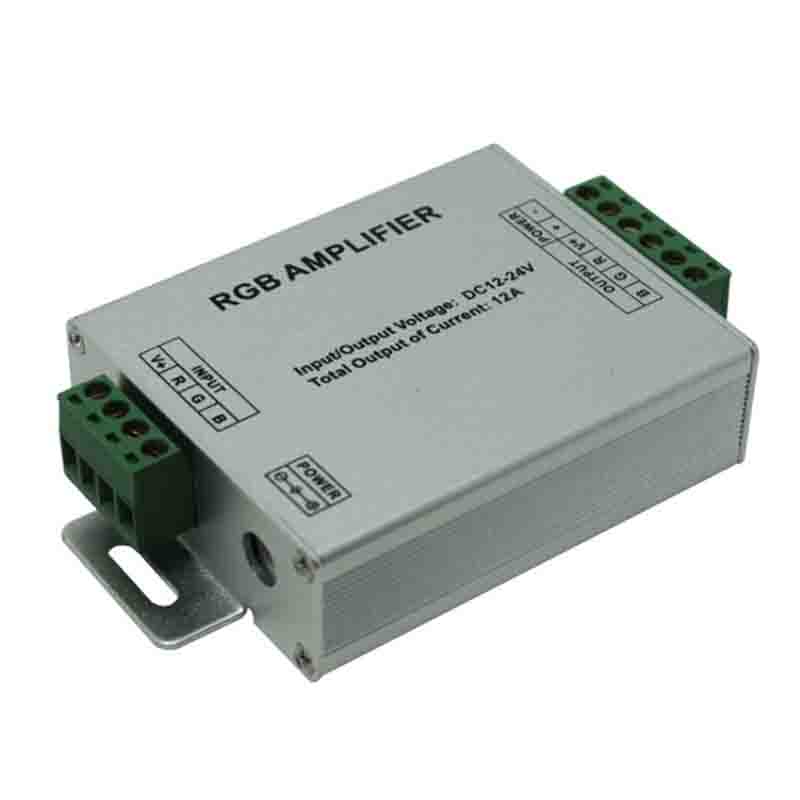
 (1)
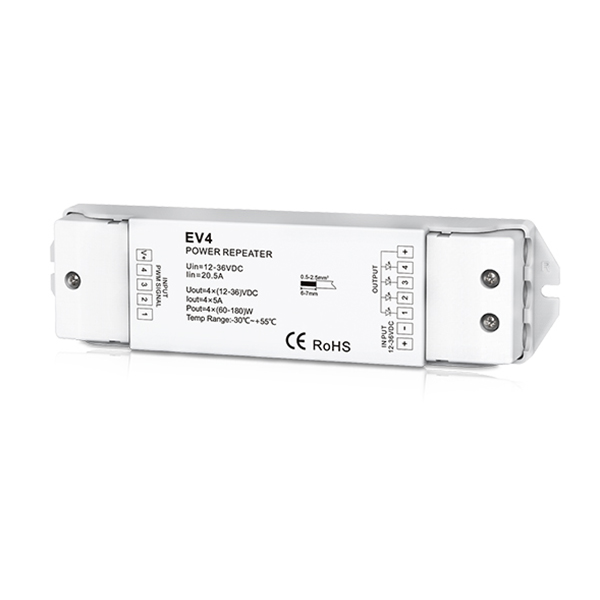
(1)
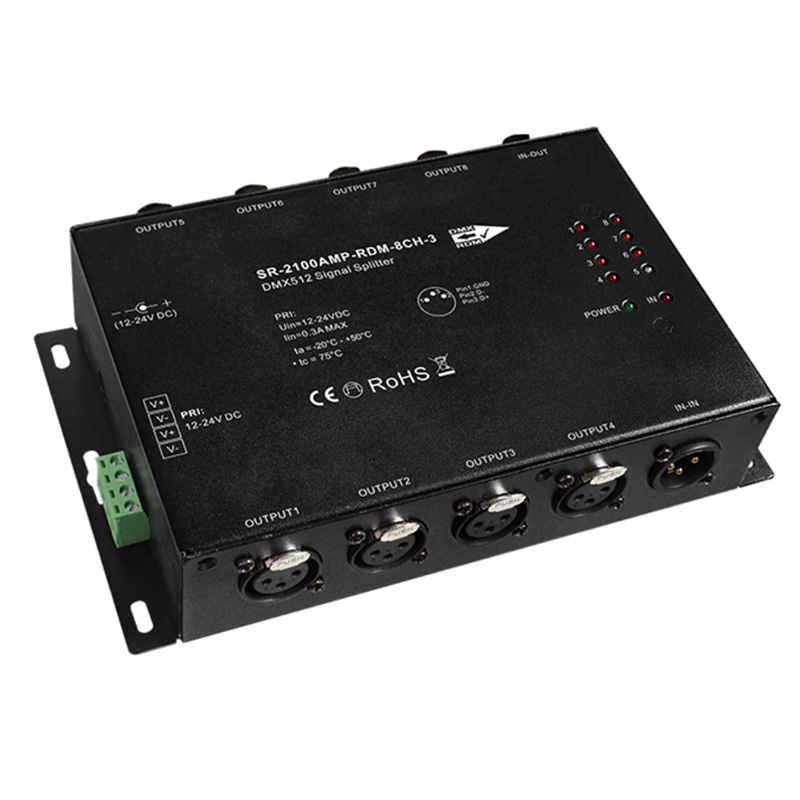
SR-2100AMP-RDM-8CH 3 or 5 Pin RDM 8 Channel DMX Splitter

When Do You Need an LED Amplifier?
You normally need an amplifier when the LED strip cannot be extended simply by connecting another section directly to the controller. A long strip light draws more current, which can cause voltage drop and uneven brightness. At the same time, longer signal paths can weaken PWM, SPI, or DMX communication and result in flickering, delayed responses, incorrect colors, or unstable effects.
An amplifier allows the lighting system to be divided into multiple sections. The original controller continues to determine the lighting behavior, while the amplifier repeats the control information and/or provides a new power output for the next section. This makes it possible to build a longer and higher-capacity LED installation while keeping all sections under the same control system. SuperLightingLED offers amplifier solutions for single-color, RGB, RGBW, RGBCCT, addressable SPI, DMX, and high-voltage RGB systems.
How Difficult Is Installation?
The installation complexity depends mainly on the type of LED system. PWM power amplifiers are generally straightforward: connect the controller's output signal to the amplifier input, provide a suitable power supply to the amplifier, and connect the next LED strip section to its output.
SPI and DMX amplifiers require more attention because signal direction, data/clock lines, protocol compatibility, power injection, cable length, and termination requirements can affect system reliability. Before installation, always confirm that the amplifier supports the exact LED strip or signal protocol being used.
FAQ About LED Power & Signal Amplifiers
Got questions about extending your LED strip run? You're in the right place. Here are the common issues we solve every day.
It always goes between sections of LED strips. The wiring is: Controller Output -> Amplifier Input. Then, Amplifier Output -> Start of the next LED strip section. Crucially, the amplifier also gets its own connection to a separate, appropriately sized DC power supply. You're essentially starting a new, independent run that just happens to mirror the first one.
Yes, you absolutely do. This is the most common mistake people make. The entire point of a power amplifier (repeater) is to inject fresh power into the system to overcome voltage drop. It gets its power from a dedicated power supply, not from the controller or the first power supply. Trying to run everything from one oversized power supply defeats the purpose and won't solve your dimming issues.
You need a DMX signal distributor, or splitter, when you exceed the limits of a single DMX line. The official DMX512 standard says you can have a maximum of 32 devices on one chain, or a maximum cable run of about 300 meters (around 1000 feet). If you need to connect more than 32 fixtures or your cable run is too long, a DMX signal distributor is required to regenerate the signal and create new, independent output lines.
Yes, it's critical. If you're using 24V LED strips, you must use a 24V power amplifier and a 24V power supply for it. If you have a 12V system, everything—the strips, the amplifier, and its power supply—must be 12V. Mixing voltages will destroy the components. Our amplifiers clearly list their operating voltage, like DC 5-24V, so just be sure to match it to your setup.
A bigger power supply solves a capacity problem. A power repeater solves a distance problem (voltage drop). If your short 2-meter strip is flickering or won't turn on, your power supply might be too small. But if your 10-meter strip is bright white at the start and yellowish-dim at the end, that's classic voltage drop. A bigger power supply won't fix that; you need a power repeater to inject power further down the line.
They do generate some heat, especially the high-current power repeaters. It's usually not a lot, but you shouldn't install them in a tight, unventilated space, especially if they're running near their maximum load. Mounting them to a metal surface can help with heat dissipation. Always give them at least a little air space, just as you would with a power supply. If one gets too hot to touch, your system is likely overloaded.