
Addressable LED Strip Lights
14 sub-categories
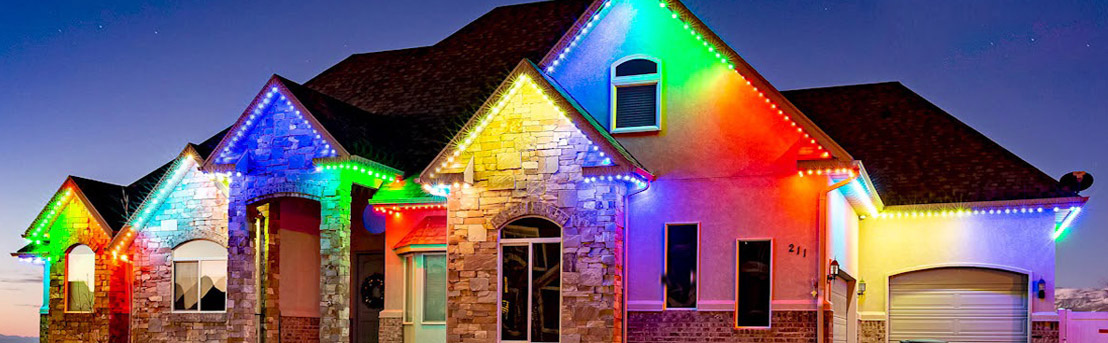
SuperLightingLED offers one of the world’s most comprehensive selections of addressable LED strip lights. From SPI and DMX addressable LED strips to pixel-level static-white, tunable white, RGB, RGBW, RGBCCT, COB, and neon solutions, we cover virtually every digital LED strip type used in architectural, entertainment, and commercial lighting projects.
What Is Addressable LED Strip?
As a programmable LED strip, each addressable LED has an integrated driver that allows the brightness and color of each RESULTED IN be regulated separately, that is, an LED can be a various color to the one beside it. Therefore, it enables us to develop lovely and complex illumination effects. Addressable led strip is also called IC-controlled led strip, because there are many ICs printed on the PCB board to control the LEDs. This is also what distinguishes addressable LED strips from ordinary color-changing tape lights.
Addressable LED can be any color, 3000K or 6000K white, 2700K-6500K or 1800K-6500K CCT color temperature, RGB, RGBW, and RGBCCT. And the type of IC controls RGB LEDs is RGBIC led strip, controls RGBW LEDs is RGBWIC led strip. Each LED controlled by a separate IC is an individually addressable led strip.
We call any LED strip that integrated with data signal, either SPI/TTL or DMX512, an addressable led strip (some people also called digital led strip, pixel led strip, programmable led strip light or smart led strip lights. This is where ARGB (addressable RGB), ARGBW (addressable RGBW), DRGB (digital RGB) designations come from.
Single Signal LED Strips
Single-signal addressable LED strips are the cornerstone of digital IC lighting, widely adopted across diverse residential, commercial, and architectural projects for their simplicity, versatility, and cost-effectiveness.
What do "Single Signal LED Strips" mean?
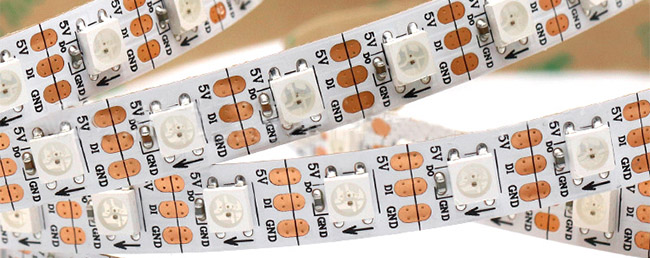
In addressable led strip lighting, "Single Signal" means that only has one wire to transmit data, which is convenient for wiring. It's also called 3 pin digital led strip (V+, GND, DAT). WS2812/WS2812B/WS2812C, SK6812, WS2811/SM16703 are the familiar 3 pin single signal digital led strip lights, which also include UCS1903/UCS2903/FW1903, UCS2904, TM1812, TM1814/TM1824 and so on.
"Single Signal" just specifies that the digital led light strip has only one data wire. It does not limit the color of the addressable LEDs, so you can still find white, WWA, or RGBW colors other than RGB here.
Breakpoint Resume Series
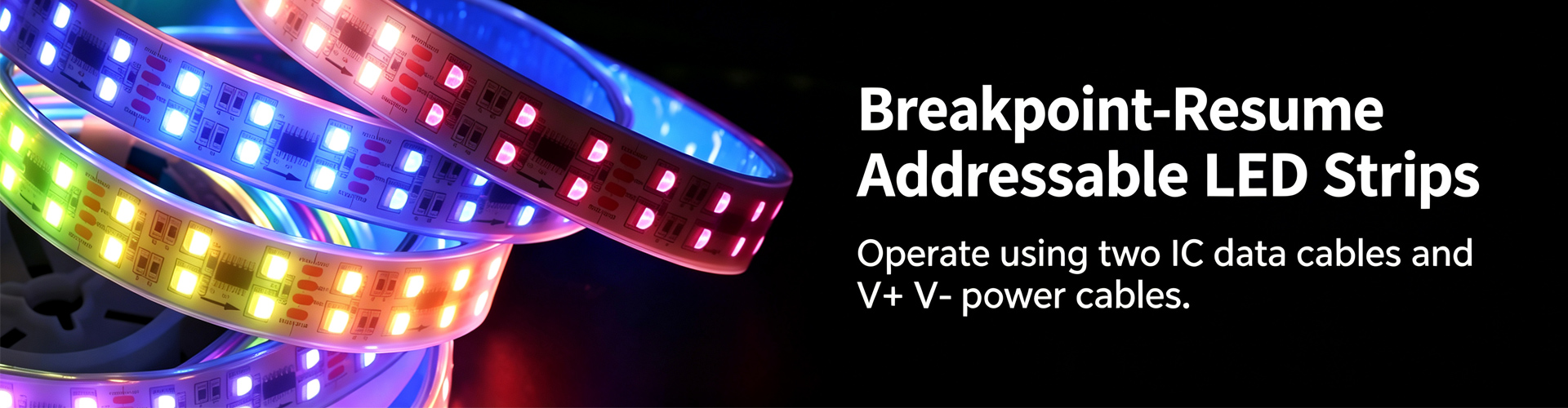
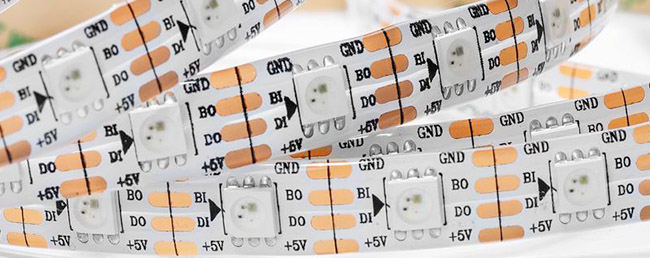
SUPERLIGHTINGLED Breakpoint Resume Series is an upgraded version of our single-signal addressable LED strip light, which is a 4-wire LED strip circuit with a data line and a backup data line. A single pixel failure will not affect the signal transmission unless two consecutive adjacent pixels fail. After a single data line fails, the backup data line will automatically start and ensure that the signal is not interrupted in long-distance cascading, suitable for commercial lighting environment.
The most representative dual-data-signal IC is the WS2815, though similar options include the WS2813, WS2818, GS8208, GS8206, TM1914, TM1934, SK6813, and others. Each dual-data-signal IC has its own unique features; browse our full collection below to find the exact dual-data-signal IC model, voltage, and IP rating tailored to your programmable lighting design.
Dual Signal LED Strips

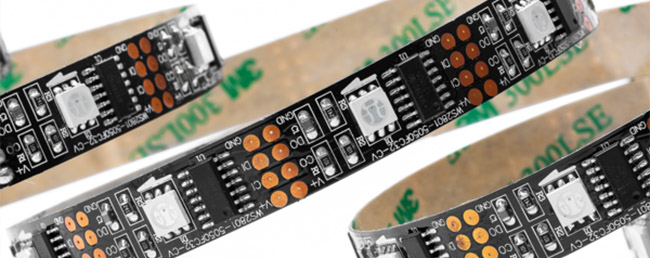
High-speed synchronization for professional pixel LED displays. At SuperLightingLED™, we provide premium dual-signal addressable LED strips featuring independent Data (DAT) and Clock (CLK) lines. Unlike breakpoint-resume LED strips that focus on backup data, this DAT+CLK architecture is engineered for ultra-high refresh rates and precise timing synchronization. IC-controlled LED strip lights with a CLK line effectively eliminate flickering and data transmission delays, making tnem the superior choice for high-speed dynamic effects and large-scale pixel mapping.
Most of our high-speed dual-signal (DAT + CLK) addressable LED strips, such as the SK9822, APA102, APA107/HD107/HD108, WS2801, and LPD8806, operate at 5V DC, while the older LPD6803 model operates at 12V DC. Notably, our WS2801 pixel modules can operate at either 12V or 24V.
Individually Addressable Series
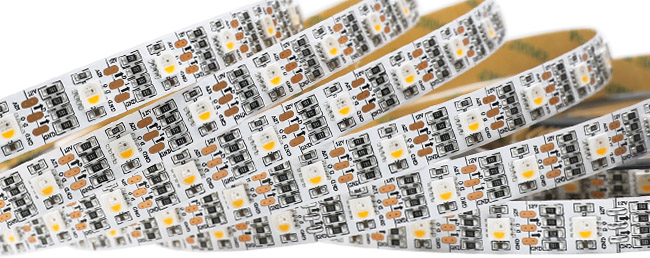
Individually addressable LED strip light is a collection of a single IC control a single LED product, serial cascade interface, an unlimited cascade, every LED that can display different lighting effects. Similarly, modular LED pixel light strings are also individually addressable and are commonly used in architectural lighting applications such as eave lighting.
How to choose an individually addressable LED strip light?
Virtually all DC 5V pixel LED strips support individual control, such as our WS2812 series, WS2813 series, and CLK clock signal IC series.
For DC12V, the most popular WS2815 breakpoint-resume product is also individually addressable, they are all single LED cuttable, so the most accurate LED strip length customization can be achieved, it is the first choice for home lighting; for longer distance lighting, you can choose WS2815 LED strip light, and for shorter distance lighting, you can choose SK6812 LED strip light, with good cost performance.
Ultra-narrow Addressable LED Strips
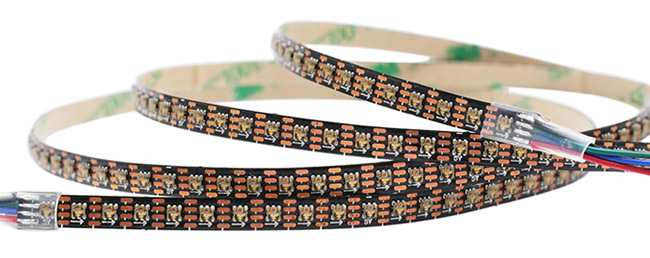
Designed for precision architectural integration and micro-linear fixtures, our Ultra-Narrow Addressable LED Strips feature ultra-slim PCB widths ranging from 2.7mm to 7mm. By integrating micro-sized pixel ICs and ultra-dense LED arrays (SMD & COB), these slim addressable LED tapes deliver smooth, pixel-accurate dynamic effects inside ultra-thin aluminum profiles, custom neon flex tubing, furniture coves, and tight display cases where standard 8mm or 10mm strips simply cannot fit.
What is the narrowest addressable LED strip light?
Ultra-narrow addressable LED Strips is a collection of the narrowest addressable LED strip light in the market. The narrowest addressable LED strip light can achieve 2.7mm ~ 3mm/0.12in wide PCB, the flexible design can provide bright lighting for any narrow space you can imagine; only a quarter pcb wide of ordinary LED strips.
In contrast to PWM small led light strips, these addressable tiny light strips allow you to control the color and brightness of their LEDs as you wish, for the ultimate in dynamic light color rendering. Match dream color LED controller to output 16 million dynamic chasing effects, suitable for elegant cabinet lighting and hidden backlighting.
SlimLine COB LED Strip Collection – Revolutionizing Ambient Lighting
DMX512 LED Strips Series
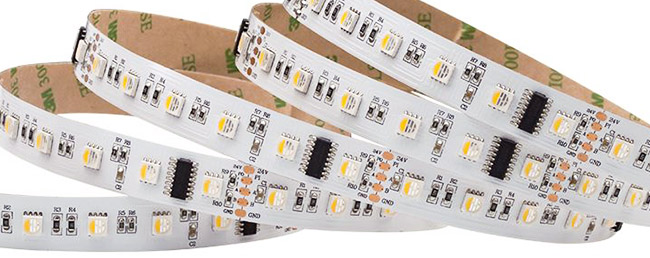
SuperLightingLED, as a dmx led strip manufacturer, specializes in Direct DMX LED Strips, which are integrated with a variety of UCS512 IC chips like UCS512C4 (256 grayscale), UCS512H4, UCS512H5, UCS512H6 (65536 grayscale), etc., can be directly connected to DMX master control.
What does DMX stand for on LED Lights?
DMX stands for Digital Multiplex, a communication protocol commonly used in lighting industry to control lighting equipment, including LED strips, LED rope lights, LED string lights, etc. DMX can send digital signals through a DMX controller or a DMX console to provide precise control of various parameters (such as brightness, color, and effects) of LED lights, commonly used to create dynamic and customizable lighting displays in a variety of settings such as stage, event, and architectural lighting.
DMX control is more precise than addressable SPI/TTL control. DMX LED Tape Light has four wires (V+, GND, D, P) or five wires (V+, GND, A, B, P), where D, A, B are the data line and P is the address line, and DMX512 can control single white light, color temperature white lights, color tuning RGB/RGBW/RGBCCT lights.
Product spec sheets & downloads
Addressable White/WWA LED Strips
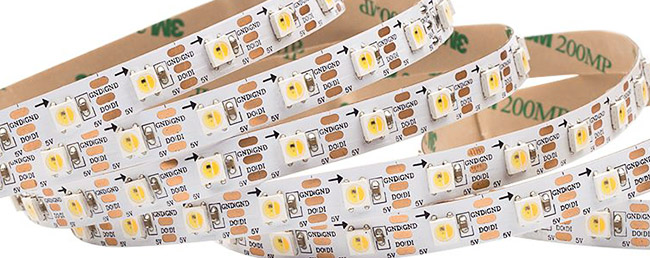
When you need dynamic lighting effects, the default is often an addressable RGB strip. But trying to mix a pure, high-quality white light from RGB chips can be frustrating, often resulting in a blueish tint. Our addressable white LED strips solve this problem directly. They are built for projects that demand sophisticated, animated white light — from warm 2700K glows to crisp 6500K daylight — without the complexity or color fringing of multi-color LED strips. These are perfect for creating flowing water effects, sparkling ceiling animations, or subtle chasing sequences in architectural coves, retail displays, and hospitality settings where pure white light is essential.
We build these digital strip lights using dedicated white or tunable white LEDs, controlled by industry-standard ICs like the WS2811, WS2815, and SK6812. This gives you pixel-level control over brightness and, on our CCT and WWA models, color temperature. You can create flowing gradients from warm to cool, mimic the sun's daily cycle, or just run a simple chase effect with a perfect 3000K warm white led strip light. Our range includes everything from cost-effective 5V white LED strips for smaller projects to high-density 24V COB versions for perfectly dotless, uniform lines of light.
Addressable RGBW LED Strips
What is Addressable RGBW Led Strip?
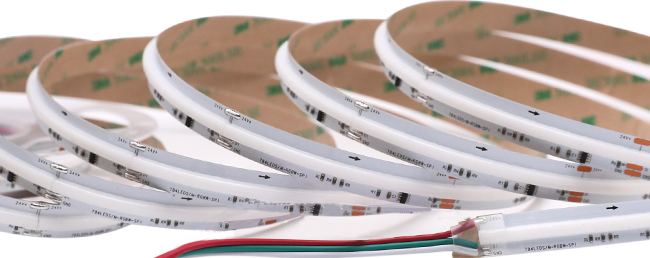
Addressable RGBW led strip is a general term for strip lights that use intelligent ICs such as WS2814, SK6812, TM1814/TM1824/TM1834, SM16704, UCS2904, DMX512, etc. to control RGBW LEDs.
The difference with ordinary RGBW strip lights is that RGBW addressable led strip follows to digital data signal commands, by programming the ARGBW (addressable RGBW) ICs, addressable led strip RGBW can display a very wide range of color effects and achieve the effect you want for your specific projects.
Components of Addressable RGBW LEDs
Addressable RGBW LEDs contain four color channels: red, green, blue, and white, and they can be packaged in the same 5050/4040 SMD or chip on board COB led, or RGB and white be independent of each other. The white color of addressable RGB W is typically 3000K, 4000K, 6000K.
How Addressable RGBW Change Light Colors
Addressable RGBW color change is not through a single color channel but through the SPI/TTL or DMX data signal, so the use of ordinary 5-wire led controller can not control the RGBW pixel strip lights. The correct approach is to choose a programmable controller compatible with these RGBW ICs and give specific commands to the ARGBW ICs to get colorful lighting effects.
Addressable RGBCCT LED Strip
What is RGBCCT addressable LED strip?
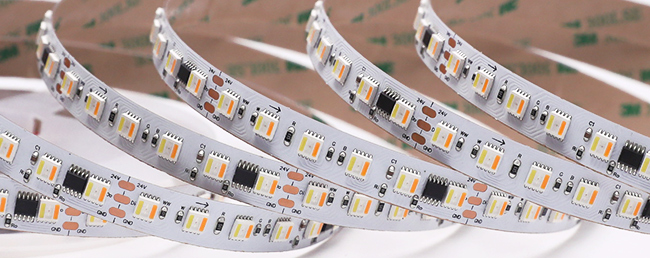
RGBCCT addressable led strip is an upgraded version of color changing led strip lights, incorporating the functions of RGB LEDs and CCT LEDs. It is a smarter version of PWM RGBCCT led strip. With special IC such as FW1906, WS2805, DMX512 to precisely control each group of LEDs (or each LED), these addressable RGBWW led strip tapes can present dynamic color effects and natural light changes via digital signals of addressable RGBCCT led controllers.
For clarity, we define RGBCCT, RGBWW, RGBCW and RGBTW as the same: RGB+ Cool White+ Warm White (RGBCW 2700K-6500K). Compared to RGBW, addressable RGBCCT can not only produce RGB colors, but also point to point control color temperature of every single LED group, ranging from 2700K to 6500K.
In this programmable RGBTW LED strip category, we offer four specific product lines:
1. Digital 5-in-1 RGBCCT light
2. Digital 3-in-1 RGB light + PWM 2-in-1 CCT light (RGB+CCT)
3. Digital 4-in-1 RGBW light + individual white light (RGBW+W)
DC12V Addressable LED Strips
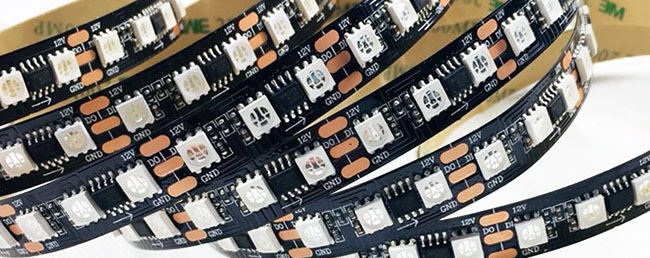
12 Volt LED Lights are commonly used in home lighting, commercial lighting, and car decorative lighting areas. In low voltage programmable led strip lighting system, considering light brightness and color consistency performance and the ability to control the LEDs individually, 12V led ribbon lights is the best choice. These 12 volt color lights are addressable and programmable, which is what sets them apart from ordinary 12 volt color changing light strips.
What is the difference between DC12V addressable LED strips?
Standard DC12V addressable LED strips vary significantly in their IC control architectures and pixel resolutions:
Single-wire 12V ICs like WS2811 and TM1814/TM1824 utilize a 1-IC-controls-3-LEDs architecture (cuttable every 3 LEDs). By requiring fewer ICs per meter, this design delivers an exceptional cost-to-performance ratio for long-run commercial lighting. While 12V SK6812 also uses a single-wire protocol, it is built with integrated IC-in-LED packaging to achieve true individual addressability per single pixel.
Advanced 12V ICs like WS2815 and GS8208 feature single-LED control (1 IC per LED, cuttable per single LED) paired with dual-signal breakpoint resume (DAT + BKP) technology. Even if a single LED or IC fails, the signal continues uninterrupted across the rest of the strip—making it the ideal high-reliability solution for critical architectural projects.
Are 12V LED strip lights right for your low-voltage lighting project?
DC24V Addressable LED Strips
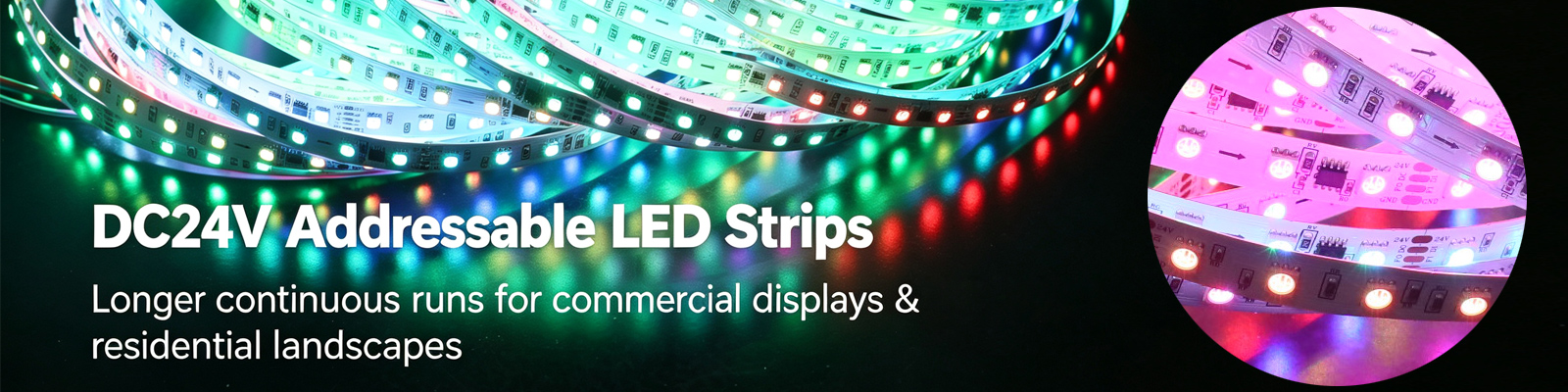
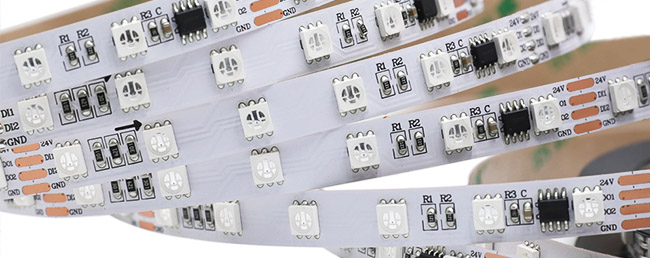
When your project demands long, continuous runs of addressable lighting, our DC24V addressable LED strips are the professional's choice. Because run on higher voltage, there is a significant reduction in voltage drop. This means you can power runs of 10 meters (about 33 feet) or even longer from a single power supply, with minimal brightness or color decay towards the end of the strip. This makes 24 volt LED strip lights perfect for architectural coving, outdoor perimeter lighting, and large-scale signage where multiple power injection points would be impractical.
Understanding 24V Addressable ICs and Cut Segments
One key technical difference with 24V addressable LED strips is the grouping of LEDs. To handle the higher voltage, LEDs are wired in series. This means that a single IC (Integrated Circuit) chip typically controls a group of 6 LEDs. This group acts as one pixel. So when you see a 24V WS2811 or 24V UCS1903 light strip, the cut lines will be spaced every 6 LEDs, and that entire 6-LED segment will always be the same color.
Multi-Row LED Strips Series
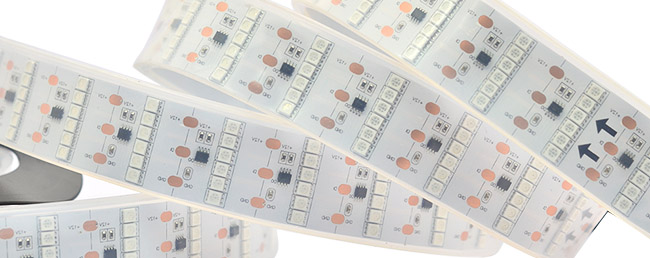
Engineered for large-scale architectural installations, dynamic stage productions, and immersive full-wall color rendering, our multi-row addressable LED strips represent the pinnacle of high-lumen output within the pixel-lighting family. By arraying 2, 3, or 4 parallel LED rows onto wide flexible PCB bases (15mm, 16mm, 20mm, and 25mm widths), these ultra-bright LED ribbons deliver maximum luminous density and fluid pixel control, eliminating light gaps for seamless edge-to-edge coverage.
Featuring bright SMD5050 or high-density SMD2835 LEDs with ICs, these strip lights boast an expanded luminous surface and a wide viewing angle for superior light distribution. Optimized for DC12V and DC24V power systems using group-controlled IC architectures, they are ideal for high-power cove lighting, wide aluminum channels, custom matrix displays, automotive custom lighting, and demanding commercial task illumination.
Driven by industry-standard RGBIC, RGBWIC, and White ICs—including WS2811, WS2818, UCS1903/UCS2903, TM1812, SK6812, TM1814, and native DMX512—these bright addressable LED strips offer seamless plug-and-play compatibility with advanced control platforms like WLED and MADRIX for boundless dynamic color effects.
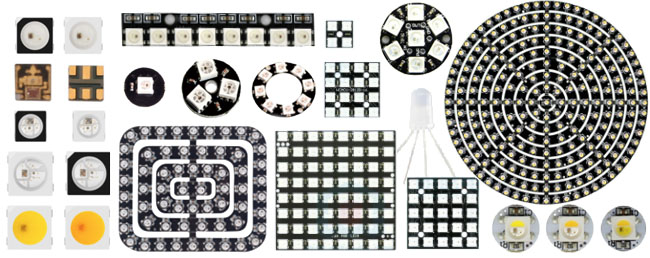
Neopixels Ring & Addressable LEDs
Unlike standard addressable LED strips designed for linear runs, this category contains the fundamental building blocks: individual addressable LEDs and pre-assembled pixel LED boards like rings, sticks, and matrices. These are the components for creating unique shapes, custom PC mods, cosplay props, or compact status indicators where every single pixel needs independent color and brightness control.
Most of these LED neopixel components run on DC5V, which is perfect for integrating with microcontrollers like an Arduino, ESP32, or Raspberry Pi.
For larger, high-density installations, addressable LED panels offer a seamless, grid-based solution that allows you to render vibrant graphics, custom animations, and full-matrix visual displays with pixel-perfect accuracy.
For scalable accent lighting and creative contouring, individually pixel LED string lights provide a flexible, modular alternative—offering dynamic 360-degree illumination and weather-resistant durability that pre-assembled boards and rigid LEDs cannot achieve in large-scale outdoor or architectural setups.
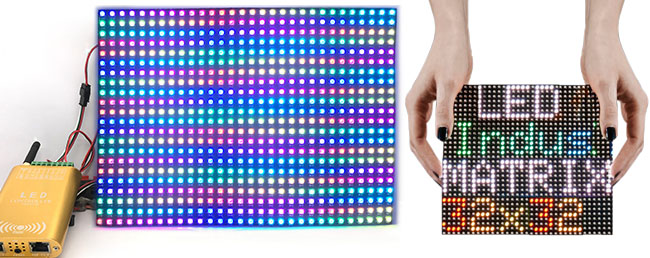
Addressable Flex LED Pixel Panel
Addressable flexible LED pixel panels provide a turnkey 2D grid solution that eliminates the labor-intensive assembly, wiring complexity, and alignment errors associated with constructing custom matrices from individual LED strips. By integrating pre-spaced, individually addressable LED neopixels onto a uniform, bendable substrate, these panels drastically streamline installation for curved surfaces, cylindrical pillars, and complex architectural contours while guaranteeing pixel-perfect pitch and seamless graphic, text, and video rendering right out of the box.
Our LED matrix panel range is built to cover any project size or power requirement. We stock common configurations like 8x8, 16x16, and 8x32, with pixel densities high enough for clear visuals even at close range. You'll find panels based on 5V, 12V, and 24V systems.
Product spec sheets & downloads
Best-selling Addressable LED Strip Lights
241–260 of 575 products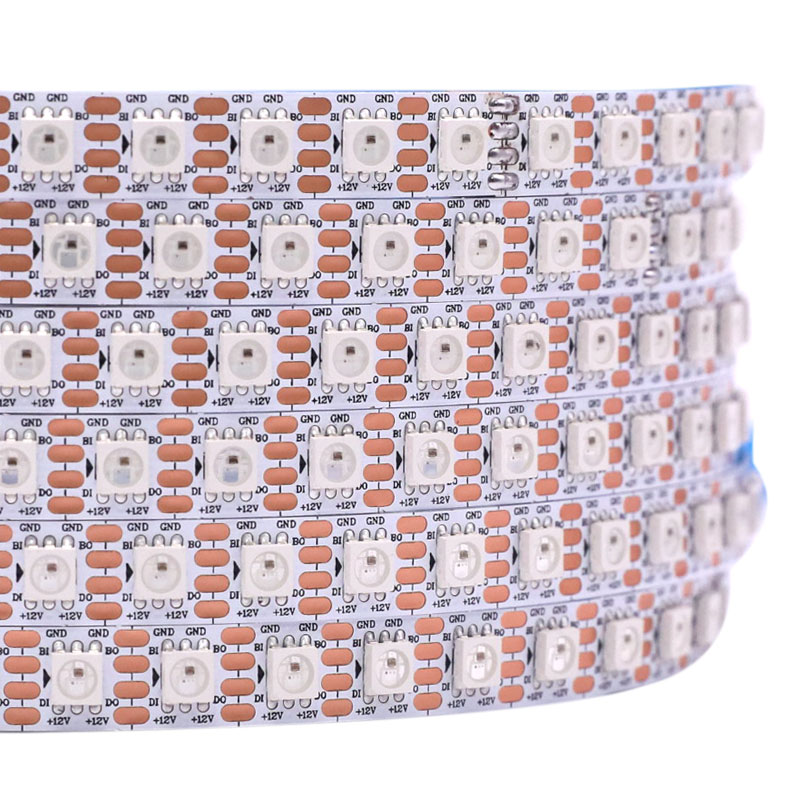
12V WS2815 Individually Addressable LED Pixel RGB Light Strip 16.4FT 96LEDs/m High Density
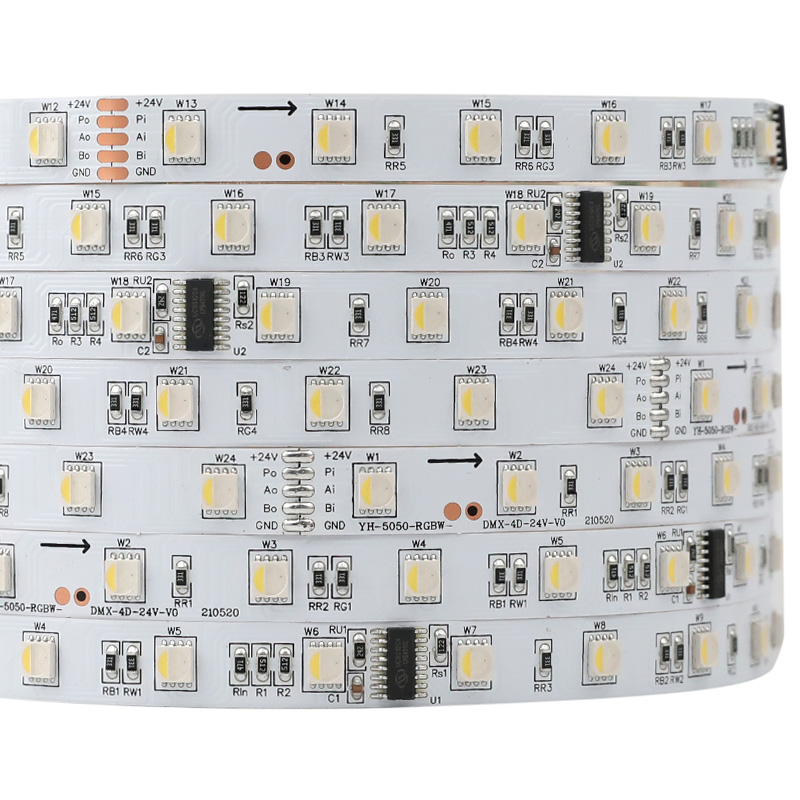
24V DMX512 RGBW Color Chasing SMD5050 Addressable LED Light Strip 48 LEDs/m
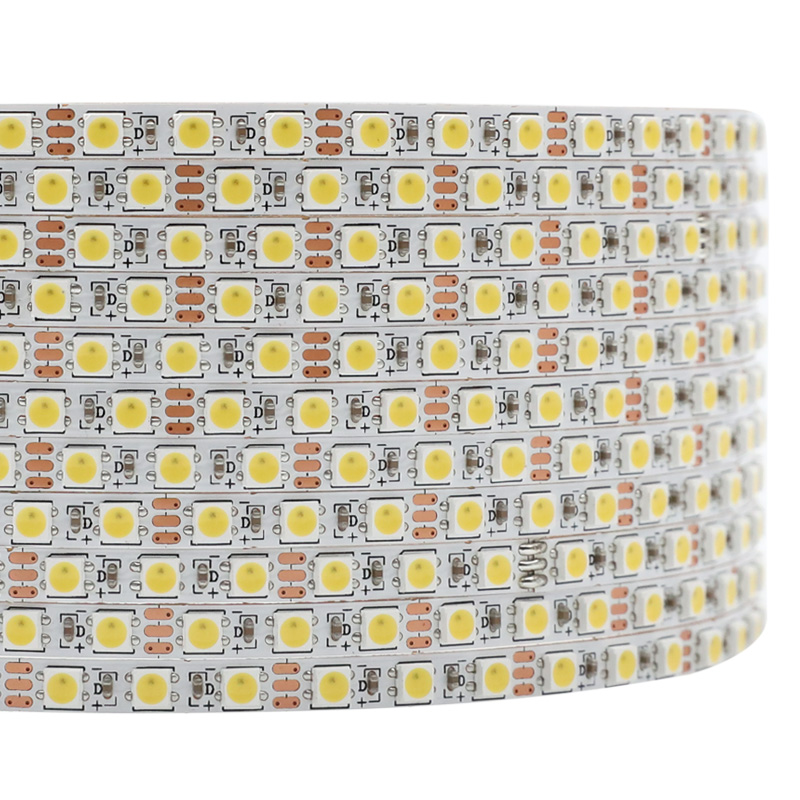
5V WS2812B 3535 5mm Slim Addressable 6500K Daylight LED Strip
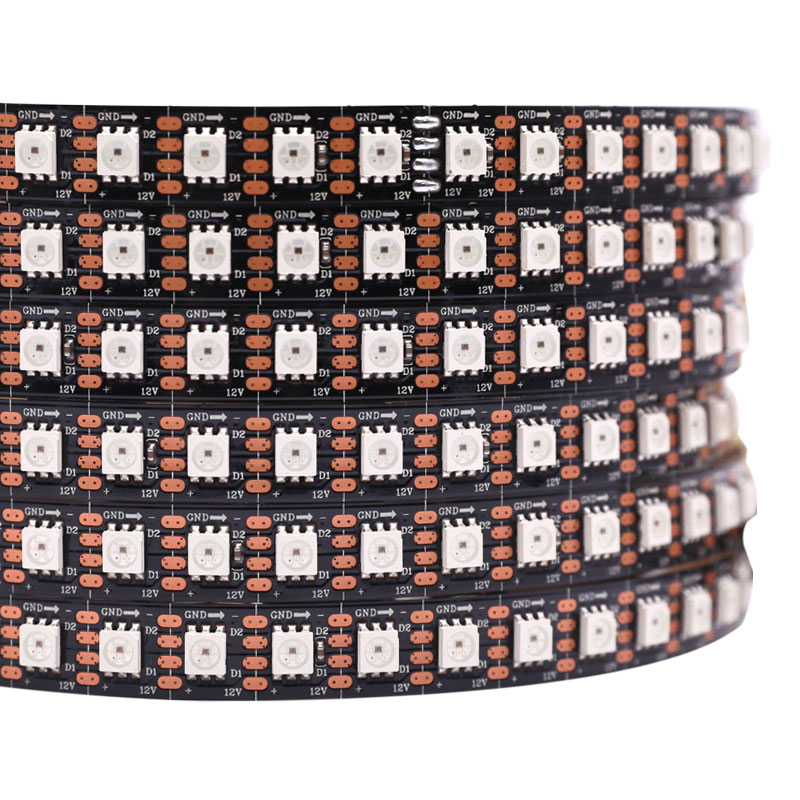
DC12V GS8208 96LEDs/m High-Density Individual Addressable RGBIC Black PCB LED Strip Light,...
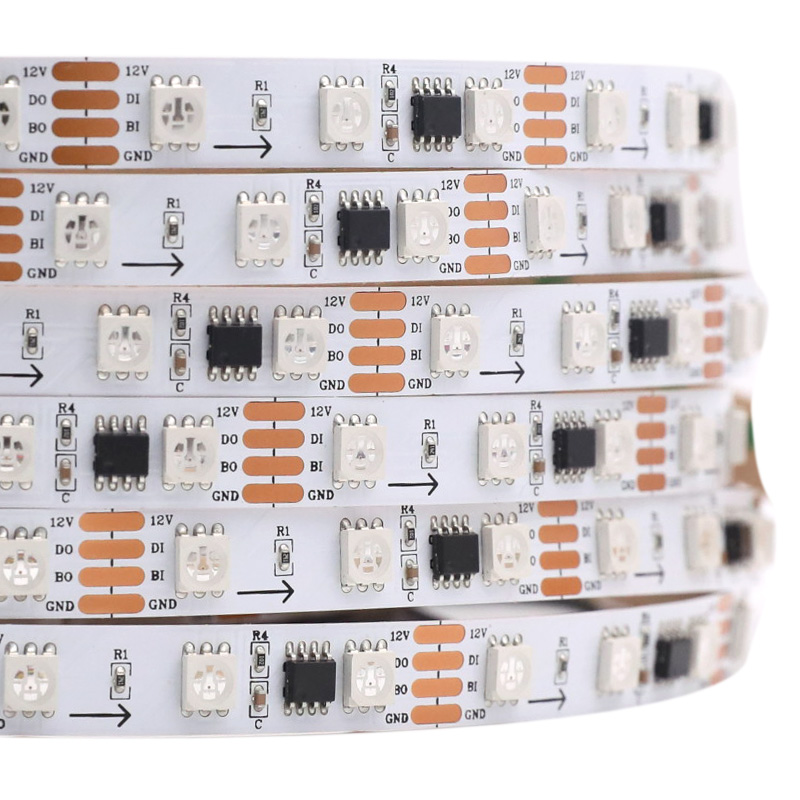
DC12V TM1914 5050SMD RGB, Breakpoint-continue,300 LEDs Addressable Digital Strip Lights, Dream...
 (1)
(1)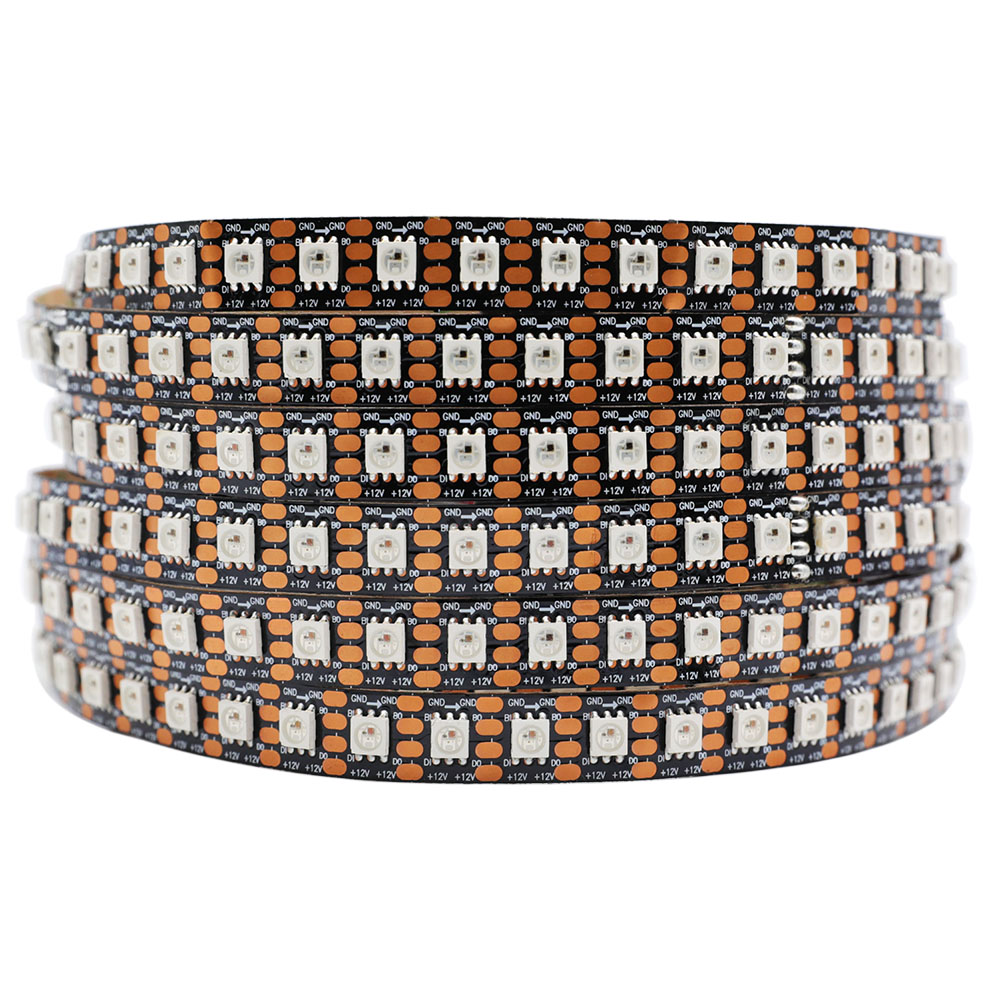
DC12V WS2815 (Upgraded WS2812B) 5M 480 LEDs Individually Addressable Digital Strip Lights (Dual...
(1)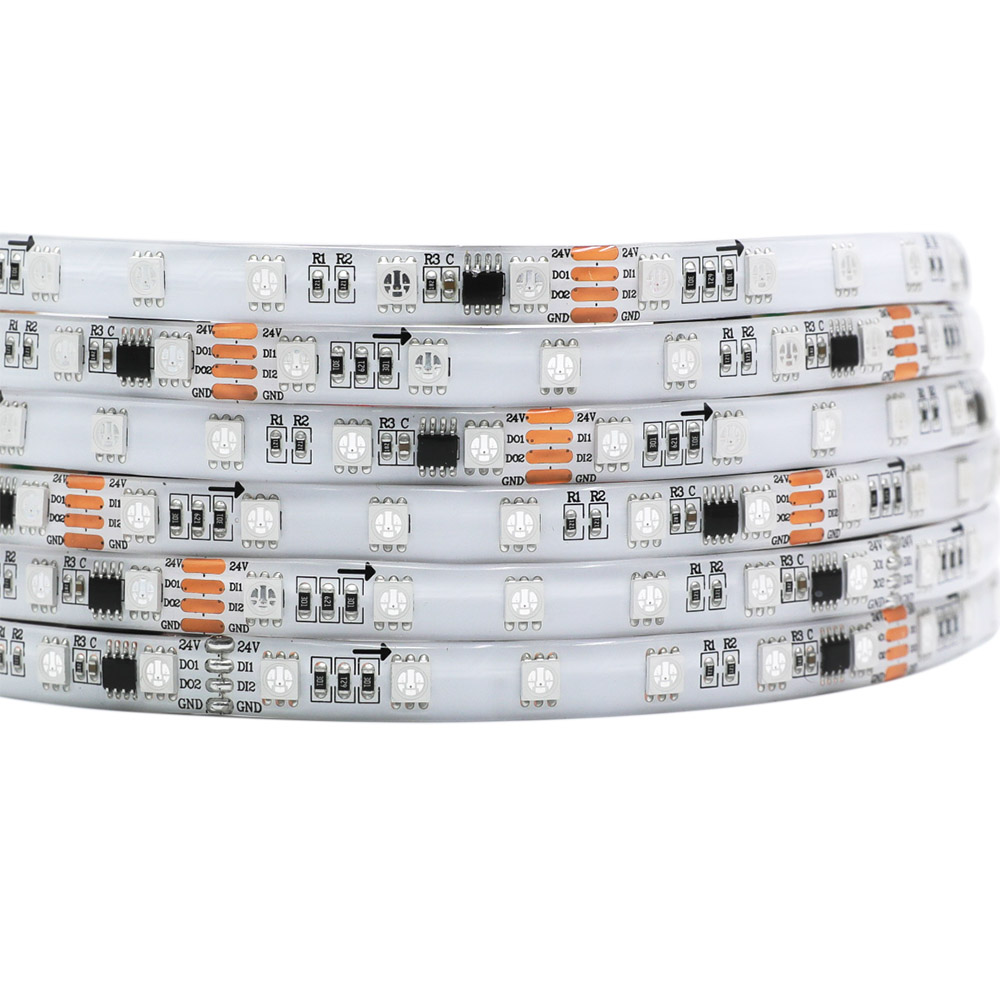
DC24V TM1914 5050SMD RGB, Breakpoint-continue,300 LEDs Addressable Digital Strip Lights, Dream...
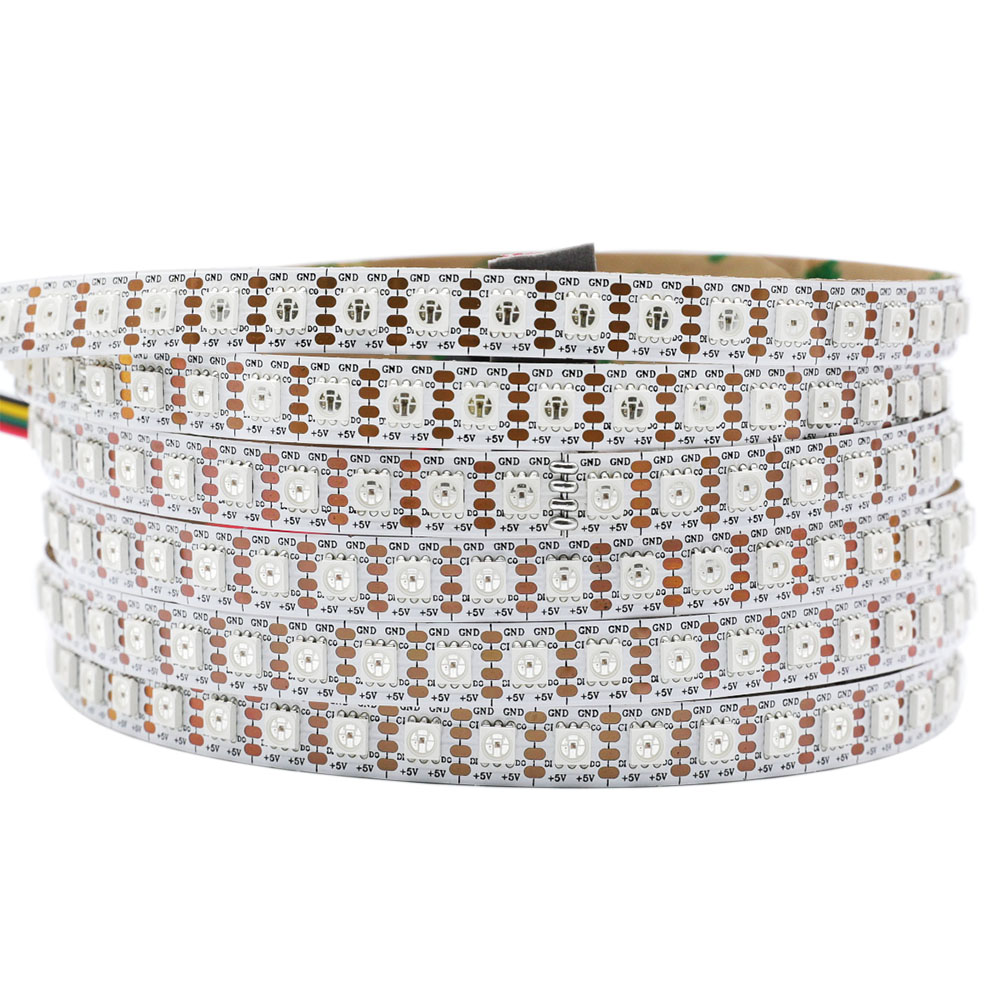
DC5V 96LEDs/m Fastest APA107/HD107S Individually Addressable Super Bright Full Color RGB LED Strip...
-Breakpoint-continue-144-LEDs.jpg "DC5V WS2813 (Upgraded WS2812B) Breakpoint-continue 144 LEDs Individually Addressable Digital LED Strip Lights (Dual Signal Wires), Waterproof Dream Color Programmable 5050 RGB Flexible LED Ribbon Light,1m/3.28ft")
DC5V WS2813 (Upgraded WS2812B) Breakpoint-continue 144 LEDs Individually Addressable Digital LED...
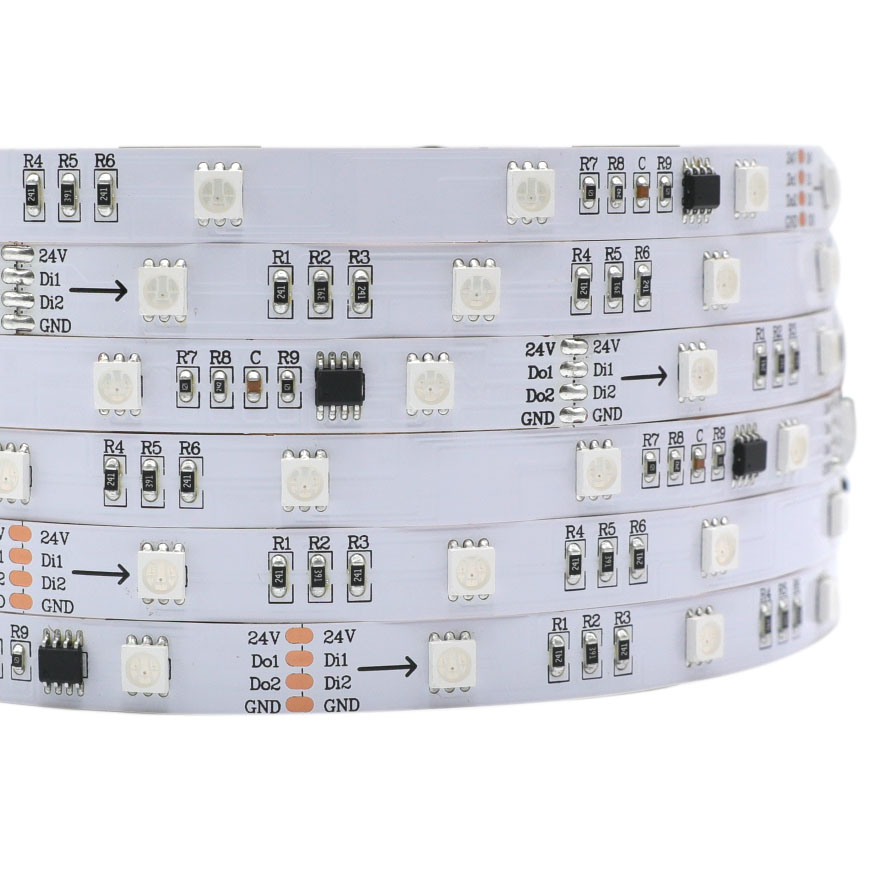
GS8206 5050 RGB LED Dream Color Addressable Strip Lights 30LEDs/m
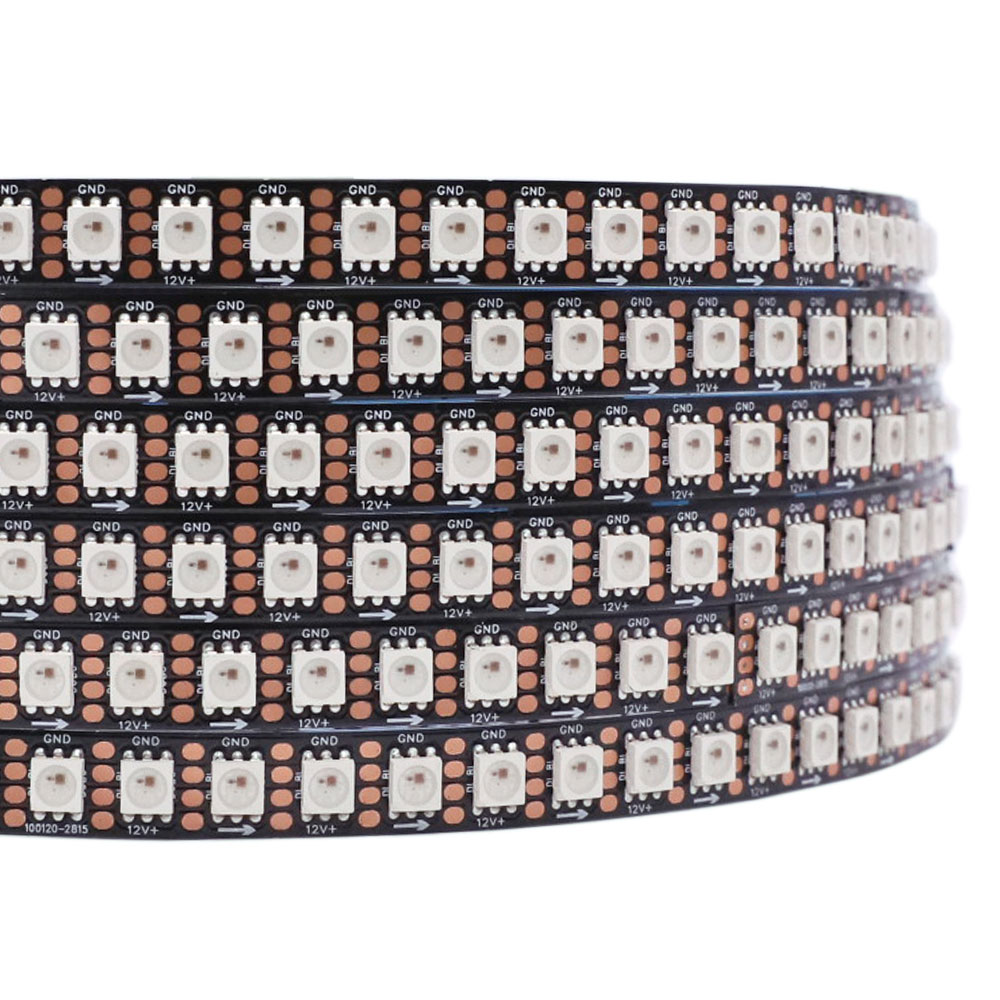
GS8208 5050 RGB Color Changing Individually Addressable LED Strip Lights
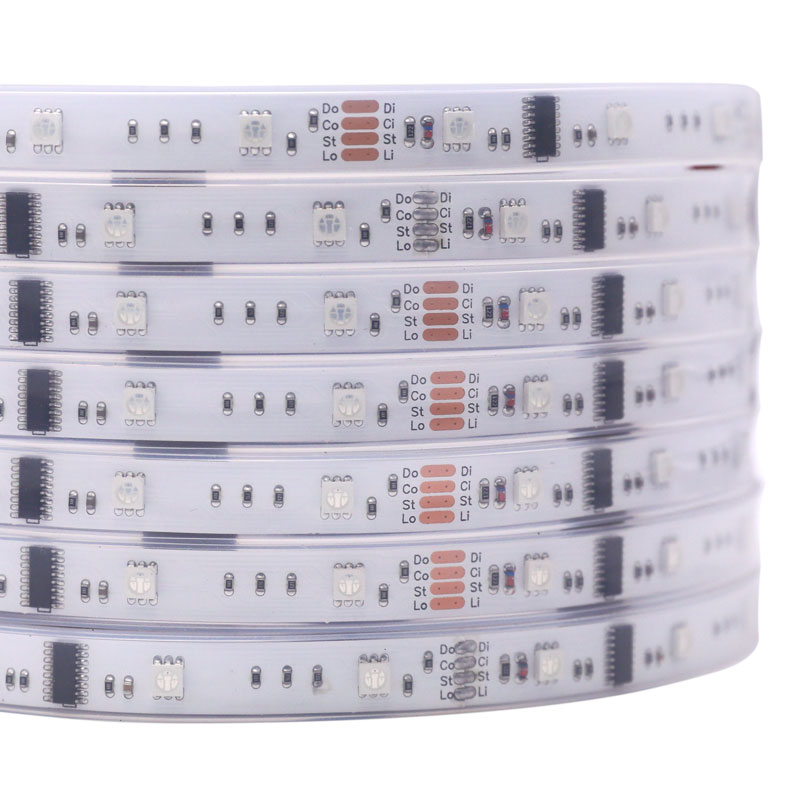
LPD6803 DC12V Series Flexible LED Strip Lights, Programmable Pixel Full Color Chasing, Outdoor...
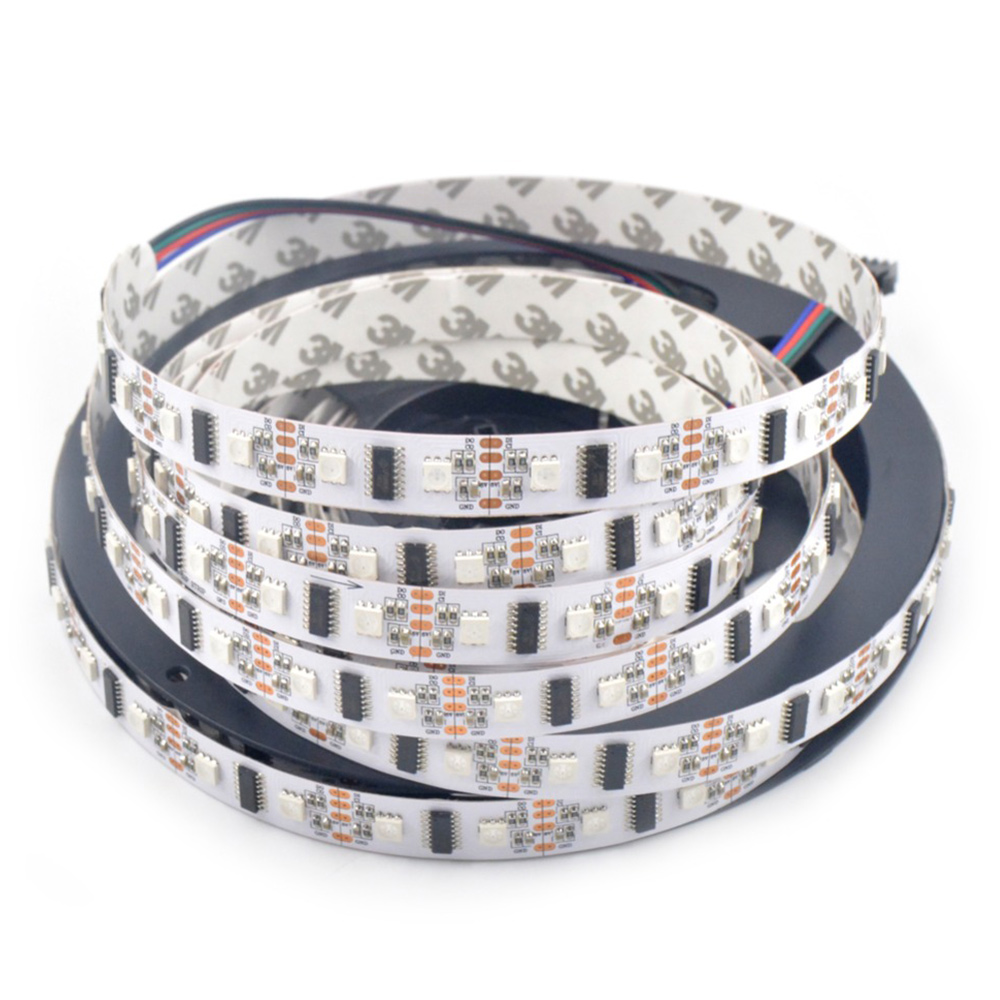
LPD8806 DC5V Series Flexible LED Strip Lights, Programmable Pixel Full Color Chasing, Indoor Use,...

Mini 5mm WS2812 3535 RGB LED Strip Lights Addressable
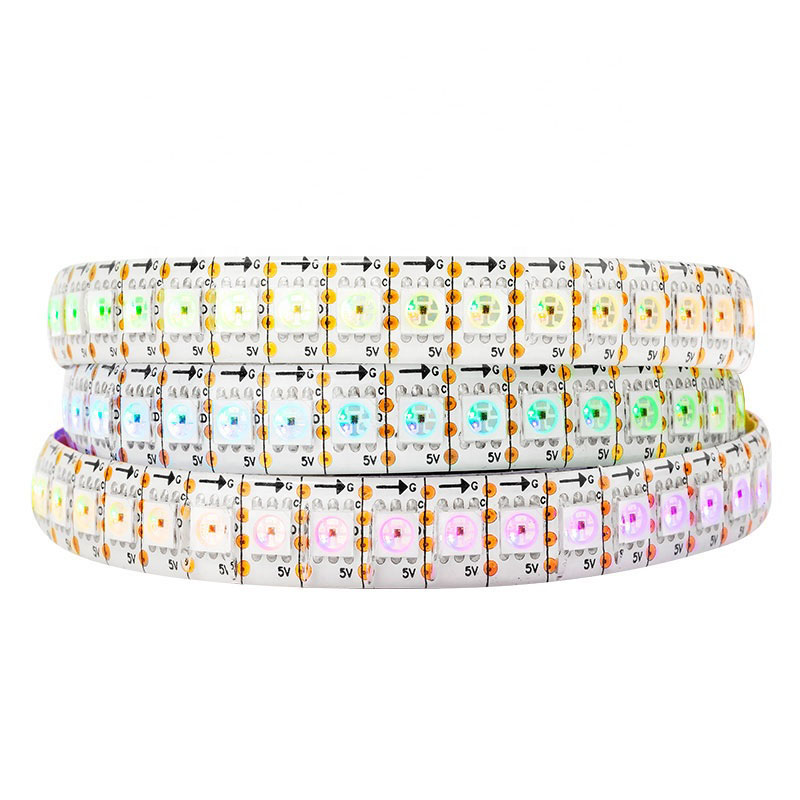
SK9822(Similar to APA102) RGB 144LEDS/M DC5V 12MM-Wide Digital Intelligent Addressable LED Strip...
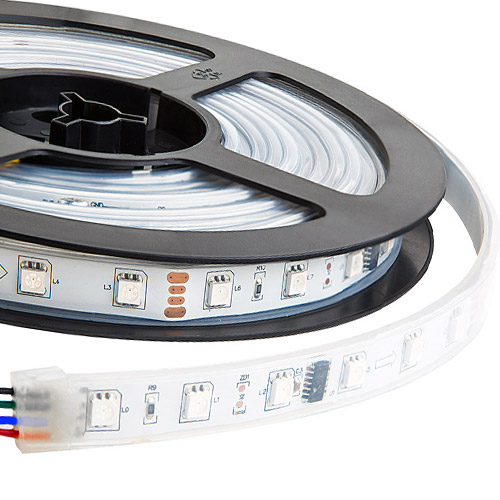
TM1812 DC12V Series Flexible LED Strip Lights, Programmable Pixel Full Color Chasing, Outdoor...
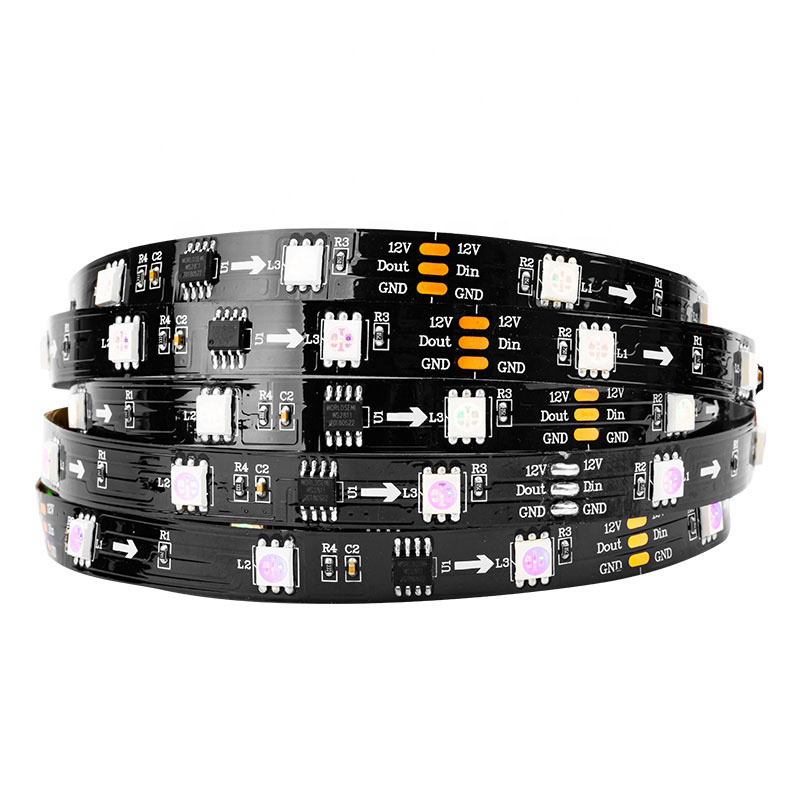
UCS1903 12V Programmable Color Chasing LED Light Strip 30LEDs/m
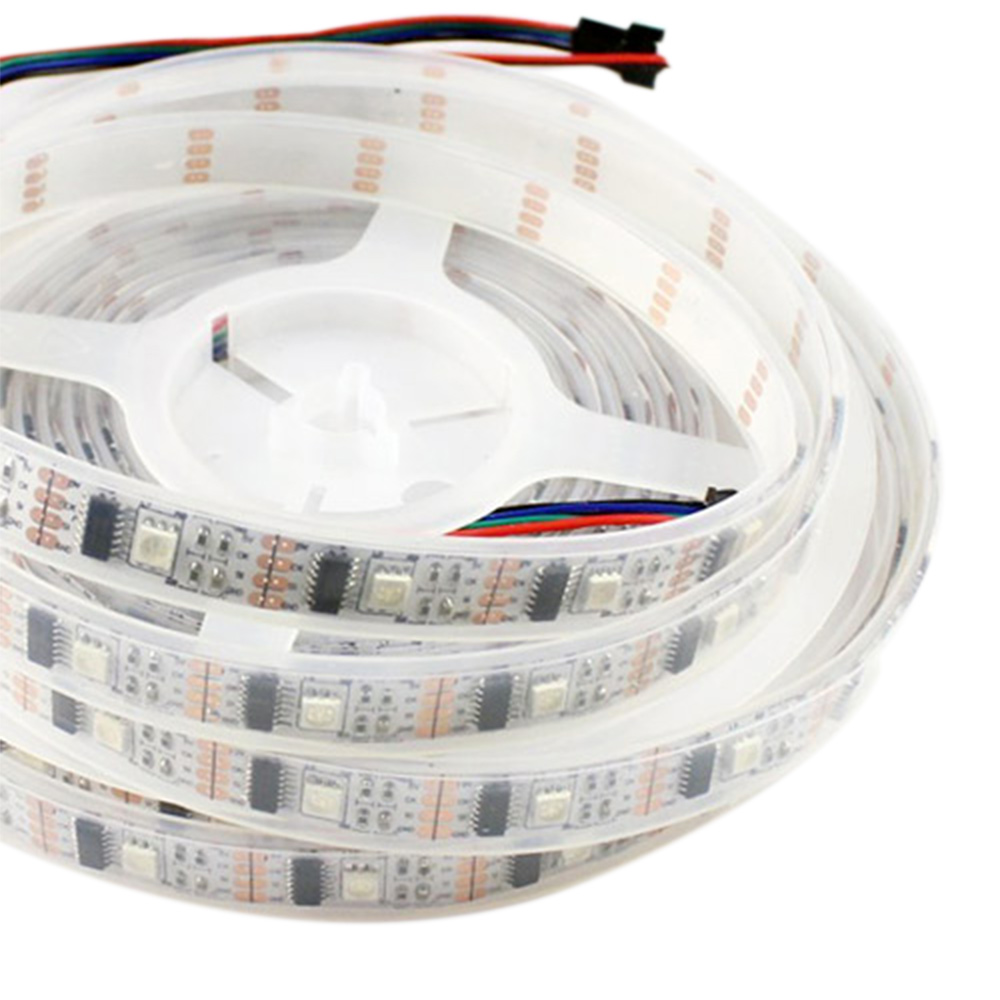
WS2801 DC5V Series Flexible LED Strip Lights, Programmable Pixel Full Color Chasing, Outdoor...
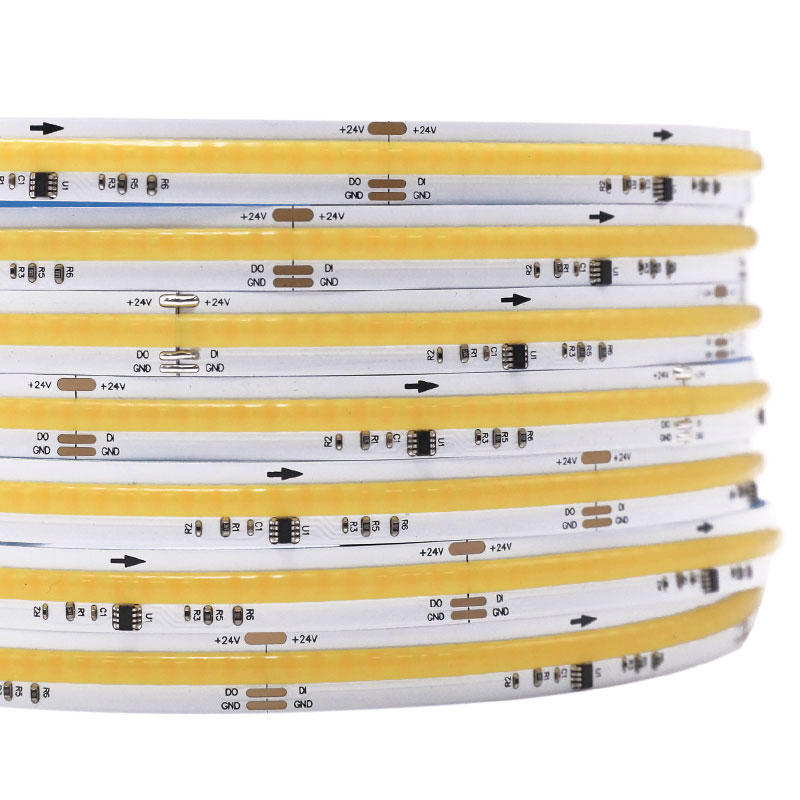
WS2811 DC24V Addressable CCT COB LED Strip 574Chips/m - Dual White Running Water
The Beginner's Guide to Addressable LED Strip Light Systems
Addressable LED strips differ from traditional LED strips in both structure and control logic. Understanding how ICs and data signals work together is key to achieving precise pixel-level lighting effects.
Table of Contents Overview
How Addressable LED Strips Work?
Types of Addressable LED Strips
Which Voltage Should Be Selected?
Addressable LED Light Source Types
Addressable LED Pixel Strip Lights FAQ
How Addressable LED Strips Work
Standard LED strips operate with a suitable voltage power supply. Programmable LED strips, however, require not only the right voltage but also compatible signals to determine the color and pattern displayed by the LEDs.
Addressable LED light strips integrate intelligent control ICs directly into each LED or LED group. These ICs receive digital control signals from a dedicated IC controller and pass the remaining data downstream through a cascading Data In → Data Out structure. Therefore, signal direction must be distinguished when connecting addressable LED tape to a controller.
The integrated control IC chip is the most critical structural feature of programmable LED light strips. It largely determines the strip’s operating voltage, IC spacing, and overall addressing behavior. Since each IC responds only to its assigned data, every LED or segment can be individually addressed—enabling pixel-level color, brightness, and dynamic effects.
This ability of LEDs to be addressable and programmable is also the reason why addressable light strips are called smart light strips.
For detailed project-level guidance on IC controller selection, signal direction, power supply layout, and multi-section digital LED strip connection principles, please refer to our blog posts.

Types of Addressable LED Strips
Because different IC designs lead to very different performance, wiring methods, and control capabilities, addressable LED strips are commonly classified based on several key technical dimensions—helping you identify the right option for your project.
Complete Guide for Every Single Option
To simplify the selection process, we classify addressable LED strips based on: control IC type, addressing granularity, operating voltage, and light source form. Each feature affects how the digital LED light strip behaves, how it is controlled, and where it performs best.
1. Control IC Type
Different addressable LED strips are built around different control ICs, each with its own communication protocol, refresh rate, signal stability, and system compatibility.
Common smart LED tape IC families such as WS, SK, UCS, and DMX-based chips are designed for different LED programmable control environments—from simple SPI controllers to professional DMX lighting systems.
Based on the addressable LED strip classifications we’ve provided above — "Single Signal LED Strips" (single data line), "Breakpoint Resume Series" (with backup data line), "Dual Signal LED Strips" (data line and clock line), and "DMX512 LED Strips Series" (directly responds to DMX systems, with address line) — these four categories effectively cover all major addressable LED control ICs available in the market. Use the table below to quickly match your project needs with the right IC type.
|
Single Signal Type
|
Voltage
|
Max. Run
|
Notice
|
Datasheet
|
|
WS2812 RGBIC Family (WS2812, WS2812B, WS2812C)
|
5V, 12V (new)
|
5m
|
DIY mainstream choice
|
PDFWS2812B Datasheet333 KB (WS2812B), PDFWS2812C 2020 Datasheet754 KB (WS2812C)
|
|
5V, 12V, 24V, 12-24V, 12-36V (special pro)
|
20m
|
Super wide compatibility
|
PDFSK6812 White LED Datasheet609 KB (white), PDFSK6812 WWA LED Datasheet1.4 MB (WWA), PDFSK6812 RGB LED datasheet562 KB (RGB), PDFDC12V SK6812RGBW EN957 KB (RGBW)
|
|
|
CS8812
|
12V, 24V
|
10m
|
Smart alternative to WS2812B, individually addressable @12V and @24V
|
|
|
WS2811 (FW1903, TM1903, SM16703)
|
5V, 12V, 24V
|
~10m
|
External driver
|
PDFWS2811418 KB (RGB), single white, tunable white
|
|
UCS1903 (FW1903, UCS2903)
|
5V, 12V, 24V, 36V (special)
|
25m
|
PDFUCS1903 datasheet349 KB (UCS1903 RGB), PDFUCS2903 Datasheet686 KB(UCS2903 RGB), single white, 3-in-1 white
|
|
|
12V, 24V
|
~10m
|
|||
|
12V, 24V
|
~10m
|
|||
|
12V, 24V
|
~10m
|
Proprietary protocol (TM1824 is similar to SK6812)
|
PDFWS2814 RGBW Datasheet338 KB (WS2814), PDFWS2814A Datasheet663 KB (WS2814A)
|
|
|
12V, 24V
|
20m
|
PDFTM1814 TitanMicro600 KB (TM1814 RGBW), white
|
||
|
12V
|
5m
|
Early version
|
||
|
Breakpoint Resume Type
|
Voltage
|
Max. Run
|
Notice
|
Datasheet
|
|
12V
|
~10m
|
Most popular dual-data-signal IC
|
RGBW (new), PDFWS2815 12v addressable led chip specification862 KB (RGB), white
|
|
|
12V
|
~10m
|
Hi-refresh engineering grade
|
PDFGS8208B Datasheet1.1 MB (RGB), white
|
|
|
12V, 24V
|
~10m
|
Streamlined version of GS8208
|
/
|
|
|
12V
|
~10m
|
Upgraded version of WS2812B
|
||
|
WS2813 (CS2803)
|
5V
|
2-3m
|
5V high-reliability “dual-safety” solution
|
PDFWS2813 LED Datasheet1.1 MB (RGB), RGBW
|
|
12V, 24V
|
~10m
|
Upgraded version of WS2811
|
PDFWS2818543 KB (RGB), CCT
|
|
|
FW1834 (TM1834) RGBW
|
24V
|
~10m
|
External driver
|
/
|
|
12V, 24V
|
30m
|
Ultra-long-distance operation
|
PDFTM1914 Datasheet419 KB (TM1914), RGB, CCT, 3-in-1 white, single white
|
|
|
12V
|
~10m
|
UL-listed, external individually addressable
|
/
|
|
|
WS2805, FW1906 (TM1906) RGBCCT
|
12V, 24V
|
~10m
|
Special five-channel IC
|
/
|
|
Dual-Signal (CLK) Type
|
Voltage
|
Max. Run
|
Notice
|
Datasheet
|
|
5V
|
2-3m
|
Gradually increasing high refresh rate
|
||
|
5V
|
2-3m
|
PDFAPA102900 KB (RGB), white
|
||
|
5V
|
2-3m
|
PDFAPA107829 KB (RGB), white
|
||
| HD107S |
5V
|
2-3m
|
PDFHD107S Datasheet853 KB (RGB), white
|
|
| HD108 RGB |
5V
|
2-3m
|
||
|
5V, 12V, 12-24V
|
5m
|
Independent PWM control
|
||
|
5V
|
2-3m
|
/
|
||
|
12V
|
5m
|
Early version
|
/
|
|
|
DMX512 Type
|
Voltage
|
Max. Run
|
Notice
|
Datasheet
|
|
UCS512C4
|
12V, 24V, 12-24V
|
~10m
|
Constant current output
|
RGB, RGBW
|
|
UCS512H
|
12V, 24V, 48V
|
20m
|
High voltage withstand
|
PDFDMX 512 IC UCS512H Series Datasheet1.1 MB (RGB, RGBW, RGBCCT, white, CCT, 3-in-1 white)
|
|
TM512
|
12V, 24V
|
~10m
|
Economical entry-level
|
PDFTM512BC LED Datasheet988 KB (RGBW), 3-in-1 white
|
|
SM18512
|
5V, 12V
|
5m
|
Dual-mode, automatically identifies DMX512 or single-wire zero-return signal
|
RGB, RGBW
|
|
GS8516
|
48V
|
20m
|
Ultra-high integration, 16-channel PWM output
|
RGB
|
Beyond the commonly used IC families listed above, we also help source and implement alternative addressable IC solutions based on your specific project requirements. This flexibility allows us to deliver one of the most comprehensive and customizable addressable strip lighting solutions on the market.
2. Number of LEDs Controlled by a Single IC
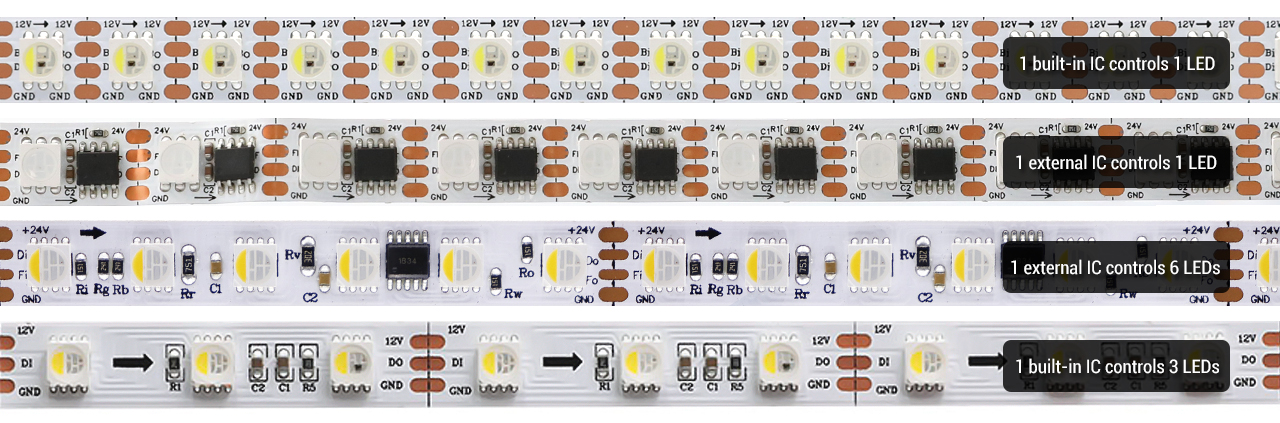
Addressable LED strips also differ in how many LEDs are controlled by a single IC. Some digital strip LED lights allow every individual LED to be addressed independently, while others control multiple LEDs as one pixel.
LED programmable lights strips can achieve grouped or individual control using either integrated ICs or external ICs. In grouped-addressable designs, a single IC may control multiple LEDs, regardless of whether the IC is built into the LED package or mounted externally on the strip. Similarly, single-LED addressable strips can also be implemented using both integrated and external IC architectures.
In practice, one control IC may drive 1, 3, 6, 7, 12, or more LEDs per addressable unit, depending on the pixel LED strip design, voltage, and application requirements. Both integrated and external IC designs can deliver reliable addressable performance when properly selected and implemented.
Why Aren't All Digital LED Strips Individually Controllable?
Not all addressable LED strips are designed for single-LED control. While individual addressability offers maximum visual precision, it also increases IC count, data load, power consumption, and system complexity.
For many programmable light strip applications, controlling multiple LEDs as one addressable pixel provides a better balance between visual performance, reliability, and cost.
In residential LED smart strip lights and small-scale applications—typically within short runs of a few meters (within 10 meters), such as accent lighting, furniture integration, or decorative features—individually addressable LED strip lights are more commonly used due to their flexibility and fine control.
Is LED Density Equivalent to IC Density?
LED density and IC density are related but not always the same. In single-LED addressable tape lights, each LED has its own control IC, so LED density equals IC density.
However, in grouped-addressable light designs, one IC may control multiple LEDs—resulting in a higher LED density than IC density. This is also why group addressability generally becomes a more maintainable and engineering-feasible choice as the LED programmable strip project scale expands.

3. Which Voltage Should Be Selected For Addressable LED Strips?
Choosing the right voltage is a critical step when selecting addressable LED strips. Voltage affects power distribution efficiency, voltage drop, maximum run length, and overall digital LED system stability.
We offer addressable LED strips in 5V, 12V, 24V, 36V, and 48V, as well as wide-voltage input options such as 12–24V and 12–36V. In most cases, voltage selection should be based primarily on the required run length and project scale of the programmable LEDs.
| Voltage | Typical Run Length | Typical Applications |
| 5V | Short runs (1–3 m) | Decorative lighting, desktop setups, small residential projects |
| 12V | Medium runs (3–5 m) | Residential accent lighting, furniture lighting |
| 24V | Longer runs (5–10 m) | Commercial interiors, architectural lighting |
| 36V | Extended runs | Large-scale installations, linear lighting systems |
| 48V | Very long runs | Architectural facades, large projects, centralized power systems |
| 12-24V / 12-36V | Flexible | Complex projects, mixed power environments |
Addressable LED strips designed for a fixed operating voltage must be powered by a matching power supply. Applying a higher voltage than specified will damage the pixel LEDs and control ICs, often instantly.
However, wide-voltage input programmable LED strips are specifically designed to tolerate a defined range of input voltage. For example, a 12–24V or 12–36V addressable LEDs strip can safely operate within that range, helping accommodate voltage fluctuations and simplify power system design in complex installations.
Does Higher Voltage Mean Higher Brightness?
Higher voltage does not automatically mean higher brightness. The brightness of an addressable LED strip is primarily determined by LED type, LED density, drive current, and optical design, rather than voltage alone. Voltage mainly affects power distribution efficiency and voltage drop, especially over longer distances when using digital LED strip lights.
4. Addressable LED Light Source Types
The light source format plays a critical role in how an addressable LED strip looks and performs in real applications. Different digital LED source types offer distinct advantages in light continuity, visual comfort, flexibility, and environmental resistance.
• SMD Addressable LED Strips
SMD addressable LED strips are the most widely used and versatile option. Individual LEDs are clearly defined, ideal for pixel-based programmable LED lights effects, dynamic animations, and applications where visible light points are acceptable or desired.
• COB Addressable LED Strips
COB addressable LED strips represent a new generation of linear lighting. By integrating a high-density LED array under a continuous phosphor layer, they deliver smooth, dot-free illumination. Ideal for applications where visual comfort and uniform light output are priorities, such as interior coves, shelves.
How to Control Addressable LED Strip Lights?
Almost all addressable LED strips can be controlled by our Dream color LED controller, support WIFI & Bluetooth APP/Amazon /Google /RF control, and have multiple control methods such as timing/music/group function.
• Home lighting: one to one (one LED controller control one LED strip). All SPI controllers are suitable for home lighting environment, plug and play, you don’t need to program, built-in hundreds of dynamic modes; for the customers with a development background, consider using the Arduino development board, by setting the Arduino ID and installing the driver program, adding a database and creating scripts to control the LED strips.
• Commercial lighting: one to more (one LED controller control several LED strips). SD digital LED controller online/offline programming output LED display lighting effect (T-1000S / K-1000C / T-4000 / K-8000 / T-300K).
• Industrial lighting: one to more and support DMX to signal transform. Art-net DMX digital LED controller (BC-204 / BC-216) through PC Mardix to control the SPI LED strip display lighting of different output channels; Or DMX SPI decoder (DSA / LT-DMX-1809) through the DMX console to control the addressable LED strips in different areas to show the lighting effect.
If you have any questions about building a dream-color smart led strip lighting project, please feel free to contact us and we will provide you with a complete solution with whatever you need, controller, power supply, connection accessory and more.
Beyond standard addressable LED lights models, we provide project-based customization, including custom pixel lengths, control IC protocols, LED configurations, and mounting methods—ensuring each programmable LED tape solution is precisely tailored to your design and installation requirements.
Expand Your Expertise: Featured Reads
How to Choose the Best Addressable LED Strip?
How to Wire Addressable LED Strip Lights?
DMX Control LED Lighting Strip – Things You Need To Know
Addressable LED Pixel Strip Lights FAQ
An addressable LED strip includes control ICs that allow individual LEDs or LED groups to be controlled independently. Typical signs include: 1. Dedicated data signal lines in addition to power lines; 2. Marked data direction (DIN / DOUT) on the strip; 3. Product descriptions referencing addressable, digital, pixel, or IC-controlled LEDs.
Regular LED strips operate with every LED displaying the same color and brightness. Addressable LED strips allow LEDs to display different colors, brightness levels, and dynamic effects simultaneously.
Yes, in most cases. Both terms refer to LED strips that receive digital control signals to address LED lights.
In practice, they all represent the same concept: data-signal-controllable LED strips (without specifying LED color). Different brands simply use varying terminology.
No. While RGB addressable strips are the most common, addressable technology can also be applied to: Single-color LEDs, RGBW or RGB+CCT LEDs, Tunable white (CCT) LEDs.
Yes. You may encounter some smart LED strips that cannot be trimmed to length. All our SuperLightingLED™ addressable LED strips support cutting.
All LED light strips can be cut through the LED cutting points. Due to the different density of the LED light strip, the minimum cutting length of the LED light strip is different. For most of the addressable LED strips, DC5V, individually addressable, single LED cuttable; DC12V, 3LEDs cuttable; DC24V, 6LEDs cuttable.
An addressable LED strip requires: A compatible power supply, A compatible controller (SPI, DMX, or system-specific), Correct power and data wiring. Once connected, lighting effects are defined via controller software or pre-programmed modes.
Not necessarily. Within normal operating distances, addressable strips can draw power from the controller to the power supply in a series circuit (“strip-controller-power supply”).
Signal degradation can occur over long distances or with improper wiring. Using correct running lengths, proper wiring, signal amplifiers (if needed), and following recommended installation practices minimizes the risk of signal loss or data corruption.
When properly powered and controlled, addressable LED strips do not flicker. Flickering is usually caused by insufficient power, voltage drop, incompatible controllers, or incorrect wiring.
It depends on the IC design. Some addressable strips support signal bypass or break-point continuation such as WS2815 and TM1934, allowing downstream LEDs to continue functioning. Others may experience partial signal interruption like WS2812B and WS2811. This is a design-specific characteristic.
Addressable LED strips (SPI) typically use pixel-based digital control and are common in decorative and media applications. DMX LED strips use the DMX512 protocol and are standard in professional stage, architectural, and entertainment lighting systems. DMX systems offer higher stability and standardized control for large-scale installations.
It depends on compatibility. The controller must support the same protocol, voltage logic, and signal format as the addressable LED strip.
Not necessarily. Many controllers offer graphical interfaces, preset effects, or drag-and-drop programming. Coding is optional and typically only required for advanced custom animations or system integration.